Profiling a Palestinian Prisoner: Starvation, Medical Neglect, Brain Hemorrhage

Palestinian journalist Mujahid Bani Mufleh is still undergoing intensive treatment six months after his release from Israeli prison, where he says he lost nearly 20 kilograms due to starvation and medical neglect before suffering a severe brain hemorrhage days after being freed.

Bani Mufleh is currently being treated at Ibn Sina Specialized Hospital in Jenin in the northern occupied West Bank. After falling into a coma, he underwent multiple surgeries, including a procedure in which part of his skull was removed. He now requires assistance with movement, swallowing and speech.

The journalist said prison conditions, including starvation and lack of medical care, severely worsened his health, particularly as he suffers from diabetes.

Speaking to Anadolu from his hospital bed, he recalled how his condition deteriorated during detention.

“I entered prison weighing 72 kilograms, and when I came out, my weight was in the early 50s,” he said.

“I lost a large part of it because of hunger. We slept hungry, and the food they gave us was not enough,” he added.

He said his condition worsened further due to lack of access to diabetes treatment.

“Since the beginning of my detention, I did not receive the proper medication, I did not undergo any medical test, and I did not know my blood sugar level. The food was very little,” he said.

Diabetes is a chronic disease in which the body either does not produce enough insulin or cannot use it effectively, leading to elevated blood glucose levels that can damage organs over time if untreated.

Israel arrested Bani Mufleh in the town of Beita, south of Nablus, in June 2025 and released him in January 2026, according to the Palestinian Prisoner’s Society.

Released into collapse

Bani Mufleh said his release came unexpectedly after his detention had been extended. He said prison authorities informed him he would be transferred, and he was not given a chance to say goodbye to other detainees.

“I was surprised that they released me. I did not even know I was going to get out,” he said.

“They took me out at midnight, and four hours later I found myself in the open, in the bitter cold of the Negev desert. I was shaking badly,” he added.

He said his health deteriorated rapidly after release. Medical tests later showed high blood sugar and blood pressure levels.

“I was doing an interview with a fellow journalist, speaking about what I had lived through in prison, and it seems that recalling those details was more than my body could bear, so I lost consciousness,” he said.

He was taken to a hospital in Nablus, where doctors diagnosed a severe brain hemorrhage. He later fell into a coma and underwent successive surgeries.

Life after detention

After regaining consciousness, Bani Mufleh said his life had changed completely and he is now unable to perform basic daily tasks.

“I was a person full of life. I worked for long hours. Today, I am almost unable to do the simplest tasks,” he said.

“I need others to help me move and get around. I lost the ability to speak and swallow, and I am still going through a long treatment journey,” he added.

He said his condition has also affected his relationship with his three children.

“I used to spend a lot of time at home beside them, teaching them and providing everything they needed. Today, I can no longer do that,” he said.

“I miss their laughter, and I hope to return to the father I used to be,” he added.

‘A photo that shows the truth’

Bani Mufleh said a Facebook post showing his post-surgery condition was intended to document his experience after detention.

The image shows part of his skull removed following brain surgery, with visible signs of severe weight loss.

“I wanted to show people the truth,” he said.

“Many friends objected to publishing the photo because they said it was not beautiful, but I have nothing to fear. Here I am today, and this is my condition,” he added.

He said he continues to think about his life before imprisonment, including his work in journalism and farming.

“I miss the old Mujahid,” he said, adding that he had cultivated land with dozens of trees before his arrest.

“My wife and children are always around me, and they hope I will return to the way I was,” he said.

Thousands of cases

The Palestinian Prisoner’s Society said last week that Israeli prisons have become a tool of “slow and direct killing” against Palestinian detainees.

It said Bani Mufleh’s case reflects wider conditions faced by thousands of Palestinians, including starvation, medical neglect and other violations in custody.

The group said more than 245 Palestinian journalists have been detained by Israel since the start of the war in Gaza in October 2023.

It added that Israeli forces have carried out near-daily raids across the occupied West Bank since October 2023, resulting in widespread arrests and searches.

According to Palestinian figures, Israel has arrested about 23,000 Palestinians from the West Bank since Oct. 7, 2023, including women, children and former prisoners.
Continue reading
Israeli Settlers Uproot 400 Olive Trees

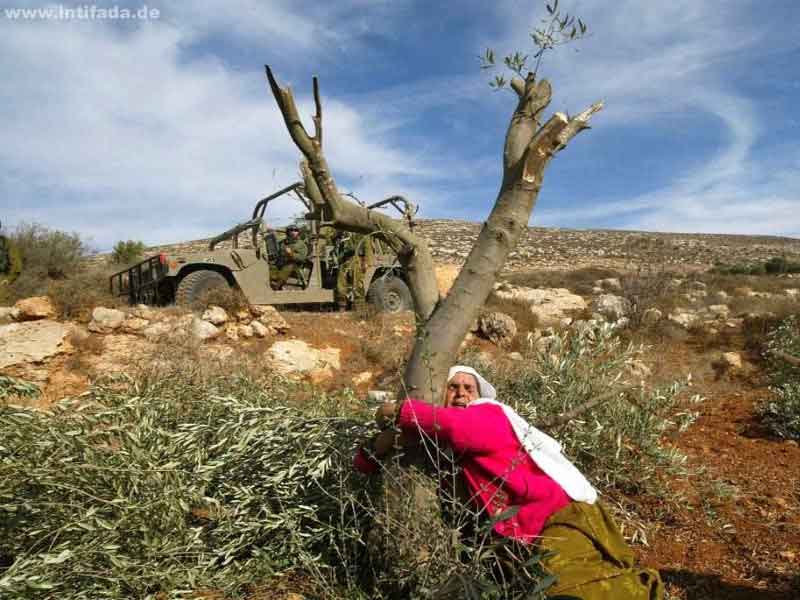
Israeli settlers are on the rampage. Their latest vandalism is the destruction of 400 olive trees in the village of Turmus Aya, northeast of Ramallah West Bank. 

Sources say settlers from the settlement of ‘Adi Ad’ which was established on the lands of the village came down to its groves, Saturday night, and proceeded to fell the trees.

The attack came days after the settlers set fire to a house and a car in the village as part of an increase in attacks against the people and property of the village according to a media report.

According to the Palestinian Wall and Settlement Resistance Commission, Israeli forces and settlers, who are also referred to as colonists, carried out 1,819 attacks last  March, according to Palestinian news agency Wafa. It added this is part of a systematic campaign in a systematic campaign targeting Palestinian people, land, and property.

The Israeli occupation continues to uproot olive trees in different Palestinian villages, towns and cities with no apparent reason and employing bulldozers if the acts are carried out by the Israeli army to make sure the trees no longer exist.

As well as Turmus Aya, there has been an increase of uprooting of trees in Nablus, Burqa village and Jenin.

According to the Palestinian commission the Israeli army is responsible for 1,322 of these attacks, while settlers carried out 497 acts of vandalism, adding Hebron topped the attacks at 321, Nablus 315, Ramallah and Al-Bireh 292, and Jerusalem 203.

Continue reading
Israeli Soldiers Attack Al Jazeera News Crew

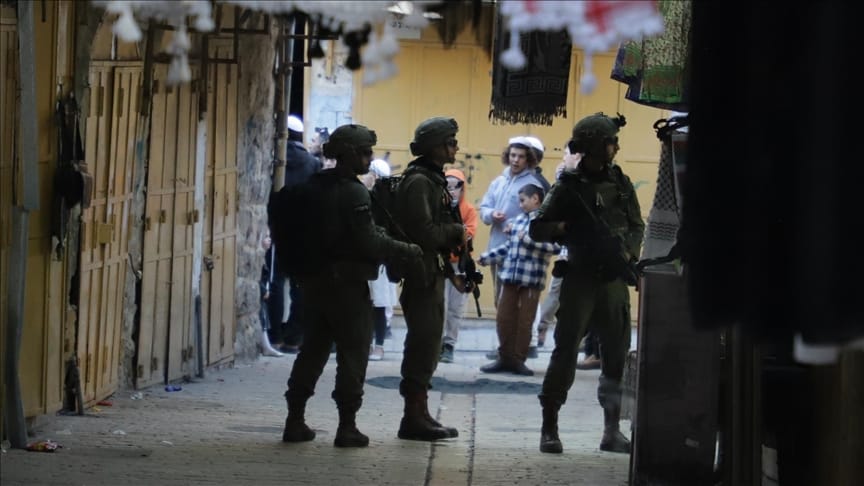
Israeli forces fired at an Al Jazeera news crew on Friday as it covered an illegal settler attack in the town of Talfit, south of Nablus in the occupied West Bank, the broadcaster said.

The Qatar-based channel reported that soldiers shot toward its team, causing partial damage to camera equipment.

Al Jazeera correspondent Tharwat Shaqra said in a live broadcast that troops used live ammunition against the crew before firing a tear gas canister that directly struck and damaged filming gear.

She said the journalists were positioned in a clearly visible, open area and were targeted without being asked to leave the location.

The Israeli army did not immediately comment on the incident.

The shooting occurred as the crew was reporting on a settler attack in Talfit that left three Palestinians injured, according to the Palestinian Red Crescent. One person was shot and taken to hospital, while two others were beaten and treated at the scene.

Israel closed Al Jazeera’s operations inside Israel on May 5, 2024, and shut its offices in the West Bank on Sept. 22, 2024, with the closure order repeatedly extended.

On Dec. 23, 2025, Israeli Communications Minister Shlomo Karhi said the channel would be barred from operating “forever.”

Israel has intensified operations in the West Bank, including East Jerusalem, since launching its military campaign in Gaza on Oct. 8, 2023. Palestinians view the escalation, including killings, arrests, displacement and settlement expansion, as a step toward formal annexation of the territory.

At least 1,112 Palestinians have been killed and about 11,500 injured in the West Bank during that period, and more than 21,000 people have been arrested.

In a landmark opinion in July 2024, the International Court of Justice declared Israel’s occupation of Palestinian territory illegal and called for the evacuation of all settlements in the West Bank and East Jerusalem. Anadolu

Continue reading
Israel And Palestinian Heritage Destruction

Last month, Palestinian Minister of Tourism and Antiquities Hani Al-Hayek warned that during its 2023-2025 war on Gaza Israel damaged or destroyed more than 316 archaeological sites in Gaza and the West Bank. While most were from the Mamluk and Ottoman eras, others were from the early Islamic centuries and the Byzantine period. He argued that Israel is conducting “systematic targeting” of Palestinian historical sites as part of its long-term strategy of colonising and annexing the West Bank.

While the current right-wing Israeli government flatly rejects withdrawal from Palestinian territories conquered 58 years ago, the Arab world and the international community argue that regional peace depends on the establishment of a Palestinian state in the West Bank, East Jerusalem and Gaza. This means that Palestinians should be in charge of archaeological remains in these territories.

Hayek was prompted to speak out after archaeologists protected by Israeli troops raided a Byzantine era site near Ramallah and stole five columns. Israel claimed Palestinians had built a structure in the centre of the site, damaging the archaeological remains.

Both Israelis and Palestinians claim a second site, Sebastia, near Nablus in the northern West Bank belongs to their cultural heritage, although it has been ignored and unexcavated for decades. Israel holds the archaeological park, which is in Area C under full Israeli control, while the Palestinian town of Sebastia is in Area B, under joint Israeli and Palestinian Authority security control but Palestinian administration.

Israel has begun to expropriate 1,800 dunams of land for the “preservation and development” of Sebastia which has been settled from the Iron Age (1200-586 BC) through modern times. The site contains layers of history reaching back nearly 3en,000 years and contains Iron Age dwellings, walls, and a palace which exist alongside remnants from Roman times.

Sebastia was the capital of the northern Israeli Kingdom during the first half of the 10th century BC. Conquered by the Assyrians in 720 BC, Sebastia became an administrative centre under the Assyrians, Babylonians, Persians, and Romans, Muslim Arabs and Ottomans.

The site and the modern village of Sebastia – which has about 3,200 Palestinian inhabitants – have been declared a World Heritage Site by UNESCO as the town is the location of Roman royal tombs, a Roman amphitheatre, medieval buildings, and a historic mosque built within a Christian church.

As the Israeli expropriation order covers the archaeological site and Palestinian olive plantations, Palestinian landowners were given two weeks to file legal objections to the seizure and their expulsion. This is the largest antiquities-related West Bank expropriation order issued by Israel since the 1967 occupation. While international law prohibits occupiers from carrying out excavations in areas they control, Israel has ignored this as well as most other laws governing occupations. In May 2023, Israel allocated $9.2 million for Sebastia.

The Israeli Peace Now movement declared: “Israel continues to harm Palestinian rights, expropriating thousands of dunams in violation of international law and settling the northern West Bank, an area with only a few thousand settlers compared with more than a million Palestinians.” The movement warned, “Israeli greed harms not only the landowners, but also the prospect of a peaceful solution that upholds the rights and heritage of both peoples.”

Emek Shaveh, an Israeli anti-occupation group founded by archaeologists, and Yesh Din, an Israel rights movement, issued a joint report in 2018 which stated, “Since 1967, Israel has endeavoured to appropriate the archaeological assets of the West Bank, based on the view that the Jewish heritage of places and antiquities testifies to a bond between the antiquities and the state of Israel, and constitutes a justification for deepening its control over ancient sites. This perception underlies every aspect of Israel’s archaeological practices in the West Bank.

“Israel’s control enables the physical exclusion of Palestinians from the sites and ancient finds through various means, ultimately weakening their connection to their heritage. It also enables Israel to shape the historical narrative of the sites by highlighting and glorifying their significance for the Jewish people and downplaying the role of other peoples and cultures who also had a part in the history of the region…

“Under the guise of concern for heritage, the government is investing tens of millions ..in turning heritage sites into weapons of dispossession and annexation.” The group added, “The intention to expropriate private land is anything but preservation; its purpose is to establish a tourism settlement that will detach Sebastia’s heritage from the [Palestinian] town and Judaize the area through the tourists who visit the site.”

Israel has weaponised archaeology to assert the legitimacy of its take-over of the land between the Mediterranean and the Jordan River. While striving to discover, develop and preserve Jewish archaeological remains in Palestine, Israel neglects or even harms non-Jewish or Palestinian heritage at the expense of Palestinians.

Meanwhile, Palestinian Archaeologists are trying to restore damaged sites. They have begun work on the Qasr al-Basha museum, a Mamluk-era palace located on a UNESCO heritage site dating back to 800 BC. After destroying 70 per cent of the museum by bombardment, Israeli troops occupying the site looted 20,000 ancient and medieval artifacts stored there.

UNESCO has reported damage to the Saint Hilarion Monastery, one of the oldest Christian heritage sites in the region, and the 7th century Omari Mosque, Gaza’s main place of Muslim worship. Due to the Israeli blockade on building material restorers have been compelled to scrabble in the ruins of these buildings for material for restoration.

In August, Israel appropriated 63 Palestinian West Bank archaeological sites, 59 in Nablus governate, three in Ramallah governorate, and one in Salfit governorate. Sixty-three were declared “Israeli historical and archaeological sites,” excluding Palestinian ownership. In total, Israel has taken over 2,400 out of the 6,000 Palestinian sites in the West Bank. This process can endanger the study of archaeology and history in this area if archaeologists involved are political motivated and preserve only what suits them while wiping out layers of remnants above and below layers, they explore. Meanwhile, Israeli archaeological organisations and personalities indulge in bitter competition with each other.

This article is written by Michael Jansen for the Jordan Times.

Continue reading
Vandalizing The Olive Tree

The current olive harvest season in the occupied West Bank has seen the highest level of illegal settler attacks in five years, a UN agency said Saturday.

The UN Office for the Coordination of Humanitarian Affairs (OCHA) said in a statement that 126 attacks were recorded in 70 Palestinian towns and villages, while over 4,000 olive trees and saplings were vandalized.

“The 2025 olive harvest season has so far witnessed the highest level of damage and number of affected communities due to settler attacks since 2020,” it added.

OCHA noted that 60 of the documented attacks involved direct assaults on Palestinian civilians, with at least 17 people injured and 19 vehicles vandalized in the past week alone according to Anadolu.

The UN agency said illegal Israeli settlers from newly established outposts have also imposed access restrictions on Palestinian farmers in multiple locations, preventing them from reaching their groves during the harvest.

On Saturday, illegal Israeli settlers attacked Palestinian olive pickers in the village of Burin, south of Nablus, and assaulted several of them, the official news agency Wafa reported.

Illegal settlers stormed farmland between Burin and the nearby town of Huwara, beat multiple harvesters and forced them to leave the fields, the broadcaster said.

Wafa added that the attackers also scattered the olives the farmers had already collected, leaving them on the ground.

The attack came amid a sharp rise in settler violence against Palestinian farmers during the annual olive harvest, which typically begins in mid-October each year.

According to the official Colonization and Wall Resistance Commission, 259 attacks on Palestinians carried out by the Israeli army and illegal settlers during the olive harvest season.

Israeli attacks have escalated across the occupied West Bank since October 2023, killing more than 1,062 Palestinians and injuring 10,300 others, according to Palestinian figures.

In a landmark opinion last July, the International Court of Justice declared Israel’s occupation of Palestinian territory illegal and called for the evacuation of all settlements in the West Bank and East Jerusalem.

Continue reading