Trump, Gaza and The New Political Ploy


Dr Sami Al-Arian

The infamous 19th-century imperialist and racial supremacist, Cecil Rhodes, once remarked: “It is our duty to seize every opportunity to acquire more territory and we should keep this one idea steadily before our eyes that more territory simply means more of the Anglo-Saxon race.” He then added: “Just fancy those parts that are at present inhabited by the most despicable specimens of human beings, what an alteration there would be if they were brought under Anglo-Saxon influence.”

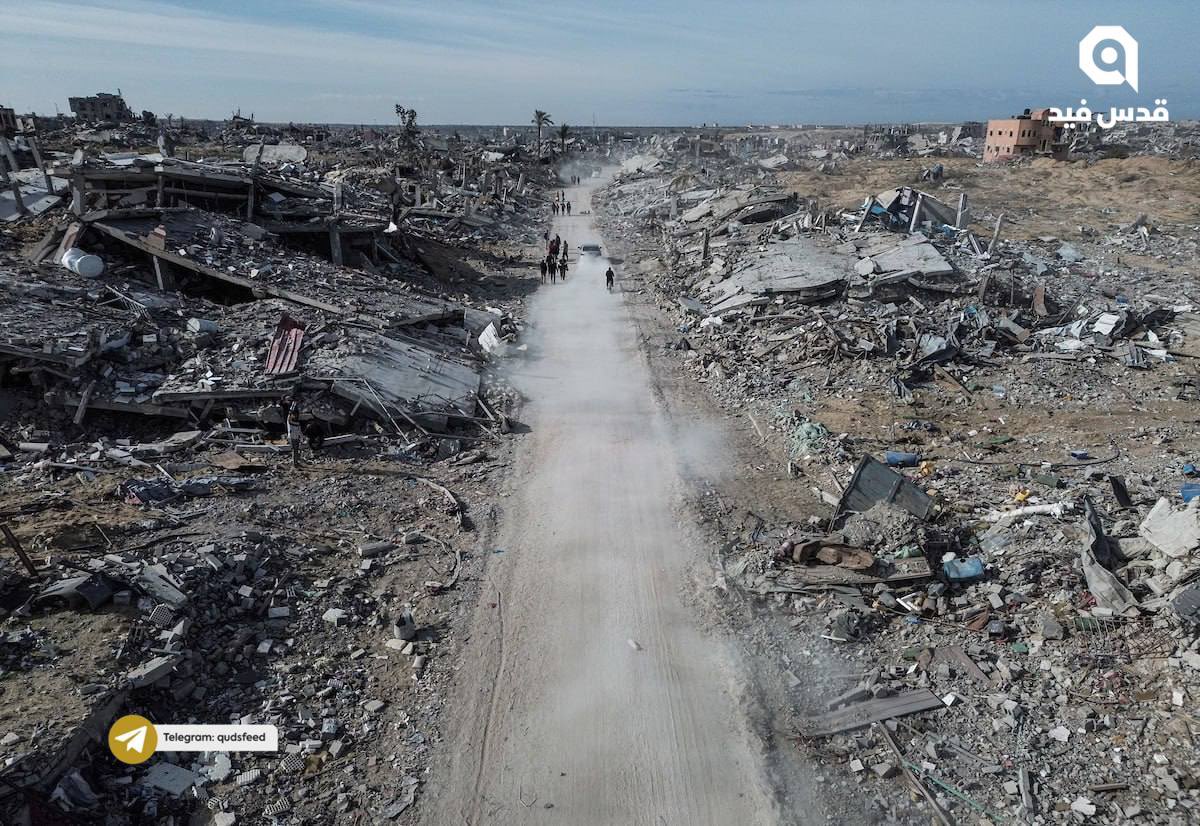
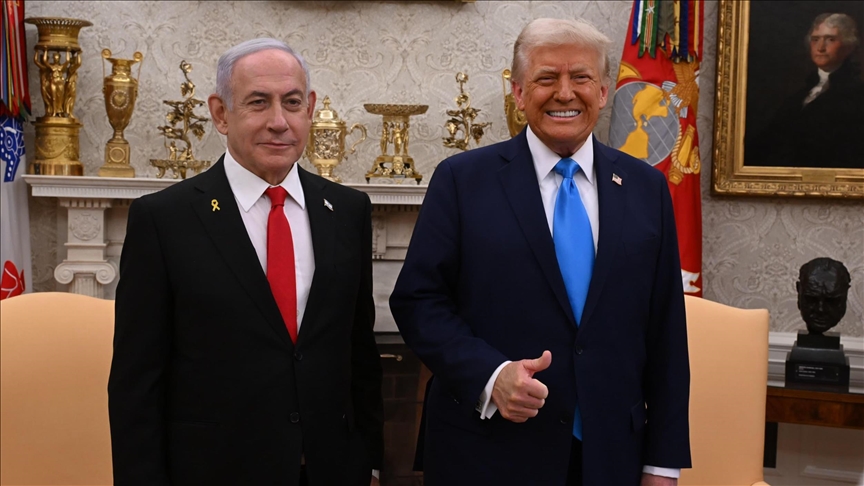
More than a century later, US President Donald Trump expressed similar attitudes during his meeting on Feb. 4, with the Israeli prime minister and indicted war criminal Benjamin Netanyahu, when he said: “We will take over the Gaza Strip, will own it long-term and will redevelop it … I do see a long-term ownership position.” In a settler-colonialist spirit, Trump callously continued, “I don’t think people should be going back to Gaza. I think that Gaza is not a place for people to be living.” He neglected to mention, of course, the exception for Jewish settlers in prime real estate along the Gaza beach. He then added, “They’re living in hell,” without any hint of irony, considering the 15-month US-sponsored genocide, supported by funds, bombs, and diplomatic protection.

Strategic agenda and regional dynamics

There were many items on the agenda between Trump and Netanyahu, including Iran’s nuclear program, the future of Gaza and the West Bank, and normalization with Saudi Arabia.

To be sure, Trump was not an unknown quantity. In his first term, he demonstrated total hostility towards the Palestinians and embraced the most radical positions espoused by extremist Zionists. These included recognizing Jerusalem as Israel’s capital and relocating the US Embassy there, the annexation of the Syrian Golan Heights (occupied by Israel since 1967), the closure of the Palestine Liberation Organization (PLO) office in Washington, DC, ending all humanitarian aid to the Palestinians through the UN refugee agency (UNRWA) or US agencies, and integrating Israel within US Central Command (CENTCOM), the US military command responsible for a region stretching from Egypt to Afghanistan.

Furthermore, throughout his presidency Trump completely disregarded the so-called two-state solution — a long-touted US goal — in favor of Netanyahu’s approach of normalizing relations with Washington’s Arab client regimes while pursuing an aggressive settlement expansion policy intended to establish a de facto Greater Israel. In effect, it appears that “Trump 2.0” is trying, in his own way, to fulfill his promises of securing a greater Israel for his right-wing Zionist donors [1], benefactors [2] and appointees [3]. The proposal to forcefully remove over 2 million Palestinians from Gaza does not appear serious or achievable, since the Palestinians will never cooperate in their own displacement, nor would neighboring countries be willing to support a dangerous plan that would destabilize the region. In the past, Trump proposed similar hyperbolic ideas that failed to materialize, including his calls [4] for constructing a Riviera on the beaches of North Korea.

Netanyahu came to the White House with several objectives in mind. He sought Trump’s support to continue his war of extermination in Gaza after freeing many Israeli captives at the end of the first stage of the ceasefire deal. His political allies pressured him to resume the war in order to achieve his elusive objective of dislodging Hamas and eradicating the resistance — an aim he has not accomplished during the 15-month onslaught. It would appear that Trump wants to achieve this goal using political means through his outrageous proposal rather than through military pressure. If that is the case, this would be Trump’s way of handing Netanyahu the fig leaf he needs to silence his hard right critics and conclude the second stage of the ceasefire deal.

On Iran, Trump has doubled down on his policy of applying extreme pressure through economic sanctions in order to get the Iranians to negotiate a deal on their nuclear program. In return, the Iranian Foreign Minister Abbas Araghchi has called [5] for “maximum wisdom” to be applied to relations between Washington and Tehran, instead of the “maximum pressure” policy Trump has espoused. Since these are the early stages of diplomatic maneuverings, it’s very doubtful that Netanyahu received a green light from Trump to use military strikes against Iran in the near term.

On the West Bank, the Zionist regime has been escalating its aggressive settlement policy as well as its unprecedented attacks on several Palestinian cities, particularly against refugee camps in Jenin, Nablus, Tobas and Tulkarem.

Towards a Saudi-Israeli accord and its fallout

In the past, Trump and many of his administration officials, such as the new US ambassador to the Zionist regime, Mike Huckabee, have endorsed the expansion of Israeli settlements and the calls for annexing large parts of the West Bank. But backing such a policy now will certainly impede the central piece of Trump’s main objective in the region, which is to conclude a normalization deal with Saudi Arabia. To negotiate a deal with the Saudis, Trump must rein in Netanyahu and his extremist allies by promising them what they desire most: a Gaza free not only of Hamas’ rule but also of Palestinians, as well as the annexation of a large part of the West Bank, in exchange for a normalization deal with the Saudis and possibly beyond.

The Israelis certainly know that they will not get the Palestinians to leave voluntarily when they could not compel them to do that through their genocidal war. They recognize that they cannot unilaterally annex parts of the West Bank before the normalization deal with the Saudis is concluded. They also know that Trump has a very long agenda, both domestically and internationally, particularly with regard to the Ukraine war and China, and will not allow a devastating war with Iran to disrupt his agenda. Once the fog of the visit clears, it will become apparent that Trump’s primary policy in the Middle East is to cement a Saudi-Israeli agreement, one that cannot be finalized without putting a hold on other contentious issues such as a military escalation with Iran, West Bank annexation, or the resumption of the Gaza genocide. But that does not mean that the Zionist regime and its supporters within the Trump administration will not push hard to achieve all their objectives in Gaza, the West Bank and against Iran. Regardless, the Palestinians and their supporters worldwide must be vigilant to resist and defeat all their nefarious plans, particularly in Gaza, the West Bank, as well as any plans to integrate a genocidal regime in the region.

People across the Middle East have witnessed the true colors of the Zionist regime. Achieving a normalization deal with the Saudis or any other party would require nothing less than the total erasure of their collective memory. It would appear that the main lesson of the Oct. 7 attacks has not been learned. They took place at a time when regional and international actors had all but buried the Palestinian cause and ignored the plight of the Palestinians in pursuit of their own interests. Not only will none of the policies advanced by Trump address these issues, but they will exacerbate them. And thus, like his forgotten deal of the century, these policies are doomed to fail.

[1] https://www.nytimes.com/2024/06/25/us/politics/miriam-adelson-trump-israel.html

[2] https://www.thejc.com/news/usa/from-jared-kushner-to-miriam-adelson-meet-the-jewish-figures-in-trumps-inner-circle-sllz2ky1

[3] https://www.palestinechronicle.com/from-stefanik-to-hucabee-donald-trumps-cabinet-is-a-pro-israel-swamp/

[4] https://www.youtube.com/watch?v=P-iTikGb-CY

[5] https://www.thenationalnews.com/news/mena/2025/02/06/irans-foreign-minister-calls-for-maximum-wisdom-in-response-to-trumps-maximum-pressure-tehran-policy/

Dr Sami Al Arian is public affairs professor and the director of the Center for Islam and Global Affairs at Sabahattin Zaim University in Istanbul.

Continue reading
Arab States Say No to Trump On Gaza

Arab nations and organizations continued to express their firm rejection of US President Donald Trump’s plan to seize Gaza and displace Palestinians.

Egypt, Algeria, Iraq, Libya and the Palestinian group Hamas released statements Thursday.

It followed earlier rejections from Saudi Arabia, the United Arab Emirates, Jordan and Oman, along with several regional and international organizations including the Arab League and the Gulf Cooperation Council.

On Thursday, Trump claimed that Palestinians would have “better lives” under his plan, suggesting they would settle in “safer and more beautiful communities with modern homes.” He said the US would collaborate with development teams to build “one of the greatest projects of its kind.”

Earlier in the day, he claimed that Palestinians would have “a chance to be happy, safe, and free” due to the relocation scheme he proposed.

He added that they “would have already been resettled in far safer and more beautiful communities, with new and modern homes, in the region.”

On Tuesday, Trump told a press conference with Israeli Prime Minister Benjamin Netanyahu that the US will “take over” Gaza and resettle Palestinians elsewhere under an extraordinary redevelopment plan that he said could turn the enclave into “the Riviera of the Middle East.”

Commenting on Trump’s plan, Egypt said it rejects any proposal “that aims to liquidate the Palestinian cause by uprooting the Palestinian people or displacing them from their historical land and seizing it, whether temporarily or permanently.”

King Abdullah II of Jordan reiterated in a call with UN Secretary-General Antonio Guterres that Jordan opposes any attempts to annex land or displace Palestinians from Gaza and the West Bank.

Kuwait’s Ministry of Foreign Affairs reaffirmed its steadfast support for Palestine’s right to establish an independent state, condemning Israeli settlement policies and the displacement of Palestinians.

Algeria condemned any plan to expel Gaza’s residents, warning that such schemes “undermine the core of the Palestinian national project.”

Both Iraq and Libya expressed their strong opposition to any proposals or attempts to forcibly displace Palestinians, calling on the international community to take a firm stand against these actions.

Palestinian President Mahmoud Abbas called Trump’s plan a violation of international law, asserting that Gaza is an integral part of Palestine and rejecting foreign decisions about the future of Palestinians.

Hamas also denounced Trump’s statements, with spokesperson Hazem Qassem calling for an urgent Arab summit to oppose the displacement project, warning that the US is essentially seeking to occupy Gaza.

Saudi Arabia reiterated its unwavering support for Palestinian statehood, while the United Arab Emirates also condemned the displacement efforts, calling for a just solution to the Israeli-Palestinian conflict.

The Arab League and Gulf Cooperation Council both reaffirmed their commitment to the Palestinian cause, rejecting any plans for the forced relocation of Palestinians.

The Houthi movement in Yemen also condemned Trump’s statements as a blatant attack on Palestinian rights and an insult to the Arab and Muslim world.

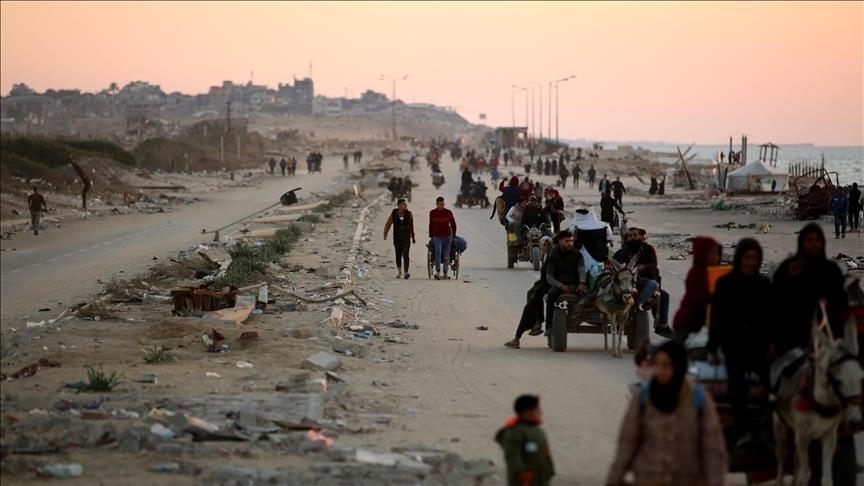
A ceasefire agreement took effect in Gaza on Jan. 19, halting Israel’s genocidal war, which has killed nearly 47,600 Palestinians, most of them women and children, and left the enclave in ruins, according to Anadolu.

The International Criminal Court issued arrest warrants in November last year for Israeli Prime Minister Benjamin Netanyahu and his former Defense Minister Yoav Gallant for war crimes and crimes against humanity in Gaza.

Israel also faces a genocide case at the International Court of Justice for its war on the enclave.

Continue reading
25 Centimeters of Snow Fall on Lebanon

Lebanon has been hit by a snowstorm and heavy rains, in the worst weather conditions in a decade.

Snow covered several villages and towns in mountainous areas of the western Beqaa region in eastern Lebanon, the state news agency NNA reported on Thursday.

With snow accumulating up to 25 centimeters, several towns in the Rachaya district became isolated, NNA said.

Heavy rainfall was also reported in Lebanon’s coastal areas.

Municipal authorities and the army have deployed snowplows and heavy machinery to reopen several roads that were blocked by the snowstorm.

The Lebanese Meteorological Service said the country is experiencing cloudy weather that is causing the temperature to drop below the seasonal averages.

Several other Middle Eastern countries, including Saudi Arabia, Jordan, Palestine, Syria, and Türkiye, are also experiencing severe weather conditions with heavy rains and snowfall, particularly in their mountainous areas according to Anadolu.

Continue reading
World Condemn Trump’s Plan Over Gaza

US President Donald Trump’s recent proposal to relocate Palestinians from Gaza and place the territory under long-term US control has sparked widespread international backlash.

Unveiled during a joint press conference with Israeli Prime Minister Benjamin Netanyahu, the plan envisions transforming Gaza into the “Riviera of the Middle East” by resettling Palestinians in neighboring countries like Jordan and Egypt.

While the proposal received support from Israel, the global response has been overwhelmingly negative, with strong condemnations from major powers, regional countries, and even US lawmakers.

Global powers reject forced relocation

Both Russia and China criticized the plan, highlighting the violation of international norms.

Kremlin spokesperson Dmitry Peskov reaffirmed Russia’s support for a two-state solution, while the Russian Foreign Ministry said: “Any populist comments are counter-productive and ramp up tensions.”

China condemned the forced displacement, emphasizing that “Palestinians governing Palestine” is fundamental for post-conflict stability.

European countries have also been vocal on the plan, expressing strong opposition.

German Foreign Minister Annalena Baerbock labeled the proposal a breach of international law, stressing that Gaza belongs to the Palestinians.

France reiterated its opposition to any forced displacement, calling it a serious violation of international law.

The UK, under Prime Minister Keir Starmer, supported Palestinian rights to return and rebuild, while Denmark said: “It doesn’t seem to be a realistic way forward.”

Reasserting Italy’s support for the two-state solution, the Italian foreign minister said nothing can be achieved without the Palestinians, noting: “It seems to me that it is a bit difficult (to implement the plan).”

Spain, Ireland, and Slovenia, having recognized Palestine in 2024, condemned the plan, calling it ignorant of Palestinian history and contradiction of the UN Security Council resolutions.

Belgium said forced displacement of populations constitutes “a grave breach of international humanitarian law” while Poland expressed support for a two-state solution.

Canada, where Trump put tariffs on hold last week, said its longstanding position on Gaza has not changed and is committed to achieving a two-state solution.

Relocation plan ‘unacceptable’

Turkish Foreign Minister Hakan Fidan condemned the plan as “unacceptable,” stressing that even considering such a proposal is wrong. The Turkish Defense Ministry declared its complete opposition to the displacement of Palestinians.

Palestinian President Mahmoud Abbas rejected the plan outright, stating peace cannot be attained without a Palestinian state.

Hamas group called it “hostile,” while Qatar, Egypt, and Saudi Arabia warned it would destabilize the region.

Iran also voiced firm opposition to the plan, and Iraq condemned the plan to displace Palestinians.

Although Latin American countries were largely silent, Brazil’s President Lula da Silva criticized the proposal as “incomprehensible,” questioning where displaced Palestinians would live.

Dissent within US

Despite originating in Washington, the plan faced criticism even from US lawmakers.

Democratic Senator Chris Van Hollen condemned it as “ethnic cleansing by another name.” Representative Rashida Tlaib, a Palestinian-American, declared: “Palestinians aren’t going anywhere.”

Even Republican figures like Senator Lindsey Graham found the proposal “problematic,” while Senator Tim Kaine labeled it “deranged.”

Trump’s Gaza relocation plan has united a broad spectrum of global opposition, transcending geopolitical divides.

While no country has openly expressed support for the plan, many countries have remained silent. Argentina, Japan, and India, the countries that sent representatives to Trump’s inauguration, have not made any statements on the issue.

Countries that want to maintain good relations with the new US administration have also remained silent. Latin American countries, where Trump has cracked down on immigration and drugs after taking the office, have so far kept mum.

Aside from Israel, the international community remains steadfast in rejecting forced displacement, advocating instead for a two-state solution as the only viable path to lasting peace in the region according to Anadolu.

Continue reading
Trump Goes Rogue

Donald Trump has gone rogue during the first days of his second residence in the White House. His executive decrees have upset US global relations and threaten US short, medium and long-term interests.

Trumps’ actions have unsettled this already tense region. His call 2.3 million Palestinians to be expelled from Gaza to Egypt and Jordan and for the US to take-over and develop the Strip as a tourist destination has been rejected by Gazans, Hamas which rules Gaza, the West Bank-based Palestinian Authority, Egypt, Jordan, Saudi Arabia, Qatar, the United Arab Emirates and the Arab League. They have rejected any attempt to displace Palestinians from their land and called on Trump to support “a just and comprehensive peace in the Middle East based on the two-state solution.” This is, of course, rejected by Israel which has colonised the West Bank and annexed East Jerusalem to pre-empt the emergence of a Palestinian state in this territory illegally occupied by Israel since 1967.

Trump’s administration has backed Israel’s January 30th ban on UNRWA, the UN agency caring for Palestinian refugees, which is meant to end its operations in East Jerusalem, the West Bank and Gaza. The UN Palestinian Rights Committee condemned the ban as a “direct violation of the General Assembly mandate [resolution 302 of December 1949] and the resolution [supporting UNRWA’s mandate] recently adopted by the General Assembly by an overwhelming majority.” The ban has also been condemned by Britain, Belgium, Ireland, Luxembourg, Malta, Norway, Slovenia and Spain. Belgium’s foreign ministry said the Israeli action “sets a disastrous precedent that deeply undermines the multilateral system and the United Nations itself.”

As soon as he took office, Trump ordered a 90-day halt to US foreign and military aid except for Israel (of course) and Egypt. Secretary of State Marco Rubio subsequently issued a waver allowing for “life-saving humanitarian assistance” programmes.

The US gives Israel $3.8 billion a year in military aid and Israel has received an additional $17.9 billion during its genocidal and devastating war on Gaza, according to Brown University’s Costs of War Report. The US has given Egypt $1.2 billion in military aid since the 1978 negotiations which led to the 1979 peace treaty with Israel.

His ignorant and destructive decree has frozen $95 million allocated mainly for Lebanon’s military as the country’s troops deploy in the south to secure Israel’s withdrawal under the fragile ceasefire between Hizbollah and Israel. This sum had previously been earmarked for Israel and Egypt, the Associated Press reported.

The non-governmental organisation managing Syria’s Al-Hol camp has said it will have to end operations without US funding. Controlled by US-sponsored Syrian Democratic Forces. Al-Hol houses more than 40,000 wives and children of Daesh fighters.

The freeze could negatively impact Jordan ($770 million in 2023) and Yemen ($35.9 million) which receive economic aid through the $95 million provided by the US Agency for International Development. The lion’s share of $14.4 billion has been allocated for Ukraine which is fighting the US-led Western war against Russia.

UN and other humanitarian agencies promptly responded to the freeze by ordering reductions in programmes to cut spending. UN Secretary General Antonio Guterres called for exemptions to “ensure the continued delivery of critical development and humanitarian activities for the most vulnerable communities around the world.” Committed to his “America First” policy, Trump cares little for such communities.

Trump has paused for 30-day his imposition of 25 per cent tariffs on imports from Canada and Mexico which have threatened to launch a North American trade war. Canadian Prime Minister Justin Trudeau said he would impose tariffs on $106.6 billion worth of US imports to his country. These include beer, wine, fresh fruits and vegetables, processed food, seafood, vehicles, dairy, and spare parts, crude and refined petroleum.

Trump justified his tariffs on Mexico by accusing government of being in league with drug cartels which smuggle drugs into the US, an allegation hotly denied by President Claudia Sheinbaum. She charged the Trump administration of “slander” and told the US to cut the illegal southward flow of guns arming the cartels. She asked her trade minister to respond with 25 per cent tariffs and non-tariff measures. the main goods Mexico exports to the US are computers, cars and vehicles, spare parts and accessories.

Trump justified announced tariffs by saying, “This was done through the International Emergency Economic Powers Act because of the major threat of illegal aliens [crossing into the US] and deadly drugs killing our citizens, including [the addictive drug] fentanyl.” 

During the pause, Trump can be expected to use tariff leverage to compel Canada and Mexico to capitulate to his demands on border security and other issues.

Beijing said it would lodge a complaint with the World Trade Organisation as Trump levied a blanket 10 per cent tariff on Chinese goods. Combined, China, Mexico and Canada accounted for more than 40 per cent of imports into the US last year.

He has also threatened tariffs on the European Union which he claims is taking advantage of the US. Trump stated, “They don’t take our cars, they don’t take our farm Products, they take almost nothing, everything from them.”

The Washington Post reported Trump’s tariffs could cost every US household $1,200 which could be ignored by the wealth and absorbed by the middle class while stressing the working class and driving the poor into debt.

Trump has not forgotten his determination to transform Canada into the 51st US state despite overwhelming Canadian rejection and to buy or occupy Greenland which belongs to Denmark. In Panama on his first trip abroad Secretary of State Marco Rubio said the US could take action to reassert control over the waterway if the Panamanian government does not exclude Chinese presence around the canal which connects the Caribbean Sea with the Pacific Ocean. The US considers the operations of canal, built by the US between 1904-1914 but ceded to Panama in 1999, a national security issue.

Trump’s ill considered transactional pronouncements and policies have rattled close allies and created global concern over the stability and reliability of the US as the world’s hyperpower.

Michael Jansen is a columnist in the Jordan Times.

Continue reading