Amos Harel: Israel Didn’t Defeat Hamas

Israeli military analyst Amos Harel has dismissed a “total victory” for Tel Aviv in the Gaza war, arguing that such assertions, promoted by supporters of Prime Minister Benjamin Netanyahu, are contrary to the ground reality.

Harel, a military affairs analyst for the Israeli newspaper Haaretz, in his write-up published on Friday, stated, “One has to be a blind follower who has shed all vestiges of doubt and criticism to believe that Israel actually defeated Hamas.”

“The organization sustained a tremendous military blow, but it certainly did not surrender,” he noted, adding that “that’s not consistent with Netanyahu’s declarations about the war’s goals, or with his promises in its course.”


US mediation efforts

Harel also touched on the role of the US in the region, highlighting that the administration of President Donald Trump is pushing for the full implementation of a multi-phase ceasefire and prisoner exchange agreement between Israel and Hamas. This contrasts with Netanyahu’s preference to focus solely on the initial phase.

The ceasefire, which began on Jan. 19, is set to last for 42 days in its first stage, with negotiations ongoing for subsequent phases under the mediation of Egypt, Qatar, and the US.

According to Harel, “The visit to the region by Steve Witkoff, US President Donald Trump’s special Mideast Envoy, attested to the mood of the administration.

“Washington views the first phase of the deal as a necessary point of transition to the second phase, which in itself is preparation for the bigger deal.

“Washington views the first phase of the deal as a necessary point of transition to the second phase, which in itself is preparation for the bigger deal: huge US-Saudi contracts accompanied by normalization between Riyadh and Jerusalem.”

He added that “Witkoff was here to ensure that Israel continues on the track laid out by Trump,” with key details expected to be discussed next week in a meeting between Trump and Netanyahu in Washington. This meeting, Harel suggested, holds significant weight as reported in Anadolu.


Challenges to Gaza deportation plans

Harel also addressed Trump’s controversial suggestion of relocating Palestinians from Gaza to neighboring countries, highlighting the practical difficulties in implementing such a proposal.

The idea is partly aimed at maintaining Netanyahu’s coalition with the far right. However, he noted that the chances of executing such a plan are slim.

“Washington’s bargaining power in the Middle East on emigration doesn’t resemble what it’s capable of achieving with its neighbors in Latin America,” said the analyst.

“Trump appears to be looking at Gaza like the real estate entrepreneur he used to be. To resettle the destroyed area, an evacuation-construction project is needed,” he explained.

Harel pointed out that while these proposals align with the long-standing aspirations of Israel’s right-wing to remove Palestinians from the equation, they are likely to face strong resistance.

“Such schemes will inevitably encounter Palestinian opposition, backed by Arab states. At this moment, it is difficult to imagine any Arab leader endorsing Trump’s relocation plan for Gaza,” he concluded.

On Jan. 25, Trump publicly proposed relocating Gaza’s Palestinian population to nearby countries like Egypt and Jordan. His suggestion has been widely rejected by several countries, including Jordan, Iraq, France, Germany, the Arab League, the Organization of Islamic Cooperation, and the UN.

Continue reading
Carter: A Mideast Idealist

Dr Khairi Janbek

The legacy of the late President Jimmy Carter in the Middle East can at best be described as mixed, notable achievements and setbacks.

The Camp David Accords remain his greatest foreign policy achievement in the region, with Egypt and Israel continuing to honor the peace treaty till this day. However, the 1978 Iranian Revolution, the fall of the Shah, the US embassy hostage crisis and the rise of the Islamic Republic of Iran, underscored the limits of his idealistic foreign policy approach.

While Carter’s emphasis on human rights was a notable shift from the more pragmatic or rather, realpolitik approach of his predecessors, it often clashed with the realities of the US strategic interests in the region. His inability to stop or reverse the Iranian Revolution, combined with his perceived weakness in handling the hostage crisis, significantly damaged his standing both domestically and internationally.

Despite these challenges, Carter’ presidency laid the groundwork for future US policies in the Middle East in terms of emphasis on peace, diplomacy and the need for strategic engagement. In fact, he articulated in January 1980 the Carter Doctrine, which stated that the US will use military force if necessary to defend its interests in the Arabian Gulf against Soviet aggression, which marked a significant shift in US foreign policy asserting a more active and interventionist role in the region.

When it comes to the question of human rights, despite concerns for abuses in countries like Saudi Arabia and Iraq, Carter found it necessary to balance human rights with strategic and economic interests, and he did receive criticism internationally and nationally for tolerating autocratic regimes, not to mention of course in this context, his support for the Shah of Iran despite his repressive policies and human rights abuses.

Still, in the final analysis, with successes and failures, Carter’s approach to the Middle East was foundational in shaping US policy for the years that followed, particularly in the realms of contradictory policies of human rights, and the balance of power in the Gulf region.

Dr Khairi Janbek is a Jordanian commentator currently based in Paris.

Continue reading
Netanyahu: Ideologue, Pragmatist or a Proxy?

Dr Khairi Janbek

PARIS – When talking about the Israeli prime minister Netanyahu, we must not miss the point that in effect he is a politician, thus, he is both an ideologue and a pragmatist. He is an ideologue when he feels he can go all the way with brinkmanship and get away with it, and he is a pragmatist, when realizes that he should stop and talk. However, by and large that usually depends on the position of the USA primarily, and on the regional situation in the second degree.

He was a pragmatist, when he originally gave his implicit support to Hamas as a guardian of peace in Gaza, and the guarantor of border security with Israel, and he was an ideologue when he demanded that the PNA accepts that Israel is a Jewish state, and accept moreover, that any form of a Palestinian state ought to be demilitarized and just a guardian of the border with Israel.

https://twitter.com/LegitTargets/status/1847287962024747060

He was an ideologue when avenging the 7 October events and a pragmatist in letting the hostage crisis drag on. He chose to head a government in which he can present himself as the only one whom the world can talk to when compared to his extremist colleagues, through his masque of pragmatism, rather than go into a government with partners whom will make him look as the only ideologue among pragmatists.

Again, this Netanyahu dualism, be that the ideologue who has the freedom to do as he sees fit, or the pragmatist who gets to know his boundaries one cannot say is clear, at least for the moment. For all intents and purposes, the red apple of the so-called Abrahamic Accord, Saudi Arabia, remains illusive, as the Saudis have indicted in no uncertain terms, that any prospects of normalization are conditional on at least, reviving the two-state solution. But at the same time, Netanyahu still has working relationships with the UAE and Bahrain in the Gulf as well as Qatar.

As for the older cold peace partners, Jordan and Egypt, Netanyahu is content that at least the situation is stable as it could be.

Now, will Netanyahu be able to pull a rabbit out of the hat when it comes to Trump, or does he really feel that he can take Trump for granted? The current thought in the Middle East fluctuates between those two guesses. But in reality with a paradigm shift, perhaps we can see things clearer. For a start, we are currently living in the age of separation of economics and business from the world of politics, also the separation of interests from principled positions. This age is not created by either Netanyahu or Trump but it certainly suits their relationship fine.

One thing for certain, Netanyahu can rely on Trump’s support as an intransigent ideologue, for Israel is undoubtedly the advanced military post of the USA, but also as a pragmatist, he has to understand to what extent he can be a tool of US foreign interests especially that Trump is very much fond of the concept of proxies and does not like infringements on his business deals.

Dr Khairi Janbek is a Jordanian historian based in Paris and the above opinion is written exclusively for crossfirearabia.com. 

Continue reading
Testing Iran’s Foreign Moves

By Dr Khairi Janbek

Iranian foreign policy is a mixture of historical, ideological and geopolitical factors. As a major regional power in the Middle East, its foreign policy has often been seen as pragmatic; but practicality with an ideological component.

The country’s policy decisions are influenced by its revolutionary origins in competition with other regional powers. In reality, Iran cannot be understood outside the consideration of the legacy of the 1979 revolution, which highlighted the centrality of the concept of Velayet e Faqih; the Guardianship of the Jurist on Iran’s political and and ideological stance on global affairs.

Iran adopted a foreign policy that combined ideology with the desire for regional leadership often expressed as the defender of oppressed Muslims, the power behind the spread of Islamic values and opposition to western imperialism, especially that of the USA.

The objective has been ever since to focus on expanding and maintaining influence in the Middle East, not necessarily by creating a ‘Shiite Crescent’, but rather by creating a Persian-dominated crescent through fostering alliances with groups in Syria, Iraq, Lebanon, Yemen, and Hamas in Gaza.

This crescent has been aimed primarily as being an arch to exclude, in the first degree, Iran’s biggest Islamic rival Saudi Arabia with its close relations with the USA, from its sphere of influence.

At the same time, Iran’s nuclear ambition have put it in direct conflict with the USA and western powers. However this confrontation with the USA has habitually fluctuated between agreement, as during the Obama administration, and confrontation during the first Trump administration, then the ambiguity of the current Biden administration.

However, currently, the country faces the delicate balance of managing its relations with the western powers as well as regional actors, while seeking to maintain good relations with Russia and China.

Currently, with the ongoing tensions with Israel on one side, and melting of ice with Saudi Arabia, with the possibility of further serious confrontation with the Trump administration, Iranian foreign policy and its ability to continue to be able to navigate the preservation of its interests, will most certainly be put to the test.

Dr Khairi Janbek is a Jordanian historian based in Paris and the above opinion is written exclusively for crossfirearabia.com. 

Continue reading
‘Israel Will Not be Able to Defeat Hezbollah’ – Military Expert

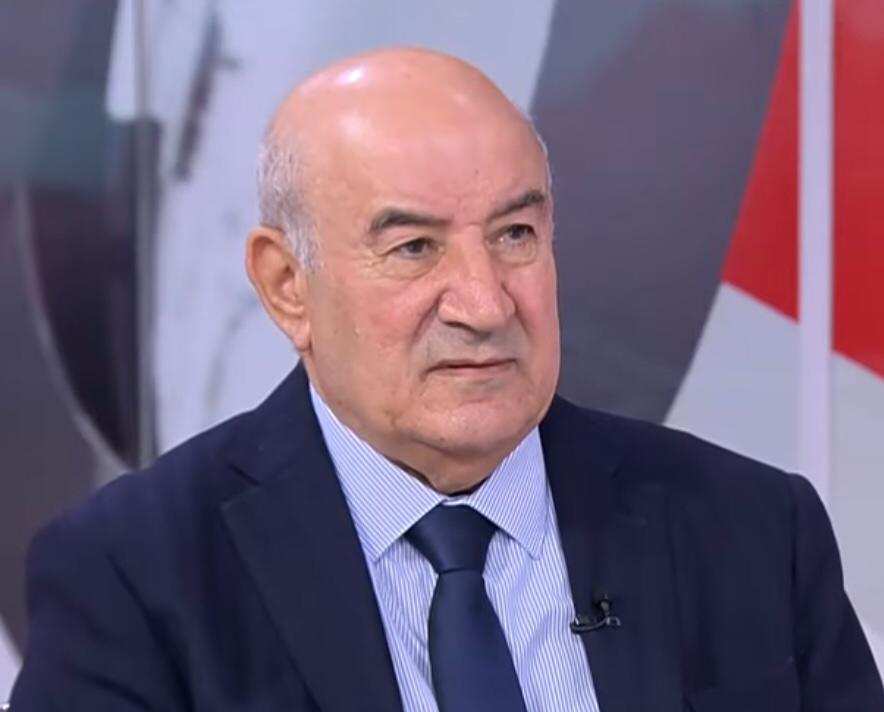
Israel will not succeed in achieving the goals it set in Lebanon and will not be able to defeat Hezbollah said military expert Retired Maj-Gen Mamoun Abu Nawar.

He pointed out Israel is still unable to cross the border into southern Lebanon due to the heavy losses and after seven failed attempts to do so by its soldiers.

He stressed Israel does not have the ability to defeat Hezbollah despite the losses and assassinations it carried out through its air strikes on southern Lebanon and Beirut’s southern district in the last two weeks.

Abu Nawar added to Jordan 24 the Israeli occupation army is trying to get out of the Gaza impasse and its inability to achieve the goals it announced there by opening the Lebanese front and is trying to cross the border and establish a foothold there to start extensive military operations later.

But he pointed out it is failing to do so after the heavy losses inflicted on its invading soldiers.

Abu Nawar explained opening a third front with Iran will not be easy and Israel does not have the ability to confront the strikes and ballistic and hypersonic missiles, which are considered among Iran’s most powerful weapons.

Abu Nawar pointed out that the air strike on Iran requires the approval of four countries for the aircraft to cross, namely Jordan, Saudi Arabia, Iraq and Syria. He noted Jordan has already refused for its airspace to be used by both parties and the other countries will not allow the use of their airspace because they will be partners in the operation and this is not easy either.

Abu Nawar continued that there are also technical, technological and logistical reasons for Israel’s inability to strike Iran by air, including because the lack of aircrafts available to refuel after they were taken out of service; and in this case it needs the intervention of the USA to supply it with them or use its military bases in the Middle East, and this is not possible at the present time.

Continue reading