Israel is Exporting its “Crises” to Syria – Experts

Syrian political analysts are warning that Israel is seeking to export its internal crises to Syria, following its military failure in the Al-Aqsa Flood battle in Gaza. They add Tel Aviv wants to fuel regional tensions to divert attention from its worsening internal crisis.

Weakening Syria to unite the Israelis

Member of the Syrian National Dialogue Conference Abdul Nasser Hawshan believes the recent Israeli escalation “aims to prevent the establishment of a strong Syrian state and destabilize the region,” adding the Israeli occupation government is trying to unite the Israelis behind it to escape the increasing internal and international pressures it is facing.

https://twitter.com/Dylanjusti79850/status/1895386169812361434

Hawshan told Quds Press, the recent National Dialogue Conference held in in country witnessed a national consensus on the unity and independence of Syria, and the rejected partition projects as espoused by the Syrian Democratic Forces (SDF). He described such a project as a “separatist” one that “serves the Israeli agenda.”

He also pointed out that the Israeli incursions into southern Syria came “in response to this popular rejection of foreign plans.”

Druze position and rejection of Israeli intervention

Regarding the Druze community’s position in these developments, Hawshan explained that “some Druze leaders have adopted a discourse in line with the Israeli proposal,” but he stressed they “do not represent the Druze sect in general, which rejects any foreign intervention in Syrian affairs.”

He also denied the possibility of establishing the so-called Daoud Crossing, which links Israel to the areas under the control of the SDF, stressing “this project will not succeed under any circumstances.”

Irksome Turkey-Israel ties over the SDF

Political analyst Adel Hanif Daoud believes Israel is trying to exploit regional tensions to strengthen its position as an effective force, despite its escalating political and military crisis.

But Daoud warned that “any Israeli attempt to link the Druze and the SDF through the Tanf crossing could lead to an inevitable military confrontation with Turkey.” He noted Ankara considers the “Syrian Democratic Forces” a direct threat to its territorial integrity, and may resort to large-scale military intervention even if that leads to an international conflict.

He added the Druze leadership is divided between those who support Israel and those who are loyal to Damascus, but he expected that Druze leader Kamal Jumblatt would intervene to pressure the Druze community to reject the Israeli project.

As for the Turkish position, Daoud indicated that Ankara, as a member of NATO, has many political tools that it can use before resorting to the military option.

Military escalation in southern Syria

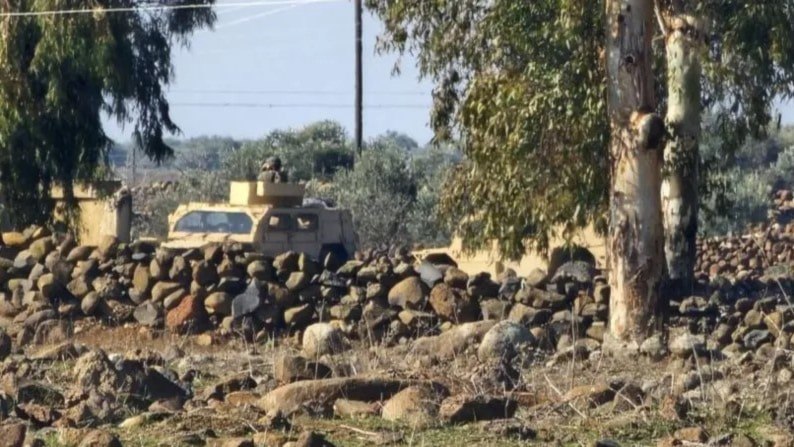
These warnings come in light of the escalation of Israeli military violations in southern Syria, as the occupation forces have intensified their airstrikes on sites in the Damascus countryside and Quneitra in recent weeks, targeting military and civilian infrastructure. Unprecedented Israeli military movements were also monitored along the occupied Golan Heights, amid reports of limited ground incursions.

In this context, Israeli Prime Minister Benjamin Netanyahu escalated his rhetoric, stressing that his army would not allow the Syrian army or its allied forces to enter southern Syria, stressing Tel Aviv would not back down from its control of Mount Hermon, considering it a “strategic part of Israel’s national security.”

Damascus rejects Israeli aggression

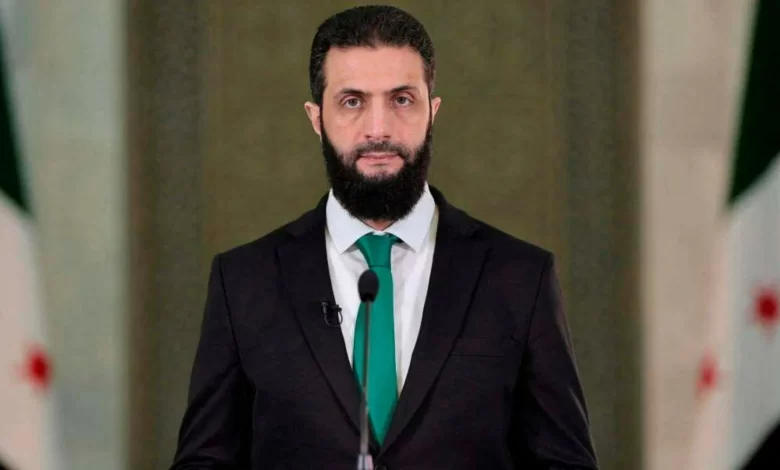
For his part, Syrian President Ahmed al-Sharaa stressed his categorical rejection of these attacks, considering them a threat to regional security and a continuation of the policies of aggression against Syria’s sovereignty.

In light of this escalation, Syria continues to defend its sovereignty and rights, while calls are increasing for the international community to act to stop Israeli violations, amid growing complications that threaten the stability of the entire region.
Continue reading
‘You Have No Business Here’ Syrians Tell Netanyahu

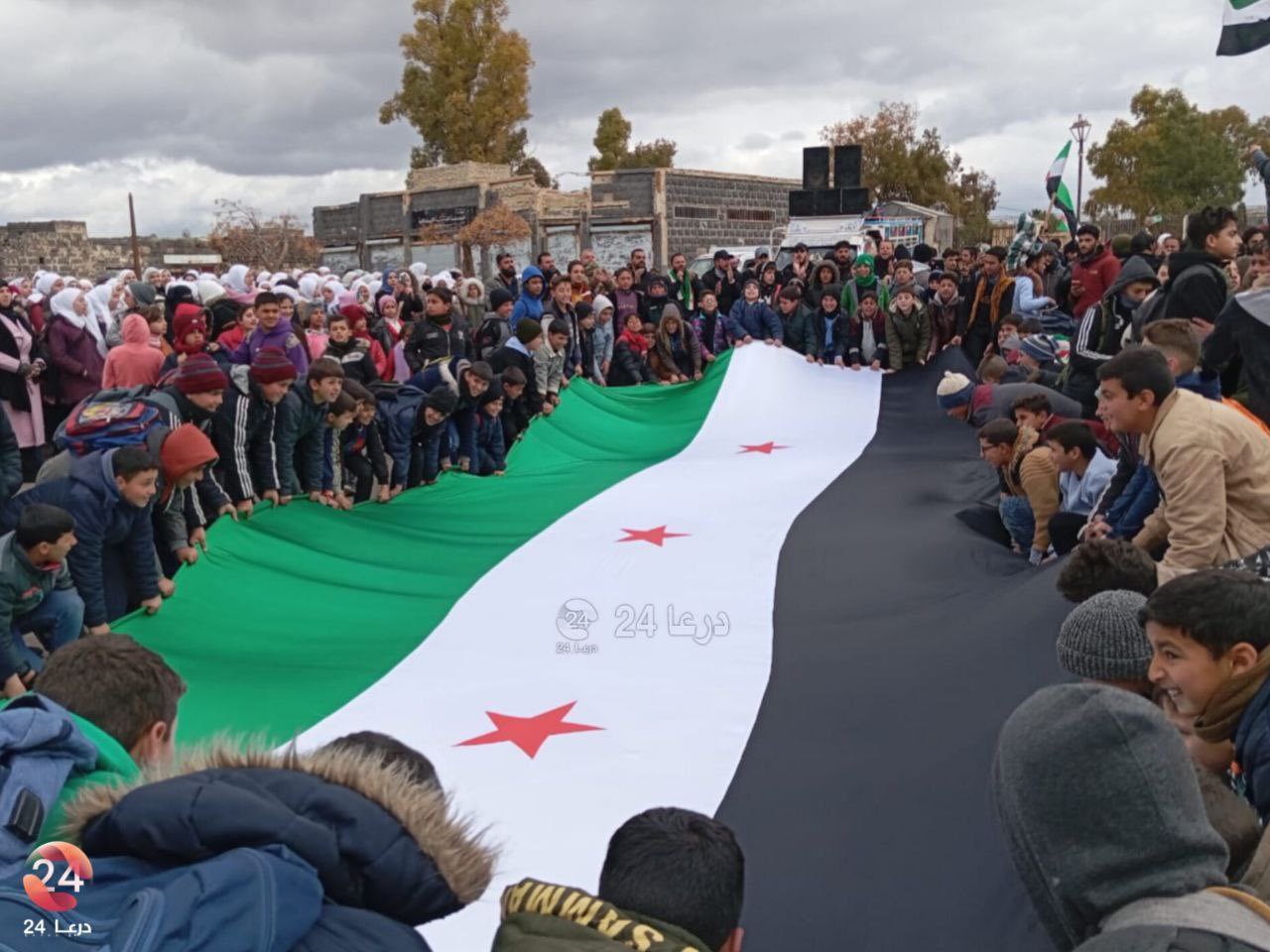
Hundreds of Syrians demonstrated in the southern Daraa province on Tuesday against Israeli Prime Minister Benjamin Netanyahu’s call for the demilitarization of southern Syria.

Protesters gathered in the March 18 Square in Daraa city, calling Netanyahu’s comments a “blatant interference” in Syria’s internal affairs, according to an Anadolu correspondent.

https://twitter.com/MiddleEastEye/status/1894008504333271275

Israeli drones were seen flying over the area during the protest.

On Sunday, Netanyahu called for the complete demilitarization of southern Syria in the provinces of Quneitra, Daraa and Suweyda from the forces of the new Syrian army.

“We will not tolerate any threat to the Druze community in southern Syria,” he claimed, saying that the Israeli army will stay in Syria’s buffer zone and the Syrian Hermon Mount “Jabal al-Sheikh” for “an unlimited period of time.”

https://twitter.com/3Amilsa/status/1894172313295204509

After the fall of the Bashar al-Assad regime in December, Israel expanded its occupation of the Syrian Golan Heights by seizing the demilitarized buffer zone, a move that violated the 1974 disengagement agreement with Syria.

Israel’s recent military advances in the Golan Heights, which it has occupied since 1967, have drawn condemnation from the United Nations and several Arab nations.

Continue reading
Sharaa Says No to Syrian Normalization With Israel

Syrian President Ahmed Al-Sharaa ruled out any near-term normalization deal with Israel, citing its continued occupation of the Golan Heights.

In an interview with The Economist, Al-Sharaa stressed that Syria seeks peaceful relations with all countries. However, he noted that Israel’s presence in the region remains a major obstacle. “There is great sensitivity regarding the Israeli matter, especially after the big wars and their occupation of the Golan since 1967,” he said. Al-Sharaa made no mention of Israel’s genocide in Gaza.

Ahmed Al-Sharaa also addressed US and Israeli military activities in Syria. He reaffirmed Syria’s commitment to the 1974 disengagement agreement with the occupation state, mediated by the UN. He called on Israeli forces to withdraw to pre-advancement positions to allow the UN peacekeeping force (UNDOF) to operate in the buffer zone.

Regarding US troops in Syria, Al-Sharaa asserted that any foreign military presence must be based on official agreements. “We are reassessing the Russian military presence, and we might reach an agreement or not. But any presence should have the host state’s approval,” he explained.

The Syrian president reiterated that international pressure is mounting against Israel’s recent military actions. “There is near-unanimous agreement that this advancement is not right,” he said.

While Al-Sharaa did not rule out future discussions, he emphasized that Syria is still prioritizing internal recovery. “We entered Damascus only two months ago, and there are many priorities ahead of us. It is too early to discuss such matters,” he concluded according to the Quds News Network.

Continue reading
Calls to Displace Palestinians is a New Battle For Jordan

By Samih Maaitah

As Jordan has only just recovered from the aggression on Gaza and has seen some relief along its northern borders, the issue of displacement has resurfaced once again. This time, it arises either from Gaza, exploiting the humanitarian and political catastrophe it faces, or from the occupied West Bank, where Netanyahu’s most right-wing government continues to escalate security and military tensions.

From the beginning of the aggression on Gaza, Jordan understood that the goal was to displace its people. Alongside its Egyptian brothers and other Arab and international parties, Jordan worked to confront this scheme. Jordan is fully aware that displacement is not just about relocating Gaza’s residents to another country; it is about dismantling the Palestinian cause and undermining its major pillars. Amman is cognizant that Israel seeks a Palestine without Palestinians and, through displacement, it seeks to destroy the prospects for a Palestinian state and the right of return.

Jordan, which has already received millions of Palestinians and millions of others due to the region’s endless crises and wars, has paid a heavy price in terms of its limited resources and political stability. Each wave of migration—most recently from Syria—has come at a significant cost. Jordan is aware that accepting any number of people from Gaza or elsewhere is no longer acceptable or tolerable, especially given the political implications for Jordan’s demographic composition, its national identity, and the Palestinian national identity.

Logic dictates that after all these wars and acts of aggression, the world should seek to resolve the Palestinian issue by granting Palestinians their rights on their national soil. It should not seek solutions to address Israel’s so-called security concerns by emptying Palestinian land of its people and displacing them to other countries.

Jordanians will not accept any solution at the expense of their national identity, homeland, and state. Those who truly seek peace must understand that the path to peace lies in granting Palestinians their rights on their land, not through displacement or the illusion of peace based on a scheme that can only be described as a liquidation of the Palestinian cause.

The writer is a columnist in the Jordan Times

Continue reading
A Gaza War Reader

By Dr. Tariq Sami Khoury

Despite the Gaza truce announcement, the question everyone is asking: Did this war end in victory or defeat?

Did the Zionist entity achieve its strategic goals, or did the Palestinian resistance factions impose a new equation on the ground? The mass destruction and great human losses open the way for a deeper analysis of the situation from multiple angles.

Zionist entity…Goals successes or victory illusions?

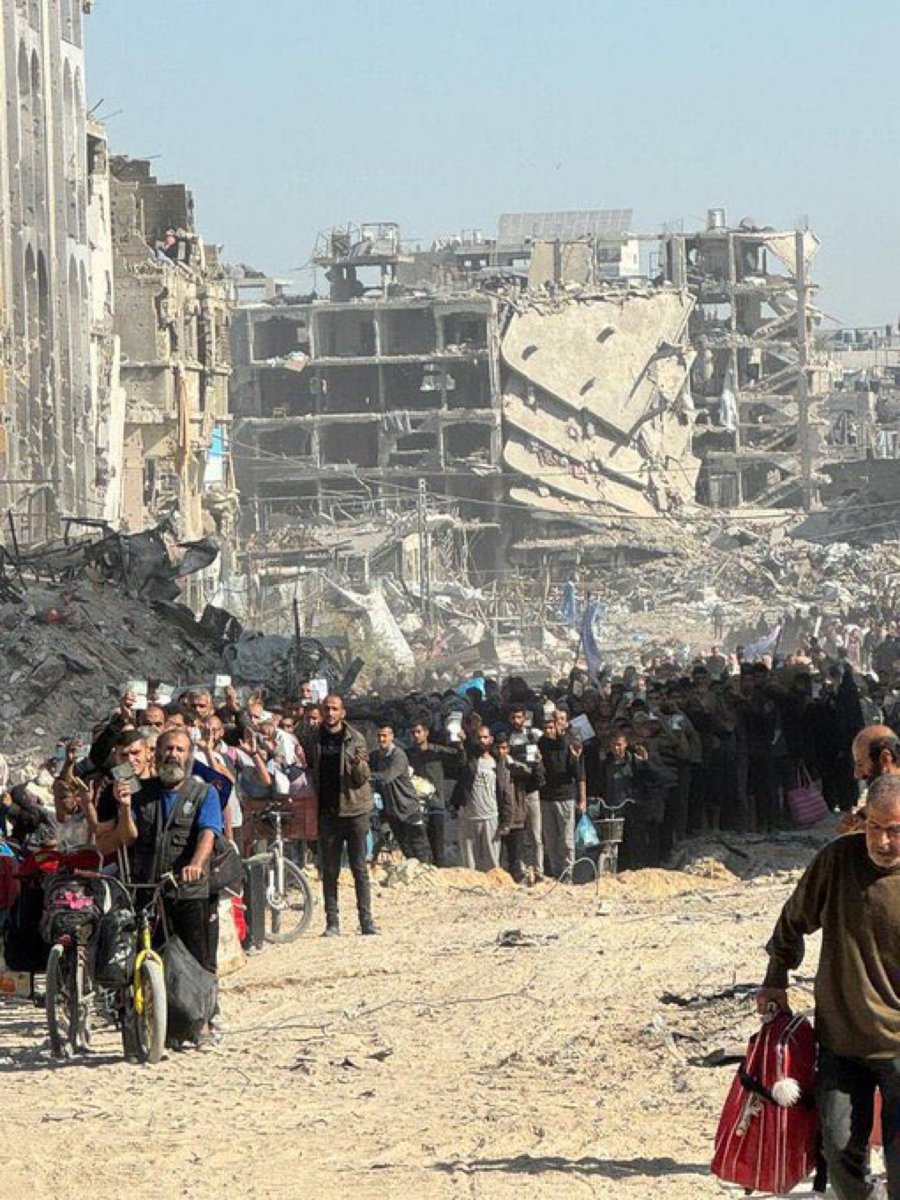
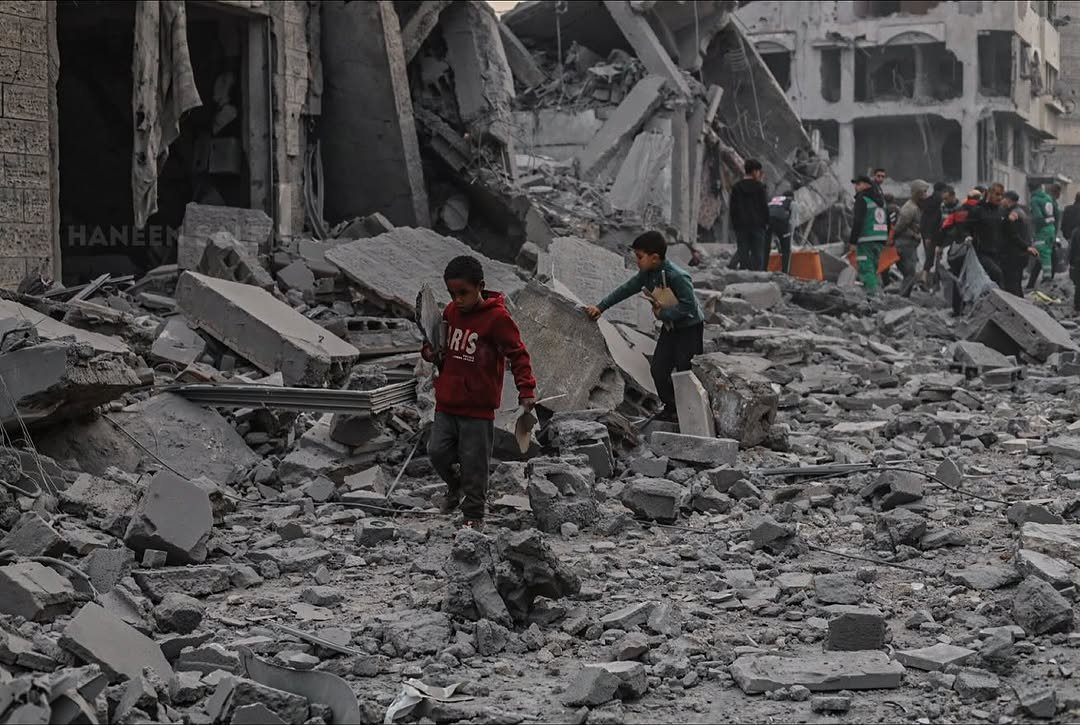
Israel launched its aggression on Gaza with unprecedented brutality, resulting in the near-total destruction of the Strip’s infrastructure, and the deaths of more than 250,000 people between those killed and wounded with the displacement of hundreds of thousands of residents.

Also the Israeli aggression extended to southern Lebanon and Syria, whilst targeting Yemen and Iran in clear attempts to expand the scope of the confrontation.

But did the Zionist entity achieve its goals?

1) Eliminating the resistance: Despite all attempts at genocide and continuous bombing, the Israeli army was unable to end the resistance or dismantle its infrastructure. The resistance proved its ability to continue to confront, and to carry out qualitative military operations till the last minute.

2) Recovering Its prisoners: Israel did not succeed to recover all its prisoners. In the end it was forced to enter into negotiations with the resistance under their own terms, which showed Israel was unable to impose its will by military force alone.

3) No deterrence: Instead of imposing a new equation to deter the resistance, Israel faced continuous missile strikes that reached deep into its territories and imposed a new and unprecedented reality on the Israeli internal front and unbearable political and security pressure on the Zionist leadership.

Legendary  Palestinian resistance…

Despite the Israel ferocity and the intense destruction, the Palestinian resistance emerged strong and cohesive. The battle it fought was not only for defense, but to establish a new equation in the conflict, as it was able to:

1) Survive despite the bombardment: Israel was unable to break the resistance will or push its fighters to surrender and remained able to respond and maneuver till the last moment, which shows the failure of the Zionist plan to crush it.

2) Imposing negotiating equations: The resistance was able to impose itself as a key party in any future solution, and succeeded in confirming that the prisoners are not just a pressure card, but a negotiating element that changes the equation.

3) Maintaining morale: Despite Gaza’s humanitarian catastrophe, the Palestinian people came out to celebrate the truce, in scenes that reflect their steadfastness and ability to overcome hardships. That is a psychological defeat for the Zionist entity.

Regional and international dimension… Exhaustion or victory?

Israel expanded the scope of its aggression to Lebanon, Syria, Yemen and even Iran to attempt to weaken any future threats. But this did not lead to decisive results. Rather it opened up several fronts without achieving any strategic gains.

1) Northern front (Lebanon and Syria): Despite its continuous bombing, Israel was not able to stop the force of the axis of resistance, but faced more threats leading to the exhaustion of its forces.

2) Yemeni front: The air strikes on the country failed to stop Yemen from participating in the conflict equation by targeting the ships in the Red Sea going to the Israeli Port of Eilat, and which added a new strategic dimension.

3) Iranian Front: The Zionist strikes did not deter Iran or stop its support for the axis of resistance, but strengthened its position whilst prompting it to escalate its support for the Palestinian resistance.

Truce.. Rest bite and an opportunity?

With the ceasefire announcement, it can be said the resistance emerged victorious through its ability to withstand and maintain its position to influence the future. In contrast, while the Zionist entity may have achieved some of its field goals, it failed to draw a decisive victory and end of the resistance.

Conclusion.. Victory and defeat

The battle was not equal in terms of military strength, but victory is not only measured by the ability to destroy; it is by steadfastness and ability to continue. Israel did not achieve a decisive victory, but fought a long war of attrition, while the Palestinian resistance emerged more solid and able to impose a new reality in the regional equation.

In the final analysis, the fact remains that liberating the land and restoring rights can only be achieved through continuous resistance, and that every Zionist attempt to eliminate the Palestinian people will be met with a will that does not know surrender. Thus, Palestine remains the compass of the free.

The author is a Jordanian writer and contributed this piece in Arabic for the JO24 website.

Continue reading