ESCWA: War Affects 5 Million in Arab States

ESCWA: Conflict Could Push 5 Million more People into Food Insecurity across Arab Countries

A 20% increase in global food prices could push an additional 5 million people into food insecurity across Arab middle- and low-income countries, the United Nations Economic and Social Commission for Western Asia (ESCWA) warns in a new policy brief released Wednesday 2 April, 2026. The report underscores that this risk is immediate and growing, particularly for fragile and conflict-affected countries with limited fiscal space and high dependence on food imports.
 
The brief, titled “Conflict and its shockwaves: escalating impacts and risks for energy, water and food systems in the Arab region”, cautions that the escalating conflict in the region is triggering severe and interconnected shocks to energy, water and food systems, with potentially devastating consequences for human security and economic stability.
 
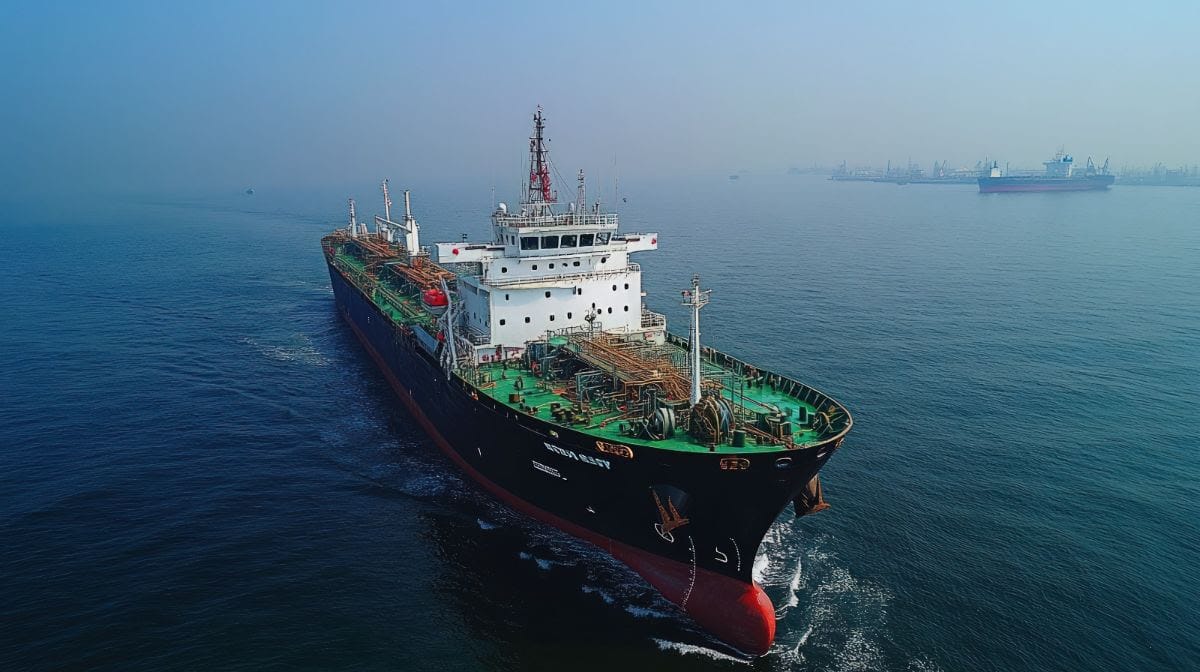
It highlights how disruptions to energy trade have been the most immediate macroeconomic shock. Oil markets are under acute stress, with Gulf hydrocarbon exports falling by 75 to 90% since the start of the war and oil prices surging above $112 per barrel due to the near-closure of the Strait of Hormuz. These disruptions are driving inflation, widening fiscal deficits, and sharply increasing transport and insurance costs across the region.
 
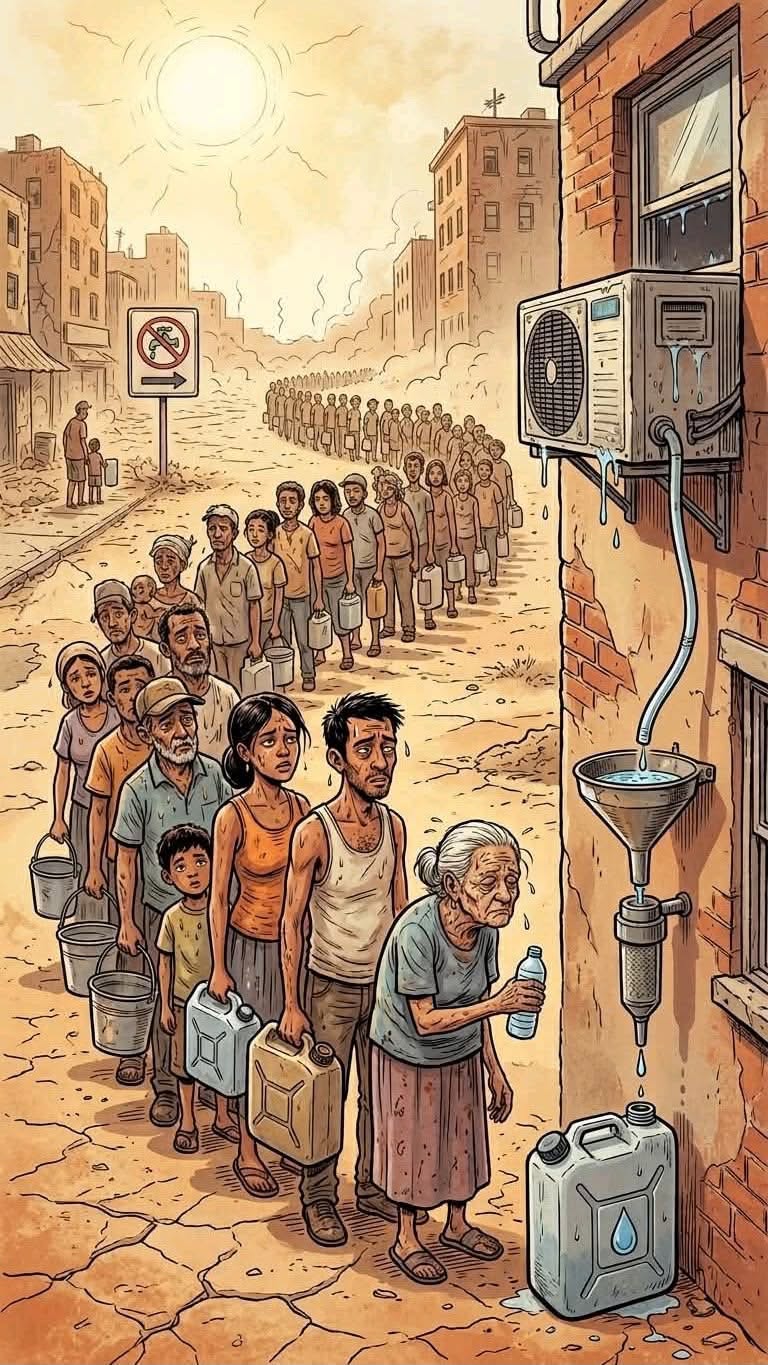
Water security risks are equally alarming. The brief notes that nearly 40 million people in Gulf Cooperation Council (GCC) countries depend on desalinated water drawn from the Gulf, making them highly vulnerable to any damage to energy or desalination infrastructure, as well as to marine pollution caused by the conflict. Any prolonged disruption could rapidly escalate into a humanitarian crisis, given  limited household-level  emergency water storage.
 
“These overwhelming figures entail urgent and coordinated regional action to safeguard critical supply chains,” urged ESCWA Acting Executive Secretary Mourad Wahba. “Such actions include deploying early warning systems, ensuring regional storage of strategic reserves, diversifying trade corridors, and accelerating investment in resilient energy, water and food systems.”
 
Food systems are already feeling the strain. The Arab region imports most of its cereals, and reserves remain limited, covering just over three months of consumption in recent years. Rising fuel prices, disrupted shipping routes and higher fertilizer costs are expected to further increase food prices and production costs, disproportionately affecting low-income households and vulnerable groups.
 
“Without swift intervention, the compounding effects of conflict could deepen poverty, fuel social unrest in fragile countries and reverse progress towards sustainable development across the Arab region,” Wahba added.
 
The brief is the second in a series of studies issued by ESCWA on the shockwaves of the conflict, the first having estimated that Arab economic output would be cut by $150 billion in one month.

One of five United Nations regional commissions, ESCWA supports inclusive and sustainable economic and social development in Arab States and works on enhancing regional integration.

Continue reading
UN Condemns US/Israel Attacks on Iran

UN Secretary-General António Guterres and the heads of UN agencies have condemned Saturday’s joint Israeli and US attacks on Iran and the Iranian retaliatory strikes on Israel and the Gulf Regions.

The attack on Iran reportedly targeted military sites as well as the leadership of the Iranian regime. Explosions were heard in Israel and Gulf countries after Iran launched a wave of drones and missiles.

Mr. Guterres declared that the military escalation in the region undermines international peace and security, and recalled that all Member States must “respect their obligations under international law, including the Charter of the United Nations,” which prohibits “the threat of the use of force against the territorial integrity or political independence of any state, or in any other manner inconsistent with the Purposes of the United Nations.”

 The UN Chief called for an immediate cessation of hostilities and de-escalation and warned that a failure to do so risks a wider regional conflict with grave consequences for civilians and regional stability. 

Risk of ‘destruction on an unimaginable scale’

Senior officials added their own responses on Saturday morning: Volker Türk, the High Commissioner for Human Rights said that bombs and missiles are not the way to resolve differences but “only result in death, destruction and human misery.” Civilians, he noted, “end up paying the ultimate price.”

Mr. Türk called for all parties to return to negotiations in order to avoid a wider conflict that would mean further civilian deaths and “destruction on a potentially unimaginable scale, not just in Iran but across the Middle East region.”

World Health Organization (WHO) Director-General Tedros Adhanom Ghebreyesus said in a statement that he was deeply troubled by the situation and urged leaders to “choose the challenging path of dialogue over the senseless route of destruction.” 

Emergency Security Council meeting scheduled

Security Council meeting to discuss the attacks has been called by French President Emmanuel Macron. The meeting is scheduled for 4PM Eastern Time on Saturday.

Follow the meeting live on UN News and on UN WebTV

Reactions from across the UN system

  • António Guterres, UN Secretary-General“I condemn today’s military escalation in the Middle East. The use of force by the United States & Israel against Iran, and the subsequent retaliation by Iran across the region, undermine international peace & security.”
  • Tedros Ghebreyesus, Director-General, World Health Organization (WHO)“I am deeply concerned about the current situation in the Middle East. My heart is with the civilians caught in the crossfire.”
  • Volker Türk, High Commissioner of Human Rights“As always, in any armed conflict, it is civilians who end up paying the ultimate price.”
  • Annalena Baerbock, President of the General Assembly“The UN Charter is clear: all Member States must settle their international disputes by peaceful means in such a manner that international peace and security, and justice, are not endangered.”
  • International Atomic Energy Agency“The IAEA is closely monitoring developments in the Middle East, and urges restraint to avoid any nuclear safety risks to people in the region.” – UN News

Continue reading
Albanese: ‘I Will Not Resign’

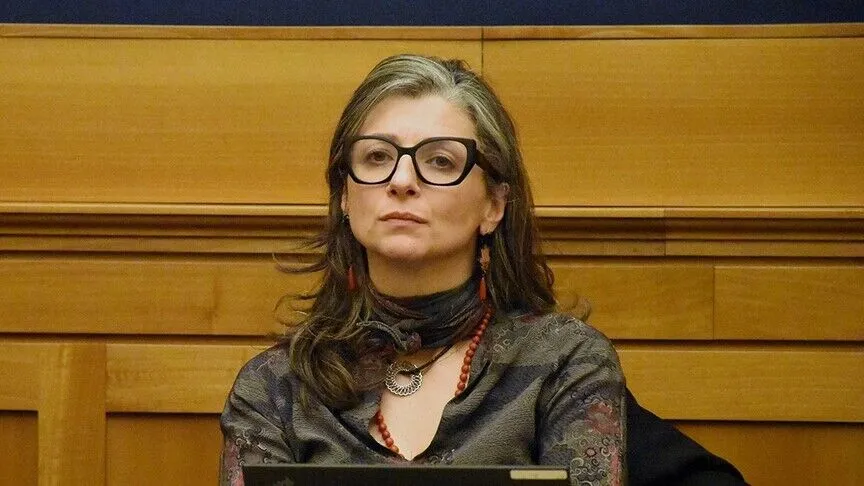
UN Special Rapporteur Francesca Albanese rejected calls for her resignation after French Foreign Minister Jean-Noël Barrot urged her to step down over her unwavering denunciation of Israel’s alleged war crimes.

She described the criticism as a smear campaign linked to her stance and affirmed that she will continue advocating for Palestinian rights despite mounting pressure.

Continue reading
‘Creeping Colonization’ – An Israeli Blueprint

By Najla M. Shahwan

The Israeli government has initiated a significant expansion of settlements in the occupied West Bank and East Jerusalem , and while 2025 was a year of settlement expansion, 2026 is intended to be a year of “action on the ground” focusing on accelerating construction, retroactively legalizing outposts, and deepening control in strategically sensitive areas.

New construction projects, such as bypass roads and barriers, are actively slicing through the West Bank, creating disconnected “islands” of Palestinian areas and facilitating the expansion of settlements.

This strategy, heavily driven by Israeli far-right coalition members, aims to establish, legalize, and expand numerous settlements and outposts, effectively creating “de facto annexation”.

On his part, Israeli Finance Minister Bezalel Smotrich announced a plan to allocate 2.7 billion shekels in the 2026 state budget to establish 17 new colonies in the West Bank over the next five years.

Plans for 22 new settlements in the West Bank were approved in early 2026, building upon a record number of approvals in 2025, which totaled 41 new settlements.

Israel has moved to start construction on the contentious E1 project, with a tender for 3,401 homes posted in late 2025/ early 2026.

This project aims to connect Maale Adumim settlement with East Jerusalem, which analysts warn will divide the West Bank in two and block the contiguity of a future Palestinian state.

Plans are also advancing for a major new 9,000-unit settlement project in East Jerusalem, at the site of the former Atarot/ Qalandiya airport.

Besides, a new settlement named Mishmar Yehuda (or Givat Adumim) was recently approved, located near Kedar and Ma’ale Adumim.

Reports from May 2025 and January 2026 indicate a surge in the legalization of previously unauthorized settler outposts, transforming them into permanent, legal settlements under Israeli law.

Following the repeal of the 2005 Disengagement Law, plans are underway to rebuild and expand settlements in the northern West Bank, such as Homesh and Sa-Nur.

Settlement activity is heavily concentrated in the East Jerusalem area, the northern West Bank, and the Jordan Valley to sever Palestinian territorial continuity.

Settlement expansion has been accompanied by increased settler violence and attacks, with over 1,800 incidents documented in 2025, according to the UN.

Settlers have been involved in the killings of Palestinians, including children, and have caused thousands of injuries through physical assaults, shootings, and arson.

In the first weeks of 2026, the UN Office for the Coordination of Humanitarian Affairs (OCHA) recorded at least 55 settler attacks causing injury or property damage and injuring 30 Palestinians. These attacks, often targeted water systems and schools, have directly led to the displacement of over 100 Palestinian Bedouin and herding households.

In the Jericho area community of Ras ‘Ein al ‘Auja, at least 77 households began dismantling their homes following intensified nighttime settler attacks and threats.

Settler attacks have completely displaced 29 Palestinian communities since October 2023, more than one a month on average, UN data showed.

Attacks frequently target Palestinian property, including the burning of homes, destruction of vehicles , poisoning water sources , steeling livestock , devastating agricultural livelihoods and uprooting or chain sawing of olive trees.

Settler violence is a key driver of forced displacement, creating a coercive environment that has forced dozens of Palestinian communities to leave their homes.

Since October 7, 2023, thousands of Palestinians have been displaced due to settler attacks.

The Office of the United Nations High Commissioner for Human Rights (OHCHR) and various UN bodies have reported that the distinction between settler violence and state violence has become increasingly blurred, with settlers wearing uniforms and acting alongside or as part of the Israeli security forces.

The line between settler and state violence has blurred “to a vanishing point,” according to a 2025 UN report.

This is attributed to the involvement of settlers in official “settlement defense squads” and “regional defense battalions,” which are part of the Israeli army’s structure.

The UN has noted a high level of impunity for perpetrators, with very few investigations into settler attacks resulting in convictions.

The European Union, various international bodies, various nations, including the UK, Canada, and Germany, have urged Israel to halt these activities, citing that the settlements are obstacles to peace , illegal under international law and undermine the possibility of a two-state solution.

The UN human rights office has repeatedly called on Israeli authorities to protect Palestinians from these attacks, end the cycle of violence, and hold perpetrators accountable.

However as of January 2026, reports indicate that Israel is disregarding all condemnations and warnings and accelerating its actions in the occupied West Bank, shifting from a “slow creep” of control to a rapid expansion of settlements and infrastructure, which observers characterize as de facto annexation.

This, combined with increased settler violence and military actions, is profoundly altering the landscape of the West Bank.

This ongoing process, which was often referred to as “creeping annexation’’, and now some analysts call it “running annexation’’ aims to permanently incorporate the West Bank into Israel by creating irreversible, on-the-ground facts.

Najla M Shahwan contributed this article to the Jordan Times

Continue reading
Israel’s ‘New Battle’ With Hamas

CROSSFIREARABIA – Now the remains of Ran Gvili, the last Israeli hostage in Gaza recovered, many thought Israel would move to open the borders and quickly allow for the rebuilding of the enclave.

But not so. Israeli Prime Minister Benjamin Netanyahu now says before that can happen Hamas must disarm and dismantle itself. He says if the Islamic movement doesn’t give up its arms voluntarily it will be forced to, no less by Israel and its army. 

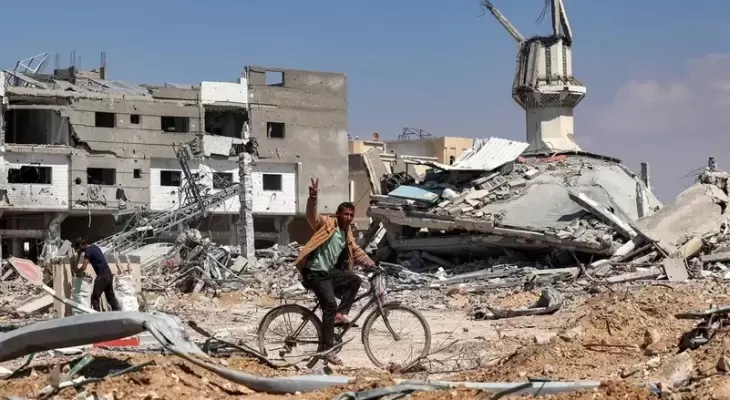
But this is laughable. Netanyahu has been consistently saying throughout this genocide that his army is moving towards destroying the movement and its army of fighters and operatives. Instead, Israel destroyed the whole of Gaza, turning the strip into a huge rubble and debris site.

The only thing that Israeli couldn’t do was to destroy the Palestinian resistance, Hamas and the other different factions. Hamas and its fighting forces is said to be alive and kicking according to different  estimates including the Americans but Israeli intelligence currently put the Hamas fighters at 20,000. 

This must be depressing for Netanyahu who spent over $66 billion on trying to defeat Hamas. All he did however is massively destroy the enclave creating around 60 million tons of debris and wreckage according to UN estimates and killing 71,000 civilians while 10,000 remaining buried underground. 

For all his bombast about slowly destroying Hamas, Netanyahu did nothing of the sort. While he may have killed some of its top leaders like Ismael Haniyah and Yehiya Sinwar who died in direct battlefield combat and not in an underground bunker away from his men as the Israelis like to claim, fighters are being replenished from human mass in Gaza whose population is estimated at around 2 million people.

Based on commentary from Israel’s Channel 13 Netanyahu has provided  US President Donald Trump with Israeli military intelligence to say that Hamas still has 60,000 kalashnikovs inside the Gaza Strip. These are yet to be destroyed. 

While Netanyahu may have provided the figures for political reasons, it maybe travesty on his part because it shows that despite the mass Israeli massacres in two years of war against the Gaza Strip, Tel Aviv is not able to get rid of Hamas nor of the other Palestinian resistance groups.

Kalashnikovs are not the only weapons. While intelligence estimation suggests that long and short-missiles may have been heavily reduced, Hamas still has thousands of rockets in its stockpiles and is still an effective fighting force despite the fact that Israel, in its “yellow line” still controls more than 53 percent of the Gaza Strip.

Now under Stage II of Trump’s peace accord on Gaza, Hamas is supposed to give its weapons to the Palestinian Authority, but Israel is fearful this may not happen and are on military alert and are still trigger-happy having killed 490 people since the ceasefire was killed on 10 October, 2025.

But these weapons frequently fall into the hands of the resistance as it is estimated that 15 percent of the weapons, missiles, bombs and mortar fired onto the different parts of Gaza don’t go off. What tended to happen in the past two years is that these would fall into the hands of the Hamas fighters, “repackaged” and fired back at Israeli soldiers and cities. Some may off course stay in the Hamas stockpiles.

What this means is the fight between Israel and Hamas will continue despite the Trump peace machinations. A bit of good news maybe coming out of that as Israel, under pressure from the White House, has promised to open the crucial southern Rafah Crossing between Gaza and Eygpt. While Israel has been resisting this, it has finally agreed to open the border both ways so that people can go in and out of Gaza. The short-coming of that is that Israel is refusing to allow the entry of aid trucks for the starved enclave.

Continue reading