Spiralling Catastrophe: 1 in 3 Not Eaten in Days

United Nations agencies welcomed, Sunday, Israel’s pledge to implement daily humanitarian pauses in its military operations in Gaza, aimed at easing the flow of desperately needed aid into and across the devastated enclave.

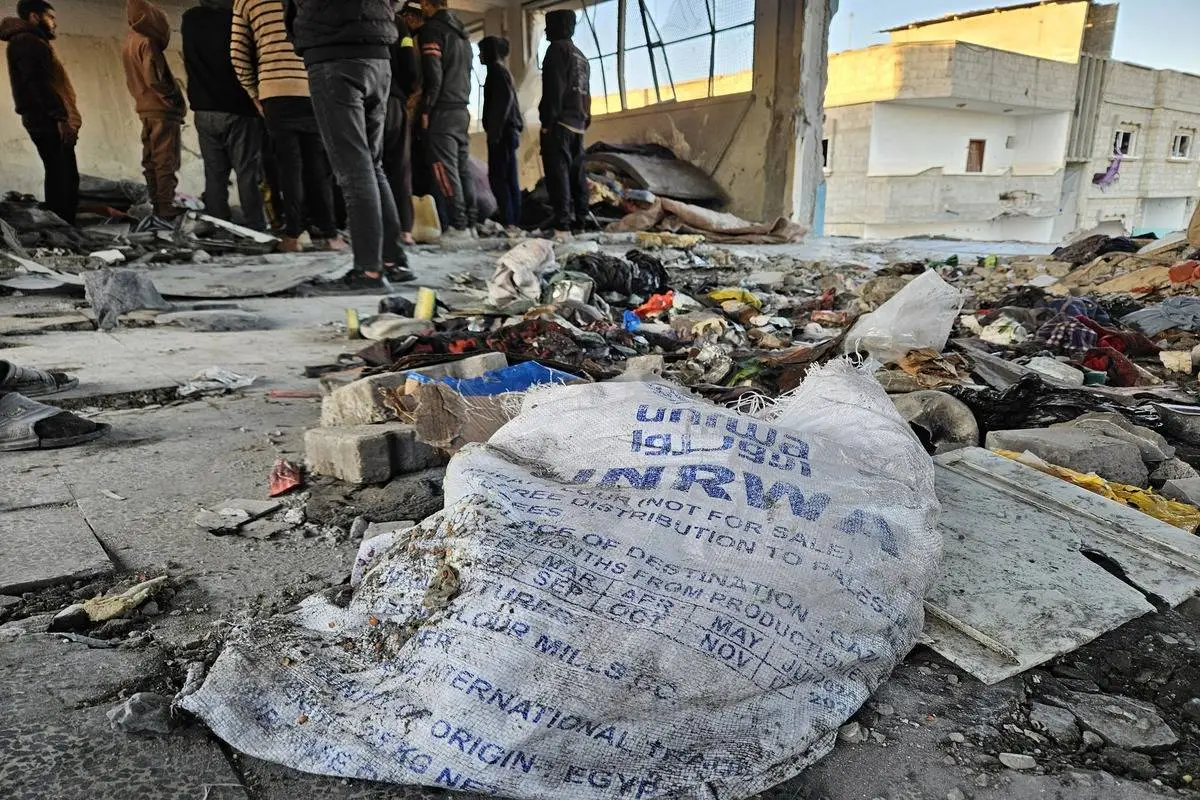
But as starvation tightens its grip and “children are dying before our eyes,” UN officials and aid workers warn that the measures fall far short of the much-needed ceasefire and unfettered aid access that could help stem the spiralling humanitarian catastrophe.

“Welcome announcement of humanitarian pauses in Gaza to allow our aid through,” UN Emergency Relief Coordinator Tom Fletcher said on X. “In contact with our teams on the ground who will do all we can to reach as many starving people as we can in this window.”

In a statement later issued later by the UN Office for the Coordination of Humanitarian Affairs, or OCHA, which Mr. Fletcher heads up, he added that some movement restrictions appear to have been eased today, with initial reports indicating that over 100 truckloads were collected.

“This is progress, but vast amounts of aid are needed to stave off famine and a catastrophic health crisis. Across the UN agencies and humanitarian community, we are mobilized to save as many lives as we can, he said, but called for “sustained action, and fast”, including quicker clearances for convoys going to the crossing and dispatching into Gaza.

“Ultimately of course we don’t just need a pause – we need a permanent ceasefire,” stated Mr. Fletcher, who emphasized: “The world is calling for this lifesaving aid to get through. We won’t stop working for that.”

Also reacting via X, UNICEF said: “This is an opportunity to begin to reverse this catastrophe and save lives.”

According to the agency, since the collapse of the ceasefire between Israel and Hamas in March, children have been trapped in a nightmare and deprived of the basics to survive.

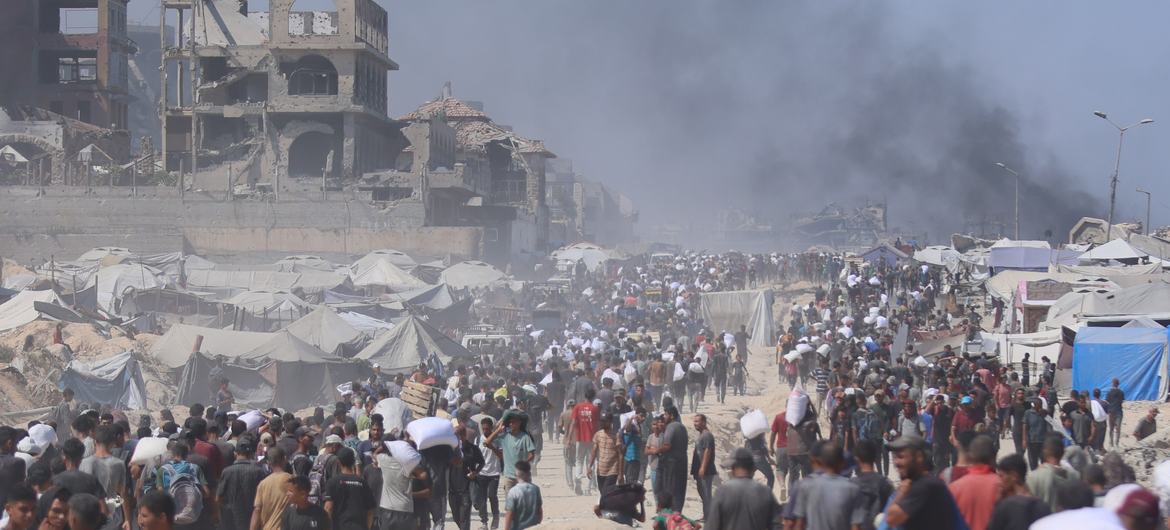
“The entire population of over two million people in Gaza is severely food insecure. One out of every three people has not eaten for days, and 80 per cent of all reported deaths by starvation are children,” the agency continued.

UNICEF emphasized that while it has never stopped delivering, “we can do a lot more if additional designated humanitarian corridors are created to facilitate the movement of our convoys – as well as commercial trucks, which are essential.”

‘A lifeline – if upheld and expanded’

The UN World Food Programme (WFP) also welcomed Israel’s announcement and its intent to open designated corridors for aid convoys in Gaza, “where hunger has reached catastrophic levels.”

With nearly half a million people facing famine-like conditions and a third of the population going days without food, WFP said in a press statement that the measures could offer a lifeline – if upheld and expanded.

Despite recent deliveries, including 350 truckloads last week, aid workers continue to face extreme risks and logistical hurdles. WFP said it has enough food stockpiled or en route to feed Gaza’s 2.1 million residents for three months, but without a ceasefire and consistent access, the scale of need far outpaces current efforts.

“An agreed ceasefire is the only way to reach everyone,” the agency stressed, calling for predictable and safe conditions to prevent further loss of life.

‘An entirely preventable crisis’

At the same time, the UN World Health Organization (WHO) warned that malnutrition in Gaza is spiralling out of control, with a sharp rise in deaths – most of them in July – marking what it calls a “dangerous trajectory.”

Of the 74 malnutrition-related deaths recorded this year, 63 occurred this month alone, including 24 children under five. Many died before reaching medical care, their bodies showing signs of severe wasting.

“This crisis is entirely preventable,” WHO said in a press release, citing the deliberate obstruction of aid for the mounting toll.

Children are bearing the brunt. Over 5,000 children have already been treated for malnutrition in July, many with the most life-threatening form. But Gaza’s four specialized treatment centers are overwhelmed, running low on fuel and supplies, and staffed by exhausted health workers.

“The health system is on the brink,” WHO warned, as disease spreads rapidly through communities with no clean water or sanitation.

The crisis is also devastating pregnant and breastfeeding women, over 40 per cent of whom are now severely malnourished. And it’s not just hunger that’s killing people—it’s the desperate search for food, according to WHO.

Since late May, more than 1,000 people have been killed and over 7,000 injured while trying to access aid. WHO is calling for an immediate ceasefire and a sustained surge of diverse, nutritious food and medical supplies.

“This flow must remain consistent and unhindered,” the agency said, urging protection for civilians, health workers, and humanitarian operations.

‘The world will judge this conference’

Looking ahead to the High-Level Conference on Palestine set to open on Monday at UN Headquarters in New York, the UN High Commissioner for Human Rights issued a strong call for immediate action to end Israel’s unlawful occupation and the ongoing devastation in Gaza.

“Countries that fail to use their leverage may be complicit in international crimes,” Volker Türk warned in a statement, urging governments to seize the moment for concrete measures that pressure Israel to halt the carnage and recommit to a two-state solution.

The UN rights chief described Gaza as a “dystopian landscape of deadly attacks and total destruction,” where children are starving and families are being killed in their search for food. The militarized aid distribution system, supported by the US and Israel, is failing to meet the scale of need.

“We can never forget that more than 300 of our own colleagues have been killed,” he added.

Moreover, in the occupied West Bank, violence by Israeli forces and settlers continues unabated, with homes demolished and water supplies cut off.

Mr. Türk reiterated condemnation of the 7 October attacks by Hamas but emphasized that the scale of suffering inflicted on Palestinians since then cannot be justified.

Calling for an immediate, permanent ceasefire, the release of hostages and detainees, and a massive surge in humanitarian aid, he concluded:

“The people of the world will judge this Conference on what it delivers.”
UN News

Continue reading
‘Its as Bad as Ever in Gaza’ – UN Workers

Lifesaving supplies in Gaza continue to run dangerously low, nearly four weeks into the total aid blockade and deadly bombardment of the enclave by Israel, UN humanitarians said on Friday.

According to local health authorities in Gaza, 830 people were killed between 18-23 March, including 174 women and 322 children. A further 1,787 were injured.

“The acts of war that we see bear the hallmarks of atrocity crimes,” said Jens Laerke, spokesperson for the UN aid coordination office, OCHA. “Hundreds of children and other civilians have been killed in health and Israeli airstrikes. Intensely populated areas hospitals are once again battlegrounds; patients killed in their beds, ambulances shot at, and first responders killed.”

It has been 10 days since Gazans woke up to renewed Israel bombing, abruptly ending the two-month ceasefire.

“It has been 10 days of witnessing – because the UN remains on the ground in Gaza – a callous disregard for human life and dignity,” Mr. Laerke maintained.

No to evacuations

Maryse Guimond, UN Women Representative for the Occupied Palestinian Territory, relayed testimonies of Palestinians in Gaza who say they will not heed new evacuation orders issued by the Israeli military, on the grounds that “there are no safe places anyway”.

Speaking from Amman, she added: “It is a situation of pure survival and survival of their families because, as they say, there is simply nowhere to go…”

“As a woman recently said to us from Deir al Balah, ‘My mother says death is the same whether in Gaza City, or in Deir al Balah; we just want to return to Gaza.’”

Echoing those concerns, Dr. Margaret Harris, spokesperson for the UN World Health Organization (WHO) said that the situation “is as bad as it ever was”. A new ceasefire is needed immediately for the sake of all Gazans, she insisted.

“We knew it was bad before the ceasefire, when we were constantly begging to be allowed to do our job just to help the ordinary people. No, they can’t keep going.”

Healthcare in the enclave is also suffering from the aid blockade, with supplies dwindling dangerously low since the cut-off began on 2 March.

“The key supplies now for safe labour and delivery…will be running out soon,” said Dr Rik Peeperkorn, WHO representative in the OPT.

A dozen ambulances have also been put out of action through lack of fuel, the veteran humanitarian medic said, speaking from Jerusalem.

Collective punishment warning

Sparked by Hamas-led terror attacks in Israel, the war in Gaza has devastated the enclave and prompted widespread international condemnation over its impact on civilians, who should be spared from violence in times of war.

Nothing can justify the collective punishment of the Palestinian people,” OCHA’s Mr. Laerke insisted.

“International law is clear, it prohibits indiscriminate attacks, obstruction of life saving aid, destruction of infrastructure indispensable for civilian survival and hostage-taking.

“The International Court of Justice’s provisional measures on the application of the Genocide Convention remain in place; yet the alerts that we issue in report after report reveal an utter lack of respect for the most basic principles of humanity.”

UN News

Continue reading
Rebuilding Gaza is a Massive Task

The rebuilding process in the Gaza Strip following 15 months of Israeli bombardment will “take an awful lot of time” despite the promised surge in humanitarian deliveries, a UN official in Gaza has warned.

“We’re not just talking about food, healthcare, buildings, roads, infrastructure. We’ve got individuals, families, communities that need to be rebuilt,” Sam Rose, acting director of the UN agency for Palestinian refugees (UNRWA) in Gaza, told the BBC.

“We’re expecting a major uptick in the volume of aid that’s coming in, and of course it’s far easier for us to go and collect that aid because many of the problems that we have faced so far in the war go away when the fighting stops,” Rose said.

But he also stressed that “we have to get away from thinking of people’s needs in Gaza as a function of the volume of aid”.

“Every person in Gaza has been traumatised by what’s gone on. Everyone has lost something. Most of those homes are now destroyed, most of the roads are now destroyed,” he added. “It’s going to be a long, long process of rehabilitation and rebuilding.”

The World Health Organization’s regional director, Hanan Balkhy, meanwhile said it had a 60-day plan to get Gaza’s health system back on its feet to meet the population’s urgent needs and prioritize care for the thousands of people with life-changing injuries.

The plan includes repairing Gaza’s hospitals – half of which are out of service and the others are only partially functional – setting up temporary clinics in the hardest-hit areas, addressing malnutrition and controlling disease outbreaks.

Most of Gaza’s 2.3 million population has also been displaced multiple times, 60% of buildings are estimated to be damaged or destroyed, the healthcare, water, sanitation and hygiene systems have collapsed, and there are severe shortages of food, fuel, medicine and shelter.

In October, the UN-backed Integrated Food Security Phase Classification (IPC) estimated 1.84 million people across Gaza were experiencing high levels of acute food insecurity, and that 133,000 people were facing catastrophic levels, which can lead to starvation and death.

The following month, an IPC committee warned that there was a strong likelihood that famine was “imminent” in some areas of northern Gaza.

Before the ceasefire, the UN said the besieged northern towns of Jabalia, Beit Lahiya and Beit Hanoun had been largely cut off from food assistance since the Israeli military launched a ground offensive and siege in October according to the Quds News Network.

Continue reading
Gaza: Israeli Army, Strewn Bodies and Stray Dogs

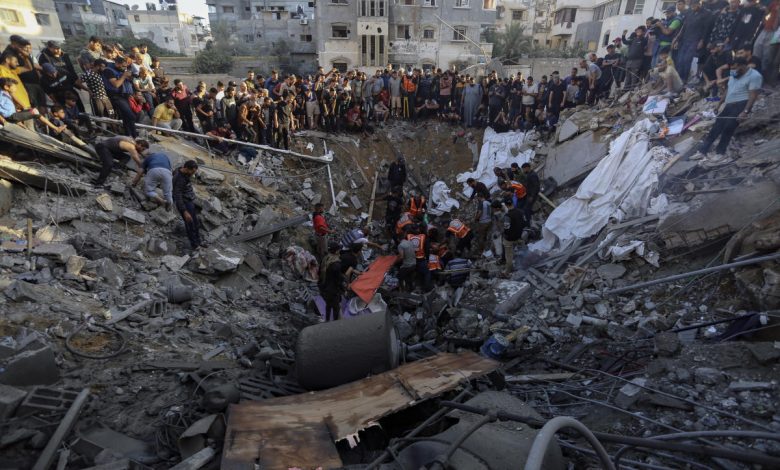
Gaza’s Civil Defense reported, Saturday, Israeli forces are killing Palestinians and leaving their bodies in the streets where stray dogs are feeding on them as a clear violation of international law.

In a statement, the Civil Defense explained Israeli forces have repeatedly targeted rescue teams and ambulances, specifically when they attempt to approach the bodies of those killed.

It emphasized that Israel has also obstructed efforts to recover the bodies of thousands of Palestinians who have died under the rubble of homes destroyed in Israeli airstrikes.

It added that it had found several Palestinian bodies that had been reduced to skeletons according to Anadolu.

In other instances, it described seeing stray dogs feeding on the bodies in several neighborhoods, including Zeitoun, Shujaiya, Tel al-Hawa, the Jabalia area, Tal al-Zaatar, Beit Hanoun, and parts of the eastern areas of Khan Younis and Rafah.

Stressing that these actions by Israel constitute violations of the Geneva Conventions, it called on the signatory countries to “take immediate action to ensure Israel’s compliance with international law.”

They urged the international community, including the International Committee of the Red Cross (ICRC) and the World Health Organization (WHO), to “pressure Israel to follow proper protocols for handling the bodies of the deceased during wartime.”

Israel launched a genocidal war on Gaza that has killed more than 45,200 people, mostly women and children, since a cross-border attack by the Palestinian group Hamas on Oct. 7, 2023.

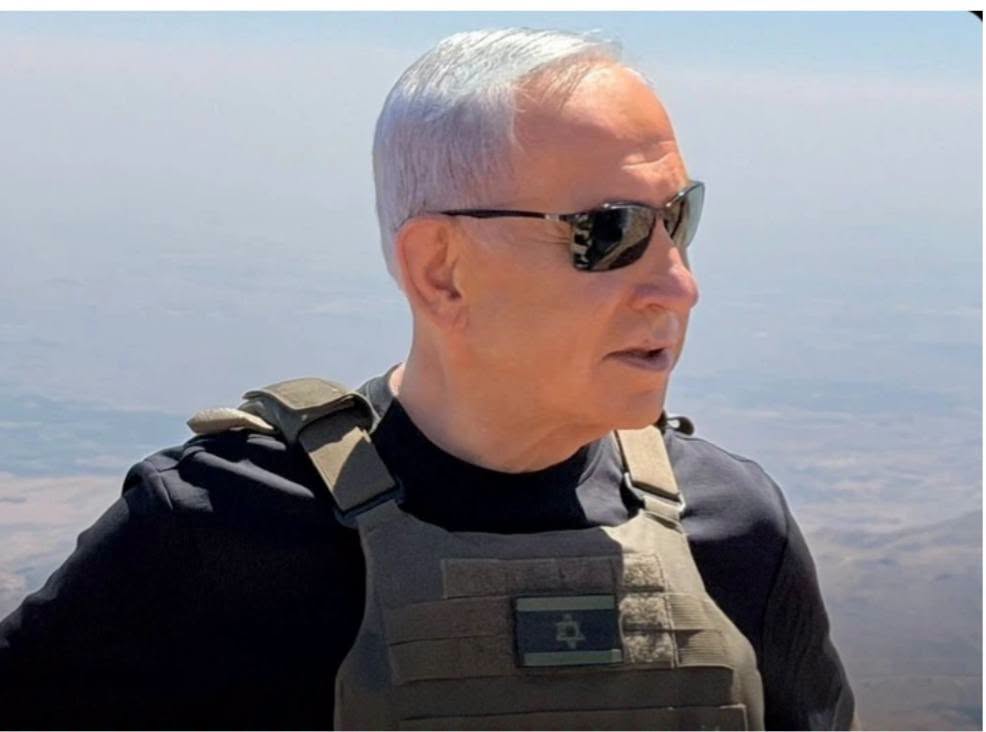
The International Criminal Court issued arrest warrants last month for Israeli Prime Minister Benjamin Netanyahu and his former Defense Minister Yoav Gallant for war crimes and crimes against humanity in Gaza.

Israel also faces a genocide case at the International Court of Justice for its war on Gaza.

Continue reading
Ruined Lives: 22,500 Injured in Gaza Permanent

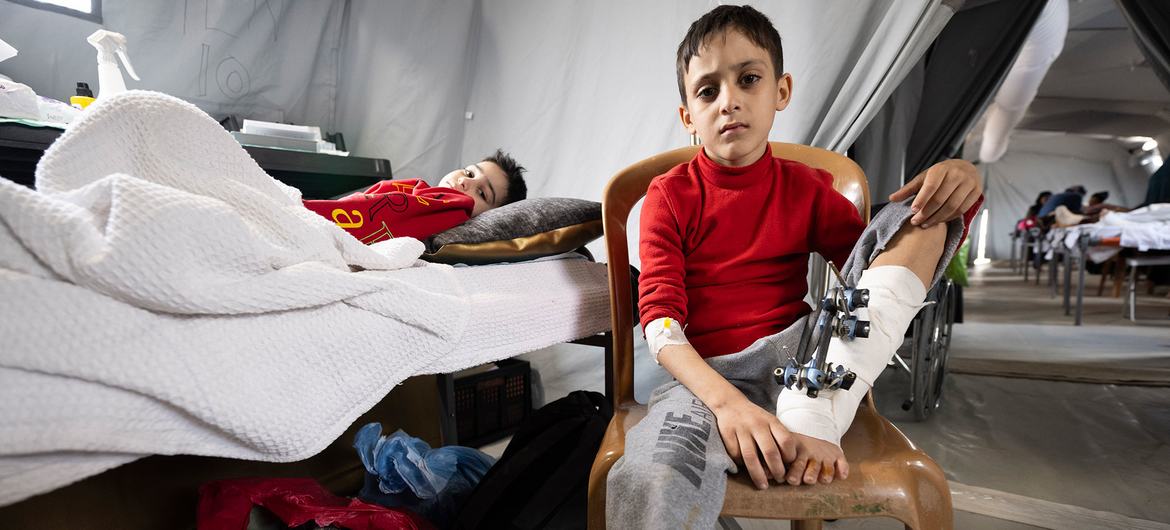
At least one quarter or 22 500 of those injured in Gaza by 23 July are estimated to have life-changing injuries that require rehabilitation services now and for years to come, according to a World Health Organization (WHO) analysis of the types of injuries resulting from the ongoing conflict in Gaza: Estimating Trauma Rehabilitation Needs in Gaza using Injury Data from Emergency Medical Teams.

The analysis found that severe limb injuries, estimated to be between 13 455 to 17 550, are the main driver of the need for rehabilitation. Many of those injured have more than one injury. According to the report, between 3105 and 4050 limb amputations have also occurred. Large surges in spinal cord injury, traumatic brain injury and major burn injuries all contribute to the overall number of life-changing injuries, which includes many thousands of women and children.

“The huge surge in rehabilitation needs occurs in parallel with the ongoing decimation of the health system,” said Dr Richard Peeperkorn, WHO Representative in the occupied Palestinian territory. “Patients can’t get the care they need. Acute rehabilitation services are severely disrupted and specialized care for complex injuries is not available, placing patients’ lives at risk. Immediate and long-term support is urgently needed to address the enormous rehabilitation needs.”

Currently, only 17 of 36 hospitals remain partially functional in Gaza, while primary health care and community-level services are frequently suspended or rendered inaccessible due to insecurity, attacks, and repeated evacuation orders. Gaza’s only limb reconstruction and rehabilitation center, located in Nasser Medical Complex and supported by WHO, became non-functional in December 2023 due to lack of supplies and specialized health workers being forced to leave in search of safety, and was later left damaged following a raid in February 2024. Tragically, much of the rehabilitation workforce in Gaza is now displaced. Reports indicate 39 physiotherapists have been killed as of 10 May. In-patient rehabilitation and prosthetic services are no longer available and the number of people with injuries requiring assistive products far exceeds the equipment available within Gaza. Partners report that stocks of essential assistive products such as wheelchairs and crutches have run out and it is difficult to replenish supplies due to the restricted flow of aid into Gaza.

The analysis focuses solely on new injuries sustained since the escalation of hostilities in October 2023. However, tens of thousands of Palestinians in Gaza were already living with pre-existing chronic conditions and impairments before this, putting them at significant risk due to the lack of appropriate services.

The estimates in the analysis will be used by WHO and partners to plan for a surge in rehabilitation-related services and contribute to long-term health planning and policymaking.

Amidst the ongoing hostilities, it is critical to ensure access to all essential health services, including rehabilitation to prevent illness and death. WHO reiterates its call for a ceasefire, which is critical for rebuilding the health system to cope with escalating needs.

Reliefweb

Continue reading