Reshuffling Cards: Trump and Netanyahu’s Nightmare

(Crossfirearabia.com) – Benjamin Netanyahu hadn’t finished patting himself on the back for destroying the Sanaa International Airport – after all Israeli warplanes hit the country twice in less than 24 hours – before US President Donald Trump dramatically announced he had just reached a deal with the Houthis to stop striking Yemen. Shock, surprise, horror!

Trump added the Houthis promised in turn they would halt targeting all ships, including US vassals and tankers entering the world-trade-crucial Bab El Mandeb Straits, the Red Sea and presumably the Arabian Sea, just off the tip of the country in the south.

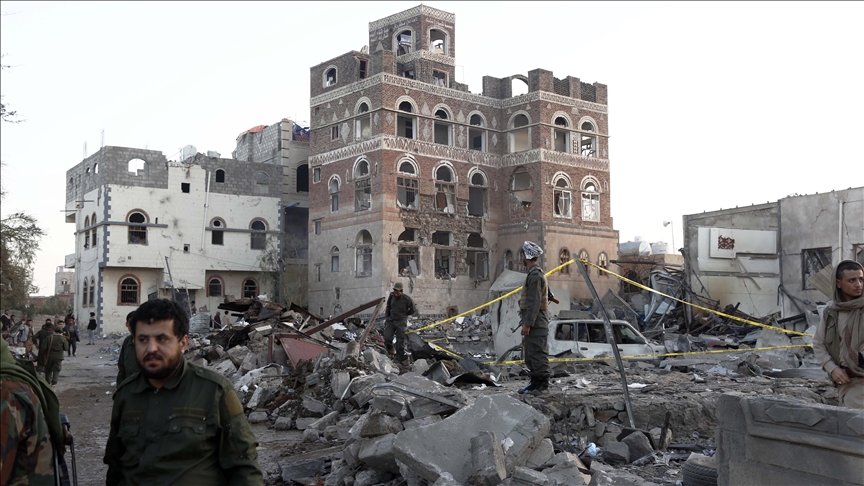
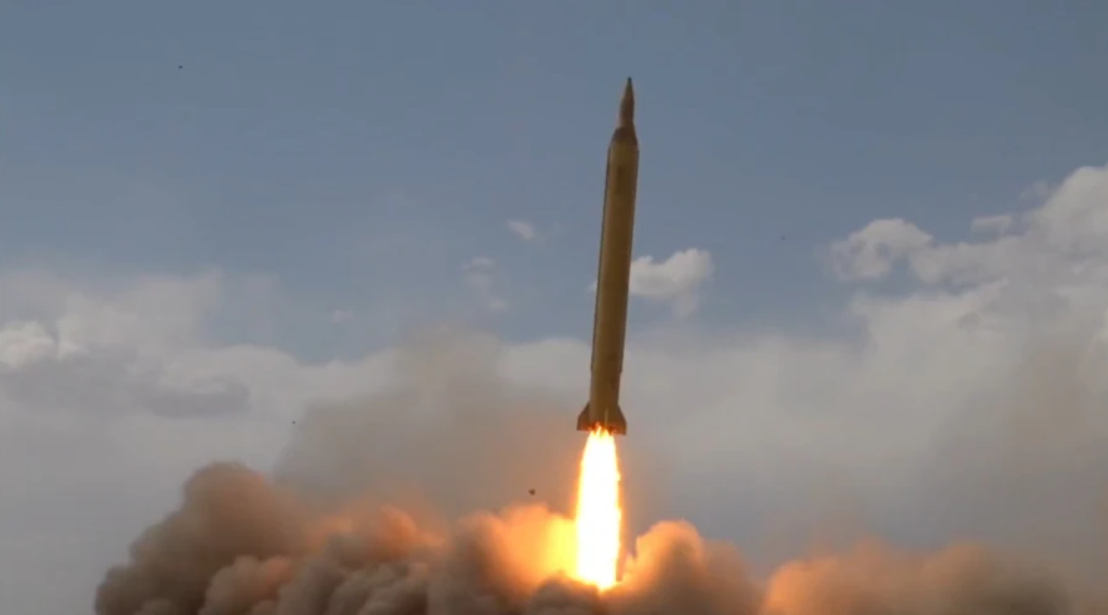
Thus, in one full swoop and at a strike of a pen, the war between the US and the Houthis, started in earnest since 15 March had come to an end in a mesmerizing fashion. During this time, the Americans had made at least a total of 1300 air-raids on Yemen in a bid to end the Houthis who had been striking Israel with ballistic missiles on a regular basis since 7 October, 2023 when Israel started bombarding Gaza.

The country that was behind the deal was Oman who had indeed announced, Tuesday, that an agreement between the United States and the Houthis, the effective but not internationally recognized government in Yemen, was reached to stop the war.

Omani Foreign Minister Badr Albusaidi said in a statement on X that: “Following recent discussions and contacts conducted by the Sultanate of Oman with the United States and the relevant authorities in Sana’a, in the Republic of Yemen, with the aim of de-escalation, efforts have resulted in a ceasefire agreement between the two sides,” as carried by Anadolu.

Analysts since suggested that the deal was reached because the two sides had wanted to end the open-ended escalation that was proving very costly not least of all to the United States which hiked the US treasury bill to about $1 billion dollars since its campaign, mostly to support Israel, in less than one month of military action.

The Houthis on the other hand didn’t want to fight on two fronts, the Americans and the Israelis. For them ending one front was perfectly logical to focus on strikes against Israel in a bid to end the latter’s war on Gaza, and which Israel has promised to step up soon and added to the misery and genocide of Palestinians in Gaza.

In agreeing to stop attacking shipping in the area they were of the firm belief that Trump had not meant that no firing against Israel as part of the deal which meant they would continue to strike Jewish cities, airports areas and military installations, more than 2000 kilometers away, until Israel ends its war on Gaza.

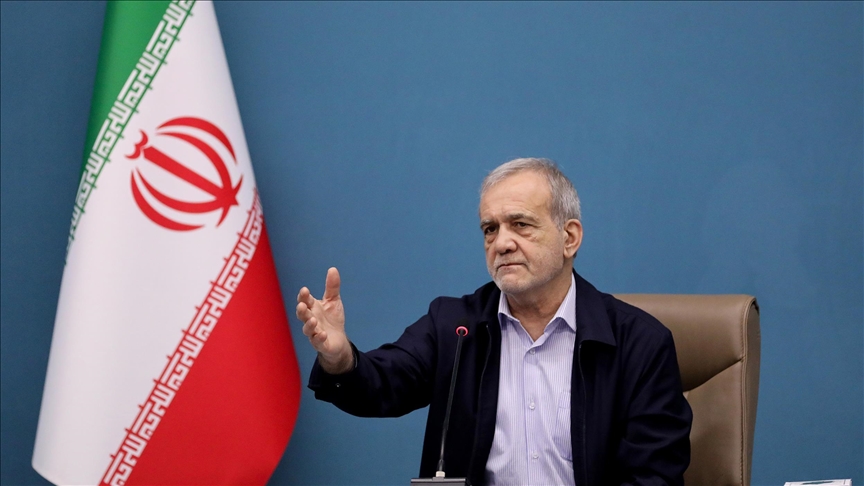
It is still too early to read into how things will unfold, especially since Trump is coming to Saudi Arabia and the Gulf in mid-May, but everyone is seeing the deal as creating a wedge between the US-Israeli alliance on matters relating to US security in the region and especially on the Iran nuclear file, where incessant negotiations – now in their third and fourth rounds -are taking place for the first time between Washington and Tehran in Muscat and through an Omani team lead by their formidable Omani Foreign Minister Albusaidi as mediator.

These are developments that are clearly upsetting Netanyahu who is dead against any nuclear deal that may be reached between the White House and Tehran and wants to strike Iran’s nuclear facilities regardless of the dangerous consequences. But this is seen as a critical line between Trump and Netanyahu while the former is determined to initial a new nuclear deal which he would see as a great US success and for his diplomacy in checking Iran’s nuclear weapon.

International issues as they stand are still fluid for Trump is looking for certain objectives most of all includes his slogan of “Make America Great Again”, focusing on his domestic scene, and not getting involved in unnecessary war around the globe, hence his wish to end the Ukraine War, the war on Gaza and achieve a new nuclear deal with Iran; these are objectives, especially they last two, are not at all in line with the Netanyahu who is attacking Syria, Lebanon, Iraq and occasionally Yemen.

Thus the last deal between Trump and the Houthis, regardless of whether it would stick in the end, is surely likely to be a “splitting headache” for Netanyahu, from a man who was once seen as great friend to Israel.

But the Israeli Prime Minister must not forget that Trump is no pushover, he is a broker who likes to do things his own way.

This analysis is written by Dr Marwan Asmar, chief editor of the crossfirearabia.com website. 

Continue reading
No World Flights to Israel!

Multiple international airlines on Monday extended flight suspensions to and from Israel after a missile launched from Yemen hit Ben Gurion Airport, severely disrupting air traffic and leaving thousands of Israelis stranded overseas, according to Israeli media reports.

The missile, claimed by the Yemeni Houthi group, struck near the airport in central Israel on Sunday, injuring eight people and prompting a wave of flight cancellations by foreign carriers.

According to the Israeli financial outlet Calcalist, the Lufthansa Group—including SWISS, Austrian Airlines, Brussels Airlines, and Eurowings—will extend the suspension of flights to Israel until 11 May. Similarly, ITA Airways (Italy) suspended all Tel Aviv routes through the same date.

United Airlines extended cancellations until 9 May, while Wizz Air (Hungary) will halt flights until 8 May. Aegean Airlines, British Airways, Delta Airlines, and Ryanair announced extensions through 6 May.

Several carriers, including Air Canada, Air France, Air India, Aeroméxico, and Air Europa, also canceled scheduled flights on Monday.

The Israeli daily Yedioth Ahronoth reported that thousands of Israeli citizens remain stranded abroad due to the widespread disruptions in international flights.

On Monday, Israel carried out airstrikes in Yemen a day after Prime Minister Benjamin Netanyahu threatened retaliation over a missile fired by the Houthi group that landed near Ben Gurion Airport in Tel Aviv.

The airstrikes marked Israel’s first direct military response after the Houthis fired a missile at Ben Gurion Airport on Sunday, wounding eight people.

Yemen has faced an intensified US military campaign since mid-March, including around 1,300 air and naval strikes, resulting in hundreds of civilian casualties, according to the Houthis.

The Houthis have targeted ships passing through the Red and Arabian seas, the Bab al-Mandab Strait and the Gulf of Aden since November 2023 in solidarity with Palestinians in the Gaza Strip, where nearly 52,600 people have been killed in a brutal Israeli assault for more than 19 months, most of them women and children.

The group halted attacks when a Gaza ceasefire was declared in January between Israel and the Palestinian resistance group Hamas but resumed them after Israel’s renewed airstrikes on Gaza in March according to Anadolu.

Continue reading
Trump’s War in The Red Sea

Dr Khairi Janbek

The US foreign policy in the Red Sea today is characterized by a robust military response to Houthi threats, aiming to protect critical maritime trade routes and assert influence in a geopolitical strategic area. While these military operations garnered international support, the ongoing conflict underscores the complexities and challenges of Middle East interventions.

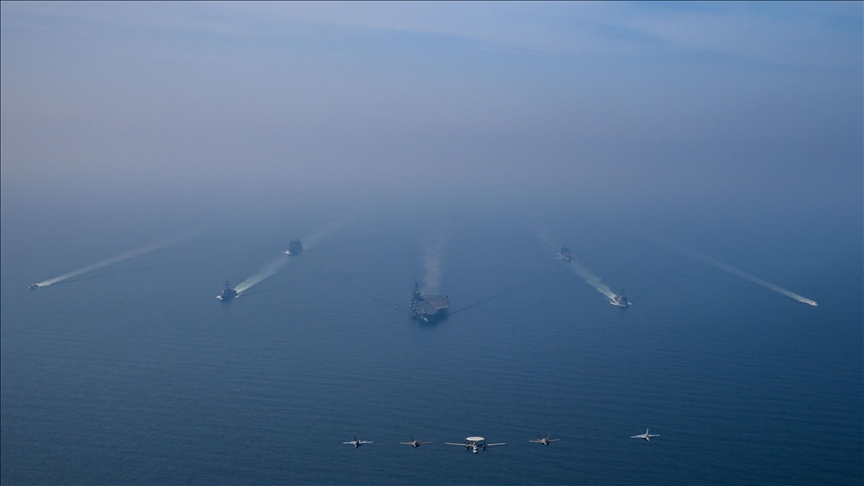
The US military’s increased involvement in the Red Sea, including the deployment of two aircraft carriers, signals a commitment to ensuring freedom of navigation and countering the Iranians in the region. However, the present ongoing escalation also risks entangling the US in a prolonged conflict.

This is reminiscent of past Middle East engagements which the Americans should be well-aware of, and may put additional strain on the US military resources amid other pressing global priorities if faces.

That said, the present military strikes on Yemen are not just about the Houthis. They are also widely seen as demonstration of US strength towards the group’s main backer: Iran.

The Washington administration is currently locked in a series of negotiations regarding Iran’s nuclear programme and Trump has not ruled out military action if those talks fail, yet, it is possible still, that the US, and judging by recent history, the Americans may change their mind and everything is put on hold yet again.

But we need to wait and see! The US has already moved its patriot and THAAD missiles from Asia to the Middle East, and only in the first month of the preparedness campaign, $200 million of ammunition has been used and this is making military officials greatly concerned about the impact on stocks the US Navy might use in the event of a Chinese attack on Taiwan.

At the same time, there are various Yemeni groups opposed to the Houthis with regional backing, and dare one say with some international backing, reportedly considering taking advantage of the situation to launch a ground campaign to oust the Houthis once and for all, but Washington is yet to make a decision on whether to back such operations or not.

Most analysts and officials say that, American troops participating in any ground operations in Yemen is highly unlikely, moreover, even more limited support for ground operations would still be another case of the US backing armed groups in a messy middle Eastern war; exactly the sort of situation Trump blasted previous administrations for falling into.

Dr Janbek is a Jordanian analyst based in Paris, France.

Continue reading
Analysts: US Fails on Houthis After Six Weeks of Bombing

After nearly six weeks of intensive US airstrikes on different areas and cities of Yemen the Houthi Ansar Allah continues to assert that its military operations in the Red Sea and against Israeli targets will not stop until the ongoing Israeli war on the Gaza Strip ends.

Houthi military spokesman Yahya Saree, Saturday, announced the targeting of the Israeli Nevatim Air Base in the Negev with a ballistic missile, as well as two other sites in the Tel Aviv and Ashkelon areas and the targeting of warships on the US aircraft carrier SS Harry Truman in the northern Red Sea are just part of the continuing ongoing military strikes.

However in response to these attacks the US aircraft launched two airstrikes last Friday night on the Ras Isa oil port in the coastal province of Al Hudaydah, which Washington considers a major source of fuel used to finance the Ansar Allah group’s activities.

According to Dr Liqaa Makki, senior researcher at the Al Jazeera Center for Studies, the USA has failed miserably in its strikes against the Houthis because of its inability to move to the second phase. He said that as a result they are  discussing an alternative scenario for this military campaign against the Houthis.

Makki believes that US President Donald Trump has reached a dead end, and that the ceiling he set regarding the Houthis is proven unrealistic, pointing out the United States, despite its military strength, is failing in Yemen because it is fighting a group, not a state.

On the other hand, military and strategic expert Brigadier-General Elias Hanna, believes that both sides are losing, whilst the image of the United States is being damaged, given the scale of the US military campaign and Trump’s engagement with the Houthis, who previously declared that  “we [US] will withdraw from all the world’s wars.”

Reports estimate the cost of the airstrikes carried out by the US military on Houthi positions amounted to approximately $1 billion in the first three weeks of the military campaign alone.

The Associated Press reported the value of the seven downed American drones made by the Houthis exceed $200 million, and the continued loss of American drones makes it difficult for the US leadership to accurately determine the extent of the damage to the Houthis’ weapons stockpiles.

Brigadier-General Hanna said that Washington lacks a comprehensive strategy in its dealings with the Houthis, and that the political goal it announced—restoring deterrence and opening shipping lanes—has not been achieved.

He also pointed out the US military is targeting the centers of gravity within the Houthi military system to disrupt it, a strategy Israel has used with the Palestinian resistance but has failed to achieve.

Appeasing the Houthis

In light of Washington’s inability to achieve its goals against the Houthis, Brigadier-General Hanna believes the pressure being exerted on Israeli Prime Minister Benjamin Netanyahu regarding the entry of aid into the Gaza Strip is part of an effort to appease the Houthis so that they will halt their operations in the Red Sea and against Israeli targets.

Trump’s upcoming visit to the region also requires a de-escalation. According to the military and strategic expert, the US president cannot arrive while the Houthis are launching missiles.

In the same context, the senior Al Jazeera’s Makki expects  that a Gaza ceasefire will soon be reached before Trump’s visit, allowing the Houthis to halt their operations as they have initially linked the cessation of their operations to an end to the war on Gaza and to the cessation of US strikes against them.

American officials have previously revealed to CNN that the US military has struck more than 700 Houthi targets and carried out 300 airstrikes since the campaign began in mid-March, “forcing them underground and creating confusion and chaos within their ranks.”

Continue reading
US Warplanes Makes 1200 Strikes on Yemen Since 15 March

US warplanes launched 1200 airstrikes on Yemen since 15 March the Houthis announced on Friday. The Houthis stated the airstrikes resulted in the killing and wounding hundreds of civilians.

In a statement by the Houthi Foreign Ministry stated the United States ” launched more than 1,200 airstrikes and naval bombardments since mid-March, resulting in the death and injury of hundreds of civilians and the destruction of numerous civilian objects, including residential neighborhoods, ports, health facilities, water tanks, and archaeological sites, in flagrant violation of international law and international humanitarian law.”

It indicated that what the USA is doing in Yemen is “full-fledged aggression and a flagrant violation of the UN Charter and all international norms and conventions.”

The statement considered that Washington is trying, in a “miserable attempt to evade its responsibility for the crimes it is committing in Yemen.”

The group accused Washington of “working to cover up its sinful aggression against Yemen and its crimes against civilians and civilian objects, which are shameful to humanity, as well as its abject failure,” according to Anadolu.

On 15 March, the United States resumed its attacks on Yemen after President Donald Trump ordered his military to launch a “major attack” against the Houthi group, before threatening to “completely eliminate” them.

However, the group ignored Trump’s threat and resumed bombing sites inside Israel and ships in the Red Sea heading to Israel, in response to Tel Aviv’s resumption of its war of extermination against Palestinians in the Gaza Strip, which began on 18 March.

With full American support, Israel has been committing genocide in Gaza since October 7, 2023, leaving more than 168,000 Palestinians dead and wounded, most of them children and women, and more than 11,000 missing.

Continue reading