Jerusalem Signs: Identity and Political Power

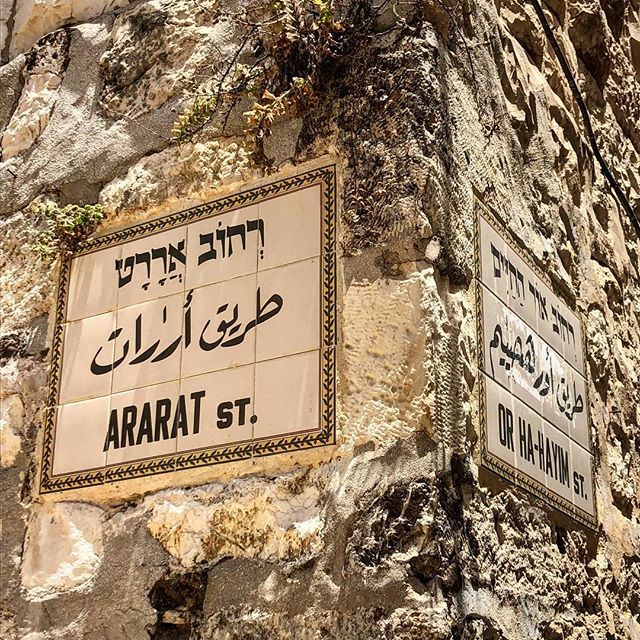
At a recent lecture hosted by the Council for British Research in the Levant (CBRL), Yasir Suleiman, professor of Modern Arabic Studies at the University of Cambridge guided the audience through the intricate linguistic landscape of Jerusalem. Exploring the Holy City’s street signs, Suleiman revealed how these seemingly mundane markers act as silent witnesses to history and power struggles, charting the evolution of identity and conflict in the region. 

“Language is important, not because it gives you information, but because it stands for something that is beyond language,” Suleiman explained. “Road signs, anywhere in the world, do tell a story. They present you with a narrative, a cultural map, a linguistic map, and a political map.”

Language Layers of Jerusalem 

Jerusalem’s street signs have long served as a battleground for identity and political power, reflecting the city’s historical transformations, from the Ottoman period through the British Mandate and into the present day. Suleiman traced this history, showing how language has shaped and been shaped by competing claims over the city’s public space. 

https://twitter.com/CBRL_news/status/1878758921340678444

Before the fall of the Ottoman Empire in 1917, Jerusalem’s signs prominently featured Ottoman Turkish (written in Arabic script) alongside English and occasionally French. Hebrew was largely absent. For instance, an original 1892 sign at the Jerusalem-Jaffa train station displayed the name of “Jerusalem” in English and Ottoman Turkish, with Hebrew was only added post-1948. 

This marked a time when Hebrew was largely absent from Jerusalem’s linguistic landscape, reflecting its limited presence in the population’s daily life, while Arabic script was present, but the Arabic language itself was absent.

However, the rise of the Zionist movement sought to change this, prioritising Hebrew revival as a cornerstone of its political and cultural agenda. 

Three Languages, One Hierarchy

Under British Mandate, it was decided that English, Arabic and Hebrew were all required on street signs. Yet, their arrangement revealed the prevailing power dynamics: English appeared at the top, Arabic in the middle, and Hebrew at the bottom, as stipulated by British authorities. 

This vertical hierarchy symbolised the ruling power, with English taking precedence and Arabic reflecting the majority population (around 90% of the people in Palestine were Arabic-speakers, including the Jews and Christians). Hebrew’s lower placement underscored its marginal status at the time. 

The Zionist movement, unhappy with this arrangement, lobbied for horizontal signs, where all three languages appeared side-by-side. Even so, Arabic retained a visual advantage because its right-to-left orientation naturally positioned it above Hebrew in terms of linguistic flow, as any right-to-left script placed on the right takes visual precedence over one positioned on the left.

Three Languages, Three Names

Suleiman highlighted how different languages on street signs often tell different stories about the same location. For instance, the famous Damascus Gate is labelled in Arabic “Bab el-’Amoud,” referencing Roman pillars in the area, while in Hebrew, it is called “Bab Nablus,” acknowledging Nablus’s religious significance for Jews, and in English, it is “Damascus Gate,” reflecting the trade connexions to the Syrian capital. Each language offers a distinct historical or cultural claim to the place, underscoring the city’s layered identity. 

Three languages, Two Boxes

The 1948-1967 Jordanian control of Jerusalem brought changes to Jerusalem’s signs. With almost no Jewish presence within the Old City’s walls, the Jordanian authorities only put street signs in Arabic and English. 

Arabic was placed above English, with the English text mirroring the Arabic perfectly (e.g., “Al-Malak Road”). This reflected a shift in status: English was no longer the language of the ruling power but had become merely a lingua franca, while Arabic took precedence as the dominant language.

However, after the Israelis occupation of East Jerusalem in 1967, the linguistic order shifted again. New signs were introduced, with Hebrew taking the top position, symbolising Israeli sovereignty. Arabic and English were relegated below it, marking a significant reordering of visual and political priorities. 

By 1980, when the Israeli Knesset declared Jerusalem the capital of Israel, the street signs further evolved to reflect political realities. A single box now contained all three languages, with Hebrew firmly at the top. Arabic began to diminish in influence, with English morphology increasingly aligning with Hebrew rather than Arabic conventions. For instance, “Ha-Malak Road” replaced “Al-Malak Road,” subtly asserting Hebrew’s dominance over Arabic. 

Signs of Power

This dynamic became even more pronounced in 2018 when the Israeli Knesset stripped Arabic of its status as an official language. On modern street signs like “Nablus Road,” Hebrew now appears on top of the three languages and often in its fully pointed form, a form traditionally reserved for sacred texts, emphasising its elevated status in Israel’s narrative of Jerusalem. 

Suleiman underscored how Jerusalem’s street signs are not just tools for navigation, they are symbols of power. “These signs are not about informing you where you are, they tell you who owns the place, who calls the shots.”

Street signs of Jerusalem have become a linguistic archaeology, with layers of history etched into their evolving forms. From the Ottoman period to the present day, they quietly tell the story of a city at the centre of competing claims over its identity. 

This article was written by Sophie Constantin and appeared in the Jordan Times
Continue reading
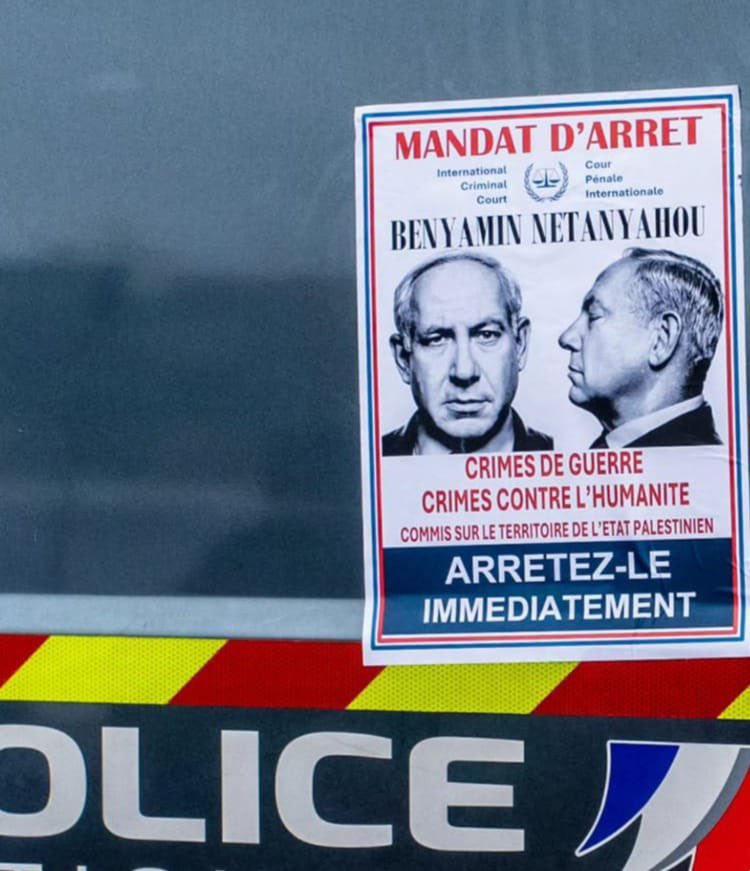
Dysfunctional Netanyahu

If all the criticism directed at Israel’s current prime minister, Benjamin Netanyahu, fails to unseat him, then there is something deeply troubling about Israeli democracy—it is fundamentally dysfunctional.

Netanyahu has been the most influential architect of Israel’s policies and politics since 1996, when he first became prime minister.

He has often been quoted as saying, “Israel has no negotiating partner on the Palestinian side.”

Yet, we should ask: Where is the negotiating partner on the Israeli side?

Since taking office, Netanyahu has waged wars against nearly all of Israel’s neighbours, particularly Lebanon, Gaza, the occupied West Bank, and Syria and the occasional bouts with Iraq and Iran.

If we tally all the conflicts under his leadership, they exceed ten, many of them prolonged and devastating.

The cumulative cost, both in human lives and property, is staggering—over $500 billion lost and at least 100,000 people killed.

Netanyahu has systematically violated agreements, expropriated land for illegal settlements, and sanctioned the destruction and pillaging of homes, hospitals, schools and infrastructure.

His policies have included uprooting trees, destroying livelihoods, and killing tens of thousands of civilians, including children and women.

He stands as an indicted war criminal and is currently being tried in Israeli courts on charges of bribery, fraud, and abuse of power.

Many respected Israeli voices—authors, journalists, political analysts, human rights activists, lawyers, peace advocates, as well as his political allies and adversaries—express anger and even sometimes contempt for him, criticising his deceit and betrayal.

Every time Netanyahu insisted on engaging in dialogue with the late King Hussein or King Abdullah II, shortly after his army would commit grave atrocities against Palestinian civilians in the occupied territories.

Thus creating the false impression of a sequitur relationship between the meeting and the atrocities.

He even welcomed the Israeli guard who killed two Jordanians at the Israeli embassy in Amman with open arms, celebrating him instead of subjecting him to trial, despite Jordan’s accepting the murderer’s return to Israel, out of respect for the international diplomatic protocols.

Why does Netanyahu continue to act with such impunity? His actions appear to be deeply influenced by the ideology of his father, Benzion Netanyahu.

Born in Warsaw, Poland, Benzion served as the secretary and close aide to Ze’ev Jabotinsky, who instilled in him—and later his son Benjamin—the principles of revisionist Zionism.

It is exceedingly difficult to make peace with the proponents of the maximalist and revisionist branch of Zionism, which was established by the extremist Abba Ahimeir.

Although Benzion was a historian specializing in the history of Jews In Spain—a history rich with examples of tolerance and coexistence between Muslims and Jews under Islamic rule—he chose to become a disciple and propagator of revisionist Zionism. He became a staunch spokesperson for this ideology in the United States.

To better understand the radicalisation of Netanyahu and his father, one need look no further than the statements made by their mentor, Jabotinsky.

The following quotes are sourced from betarus.org, a well-known Zionist website:

1.“We, the Zionists, all applaud, day and night, the iron wall.”

This is the same iron wall that neo-historian Avi Shlaim described as being created to hammer Arab heads against, until they agree to Zionist claims to their lands.

2.“We hold that Zionism is moral and just, and since it is moral and just, [that means] justice must be done, regardless of whether Joseph, Simon, Ivan, or Ahmet (Ahmad) agree with it or not.”

3.Finally, Jabotinsky declared, “We were not created in order to teach morals and manners to our enemies. We want to hit back at anyone who harms us—only someone who can hate his enemies can be a faithful friend to those who love him.”

With sentiments like these, what chances does a serious, just, and lasting peace—or perhaps any peace at all—have?

Dr Jawad Al Anani, a former Jordanian government minister, contributed this piece to The Jordan Times.

Continue reading
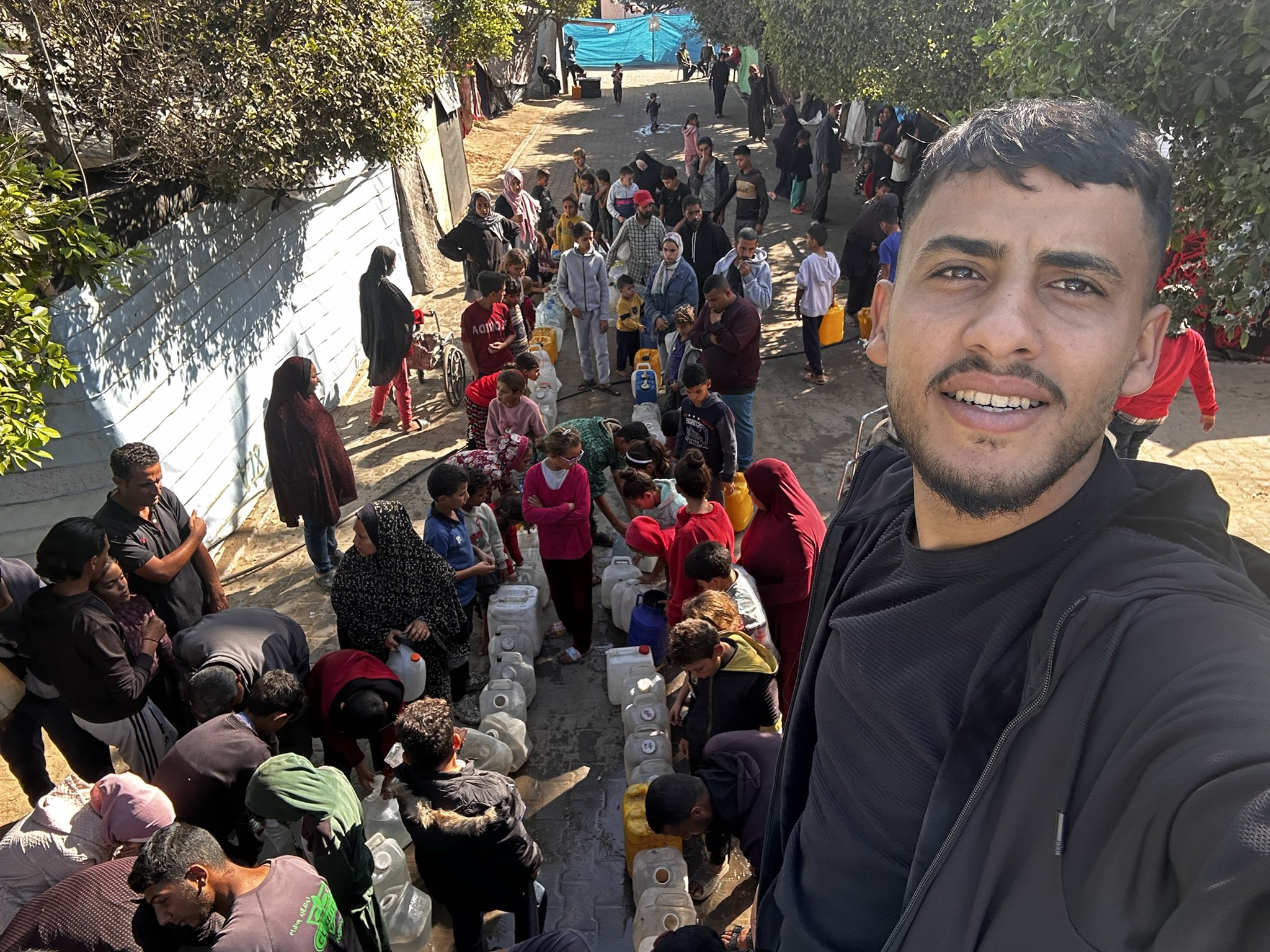
Alive at Day 410

Muhammad in Gaza writes:

Good morning, I’m still alive at date 410 I know that my tweets do not reach you due to Zionist censorship and repeated reports on my account!

Just for knowledge! If you see this tweet, please reply and tell me something….’

Continue reading
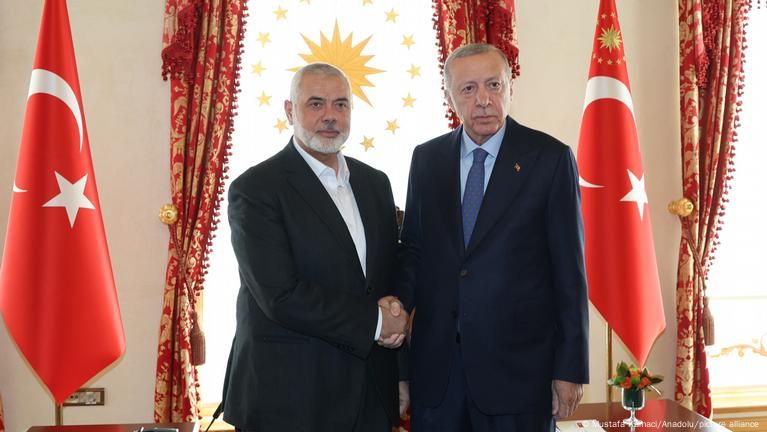
Erdogan: Haniyeh’s Assassination is ‘Zionist barbarism’

Turkish President Recep Tayyip Erdogan condemned Wednesday the assassination of Hamas Political Bureau Chief Ismail Haniyeh in Tehran as reported in Anadolu.

“I strongly condemn and curse the treacherous assassination carried out in Tehran against Hamas Political Bureau Chief Ismail Haniyeh,” Erdogan said on X.

It was “a despicable attempt to undermine the Palestinian Cause, the glorious resistance of Gaza, and the rightful struggle of our Palestinian brothers, aiming to demoralize, intimidate, and suppress them,” he added.

Erdogan emphasized that this assassination mirrors previous attacks on Palestinian figures like Sheikh Ahmed Yassin and Abdul Aziz al-Rantisi, asserting that “Zionist barbarism will once again fail to achieve its goals.”

He called for a united stance from the Islamic world to end the oppression in Gaza and reaffirmed Türkiye’s commitment to supporting the establishment of a sovereign Palestinian state with East Jerusalem as its capital.

Erdogan concluded with a prayer for Haniyeh, extending condolences to his family and the Palestinian people.

Hamas announced early Wednesday that Haniyeh was killed in an Israeli airstrike on his residence in the Iranian capital Tehran.

The Iranian state television also reported Haniyeh’s death, noting that an investigation into the assassination is ongoing and that the results will be announced soon.

Israel has made no immediate announcement about the assassination according to the Turkish news agency.

Continue reading