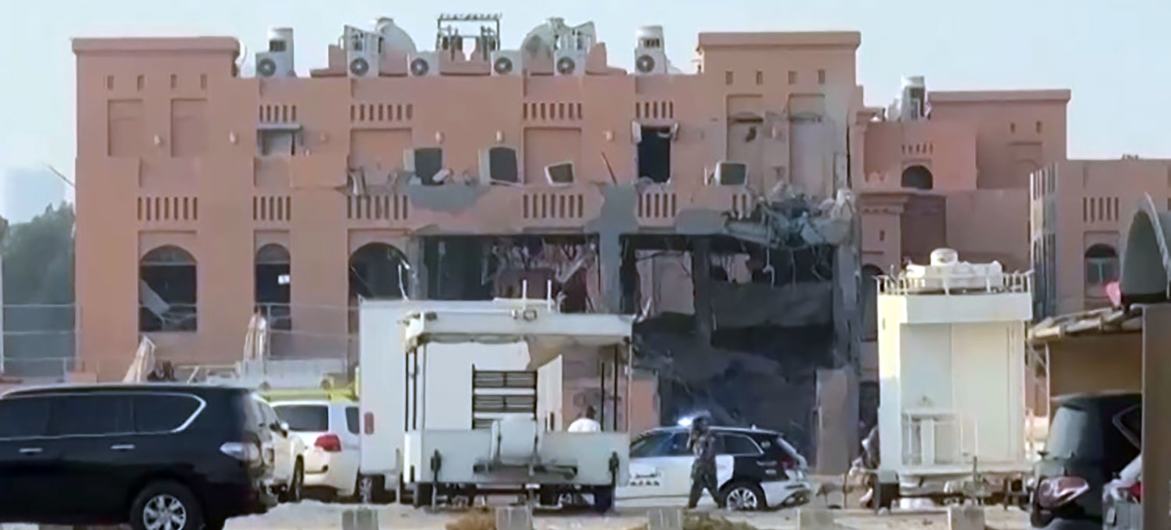
Israel’s Mideast Message

By Dr Maisa Al Masri

“This is a message to the entire Middle East,” Israeli Knesset Speaker Amir Ohana said in response to the Israeli airstrike that targeted Hamas leaders in the heart of the Qatari capital, Doha.

However, this statement is not merely a comment on the military operation strike into a declared strategic message, telling the entire region, and primarily the Gulf, that Israel, in partnership with Washington, has become the master of the decision-making process in the region.

Ohana’s statement is an explicit and direct threat that leaves no room for interpretation,  reflecting the new deterrence doctrine adopted by Tel Aviv: No red lines, no geographical immunities, and no Western allies outside the confines of Israeli dictates. Simply put, anyone who disagrees with us becomes a legitimate target, even if they are in the heart of a friendly capital that hosts the largest American military base.

This makes for a dangerous conclusion: Israel no longer views the Gulf states as partners in stability, but rather as “open arenas for fiery messages.” Washington is blessing the silence, participating in complicity, and mocking the Arabs.

Naked dominance

And don’t forget the Israeli crime in the heart of the Gulf marks the beginning of a new era of naked dominance. It’s not a traditional security operation, but a pivotal turning point in the rules of regional engagement, in which Qatar has been embarrassed both on the Arab level and internationally.

Israel has now publicly placed itself in a circle (no longer concealing its intentions) – through bombing and military strikes – that it no longer sees a distinction between political geography and the theater of operations. More dangerously, the heart of the Gulf today has become openly subject to Tel Aviv’s fire. And who can challenge it?

The strike wasn’t an intelligence leak or a silent targeting, but a direct airstrike in an area teeming with embassies, schools, and residential buildings, in a country that is a major ally of Washington and a pillar of American security in the Middle East.

Thus the message has become clear to everyone: No one is above attack… no state, no sovereignty, no partnership.

The US administration, led by Donald Trump, evaded with a series of conflicting statements about its prior knowledge of the operation. But whether it knew and blessed it, knew and remained silent, knew too late, or did not know at all, the outcome is the same: The American cover was removed, Gulf confidence eroded, and billions perished. The statements of the US embassy in Doha did not go beyond expressions of caution to American citizens, while White House statements swayed between “regret over the location” to “understanding the goal of eliminating terrorism.”

I believe the opposite message was conveyed to the Gulf capitals: Your security is not a priority, and your sovereignty does not equate to a clear position from Washington. The question that now arises however is: Why Qatar? Why now? Why was the strike carried out in Qatar and not in Turkey, or Iran for example? This is despite the fact that the Hamas leaders that were targeted had just returned from Istanbul, suggesting Tel Aviv chose the location not arbitrarily but with deep political awareness. Tel Aviv did not pull the trigger in Istanbul, even though the targeted leaders passed through it only hours earlier.

Turkey, with all its military, political, and international complexity, is not a testing ground for Israeli madness. There are red lines that even Tel Aviv dares not cross… and Turkey is one of them. The potential Turkish military response, the internal Turkish explosion during a highly sensitive election season, and the delicate balance of power within NATO rendered Turkish territory “operationally closed” even to the most violent wings of Israeli decision-making. But when the targeted figures left Istanbul for Doha, everything changed.

Qatar, like other threatened Arab states, in the Israeli security and intelligence mindset, is merely an intermediate gray area, neither neutral nor classified as an “enemy,” potentially a shocking target at a low cost. This is something all Arab decision-makers should be aware of.

From Tel Aviv’s perspective, Qatar is balancing contradictory roles, managing mediation, funding aid, and hosting parties that anger Israel without possessing a genuine deterrent umbrella. There are no international calculations that could prevent a surgical strike carried out within hours. Merely hosting an American base does not make Doha “immune,” but may even further tempt Tel Aviv, proving that decision-making in the region is no longer solely in Washington’s hands but in Tel Aviv as well.

In short, Israel needed a platform to send the biggest message since the Gaza war… so it chose the weakest link, amid the silence of its strongest ally.

Here, we can pause a moment at the Knesset member’s statement that the operation was “a message to the Middle East.” This is not a slip of the tongue, but a strategic doctrine upon which future decisions are based. Israel is telling all countries in the region that whoever harbors Hamas, or even engages in dialogue with it, will be next.

If the Arab states fail to take a firm political stand, the Doha precedent will be repeated elsewhere. It may not be Hamas’s mediation that stands accuse but rather the concepts of neutrality, balance, and even dialogue with parties Tel Aviv disapproves of and which then could become sufficient justification for a strike. It’s a policy of punishment.

This scene is posing existential questions for Arab capitals. If Qatar, Washington’s most important ally, is being bombed over the heads of its own people, after Syria, Lebanon, and Gaza… should we wait for Iraq’s turn? Riyadh? Abu Dhabi? Kuwait? And others? Does the American umbrella truly protect us, or is it used only when our interests intersect with Israel’s?

And what is the point of hosting American bases if they do not prevent airspace violations? Or provide protection?

What happened in Doha is pushing the region to crossroads: Either continuing its position of dependency and timid mediation, or repositioning strategically and developing independent air defenses, which is logistically difficult, or seeking alternative alliances (Ankara, Beijing, Moscow, Tehran?), and establishing red lines that Tel Aviv will not cross.

Qatar now faces difficult choices: Will it withdraw from the Hamas mediation? Will it demand real security guarantees? Will it go further, toward symbolic deterrence or unconventional partnerships? Or will it pay the price of protection once again?

Beware: A war of wills is beginning now. The Israeli airstrike in Doha was not just a blow to Hamas, but also a slap in the face to the sovereignty of the Gulf and the region, an undermining of the prestige of international law and its signed, ratified, and binding agreements, and an insult to the concept of the alleged strategic partnership with America.

This is the beginning of a new era, one in which Israel and Washington declare that the security of the region is no longer an Arab decision. The question now is: Will the Arabs as a whole wake up before “Ohana’s message” reaches other capitals? Perhaps.

The author is a political writer based in Amman Jordan and contributed this article to the Al Rai Alyoum Arabic website
Continue reading
Is The West Turning Against Israel?

By Dr Ramzi Baroud

Is it finally happening? Is the West turning against Israel? Or are we, whether motivated by hope or driven by despair, simply engaging in wishful thinking? The matter is not so simple.

Last July, a significant number of countries and organizations signed the ‘New York Declaration,’ a strong statement that followed a high-level meeting titled, “Conference on the Peaceful Settlement of the Question of Palestine.”

The conference itself and its bold conclusion warrant a deeper conversation. What matters for now, however, is the identity of the countries involved. Aside from states that have traditionally advocated for international justice and law in Palestine, many of the signatories were countries that had previously supported Israel regardless of context or circumstance.

These mostly Western countries included Australia, Canada, and the United Kingdom, among others. Some of these nations are also expected to formally recognize the state of Palestine in September.

Of course, one has no illusions about the hypocrisy of supporting peace in Palestine while still arming the Israeli war machine that is carrying out a genocide in Gaza. That notwithstanding, the political change is too significant to ignore.

In the case of Ireland, Norway, Spain, Luxembourg, Malta, and Portugal, among others, one can explain the growing rift with Israel and the championing of Palestinian rights based on historical evidence. Indeed, most of these countries have historically teetered on the edge between the Western common denominator and a more humanistic approach to the Palestinian struggle. This shift had already begun years prior to the ongoing Israeli genocide.

But what is one to make of the positions of Australia and the Netherlands, two of the most adamantly pro-Israel governments anywhere?

In Australia’s case, media accounts argue that the friction began when the federal government denied an Israeli extremist lawmaker, Simcha Rothman, a visa for a speaking tour.

Israel quickly retaliated by ending visas for three Australian diplomats in occupied Palestine. This Israeli step was not just a mere tit-for-tat response but the start of a virulent campaign by Israeli Prime Minister Benjamin Netanyahu to wage a diplomatic war against Australia.

“History will remember Albanese for what he is: a weak politician who betrayed Israel and abandoned Australia’s Jews,” Netanyahu said, again infusing the same logic of lies and manipulation tactics.

Israel’s anger was not directly related to Rothman’s visa. The latter was a mere opportunity for Netanyahu to respond to Australia’s signature on the New York Declaration, its decision to recognize Palestine, and its growing criticism of Israel’s genocide in Gaza.

Though Albanese did not engage Netanyahu directly, his Home Affairs Minister, Tony Burke, did. He answered the accusations of weakness by boldly arguing that “strength is not measured by how many people you can blow up.”

This statement is both true and self-indicting, not only for Australia but for other Western governments. For years, and numerous times during the genocide, Australian leaders have argued that “Israel has the right to defend itself.” Since blowing people up hardly qualifies as self-defense, it follows that Canberra had known all along that Israel’s war is but an ongoing episode of war crimes. So, why the sudden, though still unconvincing, shift in position?

The answer to this question is directly related to the mass mobilization in Australia. On a single Sunday in August, hundreds of thousands of Australians took to the streets in what organizers described as the largest pro-Palestinian demonstrations in the country’s history. Marches were held in more than 40 cities and towns, including a massive rally in Sydney that drew a crowd of up to 300,000 people and brought the city’s Harbour Bridge to a standstill. These protests, which called for sanctions and an end to Australia’s arms trade with Israel, demonstrated the immense public pressure on the government.

In other words, it is the Australian people who have truly spoken, courageously standing up to Netanyahu and to their own government’s refusal to take any meaningful step to hold Israel accountable. If anyone should be congratulated on their strength and resolve, it would be the millions of Australians who relentlessly continue to rally for peace, justice, and an end to the genocide in Gaza.

Similarly, the political crisis in the Netherlands, starting with the resignation of Foreign Minister Caspar Veldkamp on August 22, 2025, is indicative of the unusually significant change in European politics toward Israel and Palestine.

“The Israeli government’s actions violate international treaties. A line must be drawn,” said Eddy van Hijum, the leader of the country’s New Social Contract Party and deputy prime minister.

The “line” was indeed drawn, and quickly so when Veldkamp resigned, ushering in mass resignations by other key ministers in the government. The idea of a major political crisis in the Netherlands sparked by Israeli war crimes in Palestine would have been unthinkable in the past.

The political shift in the Netherlands, much like in Australia, would not have happened without the massive public mobilization around the Gaza genocide that continues to grow worldwide. While pro-Palestine protests have occurred in the past, they have never before achieved the critical mass needed to compel governments to act.

Though these governmental actions remain timid and reluctant, the momentum is undeniable. People’s power is proving more than capable of swaying some governments to impose sanctions and sever diplomatic ties with Israel, not only through pressure in the streets but also through pressure at the ballot box.

While the West has not yet fully turned against Israel, it may only be a matter of time. The precious blood of hundreds of thousands of innocent Palestinians in Gaza deserves for history to be finally altered. The children of Palestine deserve this global awakening of conscience.

Ramzy Baroud is a journalist, author and the Editor of The Palestine Chronicle. He is the author of six books. His forthcoming book, ‘Before the Flood,’ will be published by Seven Stories Press. His other books include ‘Our Vision for Liberation’, ‘My Father was a Freedom Fighter’ and ‘The Last Earth’. Baroud is a Non-resident Senior Research Fellow at the Center for Islam and Global Affairs (CIGA). He contributed this article to the Jordan Times.

Continue reading
Worst Day For The Israeli Army. Why?

By Dr Marwan Asmar

As the Israeli army attempts to enter and control Gaza City, it is receiving constant and horrendous shocks from the Palestinian resistance groups after 23 months of fighting. It is sobering for Israeli soldiers as four simultaneous ambushes were carried out against in an area of eight kilometers supposedly flattened by American-supplied mass bombs.

The latest carried Tuesday night by Hamas and Islamic Jihad fighters is sending shockwaves in Israel and among its army because of the intensity of the clashes and firepower where it is reported that Israeli tanks and armed carriers were blown up in face-to-face fighting with machine guns and other explosives.

The toll is still being counted but Hamas are promising this is just the beginning.

On the Israeli side at least one soldier was killed, 11 others injured and four soldiers missing. They are feared to be taken hostages by Hamas although the Israeli army wouldn’t confirm this with latest reports that them may have reestablished contact. But this is yet to be verified.

Many media outlets, primarily Israeli, are speculating the Israeli army may have activated its Hannibal Directive and killed at least one its soldier rather than allowing him to be taken alive by resistance fighters.

The latest clashes, carried out in Al Zaytun and Sabra neighborhoods, on the southern outskirts of Gaza City is being described by the Israeli media as another 7 October when 1200 Israelis were killed and 250 hostages were taken by Hamas fighters back to Gaza City.

This description is setting additional shockwaves among Israeli society and fear that the remaining hostages in Gaza, dubbed at least 20 will not come out alive, nor the 30 killed will not be handed back.

The latest ambushes are suggesting as well Hamas and other Palestinian resistance groups are still in their top fighting form despite the repeated utterings by Israeli Prime Minister that his army is “cleaning up” the areas of Gaza from these fighters and in spite of the fact that most of the enclave has been turned into rubble with more than 63,000 killed by the Israeli war machine.

While Israel controls 75 percent of the Israeli army, they are yet to enter Gaza City. The latest incursion into the Al Zaytun neighborhood is number seven. Their previous incursions, totaling six have ended in failure.  As a result of the latest ambushes, Israeli soldiers have withdrew yet again further south to the Natzarim Crossing which they now control and effectively split Gaza into two halves.

The Battle for Gaza City is still in its early stages however and Israel is in for more surprises. The Israeli Chief of Staff Eyal Zamir who is already deeply dismayed about attempting to control Gaza City because of insurmountable logistical reasons and powerful armed Palestinian groups, is sure to be greatly worried from the latest ambushes.

He has already warned the Netanyahu that Israel could lose 100 soldiers in the battle which is yet to start to control Gaza City and prefers a political solution. But this is not in the offing or an option for the political leaders who insist that the military plod on regardless of their safety and security.

By western estimations, the Palestinian resistance groups – mainly Hamas and Islamic Jihad –  continue to have anything between 25,0000 to 50,0000 fighters and will likely maintain their maintain their momentum and keep emerging from underground tunnels. Experts have said this is indeed a miracle for many of these tunnels, including the one under Al Zaytun, are still intact and continue to replenish the resistance.

At the moment many of the Palestinian fighters, including from leftist factions like the Popular Front for the Liberation of Palestine and the Democratic Front for the Liberation of Palestine have relocated and the Zaytun Battalion has rebuilt itself which the Israeli army claimed it destroyed in the previous 22 months. The scorching ambushes that occurred recently, and whose Israel is keeping a tight censorship lip about the actual number of its deaths and injured, are just the beginning and there is likely to be more in the coming days.

Zamir is well aware of the tough fight that lies ahead and that is why his is claiming to be following a strategy of moving slowly and “surely”. But judging from the latest fight this strategy is failing before it gets off-the-ground as the decision to enter the formidable was taken two weeks ago.     

Continue reading
Israel’s World Image in The Gutter

By Ismael Al Sharif

“This situation must end. It is blackmail, and it must end. Freeing the hostages by force would be safer than negotiating a deal that allows Hamas to survive.” – Trump

These days, leaks, press reports, and international positions are proliferating that are damaging Israel’s image severely. The most recent is a joint investigation by the British Guardian, +972 magazine, and the Hebrew website Local Call, which revealed an Israeli intelligence database showing that five out of every six Palestinians killed in Gaza until last May were civilians. Only one-sixth of the martyrs were Hamas fighters.  This figure is only half what Israel previously announced.

What’s more alarming is that Israel’s own reports are based on numbers from the Palestinian Ministry of Health in Gaza, figures Israel and the United States have long denied.

Leaks attributed to Aharon Haliva, former head of Israel’s Military Intelligence Directorate (Aman), dating back to March 2024, justified the killing of tens of thousands of Palestinians. “For every Israeli killed, 50 Palestinians must be killed in return, regardless of whether they are children,” he said. This statement is not merely a slip of the tongue but reflects a hardline religious and ideological current and embodies a systematic political and military strategy.

Two American mercenaries working for the so-called “Gaza Humanitarian Foundation” appear to admit that the Israeli army working with the US mercenaries bear direct responsibility for targeting hundreds of starving Palestinians with indiscriminate fire.

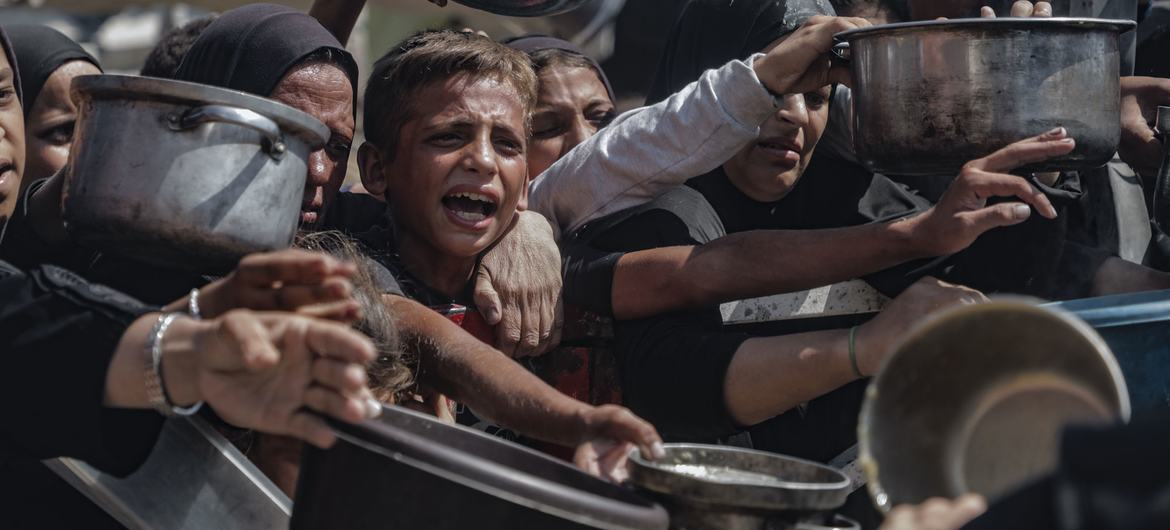
In this context, the United Nations confirms the Gaza Strip is facing the most severe phase of a man-made famine, not attributed to a natural disaster.

As a result of the popular demonstrations sweeping the streets of Europe and Australia, which have put significant pressure on their governments, criticism has begun to emerge from even Israel’s closest allies.

The Danish Sovereign Wealth Fund announced it was withdrawing its investments from the Israeli entity, and Germany has suspended arms exports there. In a British parliamentary session on 22 July, Foreign Secretary David Lammy stated: “I firmly believe the actions of the Israeli government are causing enormous damage to Israel’s standing globally.” These escalating positions reflect a growing shift in the positions of its allies.

The Israeli media, along with the pro-Israeli global media—one of Israel’s most important soft power tools—are failing to counter these reports, leaks, and shifting positions among its allies.

War criminal Netanyahu himself acknowledged the failure of the Israeli media and its pro-Israel media to repair the deteriorating image of the Jewish state. Logic would have required Israel to improve its media image by halting the massacres and allow humanitarian aid to enter.

Instead, he denied all these accusations and launched an attack on its closest allies, reminding Germany of its Nazi era and its actions would only serve “terrorism” and be a “reward to Hamas.” The Zionist Foreign Ministry also summoned the ambassadors of the above countries and reprimanded them.

War criminal Netanyahu pressured the social media to alter their  algorithms. Leaked documents reveal that Twitter and Facebook already restricted posts deemed to be anti-Israel and/or sympathetic to the tragic plight of our people in Gaza. He did not stop there, but went on to criminally assassinate the journalists, the latest of which at the Nasser Hospital, killing four journalists at once, to silence voices and intimidate the media workers from carrying out their mission.

War criminal Netanyahu would not have dared to display such arrogance, defiance, and indifference without American support, as he always relies on “Big Brother” to compensate for his material and moral losses. Take the example of Charles Kushner—Jared Kushner’s father and the US ambassador to France— who wrote an open letter to President Macron, published in The Wall Street Journal.

He expressed his “deep concern about the sharp rise in anti-Semitism in France,” accusing the French government of failing to take sufficient steps to counter it. He also noted that Paris’s critical statements about Israel and its efforts to recognize a Palestinian state “encourages extremists, fuels violence and endanger Jewish lives.”

The letter coincided with the 81st anniversary of the liberation of Paris and the halt to the deportation of Jews to Nazi concentration camps, a symbolic reminder of a tragic past.

However, France rejected and condemned the letter, and the US State Department quickly came out in support of the US ambassador there.

Netanyahu’s motto is: Those who have an ally like the United States have nothing to fear, nor will they grieve.

This is a translated piece written by Ismael Al Sharif and published in the Arabic Addustour newspaper in Amman.

Continue reading
Israel: A Bad Brand in World Markets

By Ramzy Baroud

In an important step toward the economic isolation of Israel due to its genocide in Gaza, Norway’s Government Pension Fund Global has decided to divest from yet more Israeli companies.

Norway’s sovereign wealth fund is the world’s largest, with total investments in Israel once estimated at $1.9 billion. The decision to divest was taken gradually but is consistent with the Norwegian government’s growing solidarity with Palestine and rising criticism of Israel.

Taking a leading role along with Spain, Ireland, and Slovenia, Norway has been a vocal European critic of the Israeli genocide and man-made famine in Gaza, actively contributing to the International Court of Justice’s investigation into the genocide, and formally recognizing the state of Palestine in May 2024. This diplomatic and legal stance, coupled with its financial divestment, represents a coherent and escalating effort to hold Israel accountable for the ongoing extermination of Palestinians.

The Israeli economy was already in a state of free-fall even before the genocide. The initial collapse was related to the deep political instability in the country, a result of Israeli Prime Minister Benjamin Netanyahu and his extremist government’s attempt to co-opt the judicial system, thus compromising any semblance of “democracy” remaining in that country. This resulted in a significant lowering of investor confidence.

The war and genocide, beginning on October 7, 2023, only accelerated the crisis, pushing an already fragile economy to the brink. According to reports from the Israel Ministry of Finance, foreign direct investments in Israel fell by an estimated 28 per cent in the first half of 2024 compared to the same period in 2023.

Any supposed recovery in foreign investments, however, was deceptive. It was not the outcome of a global rallying to save Israel, but rather a consequence of a torrent of US funds pouring in to help Israel sustain both its economy and the genocide in Gaza, along with its other war fronts.

Israel’s Gross Domestic Product was estimated by the World Bank to be around $540 billion by the end of 2024. The war on Gaza has already taken a considerable bite out of Israel’s entire GDP. Estimates from Israel itself are complex, but all data points to the fact that the Israeli economy is suffering and will continue to suffer in the foreseeable future. Citing reports from the Bank of Israel and the Ministry of Finance, the Israeli business newspaper Calcalist reported in January 2025 that the cost of the Israeli war on Gaza had already reached more than $67.5 billion. That figure represented the costs of the war up to the end of 2024.

Keeping in mind that the ongoing war costs continue to rise exponentially, and with other consequences of the war, including divestments from the Israeli market by Norway and other countries, future projections for the Israeli economy look very grim. The Israeli Central Bureau of Statistics reported that the Israeli economy, already in a constant state of contraction, shrunk by another 3.5 per cent in the period between April and June 2025.

This collapse is projected to continue, even with the unprecedented US financial backing of Tel Aviv. Indeed, without US help, the precarious Israeli economy would be in a much worse state. Though the US has always propped up Israel, with nearly $4 billion in aid annually, the US help for Israel in the last two years was the most generous and critical yet.

Israel is the recipient of $3.8 billion of US taxpayer money per year, according to the latest 10-year Memorandum of Understanding signed in 2016. Equally, if not more valuable than this large sum are the loan guarantees, which allow Israel to borrow money at a much lower interest rate on the global market. The backing of the US has, therefore, enabled investors to view the Israeli market as a safe haven for their funds, often guaranteeing high returns. This applies to the Norwegian sovereign wealth fund as it did to numerous other entities and companies.

Now that Israel has become a bad brand, affiliated with unethical investments due to the genocide in Gaza and growing illegal settlement expansion in the West Bank, the US, as Israel’s main benefactor, has stepped in to fill the gaps.

The US emergency supplemental appropriations act of April 2024 allocated a total of $26.4 billion for Israel. While much of the money was earmarked for defense expenditures, in reality, most of it will percolate into the Israeli economy. This amount, in addition to the annual military aid, allows the Israeli government to minimize spending on defense and allocate more money to keep the economy from shrinking at an even faster rate.

Additionally, it will free the Israeli military industry to continue producing new, sophisticated military technology that will ensure Israel’s continued competitiveness in the arms market. The military-industrial complex, a significant part of the Israeli economy, is thus not only sustained but given a fresh impetus by American aid, ensuring the war machine continues to function with minimal financial disruption.

All of this should not diminish the importance of divestment from the Israeli financial system. On the contrary, it means that divestment efforts must increase significantly to balance out the US push to keep the Israeli economy from imploding.

Moreover, this should also make US citizens, who object to their government’s role in the genocide in Gaza, more aware of the extent of Washington’s collaboration to save Israel, even at the price of exterminating the Palestinians. Indeed, the flow of funds from the US is not a passive action; it is an active collaboration that directly enables the Israeli genocide in Gaza.

Ramzy Baroud is a journalist, author and the Editor of The Palestine Chronicle. He is the author of six books. His forthcoming book, ‘Before the Flood,’ will be published by Seven Stories Press. His other books include ‘Our Vision for Liberation’, ‘My Father was a Freedom Fighter’ and ‘The Last Earth’. Baroud is a Non-resident Senior Research Fellow at the Center for Islam and Global Affairs (CIGA). His website is www.ramzybaroud.net

Jordan Times

Continue reading