Historical Kick: Weighing The Hit Against Iran

EDITOR’S NOTE: This is a reprint of an article written by me and posted in 2008 about Israel gearing up to hit Iran’s nuclear facilities. Perceptive is the fact it took Israel and and the USA 17 years, in June 2025, to make a direct hit on Iran and its nuclear facilities. Today, US President Donald Trump, and with the current protests in Iran, is weighing the options for another direct on Iran. However Tehran said it will retaliate with more launches on Tel Aviv and other Israeli cities just as it did last year as well on as US military bases. The reprint is made here with the same title, Weighing the hit against Iran as it appeared in the Media Monitors Network.

Will Israel hit Iran’s nuclear facilities, or won’t they? You would think everyone would be talking about it on the international level, and it might be the case judging from the newspaper articles that are being churned out about a possible nuke followed by regional conflagration.

In Jordan news is in full throttle: Yes Israel is contemplating a hit on Iran and it is in line with its power-hungry policies to dominate the region even if it eventually destroys itself.

Newspapers here see Israel as careless and would not only be prepared for that slippery-slope of a nuclear exchange but would use her nukes as a deterrent force to stop Iran from gaining her own nuclear capability.

Iran is not afraid, saying time and again, her nuclear development is for peaceful purposes and it will have a nuclear capability come what may regardless of what Israel is trying to do and of the international nuclear inspectors monitoring her activities which is more than can be said of Israel whose nuclear reactors and capabilities remain a state secret.

On a more personal level, I briefly talked to my wife about the possible hit in Iran, which I thought was well probable after reading the recent articles, and she just looked and said the issue is being blown out by media talk: There “won’t be war” and it is “media hype”.

Someone else just made fun of the issue. All this was going on when International Atomic Energy Agency chief Mohammad Al Baradei was warning that if a strike does happen then it will surely turn the region into a ball-fire.

Ball-fire or not, the journalists and media were having a field day, now they say is the best time to strike because US President George W. Bush is nearing his tenure in office and Israeli Prime Minister Ehud Olmert is in trouble over allegation of corruption charges and accepting bribes, and so the theory states if he is going to go then he wants to go in style.

But such reports and opinions are being made when the actual devastation and the far-reaching consequences of a potential strike and the subsequent military and nuclear exchange is underplayed and even treated as a daily occurrence where people will just pick up the pieces and continue with their lives.

People, including the media are not fully aware of what a nuclear exchange would mean, in terms of the scale of human losses, of radiation, devastation, the so-called nuclear winter of darkness, the nuclear holocaust that would actually make the area, the region and the geography completely uninhabitable for many years to come.

While this maybe the case in the West with the media there long tackling these issues, especially at the height of the Cold War in the 1980s, here the media has taken more of a sedate view about tackling these subjects especially since more important issues were on the scene.

That is up till now. Seeing the issue as an extension of the Arab-Israeli conflict, today the media is using the possible strike as a point of titillating us into fright regardless of the cynicism of many people like my wife who keep saying its media scare-mongering. But, and regardless again, what is required is a real cold analysis of the situation as it exists.

Would Israel be willing to take a chance and strike, whether military or nuclear, knowing full-will that the present Iran has the long-range missile capability, and knowing also the United States is not too sure and can’t make up its mind about the strike while playing lip service to negotiation and diplomatic talk.

Iran is not Iraq; this is not 1982 when Israeli F 16s flew over the region and bombed the Ozreiq reactor being built by under Saddam Hussein. Despite the fact the Americans are in Iraq, and the Israelis are flexing their muscles against the Palestinians and frequently threatening the Lebanese and Syrians, the security and military environment in the region is changing,

New powers like Iran, Syria, Turkey and non-state actors like Hizbollah and maybe Hamas are increasingly making headways in the region and internationally, and therefore a direct hit on Iran by Israel would not be received at all well by the Europeans who already recognize Israel’s intransigence on the Middle East process regardless if they want to do something about it or not.

Today, Israel’s image is increasingly at stake, an image that has come to be increasingly tarnished since the start of the Intifada in the year 2000, and Israel would definitely not want to rock the boat by seeking to pot practice with its own nuclear war heads and missiles–guessed at 200 in the late 1990s–on states like Iran.

The other important thing to remember is that Israel values its own existence and survival; that’s why it will not practice adventurist measures to the point where it may destroy itself through nuclear striking other nations even though such would be surgical strikes or limited which are nullified for all intense and purpose.

Hence survival is not only a security argument but an ideological one that involves an entity, identity and statehood. An Israeli state even if it does survive a nuclear exchange would probably be sitting in an ocean of radiation still far to be within the parameters of Europe, and certainly too far to remain as the United States valuable ally because if all things are destroyed there would be no need to have a “trusted friend” in the Middle East.

These continue to be in the realm of possibilities and conjectures. However, and against the argument of nuclear hit on Iran is the fact that American troops are in Iraq, in the middle of what would become a “nuclear ball-fire”. This is, unless of course, Israel refuses to give warning and go for the element of surprise and unleashes its weapons against Iran in the hope of preemption, a doctrine the US used for launching its 2003 war to remove Saddam Hussein and destroy his so-called weapons of mass destruction which were subsequently proved false.

Continue reading
After Venezuela… Tighten Your Seatbelts

By Mohammed Abu Rumman

John Mearsheimer, one of the most prominent professors and theorists of international relations and a founder of the so-called “structural realism” school, believes that the “Venezuela operation” (arrest of President Nicolás Maduro and his wife) is not the end, but rather the beginning of major transformations taking place in the international system. While it reflects a significant tactical and military success for the United States, it also constitutes a major strategic failure, in terms of the inability to accurately predict the repercussions of this operation on the image of the United States and its role in the world, and the mobilization and consolidation of forces hostile to it regionally and internationally in response to the proposed American behavior.

One of the most important points raised by Mearsheimer is his prediction that the Venezuelan process will serve as a key and fundamental dynamic for the transition from the current unipolar international system, which emerged after the end of the Cold War, 35 years ago, and in which the United States and its Western allies dominated international politics, to a multipolar system. This multipolar system has already begun to take shape in one form or another in recent years, with the other two main poles being China, which clearly possesses significant economic, military, and cyber capabilities, and Russia.

On the other hand, the European continent is currently suffering from numerous problems, including its complicated and strained relationship with the United States, its strategic partner. It was evident from the recent US National Security Strategy announced by President Donald Trump that he underestimates Europe and its strategic power and greatly disregards the alliance between Europe and the United States.

From another perspective, it is clear there is considerable Israeli jubilation. Political analysts in Tel Aviv are clearly attempting to link this operation to the conflict with Iran, either by associating the Venezuelan regime with anti-Semitism and claiming the presence of significant activities by Hezbollah and Iranian supporters in Caracas, and/or considering what happened there, a message to the Iranian regime that new policies are being implemented at the beginning 2026, and the threat will not be limited to rhetoric only but be carried out on the ground.

This may align with Trump’s statements and leaks regarding his decision not to accept a proposal from his Middle East envoy, Steve Wittkopf, to renew dialogue with Iran. On the contrary, Trump insists on halting any dialogue with Iran, a view supported and advocated by his Secretary of State, Marco Rubio, and Secretary of Defense, Pete Hegseth, who are pushing for a more stringent military and economic approach towards the Iranian regime.

This brings us back to the current Trump US National Security Strategy which served as a prelude and framework for what happened in Venezuela and anticipated US policies toward its two neighbors: Latin America and Canada. The strategy began by emphasizing the Monroe Doctrine (i.e., ensuring US hegemony and control over South America — the backyard) as the primary priority for the United States and its national security, a point we can infer from Trump’s subsequent threats against both Colombia and Cuba.

More importantly, there is a shift in the strategic perspective that dominates the Trump administration, both domestically and internationally. This refers to the question of identity, specifically the Anglo-Saxon Protestant community—which, for the Trump administration, represents its electoral base (we can here refer to Samuel Huntington’s book, “Who Are We?”, by the theorist of the clash of civilizations—a work that complements the Trump administration’s vision). While this new line, ostensibly represented by Trump, is the leading force within the Republican Party, it fundamentally reflects several new dynamics that began with the neoconservative dominance of the White House under George W. Bush.

These dynamics involve a heightened religious, cultural, and social connection to this identity, and a greater role for Christian Zionist groups and the American right wing in shaping American policies and strategic visions.

Within these parameters, ladies and gentlemen, we are entering a more difficult and tense phase, both globally and regionally. As Mearsheimer aptly describes it, this is a transitional phase in the international order, one in which America abandons its claims of democracy and human rights, international institutions become arenas of conflict between superpowers, and a state of confusion, turmoil, and regional tensions prevails, particularly in a region like the Middle East, which is already a perpetual hotspot of conflict in the world.

This article by Muhammad Abu Rumman was originally published in Arabic in the Jordan Addustour daily newspaper.

Continue reading
For Israel The ‘Yellow Line’ is Occupation

By Ismail Al Sharif

Two months after the signing of the ceasefire, that remains merely ink on paper, the region is yet to witness a fundamental shift to the second phase: A transition from a strategy of destruction to a withdrawal mechanism, and from the logic of military operations to a framework of international administration, paving the way for a political process to ultimately lead to the establishment of a sovereign Palestinian state.

However, the realities on the ground today proves this path is nothing more than a theoretical assumption quickly crumbling in the face of a complex reality.

Two months after the supposed ceasefire, a completely different truth emerges; Israel continues its ethnic cleansing of the Gaza Strip. Palestinian civilians are dying from the bitter cold, just as they previously perished from the bombardment, while unilateral decisions are being made whilst deepening the chasm of mistrust between the parties supposedly partnering in ending this humanitarian tragedy and implementing the Donald Trump plan, who claims to have ended a three-thousand-year-old war.

What was supposed to be a temporary withdrawal line for the Israeli army has, according to its generals, become a new de facto border called the “Yellow Line,” swallowing up more than half of the Gaza Strip.

Early this month, the army’s chief of staff Eyal Zamir addressed his troops, asserting Israel “now exercises effective control over vast areas of the Strip” and its military units “will maintain their positions on these defensive lines.” He explicitly declared “the Yellow Line represents a new border of an advanced line of defense to protect Israeli society, and serves as a framework for the ongoing military operational activity.”

From these comments it can be understood the ceasefire line is no longer a temporary, transitional measure, but has effectively become a forcibly-imposed border, a permanent defensive zone, and a legal framework that legitimizes a long-term Israeli military presence within territories that, until recently, were an integral part of the Palestinian territories.

These pronouncements are not merely political rhetoric. The “Yellow Line” is now embodied on the ground by massive, yellow-painted concrete blocks that bisect the Gaza Strip to a depth of between 1.5 and 6.5 kilometers. Before the recent escalation, the Strip extended about 41 kilometers in length and between 6 and 12 kilometers in width. As it stands however, Israel has tightened its grip on more than half of this area in one of the world’s most densely-populated regions. This has exacerbated overcrowding, drastically reduced usable land, and devastated the agricultural sector, thus intensifying the humanitarian catastrophe, entrenching mass forced displacement, deepening the destruction, and contributing to the complete collapse of the institutional infrastructure.

The Zamir statements cannot be separated from the context of the pronouncements of war criminal Benjamin Netanyahu, who, from northern occupied Palestine, spoke of the expansion of his northern and northeastern borders by establishing a demilitarized buffer zone from the Syrian capital, Damascus, to the occupied Golan Heights. This is being made with the advance of his military forces into the UN-monitored buffer zone and the occupation of the Syrian side of Mount Hermon (Jabal al-Sheikh). Also, Israel is presently establishing establishing a “buffer zone” in the territory of southern Lebanon, destroying border villages and/or leaving them completely depopulated and deploying military reinforcements at strategic border points to impose a new security and geopolitical reality by force.

According to the Trump’s plan the second phase was supposed to begin after Hamas fulfilled its commitment to release all Israeli captives, both alive and deceased, and after Netanyahu announced his readiness to move to this phase.

However, this transition was contingent on two fundamental conditions: The deployment of international peacekeeping forces and the complete disarmament of Hamas. Herein lies the complexity of the issue; Netanyahu has publicly expressed skepticism about the ability of any international force to carry out the disarmament mission and has categorically stated that Hamas’s disarmament will be achieved through coercive military means and under the direct supervision of Israeli forces.

In contrast, Hamas maintains its categorical refusal to disarm except within a comprehensive framework that includes the formation of a unified Palestinian ‘technocratic” government and a complete withdrawal of Israeli occupation forces. At a minimum, Hamas has expressed its willingness to store its weapons within an agreed-upon mechanism as part of a comprehensive political process, as confirmed by Bassem Naim, a member of the movement’s political bureau, in recent statements.

The current situation reveals that Israel is treating the existing circumstances as a strategic opportunity to expand its geographical borders and exert maximum pressure on the Palestinian people, paving the way for what it calls “voluntary displacement” under a humanitarian pretext—a pretext it itself created.

Simultaneously, it is deliberately and systematically obstructing the transition to the second phase of the Trump agreement by continuing its policies of occupation, killing, and destruction under the guise of a ceasefire.

It is clear this arrangement serves its strategic interests and intersects with broader Western interests, with the ultimate result being the aborting of any chance of establishing a sovereign Palestinian state, and keeping the Gaza Strip – as it has always been – a besieged enclave, which Israel exploits to achieve its political agenda and strengthen its internal cohesion, and turning it into a field laboratory in which various military weapons, biological tools and advanced technological techniques are tested, but with a reduction in the population, which allows it to continue what is strategically known as “managing the conflict” in the long term.

This article by Ismail Al Sharif was originally written in Arabic for the Addustour daily and published in Crossfirearabia.com.

Continue reading
Israel And Palestinian Heritage Destruction

Last month, Palestinian Minister of Tourism and Antiquities Hani Al-Hayek warned that during its 2023-2025 war on Gaza Israel damaged or destroyed more than 316 archaeological sites in Gaza and the West Bank. While most were from the Mamluk and Ottoman eras, others were from the early Islamic centuries and the Byzantine period. He argued that Israel is conducting “systematic targeting” of Palestinian historical sites as part of its long-term strategy of colonising and annexing the West Bank.

While the current right-wing Israeli government flatly rejects withdrawal from Palestinian territories conquered 58 years ago, the Arab world and the international community argue that regional peace depends on the establishment of a Palestinian state in the West Bank, East Jerusalem and Gaza. This means that Palestinians should be in charge of archaeological remains in these territories.

Hayek was prompted to speak out after archaeologists protected by Israeli troops raided a Byzantine era site near Ramallah and stole five columns. Israel claimed Palestinians had built a structure in the centre of the site, damaging the archaeological remains.

Both Israelis and Palestinians claim a second site, Sebastia, near Nablus in the northern West Bank belongs to their cultural heritage, although it has been ignored and unexcavated for decades. Israel holds the archaeological park, which is in Area C under full Israeli control, while the Palestinian town of Sebastia is in Area B, under joint Israeli and Palestinian Authority security control but Palestinian administration.

Israel has begun to expropriate 1,800 dunams of land for the “preservation and development” of Sebastia which has been settled from the Iron Age (1200-586 BC) through modern times. The site contains layers of history reaching back nearly 3en,000 years and contains Iron Age dwellings, walls, and a palace which exist alongside remnants from Roman times.

Sebastia was the capital of the northern Israeli Kingdom during the first half of the 10th century BC. Conquered by the Assyrians in 720 BC, Sebastia became an administrative centre under the Assyrians, Babylonians, Persians, and Romans, Muslim Arabs and Ottomans.

The site and the modern village of Sebastia – which has about 3,200 Palestinian inhabitants – have been declared a World Heritage Site by UNESCO as the town is the location of Roman royal tombs, a Roman amphitheatre, medieval buildings, and a historic mosque built within a Christian church.

As the Israeli expropriation order covers the archaeological site and Palestinian olive plantations, Palestinian landowners were given two weeks to file legal objections to the seizure and their expulsion. This is the largest antiquities-related West Bank expropriation order issued by Israel since the 1967 occupation. While international law prohibits occupiers from carrying out excavations in areas they control, Israel has ignored this as well as most other laws governing occupations. In May 2023, Israel allocated $9.2 million for Sebastia.

The Israeli Peace Now movement declared: “Israel continues to harm Palestinian rights, expropriating thousands of dunams in violation of international law and settling the northern West Bank, an area with only a few thousand settlers compared with more than a million Palestinians.” The movement warned, “Israeli greed harms not only the landowners, but also the prospect of a peaceful solution that upholds the rights and heritage of both peoples.”

Emek Shaveh, an Israeli anti-occupation group founded by archaeologists, and Yesh Din, an Israel rights movement, issued a joint report in 2018 which stated, “Since 1967, Israel has endeavoured to appropriate the archaeological assets of the West Bank, based on the view that the Jewish heritage of places and antiquities testifies to a bond between the antiquities and the state of Israel, and constitutes a justification for deepening its control over ancient sites. This perception underlies every aspect of Israel’s archaeological practices in the West Bank.

“Israel’s control enables the physical exclusion of Palestinians from the sites and ancient finds through various means, ultimately weakening their connection to their heritage. It also enables Israel to shape the historical narrative of the sites by highlighting and glorifying their significance for the Jewish people and downplaying the role of other peoples and cultures who also had a part in the history of the region…

“Under the guise of concern for heritage, the government is investing tens of millions ..in turning heritage sites into weapons of dispossession and annexation.” The group added, “The intention to expropriate private land is anything but preservation; its purpose is to establish a tourism settlement that will detach Sebastia’s heritage from the [Palestinian] town and Judaize the area through the tourists who visit the site.”

Israel has weaponised archaeology to assert the legitimacy of its take-over of the land between the Mediterranean and the Jordan River. While striving to discover, develop and preserve Jewish archaeological remains in Palestine, Israel neglects or even harms non-Jewish or Palestinian heritage at the expense of Palestinians.

Meanwhile, Palestinian Archaeologists are trying to restore damaged sites. They have begun work on the Qasr al-Basha museum, a Mamluk-era palace located on a UNESCO heritage site dating back to 800 BC. After destroying 70 per cent of the museum by bombardment, Israeli troops occupying the site looted 20,000 ancient and medieval artifacts stored there.

UNESCO has reported damage to the Saint Hilarion Monastery, one of the oldest Christian heritage sites in the region, and the 7th century Omari Mosque, Gaza’s main place of Muslim worship. Due to the Israeli blockade on building material restorers have been compelled to scrabble in the ruins of these buildings for material for restoration.

In August, Israel appropriated 63 Palestinian West Bank archaeological sites, 59 in Nablus governate, three in Ramallah governorate, and one in Salfit governorate. Sixty-three were declared “Israeli historical and archaeological sites,” excluding Palestinian ownership. In total, Israel has taken over 2,400 out of the 6,000 Palestinian sites in the West Bank. This process can endanger the study of archaeology and history in this area if archaeologists involved are political motivated and preserve only what suits them while wiping out layers of remnants above and below layers, they explore. Meanwhile, Israeli archaeological organisations and personalities indulge in bitter competition with each other.

This article is written by Michael Jansen for the Jordan Times.

Continue reading
Destroying The Ceasefire

Dr Marwan Asmar

Since the signing of the ceasefire on 10th October 2025 Israel killed at least 347 Palestinians in the Gaza Strip. 

Although the Donald Trump team officials in the White House keeps saying how they satisfied are about the maintenance of the Gaza ceasefire, the truce is in a precarious mode. Many expect the ceasefire to be broken any day because of the bloody Israeli military actions and fire on the whole of the Gaza Strip.

Since it took effect last October, Israel violated the truce over 500 times. Israel begun attacking the Gaza Strip at the end of the first week of the ceasefire, and continued thereafter with the average daily killed standing at seven at least.

However, the highest number of those killed was on 29 October, 2025, when 109 people were slaughtered and a reminder of the carnage days of the war. But after that, the number went down significantly. On 19 October the number of those killed went down to 45, 33 on 19 November and at least 21 people on 23 November. Here as well, and although figures may vary, UN experts say at least 70 of those killed were children. Did they pose a threat to the mighty military machine?

This is not to say anything about the number of those injured, a figure conservatively put at 889 and likely to increase as the days go by especially since there is nobody to stop the Israelis.

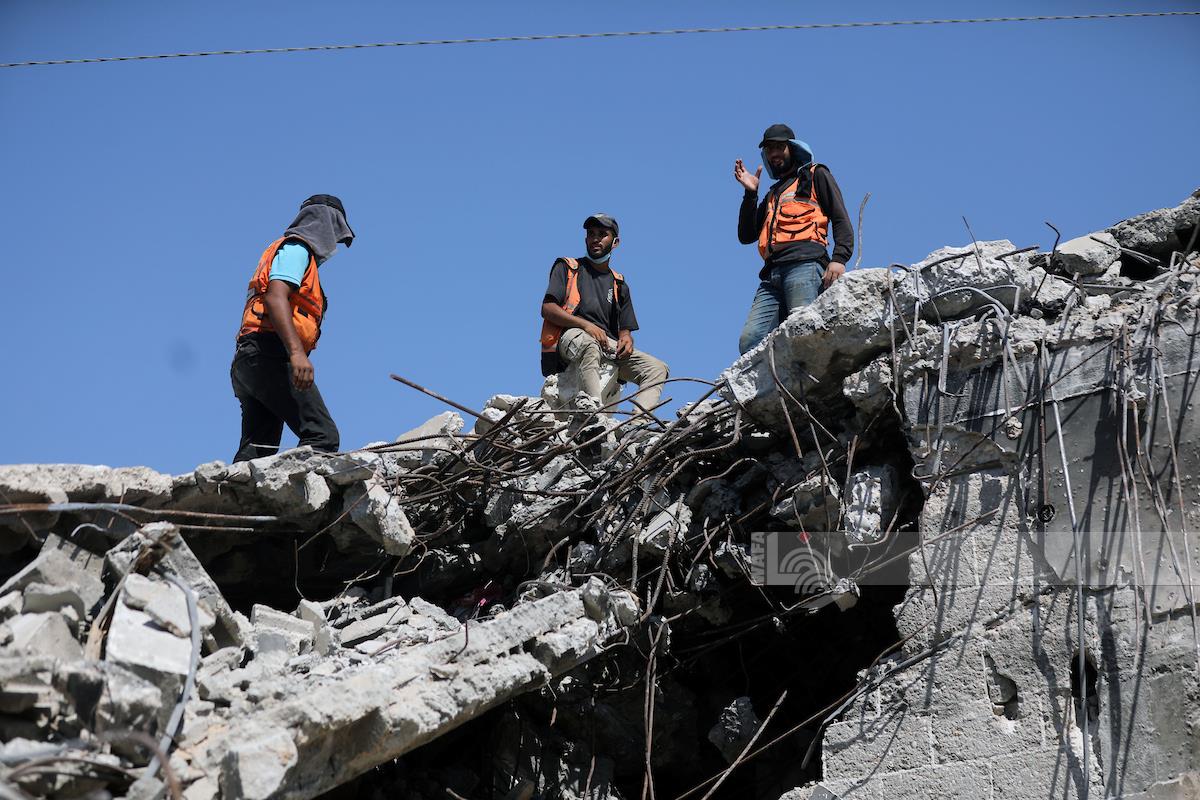
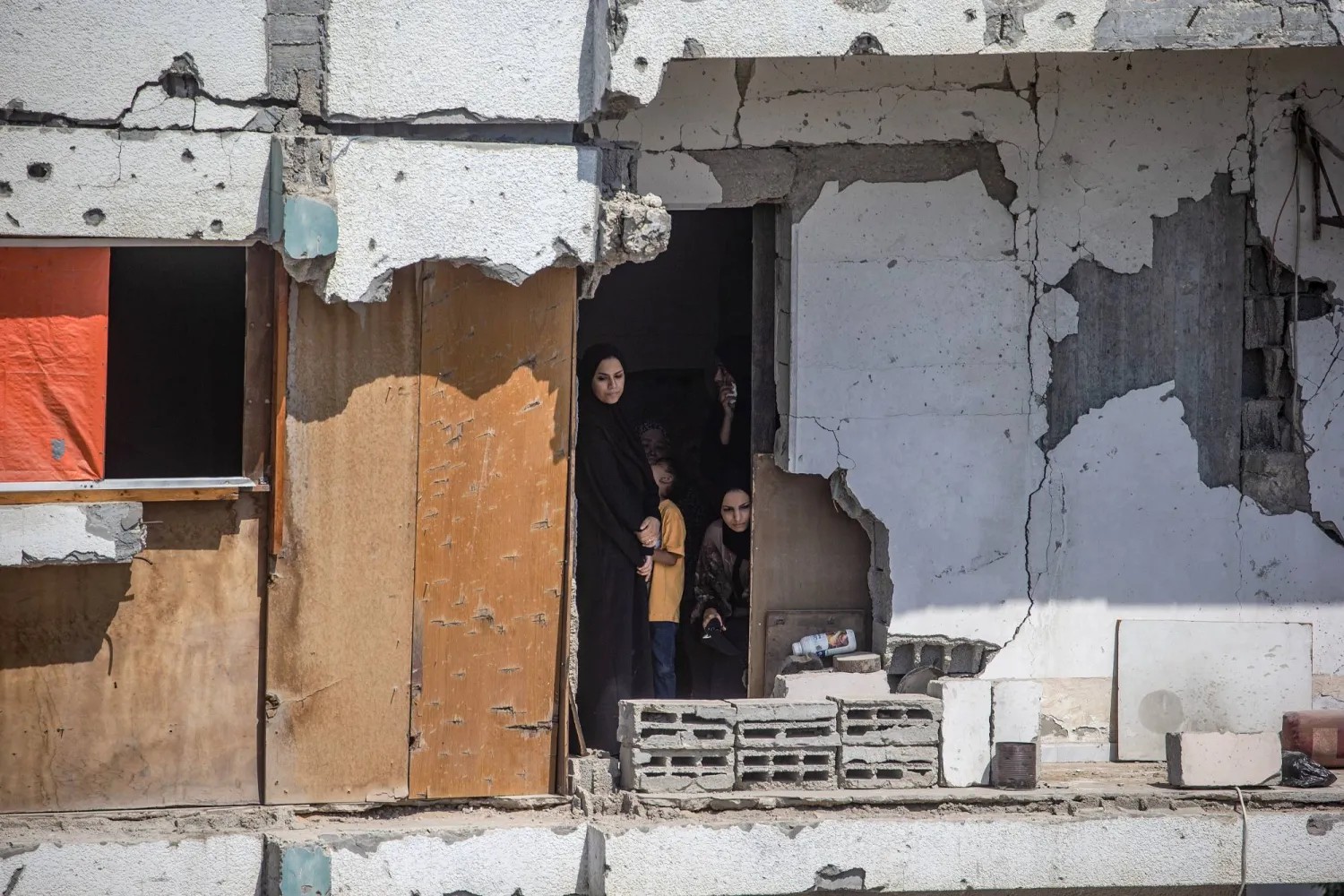
While the number of those murdered may have gone down drastically, the Israeli war machine continues to bomb different areas of Gaza, from its north, center and south of the Strip, neighborhoods, communities, cities, towns and refugee camps that exist only in names but already lie in debris, heaps of rubbles and destruction.

Biet Hanoon, Jabalia, Biet Lahia, Gaza City, Al Maghazi, Khan Younis and Rafah and more, once thriving population centers have become mounts of rubble and wreckage unfit for human habitations, gorges stumped into the earth with nothing but skewed bricks and mortar.

The Israeli army, and through its air force, has continued to re-bomb schools, mosques, residential building and tattered infrastructures and/or what remained of them. Israeli pilots and/or quite often through drones, are flying over sorrow horizons of destroyed mounts and bombing what is left of a past society, all in search of illusive Palestinian groups they were unable to “flush out” in the last two years of their genocide of Gaza.

The genocide has created a sence of acceptable madness among the Israeli populace that “you bomb as much as you can” twice, thrice, four times and more so the vicious cycle of violence is indelibly printed on helpless civilians who nevertheless, refuse to be expunged.  

Today, Gaza is a horror story with its new cold, calculated and unforegiven Israeli masters refusing to accept their new stalemate. They continue to occupy 53 percent of the enclave with them unwilling to quench their thirst for blood but leap into the misery they have created. Just after 10 October, they have demolished 1500 buildings in the areas they control and this is just the beginning for Israel is planning for a long occupation despite the US plan outlined by president Donald Trump on 29 September to end the war on Gaza and start to redevelop the enclave. This is certainly a pipedream.

The killings continue as Israel pays lip service to a US plan outlined at the heart of which is dismantling Hamas and the rest of the Palestinian resistance groups. But the story as plotted by the new political masters of Trump et el., begins here. With the ending of Hamas, the redevelopment of Gaza is supposed to start.

However, everyone is still stuck at stage of one of the plan. Hamas has already set free the 20 remaining Israeli hostages and is yet to handover the final two of the 28 dead hostages it already delivered to the Israeli hostages. God only knows when they will be delivered.

The movement says it has been finding it extremely difficult to search for the remains of the hostages and finding the final two would be a grueling task because of the mass bombing of the enclave whose geography has been drastically altered with people no longer knowing where former places, houses and roads no longer are. They have become alien to a society they lived in all their lives.

Of course, this has become music to the ears of Israeli Prime Minister Benjamin Netanyahu and his extremist government who feel they can continue to bomb Gaza under the eyes of the Americans in a pretext that the final remains of the hostages are still to be delivered and that Israel continues to fight Hamas.

Within this context many observers are saying Israel wants to “lock” the Trump 30-point plan in phase I and doesn’t want to move to stage II because that would mean it’s war objectives was for nothing apart from destroying Gaza: No Palestinian transfer, No end to Hamas and the calls for a Palestinian state growing by the majority of countries of the world. 

Despite the close alliance between the United States and Israel, the ultimate aim of the Trump plan – being its end result – is the call for a Palestinian state. Netanyahu has long realized this and this is why he wants to lock Gaza into an initial ceasefire phase in which he will continue to call the violent shots on Gaza.

Continue reading