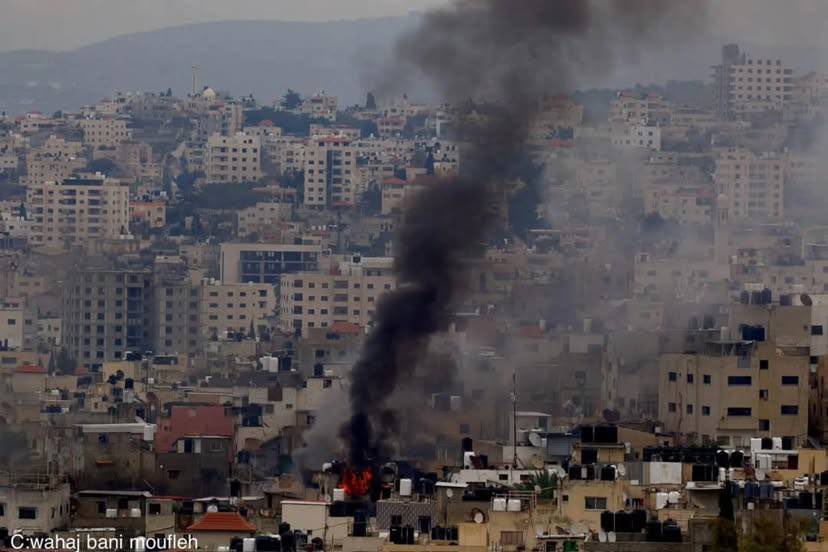
Trump’s ‘Business-like’ Solution to Gaza

By Dr Khairi Janbek

If you remember in the films, when the big mafiosi harms a friend or an ally, says, usually I had nothing against him, I even liked him, but this is pure business.

One is using this adage, because it simply reminds me of what president Trump said about the Jordanian monarch and the Egyptian president. He expressed his affection towards both, and said he got on well with them and liked them, but wants them to take refugees from Gaza and settle them in their own territories.

Now, doesn’t Mr Trump know that this move presents an existential threat to all? Or is he indifferent to their concerns, the fact being that, it’s nothing personal, just a businesslike solution to the Gazan Palestinians, whom in fact do not wish to leave their land as things stand now.

Unfortunately, this proposal stems from a very long history of the notion that, Israel is a very small country, and the Arab world is vast, and since the Palestinians are Arabs then they can be absorbed in other Arab countries!

Of course, this notion does not take into consideration that the Palestinians do not wish to leave their lands and seek justice in their own homeland, but then again there is an Arab contribution to this dimension which emerged in the so-called post-Arab-Israeli peace process, albeit in all probability unintentionally.

The fundamental idea of land for peace, which implicitly and explicitly meant land and state for the Palestinian people; which is incidentally a political notion, is that the Palestinian problem becomes a humanitarian issue that of refugees demanding the right of return.

In essence a people without land, or unspecified area of land doesn’t not constitute a nation. One is not going to bore everyone with justice and injustice, rather wishes to say why is it assumed by Mr Trump that the Palestinians should not have a say in their independent destiny? Why doesn’t he address them directly, after all the US is one of the guarantors of the Oslo accords, which incidentally gave legitimacy to the PNA.

Having said all that, where do we go from here, and for whom is Gaza supposed to be built for? If it is supposed to be built for the Gazans would that mean the Gazan status in Jordan and Egypt is a temporary proposal, in other words until Gaza is rebuilt? And who will rebuild Gaza?

These are very important details which cannot be swept aside without discussions involving the Egyptians, Jordanians and the PNA. But can Mr Trump’s idea really be worth considering and entertaining in terms of practicalities or is it on top-of-the-head remark?

The writer is a Jordanian columnist based in Paris
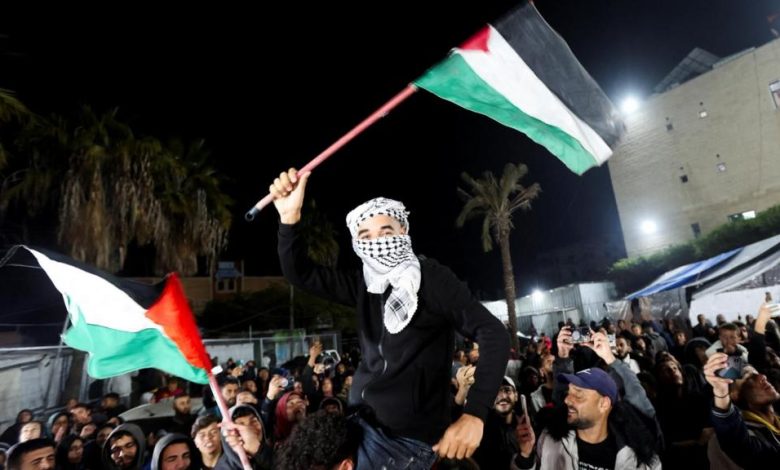
Continue reading
Winners, Losers in Ceasefire Gaza

Dr Khairi Janbek

The idea of peace in Gaza is a deeply complex and sensitive issue that involves multiple layers of history, politics, and human rights concerns. When asking who is the winner in such a situation, it is important to note that in conflicts like this, there is often no clear cut winner. Both sides have experienced significant losses, and the true victory is ideally peace and justice for all involved.

Therfore, writing about peace in Gaza and identifying a winner is a delicate and complex issue, given the long history of the conflict, the many political, religious, and social factors involved , anf the human toll. Rather than framing it in terms of winner, it might be more constructive to focus on how peace could be achieved and what that would mean for the people of Gaza, Israel, and the broader region.

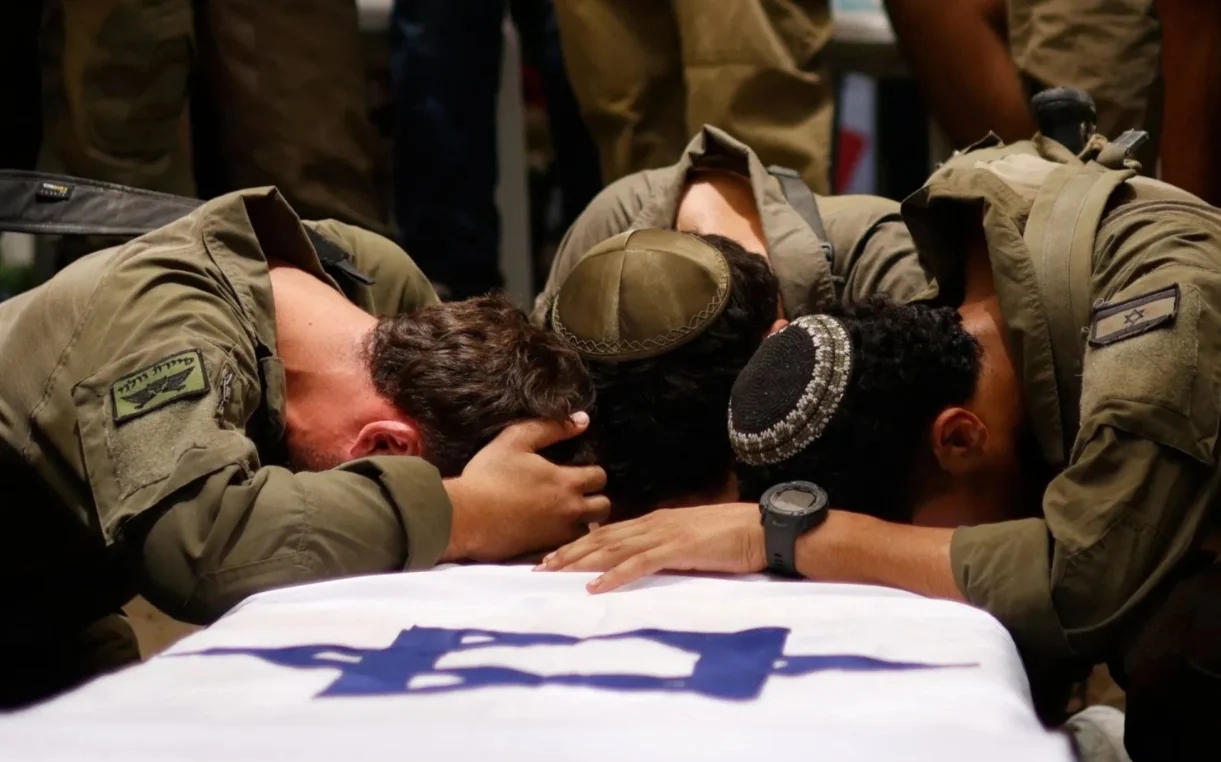
To move forward, in any conflict the idea of a winner is flawed. For those caught in the crossfire, both Palestinians and Israeli have face immeasurable losses, so instead of asking who emerged victorious, we must ask how can both, Israelis and Palestinians, live side by side in dignity and security? Essentially, a lasting peace would not mean the obliteration of one side or the domination of another. It would require mutual recognition of each other’s rights, history and humanity. It would mean ending the cycle of violence that harms innocent civilians and leaves communities devastated, while opening the door for political and economic solutions that allow both peoples to thrive.

Heavy hand

For Israel, security is a non-negotiable priority. The persistent threat of violence from militant groups in Gaza has been a constant concern. On the other hand, Palestinians in Gaza must also be able to live without the heavy hand of occupation and blocade, ensuring their freedom. In this context, the international community must ensure that the rights of both Palestinians and Israelis are upheld, with a focus on dignity of the individuals; whether it is the right to live without fear of violence, or the right to self- determination and sovereignty.

Indeed the people of Gaza have long suffered under economic hardship, with hardly any access to basic services like healthcare, education, and employment opportunities, consequently any peace agreement must include a comprehensive plan for rebuilding Gaza, improving living standards, and opening up pathways to regional cooperation and trade. Achieving peace will require honest peacemakers on both sides, committed to negotiation and diaogue over violence. This clearly will involve the international community playing a much more active rôle in mediating talks, promoting trust-building measures, and holding all parties accountable.

The true winners in a new beginning would be the people; both Palestinians and Israelis, whom have suffered for too long. Peace would allow for the children of Gaza to grow up without fear of bombings, and for Israeli families to live in security without constant worry of attacks. Therefore, victory would be a shared one, a victory of humanity over hate, of hope over despair, and of a future where both Palestinians and Israelis can claim their right to live in peace, security, and mutual respect.

Dr Khairi Janbek is a Jordanian analyst based in Paris

Continue reading
Can Joseph Aoun Get Lebanon Out of its Rut?

By Dr Khairi Janbek

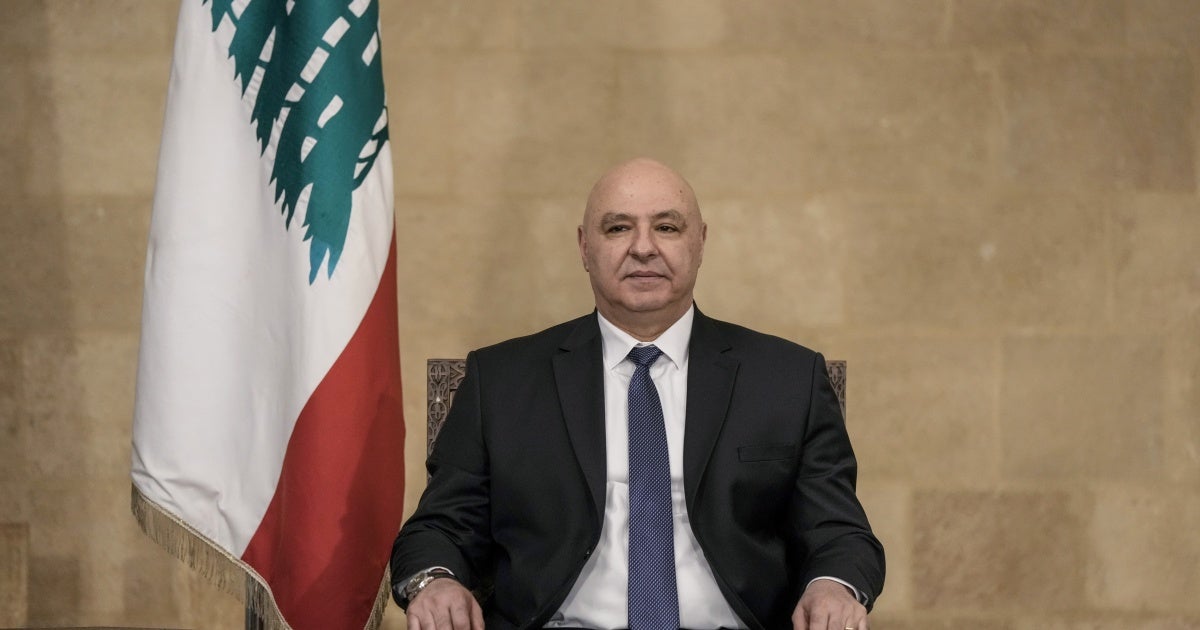
We have grown accustomed to Lebanon being in the headlines as a result of blood and destruction, but no longer. Whether due to the weakening of Iran, determination of the international community and/or both, all this appears to be changing.

Lebanon has now officially elected a new president, ending a long period of political crisis that has long left the country without a head of state since the term of former president Michel Aoun expired in late October 2022. After protracted negotiations and intense political maneuvering, not to mention Arab and international pressure, general Aoun, with a tough military reputation who has lead the army since 2017, has become the latest leader of the country.

General Aoun takes office amidst a period of significant economic and social challenges for Lebanon, as the country is grappling with an acute and ongoing financial crisis, soaring rates of unemployment, and the collapse of its currency, in addition to the refugee crisis and deteriorating infrastructure that has left Lebanon hanging by a thread.

In fact to top it all, the powerful sectarian political groups which hindered the election of a president for the past 26 months and more will not likely disappear with the election of general Aoun despite the seemingly robust character of the new leader.

The new 14th Lebanese president in his first address to parliament, vowed to work with all political factions to implement reforms and tackle the pressing economic issues that has long log-jammed the country. His speech was one that had determination and a sense of purpose and appeal with a rallying-cry for all of the fractious political groups of Lebanon.

Having said that, and despite the election in the Lebanese Parliament, the country’s future still remains uncertain with challenges. The new president will need to navigate carefully the deeply entrenched political system which often leads to gridlock and an inability to implement meaningful change.

Additionally, the country’s economy remains in freefall, with millions of Lebanese struggling to afford basic goods and services. Therefore, it is clear the road ahead will be a challenging one to say the least. Logically for many, the focus has already turned to whether the new president can live up to the promise of healing the nation and lead it towards a more stable system.

From the Arab and international perspectives, the messages of support from both seem to be encouraging, but this support will need to be translated into monetary terms for re-building the country. It is said there is the promise of $10 billion earmarked for this effort but frozen on the condition that Lebanon elects a president based.

Now this hurdle has been overcome and passed. At the end of the day as well, General Aoun is seen as the consensus candidate for the Arab countries as well as the international community. In this sense, the release of the re-building funds may look optimistic but there is still the snag of the question of Hezbollah and Israel’s future belligerent intentions towards the country, issues that are still to be ironed out.

The new Lebanese administration needs guarantees from Hezbollah in as much as it needs guarantees from the new Lebanese administration, and the Arab and international community eagerly awaits the results of this dimension because, putting it bluntly, no one wishes to see their investments blown up in another war nor their money burnt in smoke.

All that one can say under the circumstances, is that General Aoun, and he is the fourth president to be chosen from the military establishment, can negotiate with Hezbollah to surrender their heavy weapons to the Lebanese Army while keeping their light weapons; at least for the time being, and stay away from the Litani River as demanded by Israel.

But this will need considerable political dexterity and acumen.

Dr Khairi Janbek is a Jordanian analyst based in Paris

Continue reading
Carter: A Mideast Idealist

Dr Khairi Janbek

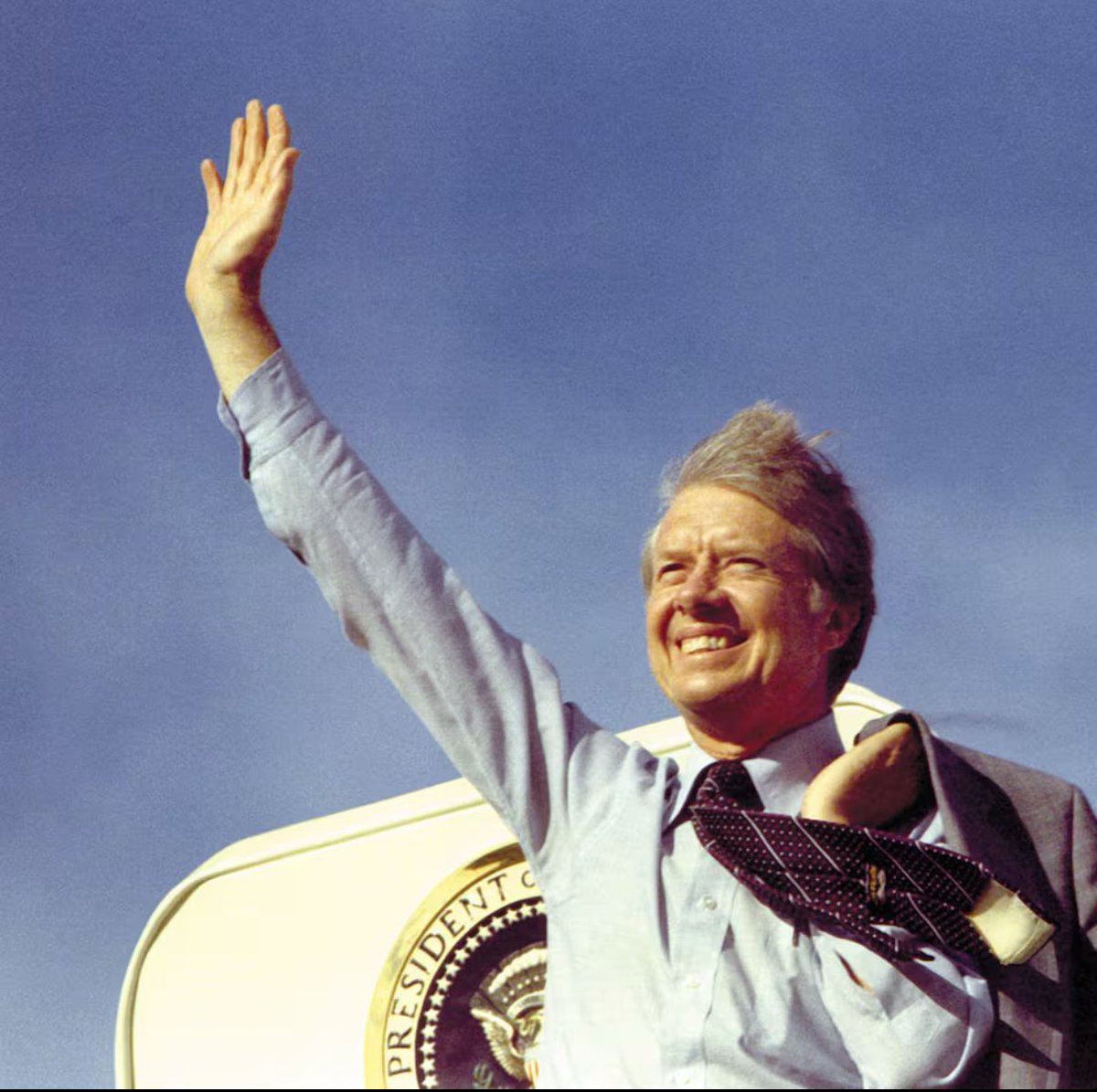
The legacy of the late President Jimmy Carter in the Middle East can at best be described as mixed, notable achievements and setbacks.

The Camp David Accords remain his greatest foreign policy achievement in the region, with Egypt and Israel continuing to honor the peace treaty till this day. However, the 1978 Iranian Revolution, the fall of the Shah, the US embassy hostage crisis and the rise of the Islamic Republic of Iran, underscored the limits of his idealistic foreign policy approach.

While Carter’s emphasis on human rights was a notable shift from the more pragmatic or rather, realpolitik approach of his predecessors, it often clashed with the realities of the US strategic interests in the region. His inability to stop or reverse the Iranian Revolution, combined with his perceived weakness in handling the hostage crisis, significantly damaged his standing both domestically and internationally.

Despite these challenges, Carter’ presidency laid the groundwork for future US policies in the Middle East in terms of emphasis on peace, diplomacy and the need for strategic engagement. In fact, he articulated in January 1980 the Carter Doctrine, which stated that the US will use military force if necessary to defend its interests in the Arabian Gulf against Soviet aggression, which marked a significant shift in US foreign policy asserting a more active and interventionist role in the region.

When it comes to the question of human rights, despite concerns for abuses in countries like Saudi Arabia and Iraq, Carter found it necessary to balance human rights with strategic and economic interests, and he did receive criticism internationally and nationally for tolerating autocratic regimes, not to mention of course in this context, his support for the Shah of Iran despite his repressive policies and human rights abuses.

Still, in the final analysis, with successes and failures, Carter’s approach to the Middle East was foundational in shaping US policy for the years that followed, particularly in the realms of contradictory policies of human rights, and the balance of power in the Gulf region.

Dr Khairi Janbek is a Jordanian commentator currently based in Paris.

Continue reading
Syria: A Hot Political Potato

By Dr Khairi Janbek

All eyes are on Syria, simply because the only thing known about how the new Syria will look like is frankly, the unknown. What is prevailing in the new predictions and analysis is at best, and at worst blunt fears.

Of course, this is understandable considering the composition of the groups which are now trying to run the country. What is vey disconcerting however, is how the international media presented the war prior to the fall of Damascus in no more than a side show, giving the impression that, as big Syrian cities fell one after the other in the hands of the rebels, that an agreement was likely to be struck which will solve the concept peaceably. Well, such an agreement was not struck, and the victorious rebellion became the hot potato in the hands of all.

Now, how will the new regime look like in Syria? Frankly your guess is as good as mine. Will they act momentarily in a pluralistic manner, then adopt political Islam as regime ideology? Again, only time will tell, but also that would depend primarily, on the prevailing regional and international actors and players.

For a start, the rapprochement between Russia and Turkey will not greatly depend on the shape of the new regime, so long of course, as the new regime in Damascus continues to protect the Russian interests in warm water bases, and be a wall against Kurdish armed groups threatening Turkish interests.

Then of course there is Israel, which after it destroyed Syrian military capabilities, has no fear of war with Damascus, but does fear the potential presence of a regime adopting political Islamist trappings on its borders, which it will use as an excuse use to expand and probably annex Syrian, and maybe Lebanese territories before the dust settles down.

However, when it comes to the Arab neighbors of Syria, Jordan and Iraq, it’s only natural they would feel concerned but for different reasons. For Jordan, the recent history of Iraqi political instability and the associated acts of terrorism are still fresh in the mind of everyone in the Kingdom, so in no uncertain terms, Jordan would wish to see on its border, a regime adopting political Islam, lest it suffers once more from terror acts that are likely to push for military action and in which it doesn’t wish to be involved in.

As for Iraq, the sectarian troubles are still fresh in the minds of everyone. Certainly the Iraqi government doesn’t wish to see a regime on its borders which has the potential of igniting an unwanted sectarian civil war. As for the rest of the Arab countries, the question remains theoretical – plainly speaking being against political Islam .

As for Syria itself, it’s rather banal to repeat the obvious which is, that it is pluralistic country. But, how can you mange such a country, if indeed this is the intention intention and not shoving it up everyone’s throat ideology by blood and fire.

For a start every community, ethnic and religious, has to feel secure, and secondly they need to know that they have a stake in the future of the country, and that can only happen by establishing a truly functioning parliament freely elected by all of its constituents, then adopt a prime ministerial system of government accountable to the people with a titular president of the republic. No political party should be prohibited to field parliamentary candidates except those associated with armed groups.

At the end of the day, the only thing which will turn the current victorious rebels into extremist islamists is the specter of internal civil conflict which everyone is trying to avoid.

Dr Khairi Janbek is a Jordanian commentator currently based in Paris.

Continue reading