The Bombs Under Gaza’s Rubble Wait to Explode

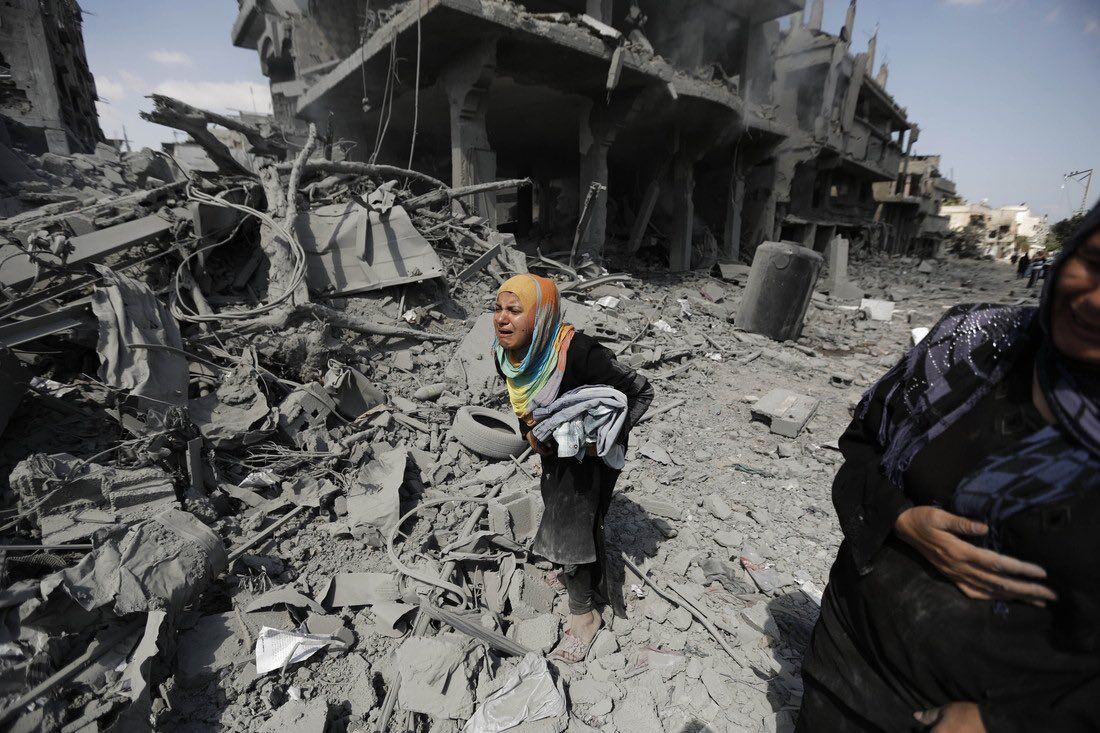
On top of the mass destruction that Gaza has suffered for the past 10 months, today many local and international organizations are asking what will happen to the unexploded bombs dropped by Israeli warplanes and which now lie under the mass rubble and wreckage of Gaza.

They are deeply worried that another disaster is about to happen because of the large quantity of unexploded bombs and missiles deeply buried under the rubble womb of Gaza.

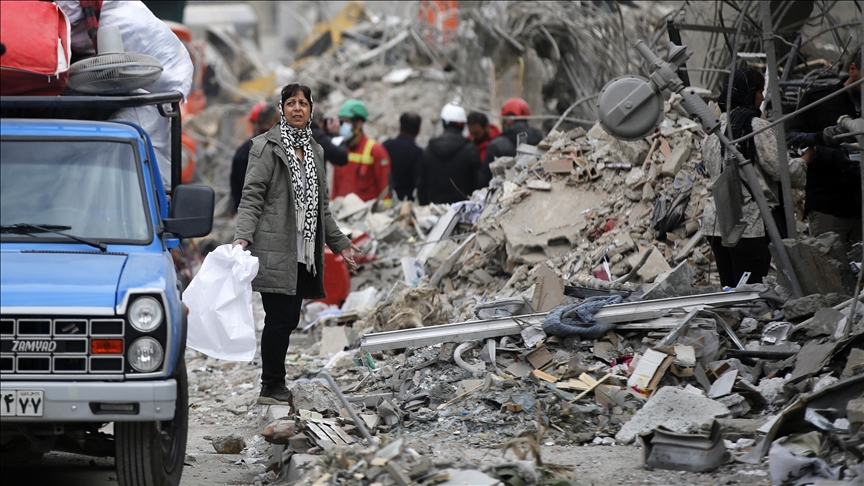
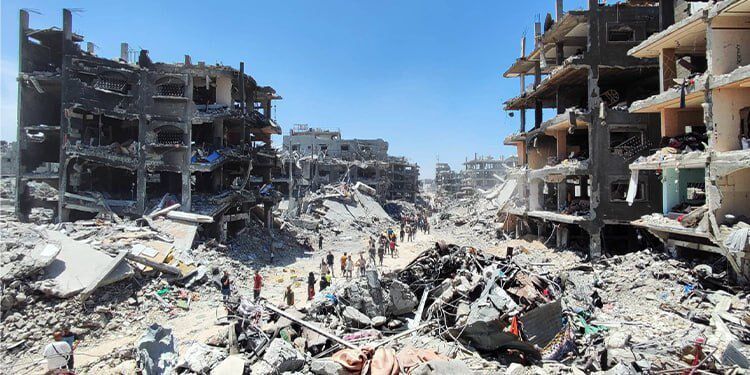
French newspaper ‘Libération’ reported the Israeli assaults on over 40,000 estimated targets in the Strip created about 39 million tons of rubble in the tiny area of Gaza that spans only 41 kilometers.

According to the report, typically, one in 10 conventional bombs do not detonate. With the ongoing genocide on Gaza and the repeated displacements of 100s of thousands of Palestinians, the risk of accidents and explosions from these unexploded ordnance increases.

Experts warn that each layer of debris could conceal unseen, unexploded ordnance, as reported in the Quds News Network.

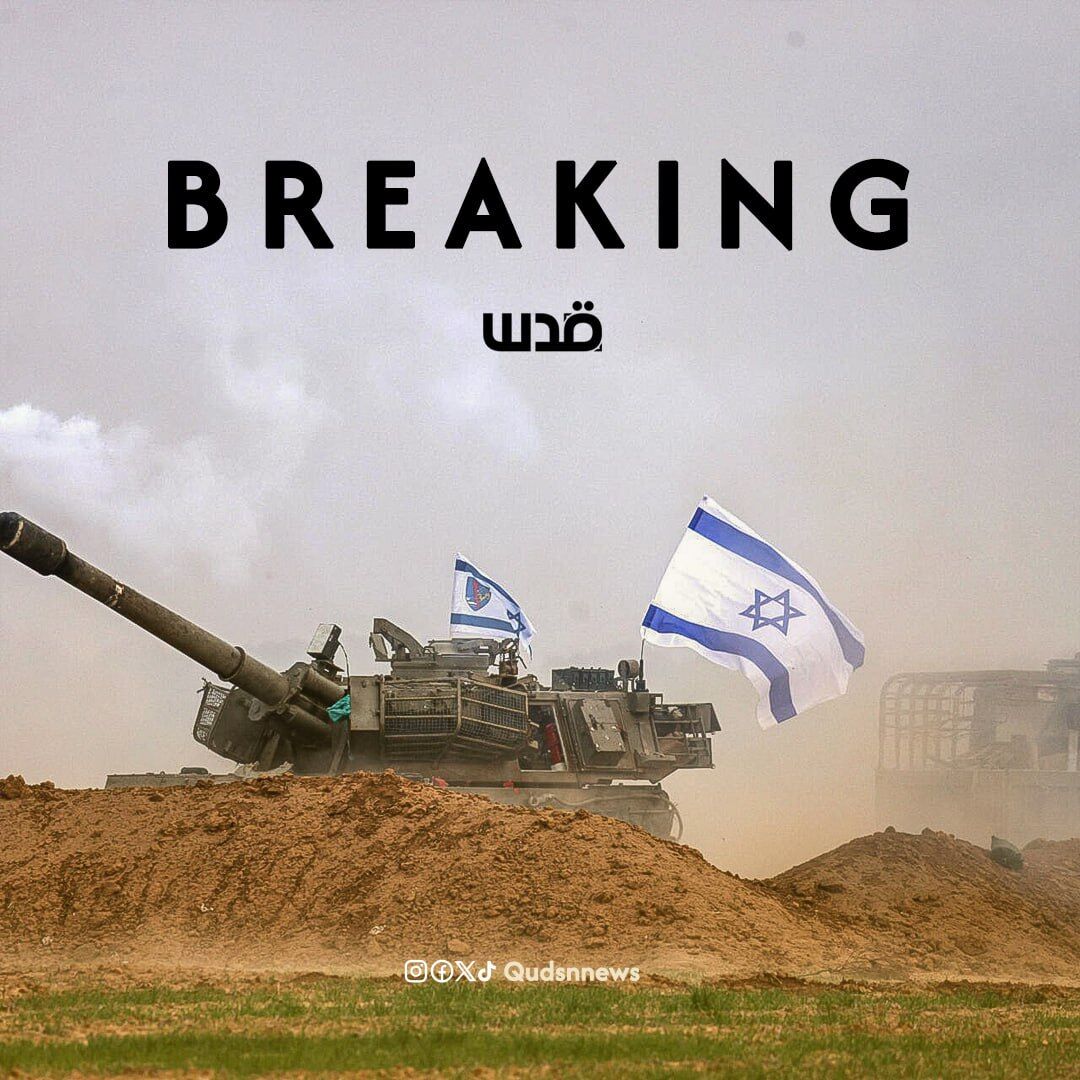
The problem becomes riskier because the Israeli army – tanks and warplanes –  is bombing different areas countless times. Jabalia, Tal Al Hawa, Sheikh Radwan, Shujaiya, Nuseirat and many others are being bombed twice, thrice and a fourth time which means the likehood of these “dormant” bombs exploding becomes much higher.

Comstant, bombings, explosion, TNT powder is like to have a health and environmental impacts on the area because of the derivatives this Israeli war is having on localities and spaces: 800,000 tons of asbestos, thousands of bodies, and toxic, organic, and the chemical materials that now lie deeply buried under the rubble.

This is not to say anthing about the hospitals – 36 of them – that have also been subject to endless bombings and military encroachment. Some of these hospitals like Al Shifa Complex in Gaza City is completely destroyed by the Israeli army and now lie in ruin and houses radioactive equipment and biological materials. These now lie beneath the debris like ticking time-bombs.

Expert were always worried about the thousands of unexploded shells and missiles dropped, stating these pose a long-term dangers to the population of Gaza. The UN has estimated that 10% of the ordnance dropped by the Israeli military on the Strip have not  exploded. This means they lie under the scattered streets, lands and homes that have been turned into rubble and debris.

The Government Media Office has warned about recurring incidents of explosions in homes, particularly from canisters made to deceive and harm civilians, especially children. There have been numerous injuries from such devices.

Expert voices inside Gaza and the international community have been made to send specialized engineering teams and explosive experts, and equip and provide local authorities with the necessary technical resources to deal with bomb removal and other hazards safely. But these have been ignored by the Israelis.

Danish newspaper ‘Information’ reported in the first three months of the war on Gaza, around 45,000 bombs were dropped, averaging 500 bombs per day or 21 bombs per hour. This extensive bombing has damaged/or destroyed 50-62% of all buildings in Gaza, according to a study by New York University in collaboration with the University of Oregon. The newspaper warned of severe long-term consequences due to the thousands of unexploded bombs, impacting Palestinians’ recovery efforts after the war according to the Quds News Network.

Unexploded bombs are dangerous to the future of Gaza and would remain apparent after the war ends when the removal of the debris and reconstruction starts. Thus, the demining process is likely to be long-term and of hindrance to the development of Gaza especially in densely-populated areas.

The report noted over 14% of bombs dropped in Gaza remain unexploded, far exceeding earlier estimates of about 6,300 bombs and missiles in the first three months of the conflict.

The presence of numerous unexploded bombs are forcing residents to live in a perpetual war-situation. This is even when the bombs stop raining down, tanks cease fire and the trauma subsides. We are still at stage one of the war; the second stage is who is going to clear these ticking time bombs.
Continue reading
‘Stop Paddling Israeli Narrative’ – Hamas Tells HRW

The Hamas Movement has called on Human Rights Watch (HRW) to withdraw its latest report on the Gaza Strip, saying it “lacks professionalism and credibility and is full of lies and blatantly biased in favor of the Israeli occupation state,” according to the Palestine Information Center.

In a statement on Wednesday, Hamas strongly denounced the fact that an institution that defends human rights had made such a mistake, stressing that “the last HRW report repeats the lies that were made by the Israeli army and its media machine at the beginning of the events to justify its crimes against out people.”

Hamas accused HRW of adopting in its report the entire Israeli narrative and deviating from the scientific research methodology and the neutral legal position, adding that its report became more like an “Israeli propaganda document.”

Hamas affirmed that the HRW report did not talk about the Gaza people’s exposure to killing, destruction, starvation and suffering that goes beyond imagination.

Hamas also said that the report did not mention the number of the martyrs and wounded people that exceeded 120,000 within 285 days and the complete destruction of hospitals, universities, schools and infrastructure, “while the Israeli occupation’s killing machine persists in its crimes with full US and Western support.”

“The Palestinian people have the right to resist the occupation, the root of all evil, with all means and in accordance with what is enshrined in divine laws and international conventions,” Hamas stressed, adding that HRW ignored what the Palestinians in Gaza had suffered from repeated wars, killing, torture and siege before October 7, 2023.

“The [HRW] report deliberately has ignored on purpose the crimes that were committed by the Nazi occupation army on October 7 against our people in Gaza, and even against Israeli civilians who were bombed along with Palestinian fighters by warplanes and tank projectiles,” Hamas said.

“This international organization’s report has confirmed its inhuman bias when talking about Israeli prisoners who are being held by the Palestinian resistance and the need to release them immediately, without demanding the release of thousands of Palestinian prisoners, men, women and children, [from Israeli jails]” Hamas added.

The Hamas Movement has held HRW fully responsible for what was mentioned in its report that justified Israel’s crimes, stressing that the report damaged HRW’s image.

This article is reprinted from the Palestine Information Center’s website

Continue reading
Hunger Kills: 9 Out of 10 Children in Gaza Severely Malnourished

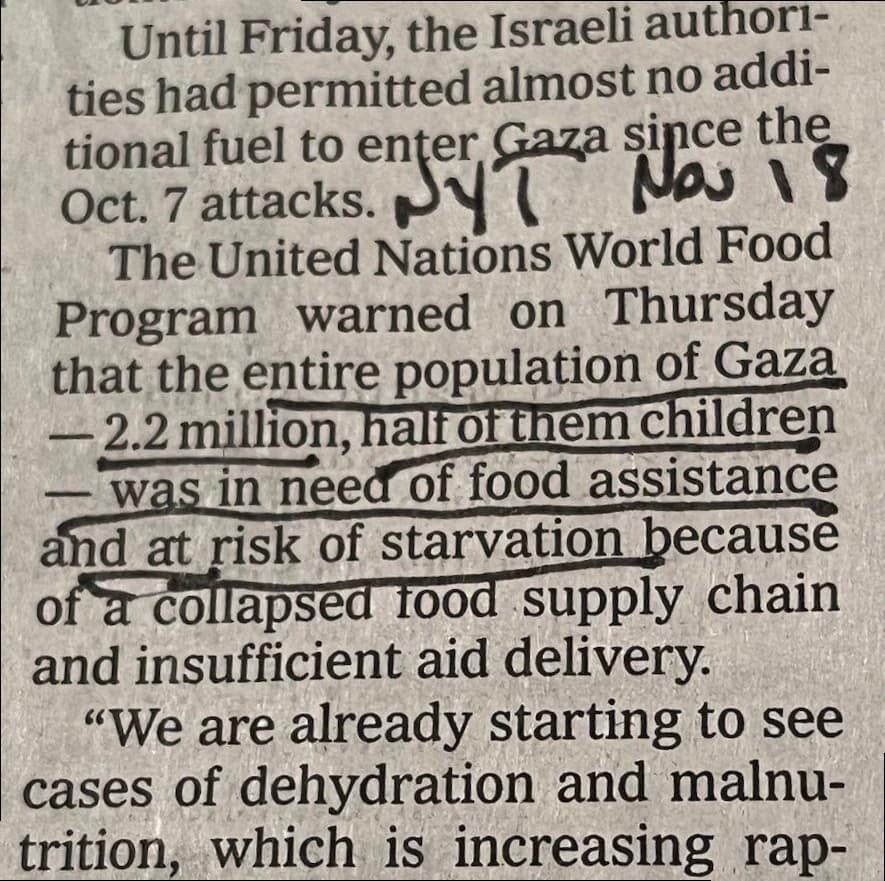
Nine out of 10 children in Gaza suffer from sever malnutrition according to UNICEF. The malnutrition manifested itself after the 7 October, 2023 war when Israel promised it would impose a “complete siege” on Gaza denying the 2.2 million population electricity, food, water and fuel.

“Five rounds of data collected between December 2023 and April 2024 have consistently found that nine out of 10 children in the Gaza Strip are experiencing sever food poverty, surviving on two or fewer fewer group per day,” a UNICEF report quoted by Palestinian news agency Wafa.

UNICEF added months of agression – this is the start of the nine month of war that Israel waged on Gaza – has resulted in the complete destitution and displacement of people who are being forced to move from one area to another in the enclave as their houses are being bombed.

To meet the minimum level of dietary diversity for healthy development, “children must consume foods from at least 5 of the 8 food groups determined by the dietary diversity score used by UNICEF and WHO,” as pointed out in Al Jazeera.  

The hunger and malnutrition is being exacerbated by the intence bombing the Gaza Strip has been subjected to in this war that saw Israel drop 70,000 tons of explosives on the enclave.

Tel Aviv’s “indiscriminate attacks” on Palestinian children and women are “clearly Israeli war crimes,” said the head of a Norwegian non-governmental organization, as quoted by the Anadolu Turkish news agency.

“It is obscene to continue waging war through refugee camps. Even if Hamas committed the war crime of hiding fighters among displaced civilians, these continued, indiscriminate attacks killing scores of children and women are clearly Israeli war crimes, he said on the X platform.

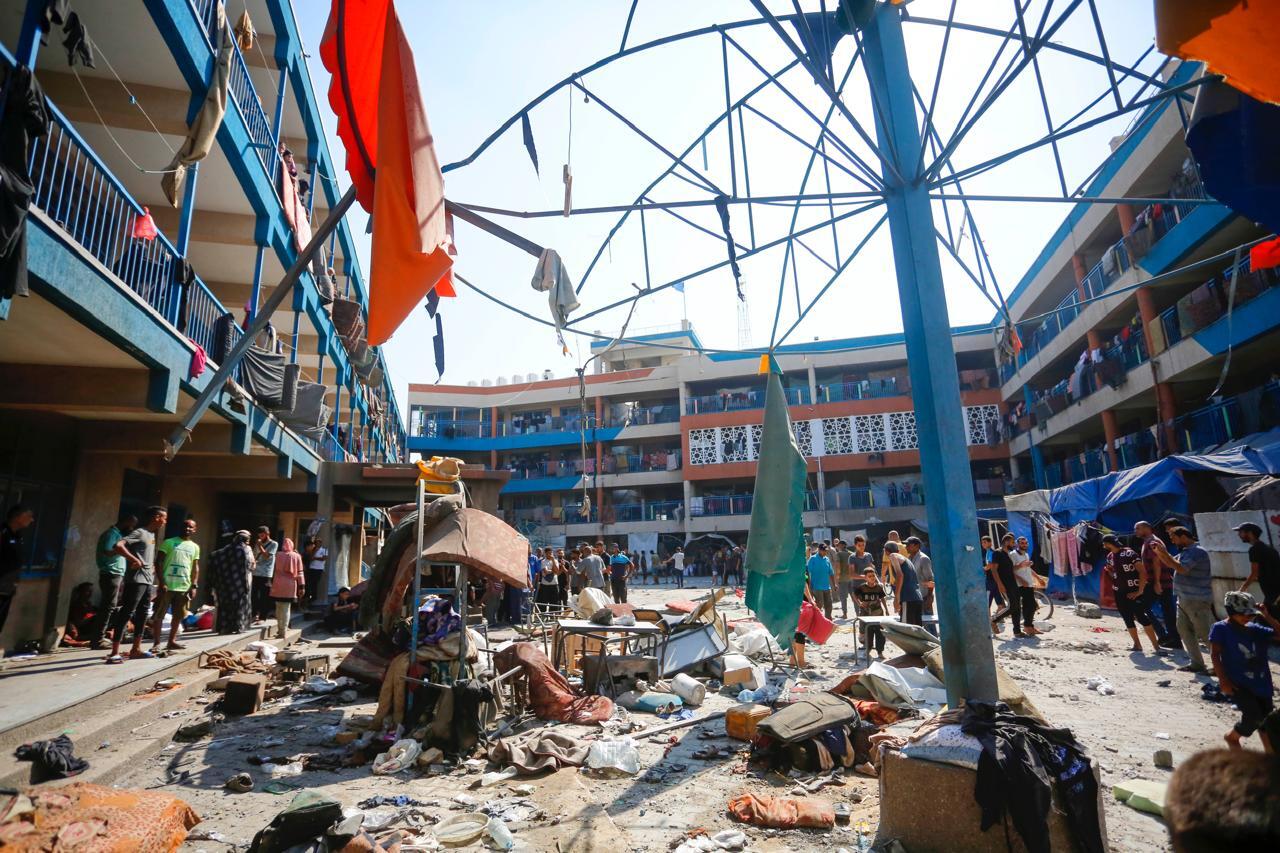
His comments came after at least 39 displaced Palestinians were killed, Thursday, in Israeli airstrike on a school sheltering thousands of displaced people in the Nuseirat refugee camp, the central Gaza Strip, according to Gaza authorities.

UNICEF: ≈

Nine out of 10 children in Gaza suffer from sever malnutrition according to UNICEF. The malnutrition manifested itself after the 7 October, 2023 war when Israel promised it would impose a “complete siege” on Gaza denying the 2.2 million population electricity, food, water and fuel.

“Five rounds of data collected between December 2023 and April 2024 have consistently found that nine out of 10 children in the Gaza Strip are experiencing sever food poverty, surviving on two or fewer fewer group per day,” a UNICEF report quoted by Palestinian news agency Wafa.

UNICEF added months of agression – this is the start of the nine month of war that Israel waged on Gaza – has resulted in the complete destitution and displacement of people who are being forced to move from one area to another in the enclave as their houses are being bombed.

To meet the minimum level of dietary diversity for healthy development, “children must consume foods from at least 5 of the 8 food groups determined by the dietary diversity score used by UNICEF and WHO,” as pointed out in Al Jazeera.  

The hunger and malnutrition is being exacerbated by the intence bombing the Gaza Strip has been subjected to in this war that saw Israel drop 70,000 tons of explosives on the enclave.

Tel Aviv’s “indiscriminate attacks” on Palestinian children and women are “clearly Israeli war crimes,” said the head of a Norwegian non-governmental organization, as quoted by the Anadolu Turkish news agency.

“It is obscene to continue waging war through refugee camps. Even if Hamas committed the war crime of hiding fighters among displaced civilians, these continued, indiscriminate attacks killing scores of children and women are clearly Israeli war crimes, he said on the X platform.

His comments came after at least 39 displaced Palestinians were killed, Thursday, in Israeli airstrike on a school sheltering thousands of displaced people in the Nuseirat refugee camp, the central Gaza Strip, according to Gaza authorities.

Continue reading
Israel Holds 9,700 Palestinian Prisoners in its Jails

The Detainees and Ex-Detainees Affairs Authority and the Palestine Prisoners Society ( PPS) said the Israeli occupation army has detained  more than 9,700 people since the start of the aggression on the Gaza Strip on 7 October, 2023 according to the Palestine News Agency Wafa.

The PPS and the Commission said in a joint statement that this toll includes those who were arrested from homes, through military checkpoints, those who were forced to surrender themselves under pressure, and those who were held as hostages.

The statement pointed out that the detentions are accompanied by widespread abuse, beatings, and threats against detainees and their families, in addition to sabotage and destruction of citizens’ homes.

The Commission and PPS stated that the occupation detained at least 15 people from the West Bank, including three women, a child, and former detainees, from yesterday evening until this morning.

Continue reading
Shattered Dreams of Gaza

In Gaza, where daily life has become a battle for survival, the stories of Palestinians who lost their homes in the midst of the genocidal war waged by Israel on the Strip 10 months ago come as a mirror-image reflecting the suffering of an entire people, carrying with it bitter human details of what it means for someone to lose their home.

The Al-Sayyid family was living in peace until that fateful night. “The night had fallen, and suddenly, we heard the sound of a huge explosion. Then the voices of the remaining neighbors shouted ‘I had to evacuate the area because there was a threat to blow up the residential tower opposite my house,’” Ahmed, the father, tells the Palestinian Information Center.

At first Ahmed’s family of a wife and seven children moved to a shelter school in the Sheikh Radwan neighborhood south of Gaza City, and as the Israeli ground invasion expanded, they moved to Al-Aqsa University in Khan Younis but when the Israeli army withdrew from the city, they went back.

“I did not wait a minute after I learned of the occupation army retreat to the northern parts of Gaza Strip. Me and my brother rushed to inspect our three-story house. As soon as we arrived there, we were shocked by what happened to the place,” Ahmed told the PalestineIn formation Center Tuesday.

“I found a large part of the house destroyed by artillery shells and burning furniture. It was harsh moments. This is the first time I have faced such an experience like thousands of others who repeatedly lost their homes in previous Israeli wars.”

The man, who is in his 50s, stresses “losing a house is not an easy matter. You are not lose stones here. You feel as if someone has token you to a distant world, erasing a lifetime from your memory. In every corner of the house there are memories, feelings, emotions and life experiences.”

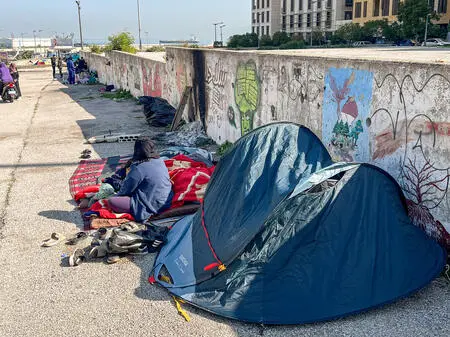
Israel has systematically and extensively destroyed homes in Gaza, completely destroying hundreds of thousands of housing units and in just 283 days,  it has turned their owners and residents into homeless people living in tents and shelters.

Israel warplanes bomb houses over the heads of their residents resulting in their instant deaths. In many times the people mostly women and children are deeply buried in the rubble of these homes. This is not to forget the aerial bombardment of blowing up residential blocks.

Residents ask why is this happening to us? There is no need for it. International organizations protest and condemn but to no avail.

Ahmed points out the psychological and social pain is more severe than the material loss. “Many a time, my tongue twists and turns when my children ask ‘we are going to get back to our house, how long will it take to repair it, how long do we have to stay here?,” Ahmad waves his hands at a loss.

 “How can children feel safe in a temporary shelter? They have lost everything, even their small toys.”

Satellite images by the United Nations Satellite Center show 35% of all buildings in the Gaza Strip are either completely destroyed or extensively damaged due to this Israeli war of annihilation. This means the number of buildings razed to the ground is 88,868.

In its last March assessment, the center used high-resolution images taken by satellites and collected on 29 February, and compared them with images taken before and after the outbreak of the war.

Dreams crushed

Whenever she remembers her home and her memories there, Aya Ahmad, is reduced to tears.  “I had a private room and/or a suite. All my memories, books, and office are gone now.”

“I am a medical student at the beginning of my third year, and at the beginning of my university studies, my father prepared the second floor of our house, bought me a large collection of medical books, and prepared a special room for me with an office, on the walls of which I wrote my hopes and ambitions,” Aya told the Palestinian Center

The 23-year-old girl lives in the city of Khan Yunis, and she has never been forced to move in previous Israeli wars on Gaza, as in this war.

“This is the first time I have been displaced, and when we were forced to do so at the beginning of December 2023, we cried a lot then. We took a few of the house’s belongings in the hope that we will get back.

But this wasn’t so, its been 10 months now since the war started, it hasn’t stopped, we were not able to return to our house which we lost subsequently due to the bombing, and we lost most of our personal belongings there. We moved between tents, and we lost many loved ones, and then the destruction of the house increased our pain. My certificates, my clothes, and my memories were all crushed, and with them many dreams were lost too.”

The garden of the house was Aya’s refuge after the rigors of a long university day. She had pleasant evenings with her parents under the palm and lemon trees on summer nights. But no more, for all of the family now are sheltering in tents of those that were forcefully displaced.

“My wish was to return home, I even wanted to return to it after the occupation forces retreated from our area. At the time, it was still standing and was only partially damaged, but the occupation army returned months later and bombed.”

Aya is still confident about rebuilding her house and whatever

the occupation destroyed, despite the pain she experiences whenever she looks at pictures of her former home and the social memories of each moment there.

A UN assessment found it would need a fleet of more than 100 trucks working for 15 years to remove the 40 million tons of rubble in Gaza. Such an operation could between $500 and $600 million.

According to the assessment by the UN Environment Programme, last month, 137,297 buildings were damaged in Gaza alone not to say anything about the destroyed buildings.

Not stones!

As for Abeer Abu Salem, resident in the Beit Lahia Project in the north Gaza, the smell of gunpowder still haunts her, as if it had just happened. “I will never forget what I experienced that evening, and it cannot be erased from my memory. I cannot describe the scene because of the horror of what I saw.”

Abeer recounts what happened: “I heard the sound of an explosion and saw the walls collapsing and columns flying. I tried to escape but could not, and with the air closing in, I found myself in the second room. I cannot imagine that I am still alive. It all happened in seconds, turning my life upside down.”

Abeer stayed in the Indonesian hospital for about a month, before the occupation army forced them to flee to the south of the Gaza Strip. When asked about what it means to lose a house, she answers:

“It is not easy to lose your house you grew up in. The house is full of precious memories. We worked hard for many years so that my father could build it for us as an apartment above the family home.”

She points out the fear she experiences is not related to their ability to rebuild the house that was leveled, as much as it is to the emotional feelings of seeing what happened to the family home.

 “We are now displaced. We do not know the fate that awaits us after the end of this cursed war. We cannot think about whether we will truly return to Beit Lahia or whether we will live what our ancestors lived when they forcibly left their homes 76 years ago in the Nakba of 1948 and died on “I hope to return,” she laments.

Continue reading