Arab-US Artist Fareed Armaly Declines German Top Award

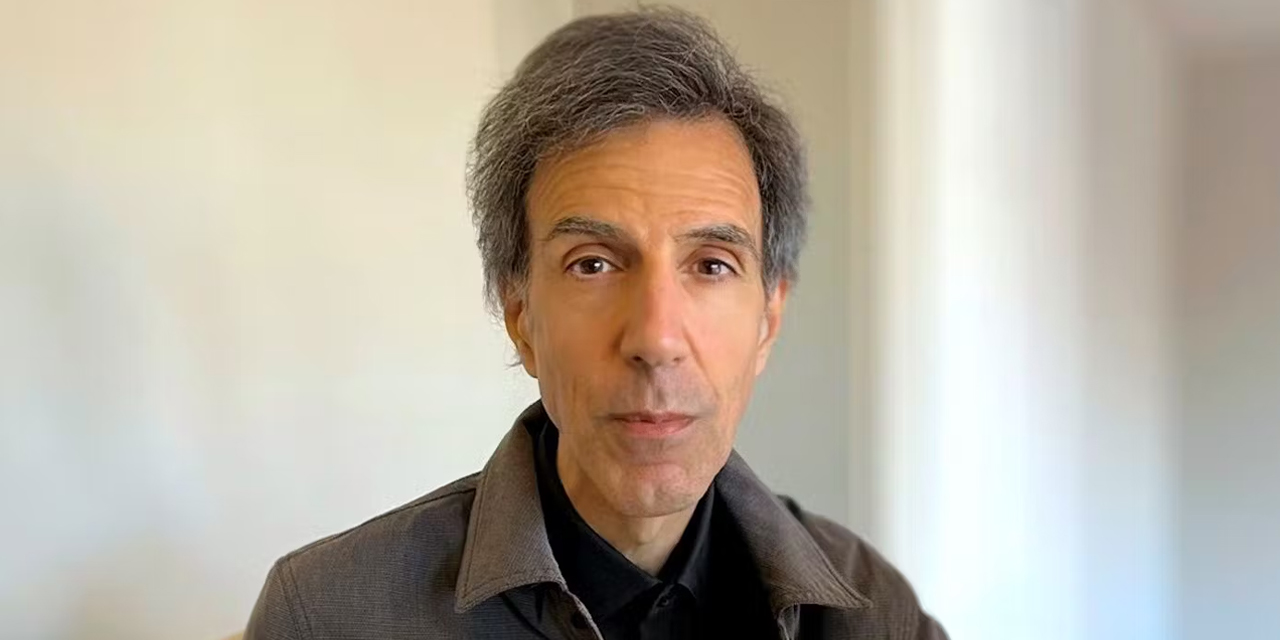
Arab-American artist and curator Fareed Armaly rejected a prestigious award by the Academy of Arts in Berlin to protest censorship and cancel culture targeting pro-Palestinian voices in Germany.

The Academy of Arts in Berlin released a statement on Thursday, acknowledging “with respect and deep regret” Armaly’s decision to decline the prestigious Kaethe Kollwitz Award.

In a letter to the institution, Armaly, born in the US, explained his reasons for declining the award, criticizing what he called a “disturbing trend of censorship in Germany” and “intolerable interference” aimed at silencing pro-Palestinian voices.

“For several years now, there has been a highly politicized, reactionary shift in official cultural policies, aimed at silencing advocates for Palestinian rights under international law,” he said in his letter.

“In such a context of intimidation, liberal cultural institutions appear to adopt complacency and self-censorship. All this, consciously or unconsciously, structurally performs the ongoing dehumanization of Palestinians by obscuring and body_abstracting their agency and voice,” he added.

Germany has been a staunch ally of Israel, and government officials have repeatedly said the country bears special responsibility for Israel due to the country’s Nazi past.

In recent months, German authorities have intensified restrictions on pro-Palestinian activities—banning hundreds of protests, canceling cultural events, and imposing travel bans on prominent international figures invited to speak at pro-Palestinian events in the country.

Critics accuse Berlin of giving a blanket support to the Israeli Prime Minister Benjamin Netanyahu’s controversial policies, and turning a blind eye to war crimes committed by the Israeli military in Gaza according to Anadolu.

Armaly has exhibited extensively in international institutions and distinguished platforms, including Documenta 11.

Continue reading
Body of Gaza Poet Alareer Finally Laid to Rest

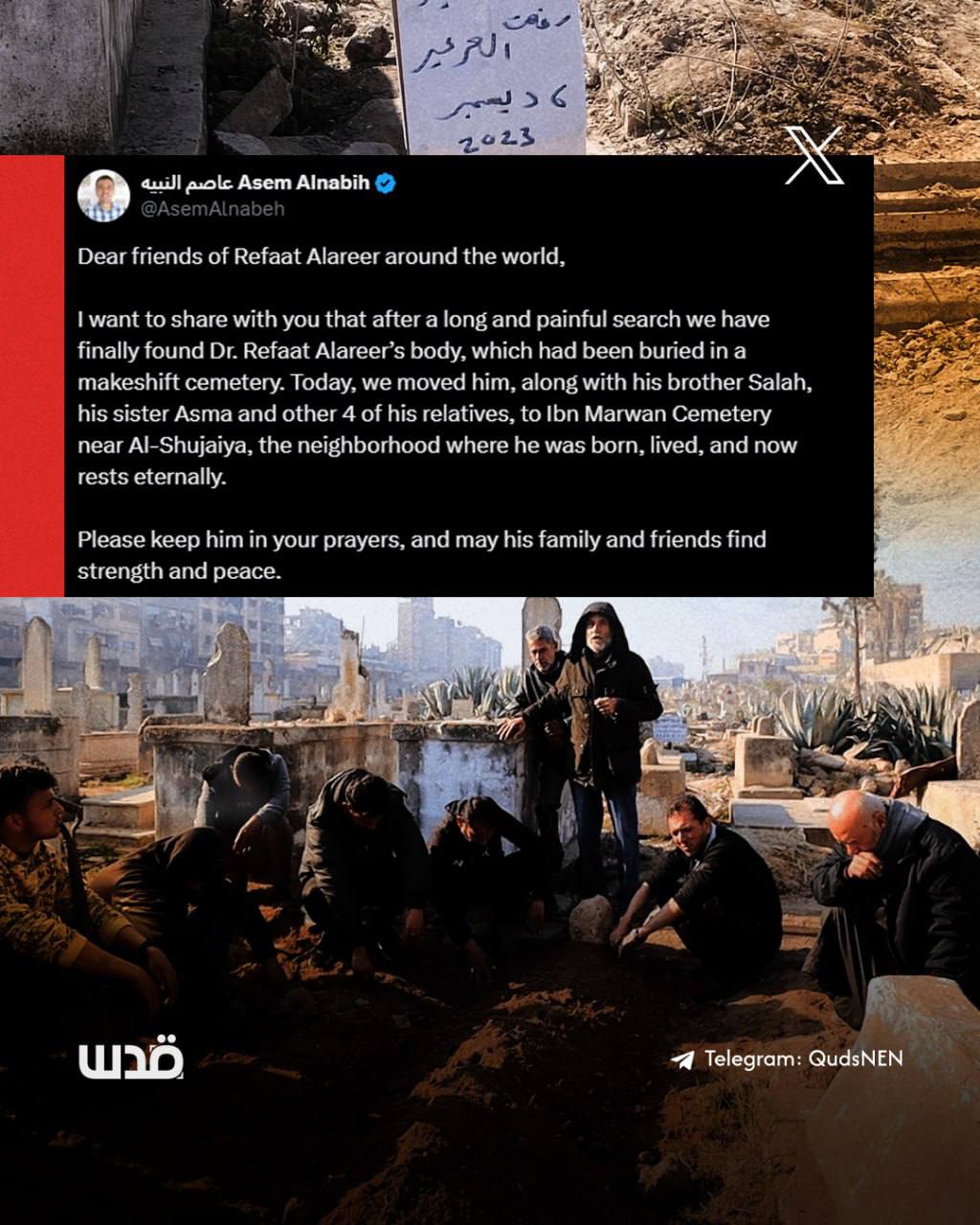
Today, Palestinians were able to find the body of Dr. Refaat Alareer, who had been buried in a makeshift grave for months, and moved him to a cemetery near his family members in Al-Shujaiya neighborhood, the area where he was born and lived.

On December 6, 2023, Dr. Refaat was assassinated in an Israeli airstrike that deliberately targeted his sister’s home, where he had sought refuge, in Gaza City, killing him along with six other members of his family.

Alareer, the Palestinian poet, writer, and literature professor at the Islamic University of Gaza, who was considered one of the most prominent voices in Gaza speaking out against Israeli crimes, leaves behind a legacy that endures despite his killing.

Continue reading
Jerusalem Signs: Identity and Political Power

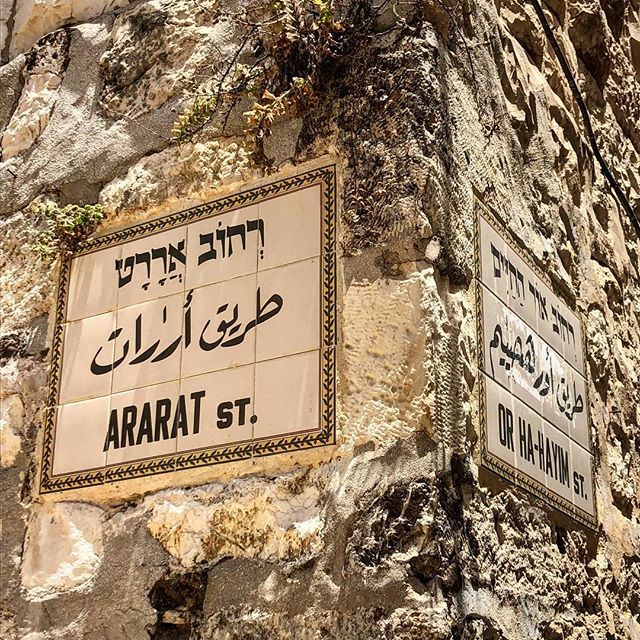
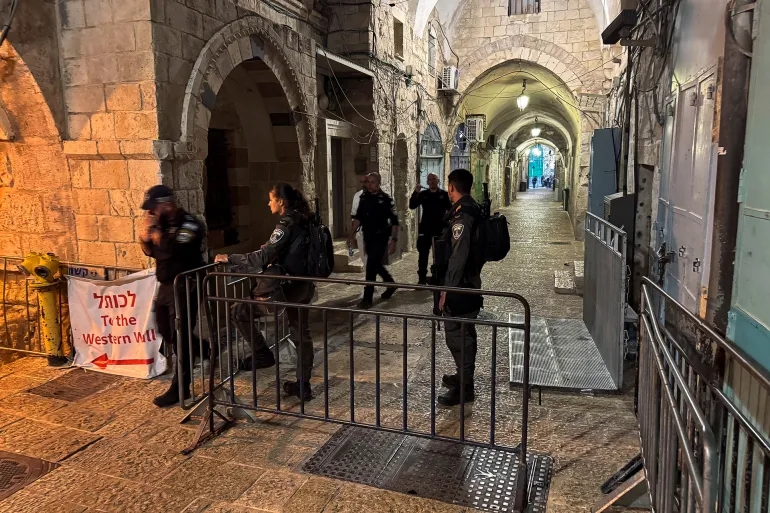
At a recent lecture hosted by the Council for British Research in the Levant (CBRL), Yasir Suleiman, professor of Modern Arabic Studies at the University of Cambridge guided the audience through the intricate linguistic landscape of Jerusalem. Exploring the Holy City’s street signs, Suleiman revealed how these seemingly mundane markers act as silent witnesses to history and power struggles, charting the evolution of identity and conflict in the region. 

“Language is important, not because it gives you information, but because it stands for something that is beyond language,” Suleiman explained. “Road signs, anywhere in the world, do tell a story. They present you with a narrative, a cultural map, a linguistic map, and a political map.”

Language Layers of Jerusalem 

Jerusalem’s street signs have long served as a battleground for identity and political power, reflecting the city’s historical transformations, from the Ottoman period through the British Mandate and into the present day. Suleiman traced this history, showing how language has shaped and been shaped by competing claims over the city’s public space. 

https://twitter.com/CBRL_news/status/1878758921340678444

Before the fall of the Ottoman Empire in 1917, Jerusalem’s signs prominently featured Ottoman Turkish (written in Arabic script) alongside English and occasionally French. Hebrew was largely absent. For instance, an original 1892 sign at the Jerusalem-Jaffa train station displayed the name of “Jerusalem” in English and Ottoman Turkish, with Hebrew was only added post-1948. 

This marked a time when Hebrew was largely absent from Jerusalem’s linguistic landscape, reflecting its limited presence in the population’s daily life, while Arabic script was present, but the Arabic language itself was absent.

However, the rise of the Zionist movement sought to change this, prioritising Hebrew revival as a cornerstone of its political and cultural agenda. 

Three Languages, One Hierarchy

Under British Mandate, it was decided that English, Arabic and Hebrew were all required on street signs. Yet, their arrangement revealed the prevailing power dynamics: English appeared at the top, Arabic in the middle, and Hebrew at the bottom, as stipulated by British authorities. 

This vertical hierarchy symbolised the ruling power, with English taking precedence and Arabic reflecting the majority population (around 90% of the people in Palestine were Arabic-speakers, including the Jews and Christians). Hebrew’s lower placement underscored its marginal status at the time. 

The Zionist movement, unhappy with this arrangement, lobbied for horizontal signs, where all three languages appeared side-by-side. Even so, Arabic retained a visual advantage because its right-to-left orientation naturally positioned it above Hebrew in terms of linguistic flow, as any right-to-left script placed on the right takes visual precedence over one positioned on the left.

Three Languages, Three Names

Suleiman highlighted how different languages on street signs often tell different stories about the same location. For instance, the famous Damascus Gate is labelled in Arabic “Bab el-’Amoud,” referencing Roman pillars in the area, while in Hebrew, it is called “Bab Nablus,” acknowledging Nablus’s religious significance for Jews, and in English, it is “Damascus Gate,” reflecting the trade connexions to the Syrian capital. Each language offers a distinct historical or cultural claim to the place, underscoring the city’s layered identity. 

Three languages, Two Boxes

The 1948-1967 Jordanian control of Jerusalem brought changes to Jerusalem’s signs. With almost no Jewish presence within the Old City’s walls, the Jordanian authorities only put street signs in Arabic and English. 

Arabic was placed above English, with the English text mirroring the Arabic perfectly (e.g., “Al-Malak Road”). This reflected a shift in status: English was no longer the language of the ruling power but had become merely a lingua franca, while Arabic took precedence as the dominant language.

However, after the Israelis occupation of East Jerusalem in 1967, the linguistic order shifted again. New signs were introduced, with Hebrew taking the top position, symbolising Israeli sovereignty. Arabic and English were relegated below it, marking a significant reordering of visual and political priorities. 

By 1980, when the Israeli Knesset declared Jerusalem the capital of Israel, the street signs further evolved to reflect political realities. A single box now contained all three languages, with Hebrew firmly at the top. Arabic began to diminish in influence, with English morphology increasingly aligning with Hebrew rather than Arabic conventions. For instance, “Ha-Malak Road” replaced “Al-Malak Road,” subtly asserting Hebrew’s dominance over Arabic. 

Signs of Power

This dynamic became even more pronounced in 2018 when the Israeli Knesset stripped Arabic of its status as an official language. On modern street signs like “Nablus Road,” Hebrew now appears on top of the three languages and often in its fully pointed form, a form traditionally reserved for sacred texts, emphasising its elevated status in Israel’s narrative of Jerusalem. 

Suleiman underscored how Jerusalem’s street signs are not just tools for navigation, they are symbols of power. “These signs are not about informing you where you are, they tell you who owns the place, who calls the shots.”

Street signs of Jerusalem have become a linguistic archaeology, with layers of history etched into their evolving forms. From the Ottoman period to the present day, they quietly tell the story of a city at the centre of competing claims over its identity. 

This article was written by Sophie Constantin and appeared in the Jordan Times

Continue reading
The Teacher Tests World Audiences to Think Palestine

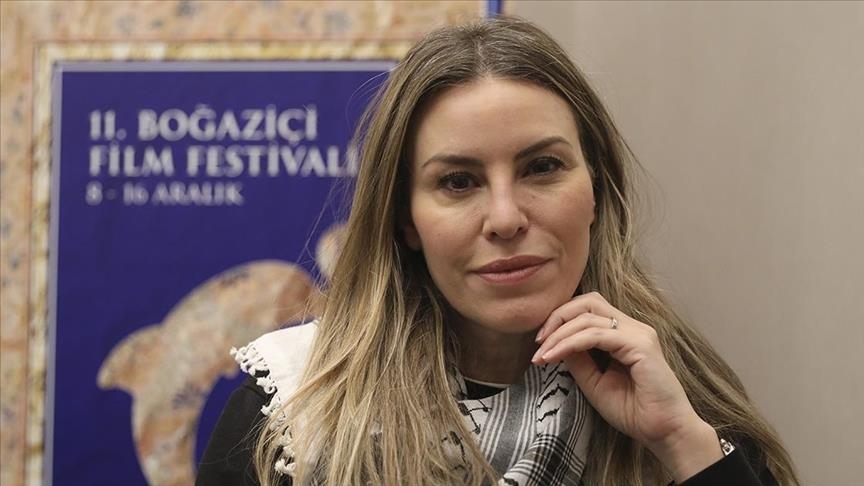
Oscar-nominated and BAFTA award-winning Palestinian-British filmmaker Farah Nabulsi is calling for global empathy for Palestinians through her debut feature film, The Teacher.

In an interview with Anadolu, Nabulsi said her goal is to challenge audiences to reflect on the hardships Palestinians face under occupation. “I really want people to ask themselves: Is this a reality they would accept for themselves? And if it isn’t, why have Palestinians been expected to?”

Nabulsi shared her experiences filming The Teacher, which premiered at the Toronto Film Festival on Sept. 9, 2023.

“Given the current reality in Palestine, as Israel conducts a genocide in Gaza, I hope this film offers a deeper human context to that reality. The sociopolitical is important but often missing from the discourse.”

Born and raised in the UK, Nabulsi said a visit to Palestine a decade ago profoundly changed her perspective.

“Despite thinking I knew about the injustice and discrimination, witnessing it firsthand—checkpoints, demolished homes, detained children—was shocking,” she recounted.

“This injustice hit me deeply,” she continued, explaining that storytelling became her way to process and respond.

Drawing inspiration from real life

Nabulsi said the script for The Teacher was shaped by her conversations with Palestinians and her observations during her time in Palestine. The film addresses settler violence, home demolitions, and the treatment of children in military courts.

Referring to a 2011 exchange where an Israeli soldier was released by Hamas in return for over 1,000 Palestinian prisoners, Nabulsi highlighted the disparity in the perceived value of human life.

“It’s this idea that Palestinian lives are not valued like Israeli Jewish lives. That imbalance inspired the story,” she said.

“I never could have imagined, though, the exponential magnification of that imbalance, as we now witness hundreds of thousands of Palestinians being killed, maimed, starved, and subjected to malnutrition and disease in Gaza.”

Filming amid real-life injustices

Filming in the occupied West Bank brought emotional and logistical difficulties, Nabulsi said.

“I didn’t realize how emotionally taxing it would be to witness these injustices while shooting scenes replicating them,” she said.

“It’s different from reading about it or watching it on the news. When your cast and crew have lived through these realities, you feel a responsibility to do justice to their experiences. It takes a mental and emotional toll.”

The film was shot near the village of Burin, close to Nablus in the occupied West Bank, where challenges arose during production.

“We heard that illegal Israeli settlers had descended onto the village, torching olive groves—something depicted in the story itself. On another occasion, I encountered a family with six children standing before the rubble of their freshly demolished home, an act mirrored in the film.”

Nabulsi said she hopes her work will inspire audiences to empathize with Palestinians and support their pursuit of freedom.

Continue reading