Shattered Dreams of Gaza

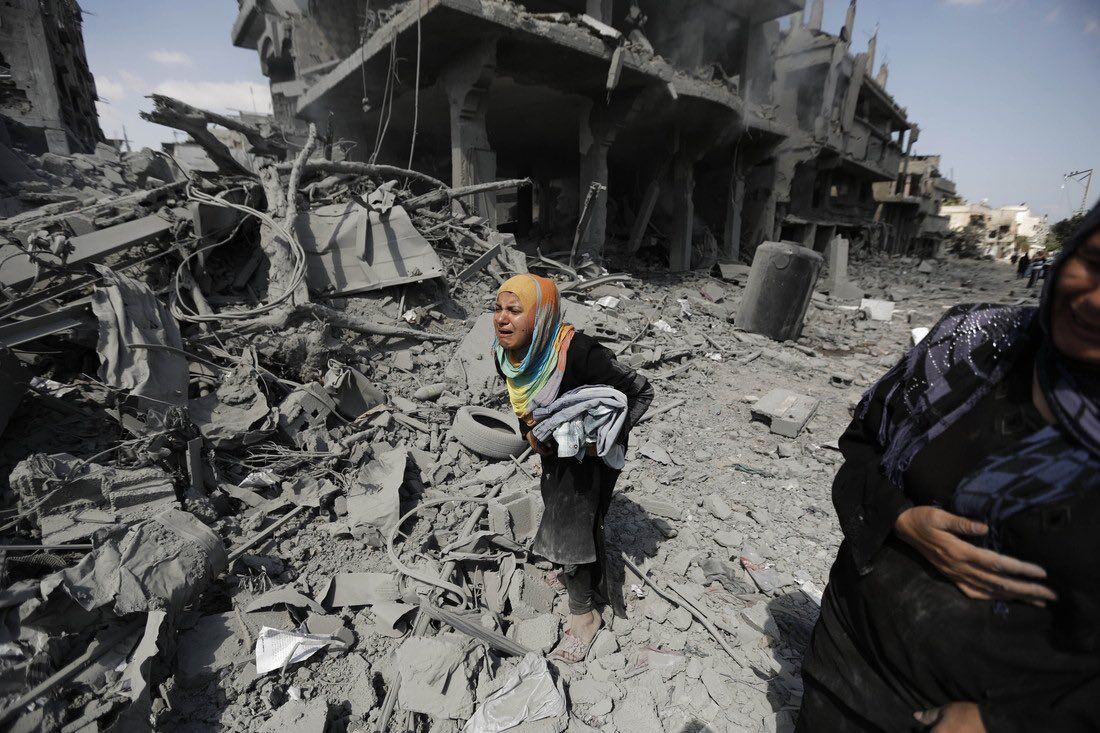
In Gaza, where daily life has become a battle for survival, the stories of Palestinians who lost their homes in the midst of the genocidal war waged by Israel on the Strip 10 months ago come as a mirror-image reflecting the suffering of an entire people, carrying with it bitter human details of what it means for someone to lose their home.

The Al-Sayyid family was living in peace until that fateful night. “The night had fallen, and suddenly, we heard the sound of a huge explosion. Then the voices of the remaining neighbors shouted ‘I had to evacuate the area because there was a threat to blow up the residential tower opposite my house,’” Ahmed, the father, tells the Palestinian Information Center.

At first Ahmed’s family of a wife and seven children moved to a shelter school in the Sheikh Radwan neighborhood south of Gaza City, and as the Israeli ground invasion expanded, they moved to Al-Aqsa University in Khan Younis but when the Israeli army withdrew from the city, they went back.

“I did not wait a minute after I learned of the occupation army retreat to the northern parts of Gaza Strip. Me and my brother rushed to inspect our three-story house. As soon as we arrived there, we were shocked by what happened to the place,” Ahmed told the PalestineIn formation Center Tuesday.

“I found a large part of the house destroyed by artillery shells and burning furniture. It was harsh moments. This is the first time I have faced such an experience like thousands of others who repeatedly lost their homes in previous Israeli wars.”

The man, who is in his 50s, stresses “losing a house is not an easy matter. You are not lose stones here. You feel as if someone has token you to a distant world, erasing a lifetime from your memory. In every corner of the house there are memories, feelings, emotions and life experiences.”

Israel has systematically and extensively destroyed homes in Gaza, completely destroying hundreds of thousands of housing units and in just 283 days,  it has turned their owners and residents into homeless people living in tents and shelters.

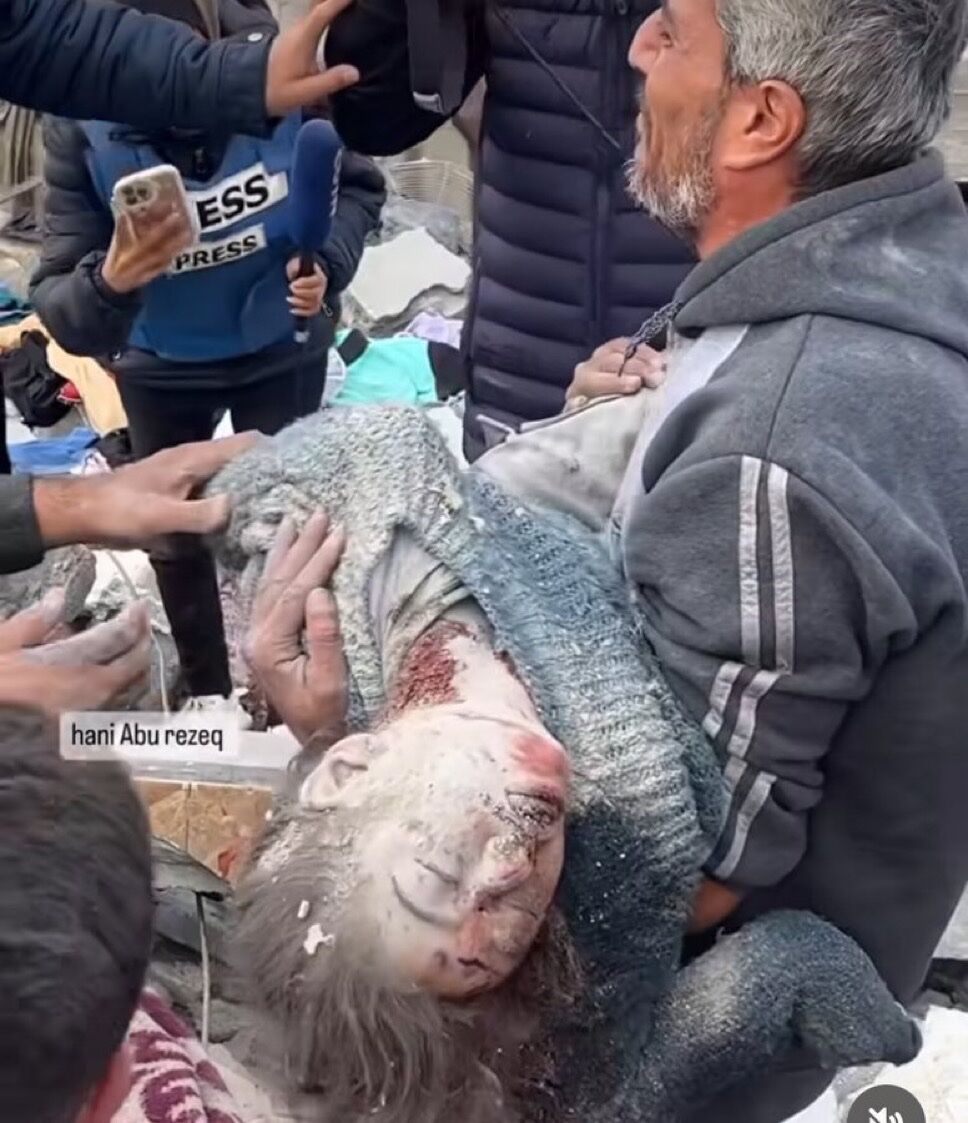
Israel warplanes bomb houses over the heads of their residents resulting in their instant deaths. In many times the people mostly women and children are deeply buried in the rubble of these homes. This is not to forget the aerial bombardment of blowing up residential blocks.

Residents ask why is this happening to us? There is no need for it. International organizations protest and condemn but to no avail.

Ahmed points out the psychological and social pain is more severe than the material loss. “Many a time, my tongue twists and turns when my children ask ‘we are going to get back to our house, how long will it take to repair it, how long do we have to stay here?,” Ahmad waves his hands at a loss.

 “How can children feel safe in a temporary shelter? They have lost everything, even their small toys.”

Satellite images by the United Nations Satellite Center show 35% of all buildings in the Gaza Strip are either completely destroyed or extensively damaged due to this Israeli war of annihilation. This means the number of buildings razed to the ground is 88,868.

In its last March assessment, the center used high-resolution images taken by satellites and collected on 29 February, and compared them with images taken before and after the outbreak of the war.

Dreams crushed

Whenever she remembers her home and her memories there, Aya Ahmad, is reduced to tears.  “I had a private room and/or a suite. All my memories, books, and office are gone now.”

“I am a medical student at the beginning of my third year, and at the beginning of my university studies, my father prepared the second floor of our house, bought me a large collection of medical books, and prepared a special room for me with an office, on the walls of which I wrote my hopes and ambitions,” Aya told the Palestinian Center

The 23-year-old girl lives in the city of Khan Yunis, and she has never been forced to move in previous Israeli wars on Gaza, as in this war.

“This is the first time I have been displaced, and when we were forced to do so at the beginning of December 2023, we cried a lot then. We took a few of the house’s belongings in the hope that we will get back.

But this wasn’t so, its been 10 months now since the war started, it hasn’t stopped, we were not able to return to our house which we lost subsequently due to the bombing, and we lost most of our personal belongings there. We moved between tents, and we lost many loved ones, and then the destruction of the house increased our pain. My certificates, my clothes, and my memories were all crushed, and with them many dreams were lost too.”

The garden of the house was Aya’s refuge after the rigors of a long university day. She had pleasant evenings with her parents under the palm and lemon trees on summer nights. But no more, for all of the family now are sheltering in tents of those that were forcefully displaced.

“My wish was to return home, I even wanted to return to it after the occupation forces retreated from our area. At the time, it was still standing and was only partially damaged, but the occupation army returned months later and bombed.”

Aya is still confident about rebuilding her house and whatever

the occupation destroyed, despite the pain she experiences whenever she looks at pictures of her former home and the social memories of each moment there.

A UN assessment found it would need a fleet of more than 100 trucks working for 15 years to remove the 40 million tons of rubble in Gaza. Such an operation could between $500 and $600 million.

According to the assessment by the UN Environment Programme, last month, 137,297 buildings were damaged in Gaza alone not to say anything about the destroyed buildings.

Not stones!

As for Abeer Abu Salem, resident in the Beit Lahia Project in the north Gaza, the smell of gunpowder still haunts her, as if it had just happened. “I will never forget what I experienced that evening, and it cannot be erased from my memory. I cannot describe the scene because of the horror of what I saw.”

Abeer recounts what happened: “I heard the sound of an explosion and saw the walls collapsing and columns flying. I tried to escape but could not, and with the air closing in, I found myself in the second room. I cannot imagine that I am still alive. It all happened in seconds, turning my life upside down.”

Abeer stayed in the Indonesian hospital for about a month, before the occupation army forced them to flee to the south of the Gaza Strip. When asked about what it means to lose a house, she answers:

“It is not easy to lose your house you grew up in. The house is full of precious memories. We worked hard for many years so that my father could build it for us as an apartment above the family home.”

She points out the fear she experiences is not related to their ability to rebuild the house that was leveled, as much as it is to the emotional feelings of seeing what happened to the family home.

 “We are now displaced. We do not know the fate that awaits us after the end of this cursed war. We cannot think about whether we will truly return to Beit Lahia or whether we will live what our ancestors lived when they forcibly left their homes 76 years ago in the Nakba of 1948 and died on “I hope to return,” she laments.
Continue reading
UN Security Council Must Act to Stop Israeli Atrocities in Gaza

Palestinian Territory – The Security Council, UN General Assembly, and all international justice institutions must act swiftly and decisively to compel Israel to cease its frequent, systematic military assaults against shelter centres housing internally displaced people. In defiance of international law, Israel has turned shelters, including UN facilities into acceptable targets and have served as the backdrop for multiple, willful mass killings in front of the world.

Israel’s frequent attacks and bombings of UN facilities, which have left hundreds of civilians dead or injured, are a blatant manifestation of the international community’s refusal to put an end to the crime of genocide, ongoing for nearly 10 consecutive months. This crime is a result of Israel’s decades-long international impunity, and is evidence of its unrelenting collective punishment of the Palestinian people.  

Horrific attacks

The most recent of these horrific attacks took place at 2:50 p.m. on Sunday 14 July, when Israeli warplanes attacked the UNRWA-run Abu Oreibat school, which is home to thousands of people who were forcibly displaced to the Nuseirat camp in the central Gaza Strip. Fifteen people were killed, including at least one woman, and numerous others had their bodies blown to pieces. Eighty people were also injured, mostly women and children.

Euro-Med Monitor’s team has documented hundreds of similar cases in which Israeli aircraft bombed shelter centres housing thousands of forcibly displaced people, killing hundreds inside them, in flagrant violation of international laws, especially those regulating the principles of war.

Since the start of Israel’s genocidal war in the Gaza Strip, UNRWA has documented 456 attacks on its buildings, some of which were targeted more than once. According to UNRWA, 188 of its facilities have been were affected during these attacks. At least 524 displaced people who took refuge in UNRWA shelter centres have been killed, and at least 1,621 others injured, since last October.

In addition, there have been hundreds of deaths and thousands of injuries in other shelter centres as well as camps for internally displaced persons inside the Israeli-proclaimed “humanitarian safe zone” to which residents have been forcibly displaced in recent months.

In Israel’s horrific massacre in the area of Al-Mawasi in Khan Yunis on 13 July, Israeli aircraft dropped eight devastating United States bombs on a crowd of tens of thousands of forcibly displaced people. At least 90 individuals were killed, and 300 others were wounded, many of them women and children who lost limbs and/or were paralysed in the attack. Medical teams faced difficulties in treating these victims, as the Gaza Strip’s health system has collapsed due to the systematic Israeli attacks targeting it since 7 October.

Israel’s attempt to use the justification of “targeting military or factional leaders” to legitimise crimes that result in the deaths of hundreds of civilians is unacceptable. Whether or not its accusations are verified, Israel is still required to follow the rules of international humanitarian law in all situations, including those involving military objectives. This means adhering to the principles of distinction, proportionality, and military necessity (taking all reasonable precautions to protect civilians), such as selecting the mode of operation and weaponry that will result in the least amount of civilian casualties and damage to civilian objects. Euro-Med Monitor notes that, regardless of how closely one party follows the rules of international humanitarian law, the other party is still legally required to abide by and honour the provisions of the law.

Israel systematically and repeatedly violates the principles of distinction, proportionality, and necessity, using bombs and ammunition with enormous destructive power that are imported from other countries, the majority of which are American-made. This makes the US—and any other country that supplies Israel with weapons—partners in the killing, which is occurring at a rate never before seen in the history of modern warfare.

In this regard, the UN Security Council should call an emergency session to discuss the consequences of these systematic crimes against Palestinian civilians in the Gaza Strip, including those who have been displaced and who sought, or are currently seeking, refuge in camps and shelter centres. It should also support efforts to hold those responsible for these crimes accountable, particularly since they are being committed in violation of international law and the UN Charter, i.e. against civilians who are protected and civilian objects that are protected.

The Security Council and the UN General Assembly must act seriously and swiftly to stop the crime of genocide in the Gaza Strip by adopting effective international resolutions with executive mechanisms and imposing sanctions and deterrent measures against Israel to ensure that it stops its crimes and grave violations in the Strip. Israel and its allies must be pressured to respect international law and the rulings of the International Court of Justice.

Based on the aforementioned, all nations are required to fulfil their international obligations by enacting strong sanctions against Israel and severing all other types of political, financial, and military support and cooperation. This includes immediately halting arms transfers to Israel, including export permits and military aid; otherwise, these nations will be held accountable for the crimes that have been committed in the Gaza Strip, including genocide.

Additionally, the International Criminal Court ought to keep looking into any and all crimes committed by Israel in the Gaza Strip; broaden its investigation into criminal responsibility, in order to hold all perpetrators accountable; issue arrest warrants for those responsible; and acknowledge and address Israel’s crimes in the Strip, as they are international crimes that fall under the purview of the International Criminal Court and are clearly crimes of genocide.

This article is a reprint from a piece in the Euro-Med Human Rights Monitor.

Continue reading
UNRWA Chief: ‘…Air Filled With The Smell of Blood’

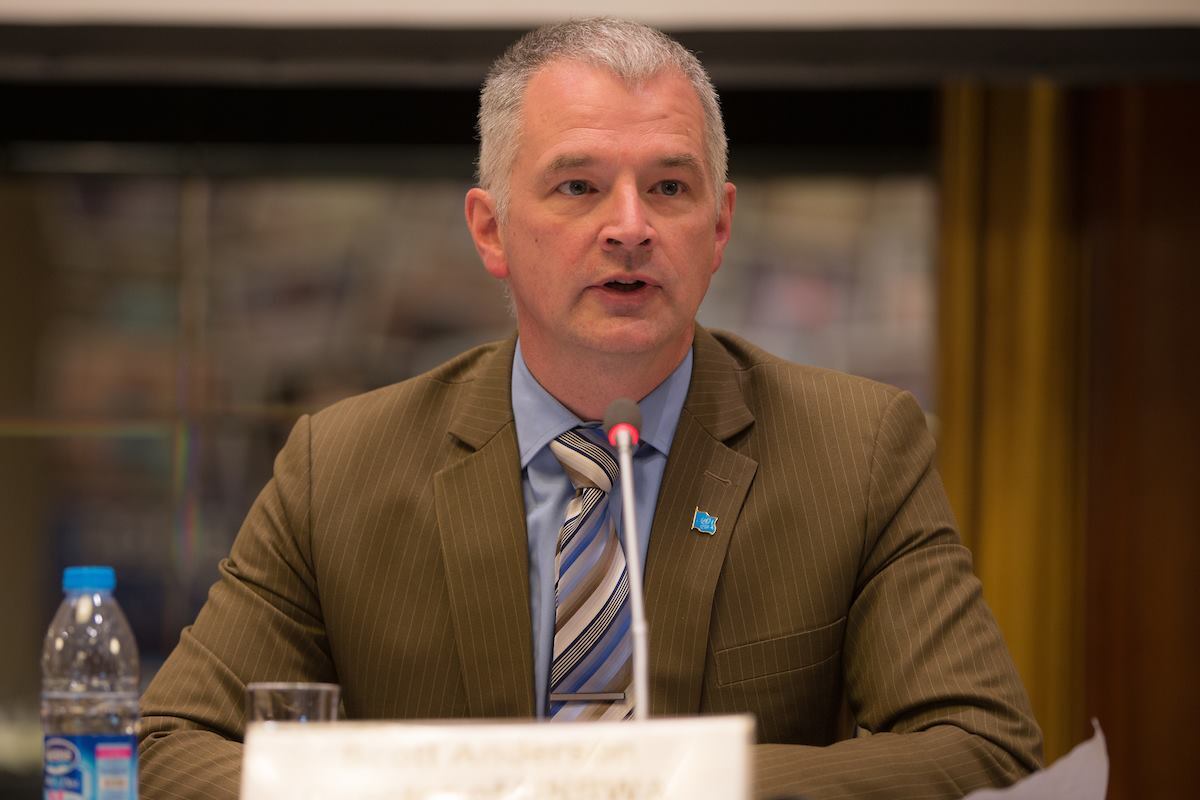
CROOSFIREARABIA – “The air was filled with the smell of blood,” Scott Anderson, deputy humanitarian Coordinator, UNRWA Affairs Director in Gaza said during his visit to the Nasser Medical Complex in Khan Younis.

“Visiting the Nasser Medical Complex in Khan Younis yesterday, I witnessed some of the most horrific scenes I have seen in my nine months in Gaza,” he added.

“This overstretched health facility admitted well over 100 of yesterday’s severe injuries. With not enough beds, hygiene equipment, sheeting, or scrubs, many patients were treated on the ground without disinfectants,” he pointed ot.

“Ventilation systems were switched off due to a lack of electricity and fuel, and the air was filled with the smell of blood,” he said according to the Palestine News Agency WAFA.

“I saw toddlers who are double amputees, children paralyzed and unable to receive treatment and others separated from their parents. I also saw mothers and fathers who were unsure if their children were alive. Parents told me in despair that they had moved into the ‘so-called humanitarian zone’ in the hope that their children would be safe there,” he said.

“My colleagues from the humanitarian community are doing everything possible to increase medical capacity in Gaza, where the health system has long been on the ropes. Yesterday, we provided referral services, as well as additional tents, beds, stretchers, disposables, and medications. But impediments to humanitarian operations prevent us from supporting people anywhere near the scale necessary,” Anderson added.

“Civilians must be protected at all times. We urgently need a ceasefire, the release of all remaining hostages, respite for the people of Gaza, and a meaningful opportunity for healing to begin,” he concluded.

Continue reading
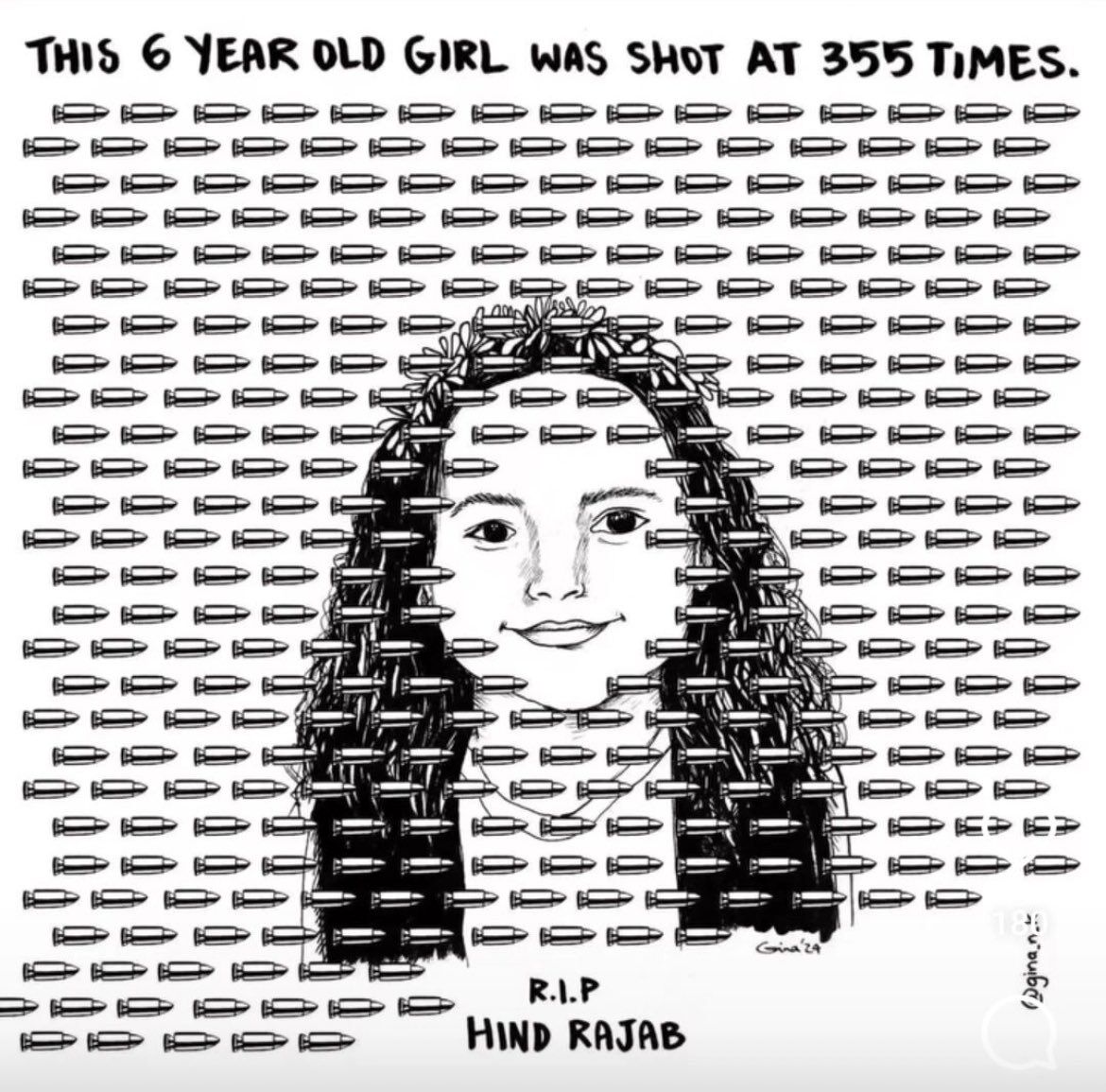
Shot 355 Times! Israel Fears Little Hind

Her name is Hind Rajab, a six-year-old girl who was killed by the Israelis while hiding in a car.

Unbelievable is the fact car was riddled with 355 bullets from an Israeli tank that kept pounding at the car with no mercy.

She was finally shot while surrounded by her unarmed dead relatives, an uncle, an aunt, three cousins who were fleeing Gaza city’s Tal Al Hawa at the end of January 2024.

The bodies of Hind and two paramedics who were sent to rescue her were found on 10 February, 2024. The story of the Killing of Hind Rajab is recounted at length on Wikipedia and many others have investigated the terrible incident in the following months.

Her name and images have continued to make headlines on the social media with a #HindRajab  tag since then, and because of the horrific nature of the killing as her body was found 12 days after she was killed with shocking audiotapes recalling her final moments, all alone, as she was killed with Israeli bullets.

Imagined: While the Israeli tank was shooting at them, one-cousin remained with her, 15-year-old Layan Hamdeh. When she was killed by more bullets, she was talking to officers in the Palestine Red Crescent Society. Then Hind picked up the phone and was told to keep hiding in the car.

Israel denied responsibility but all the evidence suggest it was their bullets. Today the “shot 355 times” continues to dominate the social media with the “6-year-old hiding in a car annihilated by an Israeli tank”.

Continue reading
Timeline: Mohammad Al Dief is Israel’s Nemesis

Quds News Network – The Israeli army claimed, Saturday, its attack on Al-Muwasi area in Khan Younis, southern Gaza Strip, targeted Muhammad Al-Deif, overall commander of the Al-Qassam Brigades, the military wing of Hamas, alongside other Hamas leaders. However, Hamas states the Israeli allegations are false.

While the Israeli army claimed today it attempted to assassinate al-Deif, the Palestinian Ministry of Health in Gaza reported an increase in the number of victims from the massacre committed by the Israeli army in Al-Muwasi area to 71 Palestinians, with 289 others injured. Later figures by Al Jazeera put the number of those killed at 91 and injured at 300.

Over the course of about three decades, Muhammad Diab Ibrahim Al-Masri, the overall commander of the Al-Qassam Brigades known as Muhammad Al-Deif, has remained a significant puzzle for Israel, which has failed in at least seven assassination attempts against him.

This detailed timeline provides a comprehensive overview of what we remember about Israel’s real and alleged attempts to assassinate Muhammad Al-Deif.

August 19, 2001

Two Israeli Apache bombarded cars in Gaza, killing a police officer in the Preventive Security Apparatus. Israel claimed that Hamas leaders, including Muhammad Al-Deif were the target but they survived.

September 26, 2002

An Israeli Apache dropped two bombs on a car in Gaza, which Al-Deif was allegedly driving.

September 6, 2003

An Israeli missile missed its target and failed to hit Al-Deif, who was allegedly accompanying Hamas’ founder Ahmad Yaseen.

August 20, 2014
During the Israeli offensive on Gaza in 2014, Israel bombarded Al-Deif’s house in Gaza City using 6 bombs, murdering two women, a man, and a baby, including Al-Deif’s wife and 7-month-old baby with 60 civilians were injured in the attack.

May 19, 2021

During the Israeli offensive on Gaza, Israel’s army said it failed to assassinate Al-Deif twice.

July 13, 2024

Israel targeted a displacement camp, sheltering 80,000 civilians, and claimed that it targeted Al-Deif. At least 79 civilians were killed in the Israeli attack.

Continue reading