Notes From a Hospital Bed

By Dr Birsen Gaskell 

A piercing alarm wailing through the corridors of the hospital for the third time this evening. I swiftly climb down the stairs to the emergency room four floors down. A crushing dread fills my chest, as the wailing of the alarm signals a mass casualty is expected. I push through the crowd piling up in the ER: “Tafadal … tafadal (please go ahead).” A child drops a torn bag spilling pieces of bony flesh. A man shrieks, the meat is a small shredded arm, ashen fingers hanging loosely attached.

The child struggles to put the shredded arm back into the bag, he looks around for help. He sweeps the amputated arm aside, away from the passing crowd. His gaze falls on me just a moment. I quiver at the calm of his face. I search for tears, anger, fear, something recognizable in his eyes but the void there like a black hole sucks me in. Child, when did you stop being a child? He will later keep peering through the ajar ER door to see if the relative or friend whose torn off arm was shoved into a bag is still alive.

The resuscitation room is quickly filled with the smoke of burned flesh. Five bodies and some missing body parts are thrown onto the stretchers. The rest are taken to the next room, a plain room with another five stretchers. I scan the room, all the bodies seem limp, unconscious. I start with one by feeling for a pulse; a teenager, burned extensively with shrapnel wounds all over her chest and face. Her long curly hair seem to be still burning slowly. No pulse. I move to the next.

A toddler again with shrapnel wounds all over his bony little body. His arms and feet burned. He has an open skull, eye sockets blackened. He has a feeble pulse but he won’t make it. I move to the next one. Another burned child with a missing arm and crushed pelvis. A doctor is putting a chest drain on each side of his little chest. Chest drains are an easy call in the ER, the majority of patients have them as most blast injuries blow the chest cavity up with air sweeping from outside crushing the lungs down. The only way to get the lungs up again is putting tubes through the chest to deflate the air around the lungs. Sterility is no concern, chest drains are put in in a flash. I let the team carry on.

The next one is another child. I see shrapnel entries on his face, blast injuries on his bare feet. He’s unconscious but has a pulse. “Lazim oksijen (oxygen needed),” I shout. My voice is swallowed in the cacophony of the ER. I grab a nurse by the elbow, demanding oxygen. He goes out to fetch an oxygen cylinder but comes back empty handed. I scan the child with ultrasound. He has blood in his abdomen and around his lungs. A local doctor is with me now. Most doctors speak excellent English. I give my findings, we agree to send him to computer tomography (CT) to check for brain injury. We can’t treat patients with head injuries in this hospital. The only neurosurgical team is based in the European Gaza Hospital in southern Khan Yunis. Without adequate airway support, the child soon is ushered to the CT.


After a week here I’m used to hearing explosions

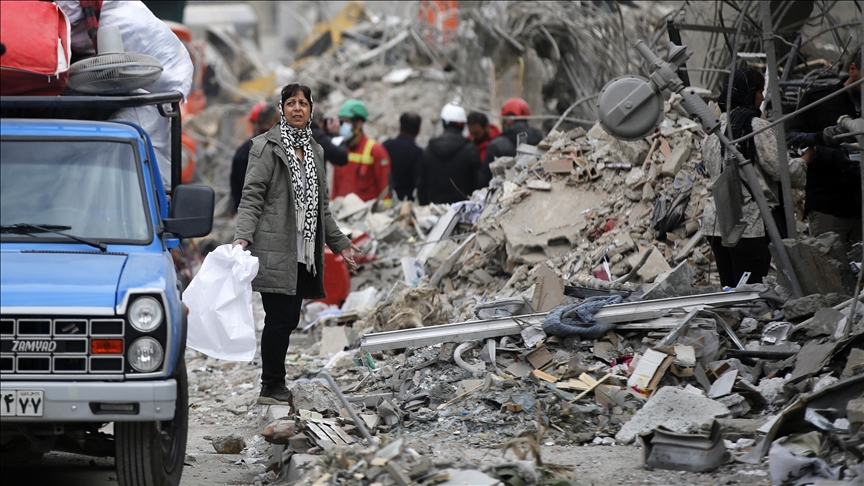
The fifth casualty is also a child. He is already intubated by the team but still bleeding from his crushed, half-amputated arm. The cloth wrapped round his arm as a tourniquet is soaked in blood. He has penetrating crushing injuries in his genitals and pelvis, his leg twisted. He is covered with so much blood, it’s difficult to inspect his injuries. With such severe injuries he’s unlikely to survive but there’s talk of moving him to an operating theater in order to stop his bleeding. I agree. We scoop him to a theater with no monitoring. His relatives grab the stretcher outside, carrying him swiftly. I rush to the stairs to alert the team in the theater. Before I reach the first landing, a shuddering blast fills my ears, shaking the windows and doors. The waves of the blast push me against the wall like a gale. I halt. That was close! But I quickly realize not close enough for me to stop. After a week here I’m used to hearing explosions, blasts, bombs in the background, some strong enough to shake the entire hospital building.

I soon find out the airstrike was just outside the main hospital gate. A tent with a Press sign was hit, setting off fire that soon will engulf the other tents around it. I now expect another wave of casualties. “Some have to be treated on the floor as the ER is pretty full now,” I think, then my thoughts shift to the child in the theater. I continue climbing the stairs. After a two-hour battle amputating his arm, exploring his abdomen and pelvis, and fixing his broken leg temporarily that painted the whole theater with blood, he makes it to the intensive care unit only to die the next day with organ failures. The mortality rate in the ICU is very high as well as in other parts of the hospital. Far too many patients with far too few resources, hardly any antibiotics or other meds, premature discharges to welcome new admissions, the hospital is often the last stop for the injured.

It is now 2 am. I feel a migraine kicking in, think I must drink some water but the taps aren’t safe to drink from. I must go to our accommodation room for a drink but I head towards the ER instead. The crowd outside the resuscitation room is bigger now. The cacophony is louder. It’s chaos in the ER, with some patients lying on the floor. I smell the familiar burned flesh. There’s ongoing cardiopulmonary resuscitation on a child whose body is covered with soot mixed with blood. The CPR is short lived, he’s dead. I watch his lifeless face, his eyes half open. I secretly feel relieved for him knowing he will no longer wake up to the sounds of explosions as he has been for the past nearly 600 days, no longer spending the day hungry and thirsty, no longer having to be displaced yet again from his makeshift tent or ruins of his city, no longer feel freezing cold overnight or scorching hot during summer days, no longer will miss his old school, his friends, his family, some of whom died or are thought to be dead. I stroke his dirty bare feet, think: “Now you’re safe little man, no one can hurt you.” Just then another crushing airstrike booms all around us! The lights go off.

Bombardment of Gaza never stops

The fourth floor of the main hospital building where the ICU unit is located in the middle is the designated assembly point for our team in case of a direct airstrike. I manage to climb the stairs to the assembly point with my cellphone flashlight. By the time I reach the assembly point the generator kicks in, the lights are back on. I don’t see anyone else from the team other than the usual traffic that never stops in and out of the ICU. I rush to the accommodation area, and we’re all fine. The strike was just outside the walls of the hospital’s east side.

We watch the massive smoke clouds billowing up right across the balcony of the accommodation. Dr. Osama instructs the team to stay in the accommodation for the time being, away from the balcony and windows. Ambulance sirens remain loud for hours to come. I lie down with a blooming migraine but can’t sleep as we spend the rest of the night with low-flying supersonic jets hovering the air above. Drones humming loudly as usual in between the sounds of jets. The bombardment of Gaza never stops.

I hear Rachael say: “Hold on.” Someone knocks on the door impatiently. “It’s for you,” says Rachael, seeing me raised in bed. What time is it? “Still very early” she says. I’m needed in theaters urgently. Anesthetic nurses are overwhelmed with no anesthetist around. My migraine is here to stay. I gobble up some painkillers and leave. Inside the theater room there’s so much blood on the floor, it swashes and ripples around every time I walk over. It’s a young girl with her chest cavity open. I see her heart fibrillating. “Lazim kalb compression (heart compression needed).” She doesn’t make it. The most efficient workers here are the cleaners. After returning from the bathroom, I see the operating room already clean and ready for the next case.

“Ahmad, where is Dr. Fayez?” I ask the anesthetic nurse. “In his office, he’s not well.” I find him having tea on a broken office chair. He offers me tea. I know that there’s no point in saying no as the hospitality of Palestinians always wins out. He turns on the mini plastic kettle behind him and pulls out some loose tea from the drawer of his table. “Feeling okay?” I ask. He doesn’t hear me as the kettle makes a buzz and vibrates violently. “You know what I really really miss, Doctor Birsen?”

He leaves me in suspense, brewing the tea in the kettle. “I miss drinking tea with sugar. Really miss tea with sugar so much. I don’t find sugar in the market anymore.” I nod. “You feeling okay?” “Better now … When we have a bad night I always get chest pain.” I say: “Ohh … shall we check you over?” He responds “It’s not new, doctor, I’m diabetic, hypertensive. Every time I hear a big explosion I get chest pain. I worry not about myself, but about my boys. They can’t survive without me.” He turns his face as his voice cracks. He wipes his eyes. Dr. Fayez has six boys. Touch between the genders is not customary here. But I put my hand on his shoulder for few seconds as he weeps quietly.

“They haven’t been out for the last 18 months. We don’t let them out to play, they’re always inside.” Their home took a hit by an airstrike on the neighboring house that knocked down part of their house down too. They survived with minor injuries. Since then they’ve been displaced five times. Now they live with other relatives in a damaged building with no windows. He was in Nasser Hospital when the neighborhood was invaded by ground troops.

When the staff and patients were led outside, he came very close to being abducted at a checkpoint. He told me: “I saw a toddler left alone screaming. I couldn’t leave him. I picked him and carried him with me. He kept screaming all the way to the checkpoint, IDF (Israeli army) soldiers who were pointing guns at us got annoyed by this. They let me through when most of the staff got held off and taken away. This small child saved my life.” I say: “You rest, Dr. Fayez, I’ll take over today.”


Many martyrs found in the ground

It’s going to be a long day. I desperately need my morning coffee. Our housekeeper Jamal makes coffee for me with the little coffee mocha I brought with me. I give half to him. We sip our coffee as we look out over the balcony. Several smoke clouds hang over the Rafah area. The air is very thick with the pollution of constant explosions. We watch the kids collecting garbage in the desolate ground of the hospital building.

The skeletons of ambulances, furniture, and hospital equipment and what’s left of them is scattered around. Some buried partially. Following the ground invasion almost a year ago, the Israeli army damaged and burned down the properties of the hospital. Children rummage around the hospital grounds every morning collecting anything they can find useful for burning fire. Every morning, when they should have been in school, they roam around the ruins of city to collect what’s left of it.

Jamal points to the hospital ground, says: “We found many shuhada (martyrs) in the ground.” He is talking about the mass graveyards that were dug out after the Israeli army withdrew from the area. The same evening on the same balcony, Jamal speaks in Arabic as my Jordanian colleague translates with a trembling voice. In December 2023, Jamal got trapped in Northern Gaza under a complete siege, constant bombardment, and a strict curfew lasting a month.

His neighborhood was reduced to ruins with decaying dead bodies scattered around. He saw his brother and his family home hit by a rocket and later made many attempts to save and retrieve their bodies. But with quadcopters hovering around, he couldn’t make it out. A week later from his windows he sees dogs eating human flesh, one of which he knows is his brother’s lifeless body. Jamal rubs his fists between his legs, says “Alhamdulillah” (praise be to God), and leaves us in silence.

Dr Birsen Gaskell, an anesthesia specialist, is a volunteer doctor for Doctors Without Borders. She visited the Nasser Hospital in Khan Younis, Gaza in April 2025.

Continue reading
The Devil You Know!

By Dr Khairi Janbek

One wonders what more can be said about the tragic war in Gaza, more than the outpouring of words in the East, West and the Arab world with the habitual accusations and counter-accusations which have reduced the question of Gaza, after many other things to a mere question of semantics with the same words and same policies, while the habitual loser, the hostages and their families, and the Gazan people continue to suffer relentlessly.

Delegations keep going and coming, ceasefires agreed then broken given the impression that all what is being attempted is to keep the war going without the pangs of guilty conscience or more pragmatically, pending how public opinion shifts in western countries.

For all intents and purposes, can Israel destroy Hamas or at least break its military structure, if indeed this is the intention of Israel? If it is not, what would be the point of this war?

This is because all of what is being done is mere destruction of lives of innocent civilians who have no say when it came to “Hamas terrorism” and the subsequent Israeli retaliation. The tragi-comedy of the situation, is that Israel is fighting Hamas in order to keep a smaller version of Hamas, in the manner possibly of the devil you know is better than the one you don’t.

As for the other side of the divide, one doesn’t believe that Hamas cares about the innocent Gazans more than Israel, of course their aim is to survive, and rule for another day, because as it appears they seem to believe that Israel has no wish to occupy Gaza, and they stand a good chance to rule a diminished territory compatible with their diminished organizational size.

One wouldn’t actually be surprised knowing only too well than in the Middle East nothing is meant to be resolved; neither with peace nor with war.

Then comes the international community, President Trump’s policy towards the region fits very well with all what is going on, and it reflects this inconsistency with its own inconsistency. At one point, he wants the destruction of Hamas, then he wants a ceasefire and wants the war to stop, with the only logical demand of wanting what everyone else wants, the release of the hostages.

But even on this path one wonders for how long he will be able to keep his attention span on the question. The EU has its twists and turns, apart from’Ireland and Spain, the governments of Europe have their own contradictions with each other and subject to the fluctuations of public opinion, nevertheless, there will be plenty of rhetoric but the same policies will continue.

Ironically, the only side which is not counted on, and the only side which seems reluctant to get involved actively, save for holding hostage release negotiations, is the Arab side.

One firmly believes, against common wisdom, that only the Arabs can convince Hamas to surrender its weapons, and manage a post-Hamas Gaza, guaranteeing security for Israel and start the reconstruction efforts for Gaza. It is only after that, a permanent solution can be thought of.

Dr Janbek is a Jordanian writer based in Paris, France.

Continue reading
Can ‘Realist’ Trump Pull Off Gaza Ceasefire?

By Michael Jansen

During his ongoing visits to Saudi Arabia, Qatar and the Emirates, US President Donald Trump seeks to focus on business opportunities and investment in the US rather than address the negative political realities to which he contributed during his first term (2017-2021).

At that time, he dismissed the two-state solution in favour of “The Deal of the Century” which would give Palestinians a degree of autonomy within Israel. He defunded UNRWA, recognised Jerusalem as Israel’s capital, moved the US embassy there, and said the US no longer considers Israeli settlements illegal overturning a 1978 policy. The fate of the refugees, Jerusalem, and settlers were meant to be negotiated under the two-state solution by the sides under the 1993 Oslo accord. He closed the US consulate in occupied East Jerusalem which served Palestinians and the PLO office in Washington. Trump recognized Israeli annexation of Syria’s occupied Golan.

Trump began his second term by calling for the expulsion of Palestinians from Gaza which would be redeveloped as a Middle East Riviera instead of exerting pressure on Israel to end the Gaza war and enable its reconstruction. Under Trump’s real estate venture Gazan Palestinians were supposed to settle in Egypt and Jordan, which along with all the Arabs flatly rejected this proposal. Egypt drew up a counterproposal to reconstruct devastated Gaza while its population stays put.

His resort scheme has angered the Arab public from the Gulf to the Atlantic. His call for Saudi Arabia to establish relations with Israel has been rejected as Riyadh has said it will normalise when there is a Palestinian state with its capital in Jerusalem.

Since Trump made Saudi Arabia his first foreign destination in 2017 during his first term, the region has changed significantly by pivoting to the East. Saudi Arabia and the Emirates have cultivated ties with Russia – Riyadh’s partner on oil production and pricing – and China which buys Gulf oil and exports billions of dollars in goods to the Gulf. The Emirates, Egypt and Iran joined BRICS (the grouping of Brazil, Russia, India, China, and South Africa) while Saudi Arabia applied but did not follow through. China mediated Saudi-Iranian reconciliation. This has ended Iran’s isolation in the region.

On the positive side, early in this term Trump opened talks with Iran over its nuclear programme to replace the 2015 deal from which he withdrew in 2018. A fifth round of talks is expected. Although Trump wants to be a peacemaker, he has threatened war if the talks fail.

As a peacemaker, Trump bombed Yemen heavily to force Yemen’s Houthis to end attacks on international commercial and naval vessels in the Gulf of Aden and the Red Sea. The Houthis and US agreed to end this confrontation. Trump has not, however, halted Houthi drone and ballistic missile attacks on Israel which the Houthis say will stop if Israel observes a ceasefire or ends the war on Gaza.

Trump has not planned to stop in Israel during this Gulf tour, indicating that there is some distance between him and Israeli Prime Minister Binyamin Netanyahu. He has not only refused to ceasefire in Gaza but also maintained a ten-week blockade of the strip. He could have done both to ease Trump’s swing around the Gulf where Gaza is high on the agendas of the rulers and public. Since Netanyahu has carried on with his Gaza war, Trump has ignored him when resuming talks with Iran on limiting its nuclear programme in exchange for lifting sanctions and agreeing to a ceasefire with Yemen’s Houthi. The ceasefire has been welcomed by Washington’s Arab allies, particularly Saudi Arabia which had been urging an end to US attacks on Yemen before Trump began his tour.

Without Israeli involvement, the US has also negotiated with Hamas over the release on Monday of US-Israeli hostage Edan Alexander. For Trump, this is a greatly desired success in the US. In Israel, families of hostages who are not US-Israel dual citizens fear their relatives will be forgotten by Netanyahu who is determined to not only continue with the war but also to expand it once Trump departs from the region. Hostage families are not alone in their suspicions. A majority (54 per cent) of Israelis said that the war was being driven by personal rather than security reasons. Only 21 per cent agreed with Netanyahu’s prioritisation of eliminating Hamas over rescuing the hostages. A March poll showed 70 per cent of Israelis wanted Netanyahu to resign.

He has adopted this stance for several reasons. First, right-wingers in his coalition have vowed to pull out if he ends the war. Second, once the war is over, Netanyahu will be called upon to account for lax Israeli security in the south where Hamas breached the fence on October 7th, 2023, killed 1,200 Israelis and visitors and abducted another 251. There was no excuse for laxity. Young female Israeli soldiers deployed as “watchers” along that part of the border with Gaza, warned repeatedly that Hamas was conducting drills and manoeuvres ahead of an attack. Their warnings were not taken serioiusly by senior Israeli officers. Some of these women were killed and some captured. Third, as long as the war is being waged, Netanyahu will not have to explain how lightly armed Hamas fighters have managed to carry on the fight while the mighty Israeli army and air force levelled Gaza and killed 53,000 Palestinians. Netanyahu has a lot of explaining to do.

Jansen is a columnist for the Jordan Times

Continue reading
Trump: The Deal-Maker in Our Midst

By Dr. Ali Bakir

US President Donald Trump begun his Middle East tour on 12 May, starting in Saudi Arabia with the Gulf Cooperation Council (GCC) summit, then moving on to Qatar and concluding in the United Arab Emirates (UAE). Trump will be accompanied by a large delegation, including senior White House staff, several ministers, high-ranking officials, and an army of businesspeople. At the core of Trump’s tour to the influential and wealthy GCC states—Saudi Arabia, Qatar, and the UAE—will be investments, economic ties, business, and bilateral relationships. The Trump administration aims to attract hundreds of billions of dollars in investments from Gulf wealth funds into the United States.

Expected discussions include Israel’s military campaign in Gaza, Palestinian statehood, negotiations over Iran’s nuclear program, and the ceasefire deal with Yemen’s Houthi group. Additionally, Syria and Lebanon may also feature on the agenda. Syrian President Ahmad al-Sharaa is reportedly seeking a meeting with Trump during his visit to Saudi Arabia, aiming to persuade him to lift sanctions and increase US involvement in Syria’s reconstruction, economy, and oil sector.

Trump critically needs this tour to project an image of a successful leader who has secured hundreds of billions of dollars in pledged investments and deals, as well as closer political and security ties with GCC states. Hundreds of agreements are anticipated during the visit, covering areas such as AI, transportation, minerals, energy, infrastructure, aviation, defense, and potentially broader agreements on semiconductors and nuclear energy.


Matter of prestige

The significance of this tour is heightened by the fact that Trump is facing both internal and external challenges, having yet to achieve any substantial victories in his ongoing struggles. These include the tariff dispute, Israeli involvement in Gaza, the Iran nuclear deal, Russia’s war in Ukraine, tensions with Canada and Greenland, and his ongoing conflict with China. An image of victory during his Gulf tour would help compensate for these setbacks. Gulf leaders are well aware of this and will arrange exceptional welcome ceremonies and generous hospitality for him. In other words, they will arrange a wonderful show for him. This not only caters to his personal ego but also enhances his standing both domestically in the US and internationally, where he is in dire need of a win. The outcome could create a win-win situation. However, it is important to note that not all the promises made during this tour will materialize. While some initiatives may come to fruition, others may remain merely part of the spectacle.

Unlike his first visit to the region during his initial term in the White House, which included Israel, Tel Aviv is notably absent from his current itinerary. This exclusion is quite significant. Under Netanyahu, Israel has little to offer the US president, aside from more problems, a negative image in the region, and a tarnished reputation for the president himself. It serves as a reminder of his failure to achieve a ceasefire in Gaza, largely due to Netanyahu’s unwillingness to pursue it.

In a previous interview following Biden’s election at the end of 2020, Trump explicitly blamed Netanyahu for the failure of his peace initiative with the Palestinians, stating, “Netanyahu never wanted peace.” Amid the ongoing conflict, initiatives aimed at encouraging Saudi Arabia to recognize Israel—an objective pursued by Trump during his first term—are likely to remain on hold. Riyadh has indicated that it requires tangible progress toward a Palestinian state first, a condition that Israel has not been willing to meet. However, Reuters reported this week that the US has shifted its stance and is no longer insisting that Saudi Arabia normalize relations with Israel as a prerequisite for advancing discussions on civil nuclear cooperation.

Desire to appear as dealmaker

Regardless, Trump’s Middle East tour represents more than just a diplomatic engagement with key US allies; it is a calculated effort to reclaim geopolitical momentum and project strength amid mounting domestic and international challenges. The emphasis on economic deals, defense cooperation, and strategic investments highlights Washington’s strategy of leveraging the Gulf’s financial and political capital to enhance Trump’s image as a dealmaker-in-chief. However, beneath the pomp lies a web of unmet expectations and unresolved conflicts.

While Saudi Arabia, Qatar, and the UAE are acutely aware of Trump’s need for a symbolic win, they remain cautious about committing to politically costly moves without tangible concessions, particularly concerning Palestinian statehood. Ultimately, this trip may provide short-term optics that bolster Trump’s leadership narrative, but its long-term impact will depend on whether these engagements translate into sustained commitments or fade into the background noise of global challenges.

Dr Bakir is Assistant Professor at Qatar University, and non-resident senior fellow at the Atlantic Council.

Continue reading
Trump’s Middle East Hour

By Mohammad Abu Rumman

President Donald Trump’s current visit to the Gulf holds substantial strategic significance, especially when compared to visits by previous American leaders or other political figures. This is due to two key reasons: the first relates to the current situation in the Arab region, which is undergoing an intense period of regional and domestic turmoil in several countries—making the future extremely difficult to predict. The second reason is Trump’s own personality, marked by unpredictability, surprise moves, and a disregard for the traditional constraints that bind other U.S. presidents.

While it may be premature to judge or fully grasp the surprises or major outcomes that Trump’s visit may bring for the next phase, the man has already, on the eve of his arrival, stirred the waters—overturning many expectations and analyses, particularly in relation to two major files: the Syrian issue and the war on Gaza, including U.S. relations with Israel and Arab states.

On the Syrian file, Trump announced that he is seriously considering lifting or easing sanctions on Syria and offering support to the new political regime there—reportedly at the request of Turkish President Recep Tayyip Erdoğan. This development is especially significant as it runs counter to the Israeli agenda, particularly in the south of Syria, where Israel has sought to incite minority groups, sow chaos, and even occupy parts of the country. It is clear that Trump has not embraced Netanyahu’s highly provocative approach toward the new Syrian regime. Instead, he seems more aligned with the Turkish and Saudi perspectives, despite Netanyahu’s earlier efforts during a visit to the White House to secure a green light for Israeli aggression in Syria and against Turkey—bait that Trump did not take at the time. Now, on the eve of his Gulf visit, Trump has drawn a clearer line by discussing the potential easing of sanctions on Syria.

The second file concerns Trump’s ongoing tension with Netanyahu. While this may appear to be a personal dispute with the Israeli Prime Minister and his political agenda, Trump seems to be distancing himself from Netanyahu’s grip—unlike in previous phases where Netanyahu appeared to dominate Trump’s outlook. How this rift will influence the next phase, particularly regarding the war on Gaza, relations with Iran, and the broader American vision for the region, remains one of the most critical questions—especially when assessing the growing divergence from the Israeli right-wing narrative.

Much has been said about the reasons behind this divergence—some even call it a crisis—between Trump and Netanyahu. Israeli and American media have widely covered the issue. However, what this writer leans toward is the idea that the Saudis have thoroughly studied how to deal with the new president. They found a way to draw him away from the Israeli perspective by offering him the deal of his dreams: the prospect of a peaceful resolution that would lead to the establishment of a Palestinian state—potentially bringing him a Nobel Prize—ending the war in Gaza with terms favorable to both Americans and Arabs, lucrative commercial deals, normalized relations with America and Israel, strong regional ties, and many other major gains. Why, then, would Trump reject all of that and blindly follow Netanyahu and his far-right team?

The Saudi leadership’s role in the current phase is crucial. They are driving a major shift in the Arab approach to regional policy. Their cooperation on several issues with Turkey, Egypt, Jordan, and the UAE is helping to correct the significant imbalances that have emerged since the Israeli war on Gaza.

That said, it would be inaccurate to claim that Trump has made a full pivot. He remains unpredictable—full of surprises and a master of reversals. Moreover, despite the wide latitude he often enjoys, there are boundaries he will not cross. He may be entering a phase of tension with Netanyahu, but he is unlikely to go so far as to harm Israeli or joint U.S.-Israeli interests. He is well aware of the entrenched domestic base, the powerful lobbies, and the political minefields involved. His room for maneuver is limited. Still, this moment may represent an opportunity to widen the gap between him and Netanyahu—even if the regional reality is complex and the current Palestinian reality even more so. We must also be careful not to raise expectations too high!

The writer is a columnist in Jordan Times

Continue reading