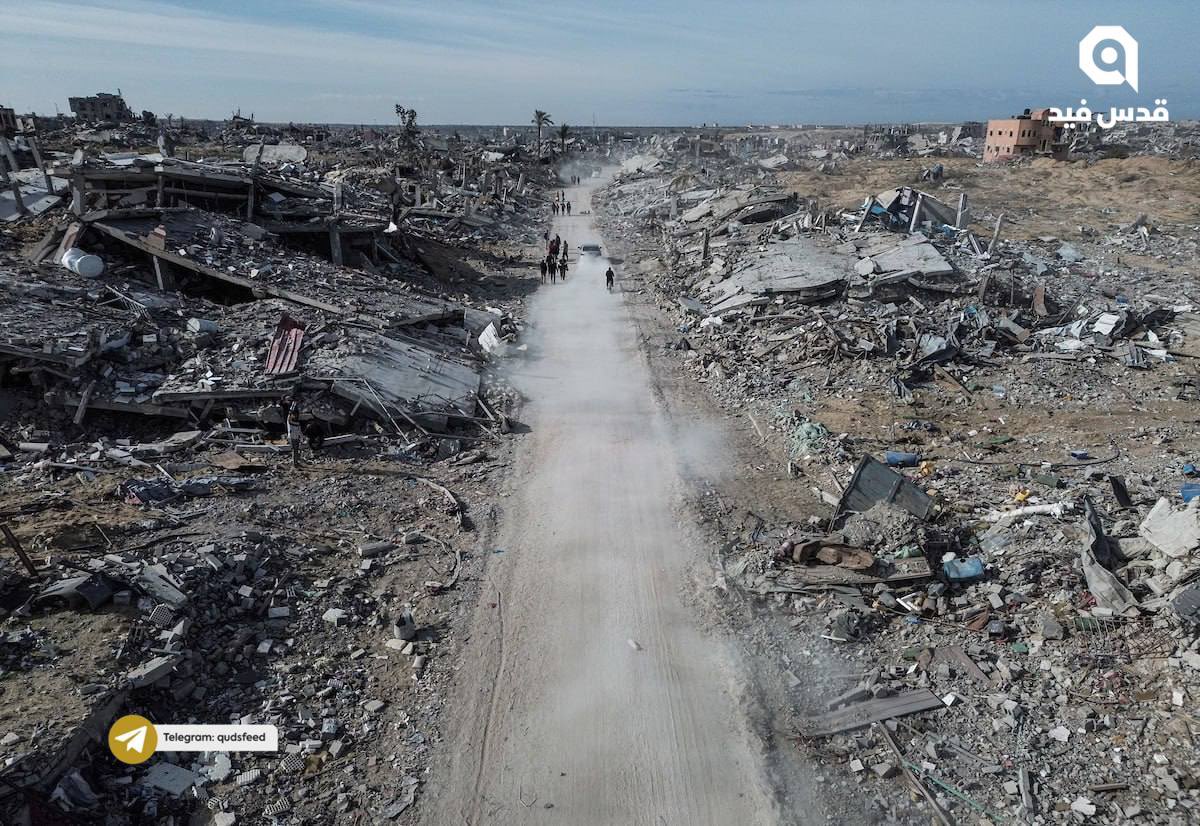
My initial response to President Donald Trump’s proposals for Gaza was to dismiss them as bizarre, detached from reality, dangerously provocative, illegal, and callously insensitive to Palestinian humanity.
His proposals are, in fact, all of the above. But because we know that this president is not a stupid man, it would be wise to assume that there may be a “method to his madness.” Not unlike Trump’s “shock and awe” Executive Order blitz that had his opponents and the media scrambling to understand his intentions, I believe that the same logic may be at work with his Gaza remarks. The logic has two essential components. The first is to disorient and demoralize his opponents. The second is to distract them—like a carnival hustler’s shell game—so we take our eyes off the real issues in front of us and focus instead on the illusion being created.
With this in mind, I do not believe for a minute that Trump intends to send US troops to take over Gaza to forcibly expel 1.5 million Palestinians. Nor will he be able to coerce Jordan and Egypt to receive and permanently resettle these expelled Palestinians, nor entice Saudi Arabia to pay to build Palestinians a “big new beautiful place.”
All these ideas are so far-fetched and dangerous that it is inconceivable that this president, who says he wants to keep America out of war and bring peace to the Middle East, will try to do any or all of them.
I may be attacked by some for trying to give President Trump the benefit of the doubt. To be clear, that is precisely what I am not doing. He may want to turn the page with the distractions of a bizarre plan for Gaza. But instead of taking the bait, we should continue to focus on what’s real. What I am saying is that instead of spending endless hours attempting to parse out his words or critique his plan or prepare for its implementation (which is exactly what he wants us to do), we should avoid the distraction and focus on the urgency of matters in front of us. The fragile ceasefire in Gaza must be maintained and the parties must move into its second and third phases. That means continuing to press for Israel’s withdrawal from Gaza and plans to begin reconstruction. It means directing our attention and action to stopping Israel’s escalation of oppressive violence on the West Bank. And it means maintaining focus on the need to hold Israel and the US culpable for the war crimes committed during the past 15 months.
Neither President Trump nor Israel’s Prime Minister Benjamin Netanyahu want us to act on any of these pressing matters. They want to further demoralise Palestinians while causing turmoil in Arab countries. They want the clock to run down on Phase One of the ceasefire plan. This would allow Netanyahu to resume his war to achieve what he calls “total victory” in Gaza. It would also ensure that he maintains his governing coalition and remains in office.
In other words, instead of addressing real problems crying for our attention, President Trump wants us to fall for his game by debating an illusory distraction while the Israelis pursue their deadly game right under our noses.
In 2007, Russia’s President Putin gave a now-infamous speech at the Munich Security Conference (MSC), announcing Russia’s new posture of hostility towards the US and Europe. In 2022, when Russia invaded Ukraine, many looked back at Putin’s 2007 Munich speech as a revealing moment of his intentions.
This year’s MSC could be a similar watershed. This time, the warning bells ring from across the Atlantic. US Vice President JD Vance delivered one of the most hostile speeches by a US official to Europe in decades. Rather than addressing the Russian or Chinese threats, Vance argued that Europe faced a “threat from within,” accusing the EU and national governments of censorship and ignoring popular demands on issues like illegal migration.
Meanwhile, away from Munich, US President Donald Trump held a phone call with Putin, setting the stage for negotiations between the US and Russia for a peace agreement in Ukraine – without involving European counterparts in the discussions. The day before, Defence Secretary Pete Hegseth announced some of the US expectations from this deal: Ukraine should drop its NATO membership bid, European countries would need to provide the forces to enforce the agreement, and these forces would not be covered by NATO’s Article 5 guarantees.
The transatlantic picture in which the MSC took place was even bleaker. Since Trump’s inauguration one month ago, the new president had promised (and now imposed) tariffs against countries across the world, including Europe. He has threatened to annex the territory of allies like Canada and Denmark.
Normally, the MSC is an opportunity for the United States to reaffirm its commitment to Europe and the Atlantic alliance. This year, it could be remembered as the time when the US started the process of abandoning Europe – or even going aggressively after it.
An attack on Europe
Vance’s speech and the reactions to it have dominated the discussions at the MSC. Although the conference theme was “multilateralization”, the real topic on everyone’s mind was: how would Trump’s second administration approach Europe?
As the pre-conference report argued: “Donald Trump’s presidential victory has buried the US post–Cold War foreign policy consensus that a grand strategy of liberal internationalism would best serve US interests.” That this consensus was gone was clearly visible in the conference. Despite perfunctory references to shared values, Vance’s speech did not talk about the alliance between Europe and North America, nor about the common threats and how to face them.
And he has voiced support for anti-EU parties. Vance pronounced his speech in Germany, just weeks before federal elections, and argued that there should not be “firewalls” in government – a clear reference to the far-right Alternative für Deutschland (AfD) which has so far been kept out of governing coalitions. After the speech, Vance met with the AfD leader.
Additionally, Vance criticized Romania for canceling its 2024 elections and accused the EU of censoring free speech. But Vance failed to acknowledge that the very election that brought Trump and him to power in November was the subject of major foreign interference by Russia, China, and Iran. Rather than sitting idly by, US agencies took active measures to counter these malign actions and prevent disruptions – like raising awareness, coordinating with the media, and keeping politics out of the fight. With his speech, Vance seems to be arguing for the exact opposite approach.
All these issues did not touch on security and defense, the core of the MSC’s discussions. But they did lure in the background of Vance’s speech. A few months ago, Vance argued that the EU should not regulate tech companies owned by Elon Musk. If the Europeans did so, he argued, the US should reduce its security commitments to NATO. Hence, American assurances could become bargaining chips to resolve other issues.
How will the EU respond?
Vance’s Munich speech marks a new era in US relations with Europe. While the themes are not new – Trump has never been a fan of NATO, and enjoys courting Europe’s far-right – the extent of the rhetorical change cannot be understated. Ukraine’s President Zelensky, speaking in Munich the day after Vance, spelled out the challenge in clear terms: “We can’t rule out the possibility that America might say ‘no’ to Europe on issues that threaten it.”
The reaction from European leaders has been strong so far. EU Commission President Von der Leyen called for an emergency clause in the EU treaties to allow member states to boost defense spending [8]. French President Macron called for a summit of European leaders in Paris on Monday, February 17 – to sketch out a common position on the upcoming negotiations over Ukraine, and on making up for US security guarantees from Europe.
The greatest challenge, however, will be transforming outrage into meaningful action. Europeans have long ignored calls to take charge of their own security. Domestic constraints over spending, divisions and the continued belief that Uncle Sam will have their back have stood in the way of ambitious choices. Will this time be different?
This opinion was written by Giuseppe Spatafora for the Anadolu news website.
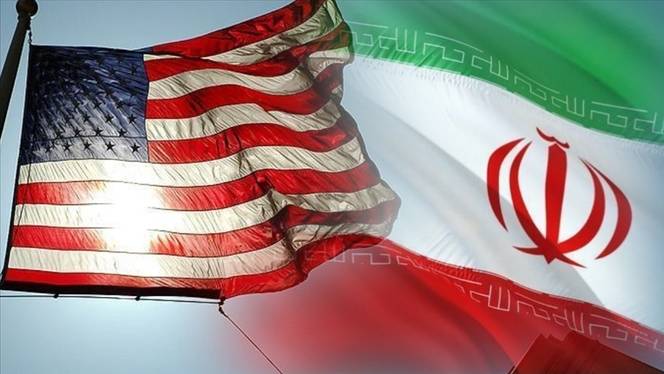
Immediately upon his return to the White House for a second stint, a hawkish Donald Trump has put Iran on notice.
In the first week of February, the US President signed a presidential decree reinstating the maximum pressure policy on Iran, saying that though he was not pleased with the decision, he had no choice but to adopt a firm stance.
A few days later, Trump claimed that a very “frightened” Iran was ready for a deal with the US over the Shia-majority nation’s nuclear programme.
The moot point of his assertion was that he would also prefer a deal rather than Israel carrying its threat of attacking Iran’s nuclear facilities. “I’d much rather do a deal that’s not going to hurt them.”
Since Trump assumed office, Iranian officials have consistently voiced their support for dialogue and expressed a willingness to engage in negotiations with the new administration.
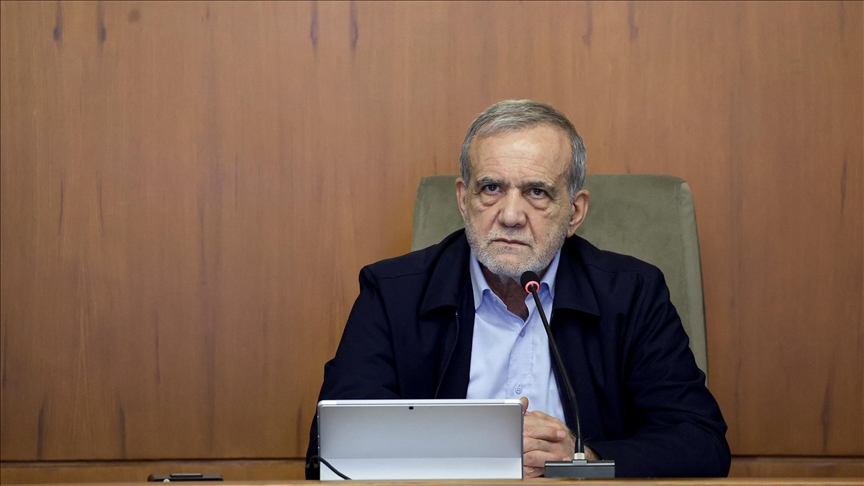
On January 14, Iranian President Masoud Pezeshkian reaffirmed this position in an interview with NBC, emphasising Iran’s openness to talks.
However, any potential for a dialogue appeared to have been decisively shut down following a February 7 statement by Iran’s Supreme Leader, Ali Khamenei.
Addressing members of the Iranian military, Khamenei declared that engaging in negotiations with the US was neither a prudent nor an honourable course of action, unequivocally rejecting the prospect of talks between the two countries.
Some analysts have interpreted Trump’s January approval of the sale of 4,700 additional MK-84 bunker-buster bombs to Israel as part of a broader Iran strategy.
This begs the question: How would Iran-US relations evolve under Trump, and how significant is the threat posed by Iran’s potential nuclear capabilities?
Trump’s re-election marks a critical turning point for Iran. Even during his first presidency, Trump’s policy of maximum pressure had led to significant economic, political, and military challenges for Tehran.
It was during the first Trump administration that some seismic events – such as the US withdrawal from the nuclear deal, the re-imposition of economic sanctions, and the assassination of Quds Force commander Qassem Soleimani—intensified the pressure on Iran.
With Trump’s re-election, the Iranian leadership is concerned about the prospect of further escalation of previous policies.
Recent developments in the region indicate that Iran’s deterrence capabilities have reached a critical low.
An analysis of Iran’s national security and defence doctrine reveals that it rests on three principal strategic pillars: the establishment of a forward defence line via non-state actors under the Quds Force, an extensive missile programme, and efforts to achieve nuclear threshold status.
However, Israel’s attacks in 2023 and 2024 have significantly weakened these pillars. Indeed, the elimination of Hezbollah leaders, the destruction of its command structures, and successful Israeli airstrikes against Iranian territory have complicated Iran’s ability to leverage these elements as an effective deterrent.
Moreover, although Iran’s missile programme is still impressive in terms of variety and quantity, its effectiveness was found to be limited during the April and October 2024 attacks. The majority of Iran’s missiles either missed their targets or proved ineffective.
The Israeli strikes on October 26 severely damaged Iran’s missile engine production facilities and solid fuel production capabilities.
In particular, the strikes on the Shahroud missile complex have significantly constrained Iran’s ability to develop long-range missiles. As a result of these strikes, Iran’s most advanced air defence systems (S-300 PMU2) were rendered inoperable.
The remaining systems are limited both in range and capability, thereby increasing Iran’s vulnerability to external attacks. These vulnerabilities have prompted Tehran to reconsider the option of developing nuclear weapons.
While Iran has the capability to produce weapons-grade uranium within a week, integrating a nuclear warhead into a missile system is regarded as a time-consuming process.
Iran’s nuclear programme and rising concerns
Trump’s threats and the continuing tensions surrounding Iran’s nuclear programme represent a critical juncture for the country.
Rather than initiating the production of nuclear weapons, Tehran could adopt the more cautious yet effective step of announcing its intention to withdraw from the Nuclear Non-Proliferation Treaty (NPT).
Such a move would underscore Iran’s seriousness while seeking to extract more concessions at the negotiating table.
A notable example is North Korea, which in 1993 employed a similar strategy by announcing its intention to withdraw from the treaty, subsequently suspending its decision before ultimately carrying it out.
Iran’s threat to withdraw from the NPT could be perceived by the international community as a shift toward nuclear weapons production. This, in turn, could escalate regional tensions and potentially encourage Israel to deploy US-made bunker-buster bombs against Iranian nuclear facilities.
Iran’s clandestine nuclear weapons programme, known as the Amad Plan, sought to produce five nuclear weapons between 1999 and 2003.
Under this plan, four warheads for Shahab-3 ballistic missiles and one bomb for an underground test were developed.
According to the Iranian nuclear archive captured by Israel in 2018, Iran has made significant advances in critical technologies, including nuclear warhead design, neutron initiators, and detonation focusing systems. This information is regarded as a contributing factor to Iran’s increased capacity to produce nuclear weapons.
Significant similarities exist between China’s first nuclear bomb (codenamed 596) and Iran’s early designs. The findings indicate that Iran is approaching the status of a nuclear threshold state.
Therefore, Trump’s nuclear policy toward Iran is a critical issue, both in terms of differing perspectives within his administration and the broader international context.
Where can the process evolve?
Iran’s nuclear programme remains a priority concern for both Europe and the US.
With the expiration of the UN Security Council (UNSC) snapback sanctions in October 2025, the US-led West risks losing one of its most powerful tools of diplomatic leverage.
In this context, Europe plans to leverage Iran’s vulnerabilities and time constraints to initiate an effective nuclear diplomacy process.
Indeed, a statement by the E3 – France, Germany and the UK – that it is prepared to utilise all diplomatic tools against Iran indicates that patience is waning.
Simultaneously, Iran’s statements suggesting it may reassess its technical capabilities and political intentions have raised concerns within the international community.
The US might intensify pressure by tightening the enforcement of secondary sanctions on the Iranian economy.
As an initial measure, Trump imposed sanctions on a key international network involved in the sale of Iranian oil, delivering a significant blow to Iran’s oil exports.
Expanding sanctions to target major purchasers of Iranian oil, particularly China, could exacerbate Iran’s economic vulnerabilities.
In other words, the US and Europe may capitalise on this window of opportunity by intensifying pressure on Iran while simultaneously presenting clear diplomatic solutions.
In Iran, contrary to Khamenei’s rhetoric, there are indications that a large section of the leadership and population are generally supportive of negotiations with the US.
Recently, the Center for Islamic World Studies, aligned with Supreme Leader Khamenei, conducted a survey on Iran-US negotiations as part of its advisory role in foreign policy.
The study surveyed 119 academics, senior executives, and current and former officials. The results revealed that 86.5 percent of respondents supported direct negotiations between Iran and the Trump administration, while just 5.8 percent opposed the proposal. A further 7.5 percent of respondents indicated that negotiations would be conditional.
Against the backdrop of Trump’s belligerence against Iran, the risk of Israel attacking Iran’s nuclear facilities has gone up manifold.
How Tehran decides to navigate the choppy waters of uncertainty will determine the future of US-Iran relations. And, perhaps, of the volatile region too.
As the hours passed after the White House bombshell in which President Donald Trump announced American control over Gaza and in which he said “it will be ours,” and reiterated that all Gazans would have to be removed and transferred to a “better” place; since then, the stock exchange of names of countries that could receive the Palestinians has been growing and flourishing.
In addition to Jordan and Egypt, which Trump mentioned, the names of countries such as Albania, Puntland, and Somaliland stand out. Why not? If you asked the Gazans themselves, some of them would laugh in Trump’s face, or say: “Come on, if it’s a resettlement, why not in Sweden, England, or Canada?”
In Israel, despite the harsh sound of the word transfer, no one opposes the idea of getting Gaza out of our lives once and for all, especially after 7 October. The Israelis believe the Palestinians will have to pay a heavy price, and they want the Palestinians of the West Bank to disappear as well.
But it seems that the big balloon Trump launched into the air is nothing more than a trial balloon; a big threat balloon in an attempt to end the resistance in Gaza without a fight. There is no real intention of a mass exodus of nearly two million people.
Trump has set a heavy price in the hope that Hamas will voluntarily leave Gaza, and it can be assumed that this is just a preliminary proposal, an introductory step, from the statements of the president’s advisers as well, and if the Arab countries do not like it, these countries are invited to present their solution to disarm Gaza.
For Israel, the intention to prevent Hamas from continuing to control Gaza is desirable, especially after Netanyahu failed in this mission, and Hamas remained in power at the end of 15 months of fighting. It seems that there are those who have to swallow the “absolute victory”.
It is to be wondered: What was actually reached in the meeting between Trump and Prime Minister Netanyahu and what are its implications? In short, in the end, Trump imposed on Netanyahu not to renew the war, and to continue with the deal to release the kidnapped soldiers. On the sidelines, it is unreasonable for an American president to insist on an Israeli prime minister in order to release Israeli kidnapped soldiers.
Messianic Vision
Trump has categorically ruled out the establishment of Israeli settlements in Gaza based on the messianic vision of Smotrich and Ben-Gvir, hinted at his desire to move quickly on the Saudi issue, and made it clear that he still prefers a diplomatic solution with Iran over the use of force.
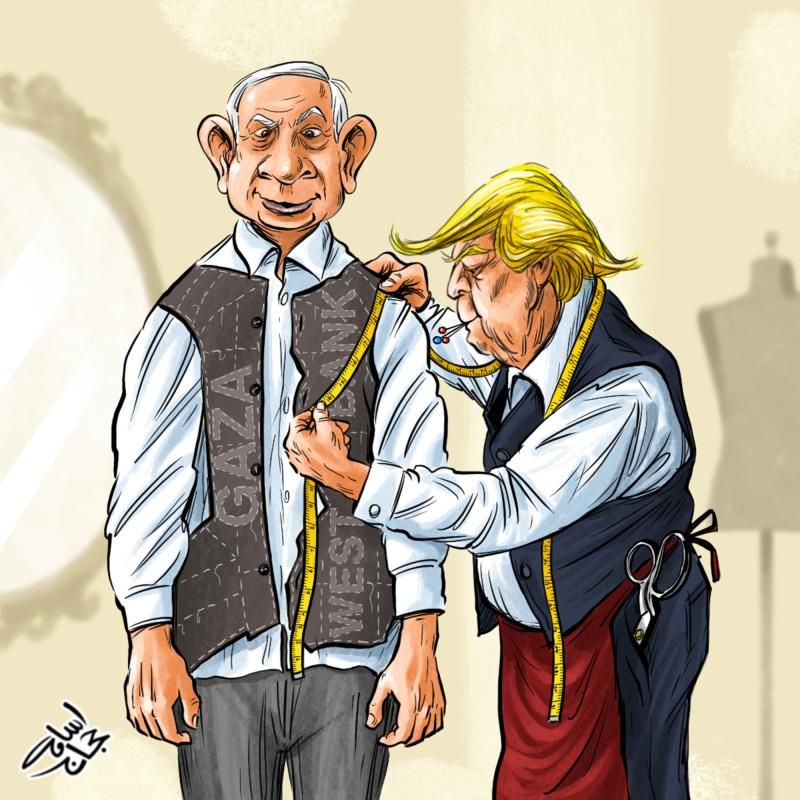
On the surface, this may seem disappointing to Netanyahu, but don’t worry; Trump has worked to create a welcoming atmosphere for the prime minister, and provided him with a far-reaching virtual achievement in order to preserve his coalition, which is a placebo for a government afflicted with the delusions of Smotrich and Ben-Gvir.
By resettling the Gazans, Netanyahu can sell the idea to his partners on the extreme right. These are dreams in the air, and the coalition is what is meant. And with the help of the grand plan of American control over Gaza and the transfer of all the residents of the Strip from there, a plan that has little chance of being realized, to say the least, Netanyahu can buy more time.
A person who cares only about his position, and whose top priority is his political survival, can strengthen the coalition, and in the meantime, Smotrich and Ben-Gvir will quickly accept the spoiled goods; the first will remain in the government, the second will return to its bosom, and the three will cling to this lie and pass it on to the base until the next crisis.
On top of all this political filth, there is the issue of releasing the hostages; Yesterday, we saw the horrific and horrific scenes of the return of Ohad Ben-Ami, Eli Sharaby and Or Levy as walking skeletons, which emphasized the importance of returning everyone as soon as possible. These people, who were abandoned twice, must be returned: once on 7 October, and then in the rigging of the deal to free them.
The outrageous images of Hamas controlling Gaza once again confirm, unfortunately, Netanyahu’s complete failure in managing the war, and now we hope that Trump and White House officials will force him to continue releasing the prisoners, and then the IDF will ensure that the “monsters” of Hamas are finally eliminated, down to the last one.
This column was written by By Yossi Hadar for the Israeli daily, Maariv and translated from Arabic and appeared in Jo24.
Evidently US President Donald Trump has raised the stakes very high in his proposed plan to solve the intractable Middle Eastern problem: The Palestinian issue and consequently reaching a wider normalization between the Arab states and Israel.
Of course not only the Arab world but also the rest of the world is learning how to cope with a new American presidency, more accustomed to making deals than in reaching agreements. Consequently the method used concerning the Arab states is that of threats to their national security and integrity with the existential being to their Palestinian brethren.
https://t.co/aML2jXnfPl Donald Trump's recent foreign policy moves have shifted focus from the Western Hemisphere to the Middle East, particularly with his controversial proposal for the U.S. to "take over" Gaza. This contradicts his administration's opposition to military…
In scenes reminiscent of a play from the theatre of the absurd, we saw Mr Benjamin Netanyahu’s face light up like a child each time Mr Trump opened his mouth promising him presents which he always sought, although in this case those presents are not the property of Mr Trump and are not his to either have or give away.
Now, one has no wish to go to the distant American history, because the last time American manifest destiny was mentioned, native Americans paid the price with a big genocide and other nations were reduced to mere colonial status by the USA.
However, Trump never mentioned the term explicitly, but whether he realises it or not, the ethnic cleansing he is proposing to solve the problem of the Palestinians to the advantage of Israel is no different to the ethnic cleansing of native Americans. The times are different but the idea is the same.
On the other hand, the acid test for the Palestinian question is in how the world is going to react to these Trump advocated policies. One doesn’t think Russia with its war in Ukraine, at least for the near future, will have much say regarding the Palestinian issue or any other to that effect, while the Chinese, the question of trade war is far more important to them as a system, which puts trade and commerce above politics.
And the EU with the apparent cracks in its unity, it is still unclear what it will do; of course besides amiable legalistic positive rhetoric, will it continue to be the financier of the new American foreign policy, or become the backdoor for US handouts to nations which the United States has claimed will not support?
Ultimately, with the US and Israeli threats of forcible transfer of the Palestinians, it is the Arab states that are in the front line, the close allies of the USA and some of whom peace signatories with Israel.
Of course in the next day or two, the King of Jordan will meet President Trump in Washington, and it is rumored president Sisi will join them, also towards the end of the month, an emergency Arab summit will likely be held in Cairo.
One cannot predict the outcome, but judging from old references, everyone will try to escape responsibility with the Palestinian people keep paying the price.
Dr Khairi Janbek is a Jordanian commentator based in Paris

 CrossFireArabia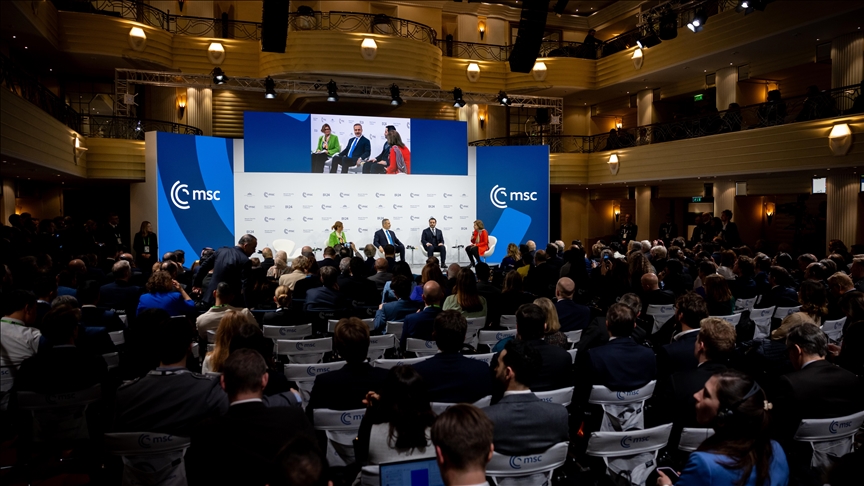


 Dr Khairi Janbek