Israel’s War on Palestine

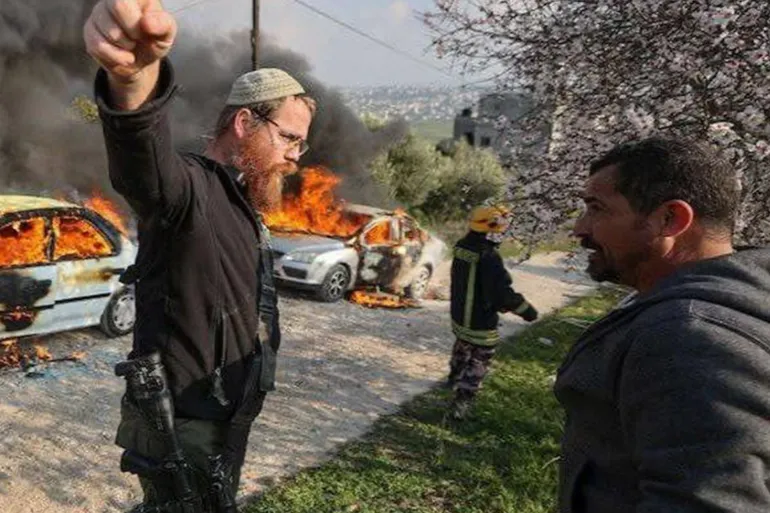
Israel’s intensification of its military assault against the northern West Bank and its forced displacement of its Palestinian communities marks a dangerous grave violence and human rights violations.

The Israeli army has been conducting the military operation “Iron Wall” in the northern occupied West Bank since January 21, killing until date more than 56 Palestinians and displacing thousands.

The assault came amid rising tensions in the occupied West Bank, where at least 917 Palestinians have been killed and nearly 7,000 others injured in attacks by the Israeli army and illegal settlers since the start of the Gaza war on October 7, 2023, according to the Palestinian Health Ministry.

Since the start of the operation several refugee camps have been nearly emptied of their residents, the largest displacement in the occupied territory since the 1967 Mideast war.

Starting in Jenin Camp, the operation has expanded to Tulkarm, Nur Shams, and El Far’a refugee camps witnessing a comprehensive, Israeli -driven war of destruction that led to the forcible displacement of more than 40,000 Palestinian refugees. 

Repeated and destructive operations have rendered the northern refugee camps uninhabitable, trapping residents in cyclical displacement. However, in 2024, more than 60 per cent of displacement was a result of Israeli Forces operations, an increasingly dangerous and coercive environment absent any judicial orders. 

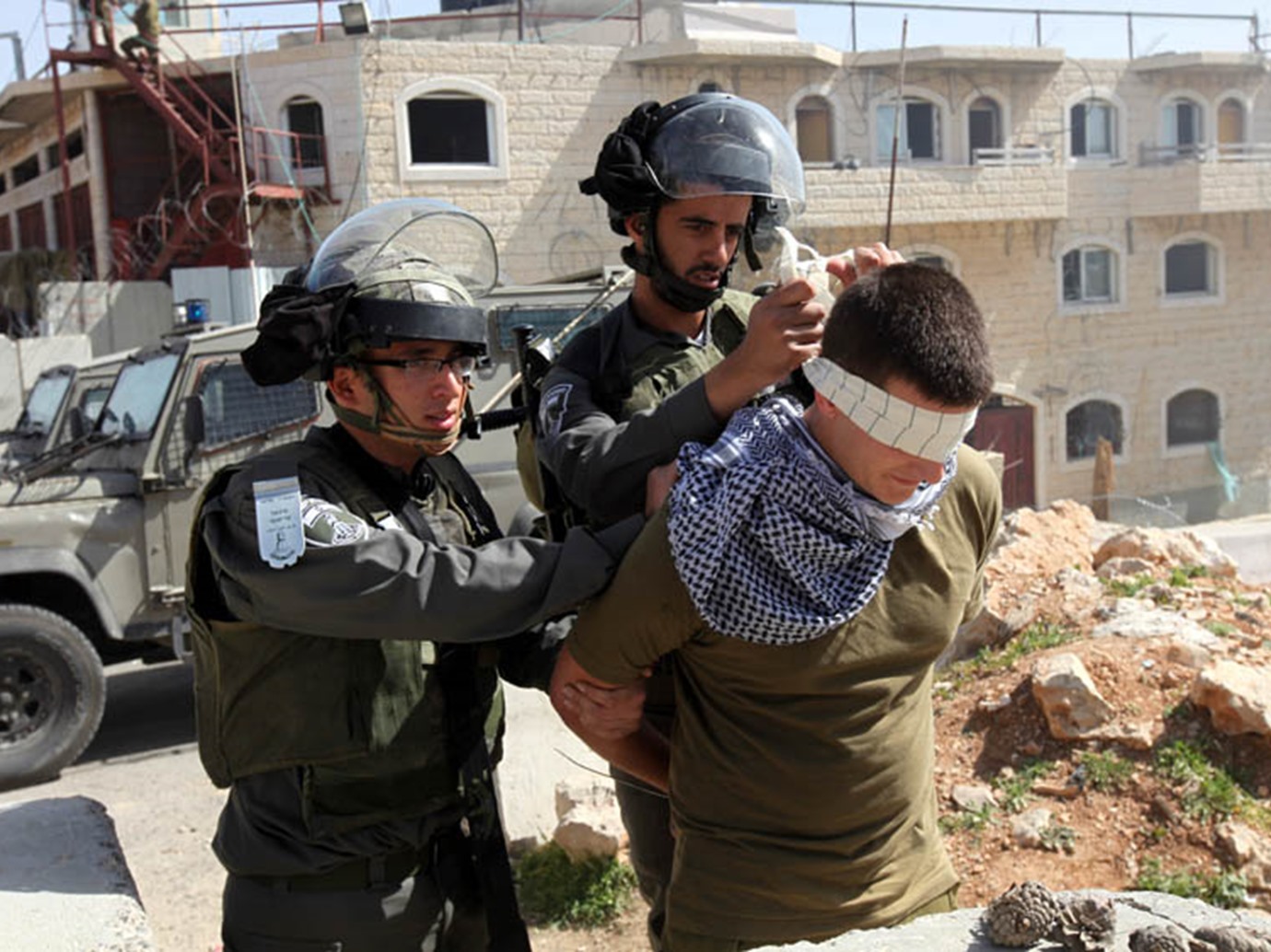
Daily reports from displaced residents described a pattern where they were led out of their homes by Israeli security forces and drones under the threat of violence.

They were then forced out of their towns with snipers positioned on rooftops around them and houses in their neighborhoods used as posts by Israeli security forces according to the UN Human Rights Office.

“Leave this place and forget the camp. You will never return. Move now before we destroy it completely,” the Israeli security forces threatened the residents.

Other eyewitness testimonies also recounted similar statements by Israeli security force members who reportedly told displaced residents to “forget” and “say goodbye” to their homes, stressing they would not be allowed to return.

One resident reported being told to “go to Jordan.”

Besides, Jenin refugee camp roads were bulldozed recently with new signs apparently giving several streets Hebrew names, UN Human Rights Office said.

This is happening while statements by Israeli officials persist in communicating open plans to annex the region, empty it of Palestinians, and expel them out of the occupied Palestinian territory.

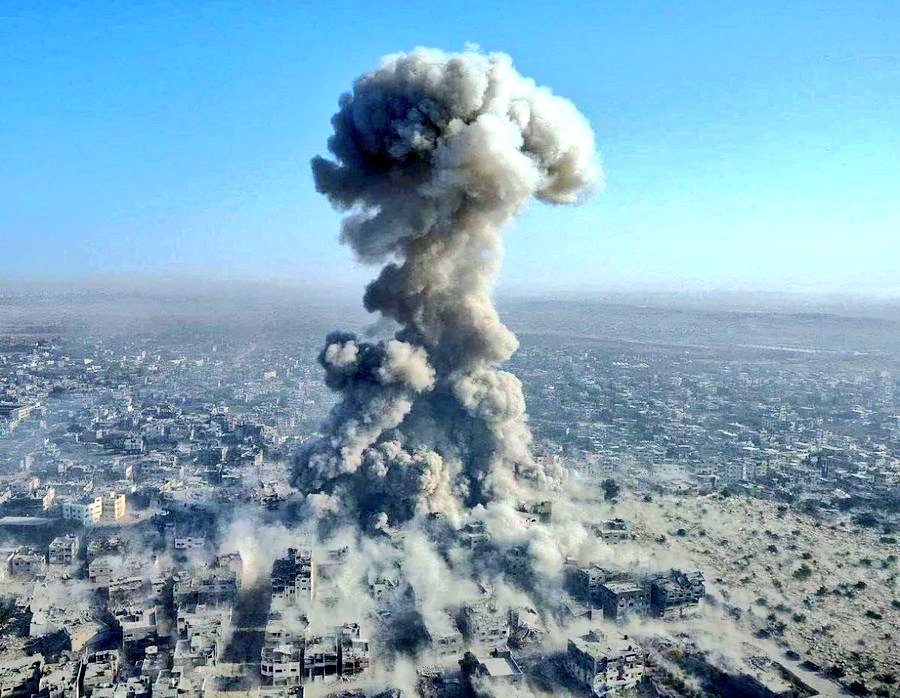
The use of air strikes, armored bulldozers, controlled detonations, and advanced weaponry by the Israeli Forces has become routine, militarised approach that is inconsistent with the law enforcement context of the Occupied West Bank, where there have been at least 38 airstrikes in 2025 alone.

Moreover, on February 19, the Israeli army has prevented thousands of displaced Palestinians from returning to their homes in the Jenin refugee camp and the

Camp stands empty today, evoking memories of the second intifada.

This scene stands to be repeated in other camps. 

On the other hand, accompanied by soldiers, Israeli Prime Minister Benjamin Netanyahu entered a Palestinian home in the Tulkarem refugee camp in the northern West Bank on February 21, announcing a new military operation in the occupied West Bank.

“We are destroying entire streets, eliminating militants, and I have instructed reinforcements in the West Bank along with additional military operations,” Netanyahu said in a recorded statement from Tulkarem, released by his office.

Earlier on the same day, the Israeli army announced the deployment of three additional battalions to the occupied West Bank following Netanyahu’s directive for a “strong operation.”

All this is a part of a plan to uproot Palestinian refugee camps, similar to the events that took place in Gaza and reminiscent of the 1948 Nakba.

This lines up with Israel’s vision of a war declared since a long time on the UNRWA, the United Nations Relief and Works Agency for Palestine Refugees which has reached the climax during the war on Gaza.

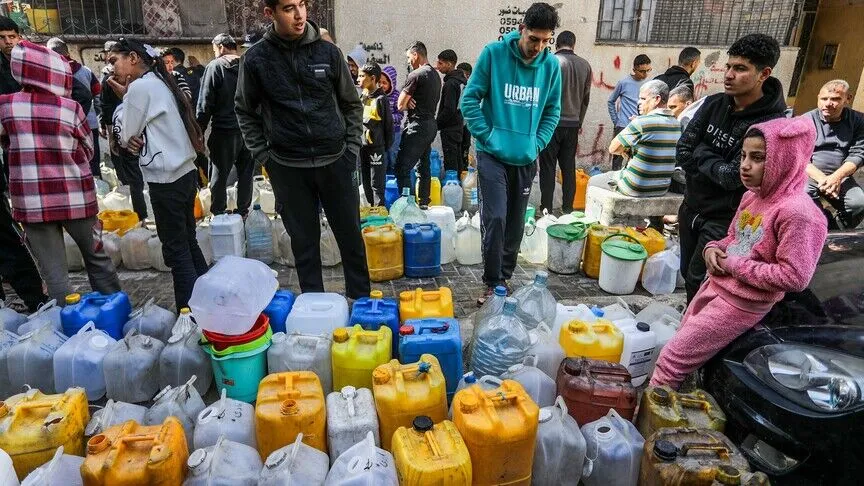
Under the Knesset laws implemented on January 30, UNRWA no longer has any contact with the Israeli authorities, making it impossible to raise concerns about civilian suffering or the urgent need for the delivery of humanitarian assistance which puts at grave risk the lives of Palestine Refugees and the UNRWA staff that serve them too.

UNRWA reiterates that civilians and civilian infrastructure must be protected at all times and that collective punishment is never acceptable.

There are about 912,879 registered Palestinian refugees in the occupied West Bank, around a quarter of whom live in 19 refugee camps mostly densely populated camps, located next to major towns and others are in rural areas, according to UNRWA.

Israel views these camps as incubators of armed Palestinian struggle, as it seeks to eradicate the refugee issue and the right of return.

Any forcible transfer in or deportation of people from occupied territory is strictly prohibited and amounts to a crime under international law.

Rather than abide by these rules, Israel has openly defied international law time and again, inflicting maximum suffering on civilians in the occupied Palestinian territory and beyond.

Displaced Palestinians must be allowed to return to their homes and Israel must comply with its obligations under international law, which include ending its unlawful presence in the Occupied Palestinian Territory as rapidly as possible and evacuate all occupied West Bank settlements.

In the meantime, as the occupying power, Israel must ensure the protection of Palestinians, the supply of their basic needs, and the respect of their full range of human rights.

Najla M. Shahwan is a Palestinian author, researcher and freelance journalist. Author of thirteen books in literature and a children story collection. Chairwoman of the Palestinian Center for Children’s Literature (PCCL). Founder of Jana Woman Cultural Magazine. Recipient of two prizes from the Palestinian Union of Writers.

Continue reading
How Israel Hijacked US Politics

A  combination of pro-Israel advocacy groups and political action committees, including right-wing Christian fundamentalists, neoconservative hawks and weak-kneed liberals, have not only enabled Israel’s genocidal campaign against Palestinians, they have done so much more.

They have silenced congressional debate on decades of Israel’s illegal policies towards Palestinians. Pro-Israel groups and political action committees cry foul whenever their role in this regard is noted. But the tens of millions they have spent to punish critics and create a climate of fear, and their own gloating over their successes, are too well-documented to ignore. The result has been that too many members of Congress have either been cowed into silence or motivated to pass excessively bizarre legislation singling out Israel for special treatment in budgetary matters or for political favours.

This same coalition of groups from the right and left of American politics has also pressed successive US administrations not only to turn a blind eye to Israeli actions that violate US laws, but also to take an aggressive posture towards other nations who are critical of Israel. These acts have contributed to dismantling the architecture of international diplomacy, laws and covenants developed in the aftermath of the two world wars and have done grave damage to the stature of the US in the world community.

US presidents from Ford to Obama have been pressured by pro-Israel group-inspired congressional letters calling on them to back away from positions critical of Israeli policies. Successive administrations have thus been cowed into silence in the face of Israeli settlement expansion in the occupied territories and other well-documented Israeli violations of international law and human rights. Worse still, in recent years this effort to shield Israel from criticism has led the US to seek to punish UN committees and other international bodies, leaving the US increasingly isolated.

• This same collection of groups and the pressures they have created to distort US policies have also done incalculable damage to Palestinians and Israelis and the prospects for Middle East peace.

The State Department Human Rights report on Israel and the Occupied Palestinian Territories is ignored, even when it has been accurate in its reporting. As a result, Palestinian rights have been systematically violated in contravention of US laws.

• US acquiescence in the face of Israel’s behavior has also contributed to the decline of Israel’s peace movement. Once fairly vibrant, they used to make the case that settlement expansion or violations of rights would damage Israel’s relationship with the US. After decades of evidence that such repercussions would never occur, this movement has faded into irrelevance. Their absence has left the hard right as the dominant force in Israel, with the only serious divisions in Israeli politics being whether the next coalition government include the Ultra-Orthodox or have Netanyahu in command. Palestinians or matters of peace and justice are not on the agenda.

• Since October 7, the coalition of pro-Israel forces, led by right-wing Christian Ideologues and pro-Israel groups in the US, have accelerated their efforts on the home front using congressional pressure and Presidential Executive Orders to dismantle constitutionally protected free speech and academic freedom on college campuses. The expanded definition of antisemitism, which includes legitimate criticism of Israel, is now being enforced to threaten federal funds to universities who do not punish students and faculty for what are now deemed antisemitic activities. The Department of Justice has launched a task force to identify groups and individuals who participated in anti-Israel actions. And right-wing groups have undertaken to identify foreign students and faculty who have been involved in pro-Palestinian protests or against whom Jewish students have issued complaints for anti-Israel remarks. They are reporting them to authorities for deportation, as per another of President Trump’s Executive Orders.

What is deeply disturbing is that equating “anti-Israel” and “pro-Palestinian” with “antisemitism” has created a climate of fear on campuses, impeding free speech and academic freedoms on campuses and public discourse.

And so, while Palestinians are paying with their lives because pressure from pro-Israel groups has silenced criticism of Israeli policies, the damage done by this pressure grows. It has discredited the structures of the international order, humiliated and isolated the US in the eyes of the world, and is now eating away at many of our much-cherished freedoms.

James J. Zogby is president of the Washington-based Arab American Institute and he has a contributed this article to The Jordan Times.

Continue reading
Jordan’s Fight Against Displacement

By Dr Amer Al Sabaileh

With the conclusion of the first meeting between President Donald Trump and His Majesty King Abdullah, Jordan finds itself facing a real political test. The strategy of buying time with an administration that has been in office for only a few weeks may not offer much room for maneuvering, making it increasingly difficult to navigate the direction of US policy. Jordan has sought to carve out a space for itself by engaging with the American president and promoting an alternative that has broader Arab support. However, this approach requires swift action and the presentation of practical alternatives that could gradually shape Trump’s perspective.

Jordan now needs to build strong alliances to manage the next phase and counter the looming threat of forced displacement of Gaza’s population—a proposal that Trump has openly suggested as the only solution. Regionally, Jordan finds itself alongside Egypt as both countries face direct pressure from the US displacement plan. This shared challenge has reinforced their cooperation on various regional issues over the years, yet expanding the Arab alliance has now become an urgent necessity. The multiple forms of US pressure on Egypt make it crucial to establish a stronger, more resilient Arab coalition, with Saudi Arabia playing a central role.

Trump views Saudi Arabia as a gateway to regional peace and a key economic partner, not only for the United States, but also for a major strategic project aimed at linking India to Europe through the Arabian Peninsula, the Mediterranean, and Italy. This highlights the importance of Saudi Arabia’s role in Trump’s vision. At the same time, Jordan’s southern geography is closely tied to Saudi Arabia within this ambitious economic corridor, which strengthens shared economic interests between the two countries. This growing economic partnership could lay the groundwork for deeper political coordination, including a potential Jordanian-Saudi understanding regarding the proposed displacement policy.

On the international level, Jordan can work to rally support for its political stance, which enjoys broad consensus among key global actors. However, at this stage, prioritising Arab alliances and maintaining effective communication channels with the US administration is far more critical than merely seeking international backing.

Domestically, Jordan’s internal front remains the most crucial. The current climate presents an opportunity for the state to reinforce national unity, as growing regional instability has heightened public awareness of external threats. This requires decisive steps to foster genuine political participation and address long-standing grievances of exclusion and marginalization. A shift in political discourse, engagement strategies, and governance methods is necessary to strengthen national cohesion. Uniting Jordanians under an inclusive and representative state framework will be vital in shaping a new phase in the country’s history.

What remains striking is how Jordan was suddenly thrust into the equation of resolving the Gaza crisis. From the outset of the war, discussions primarily centered around Egypt due to its direct geographical connection to Gaza. However, Trump’s unexpected move to involve Jordan has now exposed the country to two major risks: the potential displacement of Gaza’s population and, more alarmingly, the forced displacement of West Bank residents. The push to make Jordan part of the US plan for Gaza raises concerns that this could lead to an imposed reality in which Jordan is expected to absorb West Bank residents as well.

Categorically rejecting forced displacement must be Jordan’s top priority. However, achieving this requires a high level of political agility and the ability to engage in direct negotiations with all relevant stakeholders. This approach would strengthen Jordan’s regional role at a time when further Israeli escalation across multiple fronts, including Gaza and the West Bank, seems increasingly likely. Such an escalation could be used by the Israeli government to block political maneuvering and impose new realities on the ground. A military confrontation could shift the issue of displacement from a political debate to an unavoidable reality, forcing all parties to confront its consequences.

The author is an academic writing for The Jordan Times.

Continue reading
Don’t be Distracted by Trump’s Bizarre Plan, Focus…

By James J. Zogby

My initial response to President Donald Trump’s proposals for Gaza was to dismiss them as bizarre, detached from reality, dangerously provocative, illegal, and callously insensitive to Palestinian humanity.

His proposals are, in fact, all of the above. But because we know that this president is not a stupid man, it would be wise to assume that there may be a “method to his madness.” Not unlike Trump’s “shock and awe” Executive Order blitz that had his opponents and the media scrambling to understand his intentions, I believe that the same logic may be at work with his Gaza remarks. The logic has two essential components. The first is to disorient and demoralize his opponents. The second is to distract them—like a carnival hustler’s shell game—so we take our eyes off the real issues in front of us and focus instead on the illusion being created.

With this in mind, I do not believe for a minute that Trump intends to send US troops to take over Gaza to forcibly expel 1.5 million Palestinians. Nor will he be able to coerce Jordan and Egypt to receive and permanently resettle these expelled Palestinians, nor entice Saudi Arabia to pay to build Palestinians a “big new beautiful place.”

All these ideas are so far-fetched and dangerous that it is inconceivable that this president, who says he wants to keep America out of war and bring peace to the Middle East, will try to do any or all of them.

I may be attacked by some for trying to give President Trump the benefit of the doubt. To be clear, that is precisely what I am not doing. He may want to turn the page with the distractions of a bizarre plan for Gaza. But instead of taking the bait, we should continue to focus on what’s real. What I am saying is that instead of spending endless hours attempting to parse out his words or critique his plan or prepare for its implementation (which is exactly what he wants us to do), we should avoid the distraction and focus on the urgency of matters in front of us. The fragile ceasefire in Gaza must be maintained and the parties must move into its second and third phases. That means continuing to press for Israel’s withdrawal from Gaza and plans to begin reconstruction. It means directing our attention and action to stopping Israel’s escalation of oppressive violence on the West Bank. And it means maintaining focus on the need to hold Israel and the US culpable for the war crimes committed during the past 15 months.

Neither President Trump nor Israel’s Prime Minister Benjamin Netanyahu want us to act on any of these pressing matters. They want to further demoralise Palestinians while causing turmoil in Arab countries. They want the clock to run down on Phase One of the ceasefire plan. This would allow Netanyahu to resume his war to achieve what he calls “total victory” in Gaza. It would also ensure that he maintains his governing coalition and remains in office. 

In other words, instead of addressing real problems crying for our attention, President Trump wants us to fall for his game by debating an illusory distraction while the Israelis pursue their deadly game right under our noses.  

James J. Zogby is a columnist in The Jordan Times

Continue reading
Is America Abandoning Europe?

In 2007, Russia’s President Putin gave a now-infamous speech at the Munich Security Conference (MSC), announcing Russia’s new posture of hostility towards the US and Europe. In 2022, when Russia invaded Ukraine, many looked back at Putin’s 2007 Munich speech as a revealing moment of his intentions.

This year’s MSC could be a similar watershed. This time, the warning bells ring from across the Atlantic. US Vice President JD Vance delivered one of the most hostile speeches by a US official to Europe in decades. Rather than addressing the Russian or Chinese threats, Vance argued that Europe faced a “threat from within,” accusing the EU and national governments of censorship and ignoring popular demands on issues like illegal migration.

Meanwhile, away from Munich, US President Donald Trump held a phone call with Putin, setting the stage for negotiations between the US and Russia for a peace agreement in Ukraine – without involving European counterparts in the discussions. The day before, Defence Secretary Pete Hegseth announced some of the US expectations from this deal: Ukraine should drop its NATO membership bid, European countries would need to provide the forces to enforce the agreement, and these forces would not be covered by NATO’s Article 5 guarantees.

The transatlantic picture in which the MSC took place was even bleaker. Since Trump’s inauguration one month ago, the new president had promised (and now imposed) tariffs against countries across the world, including Europe. He has threatened to annex the territory of allies like Canada and Denmark.

Normally, the MSC is an opportunity for the United States to reaffirm its commitment to Europe and the Atlantic alliance. This year, it could be remembered as the time when the US started the process of abandoning Europe – or even going aggressively after it.   

An attack on Europe

Vance’s speech and the reactions to it have dominated the discussions at the MSC. Although the conference theme was “multilateralization”, the real topic on everyone’s mind was: how would Trump’s second administration approach Europe?

As the pre-conference report argued: “Donald Trump’s presidential victory has buried the US post–Cold War foreign policy consensus that a grand strategy of liberal internationalism would best serve US interests.” That this consensus was gone was clearly visible in the conference. Despite perfunctory references to shared values, Vance’s speech did not talk about the alliance between Europe and North America, nor about the common threats and how to face them.

And he has voiced support for anti-EU parties. Vance pronounced his speech in Germany, just weeks before federal elections, and argued that there should not be “firewalls” in government – a clear reference to the far-right Alternative für Deutschland (AfD) which has so far been kept out of governing coalitions. After the speech, Vance met with the AfD leader.

Additionally, Vance criticized Romania for canceling its 2024 elections and accused the EU of censoring free speech. But Vance failed to acknowledge that the very election that brought Trump and him to power in November was the subject of major foreign interference by Russia, China, and Iran. Rather than sitting idly by, US agencies took active measures to counter these malign actions and prevent disruptions – like raising awareness, coordinating with the media, and keeping politics out of the fight. With his speech, Vance seems to be arguing for the exact opposite approach.

All these issues did not touch on security and defense, the core of the MSC’s discussions. But they did lure in the background of Vance’s speech. A few months ago, Vance argued that the EU should not regulate tech companies owned by Elon Musk. If the Europeans did so, he argued, the US should reduce its security commitments to NATO. Hence, American assurances could become bargaining chips to resolve other issues.   

How will the EU respond?

Vance’s Munich speech marks a new era in US relations with Europe. While the themes are not new – Trump has never been a fan of NATO, and enjoys courting Europe’s far-right – the extent of the rhetorical change cannot be understated. Ukraine’s President Zelensky, speaking in Munich the day after Vance, spelled out the challenge in clear terms: “We can’t rule out the possibility that America might say ‘no’ to Europe on issues that threaten it.”

The reaction from European leaders has been strong so far. EU Commission President Von der Leyen called for an emergency clause in the EU treaties to allow member states to boost defense spending [8]. French President Macron called for a summit of European leaders in Paris on Monday, February 17 – to sketch out a common position on the upcoming negotiations over Ukraine, and on making up for US security guarantees from Europe.

The greatest challenge, however, will be transforming outrage into meaningful action. Europeans have long ignored calls to take charge of their own security. Domestic constraints over spending, divisions and the continued belief that Uncle Sam will have their back have stood in the way of ambitious choices. Will this time be different?  

This opinion was written by Giuseppe Spatafora for the Anadolu news website.

Continue reading