Making Arabic The Future Language!

By Ali Abu Hablah

On December 18, 2025, the world celebrates World Arabic Language Day, an occasion that transcends mere celebration to touch upon the core of cultural and intellectual conflict in a rapidly changing world. This day commemorates the 1973 United Nations General Assembly resolution adopting Arabic as an official and working language of the UN system, in recognition of its historical and cultural significance.

This year’s celebration, organized by UNESCO at its headquarters in Paris, carries the theme:

“Innovative Pathways for Arabic: Policies and Practices for a More Inclusive Linguistic Future.” This theme reflects a growing awareness that the future of Arabic can no longer be secured through emotional rhetoric or historical glorification, but rather through public policies, educational strategies, and serious investment in technology and innovation.

Arabic is not simply a means of communication; it is the language of the Holy Quran, the language of the Prophet’s sayings (Hadith), and a repository of poetic, intellectual, and philosophical heritage. It is also a liturgical language for several Eastern churches. It is spoken today by more than 400 million people and is widespread throughout the Arab world and its surrounding regions, as well as in the diaspora across five continents. It is also one of the most influential languages ​​in the history of world languages.

For centuries, Arabic played a pivotal role as the language of science, politics, and administration. It contributed to the transmission of Greek and Roman knowledge to Europe and served as a bridge for dialogue between cultures along land and sea trade routes. However, this historical leadership is now met with a worrying paradox: Decline of Arabic’s presence in scientific research, higher education, and digital content, in favor of other global languages.

This decline is due to a complex set of factors, most notably the dominance of foreign languages ​​in universities, weak Arabization policies, a decline in translation activity, and the digital revolution, which Arabic has not adequately kept pace with. The widespread use of local dialects, especially through media and social media platforms, has also contributed to weakening the presence of Standard Arabic in the public sphere. This does not mean that the dialects themselves are responsible for the crisis, but rather that it reflects the absence of a balanced linguistic vision. In this context, the 2025 slogan acquires strategic significance, linking the future of Arabic to three fundamental paths:

First, language policies, as no language can be protected without clear legislation guaranteeing its presence in education, administration, and media.

Second, innovation and technology, given that the survival of a language today depends on its presence in artificial intelligence, software, search engines, and the digital content industry.

Third, linguistic inclusivity and equity, by making Arabic accessible to multilingual societies, supporting low-income groups, and promoting linguistic justice without compromising the integrity of the language or politicizing it ideologically.

UNESCO’s celebration of World Arabic Language Day constitutes a platform for global cultural dialogue, but at the same time, it places a heightened responsibility on Arab states and their educational and cultural institutions. The problem does not lie in a lack of international recognition, but rather in the absence of a comprehensive Arab linguistic project that restores Arabic to its role as a language of knowledge and production, not merely a language of heritage and celebration.

Ultimately, the Arabic language does not face an existential crisis, but rather a crisis of management and awareness. It must either be integrated into the core of the civilizational and developmental project, as a language of science, law, and technology, or it will remain confined to occasions and speeches. On World Arabic Language Day 2025, the question remains: Do we want Arabic to be the language of the past, or the language of the future?

Ali Abu Hablah originally wrote this article for the Arabic Addustour newspaper.

Continue reading
Netanyahu’s Middle East Vision

By the end of December, Israeli Prime Minister Benjamin Netanyahu is expected to visit Washington to meet US President Donald Trump, marking his fourth visit in less than a year since Trump assumed office. Unlike previous visits, this one comes after President Trump imposed his vision for ending the war in Gaza and outlined his broader concept of regional peace—giving the visit a distinctly political dimension.

At the core of the discussions will be the transition to the second phase of the Gaza ceasefire agreement, the appointment of an American general and a monitoring center, and the mechanism for administering Gaza ahead of the arrival of an international peace force. The visit is also expected to address Israel’s relations with its regional surroundings, particularly Egypt. Reports suggest the possibility of a simultaneous visit by the Egyptian president to Washington, reflecting a clear American desire to initiate direct engagement and promote the concept of “economic peace,” along with major regional projects that Trump views as the backbone of future relations, especially in the energy and gas sectors.

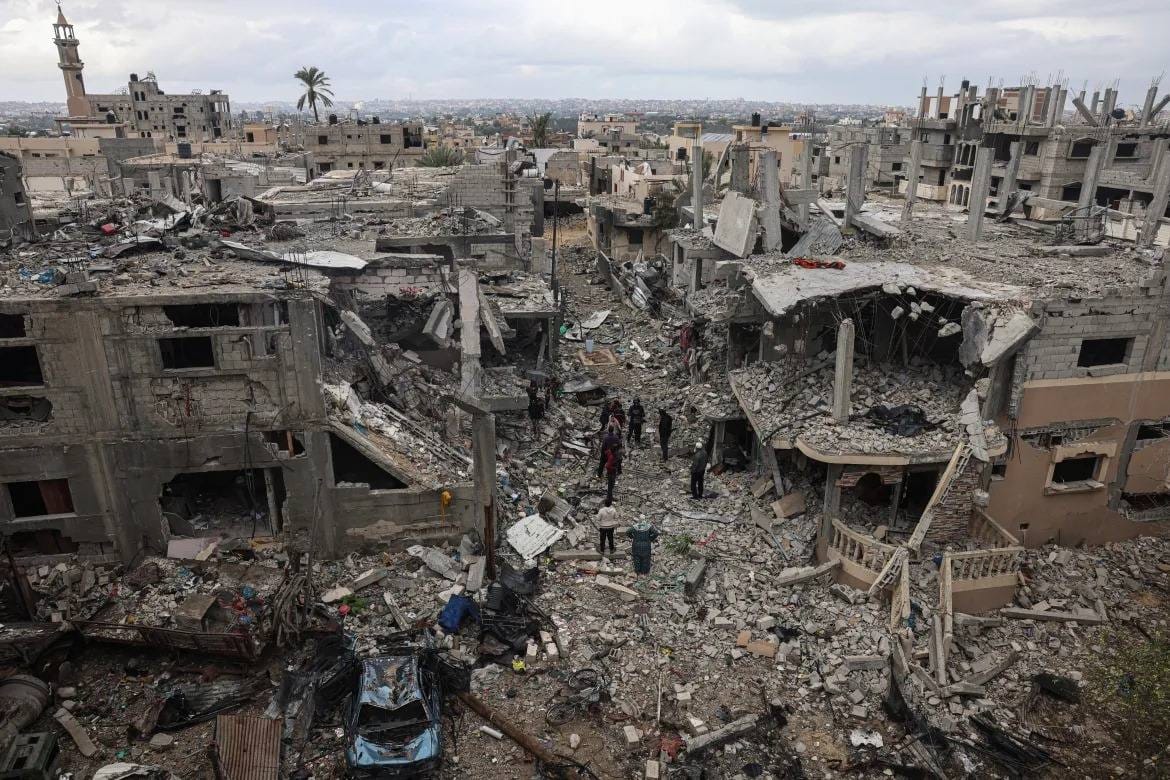
Yet even as President Trump speaks of a regional peace vision, the days preceding the visit remain open to further escalation. Indicators point toward a qualitative Israeli escalation across four fronts: Gaza, the West Bank, Lebanon, and Syria. These fronts have been deliberately kept open, transformed into continuous theaters of operation where Israel calibrates the level of military activity according to its security assessments.

Lebanon remains the most prominent arena of this escalation. Ongoing discussions about Hezbollah’s efforts to rebuild its capabilities coincide with Israel’s continued direct targeting of the group’s positions and operatives. This comes amid growing American pressure on the Lebanese government and army to take concrete steps toward disarming Hezbollah.

While the group is fully aware of its inability to engage in a comprehensive regional war, and the need to avoid providing direct justifications for escalation, it nevertheless finds itself compelled to use the weapons issue domestically to reshape internal power balances. At the same time, Hezbollah seeks to secure the future framework of its relationship with Syria, particularly if the Syrian-Lebanese border shifts from being merely a site of interdiction to a direct target zone.

This reality severely constrains Hizbollah’s response options while granting Israel continued latitude to strike the group’s infrastructure, capitalising on the absence of a decisive resolution to the weapons issue and on Lebanon’s institutional confusion over how to address it, whether through phased timelines or alternative formulas such as placing weapons under army control. From Israel’s perspective, this ambiguity justifies continued targeting until a decisive moment is reached.

Within this context, Israel’s strategy of imposing a new reality across its border fronts aligns closely with the transition to the second phase of President Trump’s plan. This approach corresponds with Israel’s efforts over the past two years to redraw geographical and security realities in Syria, Gaza, Lebanon, and even the West Bank. While the Trump administration opposed a formal declaration of annexation in the West Bank, it did not object in practice to Israel’s on-the-ground measures, allowing these changes to solidify as irreversible facts.

Security measures taken today may therefore establish realities that will be difficult to reverse in the future. From Washington’s perspective, redrawing borders may be seen as laying the groundwork for what it terms “regional peace,” treating the new border realities as spaces for potential economic or developmental investment.

Netanyahu’s visit to the White House thus represents a pivotal moment. He will seek to position himself as a central actor in the next phase, consolidate new realities along Israel’s immediate borders, and secure U.S. backing in addressing non-adjacent fronts, most notably Iraq, and above all Iran.

Iran is left to grapple with an increasingly severe internal reality marked by mounting economic, social, service-related, and security challenges, and is simultaneously categorized as part of the camp of “obstructors of regional peace” in Trump’s framework, opening the door to intensified pressure and varied forms of targeting in the period ahead.

Dr Amer Al Sabaileh, a professor in the University of Jordan contributed this analysis to the Jordan Times.

Continue reading
The Olive Tree Defies Israel

By Ali Osman Karaoglu  

A lesser-known dimension of Israel’s ongoing occupation of Palestine since 1967 is the systematic destruction of the Palestinian people’s economic resources and means of livelihood. One of the most important sources of income for Palestinians is olive cultivation – so much so that the olive tree is regarded as one of Palestine’s national symbols. Palestinian poet Mahmoud Darwish captured this symbolism in his famous words: “Here we remain, as long as thyme and olives remain.”

Beyond its symbolic value, the olive tree is the main source of income for nearly 80,000 Palestinian families. According to UN data, about 48% of the agricultural land in the West Bank and Gaza is covered with olive trees. Olive production contributes around 14% to the Palestinian economy. About 93% of harvested olives are used for olive oil production, while the remainder is used to make soap, table olives, and pickles.  

Usurpation of olive trees: Israel’s assault on nature and identity

Recently, Israeli settlers in the West Bank prevented Palestinians from harvesting olives, an essential source of livelihood, and destroyed 13,000 olive trees. Such actions, either directly committed or condoned by Israeli authorities, are known and documented as systematic practices.   

According to various international reports, Israel has destroyed around 800,000 olive trees over the past 20 years, and more than 2.5 million trees since 1967.

Palestinians face great difficulty in harvesting and protecting their olive trees. Since the Oslo Accords, Israel has exercised full control over 60% of the West Bank and requires Palestinians entering these areas to obtain a “permit issued by Israeli authorities.”

Farmers are therefore forced to secure permission to access their own land, but this permit system is largely arbitrary. There are no clear criteria specifying what conditions Palestinian applicants must meet to obtain a permit.

Even when they provide ownership documents and pass “security” checks, permits are often issued only to the person named on the deed, excluding other family members from entering the land. The permits are typically short-term, and each time they expire, farmers must reapply without any guarantee of renewal.

According to UN data, nearly half of permit applications are rejected on arbitrary grounds, turning the system into a policy of harassment and attrition. The same restrictive policy applies to bringing in agricultural necessities such as tractors, equipment, and fertilizers.

Over time, many Palestinians who once cultivated other crops have converted their land into olive groves, since olive trees can survive even without intensive care.  

How Israel’s seizure of olive trees violates international law

The destruction of olive trees in the occupied Palestinian territories occurs almost every year. Thousands of trees are destroyed annually during Israeli military operations or through attacks by settlers. Such incidents are rarely taken seriously or investigated by police or other public authorities.

Israeli soldiers frequently fail to protect Palestinians from settler attacks and, in many cases, act against the Palestinians themselves when they try to defend their land and trees.

In fact, the destruction of Palestinian farmlands and olive trees violates international law. Even Israel’s own Supreme Court has recognized the illegality of arbitrary practices in the “Morar v. IDF Commander” case.

In that case, Palestinian farmers appealed to the Israeli Supreme Court after a military commander denied them access to their farmland. The commander claimed the closure was intended to “protect Palestinian farmers from settler harassment.” The plaintiffs argued, however, that Israeli settlers systematically harass, assault, and damage the property of Palestinian villagers, while the Israeli army fails to intervene to stop this violence or take necessary measures to protect Palestinians and their agricultural products.

The court ruled that the army must take steps to prevent settler violence, stating that the proper way to protect Palestinian farmers from harassment is for Israeli military authorities to implement necessary security measures and impose restrictions on the settlers responsible for unlawful actions. Nevertheless, Israeli authorities continue to disregard their own court’s ruling and persist with arbitrary practices.

Under international humanitarian law, causing environmental damage as a military tactic is prohibited. The law stipulates that “care shall be taken to protect the natural environment against widespread, long-term, and severe damage during armed conflict.” This protection includes prohibiting methods or means of warfare that are intended – or expected – to cause such damage, as these may endanger the health or survival of the population.

Palestinian territories have been under Israeli occupation since 1967. This ongoing occupation constitutes a “continuing act of aggression,” and under the provisions of the 1949 Fourth Geneva Convention, imposes obligations on the occupying power.

The occupying power is responsible for ensuring a secure environment that allows the local population to meet its daily needs, and must protect civilians against looting and destruction of property.

Moreover, the damages caused by Israel – an apartheid regime – to the environment and to olive trees are considered war crimes under Article 8 of the Rome Statute.

UN Security Council resolutions also emphasize that Israel must refrain from harming the environment and is obligated to prevent settler provocations. Israel has repeatedly violated these obligations and continues to act in breach of international law.

It is known that Israel’s policy of destroying olive trees aims both to make its occupation permanent and to clear land for the establishment of future settlements. Therefore, Israel’s environmental crimes should be added to the cases currently being pursued against it at the International Court of Justice (ICJ) and the International Criminal Court (ICC).  

The author who contributed this piece to Anadolu, is a faculty member in the Department of International Law at Yalova University’s Faculty of Law. 

Continue reading
No Solace in Cheney’s Death

By Ismail Al Sharif

I did what I thought was my duty – Dick Cheney.

Because of him, more than five million people were killed, and more than 38 million displaced from their homes in what was falsely called the “War on Terror.” And now, the man, mainly responsible for those crimes has passed away peacefully surrounded by his family, after his heart stopped beating: And I thought he had no heart. If there were any justice in this world, he should have died alone in a cold, empty cell.

Dick Cheney, Vice-President to George W. Bush, who effectively wore the mantle of the President, the true ruler behind the scenes, has passed away. Cheney is considered the chief architect of the expansion of American militarism and one of the most bloodthirsty criminals in modern history. He cast his heavy shadow on one of humanity’s darkest periods, leaving behind an indelible stain of shame on the face of humankind.

Cheney was one of the key architects of the Project for the New American Century (PNAC), which laid the foundation for the idea that the United States should be the sole dominant power in the world, leading a unipolar system through which it would dictate its will to other nations using economic pressure and military force. This approach persists to this day, as America has never ceased waging wars and instigating conflicts since then.

The events of 11 September, 2001, presented him with a golden opportunity to implement his agenda. His influence within the Bush administration soared to unprecedented levels, and he was the one who coined the term “dark side,” which granted intelligence agencies broad powers to spy on citizens and use torture in Afghanistan and Iraq.

He was the first to promote the lie that Iraq possessed weapons of mass destruction to justify the invasion, claiming that the overthrow of President Saddam Hussein was essential for American national security, while his true aim was to seize Iraqi oil. Meanwhile, his company, Halliburton, was reaping enormous profits from the war and securing lucrative contracts, leaving him with a fortune estimated at $150 million.

When one of his top aides, Joseph Wilson, publicly questioned his account of Iraq, Cheney retaliated with a covert act of revenge: Leaking the identity of his wife, Valerie Plame, a CIA operative, effectively ending her career. Lewis Libby was later convicted of obstruction of justice and perjury before receiving a presidential pardon from Donald Trump.

Cheney was also the architect of Paul Bremer’s appointment as President Bush’s special envoy to Iraq after the invasion. Bremer meticulously implemented the neoconservative agenda, privatizing state-owned enterprises and reversing the 1972 nationalization of oil, granting international oil companies sweeping concessions for exploration and investment. Cheney was rewarded by having control of the oil. A 2003 CNN report concluded the war in Iraq was about oil, and that the real winners were the major oil companies.

History later proved that all of Cheney’s justifications for the war were false. No weapons of mass destruction were found, while millions of children and women perished, and thousands of American soldiers were killed defending the interests of the elite and Zionists in a senseless and unjustified war. Thus, Cheney became one of the most controversial figures in modern American history.

Cheney died, but his legacy did not. The ideology of hegemony and militarism that he instilled still governs power politics today. His body is gone, but he left behind a generation of monsters who continue to implement his agendas of murder, tyranny, and greed. Perhaps the recent war on Gaza is the truest testament to the fact that his ideology was not buried with him.

There is no solace in Cheney’s death, for his crimes are too horrific to be contained by fire, just as is the case with Netanyahu and all those who follow in his footsteps.

This article by Ismail Al Sharif was originally written in Arabic for the Addustour daily.

Continue reading
Trump’s Nightmare Triangle

By Dr Khairi Janbek

For all intents and purposes, US President Donald Trump is presenting himself as the arbiter of Arab-Israeli relations, and/or Arab-Israeli conflict and showing his presence as the patron for the time being, of the Gaza agreement. Therefore, no one, including Israel will be allowed to make him look bad in this multi-phased accord.

Most likely, his intention to reign in Prime Minister Benjamin Netanyahu and rejecting the Israeli rejection of the West Bank, boils down to keeping the Arabs on board in terms of money and influence for the success of his Gaza plan, as well as keeping his hopes alive for the Abrahamic Accords especially the red apple, Saudi-Israeli normalization.

Indeed Trump’s ambiguous stand of rejecting a Palestinian state while at the same time, rejecting Israeli annexation, either means giving the positive nod to Tel Aviv to create facts on the ground and create de facto annexation without the fanfare, and start the gradual population transfer, if we take Gaza as a precedence for his words, to Jordan and probably also to the wider Arab world, or, it could also be, that the future of the West Bank is intended to be united to the East Bank of River Jordan.

In the mean time, the world press talks about the continuous shuttle diplomacy of high-ranking Washington officials to Israel, and Trump’s warnings to Netanyahu, veiled as well explicit not to attempt to jeopardize the Gaza peace, to the extent of saying that Israel would lose all US support.

But what about the other side of this presumed potential rift? Netanyahu after two years of war, has nothing to show for it to the Israelis except barbarism, murder and destruction, in addition to gaining the status of becoming a fullyfledged international war criminal.

The war which he declared to finish off Hamas is increasingly controlled by the American plans, now, face a big failure with him reluctantly having to put up with. However it does not necessarily mean there are no other parties in his government, whose messianic fervour does not override the risk of losing American support, which indeed means, Netanyahu is now stuck between the rock and the hard place.

Indeed one cannot predict his longevity as the prime minister for Israel, but all what can be said is that, the alternative to him, is neither likely to be more peace loving, or more liberal in political outlook.

Dr Janbek is a Jordanian writer based in Paris, France

Continue reading