Trump’s Authortarianism

By Michael Jansen

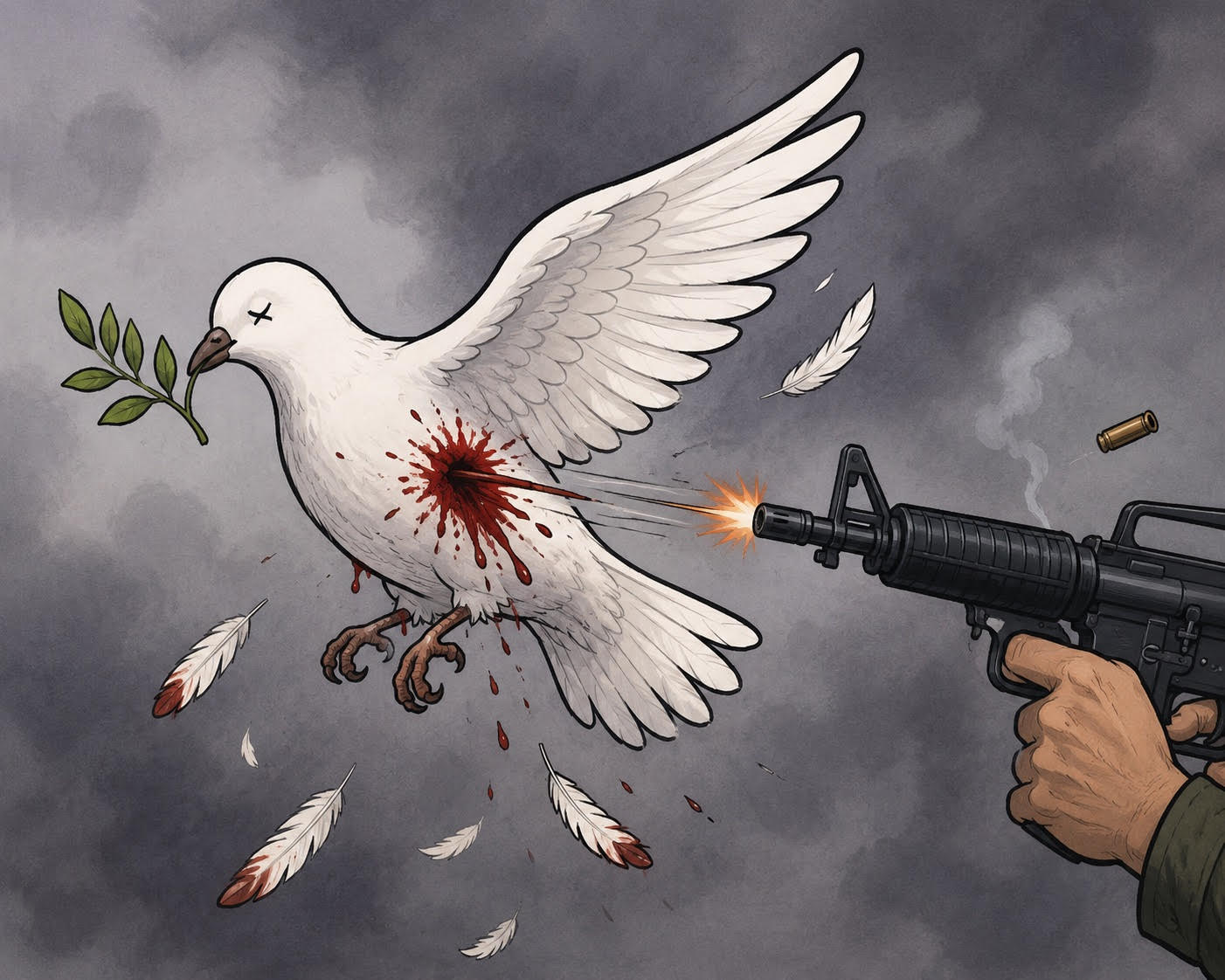
Amnesty International-USA has issued an unprecedented 46-page report on the state of that country’s domestic affairs a year after Donald Trump began his second term on January 20th. The report, “Ringing Alarm Bells,” has traced how the Trump administration’s adoption of authoritarianism is violating human rights in the US and abroad and blocking accountability. The administration’s practices increase “the risk for journalists and people who speak out or dissent, including protestors, lawyers, students, and human rights defenders,” Amnesty said.

The report describes 12 areas in which the Trump administration is undermining the “pillars” supporting the US edifice. Trump is curbing “freedom of the press and access to information, freedom of expression and peaceful assembly, civil society organisations and universities, political opponents and critics, judges, lawyers, and the legal system,” and due process. The report “documents attacks on refugee and migrant rights, the scapegoating of [entire] communities and the rollback of non-discrimination protections, the use of the military for domestic purposes…[and] the expansion of surveillance without meaningful oversight.” The adoption of such practices domestically extends to external affairs where international laws meant to protect human rights are being undermined.

Amnesty gave examples of abuses, several are included below. “Students are arrested and detained for protesting on college campuses” and communities are invaded and terrorized” by masked federal agents who are not held accountable. Such activities are “being normalised” across the country. Palestinians who are legal US residents and take part in anti-Israeli protests over Gaza have been targeted, arrested, detained and threatened with deportation.

To exact vengeance against critics, Trump has used the levers of power to “retaliate against, threaten, and coerce elected officials, federal employees and prosecutors, and universities and media outlets.” Trump has used job dismissal, suspension, investigations, withdrawal of security clearances, and denial of federal funding and contracts to attain his objectives in this campaign.

Trump has used state and federal military forces to police protests and support unlawful immigration enforcement. Black and brown demonstrations and restive localities have been disproportionately targeted. After trying to leave the area where there was an anti-deportation protest, Renee Good was shot to death in her car by a federal agent in Minneapolis, Minnesota. Department of Homeland Security Secretary Kristi Noem called her a “domestic terrorist” before any investigation had begun. The local authorities waited for a federal investigation to take over the probe into this incident which has been widely publicised and politicised.

Trump has threatened to invoke the 19th Insurrection Act, a law authorising military deployment to quell Minneapolis protests against his aggressive campaign to identify and deport “illegal” migrants although US citizens have been mistakenly swept up and detained in this effort.

Trump’s Justice Department opened a criminal probe into Minnesota state Governor Tim Walz and Minneapolis Mayor Jacob Frey, both Democrats, accusing them of impeding federal immigration operations. Walz charged the Republican administration of “weaponizing the justice system against your opponents.”

Meanwhile, on the international level, Trump has demanded that Denmark hand over to the US Greenland, an integral part of the Danish Kingdom, and threatened European countries backing Denmark with 10-25 per cent tariff punishments. Greenland is not only a strategic island, but it has deposits of precious metals. Denmark and 85 per cent of Greenlanders and 75 per cent of US citizens reject Trump’s bid although he has continued to voice his demand and issue threats against opponents and critics.

He has called for Canada to become the 51t US state despite rejection by the government and citizens. Trump argues that the US must re-acquire the Panama Canal, a choke point in the East-West trade route which connects the Atlantic and Pacific oceans. The canal was built by US engineers between 1903-1914 and was held by the US until handed over to Panama on December 31st, 1999. He falsely claims Russia and China menace both Greenland and the Panama Canal. Trump uses imagined threats to forge new global realities. However, other leaders, countries and populations prefer not to undermine and fracture the status quo which has maintained peace over and in Greenland and Panama as well as between global actors.

The writer is a columnist for the Jordan Times

Continue reading
Trump, Maduro and Diminished Values

By Dr Khairi Janbek

The late British historian Eric Hobsbawm had an interesting theory that of long centuries and short centuries. In the first, no big transformations happens, consequently these centuries are counted them in terms of numerics, like 100 years, for instance.

In the second case however, so many big transformations occur, and so these centuries are counted not numerically, but by their effect on human life, progress and development.

To this one wishes to add, that throughout history, people moved habitually into the new century with old ideas passing through and tipping over. Consequently, the grasping of the new developments is always difficult, and our current situation in the 21st century is, in fact, no different.

We have entered this century with the values inherited from the past 100 years with examples being the truth, legality, international law, human rights, sovereignty, and many other norms. Now, this is not to say in any way the values of the past century were ideal, but at least there were norms that could be appealed to not necessarily punish transgressors, but to embarrass them.

However today, and with the latest debacles, we have now entered an age in which you can easily add the word “post-” to all the aforementioned values. In fact we are in the age of post human values, in which the logic of pure force, and the law of the jungle prevails and used with no compunction.

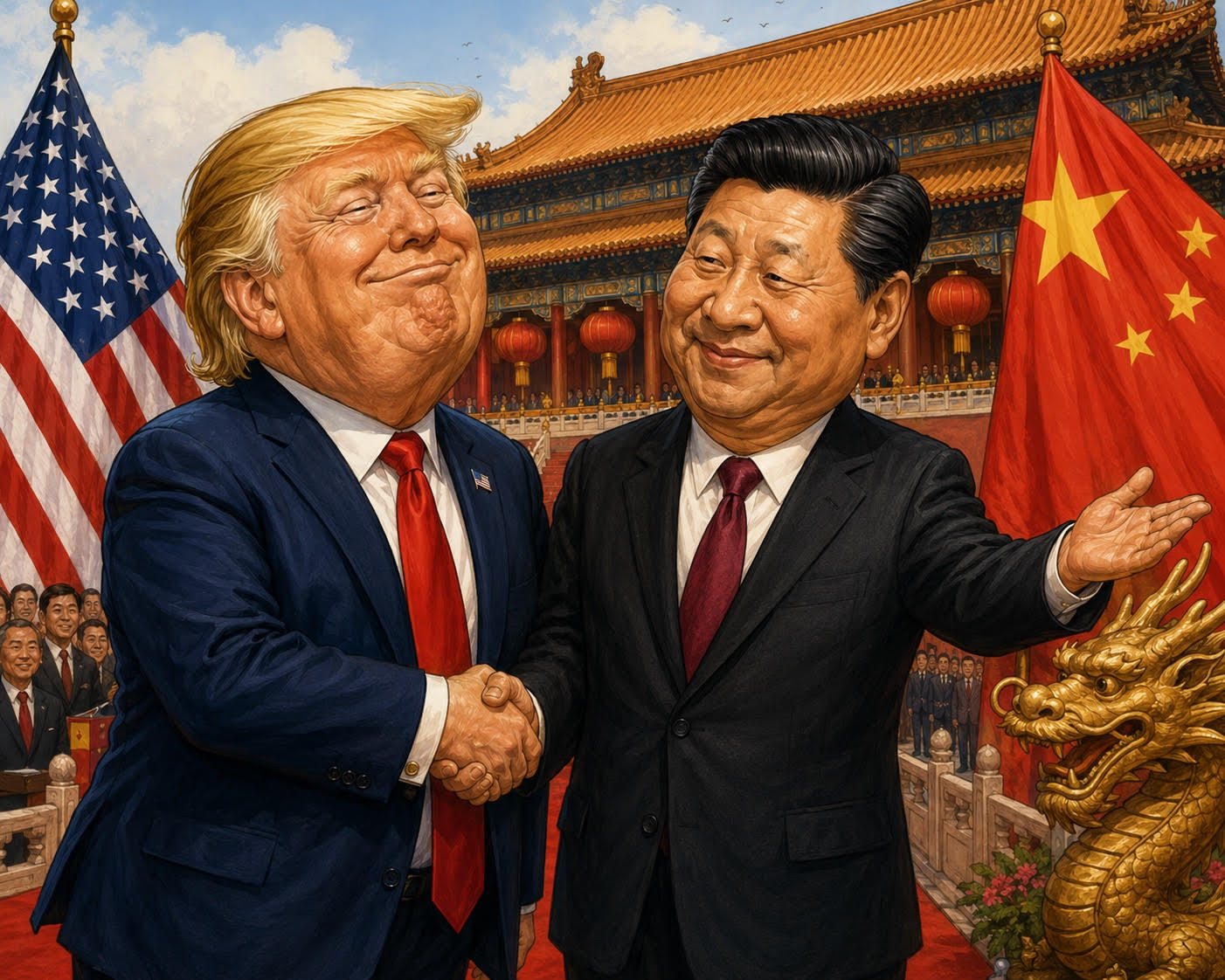
With the latest action on Venezuela, the US administration is providing a new paradigm to the world: That of the policy of the backyard to illustrate the point and as used by British prime minister Neville Chamberlain prior to World War II and in which he wrote after the annexation of Czechoslovakia by Adolf Hitler, as being the dictator’s new backyard.

What he meant of course is that any entity with enough strength is permitted to go into countries which it considers to be its own backyard. Flipping back, today this is how America sees its new role, acting to prevent harm to US interests but also is willing to negotiate on other issues important for the interests of America.

As the situation stands, Washington through the Trump administration, is clearly moving to revive the Monroe Doctrine and use it unashamedly and in accordance with the backyard theory.

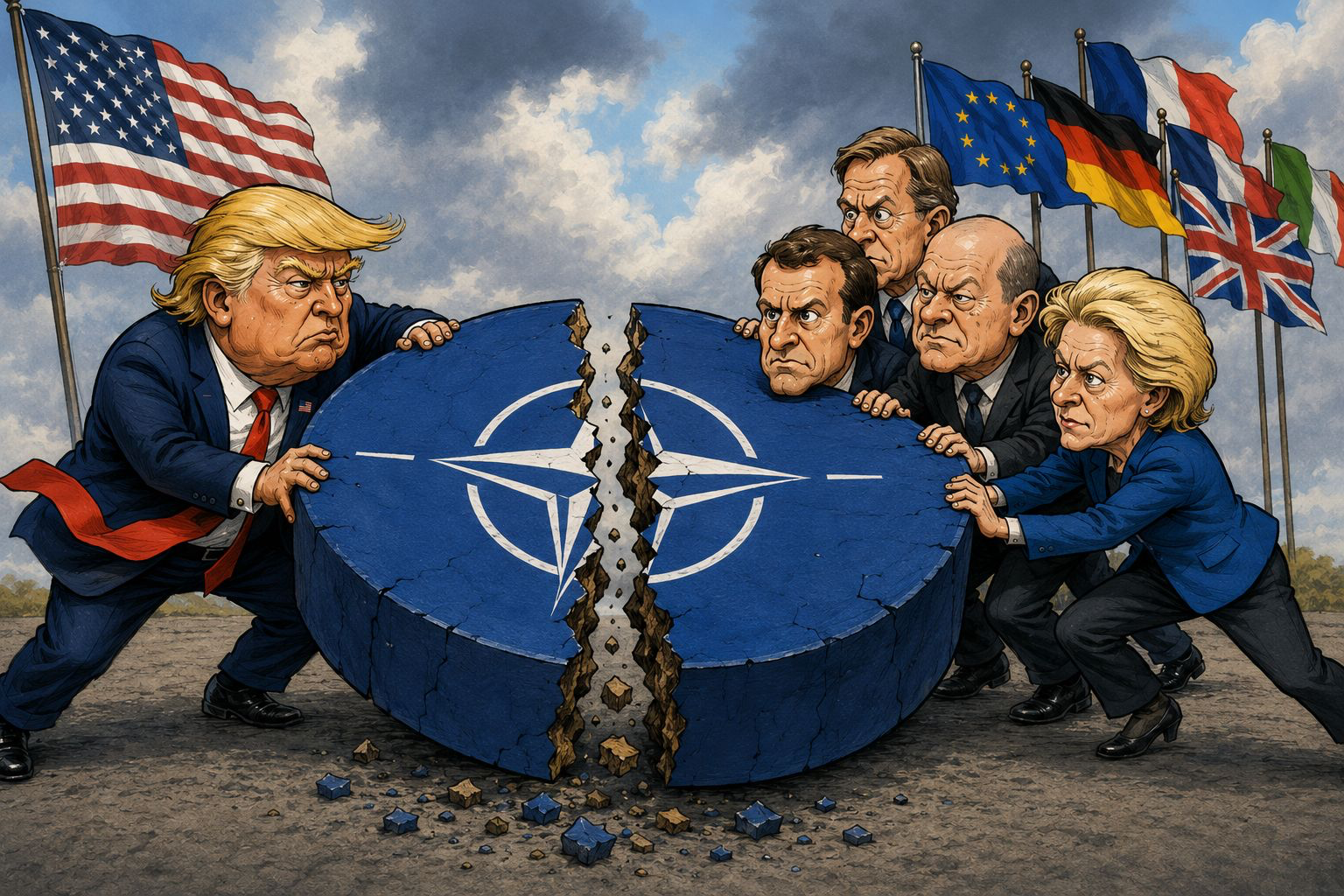
And as for the international outlook, the current US strategy is to push for extreme right-wing governments to run Europe, seeing the continent as an economically powerful block but without military swing and/or political clout and willing to negotiate to end the war in Ukraine to Russia’s advantage.

Meanwhile, Washington wants also to push the Abraham Accords in the Middle East and get Arab governments, especially the Saudis, to negotiate with Israel to liquidate the Palestinian problem once and for all. In this paradigm, the fate of Taiwan remains to be seen, whether it becomes the sacrificial lamb for US-China Accords or not. This is how one sees the balance.

However having said all that, and in this formula, the allies of the US can be hurt in as much way as the detractors of America.

Dr Janbek is a Jordanian historian living in Paris.

Continue reading
Israel Versus Turkey in Africa

By Prof. Dr. Yahya Amir Hagi Ibrahim 

The strategic waters of the Red Sea and Gulf of Aden have once again become a flashpoint, with recent actions suggesting a dangerous escalation that threatens to unravel fragile stability and deliberately target international investments. Israel has shifted toward a posture that uses access to the Red Sea and Gulf of Aden as part of its broader regional strategy. At the same time, Türkiye is deepening its footprint in Somalia with long-term development projects spanning energy, infrastructure, and space technology. After Israel’s decision to recognize Somalia’s breakaway region, Somaliland, Somalian President Hassan Sheikh Mohamud pays a critical visit to Türkiye.

Houthis and Bab al-Mandab Strait

In response to Israel’s genocide on Gaza, Yemen’s Houthi rebels have launched drones, missiles, and maritime attacks targeting Israel and commercial shipping (toward Israel or flying the flag of Israel-supporting countries) in the Red Sea, Gulf of Aden and nearby waters. In response, Israel has conducted multiple airstrikes in Yemen.

More recently, Israel’s recognition of Somalia’s breakaway region, Somaliland, as an independent state in December 2025 marked a dramatic diplomatic shift. Israel became the first UN member state to formally recognize the breakaway region (situated near the strategic Bab al-Mandab Strait), drawing strong objections from Somalia, Türkiye, Egypt, and others who view the move as a threat to regional stability.

Alarmingly, these actions appear to deliberately focus on areas where Türkiye has made significant investments in stability and capacity-building, signaling steps aimed not just at military objectives but at broader stabilization. This calculated targeting strikes at the heart of a pivotal and transformative partnership between Türkiye and Somalia. Over recent years, this alliance has moved far beyond diplomacy into tangible, nation-building projects designed to foster economic growth and regional security. To see them threatened is to see a blueprint for progress put at risk.

Over the past decade, Türkiye has built a deep, multi-layered partnership with Somalia, positioning itself as a key security and economic partner. Ankara’s long-term involvement began in earnest with high-level visits in 2011 and expanded through defense, economic, and development agreements.

Central to this is hydrocarbon exploration: under agreements granting rights across some 15,000 square kilometers of Somali offshore blocks, the Turkish Petroleum Corporation (TPAO) has conducted seismic surveys and plans to begin oil drilling by 2026, potentially harnessing significant reserves.

Beyond energy, Türkiye desires to include cutting-edge technological infrastructure. Ankara is planning a space launch facility in Somalia, leveraging the country’s equatorial advantage for satellite launches and potentially missile testing. The project (part of broader cooperation agreements signed in 2024) is expected to strengthen Türkiye’s aerospace capabilities and deepen strategic ties.

Turkish capacity-building

Türkiye’s footprint also extends to security and capacity-building. The Turkish military operates Camp TURKSOM, its largest overseas base, which trains Somali forces and enhances naval and coastguard capabilities. Joint agreements signed in recent years include maritime security cooperation to patrol Somali waters for a decade, protecting both regional stability and economic activities. Additionally, Turkish infrastructure investments include modernization of airports, hospitals, fishery programs, and diplomatic compounds.

Türkiye’s strategy is structural, aimed at building Somali capabilities and mutual economic stakes. Whether through oil, space technology, or infrastructure, Ankara’s footprint in the Horn of Africa is designed for sustained impact.

The author who has contributed this piece to Anadolu, is the deputy chairman of RAAD Peace Research Institute, a Somaville University Mogadishu board member and lecturer on economic development.

Continue reading
Making Arabic The Future Language!

By Ali Abu Hablah

On December 18, 2025, the world celebrates World Arabic Language Day, an occasion that transcends mere celebration to touch upon the core of cultural and intellectual conflict in a rapidly changing world. This day commemorates the 1973 United Nations General Assembly resolution adopting Arabic as an official and working language of the UN system, in recognition of its historical and cultural significance.

This year’s celebration, organized by UNESCO at its headquarters in Paris, carries the theme:

“Innovative Pathways for Arabic: Policies and Practices for a More Inclusive Linguistic Future.” This theme reflects a growing awareness that the future of Arabic can no longer be secured through emotional rhetoric or historical glorification, but rather through public policies, educational strategies, and serious investment in technology and innovation.

Arabic is not simply a means of communication; it is the language of the Holy Quran, the language of the Prophet’s sayings (Hadith), and a repository of poetic, intellectual, and philosophical heritage. It is also a liturgical language for several Eastern churches. It is spoken today by more than 400 million people and is widespread throughout the Arab world and its surrounding regions, as well as in the diaspora across five continents. It is also one of the most influential languages ​​in the history of world languages.

For centuries, Arabic played a pivotal role as the language of science, politics, and administration. It contributed to the transmission of Greek and Roman knowledge to Europe and served as a bridge for dialogue between cultures along land and sea trade routes. However, this historical leadership is now met with a worrying paradox: Decline of Arabic’s presence in scientific research, higher education, and digital content, in favor of other global languages.

This decline is due to a complex set of factors, most notably the dominance of foreign languages ​​in universities, weak Arabization policies, a decline in translation activity, and the digital revolution, which Arabic has not adequately kept pace with. The widespread use of local dialects, especially through media and social media platforms, has also contributed to weakening the presence of Standard Arabic in the public sphere. This does not mean that the dialects themselves are responsible for the crisis, but rather that it reflects the absence of a balanced linguistic vision. In this context, the 2025 slogan acquires strategic significance, linking the future of Arabic to three fundamental paths:

First, language policies, as no language can be protected without clear legislation guaranteeing its presence in education, administration, and media.

Second, innovation and technology, given that the survival of a language today depends on its presence in artificial intelligence, software, search engines, and the digital content industry.

Third, linguistic inclusivity and equity, by making Arabic accessible to multilingual societies, supporting low-income groups, and promoting linguistic justice without compromising the integrity of the language or politicizing it ideologically.

UNESCO’s celebration of World Arabic Language Day constitutes a platform for global cultural dialogue, but at the same time, it places a heightened responsibility on Arab states and their educational and cultural institutions. The problem does not lie in a lack of international recognition, but rather in the absence of a comprehensive Arab linguistic project that restores Arabic to its role as a language of knowledge and production, not merely a language of heritage and celebration.

Ultimately, the Arabic language does not face an existential crisis, but rather a crisis of management and awareness. It must either be integrated into the core of the civilizational and developmental project, as a language of science, law, and technology, or it will remain confined to occasions and speeches. On World Arabic Language Day 2025, the question remains: Do we want Arabic to be the language of the past, or the language of the future?

Ali Abu Hablah originally wrote this article for the Arabic Addustour newspaper.

Continue reading
Netanyahu’s Middle East Vision

By the end of December, Israeli Prime Minister Benjamin Netanyahu is expected to visit Washington to meet US President Donald Trump, marking his fourth visit in less than a year since Trump assumed office. Unlike previous visits, this one comes after President Trump imposed his vision for ending the war in Gaza and outlined his broader concept of regional peace—giving the visit a distinctly political dimension.

At the core of the discussions will be the transition to the second phase of the Gaza ceasefire agreement, the appointment of an American general and a monitoring center, and the mechanism for administering Gaza ahead of the arrival of an international peace force. The visit is also expected to address Israel’s relations with its regional surroundings, particularly Egypt. Reports suggest the possibility of a simultaneous visit by the Egyptian president to Washington, reflecting a clear American desire to initiate direct engagement and promote the concept of “economic peace,” along with major regional projects that Trump views as the backbone of future relations, especially in the energy and gas sectors.

Yet even as President Trump speaks of a regional peace vision, the days preceding the visit remain open to further escalation. Indicators point toward a qualitative Israeli escalation across four fronts: Gaza, the West Bank, Lebanon, and Syria. These fronts have been deliberately kept open, transformed into continuous theaters of operation where Israel calibrates the level of military activity according to its security assessments.

Lebanon remains the most prominent arena of this escalation. Ongoing discussions about Hezbollah’s efforts to rebuild its capabilities coincide with Israel’s continued direct targeting of the group’s positions and operatives. This comes amid growing American pressure on the Lebanese government and army to take concrete steps toward disarming Hezbollah.

While the group is fully aware of its inability to engage in a comprehensive regional war, and the need to avoid providing direct justifications for escalation, it nevertheless finds itself compelled to use the weapons issue domestically to reshape internal power balances. At the same time, Hezbollah seeks to secure the future framework of its relationship with Syria, particularly if the Syrian-Lebanese border shifts from being merely a site of interdiction to a direct target zone.

This reality severely constrains Hizbollah’s response options while granting Israel continued latitude to strike the group’s infrastructure, capitalising on the absence of a decisive resolution to the weapons issue and on Lebanon’s institutional confusion over how to address it, whether through phased timelines or alternative formulas such as placing weapons under army control. From Israel’s perspective, this ambiguity justifies continued targeting until a decisive moment is reached.

Within this context, Israel’s strategy of imposing a new reality across its border fronts aligns closely with the transition to the second phase of President Trump’s plan. This approach corresponds with Israel’s efforts over the past two years to redraw geographical and security realities in Syria, Gaza, Lebanon, and even the West Bank. While the Trump administration opposed a formal declaration of annexation in the West Bank, it did not object in practice to Israel’s on-the-ground measures, allowing these changes to solidify as irreversible facts.

Security measures taken today may therefore establish realities that will be difficult to reverse in the future. From Washington’s perspective, redrawing borders may be seen as laying the groundwork for what it terms “regional peace,” treating the new border realities as spaces for potential economic or developmental investment.

Netanyahu’s visit to the White House thus represents a pivotal moment. He will seek to position himself as a central actor in the next phase, consolidate new realities along Israel’s immediate borders, and secure U.S. backing in addressing non-adjacent fronts, most notably Iraq, and above all Iran.

Iran is left to grapple with an increasingly severe internal reality marked by mounting economic, social, service-related, and security challenges, and is simultaneously categorized as part of the camp of “obstructors of regional peace” in Trump’s framework, opening the door to intensified pressure and varied forms of targeting in the period ahead.

Dr Amer Al Sabaileh, a professor in the University of Jordan contributed this analysis to the Jordan Times.

Continue reading