Cobwebs and Impotence! 

By Dr Khairi Janbek

A few personal reflections which certainly don’t resolve the Middle East puzzle, and one hopes don’t add to the already existing puzzle.

In any case, the Arabs tend to be a vocal people of tradition, consequently, all that can be done, is limited to the terms of providing the best description to circumstances rather than providing practicable and working solutions.

One can’t say that at times there are in fact idealistic solutions which can work only in the imagination, and indeed there is plenty of that, but to face other nations’ aggression; specifically Israel’s self-proclaimed defense of its national security, Arabs tend to counter that with competition between themselves as who is the most eloquent electronically.

Essentially and apparently, the Rabs are currently in a weak state, and weakness does corrupt, and if the current circumstances persist, will lead to absolute impotence. 

For generations the Arabs have followed the so-called western path to development, while some, in order to spite the West, followed the socialist path to development, the mirage was the same, and failure no different, and with international relations, the policy has been habitually leaning on the Americans to fend off Iranian threat, leaning on Russia to fend off American threat, and leaning on Israel to fend of the threat coming from each other, which prompts the logical question: Why don’t they lean on each other?

Well, part of the answer comes from an incident from my pre-retirement days, as one was looking out of the window of the airplane passing over an area in Turkey full of dams, the VIP I had the honor of accompanying said the prophetic words which stayed with me “good luck to them, all what we did, we conspired against each other.” 

The fact remains, that a form of catharsis is needed in inter-Arab relations, which probably requires more of psychological analysis than political, because the phenomenon of seeking allies from the presumed enemy lines, as opposed to allies from the so called brethren camp, requires plenty of reflection. The ethos of common culture, religion, geography are nothing but folklore the doesn’t have the idea of common interest in its composition.

Alas, a folkloric nation that derives its strength from rhetoric can only remain a reactive nation, and in order to become an active nation, it has to clean up from its mind, the cobwebs of memory and start acting to the basis of common Arab interests.

Dr Janbek is a Jordanian writer based in Paris, France

Continue reading
How Should Arabs Influence The US?

By Hamed Kasasbeh

The United States faces a sensitive equation in the Middle East. On one side, a strong strategic alliance with Israel, built on military and intelligence superiority. On the other, a deep economic and security partnership with Arab states, which control oil, gas, key waterways, and sovereign wealth funds. Yet Washington still treats Arabs as financial and energy suppliers, while granting Israel unconditional superiority. The question is: How long can this continue before America pays a strategic price?

Since the 1970s, oil has been tied to the U.S. dollar through the petrodollar system. This made the dollar the backbone of the global financial order and allowed Washington to finance deficits while keeping global dominance. But the landscape is shifting. BRICS seeks to reduce reliance on the dollar. With Saudi Arabia and the UAE joining, Arabs now have direct influence on the future of global finance. Any move to price oil in other currencies could shake the foundations of U.S. power.

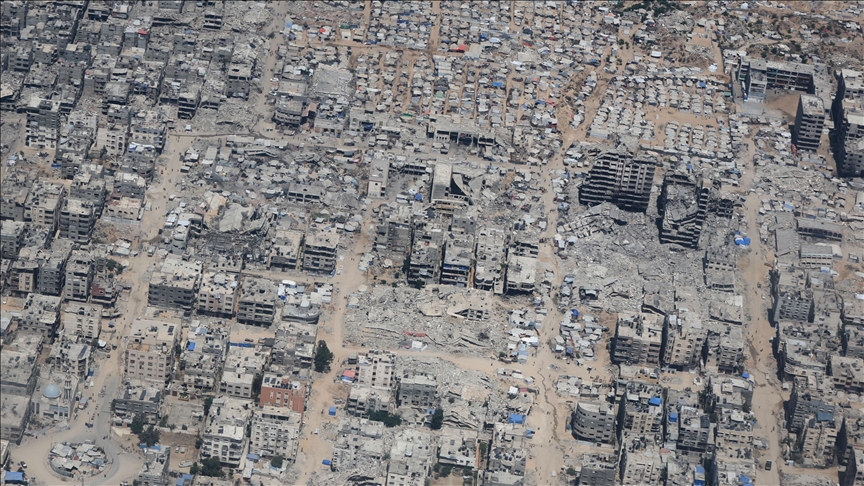
Meanwhile, Israel—backed by open U.S. support—pushes Netanyahu’s vision of a “New Middle East.” The plan is clear: destroy Gaza, swallow the West Bank, fund the displacement of Palestinians, and strike Lebanon, Syria, Qatar, and Yemen. Even Gulf states are no longer outside the danger zone, as Israeli threats expand across the region.

Israel has little economic weight compared to the Arabs, but it enjoys political and military privileges that make it a forward base for Washington. Arabs, by contrast, hold powerful cards: oil and gas, the Suez Canal, Bab al-Mandab, the Strait of Hormuz, and sovereign funds with hundreds of billions in U.S. markets. Used together within a united stance, these cards can rebalance U.S. policy toward Israel.

The pressure is not only economic. The U.S. operates dozens of military bases in the Gulf, Jordan, and Turkey. If Arabs link these facilities to Washington’s position on the conflict, the cost of bias will rise. At the same time, Arabs are no longer just oil producers. They are key players in renewable energy and green hydrogen, shaping the future of global energy markets.

Inside the U.S., the Israeli narrative no longer dominates unchallenged. A growing movement among youth, universities, and independent media rejects blind support for Israel, especially after the humanitarian disaster in Gaza. This has fueled mass protests, political pressure, and divisions inside the Democratic Party between the old guard and a younger generation more critical of Israel. Arabs can build on this by engaging think tanks, universities, and Arab-American communities.

In Europe, the EU cannot ignore its vital interests with the Arab world in energy, trade, and investment. Public anger over Gaza is rising. Arabs have an opportunity to unify their message and push Europe toward greater independence from Washington. Linking access to Arab markets with balanced political positions could turn sympathy into official pressure on Israel from within its Western allies.

At the international level, Israeli actions no longer pass without scrutiny. The UN Security Council has issued repeated condemnations, despite Washington’s vetoes. The latest vote reaffirmed the two-state solution as the only path to peace, highlighting Israel’s growing isolation. A united Arab stance could transform this consensus into real leverage, combining international legitimacy with Arab economic power.

In the end, the ball is in the Arabs’ court. They hold the tools to impose a new balance and secure a fair solution for Palestine. If they act with unity and resolve, they can curb Israeli arrogance and reshape the region. If not, the cost will fall on Arab citizens—through weaker economies, shrinking wages, and eroded sovereignty—while the future of the Middle East is written without them.

The writer is a columnist in the Jordan Times

Continue reading
Boycott V. Starvation

By Dr Usman Masood 

As we debate the sanity and economics of boycotting products during our tea breaks, many in Gaza are going through one of the slowest and most painful transitions imaginable – agonizing starvation. The aroma of my favorite coffee may be one-of-a-kind, but if the same brand operates in Israeli-occupied apartheid territories it’s time to rethink my choices.

Sometimes we call our favorite brands irreplaceable, being so attached to them so as to identify ourselves with their trademarks. Sometimes the economists within us argue that if we don’t buy from a certain company, our people are going to lose jobs. And sometimes, the cleverest among us spell out a simple calculus: boycotts are a sentimental overreaction that is not actually actionable or sustainable.

Arguably, a person should not be defined by a brand. In a world ever more sensitive to businesses’ social responsibility, it is the brand which should be defined by the kind of people it serves – its responsibility to society in the neatest sense.

Humanitarian-washing

If a company thinks it is legitimate to set up its businesses in illegitimately occupied lands, serve an army carrying out massacres, and then offer them “deals” on goods ranging from demolition machinery to feel-good grocery packs, then allowing such brands to represent us is profoundly troubling.

Sprinkling a few giveaways to the poor here and there in the name of social responsibility, after making fortunes from genocide, is the kind of “humanitarian-washing” some companies are heavily relying on these days. As responsible consumers, we need to be wary of giving them a free pass. Draped in philanthropic robes, beneath you’ll find the same Faustian bargain on offer – pleasure, products, and plenty in exchange for “looking the other way,” assuming convenient apoliticism.

Even if you set aside these moral considerations, the arguments in favor of “business-as-usual,” on the pragmatic basis of “it’s the economy, stupid,” are fundamentally flawed.

Economics beyond slogans

Yes, standing up to Israel – and the complicit companies – may cost jobs and investment to the boycotting country, but this considers only the static, one-time costs, ignoring the potential for dynamic, long-run gains. If a boycott causes momentary unemployment, an economist should tell you that capital flows, divestment in one company means investors warming up to another, and hence substitute job creation.

Moreover, a local company picking up steam at the expense of its foreign competitor ensures that the profits and jobs stay at home, rather than being repatriated to the countries of origin. Many economies that saw unprecedented growth in history used the recipe of replacing goods previously imported with local production, which vitalized the domestic industry. While import-substituting policies have had their demerits, the formula proved transformational in the case of economies like Japan, China, and South Korea, where the local production which had initially kicked off in an effort to replace imports flourished with time, making these countries the leaders in global exports.

In his book, Bad Samaritans: The Myth of Free Trade and the Secret History of Capitalism, Ha-Joon Chang notes that the drive for consuming domestically produced goods came down to the grassroots level, to something as frivolous as cigarettes. Such was the emphasis on consuming local products in South Korea that a stigma was attached to smoking foreign brands.

The state encouraged people to report such “treasonous” acts that wasted foreign exchange – foreign currency being a scarce resource, which represented the “blood and sweat” of “industrial soldiers” (p. xiv). Through this lens, boycott metamorphoses into an opportunity. The reluctance to buy Israeli – or occupation-aligning companies’ – products has already been instrumental in carving out a market for local products in countries like Türkiye, Pakistan, and Saudi Arabia.

Transformative power of consumer choice

There are still some who contend that a comprehensive boycott is simply not practical, and therefore, futile. But what’s the point of such an all-or-none approach? To be clear, boycotting does not have to be extreme – not everything, everywhere, forever. One may start with a few products that are easily substitutable, as soon as they may be substituted, for as long as necessary. Small, incremental changes to our consumption patterns may feel insignificant but they can affect retailers’ buying decisions, wholesalers’ stocking decisions, and ultimately, a company’s production decisions. The effect of consumer decisions is such that the impact is heavier each step up the supply chain, a phenomenon referred to as the bullwhip effect.

A small jolt to one consumer’s whip may feel unimportant, but collectively, it may unsettle the machinery of complicit capitalism. It’s time to opt out of the genocide, one product at a time.

The author is an assistant professor in SZABIST University in Islamabad, Pakistan and contributed this article to Anadolu.

Continue reading
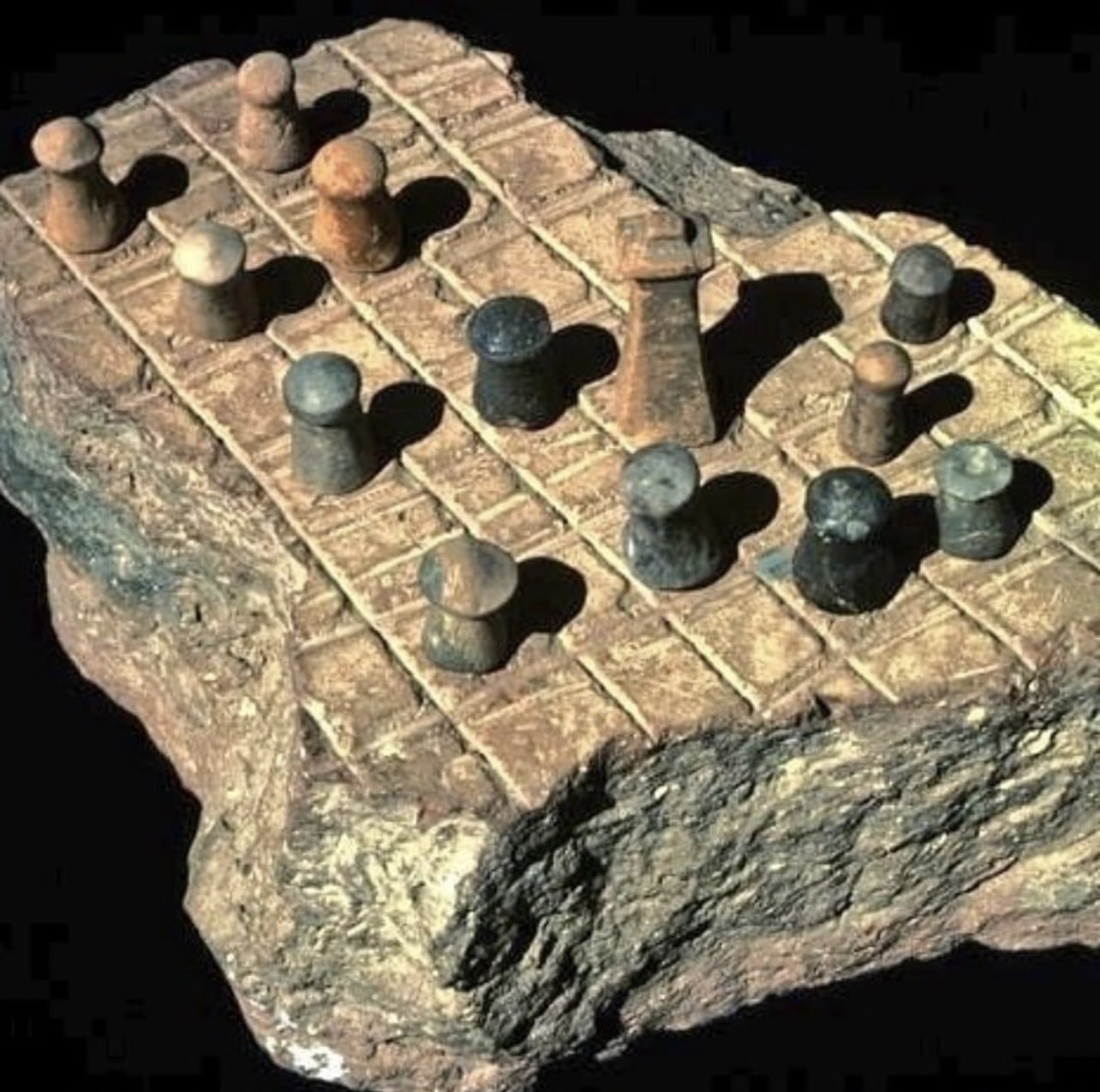
Chessboard Middle East

By Dr Khairi Janbek

When the British conquered the territory, they didn’t exactly know where to draw the borders of Palestine. British Prime Minister Lloyd George conferred with his French counterpart Clemenceau and suggested that the borders of Palestine be defined on biblical basis; in accordance with its ancient boundaries from “Dan to Beersheba”.

But what about the sparsely populated territory east of the River Jordan? Although in 1915 the British promised the territory to the Sharif of Mecca in the McMahon correspondence, in the early years of the British control, it remained part of Palestine, and not until 1922 did the British separate it from the rest of Palestine and named Emir Abdullah of the Hashemite dynasty as the ruler of the new country Transjordan.

Even when the borders of Palestine became clear to the British, the borders of the future Jewish National home remained open to dispute. Lord Balfour’s letter, spoke vaguely of the establishment ‘ in Palestine of a National home for the Jewish people’ he did not refer to the whole of Palestine or any specific part of it.

Among the Zionists, the borders of Palestine were just as blurred. The ideal borders, as mapped by the Zionist delegation at the Paris Peace Negotiations, included south Lebanon (Northern Galilee) and a stretch of land east of the River Jordan as far as the line of the Hijaz Railway.

Chaim Weizmann continued to believe that the land east of the River Jordan should be part of the Jewish National Home. Thus reiterated in his Congress speech in 1921: “The questions of borders will be answered when Cis-Jordan will be so full of Jews that we will have to expand to Transjordan.”

The right-wing Israeli revisionists continued to claim until the 1950s, the whole of Palestine on both sides of the Jordan River.

However, there was a brief glimmer of hope that an Arab-Jewish understanding might in fact be possible when Emir Faisal, later King of Iraq, and Chaim Weizemann signed an agreement in 1919, recognizing the right of the Jews to immigrate to Israel, but reality on the ground created a different set factors, when Faisal’s condition of far reaching Arab independence in the region was not fulfilled, he declared the agreement no longer valid, in any case, the agreement did not include representatives of the Palestinian Arabs.

Also in the post-World War I, another claim on Palestine was made in March 1920, when the General National Syrian Congress, declared that Palestine was nothing but the southern part of the Greater Syria State.

Dr Janbek is a Jordanian writer based in Paris, France

Continue reading
Israel’s War on The Truth

By Najla M. Shahwan

Israel’s military operation in Gaza, in the aftermath of the October 7 attack by Hamas, has become the deadliest, most dangerous conflict for journalists.

Reporting on the Gaza war has become increasingly perilous, with large numbers of journalists and other media personnel killed or deliberately targeted by Israeli armed forces.

Moreover, the Israeli Authorities have since the war began banned the entry of international journalists to Gaza, an unprecedented move in any other conflict in modern history.

It is a ban on the truth and a ban on reporting the facts.

It is the perfect recipe to fuel misinformation, deepening polarisation and dehumanisation.

While the foreign press has been banned from entering Gaza, Palestinian journalists there have been treated by Israel as legitimate military targets.

Palestinian journalists, whether classical “war correspondents” or, more dangerously, operate with varying degrees of independence have been among a precious few remaining actors capable of exposing illegality.

Over the past 22 months, the world has watched the war in Gaza unfold.

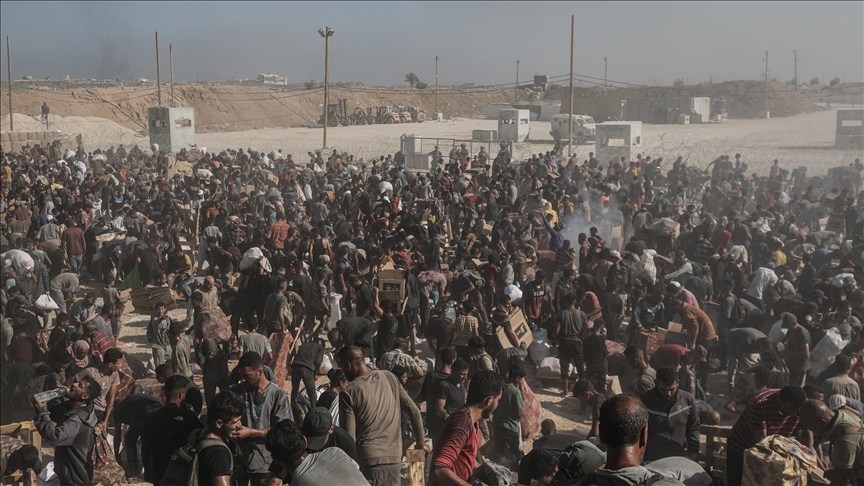
The Israeli military onslaught on the Strip continues nonstop, resulting in the killing of more than 65,000 Palestinians, mostly women and children and almost all of the 2.3 million residents displaced multiple times, struggling to survive the dual threats of targeted attacks and starvation.

Palestinian journalists killed, international reporters banned and members of press and influencers covering devastation in Gaza being silenced despite protection under international law.

In its war on the Gaza strip Israel has been running a special campaign for narrative control of how the world understands what was happening.

The vast majority of Palestinian journalists and social media influencers documenting, mass killing, starvation and other Israeli war crimes in Gaza have been killed since then in the deadliest conflict for journalists ever documented, according to the Committee to Protect Journalists (CPJ).

Even though it is illegal to target journalists, the “Palestinian journalists are being threatened, directly targeted and murdered by Israeli forces, and are arbitrarily detained and tortured in retaliation for their work.

By silencing the press – those who document and bear witness – Israel is silencing the war,” the CPJ said.

In Israel’s latest attacks, two more journalists, Rasmi Salem of Al Manara and Eman Al Zamli, were killed, bringing the total number of journalists killed since the war on the Palestinian enclave began to more than 270.

Earlier, on September 31, Islam Abed, a correspondent for Al Quds Today TV, was also killed in an Israeli air strike on Gaza City.

On August 25, five journalists were killedin a “double -tap” Israeli strike targeting Naser hospital in southern Gaza, which killed at least 21 people.

The journalists killed, all worked or freelanced for international media outlets, including Hossam Al Masri, a cameraman with Reuters, Mariam Abu Daqa, a freelance photojournalist with the Associated Press, and Mohammed Salama, a photographer for Al Jazeera.

Freelance journalists Ahmad Abu Aziz and Moas Abu Taha were also killed, while several other journalists were injured in the attack.

Earlier on August 10, another four Al Jazeera journalists and two freelancers were killed by a targeted Israeli strike on their tent outside Al Shifa hospital in Gaza City.

The Israeli army said it deliberately targeted the Al Jazeera crew – the correspondent Anas Al Sharif, who had reported on the war since its outset, the reporter Mohammed Qreiqeh, the cameraman Ibrahim Zaher, and Mohammed Noufal, a crew driver and cameraman.

The Israeli army claimed it had evidence that Sharif was a Hamas terrorist.

The CPJ and other organisations said that this claim is part of a pattern of misinformation, along with other cases where slain journalists have been labelled as Hamas fighters or operatives, and is without credibility.

Press freedom groups and journalists said that those killings are part of a campaign of intimidation to shut down vital reporting, which Israel has justified internationally with smears and false claims that the targets were undercover Hamas fighters.

To many people outside Gaza, the war flashes by as a doom scroll of headlines and casualty tolls and photos of screaming children, the bloody shreds of somebody else’s anguish but the true unimaginable scale of death and destruction is impossible to grasp, the details hazy and shrouded by internet and cell phone blackouts that obstruct communication, restrictions barring international journalists, extreme, often life-threatening challenges local journalist reporting from Gaza are facing.

Besides, local journalists inside Gaza face displacement, starvation, and extreme violence.

On August 21, 29 member states of the Media Freedom Coalition issued a statement calling for access to the Strip by foreign press and for Israel to ensure the safety of local journalists working inside Gaza.

French President Emmanuel Macron called on Israel to respect international law, emphasising the important role of independent media in covering “the reality of the conflict.”

Germany’s ambassador to Israel Steffen Seibert demanded an investigation and access for international media to Gaza, while United Kingdom’s Foreign Secretary David Lammy also condemned the attacks, calling for the protection of journalists.

“We are appalled and shocked to see Israel continue to kill journalists with no accountability, as the world watches. It is critical for the international community to step up and take concrete action to ensure the safety of Gaza’s remaining journalists,” International Press Institute (IPI) Executive Director Scott Griffen said.

“As more journalists in Gaza are killed, fewer remain to carry on their work, which means we know less about what is actually happening on the ground.”

“The unabated killing of journalists during the course of this conflict has grave implications for journalists not only in Gaza, who have sacrificed so much and endured such unimaginable violence to cover this war – but also for journalists’ safety all over the world,” Griffen added.

Despite growing global condemnation and concerns over breaches of international law, Israel is continuing its military assault on Gaza and it is likely that more journalists will die as a result.

International journalists must independently report from Gaza and support their Palestinian colleagues who continue to do a heroic job at a heavy price.

The international community must act fast to ensure that journalists are kept safe and hold Israel to account for the deaths of all journalists whose killings may have been targeted. Journalists are civilians, and it is illegal to attack them in a war zone.

Reliable information about wars and conflicts is essential for the wellbeing of local populations and is necessary to enlighten the world on the forces behind wars and the toll on civilians.

The author writes for The Jordan Times.

Continue reading