King Abdullah: Jordan Supports Rebuilding Gaza, Rejects Displacement

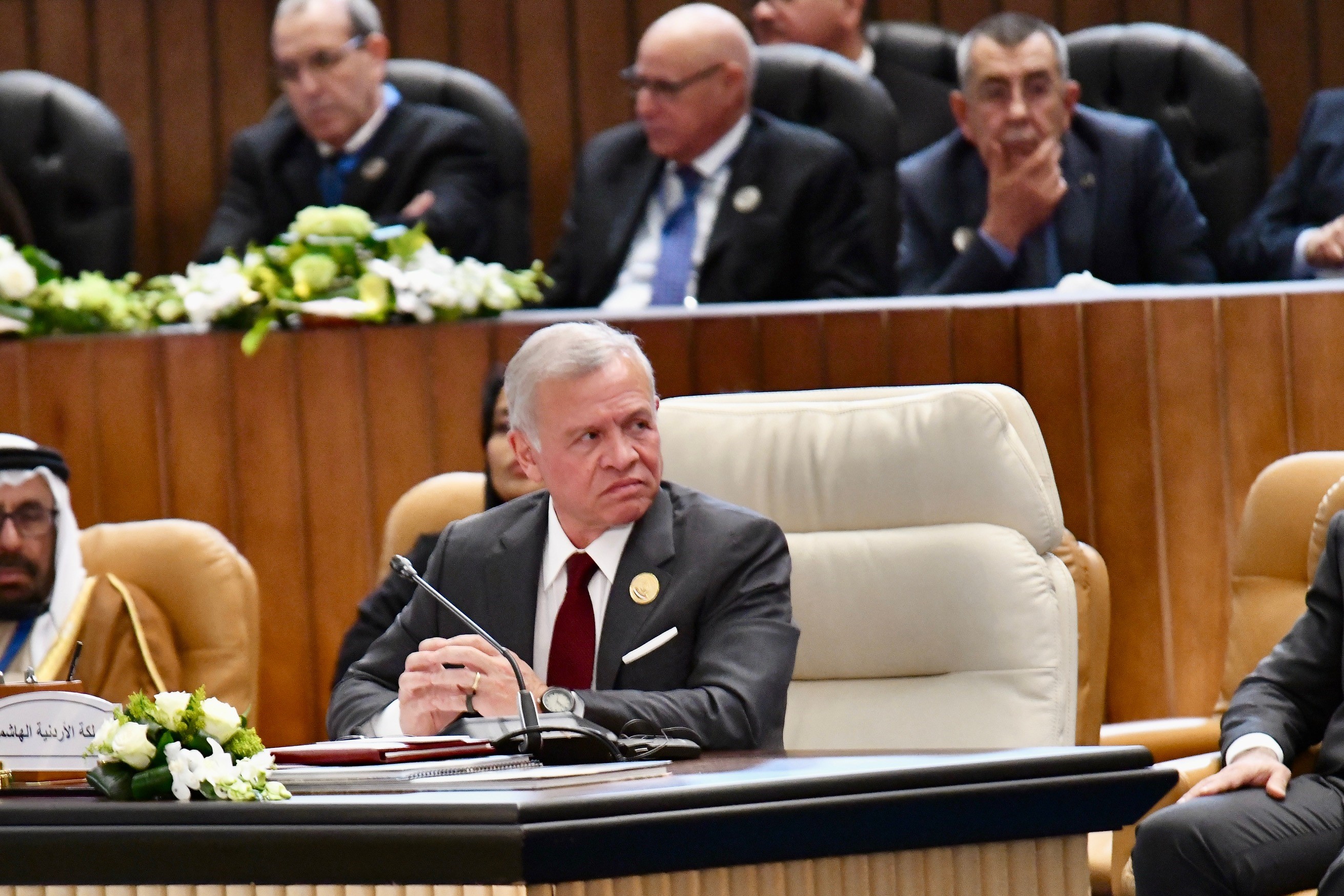
His Majesty King Abdullah II on Tuesday affirmed Jordan’s support for the plan to rebuild Gaza, which will be presented to active partners to gain international support, according to a royal court statement.

Delivering Jordan’s address at the Extraordinary Arab Summit hosted by Egypt, dubbed the ‘Palestine Summit,’ His Majesty reiterated Jordan’s total rejection of all attempts to displace Palestinians in the West Bank and Gaza and annex land, in addition to condemning the Israeli decision to block humanitarian aid to Gaza.

The King stressed the importance of maintaining the ceasefire in Gaza and ensuring the implementation of all its phases, as well as stopping the dangerous escalation of the situation in the West Bank.

Following is the English translation of Jordan’s address at the Extraordinary Arab Summit and as printed in the Jordan Petra news agency:

“In the Name of God, the Compassionate, the Merciful,

Prayers and peace be upon our Prophet Mohammad,

Your Majesty King Hamad bin Isa Al Khalifa,

Your Excellency President Abdel Fattah Al Sisi,

Your Highnesses and Excellencies,

Peace, God’s mercy and blessings be upon you.

I would like to first express my thanks to my brother President Abdel Fattah Al Sisi for hosting this extraordinary summit during this difficult phase, which demands stepping up Arab coordination and unifying our positions, and to my brother, King Hamad bin Isa Al Khalifa for his outstanding efforts in presiding over the ordinary session of the summit. I also thank the Secretary General of the Arab League and its staff for their efforts in organising our summit today.

My brothers,

We salute the steadfastness of the Palestinian people on their land, and renew our support for our Palestinian brethren in their efforts to gain their full legitimate rights, foremost of which is their right to freedom and an independent and sovereign state on their national soil, on the basis of the two-state solution, which is the only way to achieve just and comprehensive peace that guarantees security and stability for our region.

At this delicate stage, when the Palestinian cause is facing very serious challenges, it is imperative to work urgently together to counter any attempts to impose solutions at the expense of Palestinians and liquidate their cause.

We stress the importance of maintaining the ceasefire in Gaza and ensuring the implementation of all its phases. We also reiterate our rejection of the Israeli decision to block the entry of humanitarian aid into Gaza, which constitutes a violation of the most basic principles of international law.

Thus today, we need to prioritise four main themes:

First: Our total rejection of all attempts to displace Palestinians in the West Bank and Gaza, and to annex land, which is a flagrant violation of international law and international humanitarian law, and our support of the plan to rebuild Gaza, to be presented to active partners in order to gain international support.

Second: Supporting the reform efforts of the Palestinian National Authority in the interest of our Palestinian brethren, as well as preparing a clear and implementable vision for the administration of Gaza and linking it to the West Bank in order to provide all basic services and ensure the required security.

Third: The need to stop the dangerous escalation in the West Bank, which threatens the existence of Palestinians in the West Bank and is resulting in the displacement of some of them, leading to the erosion of prospects for stability and peace in the entire region. We also need to counter the violations of Muslim and Christian holy sites in Jerusalem and preserve the historical and legal status quo, especially during the holy month of Ramadan, to prevent attempts by extremists in the Israeli government to exacerbate the situation.

Jordan will persist in undertaking its historic duty to safeguard Muslim and Christian holy sites under the Hashemite Custodianship.

Fourth: Reaffirming that the two-state solution is the only way to achieve just and comprehensive peace that guarantees the establishment of an independent Palestinian state on Palestinian national soil, with East Jerusalem as its capital. The two-state solution provides a comprehensive political horizon to stabilise the region and spare its peoples further conflict.

My brothers,

Since the beginning of Israel’s unjust war on Gaza, Jordan’s position has been clear: we reject any attempt at displacement and any measure to liquidate the Palestinian cause and undermine the two-state solution.

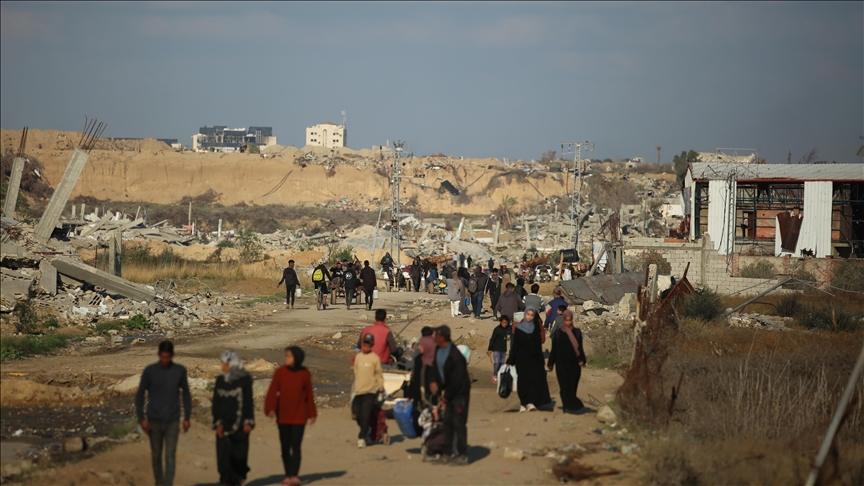
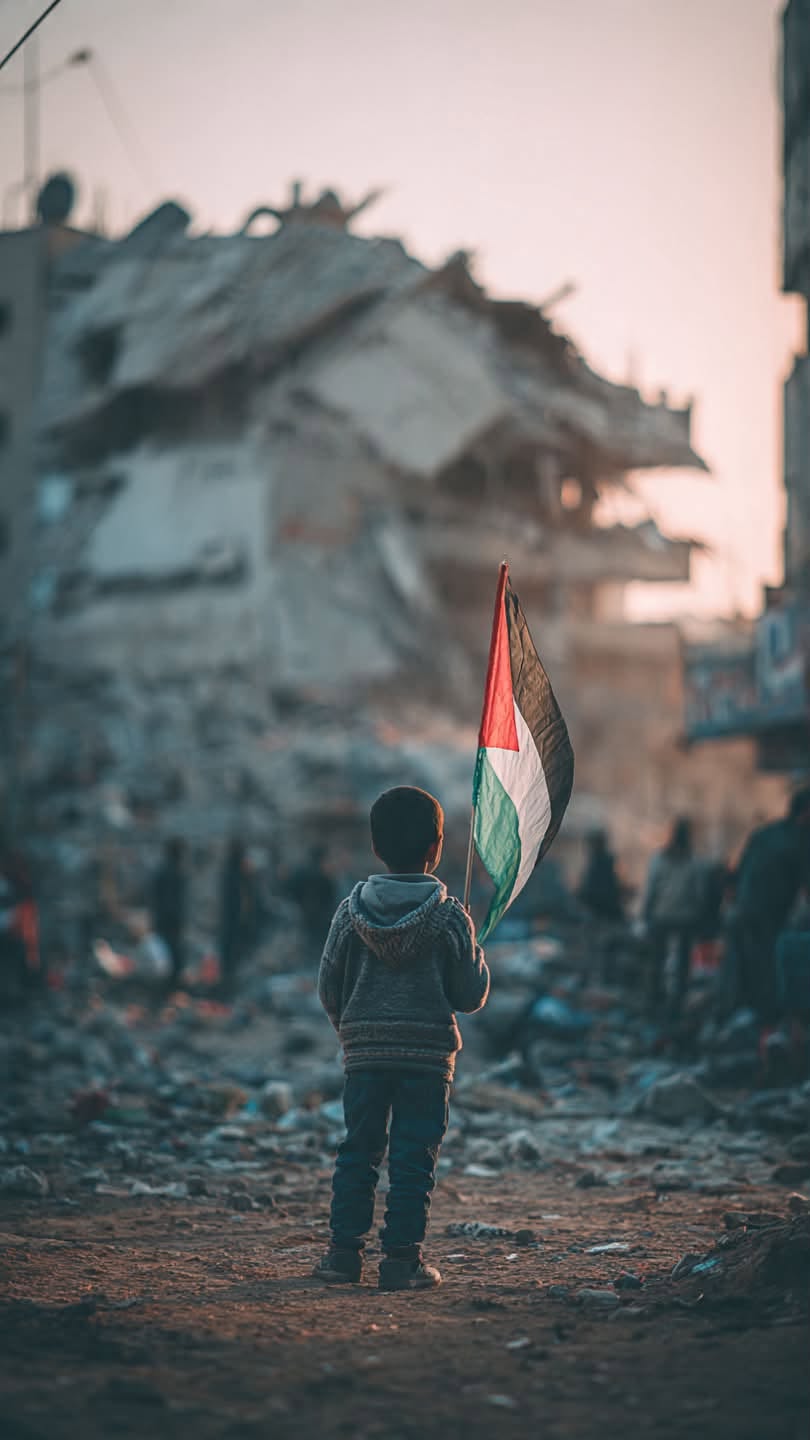
An immediate and effective regional and international effort must be launched to address the tragedies, killings, terror and destruction caused by the war on Gaza. Efforts must focus on providing shelter, treatment, and food for the people in Gaza, and we must work to implement plans to rebuild what was destroyed by the war.

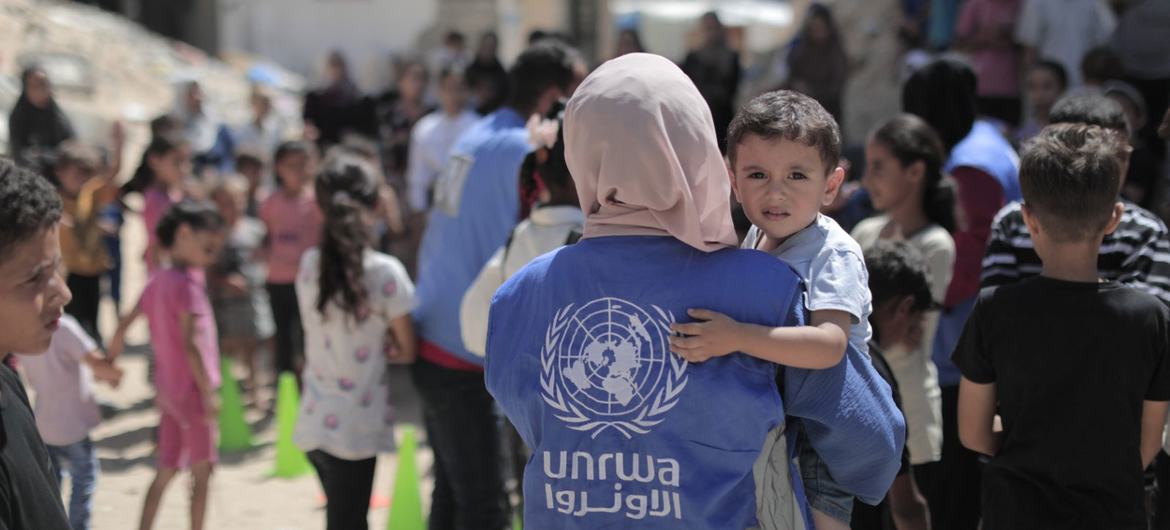
The humanitarian response in Gaza must continue. Jordan will continue to provide aid to Gaza by land and air. We also appreciate the efforts of our brothers and friends and their continued work alongside us to provide relief to Gazans.

My brothers,

The outcome of our summit must be practical steps to support our Palestinian brethren, support their steadfastness on their land, alleviate their suffering, and mobilise international efforts to stop everything that prevents the achievement of peace, which cannot be realised through military escalation, displacement of peoples, and denial of their rights.

Peace, God’s mercy and blessings be upon you.”

The Jordanian delegation at the Extraordinary Arab Summit included Prime Minister Jafar Hassan, Deputy Prime Minister and Foreign Minister Ayman Safadi, Director of the Office of His Majesty Alaa Batayneh, and Jordan’s Permanent Representative at the Arab League Amjad Adaileh.

Continue reading
Cairo Plans to Rebuild Gaza Without Displacing Palestinians

Egypt said Sunday that it has a “clear vision” regarding the reconstruction of the war-torn Gaza Strip without displacing Palestinians from the territory.

“The Egyptian efforts regarding Gaza are ongoing and will not stop with regard to implementing the specific requirements of the ceasefire agreement in its three stages,” Foreign Minister Badr Abdelatty told a news conference in Cairo with his Djiboutian counterpart Mahamoud Ali Youssouf.

“We have a clear vision for rebuilding the Gaza Strip without any citizen leaving his land,” he added.

Trump suggested last weekend that Palestinians in Gaza should be relocated to Egypt and Jordan, calling the enclave a “demolition site” after Israel’s war. His proposal, however, was vehemently rejected by Cairo and Amman.

A six-nation Arab ministerial meeting in Cairo on Saturday firmly rejected Palestinian displacement from Gaza and renewed calls for implementing a two-state solution to the Israeli-Palestinian conflict.

Trump’s proposal came after a ceasefire agreement took effect in Gaza on Jan. 19, suspending Israel’s genocidal war that has killed nearly 47,500 people, most of them women and children, and injured over 111,000 since Oct. 7, 2023.


Red Sea

The top Egyptian diplomat said there is no justification for military escalation in the Red Sea after the Gaza ceasefire.

“We stress the need to enhance the security of the Red Sea and freedom of maritime navigation, and we reject any military presence of any country that does not border the Red Sea,” he added.

Tension has begun to ease in the Red Sea after the Gaza ceasefire deal. During the Gaza war, Yemen’s Houthi group carried out drone and missile attacks on Israeli cargo ships or ones linked with Tel Aviv in the Red Sea in a show of support for the Palestinian enclave.

Egyptian President Abdel Fattah al-Sisi met early Sunday with the Djiboutian foreign minister to discuss bilateral cooperation and the latest developments in Somalia and the Red Sea region, the presidency said in a statement.

Tension escalated between Ethiopia and Somalia originated in January 2024, when Addis Ababa signed an agreement with Somalia’s breakaway region of Somaliland to use the Red Sea port of Berbera. Since then, Türkiye has actively mediated to ease tensions between the two nations.

Egypt and Ethiopia are already locked in a decade-long dispute over the construction of a dam project on the Nile River, which Cairo fears will drastically reduce its share from the Nile water. Ethiopia says that the dam is vital for its development process according to Anadolu.

Continue reading
Jordan Starts Humanitarian Airbridge to Gaza, 16 Flights Daily

The first batch of humanitarian aid, part of an air bridge that the Kingdom dispatched for Gaza earlier on Tuesday, arrived in the Strip later on the day.

The Jordan Armed Forces-Arab Army (JAF) on Tuesday announced that the Kingdom launched an eight-day air bridge with 16 flights daily to send assistance to Gaza.

During a conference at the King Abdullah II Air Base of the Royal Jordanian Air Force, JAF Media Director Brig. Gen. Mustafa Hiari said that the air bridge ensures the delivery of critical relief supplies to inaccessible areas, preventing spoilage or damage, according to an army statement.

Hiari highlighted that JAF was the first to execute humanitarian airdrops into Gaza, achieving the third-largest modern logistical supply operation.

To date, JAF has carried out 125 Jordanian airdrops, facilitated 266 airdrops by allied forces, and dispatched 53 aircraft to Gaza through Egypt’s El Arish Airport, he noted.

Hiari stressed that JAF continues humanitarian initiatives through the field hospitals in northern and southern Gaza.

He said that the hospitals have treated more than 370,000 patients since the start of the Israeli war on the besieged Strip on October 7, 2023, and fitted 296 advanced prosthetics under the “Restoring Hope” initiative.

Hiari pointed out that JAF completed infrastructure for a new field hospital specialising in obstetrics and neonatal care, noting that the hospital is staffed with 82 personnel, including 55 from the Royal Medical Services.

Also speaking at the conference, Minister of Government Communication Mohammad Momani said that, under Royal directives, 16 military aircraft carrying relief, food and medical supplies, totalling 20 tonnes, were sent to Gaza via Qarara crossing in central Gaza for distribution in the north and south of the Strip, in coordination with the World Food Programme (WFP).

He added that this initiative is part of Jordan’s ongoing efforts, directed by His Majesty King Abdullah, to alleviate the suffering of Palestinians in Gaza.

He also noted that two planes carrying aid from Italy and contributions from Greece and Malaysia are part of the relief effort.

Momani highlighted that Jordan was among the first countries to send aid and break the blockade on Gaza.

The minister added that Jordan’s national security relies on “steadfast support” for Palestinians’ presence on their land and the rejection of Israeli displacement policies.

He underscored that this stance aligns with Jordan’s strategic interests and its unwavering national and humanitarian principles.

Momani reiterated that regional peace can only be achieved by recognising the Palestinian people’s right to self-determination and the establishment of their independent state.

Also speaking at the conference, Secretary-General of the Jordan Hashemite Charity Organisation (JHCO) Hussein Shibli pointed out that Jordan had previously dispatched eight similar flights in late November, carrying seven tonnes of aid distributed by the WFP.

Shibli noted that 147 humanitarian convoys, comprising 5,569 trucks carrying around 82,000 tonnes of aid, have been sent to Gaza in cooperation with the JAF.

He stressed JHCO’s commitment to Royal directives, ensuring continued coordination with relevant sides to maintain the flow of humanitarian aid to Gaza according to The Jordan Times.

Continue reading
Calls to Displace Palestinians is a New Battle For Jordan

By Samih Maaitah

As Jordan has only just recovered from the aggression on Gaza and has seen some relief along its northern borders, the issue of displacement has resurfaced once again. This time, it arises either from Gaza, exploiting the humanitarian and political catastrophe it faces, or from the occupied West Bank, where Netanyahu’s most right-wing government continues to escalate security and military tensions.

From the beginning of the aggression on Gaza, Jordan understood that the goal was to displace its people. Alongside its Egyptian brothers and other Arab and international parties, Jordan worked to confront this scheme. Jordan is fully aware that displacement is not just about relocating Gaza’s residents to another country; it is about dismantling the Palestinian cause and undermining its major pillars. Amman is cognizant that Israel seeks a Palestine without Palestinians and, through displacement, it seeks to destroy the prospects for a Palestinian state and the right of return.

Jordan, which has already received millions of Palestinians and millions of others due to the region’s endless crises and wars, has paid a heavy price in terms of its limited resources and political stability. Each wave of migration—most recently from Syria—has come at a significant cost. Jordan is aware that accepting any number of people from Gaza or elsewhere is no longer acceptable or tolerable, especially given the political implications for Jordan’s demographic composition, its national identity, and the Palestinian national identity.

Logic dictates that after all these wars and acts of aggression, the world should seek to resolve the Palestinian issue by granting Palestinians their rights on their national soil. It should not seek solutions to address Israel’s so-called security concerns by emptying Palestinian land of its people and displacing them to other countries.

Jordanians will not accept any solution at the expense of their national identity, homeland, and state. Those who truly seek peace must understand that the path to peace lies in granting Palestinians their rights on their land, not through displacement or the illusion of peace based on a scheme that can only be described as a liquidation of the Palestinian cause.

The writer is a columnist in the Jordan Times

Continue reading
Trump Proposes Relocating Gazans to Jordan, Egypt

US President Donald Trump, Saturday, proposed relocating Palestinians from Gaza to neighboring countries like Egypt and Jordan. This is an unusual proposal that was opposed by the former administration of Joe Biden.

Speaking to reporters aboard Air Force One towards Miami, the president said he raised the matter during a telephone call with King Abdullah II of Jordan, and he might talk with Egyptian President Abdel-Fattah al-Sisi on Sunday.

“I said to him (Jordan’s king) that I’d love you to take on more because I’m looking at the whole Gaza Strip right now and it’s a mess, it’s a real mess,” said Trump. “I’d like him (Jordan’s king) to take people”.

“I’d like Egypt to take people. I’m talking to Gen. Al Sisi tomorrow sometime I believe. I’d like Egypt to take people. And I’d like Jordan to take people,” Trump continued.

“You’re talking about a million and a half people, and we just clean out that whole thing. You know over the centuries it’s had many, many conflicts. And I don’t know, something has to happen,” he added.

Describing Gaza as “a demolition site,” the US president said: “Almost everything is demolished and people are dying there. So l’d rather get involved with some of the Arab nations and build housing at a different location where they can maybe live in peace for a change.”

He added that the move “could be temporary or could be long-term.”

The Biden administration opposed relocating Gaza residents outside the enclave, advocating a return of Gazans to their homes in the aftermath of a potential peace and a two-state solution.

Israel’s genocidal war has killed more than 47,000 Palestinians, most of them women and children, and injured over 111,000 since Oct. 7, 2023.

Since Jan. 19, a ceasefire is in place to bring respite to civilians in the Palestinian enclave, but Trump said last week he is not confident that the truce will hold.

“It’s not our war. It’s their war. I think they are very weakened on the other side,” Trump told reporters in the Oval Office. “I looked at a picture of Gaza. Gaza is like a massive demolition site. That place is. … It’s really got to be rebuilt in a different way,” he said.

“Gaza is interesting. It’s a phenomenal location on the sea, best weather, you know, everything’s good. It’s like some beautiful things could be done with it, but it’s very interesting, but some fantastic things could be done with Gaza,” Trump added according to Anadolu.

Continue reading