Calls to Displace Palestinians is a New Battle For Jordan

By Samih Maaitah

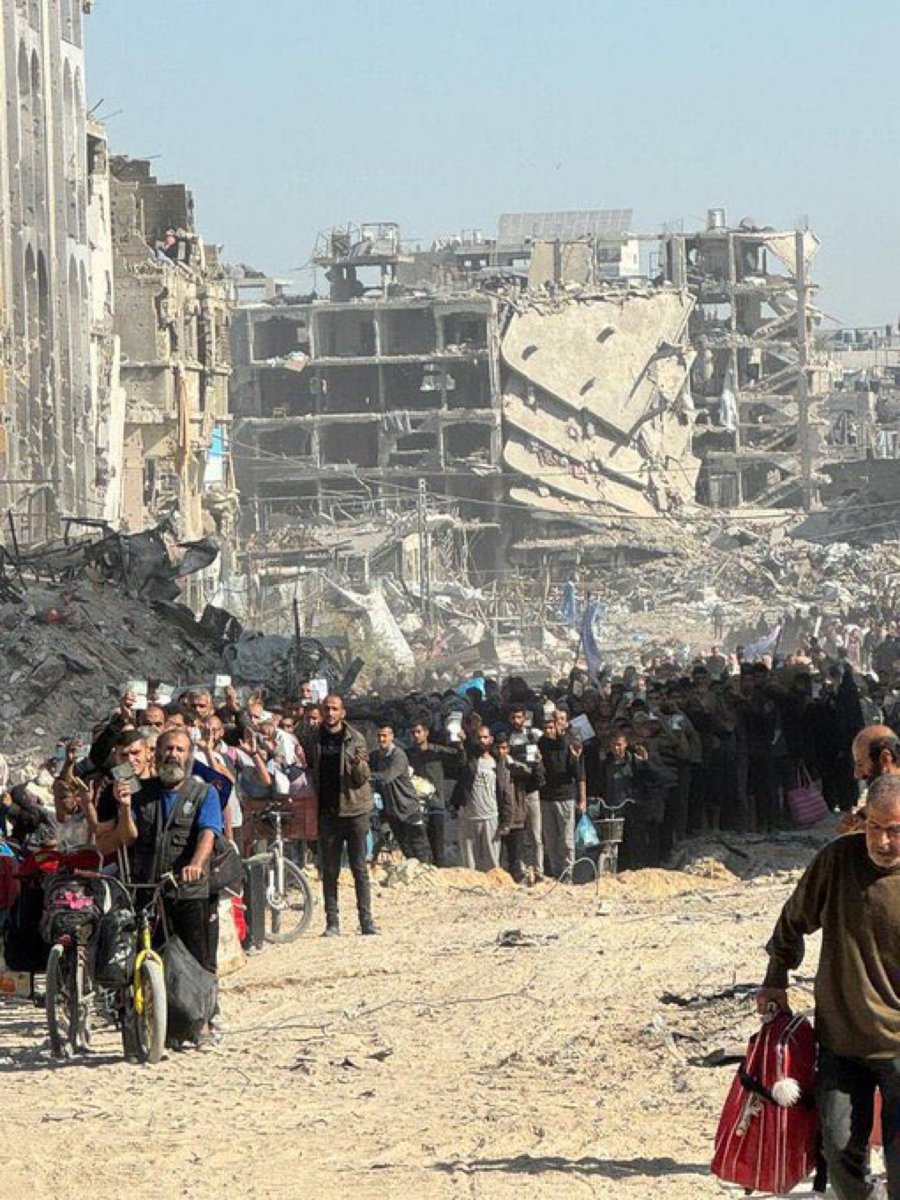
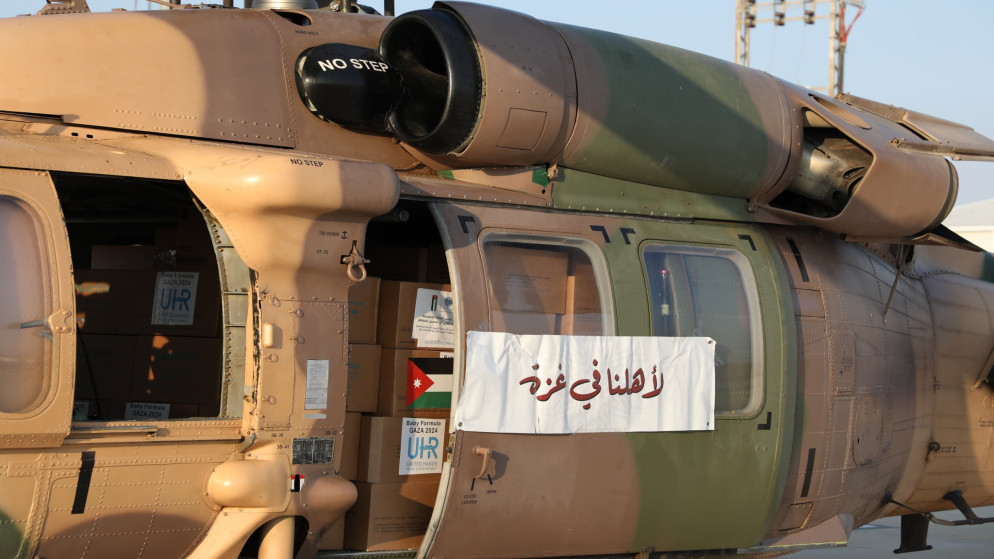
As Jordan has only just recovered from the aggression on Gaza and has seen some relief along its northern borders, the issue of displacement has resurfaced once again. This time, it arises either from Gaza, exploiting the humanitarian and political catastrophe it faces, or from the occupied West Bank, where Netanyahu’s most right-wing government continues to escalate security and military tensions.

From the beginning of the aggression on Gaza, Jordan understood that the goal was to displace its people. Alongside its Egyptian brothers and other Arab and international parties, Jordan worked to confront this scheme. Jordan is fully aware that displacement is not just about relocating Gaza’s residents to another country; it is about dismantling the Palestinian cause and undermining its major pillars. Amman is cognizant that Israel seeks a Palestine without Palestinians and, through displacement, it seeks to destroy the prospects for a Palestinian state and the right of return.

Jordan, which has already received millions of Palestinians and millions of others due to the region’s endless crises and wars, has paid a heavy price in terms of its limited resources and political stability. Each wave of migration—most recently from Syria—has come at a significant cost. Jordan is aware that accepting any number of people from Gaza or elsewhere is no longer acceptable or tolerable, especially given the political implications for Jordan’s demographic composition, its national identity, and the Palestinian national identity.

Logic dictates that after all these wars and acts of aggression, the world should seek to resolve the Palestinian issue by granting Palestinians their rights on their national soil. It should not seek solutions to address Israel’s so-called security concerns by emptying Palestinian land of its people and displacing them to other countries.

Jordanians will not accept any solution at the expense of their national identity, homeland, and state. Those who truly seek peace must understand that the path to peace lies in granting Palestinians their rights on their land, not through displacement or the illusion of peace based on a scheme that can only be described as a liquidation of the Palestinian cause.

The writer is a columnist in the Jordan Times

Continue reading
Trump Proposes Relocating Gazans to Jordan, Egypt

US President Donald Trump, Saturday, proposed relocating Palestinians from Gaza to neighboring countries like Egypt and Jordan. This is an unusual proposal that was opposed by the former administration of Joe Biden.

Speaking to reporters aboard Air Force One towards Miami, the president said he raised the matter during a telephone call with King Abdullah II of Jordan, and he might talk with Egyptian President Abdel-Fattah al-Sisi on Sunday.

“I said to him (Jordan’s king) that I’d love you to take on more because I’m looking at the whole Gaza Strip right now and it’s a mess, it’s a real mess,” said Trump. “I’d like him (Jordan’s king) to take people”.

“I’d like Egypt to take people. I’m talking to Gen. Al Sisi tomorrow sometime I believe. I’d like Egypt to take people. And I’d like Jordan to take people,” Trump continued.

“You’re talking about a million and a half people, and we just clean out that whole thing. You know over the centuries it’s had many, many conflicts. And I don’t know, something has to happen,” he added.

Describing Gaza as “a demolition site,” the US president said: “Almost everything is demolished and people are dying there. So l’d rather get involved with some of the Arab nations and build housing at a different location where they can maybe live in peace for a change.”

He added that the move “could be temporary or could be long-term.”

The Biden administration opposed relocating Gaza residents outside the enclave, advocating a return of Gazans to their homes in the aftermath of a potential peace and a two-state solution.

Israel’s genocidal war has killed more than 47,000 Palestinians, most of them women and children, and injured over 111,000 since Oct. 7, 2023.

Since Jan. 19, a ceasefire is in place to bring respite to civilians in the Palestinian enclave, but Trump said last week he is not confident that the truce will hold.

“It’s not our war. It’s their war. I think they are very weakened on the other side,” Trump told reporters in the Oval Office. “I looked at a picture of Gaza. Gaza is like a massive demolition site. That place is. … It’s really got to be rebuilt in a different way,” he said.

“Gaza is interesting. It’s a phenomenal location on the sea, best weather, you know, everything’s good. It’s like some beautiful things could be done with it, but it’s very interesting, but some fantastic things could be done with Gaza,” Trump added according to Anadolu.

Continue reading
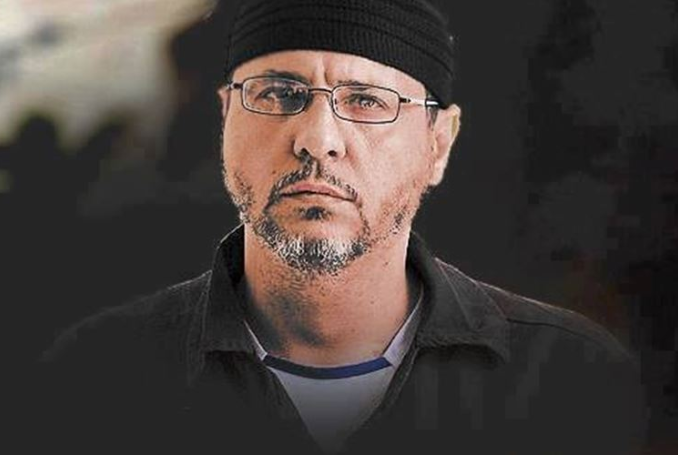
Profile: Meet ‘Prince of Shadows’ Abdullah Barghouti

Nicknamed “the Prince of Shadows” Abdullah Barghouti is the Palestinian political prisoner with the most number of life sentences ever given to a single detainee.

A former leader of the Hamas’ al-Qassam brigade’s armed wing, in the West Bank, he now appears to be on the verge of release in the Hamas-Israel prisoner exchange. 

Born in Kuwait in 1972, Abdullah Barghouti grew up outside of occupied Palestine, despite his family having originated from the village of Beit Rima, located near Ramallah. Barghouti attended school, up until high school in Kuwait.

Upon the eruption of the first Intifada in the occupied Palestinian territories, in 1987, Barghouti recounted in his memoir that the uprising had inspired him to seek revenge against the occupiers, especially after Israeli forces murdered one of his cousins and youngest uncle. “Simply put, they threw stones at the Zionist occupation forces that were wreaking havoc, so they were shot and martyred” he stated.

During the first Gulf War (1990-1991), Abdullah Barghouti was reportedly arrested for around a month after being accused of participating in the fight against US forces, later being released after the war. Prior to this, Barghouti had decided to pursue the combat sport of Judo and was trained by a man named Munir Samik who was also Palestinian.

Samik once asked Barghouti: “Aren’t you Palestinian? Don’t you want to liberate your country? If you use it against all those who occupied your homeland, there in Palestine, use what you learned here.” Inspired to make himself physically strong and capable of fighting Israel, he then began training in the use of firearms and explosives in the Kuwaiti desert. During the war, Barghouti’s family was forced to flee to Jordan.

When he traveled to live in Amman, Jordan, he would finish high school there but due to his family being too poor to afford University, so he would borrow money from a relative in order to open up a mechanic shop, continuing to practice Judo as a hobby. However, he wasn’t able to earn enough money to keep his business afloat and pay back his relatives and decided to move abroad in order to pursue higher education instead. 

A friend of Barghouti had recommended he apply for a visa program to travel to South Korea, which ended up leading him there in pursuit of an education. When he arrived, he had no money and little but the clothes on his back.

Barghouti walked from the airport to a location that was supposed to help him secure an education; his journey would take three days during which he went without eating. He recalled that he drank water from public parks until reaching the address he had been given, finding out that it was a wood-cutting factory. 

So, without any money or prospects, he ended up working at the factory for 45 days without having money to buy food, eating only from what the factory would supply him.

In 1991, after a few months in the wood-cutting factory, he moved to work in a mechanical factory and studied in parallel with his work at an engineering institute, specializing in electromechanics. This was also the time during which he would meet his wife, who was of Korean origin.

However, his passion for seeking the liberation of Palestine through armed struggle would not perish while he lived in South Korea, as he would routinely go deep into the forest and practice making improvised explosive devices and refining his craft. In 1998 he would then return to Amman with his wife, before deciding to divorce her due to his desire to have children.

Around this time he started becoming more religious, moved to Jerusalem and then the West Bank, married a Palestinian wife, and settled down in his family’s village of Beit Rima. He later had two daughters, Safaa and Tala, and a son called Osama.

It just so happened that in 2001, Beit Rima would be the first area in the West Bank that would experience a full-scale military invasion during the Second Intifada. Israeli forces deployed tanks, attack helicopters, and a huge military force to the village.

Abdullah Barghouti joined the Qassam Brigades in 2001, seeking out his cousin Bilal Barghouti in order to share his expertise in bomb-making.

After his cousin, who is currently serving 16 life sentences in Israeli military prison, witnessed how skilled he was at engineering explosives, he told his superiors in the Hamas military wing and Abdullah Barghouti would begin military training in the Nablus area, going on to become a commander of the Qassam Brigades in the West Bank.

This entire time, almost nobody close to him knew of his secret ambition to seek revenge against Israel and his bomb-making skills. He would later go on to participate in the manufacturing of explosives that killed 66 Israelis and injured over 500.

When he was eventually tracked down in 2003 and arrested by the Israeli occupation forces, he was interrogated and tortured for over five months, before being handed 67 life sentences, amounting to 5,200 years in prison. In later interviews recorded with Barghouti from inside an Israeli prison, he would confidently state that one day interviewers would come to meet him while he sits inside a hot tub in Ramallah.

If he is to be released during the upcoming Hamas-Israel prisoner exchange, it is likely that Israel will request his deportation outside of occupied Palestine. It is speculated that Barghouti could be useful to Hamas in developing its influence in the armed struggle inside the West Bank, which is currently dominated by Palestinian Islamic Jihad (PIJ) and Fatah-aligned fighters.

(The Palestine Chronicle)

– Robert Inlakesh is a journalist, writer, and documentary filmmaker. He focuses on the Middle East, specializing in Palestine. He contributed this article to The Palestine Chronicle.

Continue reading
‘New’ Syria: What Next For The Region

The swift fall of several Syrian cities, with little to no resistance from the Syrian regime or its allies, especially Russia, has drawn significant attention. Moscow’s inaction to prevent these rapid territorial advances underscores the shifting dynamics of the Syrian conflict.

Several factors must be considered to assess this new phase in Syria. The current developments are not merely a continuation of the initial Syrian conflict but reflect broader regional implications in the post-October 7 landscape. Israel’s strategy of “fragmenting fronts” as a counter to the concept of their unity has rendered Syria’s geographic arena an inevitable next focus. Although Syria has long been targeted by airstrikes, missile attacks, and assassinations, the current escalation coincides with the temporary pause in the conflict in Lebanon.

Syria’s geography serves as the logistical backbone for Iranian-aligned forces, including Hezbollah, making it a critical component in the regional equation. The ignition of the Syrian front aligns with Israel’s objective to disrupt the logistical corridor connecting Tehran and Beirut and secure its own strategic perimeter. 

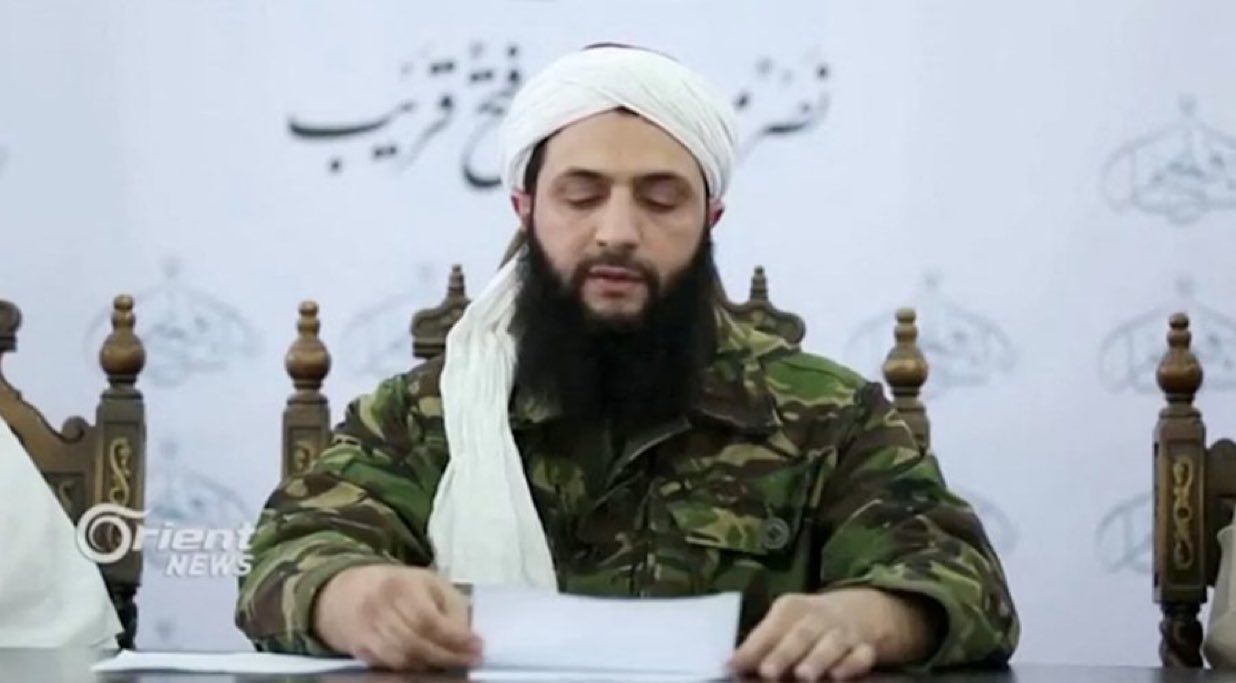
This latest shift on the ground in Syria complicates an already intricate situation. Multiple factions are mobilizing to defend their interests or expand their influence amid signs of a redrawn Syrian map. Notably, Abu Mohammad al-Jolani, former leader of Hay’at Tahrir al-Sham, has garnered attention by rebranding himself under his real name, Ahmad Hussein al-Sharaa. In interviews with CNN and The New York Times, Jolani emphasized the dissolution of HTS, presenting himself as a political figure capable of engaging with international stakeholders rather than as the leader of a proscribed militant group.

Militarily, the rapid advances of fighters from Aleppo to Hama signal a looming confrontation in Homs, a pivotal city in the Syrian conflict. Homs’ strategic location connects the Syrian coast with Damascus and borders Lebanon, serving as Hezbollah’s last operational lifeline. With the cessation of hostilities in Lebanon, Hezbollah faces the challenge of regrouping for what could be an existential battle. Losing this confrontation would strip Hezbollah of its regional power and relegate it to a vulnerable position within Lebanon.

The speed of these territorial shifts reflects not only the weakened state of the Syrian army but also the neutralization of its allies. Iran, once expected to be a key supporter of both Hezbollah and the Syrian regime, finds itself constrained by a U.S.-Israeli-led blockade encompassing land, sea, and air routes. Russia, on the other hand, has displayed a largely indifferent stance, underscoring its limited capacity or willingness to intervene. The sole remaining card for Iran is the deployment of Iraqi militias to Syria, though these forces are now targets of intensified American and Israeli strikes, further diminishing Tehran’s ability to influence the battlefield. 

Israel, meanwhile, continues its strategy of reshaping regional security dynamics. After Gaza and Lebanon, it is now turning its focus to Syria. By leveraging the current chaos, Tel Aviv is positioning itself to establish new buffer zones deep inside Syrian territory, using the ongoing conflict to justify pre-emptive strikes on perceived threats.

Amid these developments, Jordan faces significant challenges along its borders with Syria and Iraq. The prolonged instability and the emergence of new players in the Syrian theatre require Jordan to maintain heightened vigilance. To mitigate potential threats, Amman must strengthen its military alliances and adopt proactive security measures. These strategies are necessary for the unpredictability of this phase and the diverse range of threats encircling Jordan’s borders.

Dr Amer Al Sabaileh is a university lecturer and a columnist for The Jordan Times

Continue reading
Rabieh Assault is a Terrorist Attack – Spokesman Momani

Jordan’s Government Spokesman Mohammad Momani issued a strong condemnation, Sunday, of the armed assault against security forces in Amman’s Rabieh, categorizing it as a terrorist attack against officers in the line of duty, according to Petra.

The attack was near the Israeli Embassy in the Rabieh district that occurred in the early hours of Sunday morning.

Momani emphasized that Jordan’s security and stability remain an inviolable red line. “Any attempt to compromise national security or target our security personnel will be met with absolute resolve and the full extent of the law,” the minister declared, adding that perpetrators would face decisive legal consequences.

He revealed the assailant had prior criminal records involving drugs, stressing such actions stand universally condemned by the Jordanian public.

Addressing broader implications, Momani emphasized Jordan’s pivotal regional role, particularly in supporting Palestinian interests, noting that national security remains fundamental to these responsibilities.

The minister confirmed that investigations are proceeding to establish all relevant details and connections, with appropriate security and legal measures to follow based on the findings according to the Jordan news agency.

Shootout

Earlier Petra stated the  gunman who opened fire on a police patrol was killed in a shootout with security forces, the Public Security Directorate (PSD) reported.

According to a PSD statement, the incident unfolded after the suspect opened fire on a police patrol. Responding security units located the armed individual, who attempted to flee the scene.

The suspect subsequently engaged in a firefight with pursuing officers, prompting security forces to return fire in accordance with engagement protocols. The exchange resulted in the suspect’s death.

Three officers were injured during the operation and were transported to the hospital. Their condition is reported to be moderate. Investigations into the incident are ongoing.

Continue reading