Trump’s Plan: ‘Unrealistic’, ‘Imaginary’, ‘Political Tricks, ‘Unfeasible’

Israeli newspapers are frowning on statements made by US President Donald Trump about displacing Palestinians from the Gaza Strip to neighboring countries such as Egypt and Jordan. Articles are appearing criticizing the plan as unrealistic, stating the Palestinians will not leave their land, and the Trump statements are mere “political tricks” without any real plan of action.

Not Realistic

Political analyst Avi Issacharoff confirmed the Palestinians wholehearted rejection of the plan and the continued control of Hamas over Gaza make Trump’s statements inapplicable on the ground.

The writer in Yedioth Ahronoth wrote: “Trump’s statements about displacing Palestinians sparked the imagination of a large number of Israelis. After 7 October, many wanted to see Gaza disappear and its residents leave for it to turn into a prosperous American Riviera. But the only problem is that this is not realistic.”

He believed the ideas made by Trump may merely be a political maneuver or a negotiating step with Hamas, but he stressed it “is not a real plan of action, because there is no Arab entity willing to cooperate with it, including the moderate Arab countries that strongly oppose it.”

He explained Arab countries such as Egypt and Jordan, while receiving American aid, are more concerned about the influx of Palestinian refugees into their territories whilst Saudi Arabia and the United Arab Emirates have also expressed their opposition to the idea.

Historical Wound

As for the Palestinian side, Issacharoff stressed no Palestinian party could agree to a displacement plan, noting the idea of ​​mass departure is linked in Palestinian memory to the 1948 Nakba, which remains a historical wound.

The political analyst also warned of the repercussions of the displacement plan, as it could strengthen extremism within Israel and hinder ongoing efforts to complete any deal. He said, “There is doubt Trump’s statements will lead to the release of prisoners, but…hasten the resumption of fighting, which will condemn Israel to more months of war in Gaza.”

He added: “As long as there is no alternative to Hamas, any military operations will only lead to more destruction and killing, without achieving the desired goal of its collapse Hamas. The result will be more Israeli casualties and the continuation of the war without a clear political horizon.”

No Deportation From Gaza

He concluded by stressing “flattening Gaza and deporting its residents is an unfeasible dream, and is merely a gimmick by an American president seeking to prove his superiority over others.” He added Hamas still controls the Gaza Strip, and no one threatens its existence.

For his part, Israeli analyst Uri Misgav told Haaretz: There will be no “deportation” from Gaza, and the Americans will not build a “Riviera” there. There is no plan, no preparatory work, no point, and no one will receive two million Palestinians on their land. We are not in the days of World War II. Trump is babbling meaninglessly, this is his style. He has suggested in the past building hotels in North Korea instead of nuclear missiles. Since his election, he has talked about invading Panama, seizing Greenland, and annexing Canada. We are old enough to remember how he once said during a meeting with Netanyahu about annexing the West Bank to Israel.

Experts Continuous Media Bombardment with Empty Speech

“It is insulting to intelligence to take Trump’s random statements seriously,” Misgav told Haaretz. “He is completely mentally unstable, and we live in an era of accelerating decline. It is true that Netanyahu is also a psychopath with no conscience, but he is not stupid. Even he froze in discomfort when Trump began raving about evacuating Gaza, while Netanyahu lavished embarrassing praise on him.”

“It is sad to see large parts of the Israeli media cooperating with this farce, and engaging in discussions at the level of a seventh-grade social studies lesson, about deportation – for or against. Even before the moral dimension, this basically reflects superficiality and intellectual laziness. They are very easy to manipulate. And here Trump and Netanyahu are already experts in “continuous media bombardment with empty talk about things that will never happen – tomorrow, Trump will not even remember what he was talking about.”

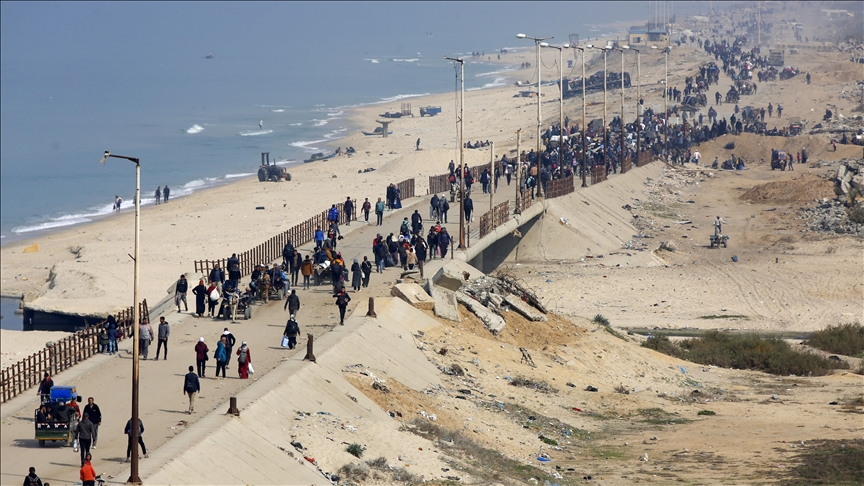
On the other hand, the Times of Israel newspaper ruled out the possibility of Trump’s plan being implemented in the near future, as the residents of Gaza, who survived 15 months of violent Israeli attacks, do not want to live in exile, and Trump will not send American forces to force some two million Palestinians to leave the Strip.

Egypt and Jordan will also not agree to the plan, despite Trump’s confidence that their dependence on American aid and military support gives him enough leverage to pressure them to accept large numbers of Gazan refugees. But this plan crosses the red lines of both countries.

Great Concern in Jordan

The newspaper indicated that Trump’s plan could raise great concerns in Jordan, as it already has a majority population of Palestinian origin, so the influx of hundreds of thousands of Gazan refugees could destabilize the country, which is already facing internal political challenges.

On the other hand, Egypt sees the influx of large numbers of Palestinians from the Gaza Strip as an existential threat to its own national security.

The newspaper reported that there are many issues on which Trump and Netanyahu can cooperate, such as ending the Iranian nuclear program, strengthening Israel’s regional position, and confronting international institutions such as the International Court of Justice and some UN agencies. Therefore, wasting political efforts on Trump’s plan for Gaza may not be the best option.

In the same context, a report broadcast by Israel’s Channel 12 stated that Trump’s plan to evacuate the residents of Gaza and place it under American control faces legal, security, and economic obstacles, and could lead to a long-term war in the Middle East.

War Crime

The report quoted international law experts warning that the mass displacement of Palestinians could constitute a “war crime” under the Geneva Conventions, sparking widespread international criticism.

The channel indicated that the cost of implementing the plan could reach tens of billions of dollars, which sparked objections even within the Republican Party, as some refuse to fund a project of this size. The plan also met with widespread opposition within the United States, as Democrats considered it a violation of international law.

As for the American Wall Street Journal, it said that Trump’s proposal regarding control of Gaza “stunned his allies and Middle East experts, and left many questions unanswered.”

The newspaper added that “any American military deployment of this kind would be long-term, something Trump has repeatedly condemned,” expressing its belief that the proposal “would be met with rejection in the Arab world.”

For its part, the American Time magazine said that Trump’s proposal “was met with sharp criticism,” noting that “some Democrats described the proposal as crazy and morally inappropriate.”

The magazine indicated that Democratic Representative Rashida Tlaib condemned the plan and considered it a purge Ethnically, “while Netanyahu expressed interest in the idea and saw that it was worth studying.”

Finally, the American Foreign Policy said that what President Trump is planning for Gaza “will be a disaster for everyone, especially Jordan, which takes the president’s talk about the forced displacement of Gaza residents very seriously.”

The magazine concluded by saying that what Trump does not know “is the extent of the damage that will be inflicted on American interests if Jordan is exposed to any disturbances as a result of his plans,” as reported by the Shihab news agency.
Continue reading
Norway FM Snubs Netanyahu, Says Palestine is Homeland of Palestinian People

Norway on Friday rejected Israel’s argument that countries opposed to its actions in Gaza should take in displaced Palestinians, stressing that the forced transfer of civilians is prohibited under international law.

In response to an Anadolu email, Norway’s Deputy Foreign Minister Andreas Kravik noted that Palestine is the homeland of the Palestinian people.

“The Palestinian people have a fundamental, independent right to self-determination and their own state,” he said, adding that this was the basis for the UN Partition Plan in 1947, after which Israel was recognized by Norway and a number of other countries in 1949.

Kravik added that this stance on Palestinian self-affirmation is confirmed in several UN resolutions as well as the International Court of Justice (ICJ).

Israeli Defense Minister Israel Katz on Thursday said nations such as Spain, Ireland, Norway, and others, which he alleged have made “false accusations and claims against Israel for their actions in Gaza,” are legally obliged to allow Gazans to enter their territory. The three countries recognized the state of Palestine last May, and have criticized Israel’s war on the enclave.

But Kravik rejoined: “The forced transfer of civilians from occupied territories to other countries is prohibited under international law.”

Spain and Ireland also criticized Katz’s controversial comment, stressing that the objective must be the safe return of the people of Palestine to their homes.

The controversy follows US President Donald Trump’s widely condemned remarks that the “US will take over the Gaza Strip” advocating a permanent resettlement of Palestinians outside Gaza.

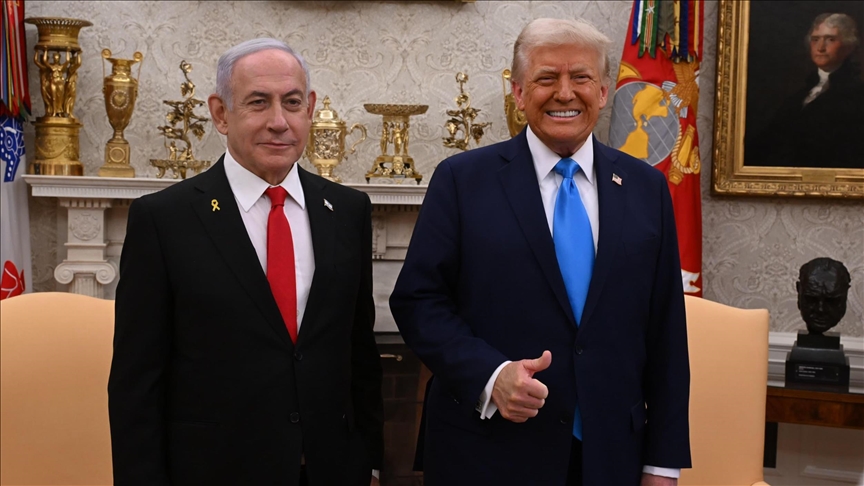
“The US will take over the Gaza Strip, and we will do a job with it too,” he told a news conference with Israeli Prime Minister Benjamin Netanyahu.

Forcibly displacing a population without justification under international law constitutes a war crime under the Rome Statute of the International Criminal Court.

A Gaza ceasefire and prisoner exchange agreement took effect on Jan. 19, suspending Israel’s genocidal war on the enclave that has killed over 47,000 Palestinians – mostly women and children – and injured over 111,000 since Oct. 7, 2023.

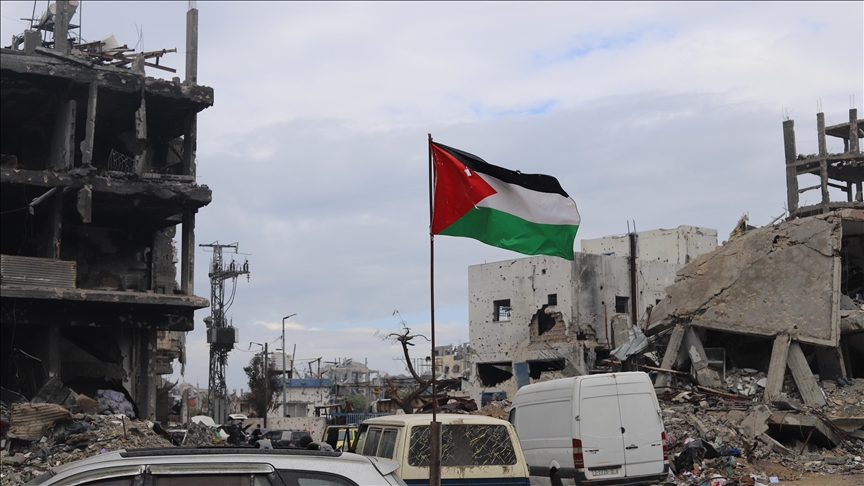
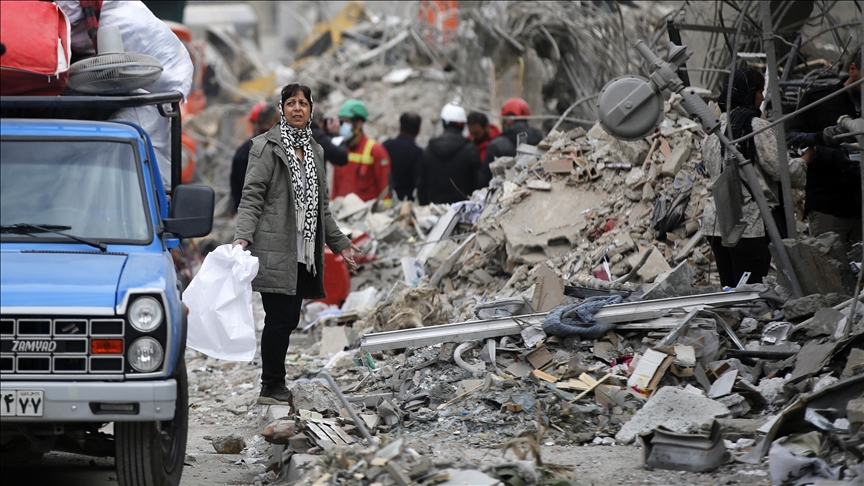
Israel’s war on Gaza has left the besieged enclave in ruins, with half of its housing damaged or destroyed and nearly 2 million people displaced amid severe shortages of sanitation, medical supplies, food, and clean water.

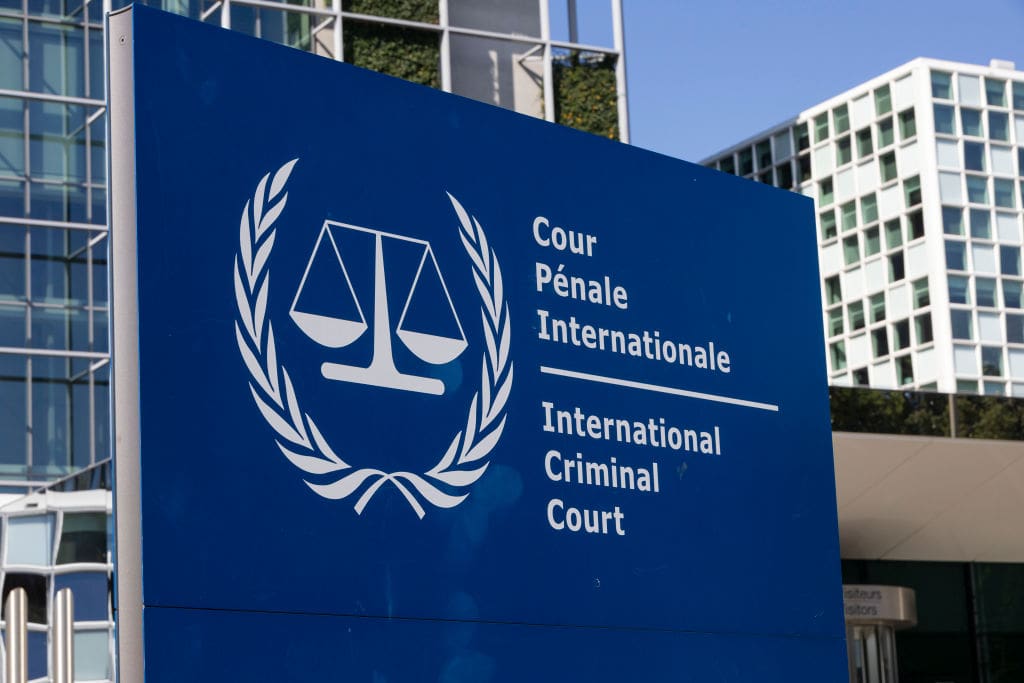
In November, the International Criminal Court (ICC) issued arrest warrants for Israeli Prime Minister Benjamin Netanyahu and former Defense Minister Yoav Gallant, citing war crimes and crimes against humanity in Gaza. Separately, Israel faces a genocide case at the International Court of Justice.

Continue reading
Trump’s ICC Betrayal

Amnesty International on Friday criticized US President Donald Trump’s executive order imposing sanctions on the ICC after it issued arrest warrants for Netanyahu and his former minister Galant, saying it “betrays” the international justice system. In a statement, Agnes Callamard, secretary general of the rights group based in the UK, said the sanctions suggest Trump endorses the Israeli government’s crimes and is embracing impunity. “This reckless action sends the message that Israel is above the law and the universal principles of international justice,” she added.

Continue reading
Trump, Gaza and The New Political Ploy


Dr Sami Al-Arian

The infamous 19th-century imperialist and racial supremacist, Cecil Rhodes, once remarked: “It is our duty to seize every opportunity to acquire more territory and we should keep this one idea steadily before our eyes that more territory simply means more of the Anglo-Saxon race.” He then added: “Just fancy those parts that are at present inhabited by the most despicable specimens of human beings, what an alteration there would be if they were brought under Anglo-Saxon influence.”

More than a century later, US President Donald Trump expressed similar attitudes during his meeting on Feb. 4, with the Israeli prime minister and indicted war criminal Benjamin Netanyahu, when he said: “We will take over the Gaza Strip, will own it long-term and will redevelop it … I do see a long-term ownership position.” In a settler-colonialist spirit, Trump callously continued, “I don’t think people should be going back to Gaza. I think that Gaza is not a place for people to be living.” He neglected to mention, of course, the exception for Jewish settlers in prime real estate along the Gaza beach. He then added, “They’re living in hell,” without any hint of irony, considering the 15-month US-sponsored genocide, supported by funds, bombs, and diplomatic protection.

Strategic agenda and regional dynamics

There were many items on the agenda between Trump and Netanyahu, including Iran’s nuclear program, the future of Gaza and the West Bank, and normalization with Saudi Arabia.

To be sure, Trump was not an unknown quantity. In his first term, he demonstrated total hostility towards the Palestinians and embraced the most radical positions espoused by extremist Zionists. These included recognizing Jerusalem as Israel’s capital and relocating the US Embassy there, the annexation of the Syrian Golan Heights (occupied by Israel since 1967), the closure of the Palestine Liberation Organization (PLO) office in Washington, DC, ending all humanitarian aid to the Palestinians through the UN refugee agency (UNRWA) or US agencies, and integrating Israel within US Central Command (CENTCOM), the US military command responsible for a region stretching from Egypt to Afghanistan.

Furthermore, throughout his presidency Trump completely disregarded the so-called two-state solution — a long-touted US goal — in favor of Netanyahu’s approach of normalizing relations with Washington’s Arab client regimes while pursuing an aggressive settlement expansion policy intended to establish a de facto Greater Israel. In effect, it appears that “Trump 2.0” is trying, in his own way, to fulfill his promises of securing a greater Israel for his right-wing Zionist donors [1], benefactors [2] and appointees [3]. The proposal to forcefully remove over 2 million Palestinians from Gaza does not appear serious or achievable, since the Palestinians will never cooperate in their own displacement, nor would neighboring countries be willing to support a dangerous plan that would destabilize the region. In the past, Trump proposed similar hyperbolic ideas that failed to materialize, including his calls [4] for constructing a Riviera on the beaches of North Korea.

Netanyahu came to the White House with several objectives in mind. He sought Trump’s support to continue his war of extermination in Gaza after freeing many Israeli captives at the end of the first stage of the ceasefire deal. His political allies pressured him to resume the war in order to achieve his elusive objective of dislodging Hamas and eradicating the resistance — an aim he has not accomplished during the 15-month onslaught. It would appear that Trump wants to achieve this goal using political means through his outrageous proposal rather than through military pressure. If that is the case, this would be Trump’s way of handing Netanyahu the fig leaf he needs to silence his hard right critics and conclude the second stage of the ceasefire deal.

On Iran, Trump has doubled down on his policy of applying extreme pressure through economic sanctions in order to get the Iranians to negotiate a deal on their nuclear program. In return, the Iranian Foreign Minister Abbas Araghchi has called [5] for “maximum wisdom” to be applied to relations between Washington and Tehran, instead of the “maximum pressure” policy Trump has espoused. Since these are the early stages of diplomatic maneuverings, it’s very doubtful that Netanyahu received a green light from Trump to use military strikes against Iran in the near term.

On the West Bank, the Zionist regime has been escalating its aggressive settlement policy as well as its unprecedented attacks on several Palestinian cities, particularly against refugee camps in Jenin, Nablus, Tobas and Tulkarem.

Towards a Saudi-Israeli accord and its fallout

In the past, Trump and many of his administration officials, such as the new US ambassador to the Zionist regime, Mike Huckabee, have endorsed the expansion of Israeli settlements and the calls for annexing large parts of the West Bank. But backing such a policy now will certainly impede the central piece of Trump’s main objective in the region, which is to conclude a normalization deal with Saudi Arabia. To negotiate a deal with the Saudis, Trump must rein in Netanyahu and his extremist allies by promising them what they desire most: a Gaza free not only of Hamas’ rule but also of Palestinians, as well as the annexation of a large part of the West Bank, in exchange for a normalization deal with the Saudis and possibly beyond.

The Israelis certainly know that they will not get the Palestinians to leave voluntarily when they could not compel them to do that through their genocidal war. They recognize that they cannot unilaterally annex parts of the West Bank before the normalization deal with the Saudis is concluded. They also know that Trump has a very long agenda, both domestically and internationally, particularly with regard to the Ukraine war and China, and will not allow a devastating war with Iran to disrupt his agenda. Once the fog of the visit clears, it will become apparent that Trump’s primary policy in the Middle East is to cement a Saudi-Israeli agreement, one that cannot be finalized without putting a hold on other contentious issues such as a military escalation with Iran, West Bank annexation, or the resumption of the Gaza genocide. But that does not mean that the Zionist regime and its supporters within the Trump administration will not push hard to achieve all their objectives in Gaza, the West Bank and against Iran. Regardless, the Palestinians and their supporters worldwide must be vigilant to resist and defeat all their nefarious plans, particularly in Gaza, the West Bank, as well as any plans to integrate a genocidal regime in the region.

People across the Middle East have witnessed the true colors of the Zionist regime. Achieving a normalization deal with the Saudis or any other party would require nothing less than the total erasure of their collective memory. It would appear that the main lesson of the Oct. 7 attacks has not been learned. They took place at a time when regional and international actors had all but buried the Palestinian cause and ignored the plight of the Palestinians in pursuit of their own interests. Not only will none of the policies advanced by Trump address these issues, but they will exacerbate them. And thus, like his forgotten deal of the century, these policies are doomed to fail.

[1] https://www.nytimes.com/2024/06/25/us/politics/miriam-adelson-trump-israel.html

[2] https://www.thejc.com/news/usa/from-jared-kushner-to-miriam-adelson-meet-the-jewish-figures-in-trumps-inner-circle-sllz2ky1

[3] https://www.palestinechronicle.com/from-stefanik-to-hucabee-donald-trumps-cabinet-is-a-pro-israel-swamp/

[4] https://www.youtube.com/watch?v=P-iTikGb-CY

[5] https://www.thenationalnews.com/news/mena/2025/02/06/irans-foreign-minister-calls-for-maximum-wisdom-in-response-to-trumps-maximum-pressure-tehran-policy/

Dr Sami Al Arian is public affairs professor and the director of the Center for Islam and Global Affairs at Sabahattin Zaim University in Istanbul.

Continue reading
Experts: Trump’s Idea Violates International Law


In a proposal that has sent shockwaves across the globe, President Donald Trump’s suggestion that the US “take over” the Gaza Strip and turn it into a “Riviera of the Middle East” has faced fierce criticism from legal experts and human rights activists.

Trump’s controversial plan came during a joint news conference with Israeli Prime Minister Benjamin Netanyahu at the White House, where he said the US “will take over the Gaza Strip,” and proposed the permanent resettlement of Palestinians.

Secretary of State Marco Rubio later clarified Trump’s remarks, describing the plan as a “generous” offer aimed at rebuilding the war-ravaged enclave, adding that “people can move back in” after reconstruction.

According to Michael Lynk, who served as the UN Special Rapporteur on the situation of human rights in the Palestinian Territories from 2016 to 2022, Trump’s plan “clearly” violates international law.

“Under international law, it’s clearly illegal,” Lynk, currently an associate professor at the University of Western Ontario, told Anadolu. “Just talking about the forced displacement of Palestinians — the ethnic cleansing of the 2.2 million Palestinians in Gaza — that would be a serious violation of the Geneva Conventions of 1949, which both the United States and Israel have signed on to.”

Lynk also pointed out the legal repercussions of such an action under the 1998 Rome Statute, which established the International Criminal Court (ICC).

“It would also be a crime against humanity,” he added, noting that the ICC has jurisdiction over Gaza, even though neither the US nor Israel are signatories of the Rome Statute. “Their leaders could be criminally liable for initiating forced displacement of the Palestinians.”

As the world watches closely, the UN Security Council has already addressed Israel’s war on Gaza, which has killed nearly 62,000 people, having added thousands who are missing in the rubble, since a cross-border attack by Hamas on Oct. 7, 2023, according to Gaza’s authorities.

In June 2024, the Security Council adopted resolution 2735, calling for an immediate and durable ceasefire in Gaza and rejecting any attempts at “demographic or territorial change” in the Gaza Strip.

“We have both these strong legal and diplomatic guardrails that would be opposed to this,” Lynk said, referring to the both Rome Statute and the June 2024 Security Council resolution.


‘Clearly a war crime’

Jonathan Kuttab, an international human rights lawyer and Executive Director of the Friends of Sabeel North America (FOSNA), a movement of Palestinian Christians, also voiced strong criticism of Trump’s controversial Gaza plan. Describing the proposal as “shocking on many levels,” Kuttab said that it “totally disregards international law.”

“You can’t just go and take another piece of territory and own it,” he told Anadolu. “It’s a war crime. It’s clearly a war crime.”

Kuttab also pointed to the moral dimensions of the plan, calling it “totally immoral.”

He questioned how it was even conceivable to displace over 2 million people in the Gaza Strip from their homes, likening this to an attempt at ethnic cleansing.

“He (Trump) is saying it in the presence of Netanyahu, who’s smirking because he’s the one who destroyed Gaza,” Kuttab noted. “It’s totally unacceptable. It’s also anachronistic.”

Kuttab added that the proposal’s underlying motive was both ideological and practical.

“The ideological aspect is to get people to start thinking in terms of accepting the idea that Palestinians can be removed from Palestine permanently,” he said. “The practical thing is to allow Netanyahu’s government to survive … The government will collapse unless you resume the war, or unless you do something to get rid of the people in Gaza. So Trump is willing to do the work for Netanyahu.”


ICC’s ability to issue arrest warrants for Trump

Lynk also indicated that if the US, with the support of Israel, forcibly removes Palestinians from Gaza and forces them either to Egypt or Jordan, the ICC would have the ability to issue arrest warrants for Trump, Netanyahu, and others involved in such a plan.

The implications of Trump’s proposal extend beyond legal concerns. The international community, particularly in the Arab and Muslim world, have strongly rejected such a move. Everyone in the region and beyond remembers the long history of Palestinian displacement, including the 1948 Nakba, when over 750,000 Palestinians were forced to flee their homes, never to be able to go back.

“No Arab or Muslim leader in the region could ever support the forced displacement of Palestinians,” Lynk said.


If Palestinians must leave Gaza, ‘the appropriate place would be Israel’

“If Palestinians have to leave Gaza in order for the rubble to be removed from the war that Israel inflicted on Gaza and to remove the 30,000 unexploded munitions in Gaza, then … the appropriate place for them to move to would be Israel itself,” he suggested.

This, Lynk argued, would fulfill the right of return as enshrined in UN Resolution 194, which guarantees Palestinians this right to go back to their homes that Israel forced them to leave.

“That would seem to be the path that is most consistent with international law and with a rights-based approach.”

The implications of Trump’s proposal could reach beyond the borders of Gaza. Lynk expressed concern that the plan could pave the way for further Israeli settlements in occupied East Jerusalem and the West Bank. Trump has already reversed Biden-era policies regarding the West Bank by removing sanctions on Israeli settlers and groups.


‘We don’t have to wait for the Hague to act’

Lynk and Kuttab agree that Trump’s plan would be dead on arrival, given the unified rejection it would face from the Arab and Muslim world.

However, Kuttab warned that if Trump attempts to follow through, it would severely undermine the international order.

“The Security Council, of course, will do nothing, because there is the veto power there, but national countries have the right under international law — in fact, the obligation to do something,” he continued.

“We don’t have to wait for the Hauge to act … Every country has local courts that can carry out and implement international law, because crimes against humanity and war crimes have universal jurisdiction,” he stressed in Anadolu.

Continue reading