By Abdel Bari Atwan
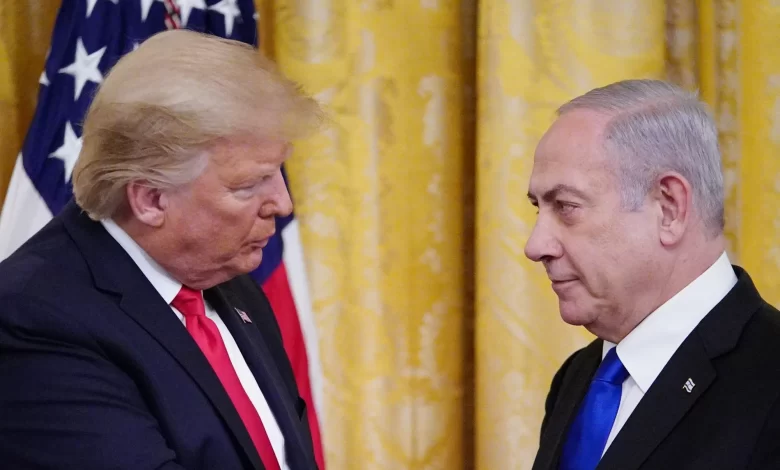
After the private dinner hosted by Donald Trump “in honor” of Mrs. Sara Netanyahu, the US President-elect immediately threatened to set the Middle East on fire if the Israeli prisoners in the Gaza Strip tunnels, guarded by the Qassam Brigades and the Al-Quds Brigades, were not released before his return to the White House on 20 January 2025.
Trump went further when he threatened the Palestinian resistance factions with paying a heavy price if the hostages were not released, and directed his threats specifically at the leaders of the Hamas and Islamic Jihad movements.
In his first term as US President, he made many similar threats, such as destroying North Korea, subjugating China, forcing Mexico to pay the bill for the border wall to keep out immigrants, and turning Iran into another Hiroshima if it responded to the assassination of the martyrs, Qassem Soleimani and Abu Mahdi al-Muhandis.
Trump – an “unruly” professional liar – did not dare to carry out any of these threats, and perhaps the only threat he carried out was withdrawing from the nuclear agreement with Iran in 2017, which backfired and came as a major gift to Iran it never dreamed of, which since developed, theoretically and practically, into an unofficially declared nuclear state.
We would like to tell Trump his threats will not move a hair on the head of the smallest hungry or injured Palestinian infant in the steadfast and heroic Gaza Strip.
If his partner [Netanyahu] in the extermination war and ethnic cleansing and who used all kinds of mass destruction weapons to bomb Gaza – executed more than 45,000 martyrs, three-quarters of whom, children and women, and destroyed 95 percent of their homes – did not succeed in releasing these Israeli prisoners, despite advanced US intelligence, what does Trump have that is stronger and more effective than that? Hitting the Gaza Strip with a nuclear bomb, as his criminal friend Senator Lindsey Graham suggests?!
The heroic Al-Qassam Brigades and Al-Quds Brigades have not submitted to all this bloody Israeli pressure and did not release the prisoners throughout the past 14 months. All the pressure and rounds of negotiations sponsored by America failed, unfortunately with Arab collusion; the USA wanted to trap Hamas and Jihad which firmly stuck to their conditions, and did not give up a single inch.
So what more can the reckless Trump do?
We need to remind Trump and draw his attention to a set of points he must have forgotten about in the midst of his euphoria on his victory over his naive and foolish opponent Kamala Harris:
First, the resistance in Gaza is still strong, ongoing, and inflicting huge and humiliating losses on the Israeli enemy and its forces, and from zero-distance, which reflects the heroism and courage of its men. Not a single mujahid surrendered, all fought until martyrdom.
Second, there is not a single American aircraft carrier now in the Middle East and its seas, whether it is red, white or Arab, due to the blessed Yemeni missiles. It is enough to point out the attack with naval ballistic missiles that hit the carrier Abraham Lincoln a few days ago, which escaped with heavy casualties and damaged three destroyers and other ships. The day before yesterday, a Yemeni hypersonic missile struck a military base in the heart of occupied Jaffa.
Third, the brave and courageous Trump did not dare respond to the Iranian missile that shot down his largest drone in the Gulf, the “RQ-4 Global Hawk” in 2019 (costing $300 million) after it deviated from its course several meters inside Iranian territory.
Fourth, great America withdrew from Afghanistan, defeated and humiliated, a few months after Biden took power from you. We all witnessed, and the whole world at that, the great escape of American forces in a way that reflects the height of humiliation.
Trump no longer frightens anyone, and in his new version he did not dare utter a single word of criticism at Russian President Vladimir Putin, who defeated his country on the plains and coasts of Ukraine, and cut off and annexed more than 20 percent of its “territory”.
Trump did not dare utter the name of China, which was his number one enemy in his first term, and let us not forget in this haste to touch on North Korea and its leader Kim Jong-un, who humiliated and degraded him, and brought him to Hanoi and Singapore in two summit meetings, from which he returned to Washington with his head bowed.
Perhaps only some Arabs who were forced to accept the humiliating normalization and his “Deal of the Century” during his first term will be afraid of Trump and his threats. But times have changed, and there is now a major superpower called the “Axis of Resistance” with a mighty head and long, deadly arms.
Above all, there is the new, powerful BRICS organization, which will not end Trump’s second term in the White House (four years) until the US dollar exhales most of its last breath. The days lie ahead, Mr. Trump!
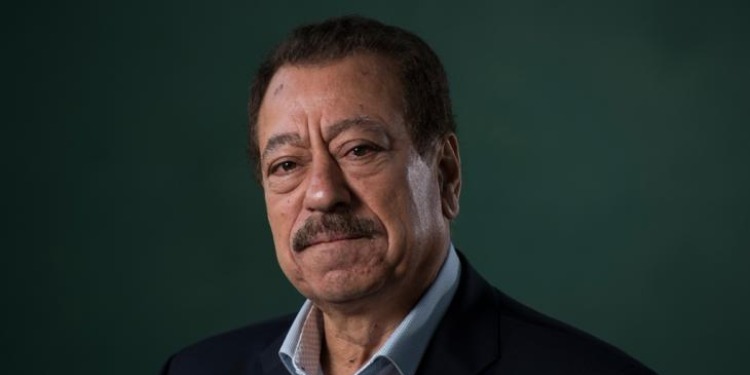
This is a translated piece from Arabic by Mr Abdel Bari Atwan, chief editor of Al Raialyoum website and reprinted on www.crossfirearabia.com.

 CrossFireArabia