Ceasefire Conundrum

By Dr Khairi Janbek

It is really pointless to keep thinking in terms of the endless circle of whether this ceasefire is a Pyrrhic victory for Israel or for Hezbullah, because the real winners are all those people who can go back to their homes hopefully very soon. In fact the whole issue is not about victory, but about the losing side, and in actual fact it is the state of Lebanon and the Lebanese people.

One the one hand, with this ceasefire agreement, Lebanon has fallen under the mandate of the US, France and Britain on the one hand, as guarantors of it, and on the other, under the mandate of Iran as the other guarantor of the accord. So where is the Lebanese sovereignty under the circumstances?

Indeed, Israel treats the Lebanese state sovereignty in terms similar to how apartheid South Africa used to treat its Bantustans, giving itself the right to intervene in Lebanon whenever it sees fit.

Moreover, what is it exactly the western overseers of this ceasefire are guaranteeing to Israel, and what is it exactly Iran has agreed to as the other overseer? One is not raising doubts here, rather wondering how this ceasefire can be implemented. For all intents and purposes, a country, unfortunately with dubious sovereignty, is supposed to secure the areas from which Hezbullah has withdrawn; from the Litani River southward, and which the Israelis will withdraw from, with the UNIFL as the other go-between.

Now, it is legitimate to ask if the Lebanese army has armaments sufficient to carry out the job and is it logistically prepared for such tasks, because we haven’t heard anything of whether there will a massive rearmament programme to support the Lebanese, especially since they don’t intend, as it seems, to deploy their forces in the area.

On the other hand, what will the other mandate power, Iran, like to do? Evidently the talk of Hezbullah surrendering its weapons might drag on, dependent on the “chicken game” the mullahs in Tehran will play with coming US president Donald Trump. In a sense, who will blink first. How will president Trump deal with Iran ? Will he see Tehran as the arch enemy, or will he take conciliatory steps towards it.

If Tehran is pushed in a corner, it might not relinquish all of its gains in Syria, Iraq, Yemen, not to mention Lebanon, without a fight. Consequently, and depending on how the next Washington administration handles the situation, will determine whether the ceasefire holds or not. This will be the least of the region’s worries actually especially since Mr Trump is partial to proxy wars.

Dr Khairi Janbek is a Jordanian historian based in Paris and the above opinion is written exclusively for crossfirearabia.com. 
Continue reading
Ceasefire and Israel’s downfall

Television journalists Ahmad Mansour writes:

“Israel agreed to a ceasefire with Hezbollah for many reasons, the most important of which is to separate the Hezbollah front Gaza to go after Hamas.

Like Gaza Israel has failed with Hezbollah despite its air superiority because of its shortage in weapons and ammunition after using it up by the Israeli occupation army on the heads of the Palestinians of Gaza over the past 15 months.

The amount of munitions dropped on the Gaza Strip equal the size dropped on the past two world wars.

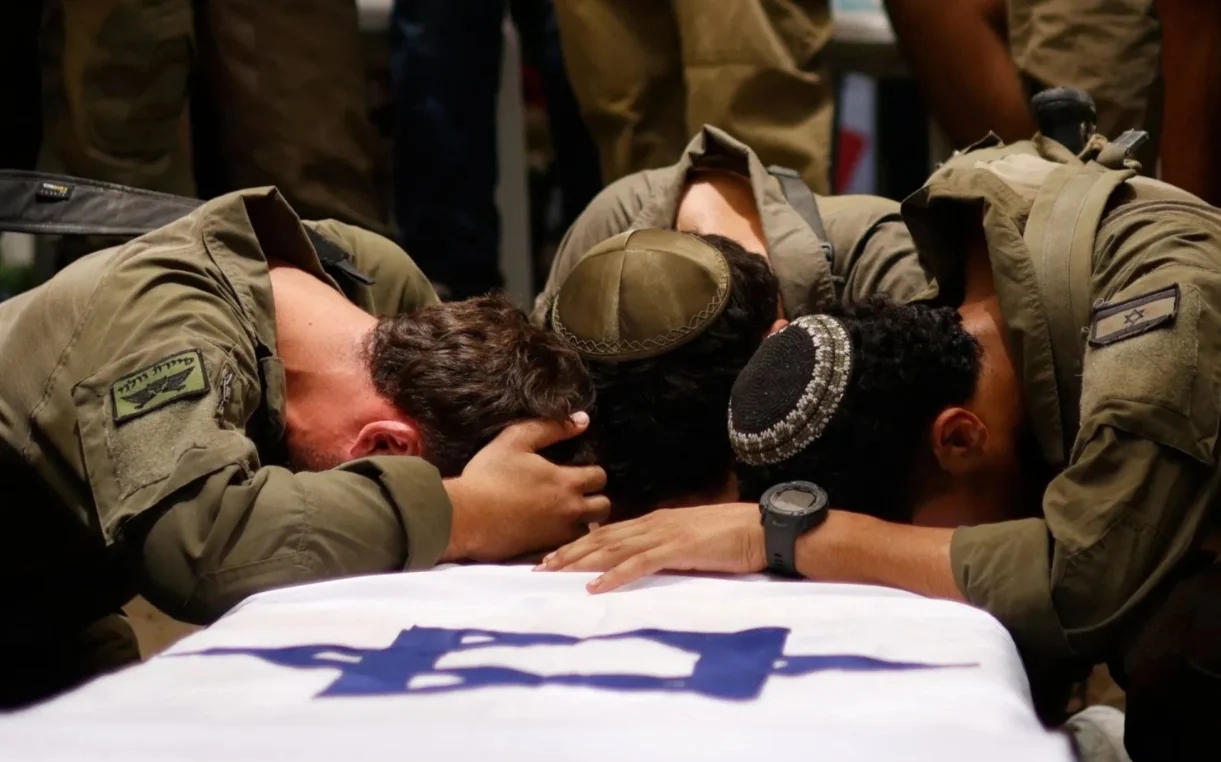
However, the agreeing of Israel to the ceasefire agreement also relates to the fact that life and economy in the Jewish state was paralyzed because of the continuing, non-stop strikes of missiles that lead to the collapse of the spirit of the Israeli army and the injuries of 10s of thousands of its soldiers who became psychologically shocked and no longer able to fight because of permanent injuries.

This is not to mention the fight that developed over the past months between the military establishment, the Shabak, and the government lead by Prime Minister Benjamin Netanyahu.  

This is the longest and most difficult war Israel has fought and it has failed in its goals to release its hostages and in addition to that Netanyahu is reordering his house with the Arab states to hitch together agreement with Israel through the coming US administration of Donald Trump and redraw the map of the Middle East with the absolute domination by Israel.

This is the plan but God has another plan which will be revealed in the coming day for Israel is collapsing from the inside and the internal conflicts with it will lead to its downfall as many Israeli analysts predict and who say that accords with other Arab countries will not save it. Israel is now on the edge of the abyss and nothing can save it.”  

Continue reading
Testing Iran’s Foreign Moves

By Dr Khairi Janbek

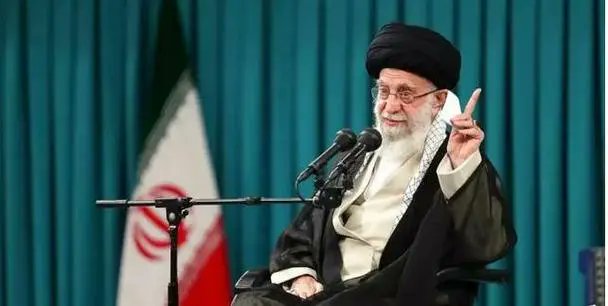
Iranian foreign policy is a mixture of historical, ideological and geopolitical factors. As a major regional power in the Middle East, its foreign policy has often been seen as pragmatic; but practicality with an ideological component.

The country’s policy decisions are influenced by its revolutionary origins in competition with other regional powers. In reality, Iran cannot be understood outside the consideration of the legacy of the 1979 revolution, which highlighted the centrality of the concept of Velayet e Faqih; the Guardianship of the Jurist on Iran’s political and and ideological stance on global affairs.

Iran adopted a foreign policy that combined ideology with the desire for regional leadership often expressed as the defender of oppressed Muslims, the power behind the spread of Islamic values and opposition to western imperialism, especially that of the USA.

The objective has been ever since to focus on expanding and maintaining influence in the Middle East, not necessarily by creating a ‘Shiite Crescent’, but rather by creating a Persian-dominated crescent through fostering alliances with groups in Syria, Iraq, Lebanon, Yemen, and Hamas in Gaza.

This crescent has been aimed primarily as being an arch to exclude, in the first degree, Iran’s biggest Islamic rival Saudi Arabia with its close relations with the USA, from its sphere of influence.

At the same time, Iran’s nuclear ambition have put it in direct conflict with the USA and western powers. However this confrontation with the USA has habitually fluctuated between agreement, as during the Obama administration, and confrontation during the first Trump administration, then the ambiguity of the current Biden administration.

However, currently, the country faces the delicate balance of managing its relations with the western powers as well as regional actors, while seeking to maintain good relations with Russia and China.

Currently, with the ongoing tensions with Israel on one side, and melting of ice with Saudi Arabia, with the possibility of further serious confrontation with the Trump administration, Iranian foreign policy and its ability to continue to be able to navigate the preservation of its interests, will most certainly be put to the test.

Dr Khairi Janbek is a Jordanian historian based in Paris and the above opinion is written exclusively for crossfirearabia.com. 

Continue reading
True Pals!

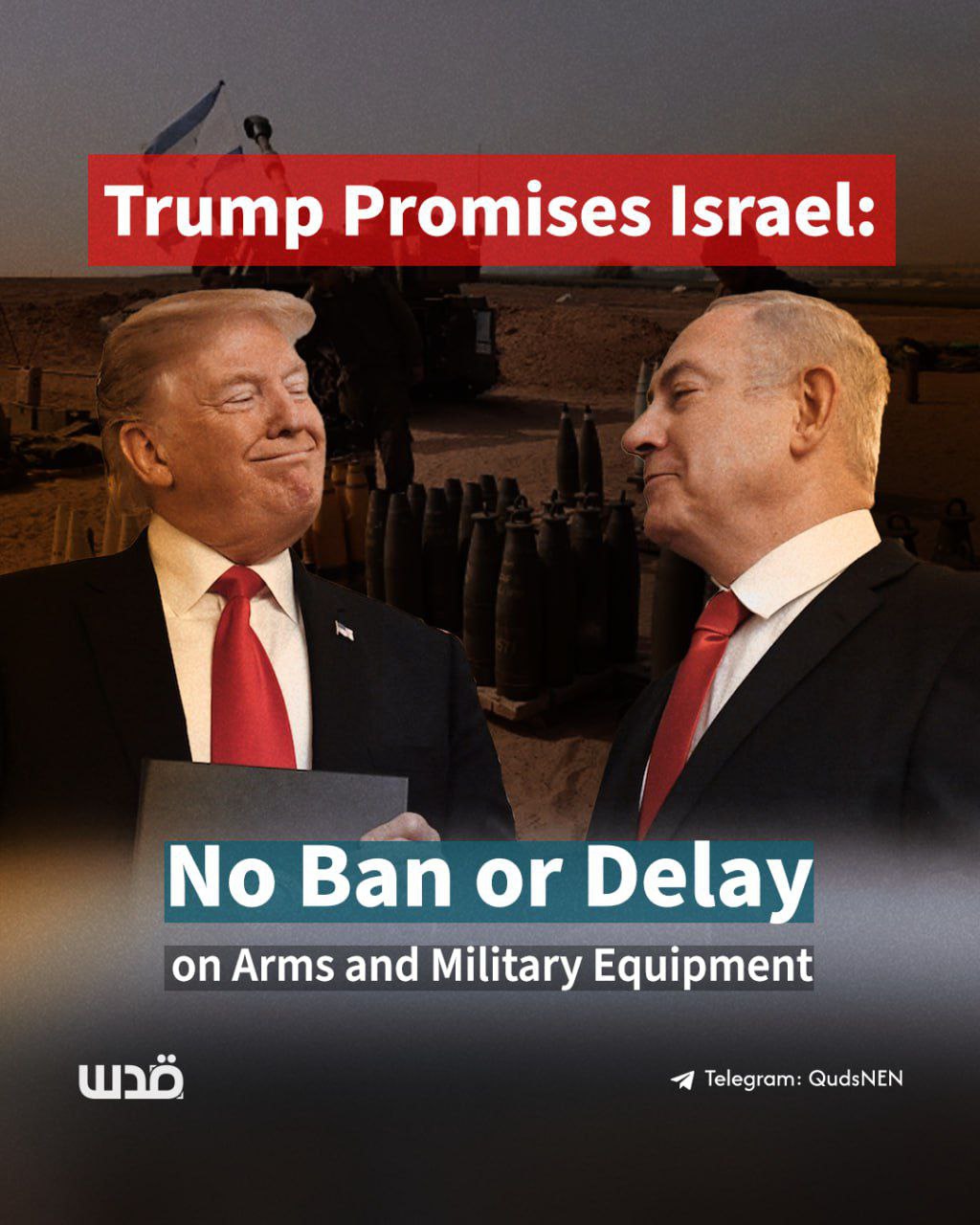
U.S. President-elect Donald Trump has pledged to lift all restrictions on arms exports to Israel immediately upon assuming office, according to Israeli Channel 12. His team has committed to removing any delays in the shipment of weapons and military equipment on his first day in office.

Continue reading