Netanyahu’s Middle East Vision

By the end of December, Israeli Prime Minister Benjamin Netanyahu is expected to visit Washington to meet US President Donald Trump, marking his fourth visit in less than a year since Trump assumed office. Unlike previous visits, this one comes after President Trump imposed his vision for ending the war in Gaza and outlined his broader concept of regional peace—giving the visit a distinctly political dimension.

At the core of the discussions will be the transition to the second phase of the Gaza ceasefire agreement, the appointment of an American general and a monitoring center, and the mechanism for administering Gaza ahead of the arrival of an international peace force. The visit is also expected to address Israel’s relations with its regional surroundings, particularly Egypt. Reports suggest the possibility of a simultaneous visit by the Egyptian president to Washington, reflecting a clear American desire to initiate direct engagement and promote the concept of “economic peace,” along with major regional projects that Trump views as the backbone of future relations, especially in the energy and gas sectors.

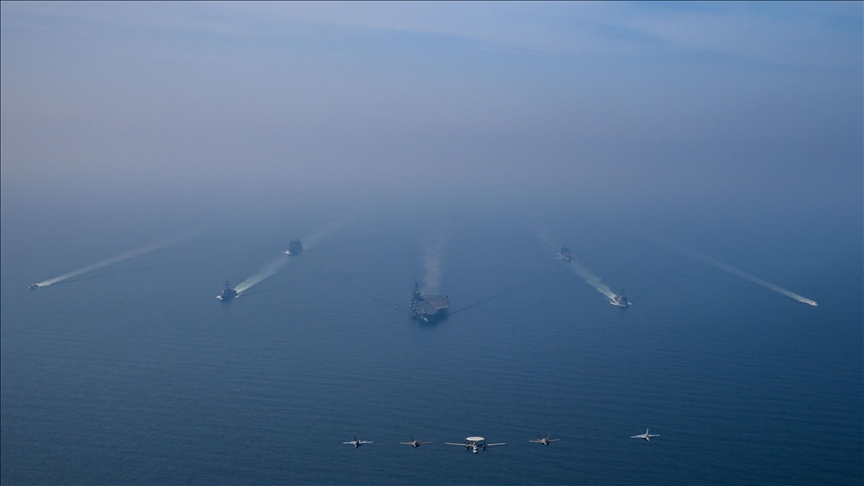
Yet even as President Trump speaks of a regional peace vision, the days preceding the visit remain open to further escalation. Indicators point toward a qualitative Israeli escalation across four fronts: Gaza, the West Bank, Lebanon, and Syria. These fronts have been deliberately kept open, transformed into continuous theaters of operation where Israel calibrates the level of military activity according to its security assessments.

Lebanon remains the most prominent arena of this escalation. Ongoing discussions about Hezbollah’s efforts to rebuild its capabilities coincide with Israel’s continued direct targeting of the group’s positions and operatives. This comes amid growing American pressure on the Lebanese government and army to take concrete steps toward disarming Hezbollah.

While the group is fully aware of its inability to engage in a comprehensive regional war, and the need to avoid providing direct justifications for escalation, it nevertheless finds itself compelled to use the weapons issue domestically to reshape internal power balances. At the same time, Hezbollah seeks to secure the future framework of its relationship with Syria, particularly if the Syrian-Lebanese border shifts from being merely a site of interdiction to a direct target zone.

This reality severely constrains Hizbollah’s response options while granting Israel continued latitude to strike the group’s infrastructure, capitalising on the absence of a decisive resolution to the weapons issue and on Lebanon’s institutional confusion over how to address it, whether through phased timelines or alternative formulas such as placing weapons under army control. From Israel’s perspective, this ambiguity justifies continued targeting until a decisive moment is reached.

Within this context, Israel’s strategy of imposing a new reality across its border fronts aligns closely with the transition to the second phase of President Trump’s plan. This approach corresponds with Israel’s efforts over the past two years to redraw geographical and security realities in Syria, Gaza, Lebanon, and even the West Bank. While the Trump administration opposed a formal declaration of annexation in the West Bank, it did not object in practice to Israel’s on-the-ground measures, allowing these changes to solidify as irreversible facts.

Security measures taken today may therefore establish realities that will be difficult to reverse in the future. From Washington’s perspective, redrawing borders may be seen as laying the groundwork for what it terms “regional peace,” treating the new border realities as spaces for potential economic or developmental investment.

Netanyahu’s visit to the White House thus represents a pivotal moment. He will seek to position himself as a central actor in the next phase, consolidate new realities along Israel’s immediate borders, and secure U.S. backing in addressing non-adjacent fronts, most notably Iraq, and above all Iran.

Iran is left to grapple with an increasingly severe internal reality marked by mounting economic, social, service-related, and security challenges, and is simultaneously categorized as part of the camp of “obstructors of regional peace” in Trump’s framework, opening the door to intensified pressure and varied forms of targeting in the period ahead.

Dr Amer Al Sabaileh, a professor in the University of Jordan contributed this analysis to the Jordan Times.

Continue reading
Destroying The Ceasefire

Dr Marwan Asmar

Since the signing of the ceasefire on 10th October 2025 Israel killed at least 347 Palestinians in the Gaza Strip. 

Although the Donald Trump team officials in the White House keeps saying how they satisfied are about the maintenance of the Gaza ceasefire, the truce is in a precarious mode. Many expect the ceasefire to be broken any day because of the bloody Israeli military actions and fire on the whole of the Gaza Strip.

Since it took effect last October, Israel violated the truce over 500 times. Israel begun attacking the Gaza Strip at the end of the first week of the ceasefire, and continued thereafter with the average daily killed standing at seven at least.

However, the highest number of those killed was on 29 October, 2025, when 109 people were slaughtered and a reminder of the carnage days of the war. But after that, the number went down significantly. On 19 October the number of those killed went down to 45, 33 on 19 November and at least 21 people on 23 November. Here as well, and although figures may vary, UN experts say at least 70 of those killed were children. Did they pose a threat to the mighty military machine?

This is not to say anything about the number of those injured, a figure conservatively put at 889 and likely to increase as the days go by especially since there is nobody to stop the Israelis.

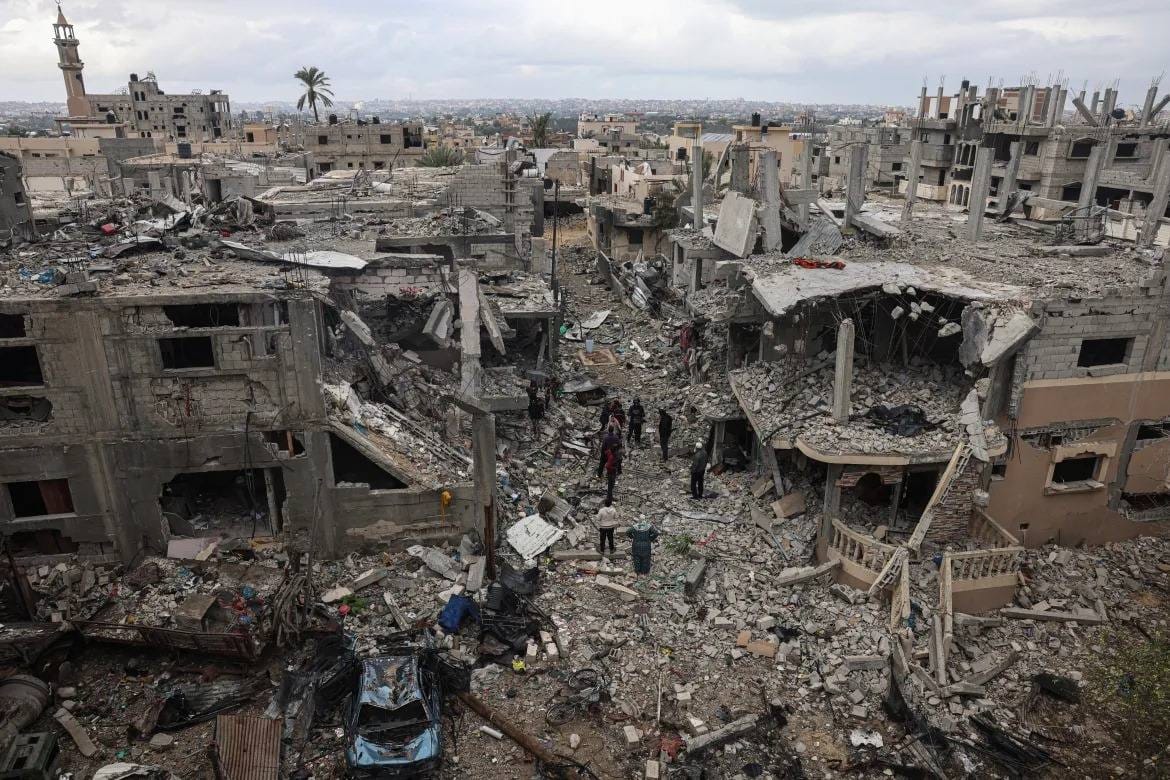
While the number of those murdered may have gone down drastically, the Israeli war machine continues to bomb different areas of Gaza, from its north, center and south of the Strip, neighborhoods, communities, cities, towns and refugee camps that exist only in names but already lie in debris, heaps of rubbles and destruction.

Biet Hanoon, Jabalia, Biet Lahia, Gaza City, Al Maghazi, Khan Younis and Rafah and more, once thriving population centers have become mounts of rubble and wreckage unfit for human habitations, gorges stumped into the earth with nothing but skewed bricks and mortar.

The Israeli army, and through its air force, has continued to re-bomb schools, mosques, residential building and tattered infrastructures and/or what remained of them. Israeli pilots and/or quite often through drones, are flying over sorrow horizons of destroyed mounts and bombing what is left of a past society, all in search of illusive Palestinian groups they were unable to “flush out” in the last two years of their genocide of Gaza.

The genocide has created a sence of acceptable madness among the Israeli populace that “you bomb as much as you can” twice, thrice, four times and more so the vicious cycle of violence is indelibly printed on helpless civilians who nevertheless, refuse to be expunged.  

Today, Gaza is a horror story with its new cold, calculated and unforegiven Israeli masters refusing to accept their new stalemate. They continue to occupy 53 percent of the enclave with them unwilling to quench their thirst for blood but leap into the misery they have created. Just after 10 October, they have demolished 1500 buildings in the areas they control and this is just the beginning for Israel is planning for a long occupation despite the US plan outlined by president Donald Trump on 29 September to end the war on Gaza and start to redevelop the enclave. This is certainly a pipedream.

The killings continue as Israel pays lip service to a US plan outlined at the heart of which is dismantling Hamas and the rest of the Palestinian resistance groups. But the story as plotted by the new political masters of Trump et el., begins here. With the ending of Hamas, the redevelopment of Gaza is supposed to start.

However, everyone is still stuck at stage of one of the plan. Hamas has already set free the 20 remaining Israeli hostages and is yet to handover the final two of the 28 dead hostages it already delivered to the Israeli hostages. God only knows when they will be delivered.

The movement says it has been finding it extremely difficult to search for the remains of the hostages and finding the final two would be a grueling task because of the mass bombing of the enclave whose geography has been drastically altered with people no longer knowing where former places, houses and roads no longer are. They have become alien to a society they lived in all their lives.

Of course, this has become music to the ears of Israeli Prime Minister Benjamin Netanyahu and his extremist government who feel they can continue to bomb Gaza under the eyes of the Americans in a pretext that the final remains of the hostages are still to be delivered and that Israel continues to fight Hamas.

Within this context many observers are saying Israel wants to “lock” the Trump 30-point plan in phase I and doesn’t want to move to stage II because that would mean it’s war objectives was for nothing apart from destroying Gaza: No Palestinian transfer, No end to Hamas and the calls for a Palestinian state growing by the majority of countries of the world. 

Despite the close alliance between the United States and Israel, the ultimate aim of the Trump plan – being its end result – is the call for a Palestinian state. Netanyahu has long realized this and this is why he wants to lock Gaza into an initial ceasefire phase in which he will continue to call the violent shots on Gaza.

Continue reading
Trump’s Nightmare Triangle

By Dr Khairi Janbek

For all intents and purposes, US President Donald Trump is presenting himself as the arbiter of Arab-Israeli relations, and/or Arab-Israeli conflict and showing his presence as the patron for the time being, of the Gaza agreement. Therefore, no one, including Israel will be allowed to make him look bad in this multi-phased accord.

Most likely, his intention to reign in Prime Minister Benjamin Netanyahu and rejecting the Israeli rejection of the West Bank, boils down to keeping the Arabs on board in terms of money and influence for the success of his Gaza plan, as well as keeping his hopes alive for the Abrahamic Accords especially the red apple, Saudi-Israeli normalization.

Indeed Trump’s ambiguous stand of rejecting a Palestinian state while at the same time, rejecting Israeli annexation, either means giving the positive nod to Tel Aviv to create facts on the ground and create de facto annexation without the fanfare, and start the gradual population transfer, if we take Gaza as a precedence for his words, to Jordan and probably also to the wider Arab world, or, it could also be, that the future of the West Bank is intended to be united to the East Bank of River Jordan.

In the mean time, the world press talks about the continuous shuttle diplomacy of high-ranking Washington officials to Israel, and Trump’s warnings to Netanyahu, veiled as well explicit not to attempt to jeopardize the Gaza peace, to the extent of saying that Israel would lose all US support.

But what about the other side of this presumed potential rift? Netanyahu after two years of war, has nothing to show for it to the Israelis except barbarism, murder and destruction, in addition to gaining the status of becoming a fullyfledged international war criminal.

The war which he declared to finish off Hamas is increasingly controlled by the American plans, now, face a big failure with him reluctantly having to put up with. However it does not necessarily mean there are no other parties in his government, whose messianic fervour does not override the risk of losing American support, which indeed means, Netanyahu is now stuck between the rock and the hard place.

Indeed one cannot predict his longevity as the prime minister for Israel, but all what can be said is that, the alternative to him, is neither likely to be more peace loving, or more liberal in political outlook.

Dr Janbek is a Jordanian writer based in Paris, France

Continue reading
Israel Cannot Annex West Bank Says VP Vance

US Vice President JD Vance rejected Israel’s proposed annexation of the West Bank as a “stupid political stunt,” reaffirming Washington’s opposition to unilateral actions and commitment to the Gaza ceasefire.

US Vice President JD Vance delivered a sharp rebuke to Israeli lawmakers on Thursday, explicitly rejecting any annexation of the West Bank and characterizing the recent Knesset vote on the matter as “a stupid political stunt.” 

Speaking to reporters in Tel Aviv, Vance left no ambiguity about the Trump administration’s position regarding the occupied Palestinian territory.

Clear US Policy Statement

“If it was a political stunt, it was a very stupid political stunt, and I personally take some insult to it,” Vance said regarding the Knesset’s preliminary approval of a bill to impose Israeli sovereignty over the occupied West Bank.

https://www.palestinechronicle.com/israeli-knesset-approves-preliminary-reading-of-bill-to-annex-west-bank/embed/#?secret=OBbWh2L4xb#?secret=TLEUEm5JV2

He then delivered the administration’s definitive position: “The West Bank is not going to be annexed by Israel. The policy of the Trump administration is that the West Bank will not be annexed by Israel. That will continue to be our policy.”

Vance’s remarks came a day after the Knesset approved, by a vote of 25 to 24, a bill to impose Israeli sovereignty over the occupied West Bank.

Israeli National Security Minister Itamar Ben-Gvir welcomed the vote, saying: “The time to impose sovereignty over the West Bank has come now.” 

Meanwhile, the Likud party, which leads the ruling coalition, described the bill as “showy” and damaging to relations with Washington.

The US Vice President said that such unilateral steps “contradict Israel’s commitments to the peace process and international agreements,” and reiterated that Washington’s message to Israel was clear: The need to maintain the Gaza ceasefire and avoid any action that could reignite tensions.

‘Despite Exceptions’

Vance also addressed the situation in Gaza, affirming that both Hamas and Israel are respecting the ceasefire “despite some exceptions.”

He made clear that “the United States would not deploy American soldiers in the Gaza Strip,” reaffirming Washington’s commitment to maintaining the ceasefire and advancing reconstruction.

According to Vance, reconstruction efforts would begin in areas “free of Hamas,” but he cautioned that it was still too early to launch large-scale rebuilding. He added that the United States hoped to see the reconstruction of Rafah “within two or three years.”

On October 9, Hamas and Israel agreed to a ceasefire and prisoner exchange following indirect negotiations in Sharm El-Sheikh under US sponsorship and mediation by Qatar, Egypt, and Turkiye according to The Palestine Chronicle.

Continue reading
America ‘Force Arms’ Netanyahu on Gaza

The Americans, both the Biden and Trump administrations, gave the Israelis two years to destroy Hamas in Gaza.  This is what the leader of the Palestinian National Initiative Dr Mustapha Al Barghouti started by saying. So for them the time was up came 7 October, 2025.

He maintained that it was because they couldn’t finish the job, the White House acted swiftly, stating enough is enough, the war on Gaza must end. What he said its true because today, the quest to end the war on the enclave and let the aid trucks in is an American initiative, who are almost dragging Israeli Prime Minister Benjamin Netanyahu forward who doesn’t want to end the war.

In a sharp analysis, the Palestinian politician said the Americans, especially President Donald Trump came to realize that the Israelis were not going to destroy Hamas despite the mass destruction of the Gaza Strip through mass weapons supplied by the United States. And that this is when the Trump administration decided to act and enforce the present, albeit fragile ceasefire between Tel Aviv and Hamas and according to him, ending the bloody, destructive, heinous war on Gaza.

But it was not for the lack of trying. When Trump entered the White House in January 2025, he then tried to sell the Rivieria Gaza idea to the region but he finally realized the Palestinian people of Gaza couldn’t be driven out of their homeland, even if it was just temporarily as he claimed and that there was going to be no way of parcelling them out to other countries.

Dr Barghouti pointed out Trump tried very hard talking to states like Indonesia, in the Arab world and those in Africa, seeking all sorts of pressure to persuade them to take the Gazans. But after much diplomatic chitchat, he realized the Palestinians weren’t for moving despite the fact that 250,000 of them were killed and/or injured at the hands of the Israeli army and the horrific mass destruction of their homeland.

This proves that the idea the Palestinian population can be ethnically cleansed – much talk about that in the past two years of the genocide – was a non-starter and that 1948 when hundreds of thousands of Palestinians were driven off their land by Israeli militias and terror gangs was not going to be repeated. Dr Barghouti added the last onslaught on Gaza has proved that ethnic cleansing has become a “closed chapter”. 

And he added Trump and his team led by Steve Witkoff and Gerard Kushner became aware of that, and that is when it was decided to push for a ceasefire to save Israel from itself. Barghouti putted this way: Trump realized many countries of the world were turning against Israel because of its murderous actions on Gaza and its mass displacement and starvation of the people of the enclave and to let Netanyahu have his own way by refusing to stop the war would be detrimental to US interests in the region.

Thus when Israel tried to re-start the war on Gaza last Monday – and a week into the ceasefire – when two of its soldiers were killed in Rafah through lone fighters and which Hamas immediately disavowed, the Trump administration played down the incident in the interest of maintaining the ceasefire accord reached at the beginning of October, 2025.

Trump first dispatched Witkoff and Kushner to Israel with Vice-president JD Vance who followed on a two-day visit in an effort to keep tempers low. Their visit to Israel today is sending a message that the US administration wants the ceasefire to be followed through in the interest of Trump’s 20-point peace plan for the Middle East.

Continue reading