UN: $70 Billion Needed For Gaza Rebuild

Around $70 billion will be needed to reconstruct Gaza and make it safe after two years of war, UN development experts said on Tuesday, while aid agencies reported that far too little aid is getting in to meet the needs of desperate Palestinians.

At just 41 kilometres long (25.4 miles) and two to five kilometres wide (1.2 to 3.1 miles), few places in the Gaza Strip had been left unscathed by the constant Israeli bombardment before the latest ceasefire came into effect haltingly last Friday.

According to the UN Development Programme Special Representative for the Palestinians, Jaco Cilliers, destruction across the enclave “is now in the region of 84 per cent. In certain parts of Gaza, like in Gaza City, it’s even up to 92 per cent.”

$20 billion needed now

Speaking from Jerusalem, the UNDP’s Mr. Cilliers highlighted the findings of the latest Interim Rapid Damage and Needs Assessment (IRDNA) on Gaza by the UN, the European Union and the World Bank, which estimated the damage at $70 billion.

To kickstart the massive operation, some $20 billion will be required in the next three years alone, he told journalists in Geneva.

The UN development agency is present in Gaza alongside humanitarian partners to provide immediate support to the enclave’s 2.1 million people.

This includes providing clean water, emergency employment, medical supplies, solid waste removal and making homes and public spaces safe by clearing rubble potentially hiding unexploded ordnance or the many thousands of missing Palestinians.

“We’ve already removed about 81,000 tonnes. That is about…3,100 truckloads,” Mr. Cilliers explained. “The majority of the debris removal is to provide access to humanitarian actors so that they can provide the much-needed aid and support to the people in Gaza. But we also help with hospitals and other social services that need to be cleared of debris.”

The UNDP official pointed to “very good indications” from potential donors in support of reconstruction from Arab States, but also from European nations and the United States “which has also indicated that they are going to be coming in supporting some of the early recovery efforts”.

Immediate aid essential

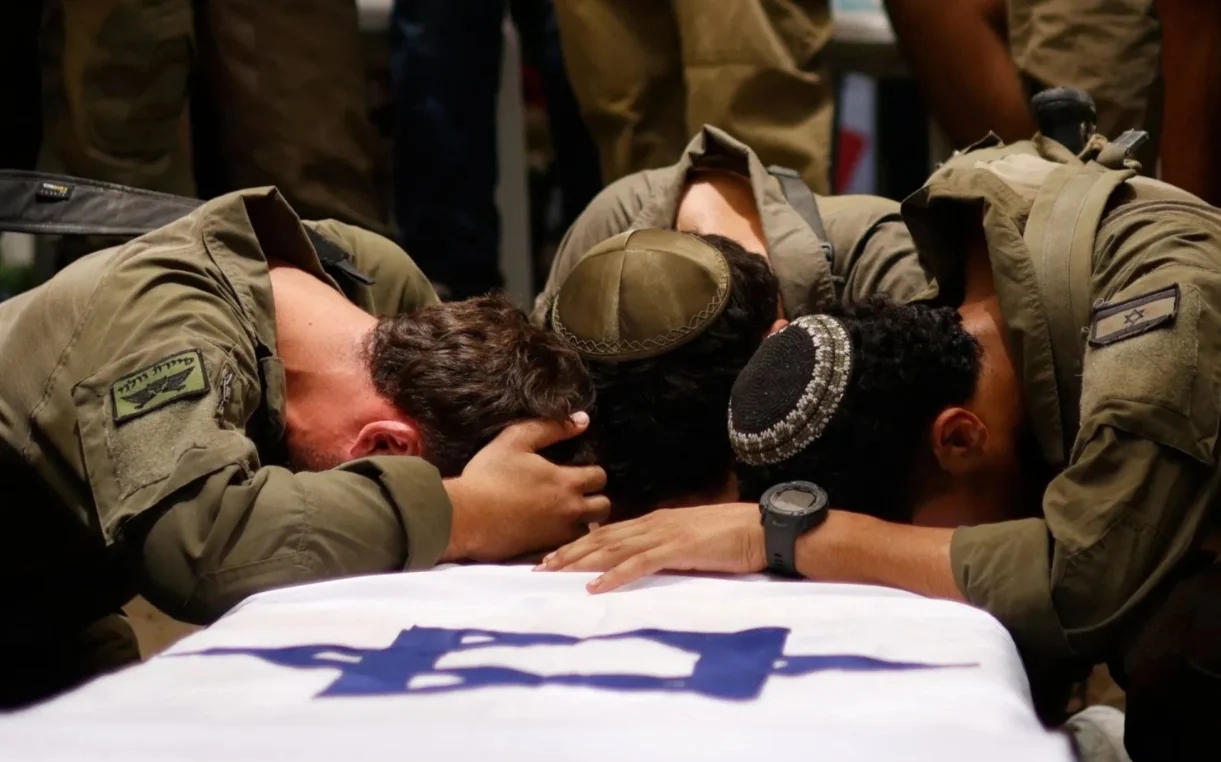
Important as reconstruction is for Gaza’s long-term future, UN humanitarians once again clamoured for the Israeli authorities to open all access points into Gaza, after the remaining 20 living Israeli hostages were freed on Monday and Palestinian prisoners were released from Israel.

The development followed the signing of a ceasefire deal between Hamas and Israel signed on Monday evening in Sharm El-Sheikh by US President Donald Trump, and the leaders of Egypt, Qatar and Turkïye.

Earlier on Monday, UN Secretary-General António Guterres welcomed the release of all living hostages from Gaza, two years since they were among some 250 taken during Hamas-led terror attacks in Israel on 7 October 2023.

Gaza City testimony

Speaking to UN News from Gaza, UN Children’s Fund (UNICEF) aid worker Tess Ingram described the story of one family displaced five times by the war:

“I met a family today, Mustafa and Syeda and their children, and they told me that they were among the lucky ones because while Mustafa was pulling rubble out from the building, that is their home, at least he said, we have a home.”

The family was relieved on Monday at the appearance of a water truck, Ms. Imgram told us: “But they live in fear that truck might not turn up today or tomorrow. She also can’t get the medicine she needs and her sons had to walk a really long way today just to buy the basics that she needed to make some bread.

“Families need absolutely everything right now. We need the hundreds of trucks a day that were promised to get into the Gaza Strip.”

Families return home amidst the destruction in Gaza. (file)

© UNICEF/Eyad El Baba

Hostage remains

On Tuesday, the focus shifted to the transfer from Gaza of all deceased hostages, an extremely difficult process overseen by the International Committee of the Red Cross (ICRC). It remains unclear how many deceased hostages will be transferred by Hamas.

“When it comes to the living hostages or Palestinian detainees – and believe me that’s a big issue for us – we actually don’t know, we know that we have to be ready,” said ICRC spokesperson Christian Cardon, adding that the complex search is getting underway today.

In the meantime, needs in Gaza remain enormous and “fluid”, aid teams report, with more than 300,000 Palestinians heading north to Gaza City since Friday, as the ceasefire agreement seemed to hold.

“The enthusiasm that came from the international community, from people on the ground that this was the beginning of the end of all the suffering and things would change rapidly, is just not being reflected on the ground, day in and day out. We are not getting enough aid in,” said UN Children’s Fund (UNICEF) spokesperson Ricardo Pires.

The Israeli authorities have agreed to allow 190,000 tonnes of relief supplies into Gaza and UN agencies and their partners are scaling up operations rapidly, but a far greater amount is needed overall, humanitarian agencies including the UN aid office, OCHA, have said repeatedly.

“Of course, we are advocating with everyone, and we were there in Sharm El- Sheikh yesterday as well, with 22 heads of state of government, who we are asking to help us push all buttons you can to get this up and running as soon as possible,” said OCHA spokesperson Jens Laerke.

Aid hub carnage

Aid teams continue to insist that there needs to be a move away from handing out lifesaving supplies from remote areas including non-UN aid hubs that are difficult to reach and where hundreds of Palestinians have been shot or injured.

“Most of the actors – ICRC included – were not able to organize sufficient distribution of aid inside Gaza,” said Mr. Cardon. “And what we’ve seen instead, it’s people coming back from distribution sites being wounded, if not killed, in many instances…It’s about aid coming to the people and not any more people going to the aid,” as reported by UN News.

Continue reading
Gaza: Changing The Middle East Face

By Mohammad Abu Rumman

The Al-Aqsa Flood operation marked a turning point in the modern political history of the Middle East. Its repercussions have gone far beyond the Palestinian and regional arenas, extending to the international system and reshaping the foreign policies of global powers toward the region.

The timing of the operation was particularly significant: it came at a transitional moment in the regional order, in the absence of consensus among international and regional actors on the rules of the game. While a fragile balance of deterrence existed between the so-called “Axis of Resistance”—led by Iran (alongside the Syrian regime, Hezbollah, Shiite political forces in Iraq, the Houthis in Yemen, and Hamas and Islamic Jihad)—and Israel, the latter was in the midst of a new phase of regional integration through the Abraham Accords.

Several Arab capitals had already normalized relations, and others were on their way, creating an unprecedented political landscape. This shift coincided with the declining influence of traditional Arab powers such as Egypt, Iraq, and Syria, and the rising centrality of the Gulf states. Many analysts began describing this new configuration as a “New Middle East”: wealthy, economically driven, and detached from historical conflicts—unlike the “Old Middle East,” where entrenched crises defined politics.

Turkey, meanwhile, had entered its own phase of recalibration. Once a champion of the Arab Spring and regional Islamist movements, Ankara sought reconciliation with Arab states, even attempting to restore ties with Bashar al-Assad’s regime (though rebuffed by Damascus), while focusing more narrowly on national security and northern Syria.

On the Palestinian front, Israel had grown complacent toward Gaza, convinced Hamas had no incentive to disrupt the status quo. Tensions, however, were mounting in the West Bank, with small armed groups emerging in places like Nablus, Tulkarm, and Jenin. Within Israeli and Western policy circles, talk was spreading about the prospect of a “mini-state in Gaza” as a substitute for a Palestinian state.

At the international level, President Joe Biden’s administration lacked enthusiasm for either the Abraham Accords or Trump’s “Deal of the Century,” yet it effectively followed the same trajectory: pursuing “regional peace” by integrating Israel into a new economic order and reducing the Palestinian question to daily livelihood concerns—employment, services, and economic relief in Gaza and the West Bank—rather than a political resolution.

The Al-Aqsa Flood and the subsequent two-year genocidal war in Gaza shattered these calculations and fundamentally restructured strategic assumptions. Whether the outcome will ultimately benefit or harm the Palestinian cause remains too complex to assess in simple terms, but what is clear is that the pre-October 7 regional order no longer exists.

From a Palestinian perspective, the conflict has restored international attention to the cause, leading to a renewed recognition of its centrality. In the Gulf, the previously dominant security paradigm—which cast Iran as the chief threat while framing Israel as a potential partner—collapsed entirely. A new consensus has emerged: Gulf security is inseparable from the Palestinian issue, and the notion of Israel as a “strategic friend” has been critically reassessed.

Skeptics may argue that these shifts have not altered the balance of power on the ground, and they are partially correct. Yet the strategic narrative has changed. Before October 7, the trajectory was toward the erasure of the Palestinian cause (closing UNRWA, moving the U.S. embassy to Jerusalem, normalization, and de facto annexation of the West Bank). Today, there is growing recognition—regionally and internationally—that Israeli policies themselves are the root of instability, not Iran or other regional actors. As Emirati political scientist Abdulkhaleq Abdulla put it on X (September 25): “When weighing who poses a greater threat to Gulf security and regional stability—Iran or Israel—the evidence points clearly to Israel. Israel’s brutal behavior has made it more dangerous than an exhausted Iran. The Gulf needs a new defensive and geopolitical strategy for the Middle East beyond Iran.”

Israel, however, now perceives a surplus of power and is pressing for a new political and security order that extends beyond the occupied territories. With the partial unraveling of the Iranian alliance and the breakdown of the “Syrian corridor” that once linked Tehran to the Mediterranean, Israel has set its sights on even more ambitious goals, including the proposed “David Corridor” and establishing buffer zones around its borders in Syria, Lebanon, and Gaza.

In response, a tentative regional coalition has begun to take shape, bringing together Saudi Arabia, Egypt, Jordan, and Qatar, with notable support from Turkey and Pakistan. The latter signed a defense pact with Saudi Arabia following Israel’s strike on Qatar and has since become more engaged in regional diplomacy. While fragile and constrained, this alignment presents a rare historic opportunity to rebuild a regional balance of power and establish a new deterrence framework.

Another striking development is the shift in Europe’s stance toward Israel. For the first time, Israel has lost significant ground in Western public opinion and media narratives, particularly among younger generations and in universities. This has pushed Israel closer to isolation—a position from which former U.S. President Donald Trump had tried to rescue it through his proposed Gaza peace plan, which was largely about securing U.S. and Israeli interests, without offering real guarantees for Palestinian statehood or ending the occupation.

In conclusion, it is still too early to judge the full strategic consequences of the Al-Aqsa Flood and the war in Gaza. Scenarios remain open, and outcomes uncertain. Yet one thing is indisputable: the region today is no longer what it was before October 7.

Abu Rumman is an Academic Advisor of the Politics and Society Institute and Professor of Political Science in The University of Jordan and published this article in The Jordan Times.

Continue reading
Trump and The Oil Jar  

By Rashad Abu Dawood 

 A long time ago when our mom wanted to send us to sleep she would always tell us the story of the ‘oil jar’.

She would start by saying: Should I tell you about the oil jar? We’d say in one voice: Yes, tell us. She would repeat: Should I tell you it or not…the story of the oil can and we would plead again: Yes. But every time, the affirmation would sink lower as we would yawn incessantly till we fell sleep.

https://www.addustour.com/articles/1521982

As we grew up we found there was no story to tell, she would repeat the oil jar tale so that we forget and go to sleep. I remember the story as I follow the news on the Trump’s mysterious 20-point plan on Gaza; there is no point among the 20 that are clear except the one on the handover of the hostages. The rest need astrologers and psychologists to decipher.

And there are others that say the plan is a “Trumpian trap” coordinated with Benjamin Netanyahu to free the hostages from the grip of Hamas while there there is no exact date for the Israeli withdrawal from Gaza, no time detail for the entry of aid to the enclave to help the starving people and most important there are no guarantees to the Palestinian side that everything would be ok.

The only guarantee is that of Trump; there is no UN, no Russia, no China, the biggest powers on the international scene. There is no Security Council whose Article 7 emphasizes the use of military force against the party that opposes the execution of the agreement.

Unfortunately, the US president is not a man of his word. He says something and says the exact opposite the same day and even in the same sentence. This what is the meaning of “peace through strength?” We understand that peace is derived through negotiations; And what about the meaning of “Hamas must agree are face the gates of hell”.

Gaza has experienced: Trump has not kept to his promises for when the US hostage Eidan Alexander was released last May Trump praised the Hamas step, regarding it as a goodwill gesture towards the US. He saw the release as a “historic day” on the way to end the barbaric war on Gaza.

But what happened to this historic day as described by the US president? The Netanyahu government become a wild beast with the Israeli army killing on average 100 Palestinians a day and with those injured double that number not to say anything about the starvation of tens of thousands.

The Israeli army increased its force on the enclave, invaded Gaza City and today it controls 80 percent of the enclave. We have no choice but to pretend that we believe in Trump and see what’s going to happen next and have to wait to see the outcome of his statements as the fairytale about the oil jar.

This opinion was written by originally written in Arabic.

Continue reading
Hamas, Trump and The Gaza Gamble

By Dr Khairi Janbek

One can only have a distant view of the current developments regarding the war on Gaza, and consequently in all honesty, a bird’s eye view of the situation. For all intense and purposes, one assumes the Hamas acceptance of plan presented by US president Donald Trump would represent extremely high-stakes gamble for them.

On the one hand it offers a pathway to end the bloodshed and set the road for reconstruction of the bludgeoned Gaza Strip. On the other hand, the plan demands existential concessions, loss of armaments, leverage, and an an end to the movement’s future. If Hamas accepts with sincerity, and the plan is implemented faithfully, it could mark a turning point towards stabilization, but also with risks of breakdown, backlash, internal splits, and which carry the warnings of a precarious road ahead.  

It is important in the meantime to advise against the search for victors and/or the vanquished, because in this time and age, wars do not seem to be launched in order to be decisive, and the view of the Gaza war is no different.  Essentially it is to be believed and cardinal to the Trump administration, the issue of arms pertaining to Hamas and Hezbullah are seen as obstacles to peace and to Israel’s normalization with the Arab world. Therefore, the objective, one imagines, is to eliminate those arms to the American administration which has wider objectives in this crucial region of the world.

Here, as well, one has to be careful with words. Is Hamas supposed to surrender all of its weapons, or will there be an accommodating plan for the Islamic movement to keep some of its weapons, so long as it is not seen to constitute any future threat?

On the other side of the equation, are we really at the juncture of seeing the total end of Hamas as an organisation? In other words, are we about to see an amnesty for the Hamas fighters, especially those who surrender their weapons and are willing to partake in the future plans for Gaza away from those who wish to leave and to be provided with a safe passage outside the Gaza enclave?

Or is there a plan within the plan. if indeed, the Trump plan is not in essence a diktat, will there be long and tedious negotiations that will accept a form of political participation for a future-transformed Hamas into less than a political organization and more than an NGO?

Then what about the role of the Arab and Islamic countries, whose leaders met with Trump during the last UN General Assembly and who subsequently welcomed Hamas acceptance of the Trump plan? After all, there is the supposition that Arab and Islamic countries will provide, if not brain, then money and brawn. Essentially, without Arab and to a lesser extent Islamic involvement, no plan will have a leg to stand on. But to what extent the Arabs are willing to get involved still remains to be seen.

Dr Janbek is a Jordanian writer based in Paris.

Continue reading
Trump: ‘This is a Great Day’

The White House broadcast a recorded clip of US President Donald Trump commenting on the statement by the Islamic Resistance Movement (Hamas) agreeing to a proposal to cease the war on the Gaza Strip.

Trump said: “This is a great day, and we’ll see how things play out, and I very much look forward to the return of the hostages to their families.”

Trump added: “I want to thank the countries that helped with the Gaza issue, such as Qatar, Turkey, Saudi Arabia, Egypt, Jordan, and others. I thank the great countries that helped with Gaza, and we received a tremendous amount of support.”

Trump emphasized that “everyone was united in their desire to end the war and see peace in the Middle East, and we are very close to achieving that.”

Jo24

Continue reading