King Abdullah: Jordan Supports Rebuilding Gaza, Rejects Displacement

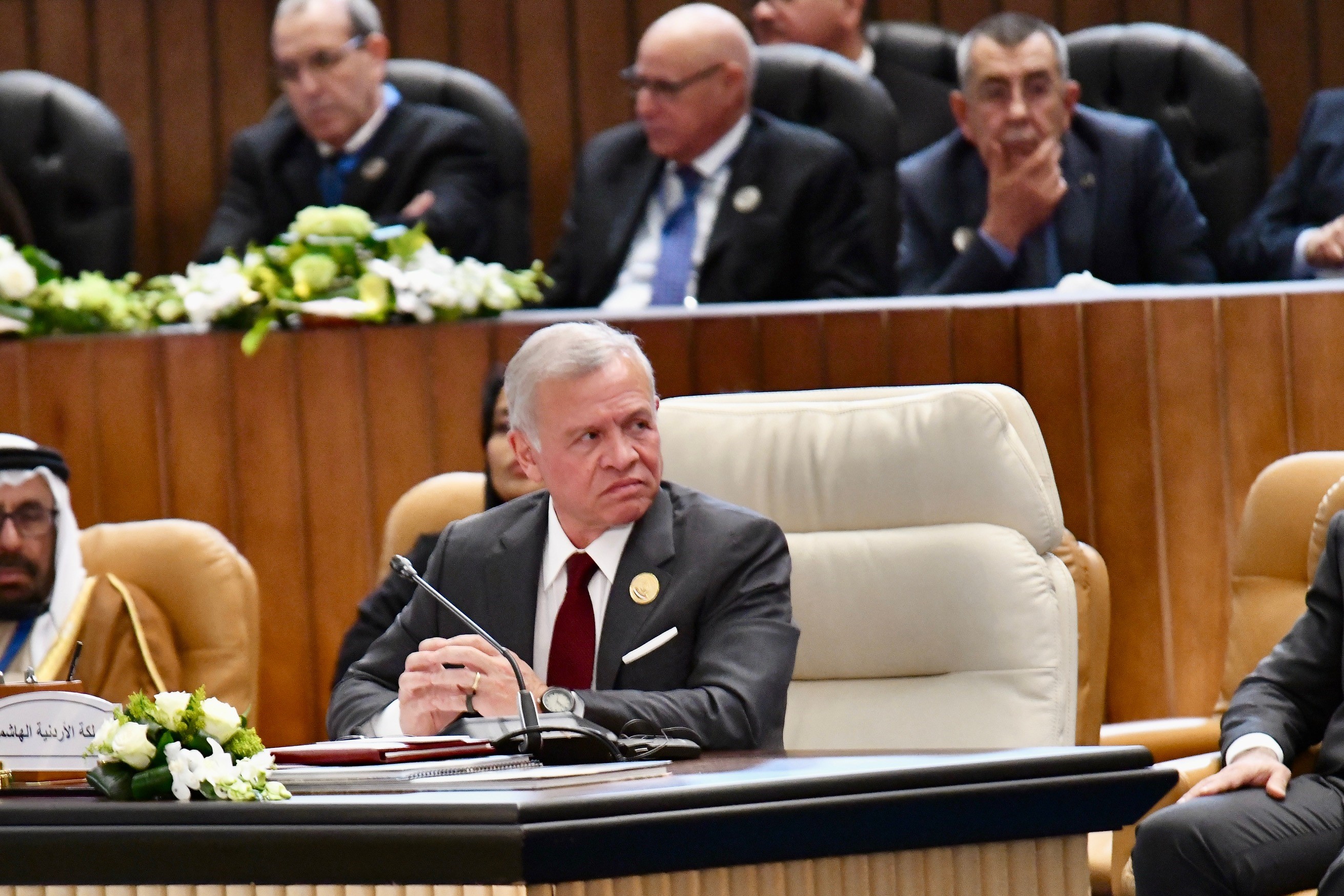
His Majesty King Abdullah II on Tuesday affirmed Jordan’s support for the plan to rebuild Gaza, which will be presented to active partners to gain international support, according to a royal court statement.

Delivering Jordan’s address at the Extraordinary Arab Summit hosted by Egypt, dubbed the ‘Palestine Summit,’ His Majesty reiterated Jordan’s total rejection of all attempts to displace Palestinians in the West Bank and Gaza and annex land, in addition to condemning the Israeli decision to block humanitarian aid to Gaza.

The King stressed the importance of maintaining the ceasefire in Gaza and ensuring the implementation of all its phases, as well as stopping the dangerous escalation of the situation in the West Bank.

Following is the English translation of Jordan’s address at the Extraordinary Arab Summit and as printed in the Jordan Petra news agency:

“In the Name of God, the Compassionate, the Merciful,

Prayers and peace be upon our Prophet Mohammad,

Your Majesty King Hamad bin Isa Al Khalifa,

Your Excellency President Abdel Fattah Al Sisi,

Your Highnesses and Excellencies,

Peace, God’s mercy and blessings be upon you.

I would like to first express my thanks to my brother President Abdel Fattah Al Sisi for hosting this extraordinary summit during this difficult phase, which demands stepping up Arab coordination and unifying our positions, and to my brother, King Hamad bin Isa Al Khalifa for his outstanding efforts in presiding over the ordinary session of the summit. I also thank the Secretary General of the Arab League and its staff for their efforts in organising our summit today.

My brothers,

We salute the steadfastness of the Palestinian people on their land, and renew our support for our Palestinian brethren in their efforts to gain their full legitimate rights, foremost of which is their right to freedom and an independent and sovereign state on their national soil, on the basis of the two-state solution, which is the only way to achieve just and comprehensive peace that guarantees security and stability for our region.

At this delicate stage, when the Palestinian cause is facing very serious challenges, it is imperative to work urgently together to counter any attempts to impose solutions at the expense of Palestinians and liquidate their cause.

We stress the importance of maintaining the ceasefire in Gaza and ensuring the implementation of all its phases. We also reiterate our rejection of the Israeli decision to block the entry of humanitarian aid into Gaza, which constitutes a violation of the most basic principles of international law.

Thus today, we need to prioritise four main themes:

First: Our total rejection of all attempts to displace Palestinians in the West Bank and Gaza, and to annex land, which is a flagrant violation of international law and international humanitarian law, and our support of the plan to rebuild Gaza, to be presented to active partners in order to gain international support.

Second: Supporting the reform efforts of the Palestinian National Authority in the interest of our Palestinian brethren, as well as preparing a clear and implementable vision for the administration of Gaza and linking it to the West Bank in order to provide all basic services and ensure the required security.

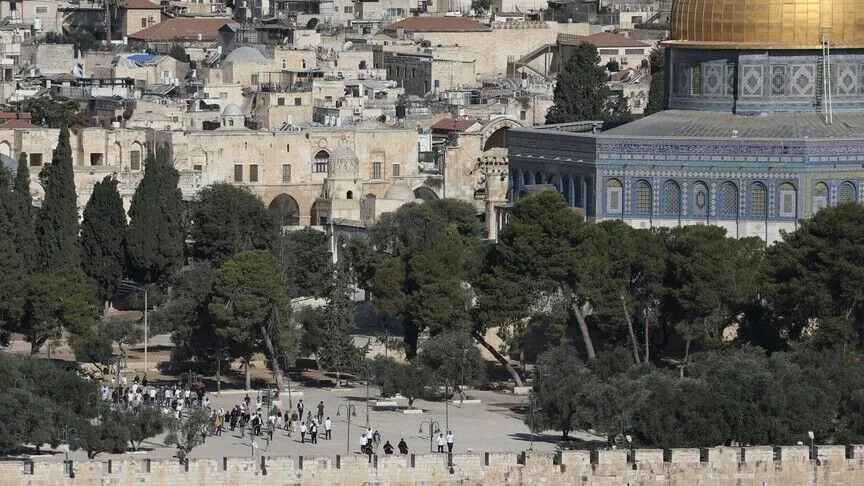
Third: The need to stop the dangerous escalation in the West Bank, which threatens the existence of Palestinians in the West Bank and is resulting in the displacement of some of them, leading to the erosion of prospects for stability and peace in the entire region. We also need to counter the violations of Muslim and Christian holy sites in Jerusalem and preserve the historical and legal status quo, especially during the holy month of Ramadan, to prevent attempts by extremists in the Israeli government to exacerbate the situation.

Jordan will persist in undertaking its historic duty to safeguard Muslim and Christian holy sites under the Hashemite Custodianship.

Fourth: Reaffirming that the two-state solution is the only way to achieve just and comprehensive peace that guarantees the establishment of an independent Palestinian state on Palestinian national soil, with East Jerusalem as its capital. The two-state solution provides a comprehensive political horizon to stabilise the region and spare its peoples further conflict.

My brothers,

Since the beginning of Israel’s unjust war on Gaza, Jordan’s position has been clear: we reject any attempt at displacement and any measure to liquidate the Palestinian cause and undermine the two-state solution.

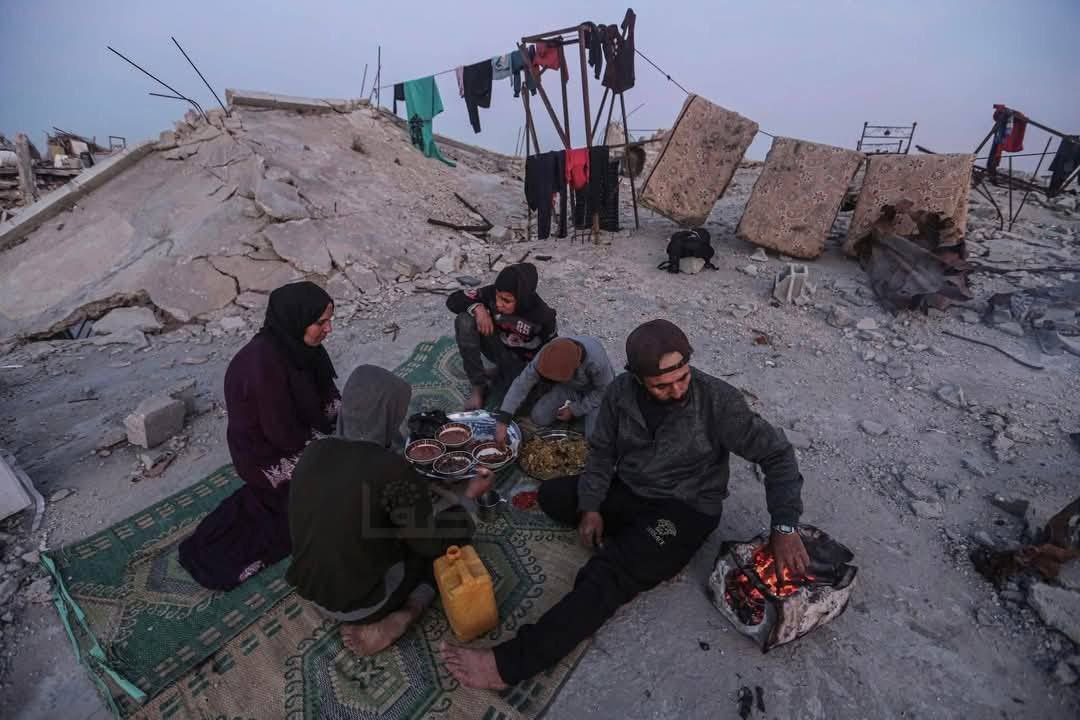
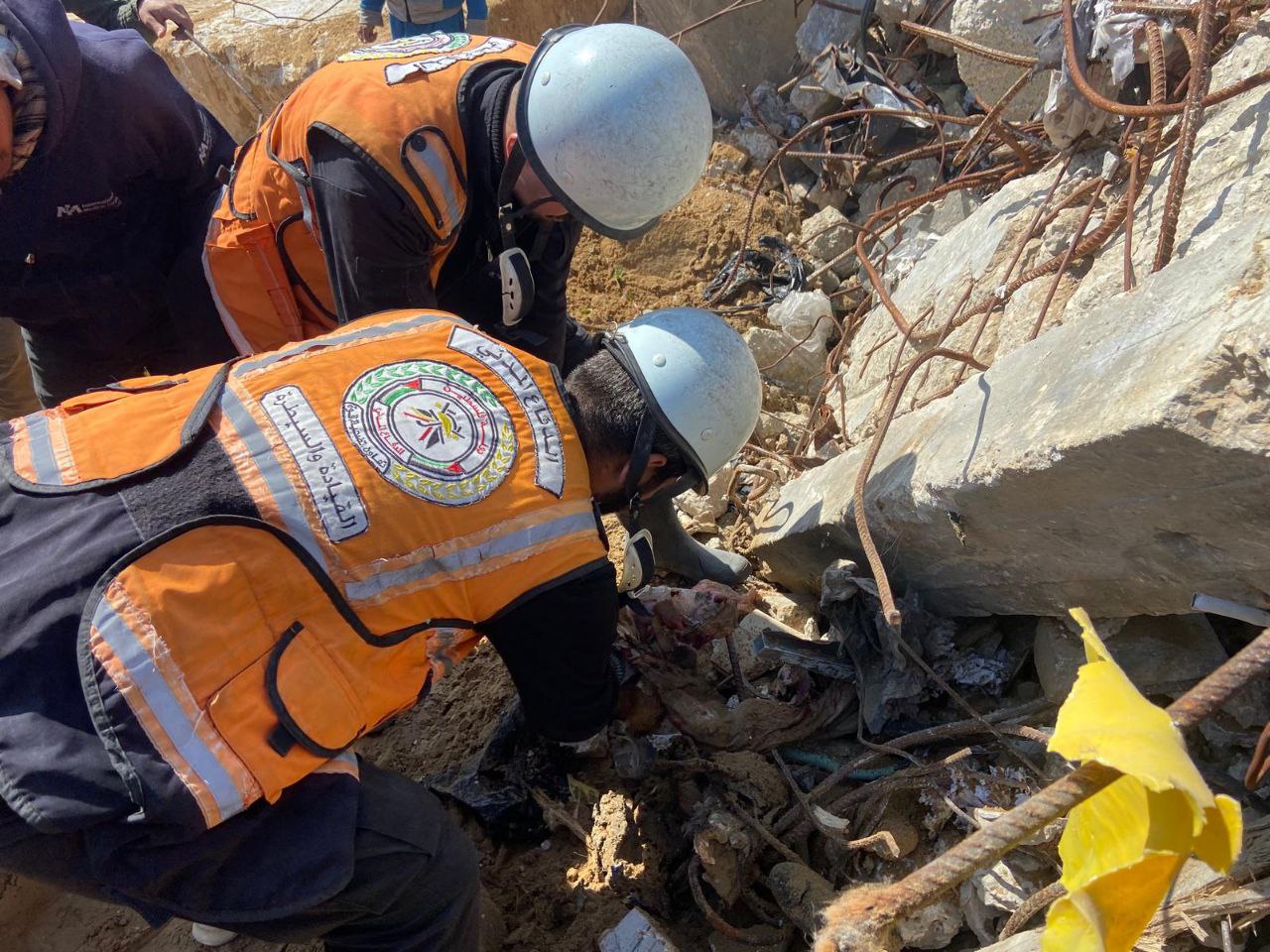
An immediate and effective regional and international effort must be launched to address the tragedies, killings, terror and destruction caused by the war on Gaza. Efforts must focus on providing shelter, treatment, and food for the people in Gaza, and we must work to implement plans to rebuild what was destroyed by the war.

The humanitarian response in Gaza must continue. Jordan will continue to provide aid to Gaza by land and air. We also appreciate the efforts of our brothers and friends and their continued work alongside us to provide relief to Gazans.

My brothers,

The outcome of our summit must be practical steps to support our Palestinian brethren, support their steadfastness on their land, alleviate their suffering, and mobilise international efforts to stop everything that prevents the achievement of peace, which cannot be realised through military escalation, displacement of peoples, and denial of their rights.

Peace, God’s mercy and blessings be upon you.”

The Jordanian delegation at the Extraordinary Arab Summit included Prime Minister Jafar Hassan, Deputy Prime Minister and Foreign Minister Ayman Safadi, Director of the Office of His Majesty Alaa Batayneh, and Jordan’s Permanent Representative at the Arab League Amjad Adaileh.

Continue reading
Al-Azhar Denounces Aid Stoppage to Gaza

Al-Azhar, Egypt’s prestigious Islamic institution, denounced Israel on Monday for barring humanitarian aid from entering Gaza, labeling the move a “crime of starving innocent children, women and men” that disregards the sanctity of the Muslim fasting month of Ramadan.

The statement, posted on X, condemned Israel’s “cowardly decision” to halt aid convoys as a flagrant violation of human values.

The statement emphasized that Israel, in perpetrating this act, “deprives innocent civilians of food, showing a complete disregard for mercy and human values,” particularly during Ramadan according to Anadolu.

The institution called on Islamic governments to utilize their diplomatic and political tools to break the oppressive siege on Gaza’s hungry population during the holy month.

It warned that the blockade is intended to force Palestinians to choose between dying of hunger or fleeing Gaza, giving up their land to the occupying entity.

Al-Azhar urged Islamic countries and the international community to demand the immediate opening of border crossings, facilitate the entry of aid convoys and hold Israel accountable for its crimes.

The statement called for war criminals responsible for some of the most horrific acts in modern history to face trial and justice.

The Israeli government halted the entry of humanitarian aid into Gaza on Sunday as Prime Minister Benjamin Netanyahu refused to start negotiations on the second phase of a ceasefire deal between Israel and the Palestinian group Hamas.

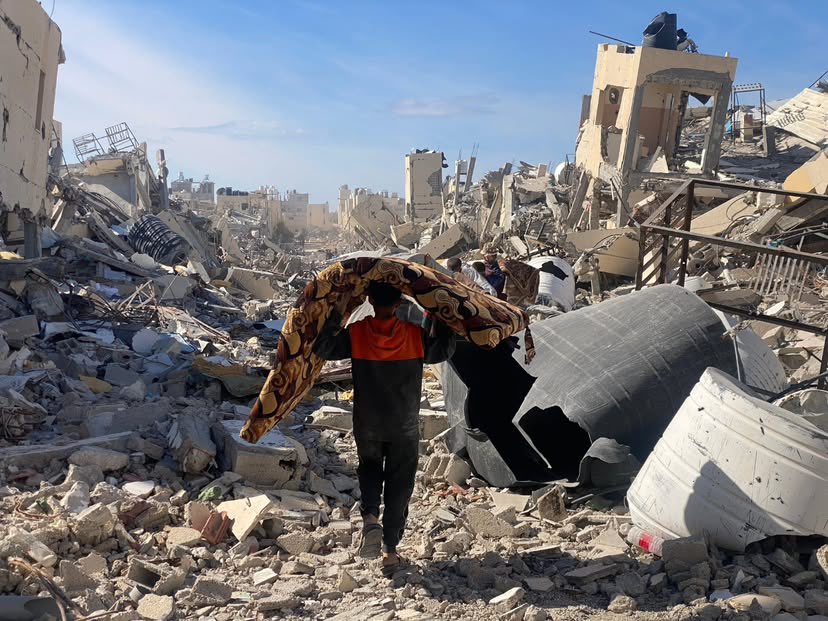
The agreement has halted Israel’s genocidal war on Gaza, which has killed nearly 48,400 people, mostly women and children, and left the enclave in ruins.

Continue reading
Back on Track: Israel Poised to Free 620 Palestinians Prisoners

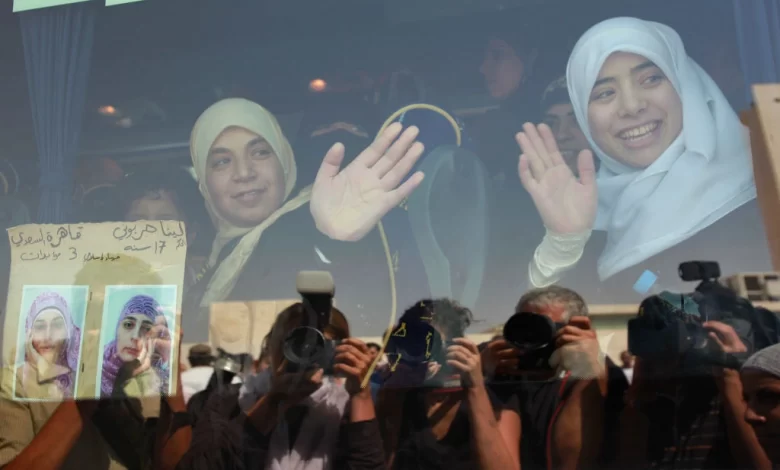
Israel is set to release 620 Palestinian detainees after days of stalling by Prime Minister Benjamin Netanyahu. The expected release as announced by Hamas will now proceed as originally scheduled.

Hamas had stated that Israel violated the ceasefire agreement, in place since 19 January 19, by freezing the release of Palestinian detainees. It insisted Israel failed to uphold its commitments, after Hamas released Israeli prisoners as agreed. Hamas official Mahmoud Mardawi warned that no releases would mean that the deal to release more of the hostages would be off-the-table.

The Israeli government is angry because of the way the Israeli hostages are being released through “humiliating ceremonies” especially after an Israeli prisoner expressed gratitude to Hamas fighters upon release, kissing their foreheads.

However, Israel soon caved in under pressure from the countries sponsoring the negotiations mainly, the USA, Egypt and Qatar.

Continue reading
Who is Going to Rebuild Gaza?

No official announcement was made following the Riyadh Summit, which was considered fraternal, friendly, and consultative rather than formal. The summit, held a few days ago, was attended by the Gulf states, along with Jordan and Egypt, in anticipation of the Cairo Summit scheduled for March 4. The Cairo Summit is expected to approve and announce a new Arab plan for rebuilding Gaza as an alternative to Trump’s plan. However, more importantly, the Arab plan presents a comprehensive political approach linking the Gaza issue to the establishment of a Palestinian state and a peaceful resolution in the region. This approach counters Israel’s new policies, which are based on political hegemony—not only in Palestine by eliminating the two-state solution but also by expanding Israel’s security boundaries to include parts of Syria and Lebanon and inciting the U.S. into a confrontation with Iran.

The Egyptian-Arab approach is still in its final stages of preparation. It takes into account a combination of financial, technical, political, and security aspects concerning Gaza. Palestinian Prime Minister Mohammad Mustafa has proposed modifications to the plan originally put forward by the World Bank, the United Nations, and the European Union, which estimated the cost of rebuilding Gaza at over $50 billion in a rapid and preliminary needs and damage assessment report (IRDNA). Instead, Mustafa proposed a more realistic and feasible plan costing no more than $20 billion, to be implemented in three phases. The Egyptians have incorporated this into their reconstruction plan, which includes dividing Gaza into three safe zones, using temporary housing (caravans) and tents, and developing a technical vision for redesigning the sector’s infrastructure through specialized Egyptian companies.

The Arab approach links the reconstruction plan to several key elements. The first is the technical, logistical, and financial aspect of rebuilding. The second is reforming the Palestinian Authority (PA) to counter Israeli claims of its incompetence, with reform measures covering political and security aspects. The third element concerns the administration of Gaza in the post-occupation phase. A significant development has occurred with the Palestinians agreeing on a temporary administrative committee responsible for technocratic affairs. Hamas has accepted this arrangement, and President Mahmoud Abbas has reluctantly agreed to it, as it implicitly means that the PA will not return to Gaza.

The most challenging aspect of the Arab plan lies in the security arrangements during the reconstruction phase. Arab states refuse to deploy security forces or enter Gaza without a clear vision for ending the Israeli occupation and establishing a Palestinian state. As Arab diplomats emphasize, what is needed is not just a roadmap for resolving the Palestinian issue, but rather an agreement on final-status issues and recognition of a Palestinian state—followed by a roadmap for implementation, not the other way around.

The most contentious issue in the Arab approach is Hamas’s weapons. Israel, along with the United States, will not accept Hamas retaining its weapons in Gaza. Israel has made it clear that it links the second phase of the process to this condition, and the U.S. has accepted this demand. On the other hand, the Arab side ties the issue of disarming non-state actors to the establishment of a Palestinian state that would have the exclusive right to possess weapons. The key question remains: Who would disarm Hamas? The only legitimate entity that could do so is a recognized Palestinian state, which remains the missing piece in U.S. policies that align with Benjamin Netanyahu’s vision.

The Arabs hope that this approach will establish a new framework for relations with the United States and offer alternative strategic options. They even believe it could persuade President Donald Trump to secure several achievements—perhaps even earning him a Nobel Peace Prize in the end.

This is undoubtedly a highly optimistic approach, but it represents a new Arab attempt to present a united position and alternative strategic options. However, the biggest challenge this vision overlooks lies in the details. As the saying goes, “the devil is in the details.” What kind of Palestinian state is actually possible under the current circumstances? What was previously proposed by Trump himself? Is there a single Palestinian—any Palestinian—who could accept a state comprising only 30% of the West Bank, without East Jerusalem, and without control over borders? How could Hamas and its supporters—or even the majority of Palestinian refugees—be convinced of such a proposal, even if there were Israeli and American acceptance of the new Arab approach?

Mohammad Abu Rumman is a columnist in The Jordan Times.

Continue reading
Cairo Confirms 4 March For Gaza Rebuild Summit

Egypt confirmed on Tuesday that it will host an emergency Arab summit on March 4 to discuss plans to rebuild the Gaza Strip without displacing its Palestinian inhabitants.

The summit was originally scheduled to be held on Feb. 27, but was postponed to March 4 “to complete logistical preparations,” the Egyptian Foreign Ministry said in a statement.

The ministry said the new date was set in coordination with Bahrain, the current chair of the Arab League, and in consultation with Arab countries according to Anadolu.

The summit follows a proposal by US President Donald Trump to take over Gaza and resettle its Palestinian inhabitants to develop it into what he called “the Riviera of the Middle East.”

On Sunday, Egyptian President Abdel Fattah al-Sisi confirmed that his country is preparing a “comprehensive” plan to rebuild Gaza without displacing Palestinians.

Trump’s plan for Palestinian resettlement has been rejected by the Arab world and many other nations, who say it amounts to ethnic cleansing.

The controversial idea came amid the ceasefire agreement that took effect in Gaza on Jan. 19, halting Israel’s genocidal war, which has killed nearly 48,300 Palestinians, most of them women and children, and left the enclave in ruins.

Continue reading