Israel Intensifies Genocidal Campaign in Gaza

Israel has intensified its genocidal campaign in Gaza through one of the most extensive and lethal assaults since the beginning of its offensive, committing massacres and adopting a scorched-earth policy involving the total destruction of remaining neighbourhoods and infrastructure. 

This approach follows a pattern sustained for over 19 months, characterised by mass killings, starvation, and the systematic destruction of all means of survival, with the deliberate targeting of Palestinian civilians in their homes, shelters, and vital facilities, all aimed at erasing Palestinian society in Gaza and eliminating any prospect of its return or reconstruction.

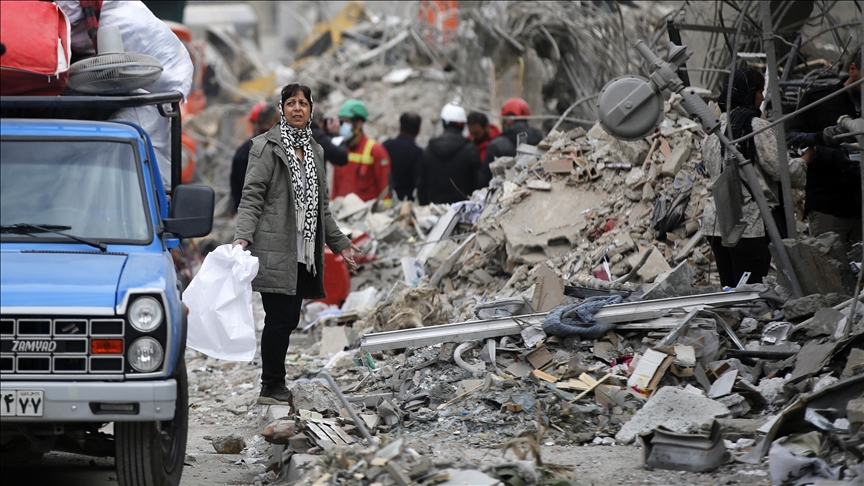
In recent days, Israeli occupation forces have escalated their assault across various areas of the Gaza Strip, carrying out systematic destruction of what remains of homes and civilian infrastructure, and committing mass killings of the population. This forms part of a policy designed to destroy all aspects of life, depopulate the area, and prevent the continued existence of its residents— a prelude to the imposition of a colonial reality by force, based on the erasure of the indigenous population and the de facto annexation of the territory to Israel, in grave violation of international law, including the prohibition on annexing land by force.

Euro-Med Monitor’s field team documented the killing of more than 115 Palestinians in the northern Gaza governorate alone in less than 12 hours since dawn on Friday. The casualties followed Israeli airstrikes on at least 10 residential homes in Tel al-Zaatar (Jabalia) and Al-Salatin neighbourhood (Beit Lahia).

These homes were completely destroyed with residents inside, resulting in the deaths of dozens of civilians, including women and children, in what amounts to a series of mass killings reflecting an escalating pattern of systematic violence against civilians in the Strip.

More than half of the victims remain trapped beneath the rubble, as rescue and civil defence teams are unable to reach them due to the lack of resources and equipment. Meanwhile, dozens of bodies and wounded individuals have overwhelmed the corridors of the Indonesian Hospital and Al-Awda Hospital, highlighting the complete collapse of Gaza’s healthcare system.

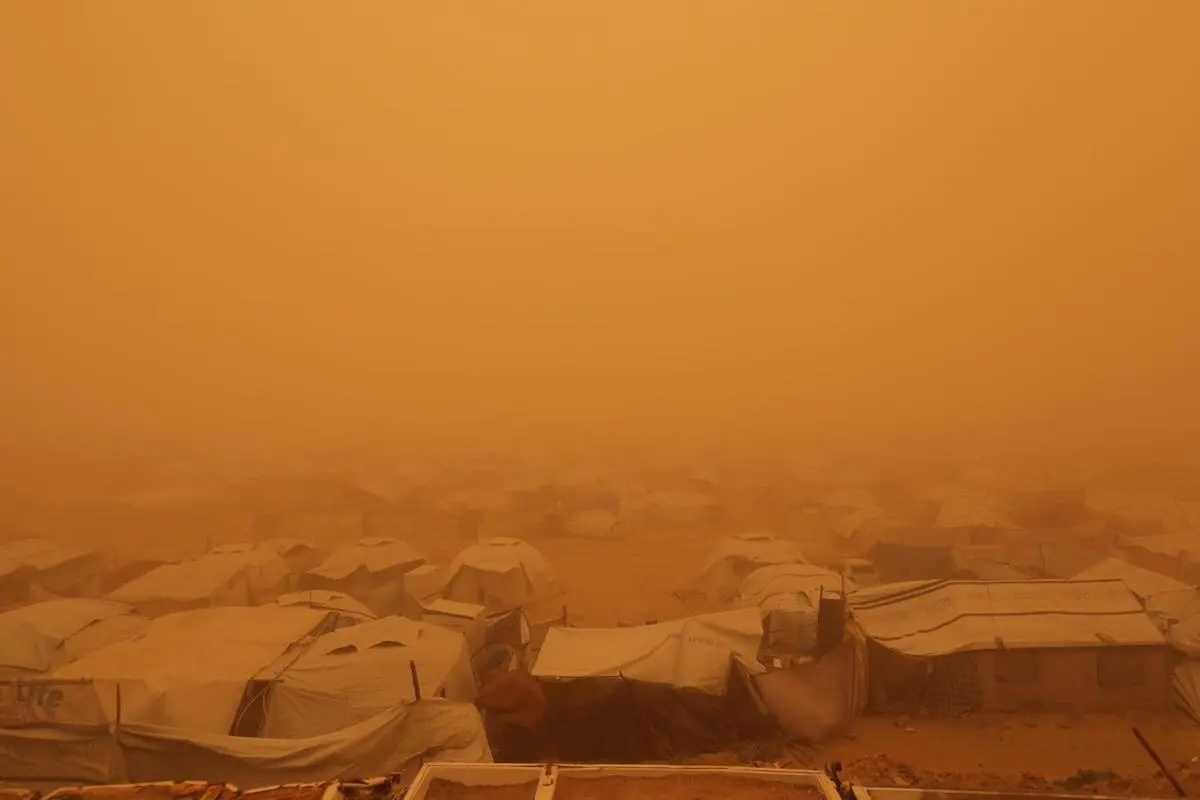
Limited incursions by Israeli ground forces were reported from two directions, north of Beit Lahia and east of Jabalia, under heavy artillery and air cover. There is growing concern that these ground operations could expand, placing hundreds of thousands of civilians, already living in tents under continuous bombardment, hunger, and daily violence, at even greater risk.

In addition, Israeli artillery targeted Palestinian civilians as they attempted to flee and search for shelter following repeated waves of bombardment. These attacks resulted in the killing of 10 people in the Al-Dur al-Gharbi area of Beit Lahia, and 8 more in the Azbet Abd Rabbo area of Jabalia.

Over the past two days, Israeli forces have systematically destroyed a large number of partially damaged residential buildings in northern Gaza, in what appears to be a continuation of a broad campaign to obliterate entire urban areas, specifically targeting civilian population centres.

In recent days, the Israeli army has adopted a scorched-earth policy east of Khan Younis, while continuing its destruction of entire neighbourhoods in Rafah. Civilian Israeli contractors have also taken part in this effort, reflecting a deliberate intent to erase the city from the map.

These developments represent the practical implementation of Israeli Prime Minister Benjamin Netanyahu’s recent statements, in which he declared: “We will continue destroying Gaza’s homes until the Palestinians have no shelter left, and nothing remains but for them to leave. The only problem is finding countries willing to take them.”

This statement constitutes a clear admission from Israel’s highest political authority of an intent to uproot an entire population, an intent now being realised on the ground through the systematic destruction of all means of survival.

The recent massacres, particularly in Khan Younis and northern Gaza, mark a dangerous escalation in the targeting of civilians. Israel is deploying overwhelming and indiscriminate firepower without justification or the presence of active combat, strongly indicating that civilians themselves are the direct targets— a grave violation of international law.

The widespread destruction policy carried out by Israel cannot be classified as serving any legitimate military objective. Rather, it constitutes part of a deliberate and systematic approach to genocide, aimed at dismantling Palestinian society in Gaza,physically and demographically, by stripping it of the means to survive, eliminating it entirely, and preventing any future return.

The international community must act urgently to stop this ongoing genocide, initiate serious investigations into the crimes committed, and take effective measures to ensure the protection of civilians and bring an end to the culture of impunity that has emboldened Israel to commit grave violations without accountability.

The international community must impose economic, diplomatic, and military sanctions on Israel for its systematic and grave violations of international law. This includes banning the export of weapons or dual-use items to Israel, prohibiting the purchase of such items from it, halting all forms of political, financial, and military support and cooperation, freezing the financial assets of officials involved in crimes against Palestinians, imposing travel bans on them, and suspending trade privileges and bilateral agreements that grant Israel economic advantages enabling it to continue committing crimes against the Palestinian people.

States must also launch criminal investigations into Israeli and international companies involved in supplying the Israeli military with weapons and heavy equipment used in carrying out acts of genocide. This includes bulldozers, surveillance systems, and spyware used to track and target civilians. Public and private investments in these companies must be withdrawn, and the companies themselves must be blacklisted nationally and internationally.

States with universal jurisdiction laws must issue arrest warrants for Israeli political and military officials implicated in the crime of genocide and initiate legal proceedings — even in absentia — under their international legal obligations to prosecute such crimes and combat impunity.

An independent international mechanism must be established to preserve evidence related to the crime of genocide in Gaza. This body should document and safeguard digital evidence, satellite imagery, and testimonies from victims and survivors for use before international judicial bodies, particularly the International Criminal Court (ICC).

The ICC must expedite its investigations and issue arrest warrants for Israeli officials responsible for international crimes committed in the Gaza Strip. It must acknowledge and treat Israel’s actions as acts of genocide without equivocation. Member states of the Rome Statute must be reminded of their legal obligations to fully cooperate with the Court, ensure the enforcement of its arrest warrants, bring the perpetrators to international justice, and end the cycle of impunity.

EuroMed Human Rights Monitor

Continue reading
Can ‘Realist’ Trump Pull Off Gaza Ceasefire?

By Michael Jansen

During his ongoing visits to Saudi Arabia, Qatar and the Emirates, US President Donald Trump seeks to focus on business opportunities and investment in the US rather than address the negative political realities to which he contributed during his first term (2017-2021).

At that time, he dismissed the two-state solution in favour of “The Deal of the Century” which would give Palestinians a degree of autonomy within Israel. He defunded UNRWA, recognised Jerusalem as Israel’s capital, moved the US embassy there, and said the US no longer considers Israeli settlements illegal overturning a 1978 policy. The fate of the refugees, Jerusalem, and settlers were meant to be negotiated under the two-state solution by the sides under the 1993 Oslo accord. He closed the US consulate in occupied East Jerusalem which served Palestinians and the PLO office in Washington. Trump recognized Israeli annexation of Syria’s occupied Golan.

Trump began his second term by calling for the expulsion of Palestinians from Gaza which would be redeveloped as a Middle East Riviera instead of exerting pressure on Israel to end the Gaza war and enable its reconstruction. Under Trump’s real estate venture Gazan Palestinians were supposed to settle in Egypt and Jordan, which along with all the Arabs flatly rejected this proposal. Egypt drew up a counterproposal to reconstruct devastated Gaza while its population stays put.

His resort scheme has angered the Arab public from the Gulf to the Atlantic. His call for Saudi Arabia to establish relations with Israel has been rejected as Riyadh has said it will normalise when there is a Palestinian state with its capital in Jerusalem.

Since Trump made Saudi Arabia his first foreign destination in 2017 during his first term, the region has changed significantly by pivoting to the East. Saudi Arabia and the Emirates have cultivated ties with Russia – Riyadh’s partner on oil production and pricing – and China which buys Gulf oil and exports billions of dollars in goods to the Gulf. The Emirates, Egypt and Iran joined BRICS (the grouping of Brazil, Russia, India, China, and South Africa) while Saudi Arabia applied but did not follow through. China mediated Saudi-Iranian reconciliation. This has ended Iran’s isolation in the region.

On the positive side, early in this term Trump opened talks with Iran over its nuclear programme to replace the 2015 deal from which he withdrew in 2018. A fifth round of talks is expected. Although Trump wants to be a peacemaker, he has threatened war if the talks fail.

As a peacemaker, Trump bombed Yemen heavily to force Yemen’s Houthis to end attacks on international commercial and naval vessels in the Gulf of Aden and the Red Sea. The Houthis and US agreed to end this confrontation. Trump has not, however, halted Houthi drone and ballistic missile attacks on Israel which the Houthis say will stop if Israel observes a ceasefire or ends the war on Gaza.

Trump has not planned to stop in Israel during this Gulf tour, indicating that there is some distance between him and Israeli Prime Minister Binyamin Netanyahu. He has not only refused to ceasefire in Gaza but also maintained a ten-week blockade of the strip. He could have done both to ease Trump’s swing around the Gulf where Gaza is high on the agendas of the rulers and public. Since Netanyahu has carried on with his Gaza war, Trump has ignored him when resuming talks with Iran on limiting its nuclear programme in exchange for lifting sanctions and agreeing to a ceasefire with Yemen’s Houthi. The ceasefire has been welcomed by Washington’s Arab allies, particularly Saudi Arabia which had been urging an end to US attacks on Yemen before Trump began his tour.

Without Israeli involvement, the US has also negotiated with Hamas over the release on Monday of US-Israeli hostage Edan Alexander. For Trump, this is a greatly desired success in the US. In Israel, families of hostages who are not US-Israel dual citizens fear their relatives will be forgotten by Netanyahu who is determined to not only continue with the war but also to expand it once Trump departs from the region. Hostage families are not alone in their suspicions. A majority (54 per cent) of Israelis said that the war was being driven by personal rather than security reasons. Only 21 per cent agreed with Netanyahu’s prioritisation of eliminating Hamas over rescuing the hostages. A March poll showed 70 per cent of Israelis wanted Netanyahu to resign.

He has adopted this stance for several reasons. First, right-wingers in his coalition have vowed to pull out if he ends the war. Second, once the war is over, Netanyahu will be called upon to account for lax Israeli security in the south where Hamas breached the fence on October 7th, 2023, killed 1,200 Israelis and visitors and abducted another 251. There was no excuse for laxity. Young female Israeli soldiers deployed as “watchers” along that part of the border with Gaza, warned repeatedly that Hamas was conducting drills and manoeuvres ahead of an attack. Their warnings were not taken serioiusly by senior Israeli officers. Some of these women were killed and some captured. Third, as long as the war is being waged, Netanyahu will not have to explain how lightly armed Hamas fighters have managed to carry on the fight while the mighty Israeli army and air force levelled Gaza and killed 53,000 Palestinians. Netanyahu has a lot of explaining to do.

Jansen is a columnist for the Jordan Times

Continue reading
Using Starvation as a Weapon of War

By Professor Mutaz M. Qafisheh and Manal Radaydeh

The famine raging in Gaza is not a side effect of war. It is the outcome of a willful and publicly declared plan aimed at displacing and destroying Gazans by starving the entire population. This is not a natural disaster— it is the systematic denial of access to food in a tiny, resource-scarce strip of land. Starvation is being used as a weapon—to break people’s will, force surrender, collectively punish, and carry out ethnic cleansing.

Nearly two months after the ceasefire collapsed, Israeli forces tightened the blockade on Gaza, sealing border crossings and halting all entry of food, water, medicine, and fuel. According to the World Food Program (WFP), food stocks had already run out by April 2024, and conditions have worsened significantly since March. Even modest charity kitchens that once served over a million meals daily have now ceased operations. WFP reported that the prices of the few remaining food items have surged by over 1,400%.  

Malnutrition and imminent death

This crisis is affecting everyone, but children are paying the heaviest price. UNICEF reported that over 60,000 children are suffering from severe malnutrition. As a result, thousands face imminent death. Most children survive on a single meal a day—or less. The lack of proper nutrition is damaging their bodies and minds in ways that may never be reversed. Satellite footage shows infants drinking water instead of milk. Many have withered to skeletons.

It is crucial to underline that this man-made hunger is not accidental. It is the explicit outcome of political decisions targeting civilians. Under international humanitarian law—particularly Article 23 of the Fourth Geneva Convention—all parties in a conflict must allow the free flow of humanitarian aid to civilians. The UN Office of the High Commissioner for Human Rights has described this famine as “cruel collective punishment.”

On Nov. 21, 2024, the International Criminal Court issued arrest warrants for Israeli Prime Minister Benjamin Netanyahu and former Defense Minister Yoav Gallant, accusing them of war crimes, including the use of starvation as a method of warfare—characterized as a war crime. This came after a unanimous order by the International Court of Justice on March 28, 2024 in the genocide case brought by South Africa against Israel. The ICJ ordered Israel to take all necessary and effective measures without delay to ensure the unhindered, large-scale provision of urgently needed services and humanitarian aid—food, water, electricity, fuel, shelter, clothing, hygiene, sanitation, and medical care—to Palestinians throughout Gaza. Yet Israel continues to act as if it were above the law.

Today, Gaza’s food system is completely destroyed: bakeries bombed, farms bulldozed, fishing boats burned, livestock killed, warehouses flattened, shops emptied, and aid trucks blocked or turned away. OCHA warns that famine is either imminent or already unfolding. And yet, the siege continues—on top of systematic daily bloodshed.  

Collapse of health care

The suffering is not only physical. As hunger spreads, so does the risk of disease, especially among children, the elderly, and the chronically ill. The health care system has collapsed. People with chronic diseases—cancer, diabetes, high blood pressure, heart and kidney failure—are dying. Euro-Med Human Rights Monitor recently documented the deaths of 14 elderly people due to malnutrition, among many others who perish in silence, with no one to record their plight.

The coming months and years will reveal the far-reaching consequences of the famine that struck Gaza in full view of world leaders—some of whom encouraged or were complicit in the starvation of 2 million innocent civilians. The world—particularly Europe and the Arab nations—can, if it chooses, put an end to these genocidal acts against children, the elderly, the sick, and the exhausted.

It is unimaginable. How is it possible that in the 21st century—an age of smartphones and social media—the international community watches a live-streamed famine unfold and does nothing? What has brought us to this moral and legal vacuum? If famine is tolerated this time, it will be normalized and replicated elsewhere. That would mean the erosion of values humanity has struggled for centuries to uphold.

It’s time for action, not just words. History will judge. History is here. And history is now.  

Mutaz M. Qafisheh is Professor of International Law at Hebron University. Manal Radaydeh is a Researcher in International Diplomacy at Hebron University and this article was published in Anadolu.

Continue reading
Trump’s Middle East Hour

By Mohammad Abu Rumman

President Donald Trump’s current visit to the Gulf holds substantial strategic significance, especially when compared to visits by previous American leaders or other political figures. This is due to two key reasons: the first relates to the current situation in the Arab region, which is undergoing an intense period of regional and domestic turmoil in several countries—making the future extremely difficult to predict. The second reason is Trump’s own personality, marked by unpredictability, surprise moves, and a disregard for the traditional constraints that bind other U.S. presidents.

While it may be premature to judge or fully grasp the surprises or major outcomes that Trump’s visit may bring for the next phase, the man has already, on the eve of his arrival, stirred the waters—overturning many expectations and analyses, particularly in relation to two major files: the Syrian issue and the war on Gaza, including U.S. relations with Israel and Arab states.

On the Syrian file, Trump announced that he is seriously considering lifting or easing sanctions on Syria and offering support to the new political regime there—reportedly at the request of Turkish President Recep Tayyip Erdoğan. This development is especially significant as it runs counter to the Israeli agenda, particularly in the south of Syria, where Israel has sought to incite minority groups, sow chaos, and even occupy parts of the country. It is clear that Trump has not embraced Netanyahu’s highly provocative approach toward the new Syrian regime. Instead, he seems more aligned with the Turkish and Saudi perspectives, despite Netanyahu’s earlier efforts during a visit to the White House to secure a green light for Israeli aggression in Syria and against Turkey—bait that Trump did not take at the time. Now, on the eve of his Gulf visit, Trump has drawn a clearer line by discussing the potential easing of sanctions on Syria.

The second file concerns Trump’s ongoing tension with Netanyahu. While this may appear to be a personal dispute with the Israeli Prime Minister and his political agenda, Trump seems to be distancing himself from Netanyahu’s grip—unlike in previous phases where Netanyahu appeared to dominate Trump’s outlook. How this rift will influence the next phase, particularly regarding the war on Gaza, relations with Iran, and the broader American vision for the region, remains one of the most critical questions—especially when assessing the growing divergence from the Israeli right-wing narrative.

Much has been said about the reasons behind this divergence—some even call it a crisis—between Trump and Netanyahu. Israeli and American media have widely covered the issue. However, what this writer leans toward is the idea that the Saudis have thoroughly studied how to deal with the new president. They found a way to draw him away from the Israeli perspective by offering him the deal of his dreams: the prospect of a peaceful resolution that would lead to the establishment of a Palestinian state—potentially bringing him a Nobel Prize—ending the war in Gaza with terms favorable to both Americans and Arabs, lucrative commercial deals, normalized relations with America and Israel, strong regional ties, and many other major gains. Why, then, would Trump reject all of that and blindly follow Netanyahu and his far-right team?

The Saudi leadership’s role in the current phase is crucial. They are driving a major shift in the Arab approach to regional policy. Their cooperation on several issues with Turkey, Egypt, Jordan, and the UAE is helping to correct the significant imbalances that have emerged since the Israeli war on Gaza.

That said, it would be inaccurate to claim that Trump has made a full pivot. He remains unpredictable—full of surprises and a master of reversals. Moreover, despite the wide latitude he often enjoys, there are boundaries he will not cross. He may be entering a phase of tension with Netanyahu, but he is unlikely to go so far as to harm Israeli or joint U.S.-Israeli interests. He is well aware of the entrenched domestic base, the powerful lobbies, and the political minefields involved. His room for maneuver is limited. Still, this moment may represent an opportunity to widen the gap between him and Netanyahu—even if the regional reality is complex and the current Palestinian reality even more so. We must also be careful not to raise expectations too high!

The writer is a columnist in Jordan Times

Continue reading
Israel is Burning: Here’s Why!

By Dr Marwan Asmar

(Crossfirearabia.com) – Israel is burning. Its war on Gaza is going nowhere, Israeli society is being torn-apart, and its remaining 59 hostages remain in the depth of the tunnels in Gaza unable to be found. Its like looking for a needle in a haystack because of the extensive hundreds of miles of underground! Many, except Israeli Prime Minister Benjamin Netanyahu, people like US Envoy Steve Witkoff believe the hostages, 24 still alive, are likely to die if the war is not brought to an end.

After 18 months of bloodshed on the Gaza Strip with its endless destruction, Israel is nowhere near to reaching its objectivity of stamping out Hamas. The Islamist organizations remains just as strong, determined and willing for martyrdom as when the fighters unleashed themselves soon after 7 October, 2023.

On the contrary all the Israeli government did by insisting on the continuation of the war on the Palestinian territory has created the wrath of many world nations, including the irritation of US president Donald Trump who has cut off contacts with Israeli Prime Minister Benjamin Netanyahu and who now feels the latter can no longer be trusted for a meaningful end to the fighting.

Meanwhile, the Israeli army which is back fighting on Gaza not of its own accord, is facing what can all be called the “Gaza malaise” of being entrapped in the Strip through ambushes, booby-trapped, once-standing houses and Palestinian resistance missiles, ammunitions and artillery.

Israel and its army – despite the killing of over 52,000 Palestinians, 100,000 injured with over 12000 remaining under the rubble – is facing the worst of times, bogged down, through its own accord in an enclave it is determined not to leave while shamelessly embarking on a spree of killing, murder and mass-bombing civilians under the intrepid eyes of the world and documented by international agencies. In fact, many experts, including Israelis, say this is the worst documented genocide which the Jewish state will not be able to live it down.  

Meanwhile, the Palestinian resistance lead by Hamas and Islamic Jihad fighters and a motley of other determined factions led by the Popular Front for the Liberation of Palestine are wreaking havoc among Israeli soldiers and their killer machines of tanks, all over the Gaza Strip from its far north, center and its south.

Privately the Israeli army is complaining because of the orders they are following from extremist politicians like Netanyahu. And they have a right to be because they have literally bombarded every nook and cranny in Gaza, forcing its 2.1 million populations on a whirlwind pool of displacements not once, not twice but up to 10 times to squat from one place to another but to no avail.

How can civilians, mostly women and children living in tents – for this is what Gaza has been reduced to – be military targets with mass bombs dropped on schools and hospital. For this is what the Israeli army is, an impressive air force, thousands of tanks and mass bombs supplied by the Americans, British and many more countries have been reduced to.

There are no Palestinians fighters here, they don’t lounge among civilians in makeshift UN schools. The fighters are in bombed houses, Israeli-gorged out what used to be manicured-gardens and residential squares, in semblance of buildings that used to be ministries, ruined university halls, restaurants, shops and libraries and much more.

Israel has made sure these longer exist. However, the Palestinian groups have came to fight among the rubble of these places that are bombed and re-bombed time and again like a macabre scene never existed before.

In many of these places, different neighborhoods of Rafah in the south of the Gaza Strip to the north the bombed-out town of Beit Hanoon to Al Tuffah in Gaza City and Shuja’iyya to the east, near the wall that divided Gaza from Israel, the rubble and wreckage has become so bad that Israelis, for the most part, are no longer able to enter their tanks, bulldozers and other heavy machinery.

The soldiers have to go on foot with their machine-guns and backpack of bombs and other “vile little goodies”. Frequently, and today, much more so, they would be running from one place to another fearful of being sniped by Palestinian fighters.

Since Israel re-started its war on the Gaza Strip after 19 March, and as the Palestinian fighters geared for action weeks later, ambushes of Israeli soldiers were stepped in in the different areas of Gaza. These ambushes resulted in the death and injury – on a daily basis of many Israeli soldiers.

While the Israeli army – and it has been so throughout this war – trying to massage and downplay the number of Israeli dead, this has not worked because of the Israeli media, the internet and power of satellite television which meant that the image and the picture – even by Israeli soldiers themselves – has been instant and at the ready ready to be posted online.

As to the intensity of the fighting when satellite television provide pictures of helicopters, both like a scene of the ambush, the booby-trapped house and landing on top of Israeli hospitals, in Tel Aviv for instance, experts said one can be sure the number of Israeli dead and injured is large because Israeli soldiers on the ground on Gaza have with them medical teams to deal with immediate emergencies.

If helicopters to be transported to hospitals are brought in, they argue the number of ‘critically’ wounded and dead is sure to be much higher and that means the resistance is meting out powerful blows at the Israeli soldiers thousands who have been protesting in this latest military campaign that they don’t want to go back to fighting in Gaza in a recent memo signed by 200,000 rank-and-file soldiers and some even prepared to go to prison for disobeying orders.

The dismay among the Israeli soldiers have been highlighted by the booby-trapped housing. In one case recent case in Al Jenienah neighborhood in Rafah, a group of Israeli soldiers with their dogs walked into what appeared to be a booby-trapped disused building and which exploded immediately bringing in the transport helicopters. The place just blew up.

Such a situation is being repeated daily on the streets of Gaza, a strip proving a tough fight that can’t be conquered nor subdued. Just to go back to Shuja’iyya, a wrecked place which the Israeli army entered many times, and which history will associate with Palestinian courage, as its name in Arabic, as of Saturday morning a military transport vehicle was just blown up.

All the Israeli army first said that there has been a serious security incident there, with helicopters hovering at the scene on top of Tel Hashomer Hospital in Tel Aviv. Later on the only owned up to two soldiers being killed and seven injured.

Brigadier-general Fayez Dwairi speaking on Al Jazeera says that the number of Israeli dead is likely to be between four and 12 depending whether we are talking about a Merkava tank and or a military vehicle that also carries 12 people. He points out the Israeli tanks is the only one in the world that has four operatives but has room for six additional soldiers.

Hence this is the battle Israel is currently waging. If Netanyahu insists that the war will continue then his army is likely to continue to face a vicious circle of death and mayhem as the Palestinian Israeli fighters will continue to mushroom.

Today the Palestinian resistance is still at the ready for with Gaza destroyed and mass wreckages that wrecks of death, they have nothing to look forward but to continue fighting especially against an Israeli government and army determined to fight Hamas and the other Palestinian factions till the end

This analysis is written by Dr Marwan Asmar, chief editor of the crossfirearabia.com website. 

Continue reading