‘No More Spaces to Bury Our Dead’ – Gaza

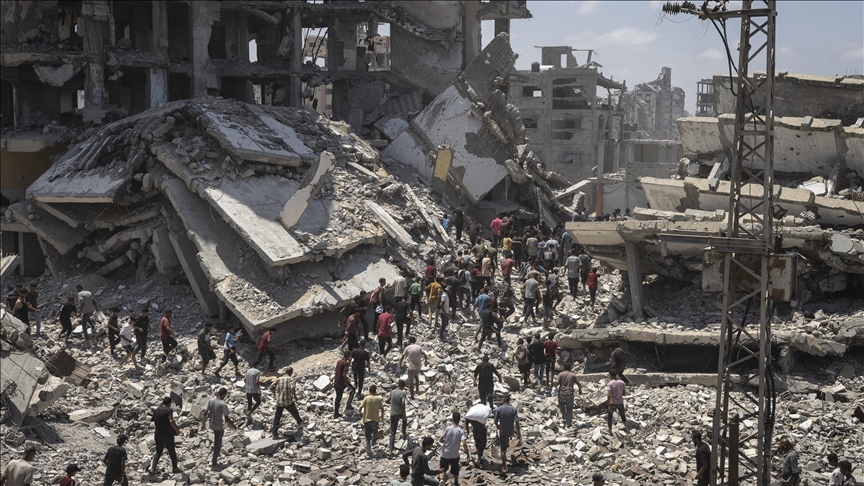
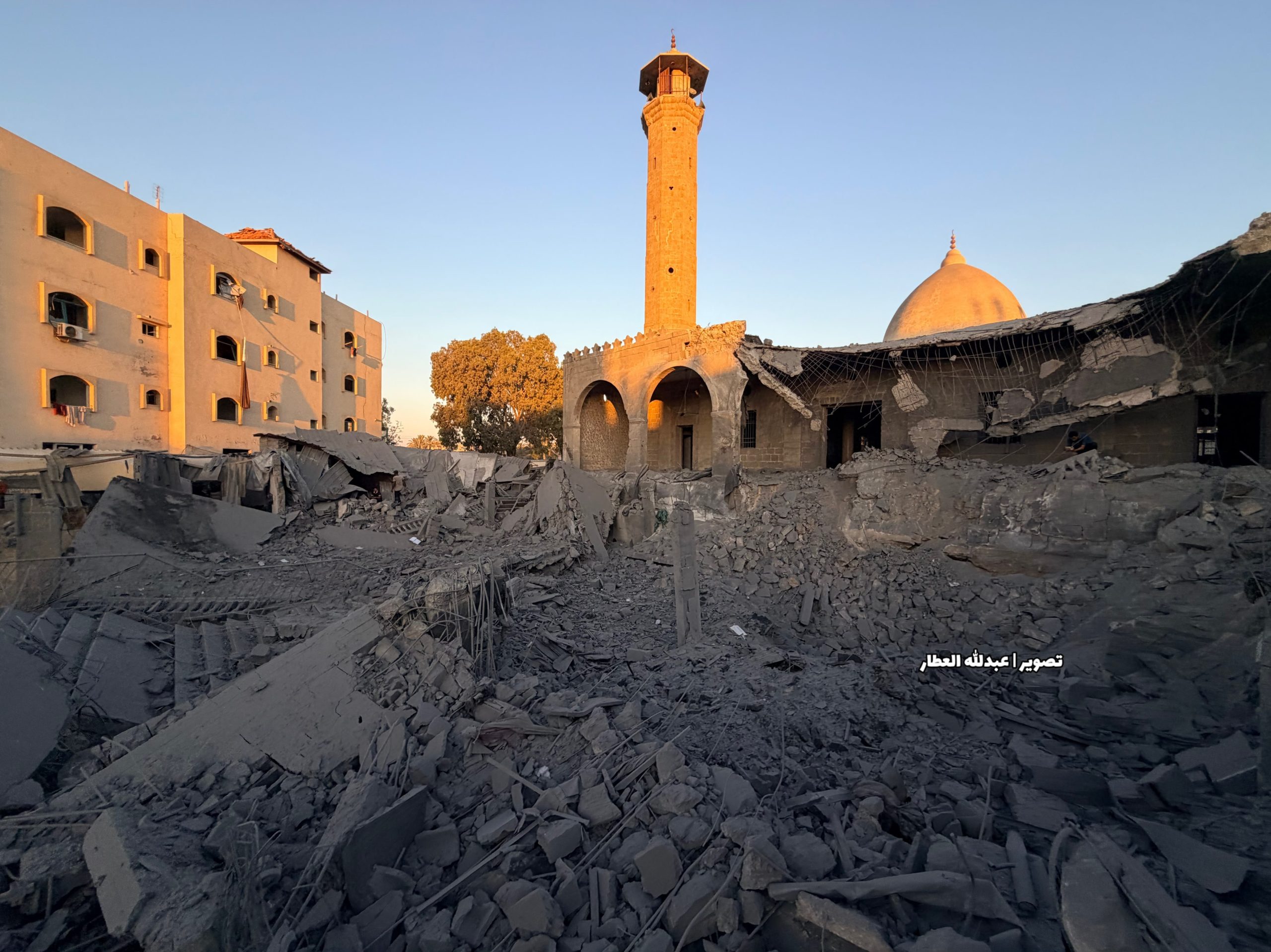
Graves are running out in Gaza. The Ministry of Endowments and Religious Affairs in Gaza announced, Wednesday evening, that graves have run out in most areas of the Strip. It added this is amidst the escalating genocide carried out by Israel over the past 22 months and the rising number of people that are being killed.

The systematic targeting of civilians and the ongoing genocide is resulting in the depletion of graves in most areas of the Gaza Strip, the Ministry stated, explaining that the Israeli army completely or partially destroyed more than 40 grave sites across the Strip since October 2023.

The ministry stated the Israeli army prevents Palestinians from “accessing cemeteries located within its security and military control, which has led to a reduction in burial spaces, the depletion of existing cemeteries, and the exacerbation of the severe shortage of graves for burying martyrs and the dead.”

It explained that this comes at a time when the Israeli army is preventing “the entry of shrouds, building materials, and materials necessary for preparing graves, which prevents the burial of martyrs in accordance with Sharia regulations.”

In addition, Israeli evacuation orders have reduced the available land for burials, transforming it into a shelter for displaced Palestinians, according to the statement.

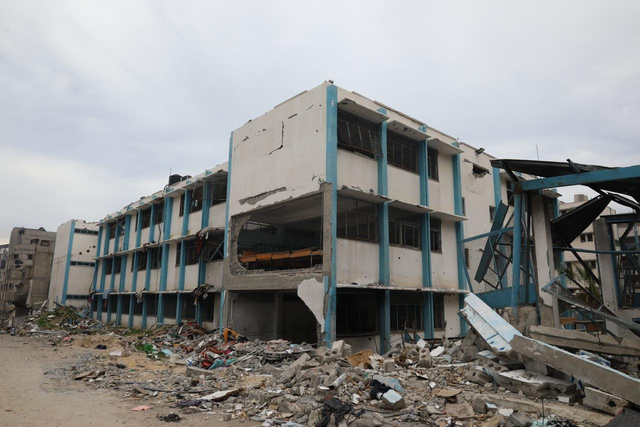
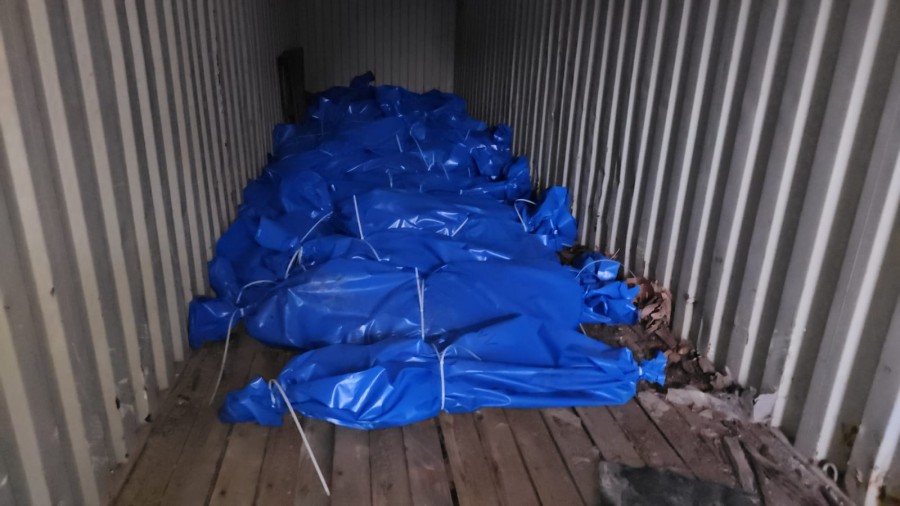
Consequently, the statement noted the accumulation of bodies of “martyrs” in hospitals and their courtyards, while schoolyards and homes have been converted into emergency burial sites.

It noted that with the worsening grave availability crisis in Gaza, the cost of preparing a single grave has increased from 700-1,000 shekels (one dollar equals 3.37 shekels), “burdening the families of the martyrs.”

The ministry is appealing to Arab and Islamic countries and entrepreneurs to support the “Ikram Campaign” it recently announced, to build free graves to honor the martyrs.

It also called on local and international relief organizations and entrepreneurs “to urgently intervene to provide relief to the families of the martyrs, work to build free graves, and provide urgent burial supplies, including shrouds, building materials, and burial equipment.”

Almost daily, activists circulate images on social media of the dead piling up in hospital courtyards as the death toll rises due to the escalating genocide.

Palestinians complain about the lack of graves to bury their “martyred” relatives, while some resort to opening old graves to bury additional bodies inside.

Since October 7, 2023, Israel has waged a genocidal war in Gaza, including killing, starvation, destruction, and forced displacement, ignoring all international calls and orders from the International Court of Justice to halt it.

The genocide, with American support, has left approximately 191,000 Palestinians dead or wounded, most of them children and women, and more than 11,000 missing, in addition to hundreds of thousands displaced and a famine that has claimed the lives of many, including children as reported by Anadolu.

Continue reading
How Britain Funded The Israeli Genocide

Britain’s support for Israel’s genocidal conduct in Gaza, through weapons, intelligence sharing, and diplomatic cover, is in the spotlight again after this week’s court ruling on a legal challenge to the UK’s continuing arms exports to Tel Aviv.

Critics, ranging from top human rights groups to legal experts and members of Parliament, say the UK has become complicit in the devastation Israel is inflicting on Gaza, where its forces have killed more than 57,000 Palestinians and wounded over 134,000 since Oct. 7, 2023.

The UK High Court on Monday dismissed a judicial review brought by Palestinian human rights group Al-Haq and London-based Global Legal Action Network (GLAN), supported by Amnesty International UK, Human Rights Watch, and Oxfam.

The case centered on Britain’s decision to exempt F-35 parts when suspending some arms export licenses for Israel last year, citing the UK’s legal obligations under international humanitarian law, including the Geneva Conventions, the Arms Trade Treaty, and the Genocide Convention.

Despite acknowledging these concerns, judges Stephen Males and Karen Steyn ruled that the so-called “F-35 carve-out” policy was lawful and beyond the jurisdiction of the courts. The decision drew widespread condemnation from the rights groups, who have vowed to keep up their efforts to force the British government to halt all arms exports to Israel.

According to a detailed investigation by London-based watchdog Action on Armed Violence (AOAV), the UK has supplied thousands of munitions, continued shipments of components for the F-35 fighter jet used in Israeli airstrikes, and conducted over 570 surveillance flights over Gaza since December 2023.

Arms and material

Britain has continued to arm Israel despite mounting civilian casualties in Gaza. “Since October 2023 there have been at least 14 shipments of military goods from the UK to Israel,” Labour lawmaker Kim Johnson said in Parliament last month.

“Those include over 8,500 munitions, bombs, grenades, missiles, and 146 armored vehicle parts. In October 2023 alone, the UK exported 150,000 bullets.”

In September 2024, under growing pressure, the Labour government announced it was suspending around 30 of 350 active export licenses for Israel, citing a “clear risk” that British-made weapons could be used in serious violations of international humanitarian law.

However, the move fell far short of a full embargo, with AOAV noting that “the vast majority of licenses remained valid.”

Critically, the UK exempted components for the F-35 fighter jet program from suspension. BAE Systems, a key British arms manufacturer, contributes to the jets used in Israeli airstrikes.

AOAV reports that F-35s have played “a critical role in the Israeli bombing campaign,” including an attack in March 2025 that killed more than 400 Palestinians.

While the UK insists that all exports are rigorously assessed, Parliament has heard warnings that Britain cannot ensure its arms are not used in Gaza.

“It is completely conceivable that those weapons have been used to kill and maim children in Gaza,” Labour MP Warinder Juss said in a Parliament session.

Surveillance and intelligence

Starting in December 2023, the Royal Air Force began flying near-daily surveillance missions over Gaza and southern Israel from the RAF Akrotiri base in the Greek Cypriot Administration.

According to AOAV data, Britain has flown over 570 such sorties, with more than 200 under the current Labour government.

The primary aircraft used is the Shadow R1, operated by the RAF’s 14 Squadron, equipped with high-resolution cameras and signals intelligence tools. The RAF also deployed RC-135 Rivet Joint planes to collect electronic intelligence.

The UK government claims these flights are “solely” for hostage rescue purposes. However, AOAV raised serious concerns about how the intelligence is used, warning that “British spy aircraft may have given Israel additional eyes and ears over Gaza’s battlefields.”

Britain’s membership in the Five Eyes intelligence alliance complicates matters further. As AOAV explains, the UK has long held responsibility for Middle East monitoring within the alliance, and signals intelligence shared with the US may have ultimately supported Israeli military operations.

Legal challenges and ethical concerns

Despite the September 2024 suspension of some export licenses, arms shipments from the UK to Israel appear to have continued. Human rights groups have sharply criticized what AOAV calls a “blind alliance.”

In early June, former Labour leader Jeremy Corbyn called for an independent public inquiry into the UK’s involvement in Israeli military operations in Gaza, urging the government to end arms sales to Israel and accusing ministers of complicity in what he described as “mass murder.”

Most recently, on June 30, the UK High Court dismissed the judicial review brought by Al-Haq and GLAN, saying that decisions on whether to continue UK’s involvement in the F-35 program were for the government and Parliament according to Anadolu.

Continue reading
Israel Kills a Cardiologist in North Gaza

In the latest crime added to the systematic Israeli targeting of medical personnel, Dr. Marwan Sultan, the Indonesian Hospital director in northern Gaza, was killed with his wife and five children in an Israeli airstrike targeting his home in Tel al-Hawa, west of Gaza City, Wednesday.

The Palestinian Ministry of Health in Gaza mourned Dr. Sultan, describing him as a “martyr of humanitarian with a medical duty.” It emphasized that his killing is a “heinous crime confirming the bloody methodology and premeditation Israel insistence while directly and deliberately targeting medical personnel.”

Dr Sultan, who was a cardiologist and one of two heart specialists in the hospital, was described as “a symbol of dedication, steadfastness, and loyalty, in the most difficult circumstances and most difficult moments experienced by our people under the ongoing aggression.” A Ministry statement emphasized that “the ongoing attacks on medical personnel represent a flagrant violation of all humanitarian norms and international laws.”

Pre-martyrdom testimony: “Why are they targeting us?”

In late May, Dr. Sultan launched a media outcry, warning of the catastrophe looming at the besieged Indonesian Hospital in the northern Gaza Strip.

He stated that the medical staff were working under constant threat, and that the hospital was subjected to a stifling siege and continuous shelling, including direct targeting of the intensive care unit, which exacerbated the damage and made it difficult to provide any kind of medical care.

He pointed out “the humanitarian situation inside the hospital has reached an extremely critical stage,” adding that the occupation forces were shooting at anyone moving in the vicinity of the hospital. He asked with sorrow: “Hospitals only house patients and medical staff, so why are the occupation forces targeting us?”

At the time, Sultan called on international human rights and humanitarian organizations to take urgent action and pressure Israel to stop targeting hospitals, warning of the collapse of the health system in the Gaza Strip if the violations continued.

More than 1,400 medical personnel have been killed since the beginning of the aggression after 7 October, 2023 according to statistics by the Health Ministry. These include doctors, nurses, paramedics, ambulance drivers, and logistics support workers, most of whom died while performing their humanitarian duties inside hospitals or while treating the wounded at bombardment sites.

The Ministry also documented the arrest of at least 360 health sector workers by the occupation forces, most of whom were arrested from inside hospitals or during their field work. They were arrested without formal charges or access to lawyers or families. According to numerous human rights reports, they are subjected to various forms of torture.

Since October 7, 2023, Israel, with American support, has been committing genocide in the Gaza Strip, including killing, starvation, destruction, and displacement, ignoring international appeals and orders from the International Court of Justice to halt the offensive. The genocide left approximately 191,000 Palestinians dead or wounded, most of them children and women, and more than 11,000 missing. Hundreds of thousands were displaced, and famine claimed the lives of many, including children, as well as widespread destruction as reported in Qudspress.

Continue reading
Shame! Drugs Found in US Flour Bags to Gaza

Palestinian authorities in Gaza said Friday that narcotic pills had been found inside US-dispatched flour bags in the Israeli-besieged enclave.

In a statement, Gaza’s government media office said prescription painkiller Oxycodone was found by Palestinians inside flour bags they received from US-run aid distribution points in Gaza.

“It is possible that these pills were deliberately ground or dissolved inside the flour itself, which constitutes a direct assault on public health,” it warned according to Anadolu.

The media office held Israel fully responsible for this “heinous crime” aimed at spreading addiction and destroying the Palestinian social fabric from within.

“This is a part of the ongoing Israeli genocide against the Palestinians,” it said, calling Israel’s use of drugs a “soft weapon in a dirty war against civilians.”

Israel has crafted a plan to establish four aid distribution points in southern and central Gaza, which Israeli media say aims to evacuate Palestinians from northern Gaza into the south.

The Israeli mechanism was opposed by the international community and the UN, which came as an alternative attempt by Israel to bypass the aid distribution through UN channels.

According to Gaza’s Health Ministry, at least 549 Palestinians have been killed and more than 4,000 wounded by Israeli fire near aid centers and UN food truck locations since May 27.

Rejecting international calls for a ceasefire, the Israeli army has pursued a brutal offensive against Gaza since October 2023, killing over 56,300 Palestinians, most of them women and children.

Last November, the International Criminal Court issued arrest warrants for Israeli Prime Minister Benjamin Netanyahu and his former Defense Minister Yoav Gallant for war crimes and crimes against humanity in Gaza.

Israel also faces a genocide case at the International Court of Justice for its war on the enclave.

Continue reading
Deflecting Netanyahu’s Problems

By Jonathan Fenton-Harvey 

Just a day before launching airstrikes on Iran, Israeli Prime Minister Benjamin Netanyahu, facing bribery and fraud charges, narrowly survived a Knesset vote that could have collapsed his government. Alongside the legal charges, Netanyahu’s domestic popularity has plummeted over corruption, economic woes and failures to return Israeli hostages from Gaza. But for Netanyahu, the war offered more than military momentum: It has given him a temporary reprieve.

Within days, Israeli airstrikes reportedly weakened Iranian nuclear and military infrastructure, eliminated senior military figures, and killed hundreds of civilians. On X, Israeli Defense Minister Israel Katz claimed “civilians in Tehran will pay a collective price,” signaling a destructive intent. As Iran has hit back, firing missiles at Israeli infrastructure and cities, diplomacy over Iran’s nuclear program has all but collapsed.

Even if a ceasefire occurs, Israeli-Iranian tensions have escalated to near irreversibility as long as both the current Israeli and Iranian governments remain in power. Israel presents the assault on Iran as a necessary move to neutralize its nuclear ambitions, a claim repeated over the years, despite the lack of convincing evidence that Tehran was close to building a nuclear bomb. In reality, the war is driven more by Netanyahu’s personal survival than just Israel’s.

As with Israel’s prolonged onslaught on Gaza, this conflict appears designed to consolidate domestic support – attempting to rally the population around the image of an existential enemy – just as it did with Hamas and the Palestinians in Gaza. That same logic extended into Lebanon, where Israel’s assault weakened Tehran’s ally Hezbollah and coincided with a jump in public approval for Netanyahu’s Likud party. But with neither Gaza nor Lebanon yielding lasting political dividends, Iran has become the next catalyst in Netanyahu’s survival strategy.  

A fragile government

For Netanyahu, projecting external threats has not only been a means of consolidating power, but also unity. His government, already fragile, is also caught between deeply divergent factions – secular versus ultra-Orthodox, nationalist versus technocratic. This internal fragmentation of Israeli civil society raised the specter of a looming civil war, warned of even before the Gaza war. But Israel’s wars and the projection of external enemies aim to unify Israeli society, at least for now.

There is also the international dimension. Netanyahu and other officials are wanted by the International Criminal Court over war crimes in Gaza, while Western backers face domestic pressure to end arms sales to Israel. The Israeli initiated Iran conflict has provided Netanyahu with yet another political lifeline as Western governments have clearly aligned with Israel. The G7 and the EU have expressed support for Israel, while the US, UK, Germany and France had pledged to uphold Israel’s security.

Even though Western public opinion on Israel has shifted recently – including legal cases and political pressure – arms sales are still expected to continue, or even increase. Moreover, the focus on Iran has also taken away spotlight from Israel’s actions in Gaza, which continues to endure Israeli airstrikes and blockade-induced starvation.  

Shielded internationally

Before the escalation, US President Donald Trump, however, had taken an unexpected turn. His truce with Yemen’s Houthis and openness to renewed nuclear talks with Iran suggest a willingness to pursue diplomacy – even if it angers Israel. Trump appears caught between appeasing his pro-Israel support base and his America First-driven MAGA base – the latter of which prompted him to override Israeli objections in favor of US interests, namely economic engagement with Iran. Netanyahu is certainly banking on Trump siding with Israel in the event of a deeper escalation with Iran. Trump’s own “urging” of Iranians to leave Tehran signals an alignment with Tel Aviv, even if he may seek to continue keeping the door open for future diplomacy with Iran. Ultimately, the cost of Netanyahu’s bid to maintain his own grip on power is regional instability.

The war has bought Netanyahu time. Less ideologically hardline voices have resigned from his coalition government over failures in Gaza, allowing him to consolidate power around extremist figures like Bezalel Smotrich, Itamar Ben Gvir and Israel Katz. Yet this hardline government, which Netanyahu has fostered to maintain his own position, is further contributing to Israel’s diplomatic and economic isolation. That’ll undoubtedly add to the economic costs of the war on Gaza, which has cost around 10% of its GDP and scared foreign investors off, creating future fiscal instability in Israel.

However, the Netanyahu-led multi-front offensives in Syria, Lebanon, Yemen and now Iran also reflect a notable historic pattern: regimes tend to lash out when they feel increasingly threatened or cornered. Netanyahu’s calculus, partly driven by a sense that Israel is facing compounding global scrutiny for its military operations, may further harm its global image – even if Western governments continue to support Israel’s actions for the time being.

For his own political survival, Netanyahu will resist efforts to halt the violence, unless sustained international pressure forces Israel to halt its operations. Because he knows that, if he ends the wars, he’ll almost certainly face renewed calls for his indictment in Israel, or be unseated in the next Israeli elections, due by October 2026. As such, he has every incentive to prolong the violence unless international pressure forces a change in course. If Trump or other key powers push for de-escalation and accountability, it could shift the trajectory toward regional stability, especially as Iran weighs withdrawing from the Nuclear Non-Proliferation Treaty. Otherwise, Netanyahu’s own instincts risk plunging the region – and inadvertently Israel – into deeper regional instability that could ultimately harm Israel itself.  

The author is a researcher and journalist focusing on conflict and geopolitics in the Middle East and North Africa, primarily related to the Gulf region. He has contributed this article to Anadolu

Continue reading