Dysfunctional Netanyahu

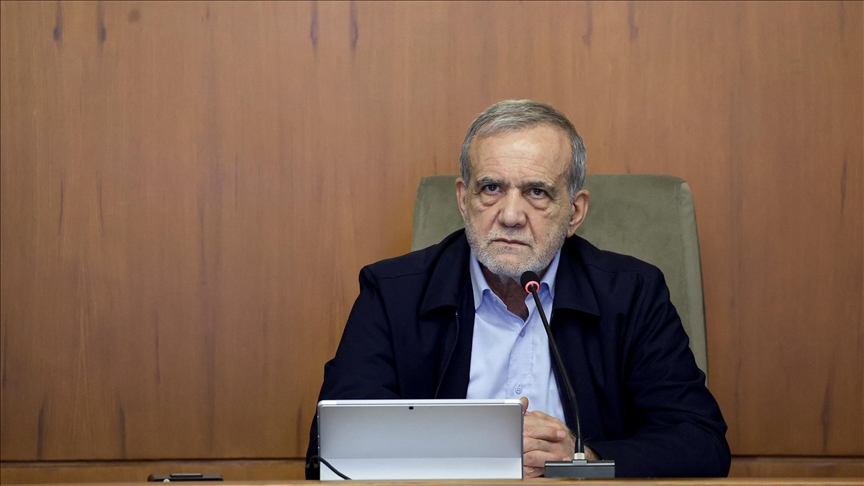
If all the criticism directed at Israel’s current prime minister, Benjamin Netanyahu, fails to unseat him, then there is something deeply troubling about Israeli democracy—it is fundamentally dysfunctional.

Netanyahu has been the most influential architect of Israel’s policies and politics since 1996, when he first became prime minister.

He has often been quoted as saying, “Israel has no negotiating partner on the Palestinian side.”

Yet, we should ask: Where is the negotiating partner on the Israeli side?

Since taking office, Netanyahu has waged wars against nearly all of Israel’s neighbours, particularly Lebanon, Gaza, the occupied West Bank, and Syria and the occasional bouts with Iraq and Iran.

If we tally all the conflicts under his leadership, they exceed ten, many of them prolonged and devastating.

The cumulative cost, both in human lives and property, is staggering—over $500 billion lost and at least 100,000 people killed.

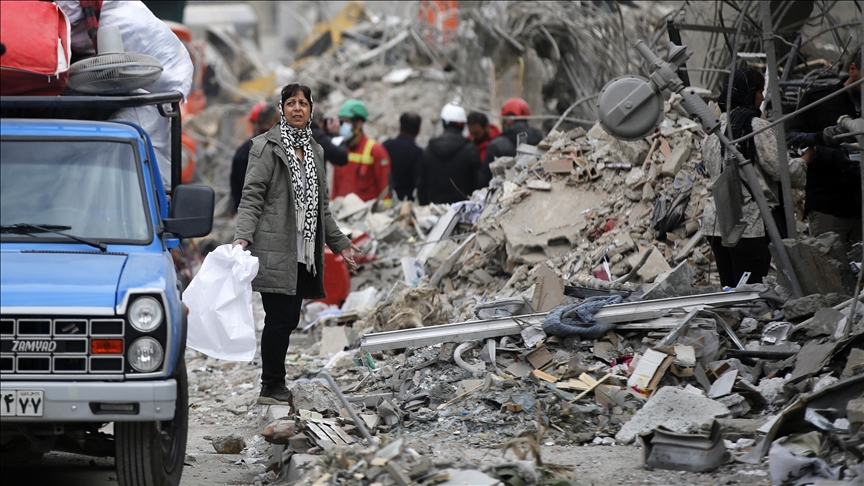
Netanyahu has systematically violated agreements, expropriated land for illegal settlements, and sanctioned the destruction and pillaging of homes, hospitals, schools and infrastructure.

His policies have included uprooting trees, destroying livelihoods, and killing tens of thousands of civilians, including children and women.

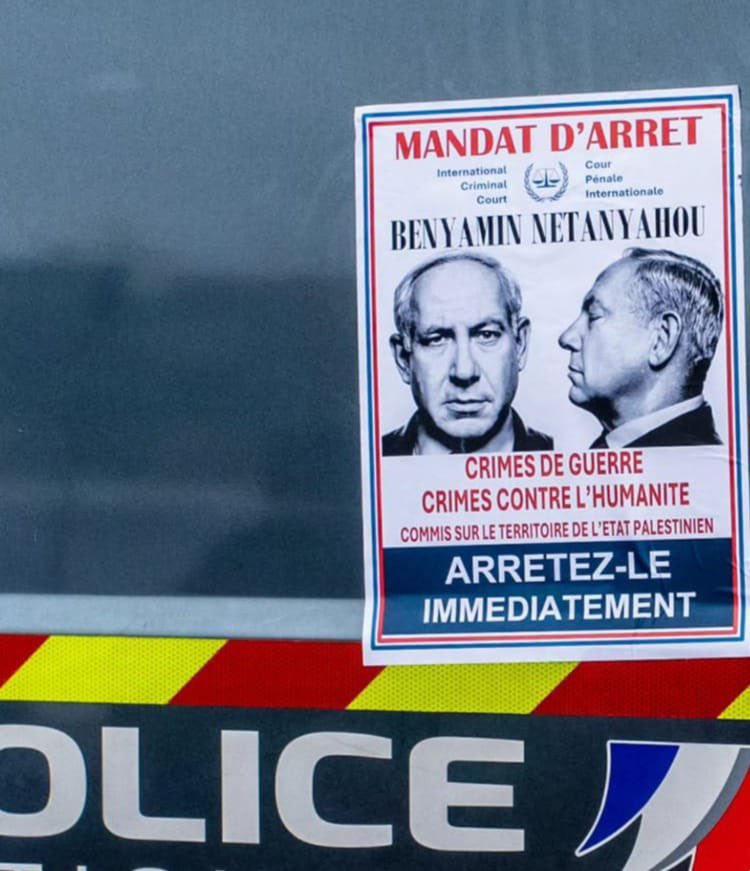
He stands as an indicted war criminal and is currently being tried in Israeli courts on charges of bribery, fraud, and abuse of power.

Many respected Israeli voices—authors, journalists, political analysts, human rights activists, lawyers, peace advocates, as well as his political allies and adversaries—express anger and even sometimes contempt for him, criticising his deceit and betrayal.

Every time Netanyahu insisted on engaging in dialogue with the late King Hussein or King Abdullah II, shortly after his army would commit grave atrocities against Palestinian civilians in the occupied territories.

Thus creating the false impression of a sequitur relationship between the meeting and the atrocities.

He even welcomed the Israeli guard who killed two Jordanians at the Israeli embassy in Amman with open arms, celebrating him instead of subjecting him to trial, despite Jordan’s accepting the murderer’s return to Israel, out of respect for the international diplomatic protocols.

Why does Netanyahu continue to act with such impunity? His actions appear to be deeply influenced by the ideology of his father, Benzion Netanyahu.

Born in Warsaw, Poland, Benzion served as the secretary and close aide to Ze’ev Jabotinsky, who instilled in him—and later his son Benjamin—the principles of revisionist Zionism.

It is exceedingly difficult to make peace with the proponents of the maximalist and revisionist branch of Zionism, which was established by the extremist Abba Ahimeir.

Although Benzion was a historian specializing in the history of Jews In Spain—a history rich with examples of tolerance and coexistence between Muslims and Jews under Islamic rule—he chose to become a disciple and propagator of revisionist Zionism. He became a staunch spokesperson for this ideology in the United States.

To better understand the radicalisation of Netanyahu and his father, one need look no further than the statements made by their mentor, Jabotinsky.

The following quotes are sourced from betarus.org, a well-known Zionist website:

1.“We, the Zionists, all applaud, day and night, the iron wall.”

This is the same iron wall that neo-historian Avi Shlaim described as being created to hammer Arab heads against, until they agree to Zionist claims to their lands.

2.“We hold that Zionism is moral and just, and since it is moral and just, [that means] justice must be done, regardless of whether Joseph, Simon, Ivan, or Ahmet (Ahmad) agree with it or not.”

3.Finally, Jabotinsky declared, “We were not created in order to teach morals and manners to our enemies. We want to hit back at anyone who harms us—only someone who can hate his enemies can be a faithful friend to those who love him.”

With sentiments like these, what chances does a serious, just, and lasting peace—or perhaps any peace at all—have?

Dr Jawad Al Anani, a former Jordanian government minister, contributed this piece to The Jordan Times.

Continue reading
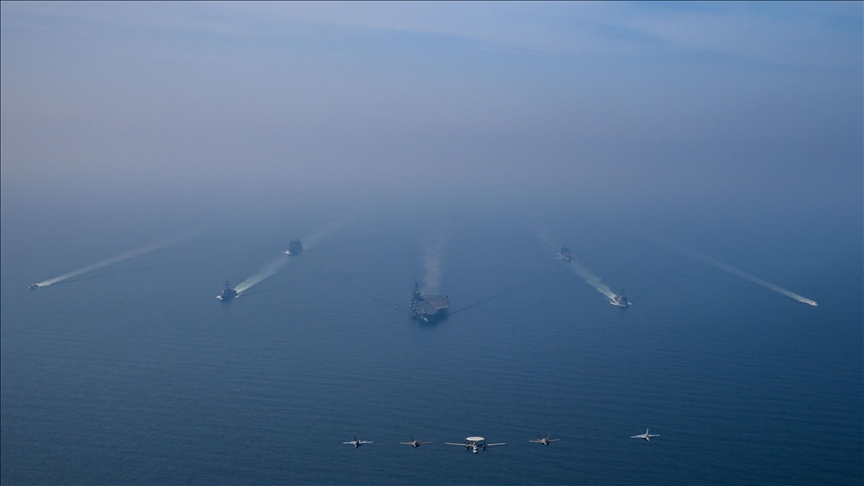
350 Israeli Warplanes Hit Syrian Targets

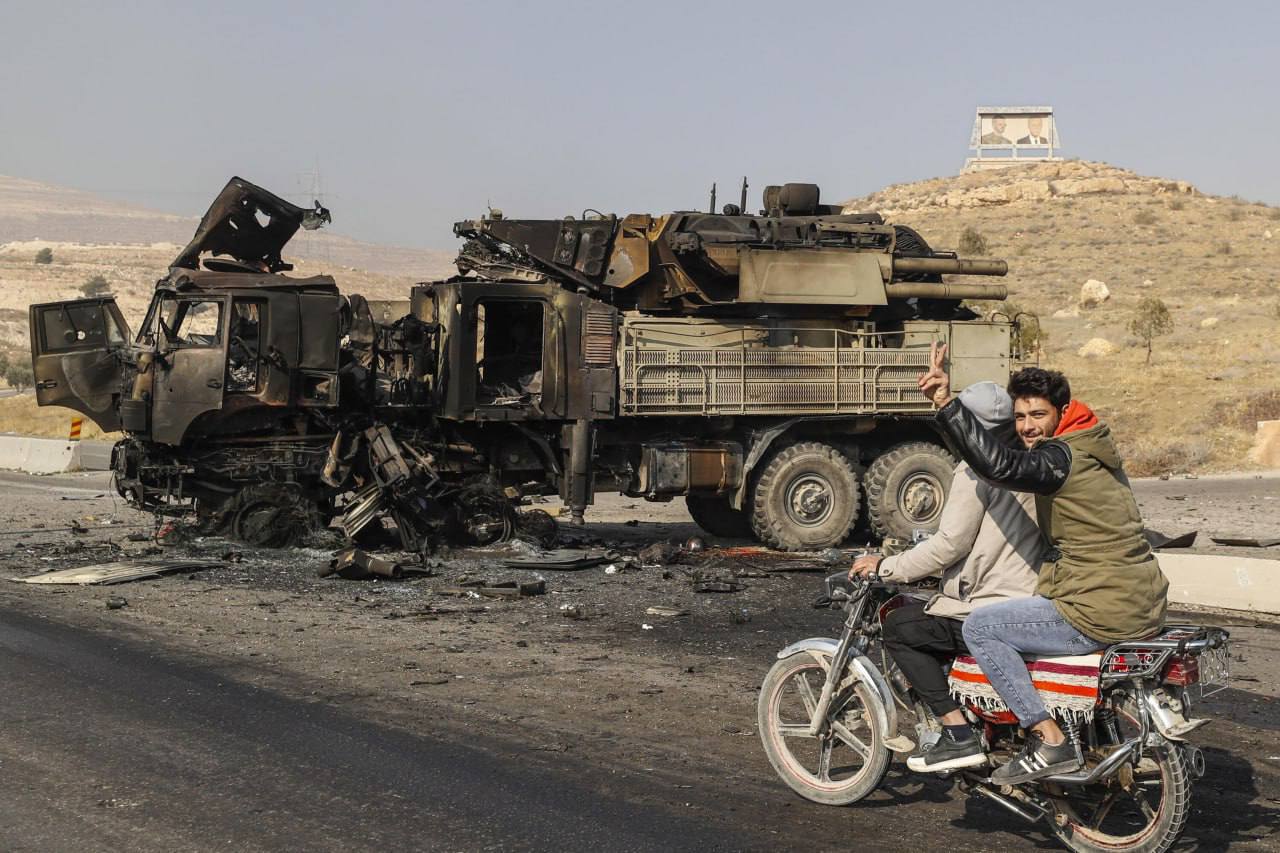
The Israeli occupation army announced, Tuesday, it destroyed about 70%-80% of the capabilities of the Syrian army.

Its stated that about 350 Israeli Air Force fighter jets participated in the aggression, attacking around 320 targets throughout Syria.

It added that “…warplanes and helicopters, radars, surface-to-air missile batteries, ships, surface-to-surface missiles, rocket shells, weapons production sites, weapons warehouses, Scud missiles, cruise missiles, sea-to-sea missiles, drones, and others were destroyed.”

In parallel, the aggression continues on land, through operations carried out by the ground forces in the “buffer zone” in the occupied Syrian Golan, so that the Israeli army is working to “establish a presence in the area and destroy weapons.”

On the political level, Prime Minister Benjamin Netanyahu, said that “Israel will respond forcefully if the new regime in Syria allows Iran to return, or allows weapons to pass to Hezbollah, and will exact a heavy price from it,” but adding it “wants to establish relations with this new regime.”

However, he stressed “what happened to the previous regime in Syria will happen to this regime as well, if it allows weapons to pass to Hezbollah.”

Earlier, the Israeli army radio described the latest aggression on Syria, following the fall of the President Bashar al-Assad regime, as “one of the largest attacks since the establishment of Israel.”

Israeli Defense Minister Yisrael Katz confirmed the occupation’s decision to continue controlling strategic points in Syria, establish a security buffer zone, and target strategic weapons and air defense systems, and any attempts to transfer weapons to Lebanon.

The Israeli Channel 12 confirmed that the air force is operating on a very large scale throughout Syria with the aim of destroying what remains of the Syrian army and all its equipment, “from tanks to missiles,” according to the Kan official channel.

Continue reading
Ex-Israeli President Said ‘Queen Elizabeth Believed Israelis Were Either Terrorists or Sons of Terrorists’

(Quds News Network) – Former Israeli President Reuven Rivlin recently discussed the complicated relationship between the occupation state of Israel and the late Queen Elizabeth II. He described the ties as “difficult” due to the Queen’s views on the occupation state as a colony.

Speaking at an event in London, Rivlin shared that Queen Elizabeth believed Israelis were either terrorists or the children of terrorists. He explained that the Queen was reluctant to accept Israeli officials into Buckingham Palace, except during international occasions. Rivlin, however, compared this with the support of King Charles III, who he described as “so friendly.”

Despite her position, Queen Elizabeth maintained cordial relations with zionist leaders throughout her reign. She visited many countries as head of state, but she never visited Israel.

In contrast, her son, then-Prince Charles, made two visits to the occupation state in 1995 and 2016. Charles also made an official visit to Israel in 2020.

No member of the UK’s royal family visited Israel in an official capacity until 2018, when Prince William, the queen’s grandson, arrived for the 70th anniversary of Israel’s ‘independence’, ending what appeared to many as an unofficial boycott.

During a visit to Jordan in 1984, one of several trips she made to the Middle East, Queen Elizabeth reportedly exclaimed, “How frightening,” as Israeli fighter jets flew by while she gazed at the occupied West Bank in the distance.

Queen Nour, the wife of King Hussein of Jordan, is said to have responded, “It’s terrible.”

Later, after viewing a map depicting the locations of illegal settlements in the occupied West Bank, Queen Elizabeth was quoted saying, “What a depressing map.”

During the British Mandate of Palestine, Zionist militias, such as the Irgun (Etzel) and the Lehi (Stern Gang), engaged in a series of terrorist attacks aimed at ending British rule and gaining control of historic Palestine. These groups carried out numerous attacks on British soldiers, police, and infrastructure, viewing such actions as a means of pressuring the British to leave Palestine. Their operations included bombings, assassinations, and raids, with one of the most notorious being the bombing of the King David Hotel in 1946, which killed 91 people.

These militias not only targeted British forces but also attacked native Palestinians. In 1948, these gangs carried out the ethnic cleansing of Palestine, the Nakba, before being rebranded as the Israeli army.

Continue reading
Syria: 10 Days That Shook The World

Dr Khairi Janbek

Without much ado, the western media is currently preoccupied with this question: Are the Syrian rebels Jihadis? This is while the Arab media appears to be in a state of euphoria about the Syrian rebels seen as liberators. The issue however is about two perspectives, the first being cautious about the next phase for the country, and this is for understandable reasons, while the second reflects optimism for the next stage and also for understandable reasons.

Now, the fear of dividing Syria on ethnic and sectarian grounds has its blueprint in the colonial history of Syria and certainly not a product of today and/or creative chaos utterances.

Looking back

In fact, on 1 July, 1922, the French colonial authorities divided Syria into federal statelets: statelet of Damascus, statelet of Aleppo, statelet of the Alawites, and the statelet of the Druze. Of course, the idea was that the country would be easier to rule and a regional and a sectarian balance would guarantee political stability. Of course, the Kurds were outside this formula as they were struggling to create an independent state of their own.

But what about Syria now, to paraphrase John Reed, after the 10 days that shook the world. Indeed, the two regional police stations in the region, Turkey and Israel seems to be gaining major influence in the current affairs, while the third police station, Iran, has lost out in this formula.

Rivalry

For all intents and purposes, no one is naive enough to think that the march towards Damascus could have occurred without Turkish support, and the Israeli foreign minister has confirmed that talks were held between his government and the Druze as well as the Kurds of Syria, whom he described as having good relations with them.

But what about the Russians? One would venture to say that they are like to stay in Syria as most probably, paying guests of the new Syrian government, renting their military installations from them.

Undoubtedly, no matter how much we can be optimistic about the future of all-inclusive democratic Syria, we will always reluctantly fall back on our cognitive dissonance regarding the case of Iraq, and make the mistake of comparison with the post-Saddam era of terrorism, sectarianism an ethnic strife.

This is simply because, we forget that in Iraq there was superpower which brought down the regime and destroyed all the functioning institutions of the country favoring when religious Islamic sect over another, and supporting one ethnicity against others. While in Syria, its the Syrians themselves brought down the Ba’ath regime.

On the face of it, the rebels don’t seem to want to be the new masters of Syria and they are working very hard to protect and preserve the functioning institutions of the country, and claim their adherence to pluralism and for an all inclusive new regime.

But two important questions remain outstanding, and only time will tell how these will unfold: To what extent will there be Turkish and Israeli influence on the emerging regime, and more importantly, what would be the share of those two police stations of the country?

In other words, how will Turkey perceive the future of the Kurds in Syria, and where does Israel see its border posts with the “new” Syria?

In all likelihood, the rebels will keep their word of wanting a stable pluralist Syria, but let us not forget also, that a future spark of ethnic, regional or sectarian conflict, will very likely turn all into extremists in the country.

Dr Khairi Janbek is Jordanian commentator based in Paris.

Continue reading
Time to Condemn Israel

On December 9, 1948, the UN has adopted the Convention on the Prevention and Punishment of the Crime of Genocide. After 76 years, the Palestinian people have been facing the real genocide, that the world witnesses for the first time, as the Israeli occupation has been killing, forced displacing, and starving them for over a year. Would Israel be held accountable over all of its crimes?

Continue reading