Ireland May Turn Closed Israeli Embassy Into a Palestine Museum
 CrossFireArabia
- December 21, 2024
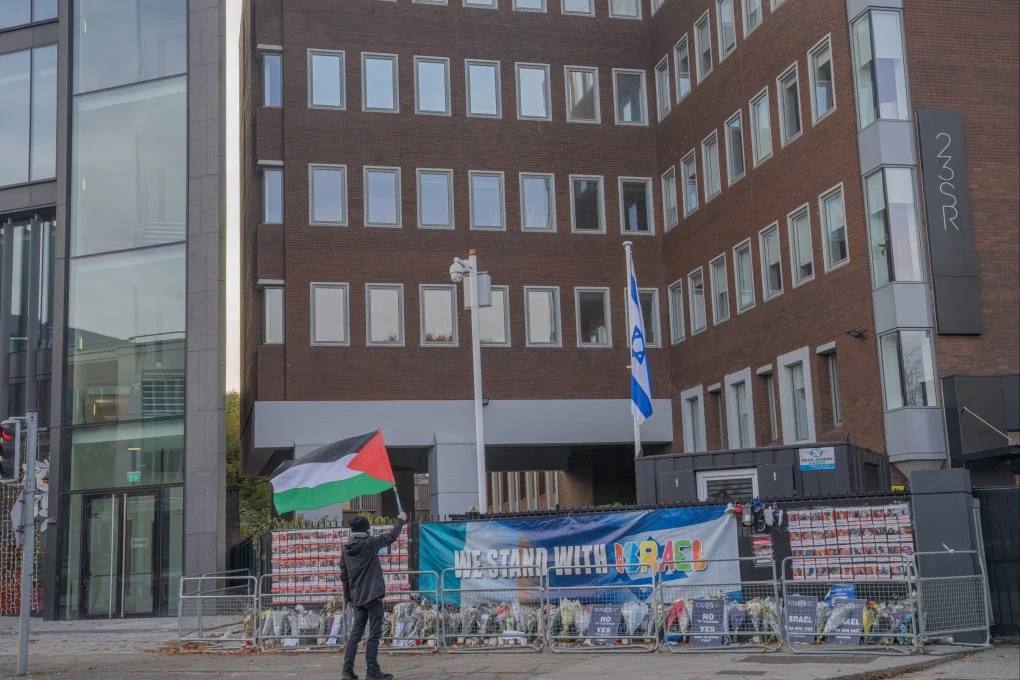
Ireland is considering transforming the former Israeli Embassy in Dublin into a Palestinian museum.
“Faisel Saleh, a Palestinian-American businessman and founder of the Palestine Museum in the United States, expressed interest in transforming the former Israeli embassy in Dublin into a Palestinian museum, calling it “a political statement.”
The idea of the Palestinian museum is trending on social media. The move comes within days after Israel decided to close its embassy in Ireland after what it called rising anti-semitism in the Irish country.
“The decision to close Israel’s embassy in Dublin was made in light of the extreme anti-Israel policies of the Irish government,” Israeli Foreign Minister Gideon Saar said in a statement last week.
The tension between Israel and Ireland came to the fore when the latter on 28 May, 2024 made a decision to formally recognize the state of Palestine.
Israeli Soldiers Admit to Killing Civilians
- CrossFireArabia
- December 21, 2024
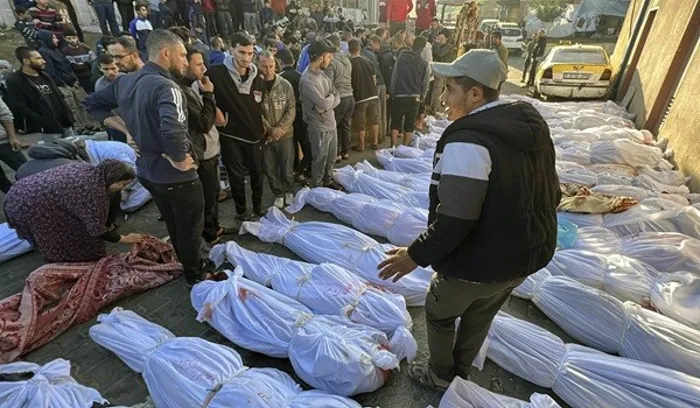
Israeli soldiers revealed Friday that the army killed Palestinian civilians who entered previously targeted buildings in the Gaza Strip, according to a media report.
The Haaretz newspaper in Israel said the army “does not routinely update its list of targets in Gaza, nor does it indicate to forces on the ground which structures are no longer being used” by fighters.
“As a result, anyone – including noncombatants – who enters such a building risks being attacked,” it said.
The army claimed that its reported death toll of militants only includes individuals confirmed as such. However, “testimonies from soldiers who served in Gaza suggest a different reality.”
A targeting officer from an Israeli combat brigade told Haaretz that, according to the guidelines, “an active building will always remain an active building, even if the ‘terrorist’ there was killed six months ago.”
A senior officer corroborated those claims, stating that “there were targets that suddenly came back to life,”
“So if someone decides to go into a building in search of a hiding place, the building will be struck,” said the officer.
In some areas, such as the Netzarim corridor in central Gaza, instructions were reportedly given to target “anyone who entered a building regardless of who they are, even if they were just looking for shelter from the rain,” according to soldiers’ testimonies.
Another discharged officer from the 252nd Division said snipers were authorized to consider civilians entering specific areas as fighters. “We’re killing civilians there who are then counted as ‘terrorists,’” he said.
The army spokesperson’s “announcements about casualty numbers have turned this into a competition between units. If Division 99 killed 150 [people], the next unit aims for 200,” he added according to Anadolu.
The daily noted that “earlier this week, Gaza’s Hamas-run health ministry announced that the death toll in Gaza since the beginning of the war has exceeded 45,000 people.”
“Information published by the ministry has previously been verified by international organizations and governments and found to be credible,” it added.
The Haaretz report emphasized that “Israel disputes the figures. However, Israel is not itself counting or publishing the number of civilian Palestinian deaths in the current conflict, unlike in previous wars.”
According to the Israeli military, of those killed, the army “believes with a high degree of certainty” that 14,000 are fighters, and “a somewhat lesser degree of certainty” that 3,000 are fighters.
The Israeli military has not responded to the Haaretz report.
Israel launched a genocidal war on Gaza that has killed more than 45,200 people, mostly women and children, since a cross-border attack by the Palestinian group, Hamas, on Oct. 7, 2023.
On Nov. 21, the International Criminal Court (ICC) issued arrest warrants for Israeli Prime Minister Benjamin Netanyahu and his former Defense Minister Yoav Gallant for war crimes and crimes against humanity in Gaza.
Israel also faces a genocide case at the International Court of Justice for its deadly war on Gaza.
Death Toll in Gaza Climbs to 45,097
- CrossFireArabia
- December 18, 2024
The Palestinian Ministry of Health in Gaza announced, Wednesday, the death toll in the Strip has risen to 45,097, most of them children and women, since the start of the Israeli occupation aggression on 7 October, 2023.
The ministry added in a press statement received “the death toll has risen to 107,244 wounded since the start of the aggression, while thousands of victims are still under the rubble.”
It pointed out that the occupation forces committed three massacres in the past 24 hours, resulting in the martyrdom of 38 Palestinians and the injury of 203 others.
Lebanon Tells Israel to Stop Violating The Ceasefire
- CrossFireArabia
- December 18, 2024
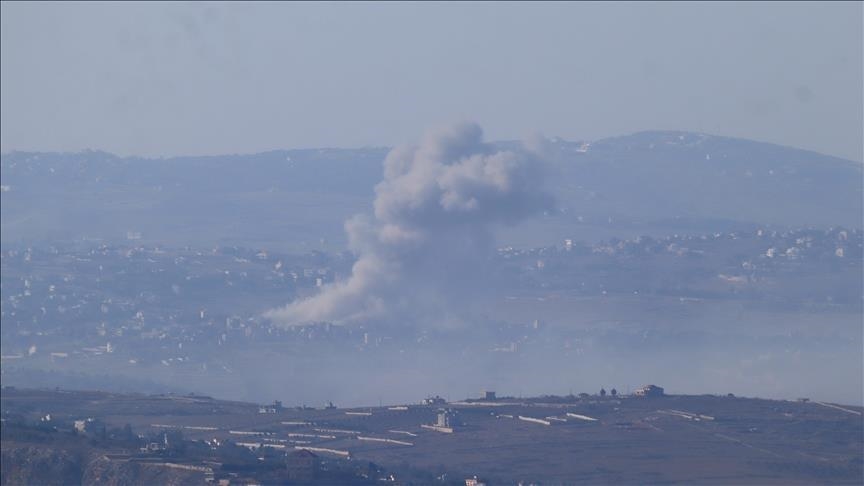
The Israeli army on Tuesday committed at least 12 more violations of cease-fire in Lebanon that took effect last month to end more than a year of cross-border warfare with Hezbollah, state media reported.
According to the official Lebanese National News Agency (NNA), the violations concentrated in the districts of Tyre, Marjayoun and Hasbaiyya in southern Lebanon, and in the districts of Rachaiya and Western Bekaa in the country’s east.
The violations included airstrikes, drones and fighter jets flights, destruction of homes, bulldozing streets and artillery shelling according to Anadolu.
In the Tyre district, an Israeli drone strike targeted a car in the town of Majdalzoun that left three people injured.
The Israeli army also bulldozed a number of roads and destroyed a home in the town of Naqoura. Several homes were also destroyed in the town of Kfarkela.
While artillery struck the towns of Kfarshouba, Halta and Sheba in the Hasbaiyya district, warplanes flew over the districts of Rachaiya and Western Bekaa at a medium altitude.
Lebanese authorities have reported around 248 Israeli violations of the truce since it came into force on Nov. 27.
Since then, according to an Anadolu tally based on Health Ministry figures, at least 30 people have been killed and 37 others injured in Israeli attacks.
Under the terms of the cease-fire, Israel is required to withdraw its forces south of the Blue Line – a de facto border – in phases, while the Lebanese army is to deploy in southern Lebanon within 60 days.
Over 4,000 people were killed and more than 16,500 injured in Israeli attacks in Lebanon, and over 1 million others displaced since October 2023, according to Lebanese health authorities.