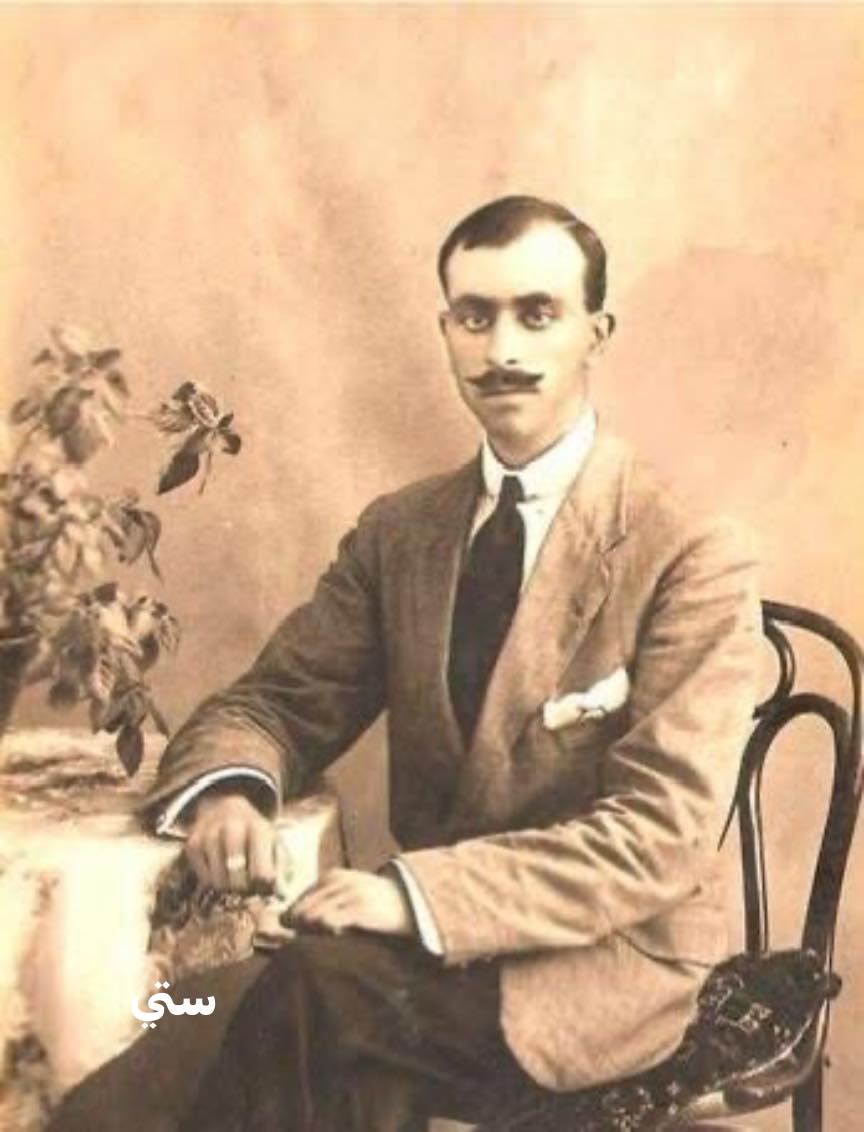
Military-strategic expert retired Major-General Mamoun Abu Nuwar states the ceasefire in the Gaza Strip remains extremely fragile as Israel continues to control the ground, security corridors and the buffer zone east of the enclave.
Abu Nuwar told Jordan 24 the current situation on the so-called “yellow line”—with its construction, improvements, and the creation of earthen fortifications—clearly shows Israel wants to make this line a permanent reality and has no intention of withdrawing from east of Gaza and will continue to carry out airstrikes and artillery shelling under the pretext of “thwarting imminent terrorist attacks.”
He added Israel seeks to establish a new reality on the ground and reinforce its security presence in the eastern areas, while simultaneously continuing to bombard the western areas of the Strip. This, he clarified, threatens the continuation of the truce and reduces it to a mere shadow.
Retired Major-General Mamoun Abu Nuwar
Regarding the formation of an international stabilization force in Gaza, Abu Nuwar explained it would be “a key element in the transitional phase,” but its success hinges on several crucial factors, notably a clear UN and Security Council.
He pointed out that any international force wouldn’t succeed without first of all coordinating it with and agreement of Hamas. He said without this, such a force would be seen as an occupation force exposing it to armed confrontation with the other resistance factions.
He stressed such force must have specific and clear tasks limited to maintaining security and assisting in the reconstruction of Gaza, along with establishing rules of engagement and a unified command structure to prevent a slide into open conflict.
Abu Nuwar indicated disarming Hamas is going to be one of the most “significant obstacles” to a settlement, as Israel insists on making it a precondition for any reconstruction or withdrawal. This is while Hamas states it would only disarm if a just political settlement leading to the establishment of a Palestinian state is reached.
He added Hamas agreed in principle to the formation of a technocratic administrative committee to take over the administration of Gaza and to allow the deployment of a new Palestinian force currently being trained in Jordan and Egypt, as part of an international plan to manage the next phase. However, Israel rejects the presence of Turkish forces in any potential mission and prefers the participation of countries such as Azerbaijan, Malaysia, and Indonesia.
Abu Nuwar believes Israel will not withdraw completely from the Gaza Strip and will seek to maintain its security and military control over the border crossings and areas. He pointed out the continuation of this situation could lead to new waves of displacement of Palestinians, given the catastrophic humanitarian conditions in the south, particularly in Rafah and Khan Younis.
He indicated any attempts to rebuild or develop new areas in Rafah will fail unless the siege is lifted and full Palestinian control is restored. He noted the continued ambiguity surrounding the “yellow line” drawn by Israel east of the Gaza Strip suggests there is an attempt to impose a new geographical and political division in the enclave
Abu Nuwar concluded by saying that the road to a political solution or a comprehensive peaceful settlement is still long and arduous, especially with Israeli Prime Minister Benjamin Netanyahu’s lack of interest in the political process due to his internal electoral calculations. He stressed that the continuation of the current situation will make the ceasefire merely a cover for a new occupation reality, and will open the door to repeated clashes and numerous difficulties in implementing any peace plan or genuine reconstruction.
In a historic shift, Britain has officially recognised the state of Palestine, a century after the Balfour Declaration set the course for its dispossession.
Prime Minister Sir Keir Starmer first announced in July that the UK would take this step at the UN General Assembly’s annual meeting in September unless Israel met certain conditions, including agreeing to a ceasefire in Gaza, lifting the ban on humanitarian aid, and reviving the prospect of a two-state solution.
Prime Minister Benjamin Netanyahu reacted furiously to the announcement, saying the decision rewarded “Hamas’s monstrous terrorism”. His Foreign Minister, Gideon Saar, threatened “a unilateral decision”, like formally annexing the occupied West Bank, if British and European recognition of Palestine were to go ahead.
At this historical juncture, Britain’s recognition of Palestine as a state is pathetically little, and a century too late.
In 1917, Britain, in the infamous Balfour Declaration, pledged its support for the establishment of a “national home” – that is, a state – for the Jewish people in Palestine.
At the time, the Jews made up just 10 percent of the population of Palestine, and they owned only two percent of the land. Yet, in British eyes, the 10 percent merited the right to self-determination, whereas the 90 percent did not.
To add insult to injury, the Balfour Declaration referred to the Palestinian majority as “the non-Jewish communities in Palestine”, thereby negating their existence by defining them in terms of what they were not.
As Edward Said pointed out, it was a classic colonial document. From 1922 until 1948, Britain ruled Palestine under a League of Nations Mandate, said to be a “sacred trust of civilisation”, to prepare the country for self-government as per their duty under the Mandate.
Instead, Britain betrayed this trust by preparing the country to be taken over by European Jews.
Jewish refugees land at Haifa, Palestine, May 19, 1946; a reminder of the early waves of Jewish immigration that Britain’s policies facilitated while sidelining the Palestinian majority (AP/File).
The history of the British Mandate in Palestine is essentially the story of how Britain stole Palestine from the Palestinians and handed it over to the Zionists.
The cornerstone of the Mandate was to prevent elections until the Jews became the majority.
Britain enabled the tiny Jewish population to embark on the systematic takeover of the whole country, a process that continues to this day. It also thwarted the peaceful coexistence of Jews, Muslims, and Christians that prevailed in Palestine before the imposition of British colonial rule.
Britain abused the Mandate to sponsor and promote Zionist settler-colonialism on the one hand while suppressing Palestinian nationalism on the other.
In this sense, the current Israeli incursion into Gaza is a direct consequence of the Balfour Declaration, which mandated unbridled Zionist takeover of the whole land of Palestine.
This is why Britain’s decision to recognise Palestine today, while carrying historical weight, rings hollow unless it is matched by meaningful action to undo the damage of a century of complicity.
From hollow gestures to present-day complicity
Since 1948, under both Conservative and Labour governments, British policy has been marked by conspicuous support for Israel and total indifference to Palestinian rights, most notably the natural right of the majority to national self-determination.
In 2014, the House of Commons passed a motion for recognising Palestine as a state, supported by 274 MPs with 12 voting against. The vote was a clear reflection of the views and sentiments of Britain as a whole.
Then-prime minister David Cameron, however, dismissed the result as just a symbolic and non-binding gesture that would not affect in any way the foreign policy of his government.
In 2017, on the centenary of the Balfour Declaration, 13,500 people signed a petition calling on the British government to issue an apology for the Balfour Declaration.
Then-premier Theresa May replied that the government had nothing to apologise for; on the contrary, it was proud of the vital role that Britain had played in creating a state for the Jewish people in their ancestral homeland. There was no mention of the Palestinians or of their right to their homeland.
After 1967, a deep contradiction marked British policy on Israel/Palestine. Britain ostensibly supported a two-state solution to the conflict, that is to say, an independent Palestinian state alongside Israel, consisting of Gaza and the occupied West Bank, with a capital city in East Jerusalem.
But while advocating a two-state solution, Britain recognised only one state – Israel –ignoring Israel’s consistent rejection of a Palestinian state.
The prospect of a hazy two-state solution remains a convenient but hypocritical cloak for failing to act against creeping Israeli annexation of the occupied territories.
The prospect of a hazy two-state solution remains a convenient but hypocritical cloak for failing to act against creeping Israeli annexation of the occupied territories.
Avi Shlaim
The debate about recognising Palestine was reignited by Israel’s genocidal war on Gaza following the Hamas cross-border blitz of October 7, 2023.
Since that day, the Israeli military have rained death and destruction on the tiny enclave: killing over 64,000 people (mostly women and children); bombing 89 percent of the houses and civilian infrastructure; seriously damaging the healthcare facilities; targeting schools and universities and UN facilities; forcibly displacing 90 percent of the civilian population, in some cases upward of ten times; and using starvation as a weapon of war.
In the course of waging this savage war – ‘Operation A Thousand Swords’, to give it its official name – Israel is also committing the crime of all crimes: genocide.
The Israeli genocide in Gaza is the darkest chapter in the history of the twenty-first century. Despite the horrors that are unfolding daily in front of our eyes, British policy continues to lean strongly in favour of Israel, providing the offender with diplomatic, logistical, intelligence, and military support.
Britain abused its position as a permanent member of the Security Council by vetoing resolutions for a ceasefire in Gaza. The Royal Air Force continues to fly surveillance missions over Gaza and to supply the Israeli forces with valuable intelligence.
The RAF base in Akrotiri, Cyprus, is placed at the service of the Israeli military. Israeli transport planes can stop in RAF bases in Scotland on their way to pick up arms and ammunition from the US.
These same bases are used as a logistics hub for US special forces flights to and from Israel. Yet, British complicity in Israeli war crimes does not stop there.
Even more disturbing is the fact that Britain is Israel’s third biggest arms supplier, after the US and Germany. In September 2024, the UK suspended some licences for arms sales to Israel, but these amounted to less than 10 percent of the total.
So this move amounted to little more than a token gesture to placate the angry public.
Britain’s most egregious moral failure in relation to the war in Gaza lies in shirking its responsibility under the 1948 Convention for the Prevention and Punishment of the Crime of Genocide.
“Genocide” is defined in the convention as the “intent to destroy, in whole or in part, a national, ethnic, racial or religious group”. Most Israeli experts in Holocaust studies, notably Omer Bartov, believe that what Israel is doing in Gaza is a classic case of genocide.
The International Court of Justice in The Hague ruled that the charge of genocide is plausible and ordered Israel to take a series of steps to prevent genocidal rhetoric and actions.
And just last week, a UN investigation confirmed what was known all along: that Israel is committing genocide in Palestine.
Israel defiantly ignored these orders. The British government maintains that there is no conclusive evidence that Israel is perpetrating genocide in Gaza, so it is business as usual.
But under the convention, signatories do not have the luxury of waiting until genocide has taken place before bemoaning it. They have a duty to act to prevent genocide; in Gaza, the British government has singularly and lamentably failed.
Recognition without action
It is against this horrifying backdrop that the British government has decided to recognise the state of Palestine. This recognition is long overdue, but it is still welcome.
It means that four out of the five permanent members of the Security Council now support Palestinian statehood − the other three being Russia, China, and France. The odd one out is the United States, Israel’s closest and most powerful ally.
Although British recognition by itself will change nothing on the ground, it represents a strong political statement, and it removes the contradiction in advocating a two-state solution while recognising only one.
What it will not do is to stop the carnage and destruction, the humanitarian disaster, the genocide in Gaza, and the ethnic cleansing of the occupied West Bank. Diplomatic recognition is, in fact, being used by British policy-makers as a cloak for inaction.
What Britain should do is sanction Israel, suspend all military and intelligence cooperation, and end all arms sales to Israel, as well as the purchase of military hardware and technology from Israel.
Israel’s genocidal campaign in Gaza is the most burning issue facing Britain and the rest of the international community today. Failure to act only contributes to Israel’s impunity. It also undermines the rule-based international order, which was put in place after World War II to prevent another Holocaust.
Britain’s half-hearted recognition of Palestine as a state, whilst aiding and abetting the monstrous Israeli war machine, brings to mind the apocryphal tale of Emperor Nero, who played his lyre while the Great Fire of Rome (AD 64) ravaged the city.
Will the British Government continue to play its fiddle whilst Gaza is razed to the ground, or will it finally listen to the masses whom it claims to represent, and acknowledge its own legal and moral obligation to act?
Turkish President Recep Tayyip Erdogan lambasted Israeli Prime Minister Benjamin Netanyahu on Tuesday for Israel’s attack on the Hamas negotiation team in Qatar last week, saying, “Ideologically, Netanyahu is like a relative of Hitler.”
“Just as Hitler could not foresee the defeat that awaited him, Netanyahu will face the same ultimate fate,” he added while returning from Doha, where he attended an emergency Arab-Islamic summit following the Israeli airstrike according to Anadolu.
Erdogan called the attack on the Hamas negotiation team “a blatant challenge to international order and international law” and said Israel’s leadership has “turned their radical mindset into nothing more than a murderous network built on fascist ideology.”
The Turkish president also addressed Western countries’ recognition of Palestine, saying it would put further pressure on Israel and pledging to raise the issue again at the United Nations.
He expressed hope that “the front of humanity will gain broader support” at the upcoming UN General Assembly.
Lastly, Erdogan also addressed Türkiye’s diplomacy in Libya, emphasizing the protection of the country’s sovereignty and unity. “We are committed to safeguarding Libya’s sovereignty, territorial integrity, and political unity, and all our actions are guided by these objectives,” he said.
He noted that Türkiye has supported the legitimate Tripoli government from the outset, while recent policies have also sought to open diplomatic channels with eastern Libya. “This reflects Türkiye’s multidimensional diplomatic efforts, regional vision, and commitment to achieving peace,” Erdogan said.
He added that the Benghazi administration’s approval of the maritime jurisdiction agreement signed between Türkiye and Tripoli would be a “significant gain under international law.”
Israeli Prime Minister Benjamin Netanyahu is a politician above all else. He is dogmatist in rejecting a Palestinian state, and a pragmatist when he talks about it, but all that depends on the position taken by the United States.
Ever since one can remember from the days of the Oslo Agreements, a Palestinian state, as a term swung between two conceptions: A future project on the ground, and a slogan up-in-the-air to pander on, and as many from my generation remember the rather acerbic comment: Gaza-Jericho First of 1993 which came to be the first and the last.
The Israeli government of that time, believed that it would bring the Palestinians to independenance as interlocutors in determining the occupied West Bank of Jordan that came about by discussing the issue through a joint Jordanian-Palestinian delegation.
However, the little that was agreed upon started to be eroded by the first Netanyahu government, which at times implicitly and at times explicitly acted in the way so as to negate the Oslo agreements with impunity.
One would like to say that since then plenty of water has passed under the bridge, but when it comes to the Palestinian issue, it’s always the same water and the same bridge.
At this point one must say that everywhere in the media there are supposedly leaks and plans about the day after with regards to the Gaza Strip. However, the only consensus between the international community at large and officialdom of the Arab world, is that Hamas should surrender its weapons. But really what happens next?
Silence in the Arab world rules the scene which is in a way saying what cannot be said, which is in other words don’t involve us directly but we shall try to do what we can. This is habitually the Arab position in always being reactive rather than active.
And now on the international scene is the big drive to recognize a Palestinian state, which is for the time being affirming a point of principle, and towards which Israel is actually debating the annexation of the West Bank, as if to say, if the West Bank is reoccupied by Israel, where is this Palestine you want to recognize?
And adding insult to injury, the Washington administration has refused entry to Palestinian President Mahmoud Abbas and the PNA leadership to attend the UN General Assembly meetings. This indicates that it does not recognize that there is a leadership of the Palestinians.
However, and despite saying this, one wishes to be able to say that we might be jumping the proverbial gun, in the sense that, the issue is just a matter of tit-for-tat telling states: You recognize Palestine we take measures to counter that, but alas the Israeli annexation was contemplated long before the international recognition of a Palestinian state.
Now, what will it mean if Israel does go ahead and annexes the West Bank and cancels the Palestinian authority? Well, once again the international community, to the exclusion of the USA, will have to consider the West Bank as and Israeli occupied territory, and once again, the world will have to go back to the Security Council for an attempt to resolve the issue.
Dr Khairi Janbek is a Jordanian columnist living in Paris, France.
Palestinian dresses immortalize history, heritage, and tradition of the now displaced Palestinian villages.
The “Heaven and Hell” dress was named so because it was made of red and green silk fabric and was worn for weddings and special occasions in the displaced village of Lifta and some other villages in Jerusalem.
The white dress of the bride is from the displaced village of Yazur in the Jaffa District: It was made of white fabric, mostly red, with several cheerful colors… with beautiful floral designs on the dome and sides.


 CrossFireArabia


 Dr Khairi Janbek