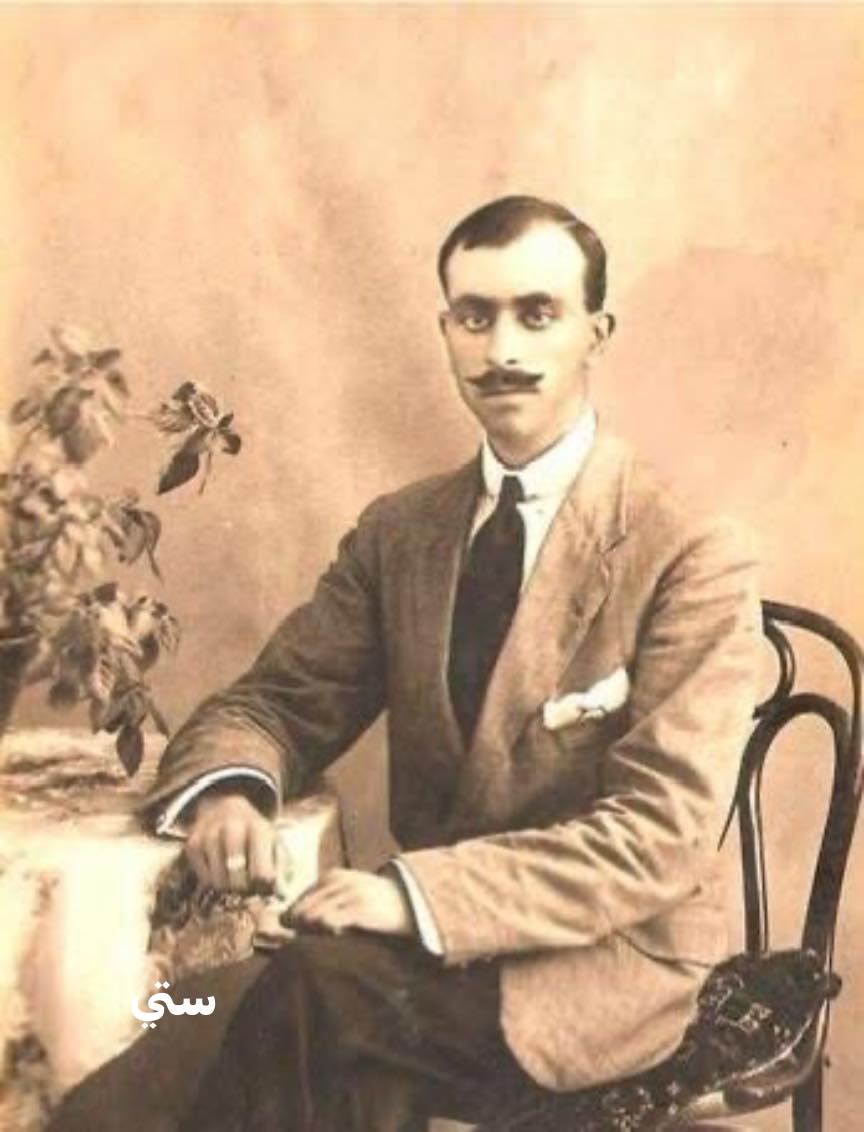
Türkiye Denounces Israel’s Attacks on Journalists

Türkiye, Friday, slammed Israel’s recent attacks on journalists, underlining their commitment to supporting media professionals reporting on the Palestinian plight.

“We wish a speedy recovery to the TRT News cameraman who was injured in occupiers’ attack, and we extend our get-well wishes to the TRT family,” the Turkish Foreign Ministry said in a written statement according to Anadolu.

“We see that Israel has not realized for months that it cannot conceal the truth by attacking journalists,” the ministry said.

“Brave and honorable journalists will continue to resolutely report the oppression happening in Palestine to the whole world, and our Ministry will stand by them in this struggle,” it added.

Israeli police prevented hundreds of Palestinian youths from entering Al-Aqsa Mosque in occupied Jerusalem for Friday prayers, witnesses told Anadolu.

Police officers stationed at the mosque’s outer gates turned away hundreds of youths seeking to pray, the witnesses said, adding that the police assaulted some of them.

The witnesses said that police beat one young man near Lion’s Gate, injuring his head. They also claimed that a member of the Turkish television network TRT was assaulted by police in the same area without any reason.

The Israeli police did not provide reasons for barring the large number of youths from entering the mosque or for the assaults. However, restrictions on youths entering the mosque have been tightening over the past few weeks.

The Islamic Waqf in Jerusalem, an organization under Jordanian authority responsible for managing the mosque’s affairs, stated that 35,000 people managed to perform prayers at Al-Aqsa Mosque despite Israeli restrictions.

Tensions have been running high across the occupied West Bank, including Jerusalem, amid a deadly Israeli offensive that killed nearly 39,200 people in the Gaza Strip since Oct. 7, 2023.

At least 590 Palestinians have since been killed and nearly 5,400 others injured by Israeli army fire in the occupied West Bank, according to the Health Ministry.

In a landmark opinion on July 19, the International Court of Justice declared Israel’s decades-long occupation of Palestinian land “illegal” and called for the evacuation of all existing settlements in the West Bank and East Jerusalem according to the Turkish news agency.

Continue reading
‘Art is Resistance’ Says Sliman Mansour

Sliman Mansour, a prominent figure in modern Palestinian art, emphasized the importance of “rehumanizing” the Palestinian people, noting that he spent his youth fighting against the erasure of Palestinian identity.

“The Israelis and the West – they’ve been trying very hard to dehumanize us. As artists and people who deal with culture, it’s our role to rehumanize the Palestinian people,” Mansour told Anadolu.

The 77-year-old renowned artist, sculptor, writer and cartoonist, who depicts the historical struggle of Palestinians through his paintings, said he sees art as a form of resistance.

Born in 1947 in the town of Birzeit in the West Bank city of Ramallah, Mansour has portrayed the Palestinian resistance through his art for over half a century.

“I would like to show that Palestinians cherish their land and are holding onto it, and they are saying in poems about the beauty of the land. In my art, I want to show the beauty of the landscape of the land. I want to show that we live in a very unjust situation,” he said.

‘Don’t forget Palestine’

“I’m not thinking about the whole people. I think about the Palestinian people, and especially those who live outside who never saw Palestine. My message for them is: Don’t forget Palestine and Palestine is beautiful. In my art, there is no message of hate. It’s beauty and love.”

Mansour, who lived through the Six Day War between Arab states and Israel in June 1967, often draws attention to the conflicts and pressures faced by Palestinians.

Using symbols derived from Palestinian culture, history, and traditions, Mansour underscores the deep attachment Palestinians have to their land, which serves as a significant source of inspiration for his work.

“Everybody is fighting about the land, and the land is my main inspiration. I was born in a village and I experienced the land and working in the land and living in a village,” he said. “I think the memories of childhood always stay with people, even if they leave the village. From these memories, I think I take my imagination and I take my inspiration,” he said.

Saying that Jerusalem is a symbol of Palestine, and the Dome of the Rock is a symbol of Jerusalem, Mansour said he reflected this idea in a painting titled, The Camel of Hardships, which contained his first political message.

“But the first main painting that I did that had very obvious political meanings is the old man carrying Jerusalem on his back. I have a big family outside, living in the US and everywhere. I noticed that everybody was outside of Palestine. He goes out and he thinks he’s free from all the political pressures.

“But no, he’s always carrying his Palestinian on his back. If you are a Palestinian, you are a problem just because you exist. I wanted to show this fact about Palestinians who live abroad,” he said.

Mansour said in his 1989 work titled, Rituals Under Occupation, he depicted crowds carrying a cross covered with the Palestinian flag and extending toward the horizon.

He received inspiration from a Palestinian judge who lived in the Old City in Jerusalem and had a son who could not walk. Mansour said the Palestinian identity is a “big burden” for them.

“I talked to him (the judge) and he said that everybody in the world has his own cross, and Palestinian people have, all of them, have one big cross,” he said.

“The Palestinian identity is a big burden for us. Our existence is a problem. The flag became one of the main important images of Palestinian identity. The flag is the Palestinian identity, and it’s forever. We don’t see the end of it,” he added.

Mansur pointed out that one of the most frequently used symbols in his work is the olive tree, highlighting his 2021 piece, From the River to the Sea.

“It’s half olive tree and half orange tree. The olive tree symbolizes the land that was occupied in 1967. The orange tree — it symbolizes the land that was occupied in 1948,” he said.

Olive tree, orange tree

Saying that he does not only address the Israeli occupation but also underscores the resilience of the olive tree in the painting, Mansour clarified: “Olive trees – it can live in very rough places on the mountains and without water, and its roots are very long inside the land.

It symbolizes perseverance and the feeling of being that – holding the land and not giving up. In my opinion, Palestinians are like the olive tree,” he added.

Highlighting the Israeli occupation with barbed wire in his paintings, Mansour said: “Barbed wire symbolizes the occupation. It symbolizes also the settlements.”

“Because in every settlement, you see these barbed wires all around the settlement. For Palestinians, when they see barbed wires, it’s either a settlement or a military base or something. It symbolizes the occupation. They want to forbid you to come near that area,” he said.

Adding he is not always hopeful as an artist, Mansur referred to his 2018 work, Temporary Escape, where he expressed those feelings.

“I made this painting during this time when I felt very, very depressed and hopeless. When you live in occupied land, you are the target of many media people that — they aim to defeat you. I mean, defeat you from the inside. Sometimes they succeed, but then you wake up after a while. This is a fight that you have to go in,” he added.

Mentioning the impact of art on the Palestinian resistance, Mansour stated: “If the artist is really truthful with his feelings, he could be effective or she could be effective.”

“Some artists, they do it just because they have to do it. It doesn’t affect anybody. But my art is still, until now, it’s effective because I do what I like to do. It comes out from my heart,” he said.

“It’s not enough to come from your heart. You have to feel a belonging to the culture of your people. It’s not enough to feel belonging, but you have to study it. If you want to express your art through this culture, you have to know this culture very good. I think I have been through that,” he added in an interview with the Turkish news agency.

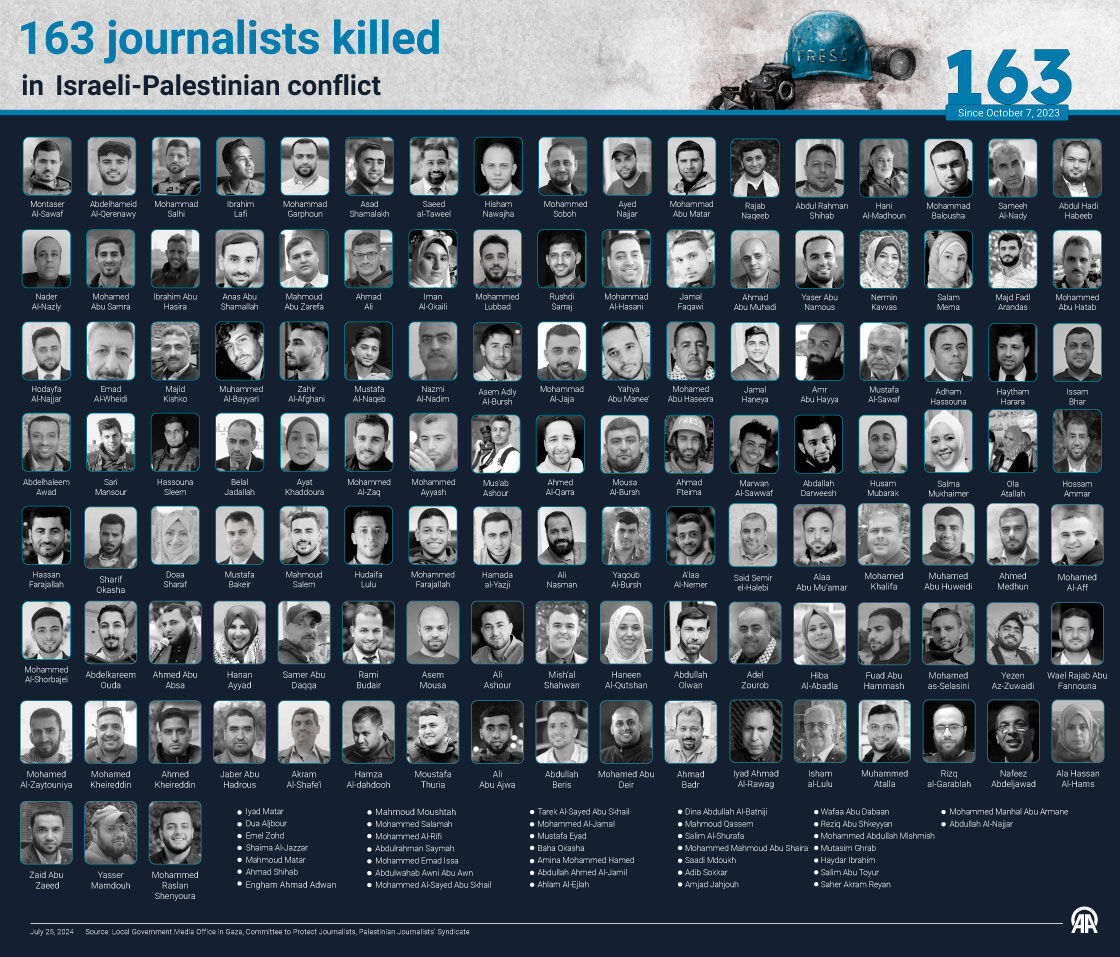
Continue reading
Under Israeli Guns: People of Khan Younis Told to Move

The Israeli army has killed more than 70 Palestinians and wounded 200 others, mostly children and women, in less than 12 hours in Khan Yunis, in the southern Gaza Strip. Meanwhile, hundreds of thousands of civilians have received new evacuation orders in the area.

These latest crimes come as part of Israel’s genocidal war against the Palestinian people in the Gaza Strip, ongoing since 7 October 2023.

The atrocities committed by the Israeli army against civilians in the Strip over the past nine months are well-documented and carried out consistently. These crimes include killing, mass murder, starvation, blocking the entry of humanitarian aid, forced evacuation, destruction of civilian objects, and the denial of any kind of stability, as has been the case in Khan Yunis since this morning (22 July 2024). Such actions indicate that the occupation army is essentially destroying the Palestinian people in the Gaza Strip in every way that it can.

Every time there is talk of returning to the negotiating table to reach a truce and an exchange agreement, the Israeli army purposefully increases the number of massacres and mass killings of Palestinian civilians. This raises concerns that Israel is engaging in political blackmail by using the killing and displacement of civilians as a tool of pressure, as it has done repeatedly in recent weeks.

After carrying out a premeditated mass murder this morning, the Israeli army launched dozens of raids, fire belts, and artillery shelling on homes, streets, and gatherings of displaced people. Thousands of these people fled into the streets in a panic, looking for a safe place that did not exist.

Residents and displaced people sheltering in the following towns were given evacuation orders from the Israeli army: Bani Suhaila and its surroundings; Abasan al-Kabira and al-Jadidah and its surroundings; al-Qarara and its surroundings; al-Fukhari and its surroundings; Khuza’a and its surroundings; al-Qurain; al-Manara; al-Salam; Jurat al-Lot; Qizan al-Najjar; Sheikh Nasser; al-Mahatta; al-Satar; and al-Katiba. This coincided with the Israeli army’s declaration that the so-called “humanitarian zone” in Al-Mawasi would be reduced. This was all part of Israel’s media disinformation campaign and psychological warfare tactics, since military assaults on forcibly displaced people and their tents have occurred continually in this area for several weeks now, resulting in hundreds of deaths and injuries.

Out of the 10 residences for which preliminary information was available since the 7:30 a.m. start of the Israeli military operation on Khan Yunis, the Euro-Med Monitor field team recorded the Israeli army bombing six homes on the heads of their occupants. Seventy citizens were killed and over 200 others were injured, many of whom were women and children, as a result of the Israeli bombing. Two of the deceased victims were infants, while several families were taken off the civil registry, including the Jabour and Harb families.

In addition to aerial bombardment and shooting from quadcopter aircraft, the Israeli army employs direct and indiscriminate artillery shelling against civilians. This has resulted in a high death toll, with many victims remaining trapped under the rubble and in the streets, where rescue workers have not been able to retrieve their bodies. Israel also deliberately targeted two civil defence paramedics, who were injured while ambulance crews in Bani Suhaila were attempting to evacuate other injured people.

Israeli forces entered the town of Bani Suhaila amid very violent bombardment, even though the Israeli army had said in its orders that the displacement was going to be temporary. This constitutes a kind of deception of the residents—large numbers of whom were not able to evacuate as a result of the bombing, or had not attempted to before it began because they estimated that the attack was a series of air strikes as opposed to a ground incursion. (On the first of this month, the Israeli army issued similar displacement orders but only carried out intense air strikes without a ground incursion).

Two Palestinian Red Crescent clinics were forced to close due to the aerial bombardment, and several health centres experienced disruptions as a result of the forced displacement orders.

Given these facts, all nations must fulfil their international obligations by enacting strong sanctions against Israel and severing all political, financial, and military support and cooperation with it. This should include immediately halting arms transfers to Israel, including export permits and military aid; otherwise, these nations will be held accountable for the crimes that have been committed in the Gaza Strip, including genocide.

Furthermore, accountability must be established at the local, regional, and global levels. Working diligently and cooperatively to pave the way for universal jurisdiction will enable national courts to hold accountable the perpetrators of the egregious crimes being committed against Palestinian civilians.

Additionally, the International Criminal Court must continue to investigate any and all crimes committed by Israel in the Gaza Strip; broaden its investigation into the criminal responsibility of all parties, including Israeli Prime Minister Benjamin Netanyahu and Defense Minister Yoav Galant, in order to hold all perpetrators accountable; issue arrest warrants for those responsible; and acknowledge and address Israel’s crimes in the Strip as international crimes that fall under the purview of the International Criminal Court, and are clearly crimes of genocide.

This article is reprinted from the Euro-Med Human Rights Monitor website.

Continue reading
Jordan Condemns Knesset Bill on UNRWA Designation

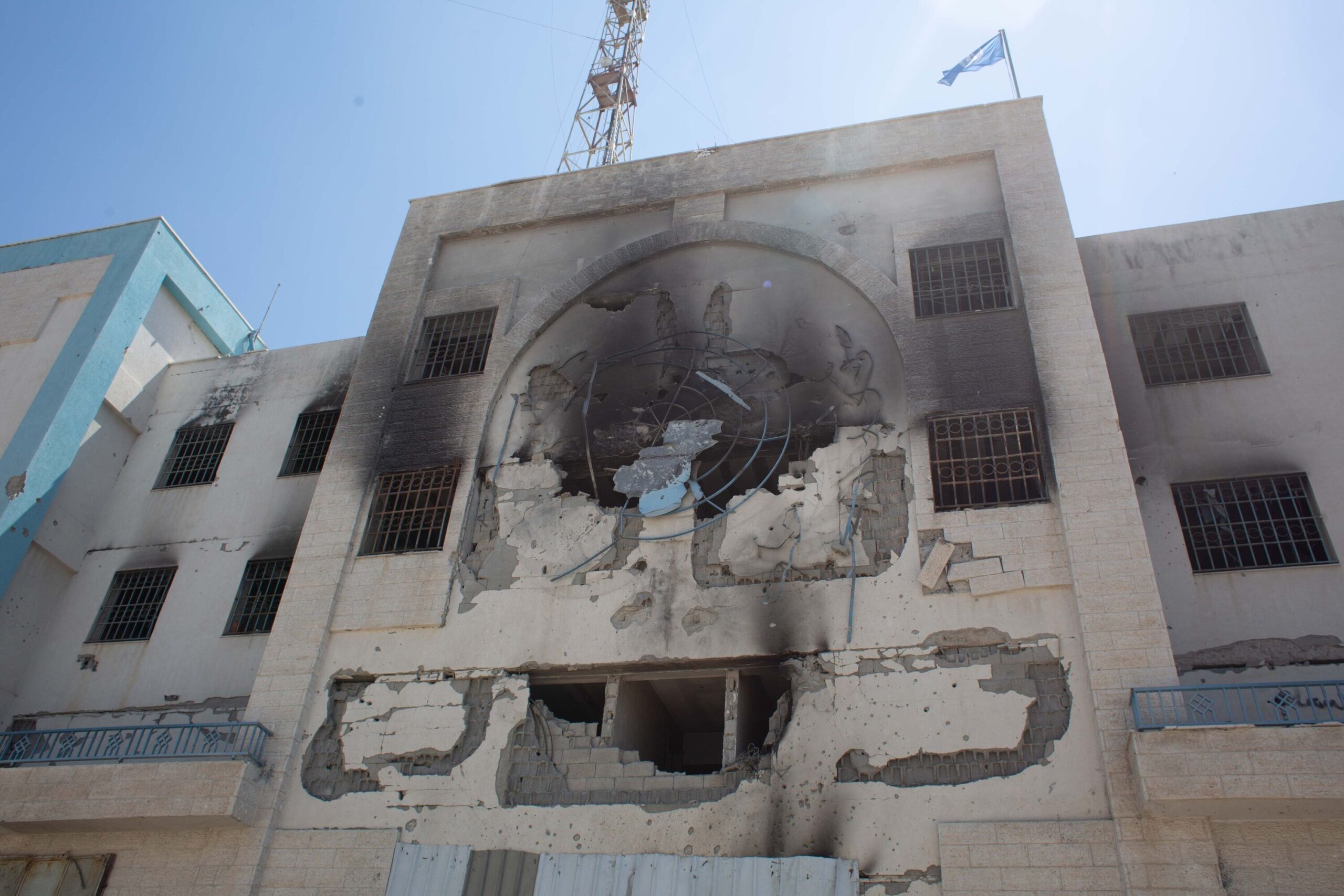
Jordan Monday, condemned the decision of the Israeli Knesset to classify the United Nations Relief and Works Agency for Palestine Refugees (UNRWA) as a terrorist organisation according to the Petra news agency.

The decision is an “attempt to kill the agency, assassinate it politically and target its symbolism, which affirms the right of Palestinian refugees to return and compensation under the international law,” a Foreign Ministry statement empahsized.

Foreign Ministry’s spokesperson Sufyan Qudah, said: “The ongoing Israeli allegations and measures targeting UNRWA and aiming to kill it and cancel its pivotal and basic role in providing humanitarian aid to the Palestinian people under its UN mandate represent a blatant violation of international law and Israel’s obligations as the occupying power.”

Qudah noted the UN Agency’s role in providing “vital” services to Palestinian refugees in its five areas of operations, especially in Gaza, which is suffering an unprecedented humanitarian catastrophe as a result of the ongoing Israeli war since 7 October.

He urged the international community to continue providing political and financial support to UNRWA, adding that the Agency “cannot be dispensed with or replaced” until the Palestinian issue is resolved based on the two-state solution by establishing an independent and sovereign Palestinian state along the lines of June 4, 1967.

Meanwhile Secretary-General of the PLO’s Executive Committee Hussein Al-Sheikh termed the Knesset’s decision as a “disregard for the international community and its international organizations.”

“We affirm that the Israeli occupation is the ugliest form of terrorism practiced daily against the Palestinian people,” he said in a statement as reported in Anadolu.

The Knesset passed three bills to shut down the UNRWA and deem it as a “terrorist” organization. The bills will require two more readings to become effective.

Continue reading
Gaza Massacres in 24 Hours

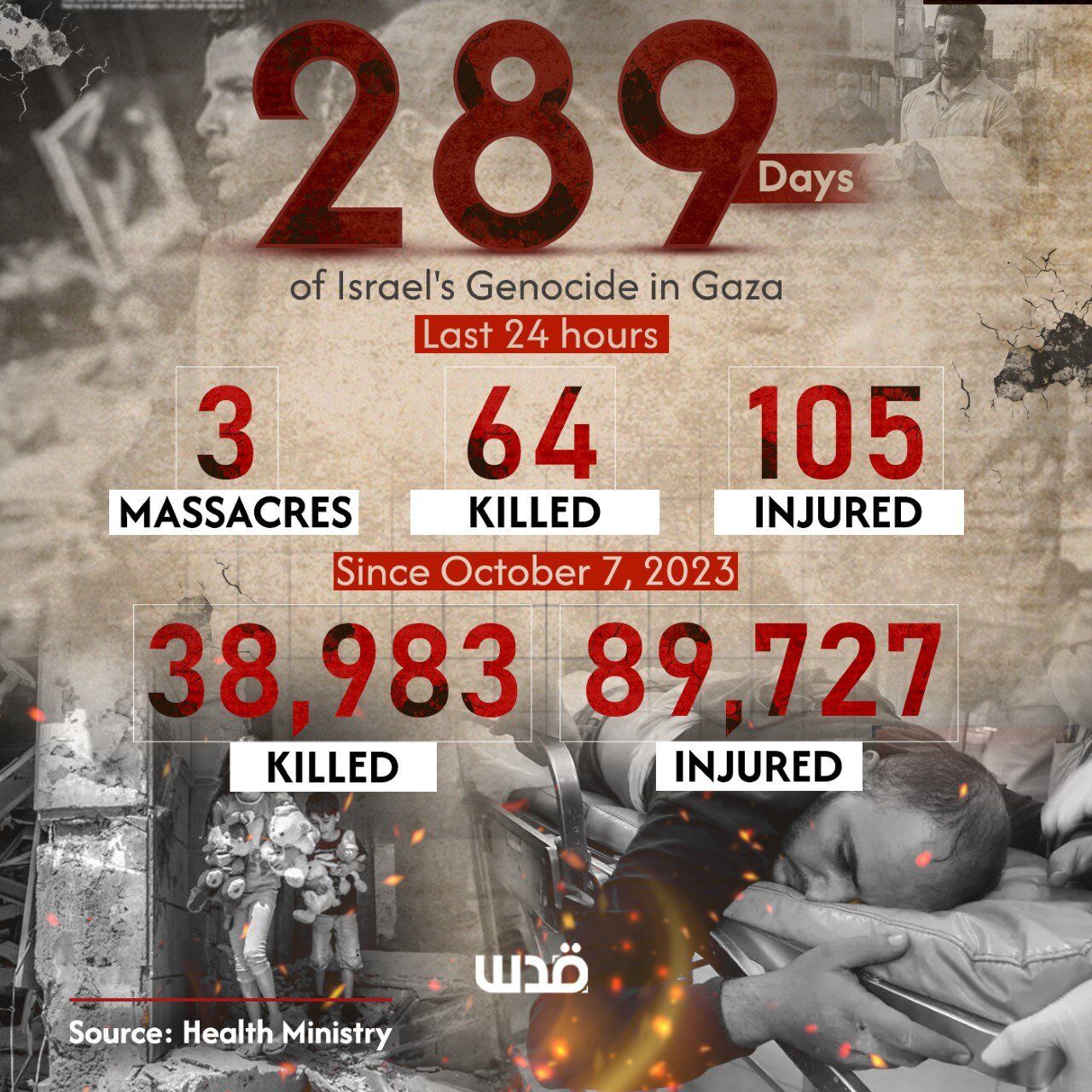
CROSSFIREARABIA – On day 289 of the Israeli genocide on Gaza the Ministry of Health in the Strip reports the following:

The Israeli occupation committed three massacres against families in the Gaza Strip in the past 24 hours, resulting in 64 documented deaths and 105 injuries.

It maintains that the documented Palestinian death toll has risen to 38,983 martyrs and 89,727 injuries since 7 October, 2023.

It states that these figures only refer to the cases transported to hospitals and registered in the records of the Ministry of Health.

An unknown number of victims are still unaccounted for or missing under the rubble, as ambulance and civil defense crews cannot reach them due to Israeli military attacks.

It is estimated that over 11,000 are dead under the rubble in the Gaza Strip.

Continue reading