Israel Makes Life Unbearable For Palestinians – Here’s The Evidence!

In the first half of 2024, there has been a severe escalation of violence and human rights violations in the West Bank reports the Norwegian Refugee Council (NRC). Hundreds of Palestinians have been killed by Israeli forces and settlers, with over 1,000 displaced and nearly 160,000 adversely affected by demolitions.

The West Bank has experienced a significant surge in violence, resulting in 228 Palestinian fatalities, including 51 children, marking a 65 per cent increase compared to the same period in 2023. In five instances, it could not be determined whether the killings were committed by Israeli forces or by settlers.

“The data indicates that Israeli forces are deploying unwarranted use of lethal force against Palestinian civilians,” said Ana Povrzenic, NRC’s country director in Palestine. “We cannot separate the worsening conditions in the West Bank from the actions of senior Israeli officials aimed to establish sovereignty over the West Bank, in violation of international law.”

The number of search and arrest operations conducted by Israeli forces in the West Bank nearly doubled, rising to 3,384 in the first half of 2024 from 1,873 in the same period in 2023. Israeli authorities have intensified raids, particularly in Jenin, Tulkarm, and Nur Shams refugee camps, utilising military tactics and heavy weaponry against civilians, including airstrikes. These operations have led to the destruction of 81 structures and the displacement of 499 Palestinians in these areas alone.

“The Israeli army did not differentiate between a stone, a tree, or a human being,” said Nihaya al-Jundi, a resident of Nur Shams camp, where 242 Palestinians were displaced, and a youth centre, a kindergarten, and a multi-purpose hall were destroyed. “No person and no home are safe, not even those with the elderly, people with disabilities, or children.”

Israel’s unlawful demolition of Palestinian property has reached unprecedented levels. By 30 June 2024, 643 Palestinian structures had been destroyed, marking a 42 per cent increase from the same period in 2023. In most of these cases, Israel reports the structures lack Israeli-issued building permits, which are virtually impossible for Palestinians to obtain.

Settler attacks have also climbed, with 649 incidents recorded in the first half of 2024, compared to 598 in 2023. In Duma, a multi-hour settler attack on 13 April resulted in the destruction of homes and livelihood structures, Izzat Dawabshe, a Duma resident, described the event: “Anyone who defended himself in any way was shot or detained.”

https://visuals.nrc.no/pages/search.php?search=%21collection9321&k=dfc67aba3f#

Settlers destroyed four homes and damaged or burned 31 others during the attack on Duma. Settlers completely burned a dozen livelihood structures and damaged or burned three others.

“While some states have imposed sanctions against individual violent settlers, this has had limited impact in reducing rates of violence,” said Povrzenic. “States must do more to hold the state of Israel, its central and local governments, and security forces – not just individual offenders – accountable for grave breaches of international law.”

This article is reprinted from reliefweb

Continue reading
Living in a Tent: Gazans Pour Out Their Woes

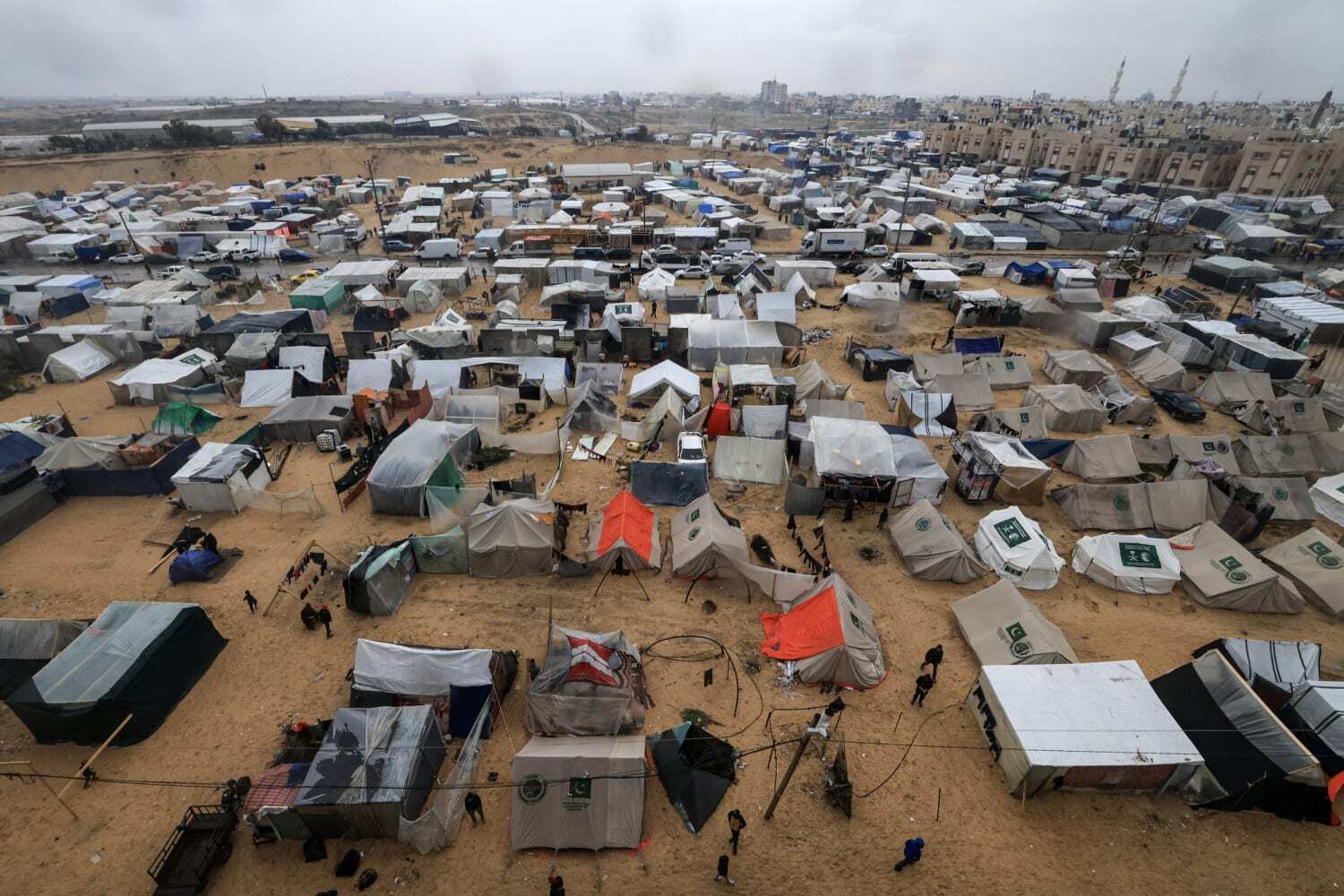
Across vast agricultural lands and along the coast in central and southern Gaza, tens of thousands of tents have become shelters for hundreds of thousands of Palestinians displaced by the ongoing, bloody Israeli war for the 10th consecutive month.

Once a symbol of the Nakba (catastrophe) and displacement for more than seven decades, the tent has now become a dream for thousands of displaced families in Gaza, despite the harsh living conditions it imposes.

What is it like to live in a tent? This question might seem devoid of emotions and disconnected from the harsh realities of Gaza amid the Israeli genocide that has taken many Palestinian lives but failed to break their will and determination to cling to their land. However, the  question is crucial to understand the extent of the Palestinian tragedy and resilience.

The Palestinian Information Center (PIC) interviewed some of those that were displaced and are now living in tents to see the harsh situation they are now under.

Quest for a tent


Whilest all those interviewed speak of the difficulty of living in a tent – suffering the harsh hot summers and cold winters – for many of the displaced, the tent has become a dream come true as it is easily hoisted and dismantled quickly. This is important for those displaced who needed to move more than once because of the Israeli army gunfire, tanks, drones and warplanes.

Mohammed Said said he bought a tent for 1,200 shekels ($330) after he could no longer bear living in a “khas,” a makeshift shelter made of wooden sticks covered with nylon or any other available material.

He explained a khas provides no privacy because of the mostly nylon material its made of and its impossible to move when forced to relocate. Thus, he went for a tent, having relocated at least twice already.

Various NGOs provide tents for free, but with demand shooting up some of the tents have started to be sold, forcing people to buy them due to the lack of alternatives. Today tents vary in shape and size, according to how much you want to pay.

Finding a place to set up the tent
After getting a tent, the second challenge is to find a place to set it up. Such areas are currently limited to around Khan Yunis and Deir al-Balah.

Khaled Al-Masri said he had to move his tent several times to be close to water sources and/or the scarce aid.

“Today, there are camps made up of a group of tents overseen by an association or individuals’ initiatives to provide some aid, ensure water access, and establish shared bathrooms. Other tents are set up randomly on agricultural land and near destroyed homes,” he said.

Life in the tents


Living in tents are tales of pain and suffering, varying according to the family’s resources, number size, tent location and the supervising entity.

A small family with a tent in an area receiving aid can adapt better and suffer less compared to an extended family with a small tent in an area lacking in services.

With the scorching summer heat, living in a tent among hundreds of others in Gaza feels like a living hell said  Amani Hamdan.

Hamdan told PIC she was forced to live in a tent on a land of a friend of her husband.  She is joined by her mother-in-law, disabled sister-in-law and her four children.

 “We relocated at least seven times from Khan Yunis since our house was bombed. Initially, we had no tent and suffered much until we managed to obtain one, and its only advantage is it can be unhooked easily if we need to move again.

Living in a tent is harsh and difficult, a  primitive life. And with no walls, and privacy, our voices reach the people in the tent next door and theirs reach us,” she added.

Suffering in tents


“We can hardly move around inside the tent, some  sleep on mattresses, some without, part of the tent holds food supplies. The temperature is scorching, forcing us out of the canvas. In winter, we were drenched by rain; now, the heat is unbearable, but we thank God for what we have,” Hamdan added.

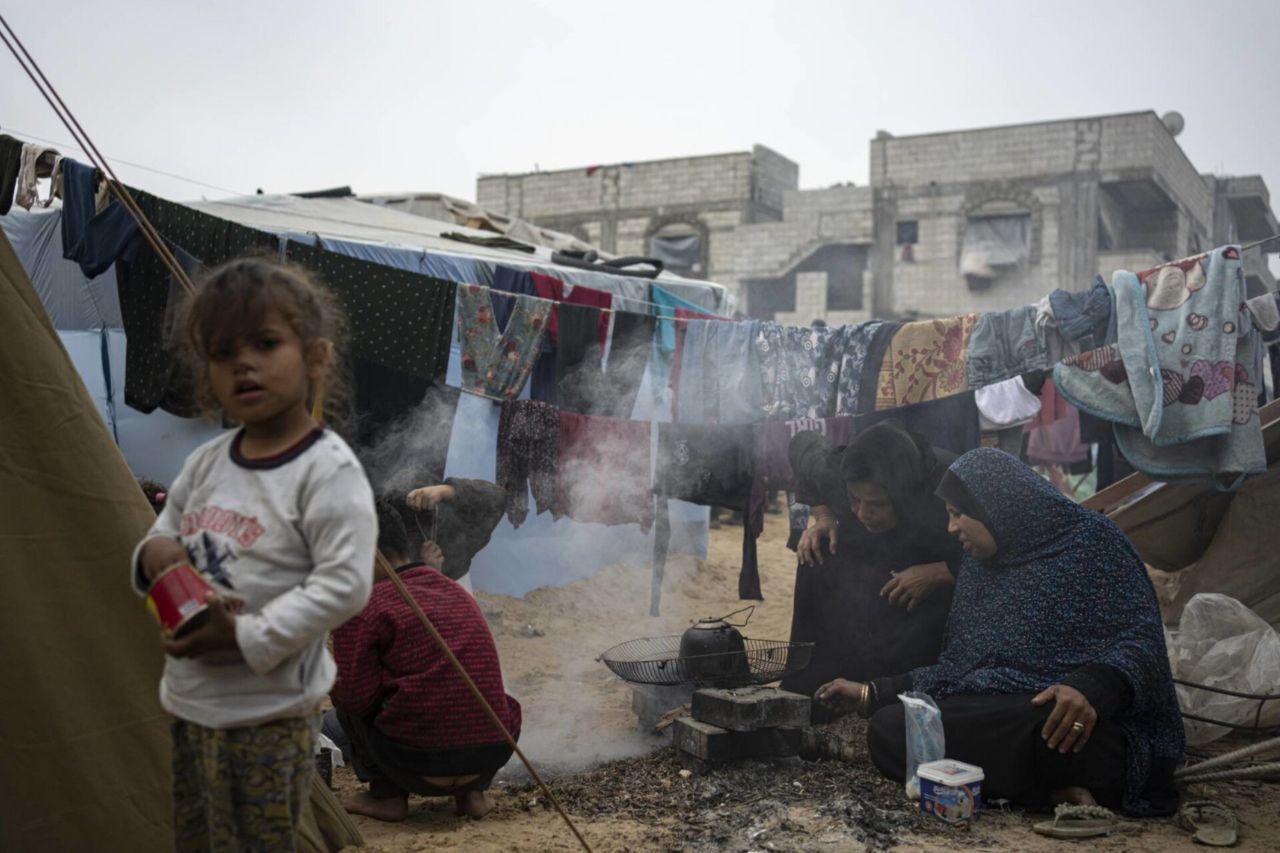
“We cook on fire outside the tent, bake bread in a shared oven, share a bathroom, and bathe rarely, needing prior coordination with the other tent partners. The children start their morning search for wood, while my husband travels long distances for water that is sometimes brought by volunteers. Life has become primitive with no kitchen, bathroom, or water faucets.”

What is a tent?


After enduring the harsh tent life for months, engineer Mohammed Munir wrote about its meaning, “To burn while sitting inside, to suffocate with no air or cooling. It’s like a greenhouse during the day.”

 “A tent means living on the ground, separated only by fabric, coexisting with all the insects of the earth as you are now their guest,” He wrote on Facebook.

“Normal activities become complicated, like taking a nap or a bath, walking comfortably, sitting peacefully, feeling safe, or sleeping without back pain from the hard ground, all of our dreams are now out of reach.

A tent means no privacy, speaking in whispers inside your tent while your neighbor hears you. With tents set up on sand and agricultural land, it means living with all types of insects and with no hygiene,” Munir concluded.

The meaning of a tent


“A tent means having no wall to lean on, no private life,” Sama Hassan wrote.

 “Displacement means not to live in safety or stability. We first moved from Gaza City to the north in search of ‘fake’ safety until the missiles to land on us. We then fled to southern Gaza in the first Friday of the war and stayed in Khan Yunis for two months, then moved to Rafah when the city was invaded in early December 2023.

 With each relocation, I lost a thread of my privacy, becoming more displaced and homeless like thousands in Gaza. A tent is harsher than a shared room in a stranger’s house as the bathroom is either within the tent, set up primitively, or shared, half a kilometer away, established by a charity. If a woman needs to use it at night, she must wake a man to escort her,” she ended by saying.

Life in a tent is hard for women, who must fully dress as they usually do when they go out of the house. She maintains dressed at all time despite the heat, lack the freedom of movement. In the tent, fires are lit, cooking is made, washing dishes, with large water containers placed in the corner.

Bathing in a tent involves women surrounding the one washing with thick blankets, like forming a small tent within the main tent, with the woman hurrying before the others tire of holding the blankets.

If living in a tent is already insufferable, doing so amid the ongoing Israeli genocide and bombings is even more so, because the strikes continue targeting as what happened to us in Rafah and Khan Yunis. This is beyond words.

In recent months, Israeli bombs have burned tents and killed dozens, leaving survivors to search for the remains of their their loved ones before finding a new place to set up another tent if one is available, continuing their struggle.

Continue reading
Bombs And The Pregnant Women of Gaza

When Hanin first sought care for her malnourished daughter in Khan Younis in southern Gaza, Palestine, the clock began ticking on her chances of survival.

“[My] child was in a critical condition. They referred me to the hospital but there was no means of transportation,” explains Hanin.

Finally, they reached the Médecins Sans Frontières (MSF) inpatient therapeutic feeding centre on a cart.

“My child was tired. She was resting her head towards me and not moving,” says Hanin. “She was close to death before we reached the hospital.”

In contexts like Gaza, where the health system has been decimated and has collapsed, late access to care is posing a health risk to pregnant women and their children. – MERCÈ ROCASPANA, MSF EMERGENCY UNIT HEALTH ADVISOR

After nine months of relentless war, people’s access to healthcare in Gaza continues to worsen, particularly for those most vulnerable when healthcare is unavailable, such as pregnant women and children. Their vulnerability has been exacerbated by repeated displacement, inadequate living conditions, insecurity, and poor nutritional conditions. As a result, MSF teams are seeing an increase in pre-term deliveries and malnutrition in children in the south of Gaza.

“The main health risks for pregnant women are blood-pressure related complications such as eclampsia, haemorrhage and sepsis – which can become deadly if not treated in time,” says Mercè Rocaspana, MSF emergency unit health advisor. “In contexts like Gaza, where the health system has been decimated and collapsed, late access to care is posing a health risk to pregnant women and their children.”

Sole option for maternity and paediatric care in southern Gaza

Al-Nasser hospital is the last tertiary hospital providing maternal and paediatric care in Khan Younis. In February, after several weeks of intense fighting with Palestinian armed groups in Khan Younis, Israeli forces stormed the facility, which had been under siege. MSF teams were forced to flee the hospital.

In May 2024, MSF teams returned to the hospital, and in June, together with the Ministry of Health and other organisations, we reopened the maternity and paediatric wards, including an inpatient therapeutic centre. We started providing support to the paediatric intensive care and neonatal intensive care units.

The needs of women and children are skyrocketing, yet MSF teams at Al-Nasser hospital are witnessing a shortage of vital supplies, jeopardising the provision and quality of care. Due to the lack of other functioning healthcare centres, Al-Nasser is facing an overwhelming increase in patients every day. Between 29 June and 5 July, the paediatric emergency department alone recorded more than 2,600 consultations, meaning staff attended to more than 300 children each day. As more and more children are admitted for inpatient care, they are being forced to share beds, pushing the paediatric services beyond their capacity.

“We are seeing malnourished children, an issue never seen in Gaza before,” says Joanne Perry, MSF project medical adviser, a member of the MSF team working in Al-Nasser hospital. “People are living in tents with minimal access to clean water, and abysmal sanitation. Bombing has devastated the sewage and water systems, resulting in diarrhoea, dehydration, and hepatitis A and skin infections among children.”

Some women are delivering prematurely, often with postpartum complications exacerbated by their living conditions. – MOHAMAD SHIHADA, MSF NURSING TEAM SUPERVISOR

Access to lifesaving maternal care

As the last hospital providing maternity care in Khan Younis, Al-Nasser hospital and its medical team is handling from 25 to 30 deliveries a day. In addition to functioning hospitals being destroyed or closed, the decimation of infrastructure has also created severe obstacles for pregnant women to reach medical facilities. Pregnant women are often forced to navigate unsafe routes amidst the fighting and without safe transportation – often delaying access to healthcare and putting them at higher risk of complications.

“I rode on a donkey-pulled cart to Al-Nasser hospital alone, as my husband couldn’t afford to join me due to financial constraints,” says Najwa, an expectant mother in Gaza.

At the same time, once women have given birth, they must quickly return to unsanitary conditions, often in tents, where lack of food and constant stress put them and their newborns at further health risk.

“Some women are delivering prematurely, often with postpartum complications exacerbated by their living conditions,” says Mohamad Shihada, MSF nursing team supervisor working in the MSF neonatal intensive care unit of Al-Nasser hospital.

In addition to maternity services, MSF is supporting the neonatal intensive care unit, which is equipped with 29 beds and incubators for high-risk newborns.

“There’s no […] diapers, or suitable clothing for my baby,” says Khadra, who gave birth in Al-Nasser hospital’s maternity ward. “Living in a tent exposes them to extreme conditions without even a proper bed.”

As the sole functional maternity unit in southern Gaza, Al-Nasser hospital will continue to face challenges with capacity. Reopening the maternity and paediatric wards is one step forward to providing care, but an immediate and sustained ceasefire in Gaza, alongside unhindered humanitarian aid is the only solution to alleviate the suffering of people trapped in the Gaza Strip, including pregnant women and children.

This article is reprinted from reliefweb

Continue reading
Day 278: Four More Israeli Massacres

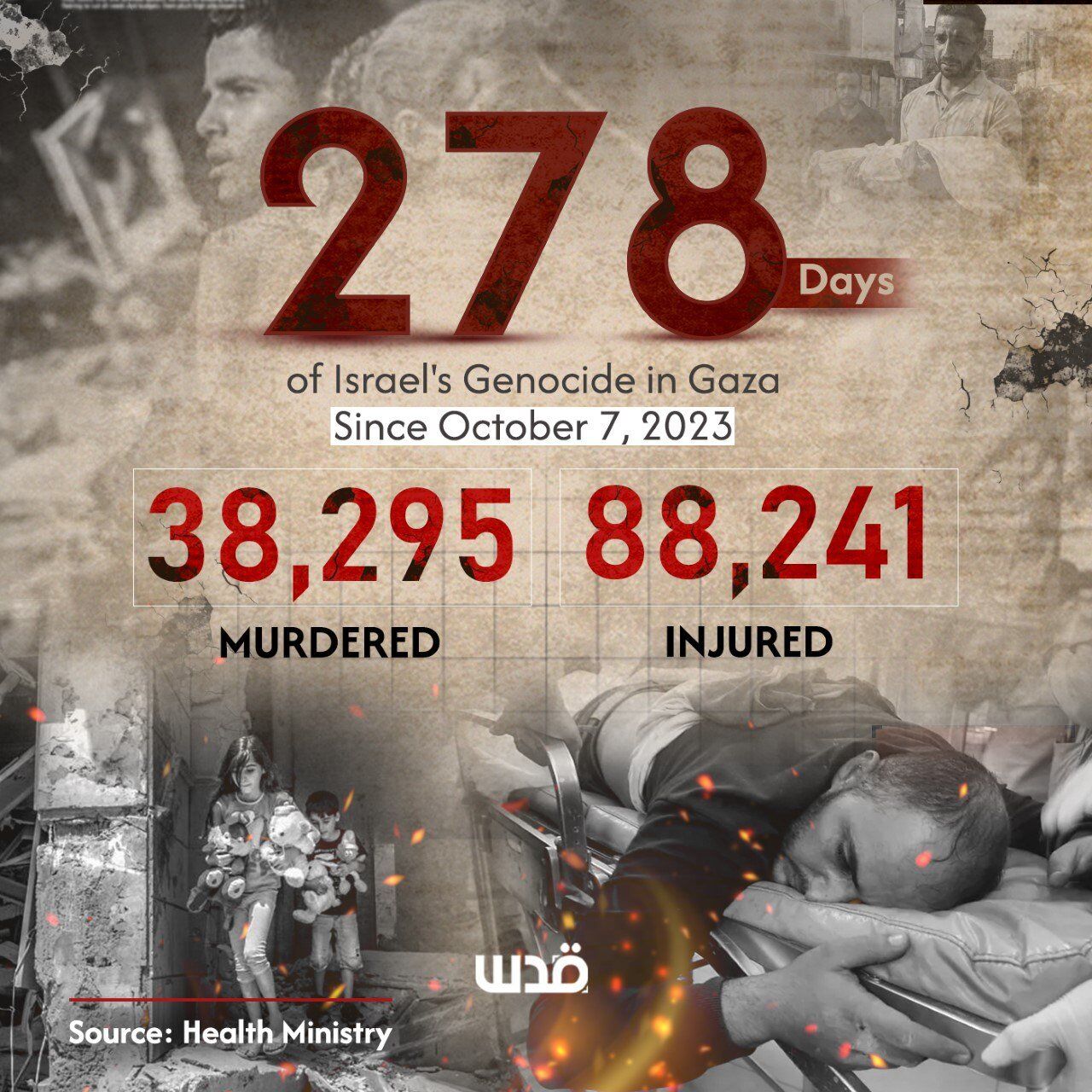
Its day 278 of the Gaza genocide that is being committed by Israel nonstop.

Israeli forces killed 52 more Palestinians in attacks in the Gaza Strip, bringing the overall death toll to 38,295 since last Oct. 7, the Health Ministry in the besieged enclave stated on Wednesday.

A ministry statement added that at least 88,241 other people have been injured in the onslaught as reported in Anadolu, the Turkish news agency.

“Israeli forces killed 52 people and injured 208 others in four ‘massacres’ against families in the last 24 hours,” the ministry said, adding 29 of the victims were killed in an airstrike on Al-Awda School in the town of Abasan, east of Khan Younis with ar least 50 injured.

“Many people are still trapped under rubble and on the roads as rescuers are unable to reach them,” it added.

Continue reading
New Palestinian Exodus! But to Where?

A new Palestinian exodus is being forced but to where? Nobody knows! Palestinians in different neighborhoods of Gaza City are picking up what little left of their belongings and are on the move again.

Thousands of Palestinian families are fleeing their homes in Gaza City amid relentless Israeli occupation bombardment and the threat of imminent invasion.

The Israeli army threatened thousands of displaced Palestinians in Tuffah and Daraj neighborhoods to immediately evacuate and flee at the end of Israeli missiles and bombardment of already ruined homes that are in complete wreckage.

To make sure thousands started moving an Israeli occupation warcraft targeted the home of the Hallou family in the Shati refugee camp west of Gaza City. The home was previously targeted but no matter.

This time the bodies of more family members did not make it. They join other members of the family who are under the rubble.

This is part of the intense attack the city is being subjected to with firebombings in the Tafah, Sabra and Al Daraj neighborhoods, east of Gaza, to force force hundreds of families once more to move out of their homes.

Israeli shelling have also targetted the vicinity of the Bank of Palestine in Gaza City.

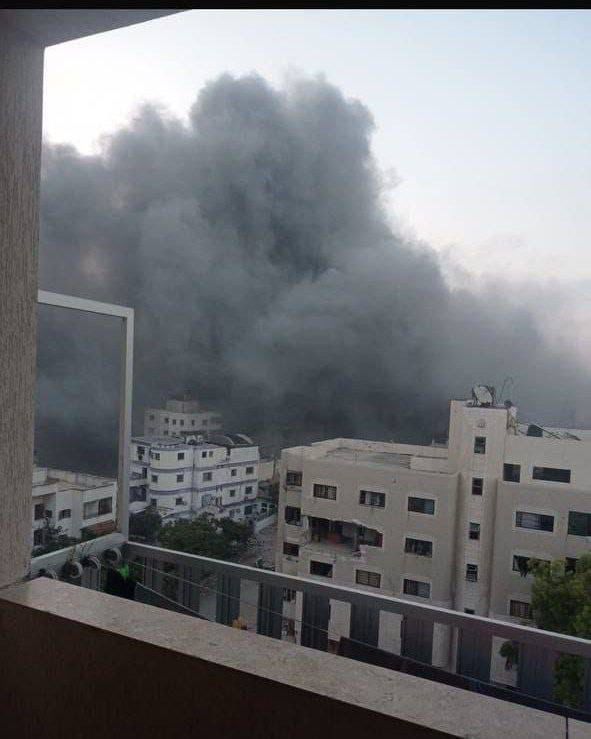
This is regarded as the biggest onslaught with Israeli warplanes launching as well, massive airstrikes on the once-plush neighbourhood  al-Remal in the city.

The Israeli military crackdown on civilians begun in the early hourse of Monday morning. “Our forces are now operating in Gaza City, including at the UNRWA headquarters, after intelligence information” an Israeli army announced.

The announcement created panic. In addition to the fact that many people started moving, patients in their hospital beds were hurriedly being wheeled out for miles to find another hospital. 

In addition to that, the heavy Israeli shelling tens of martyrs and wounded have been trapped under the rubble of their homes in Al Daraj and Al Tufah.

Continue reading