World Condemn Trump’s Plan Over Gaza

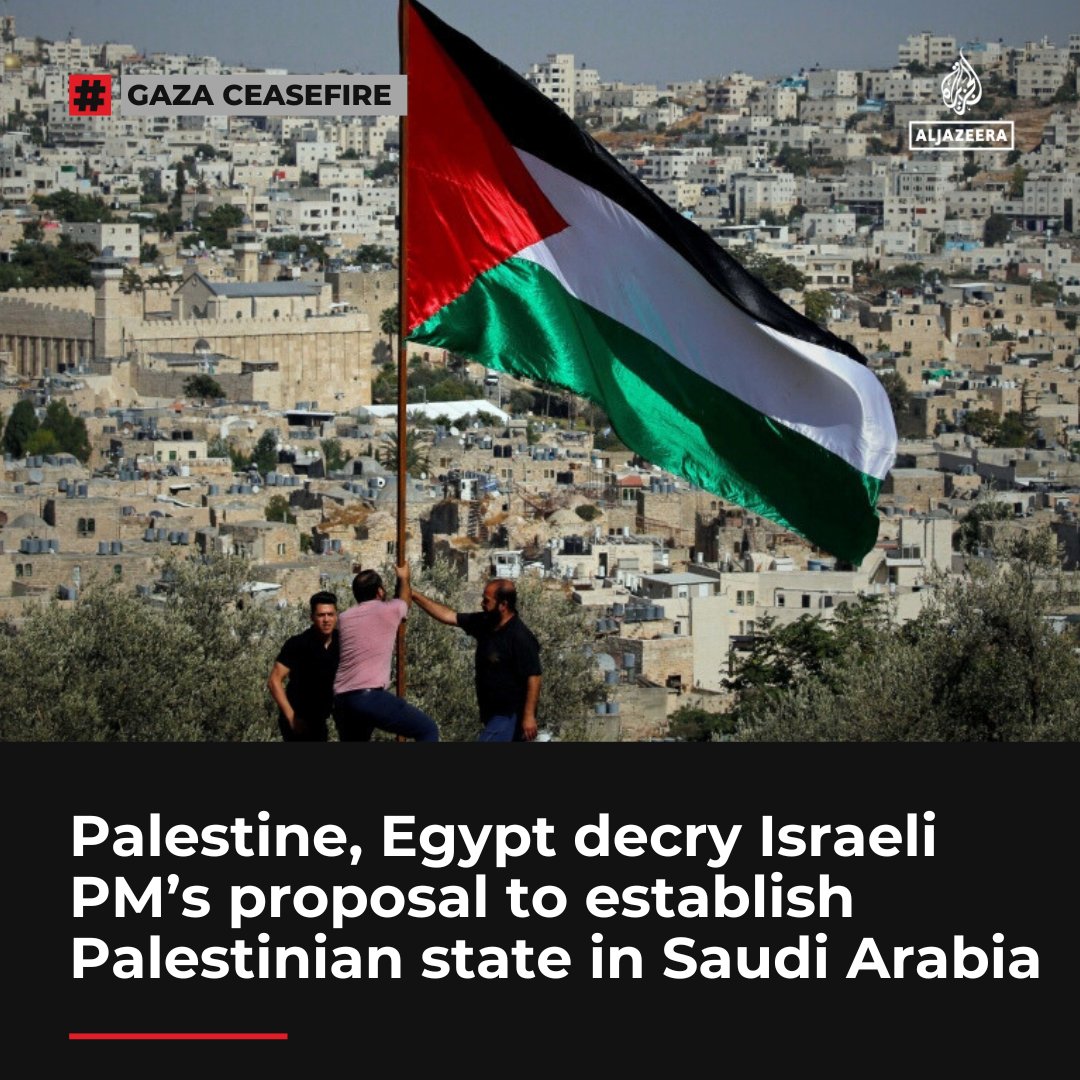
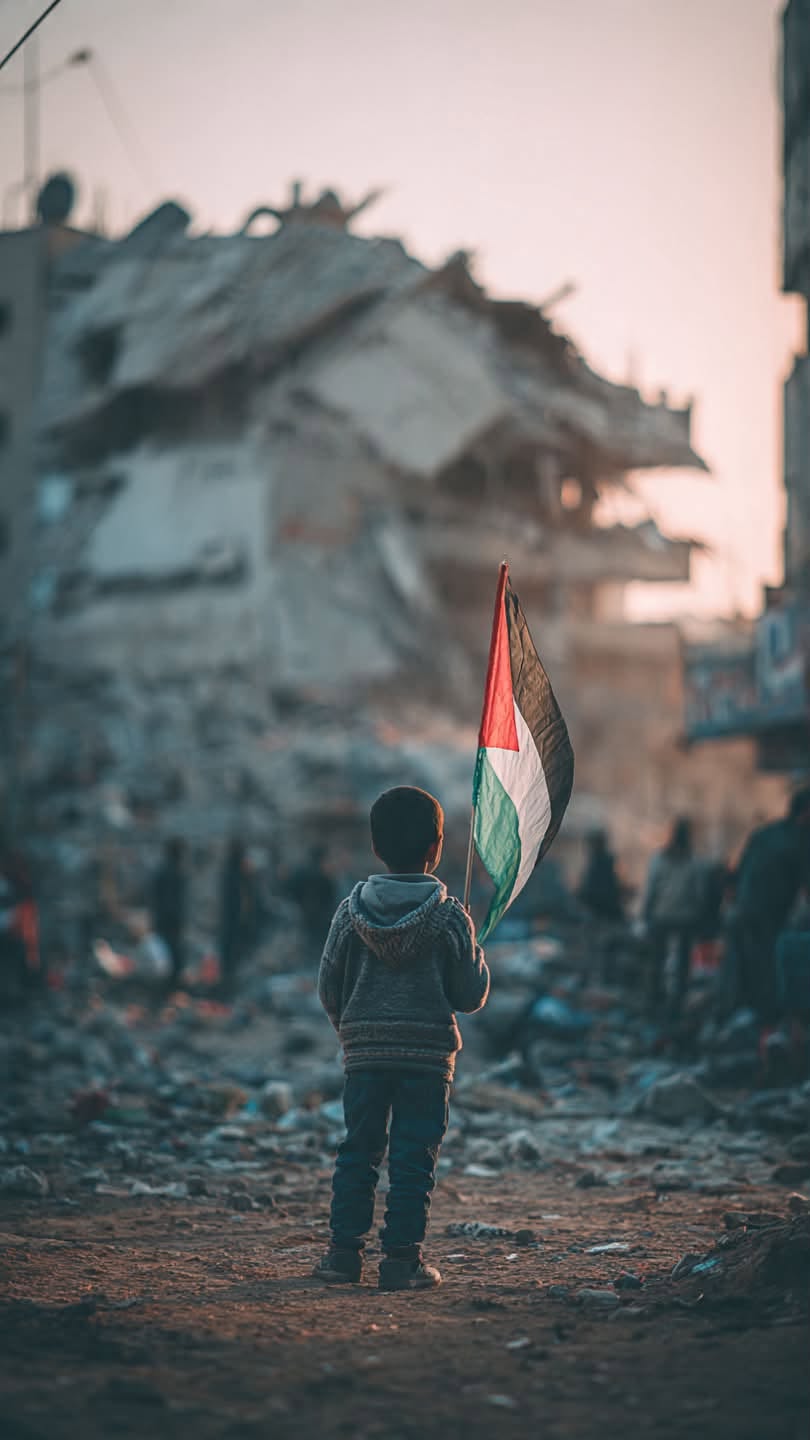
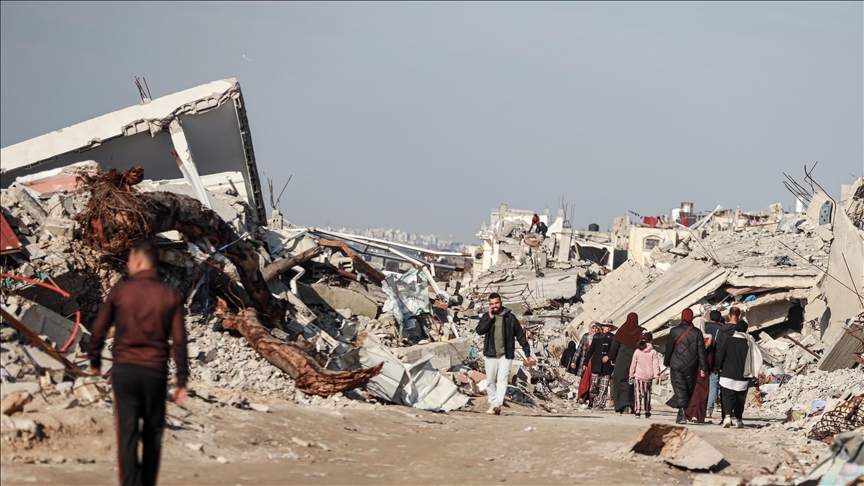
US President Donald Trump’s recent proposal to relocate Palestinians from Gaza and place the territory under long-term US control has sparked widespread international backlash.

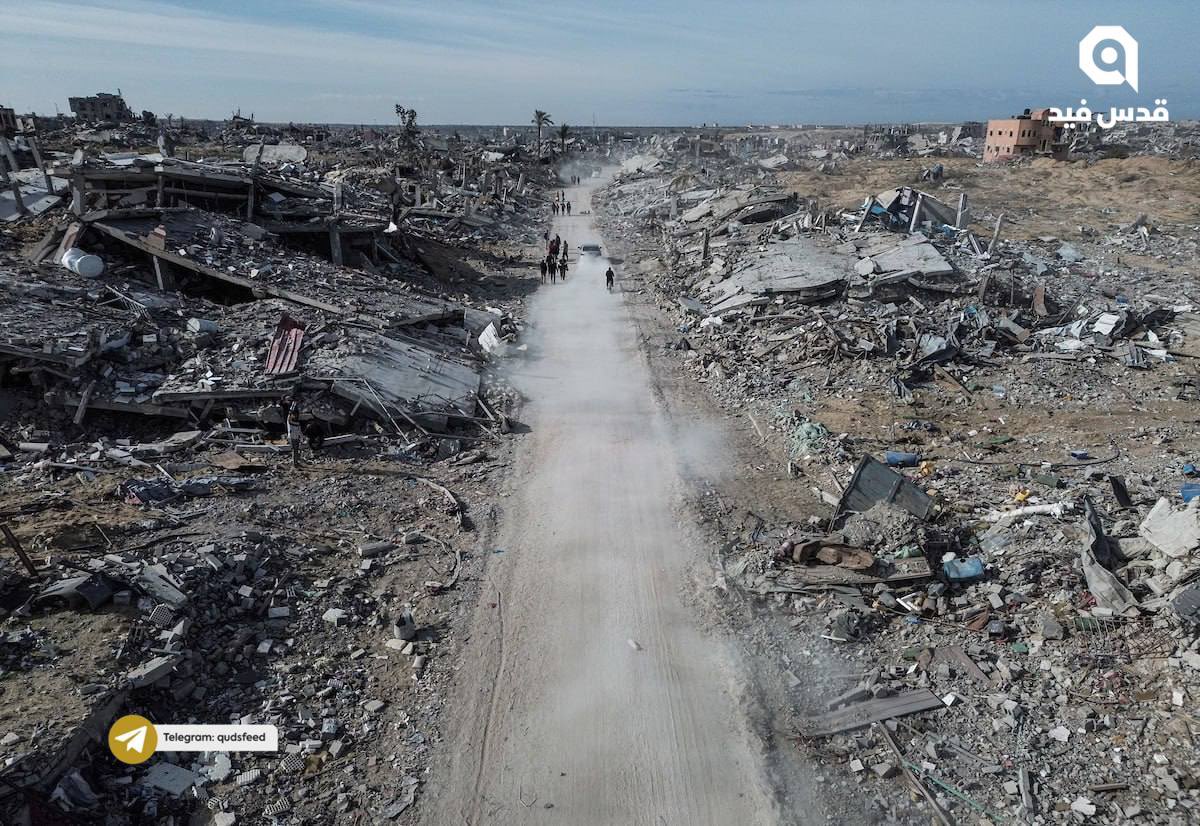
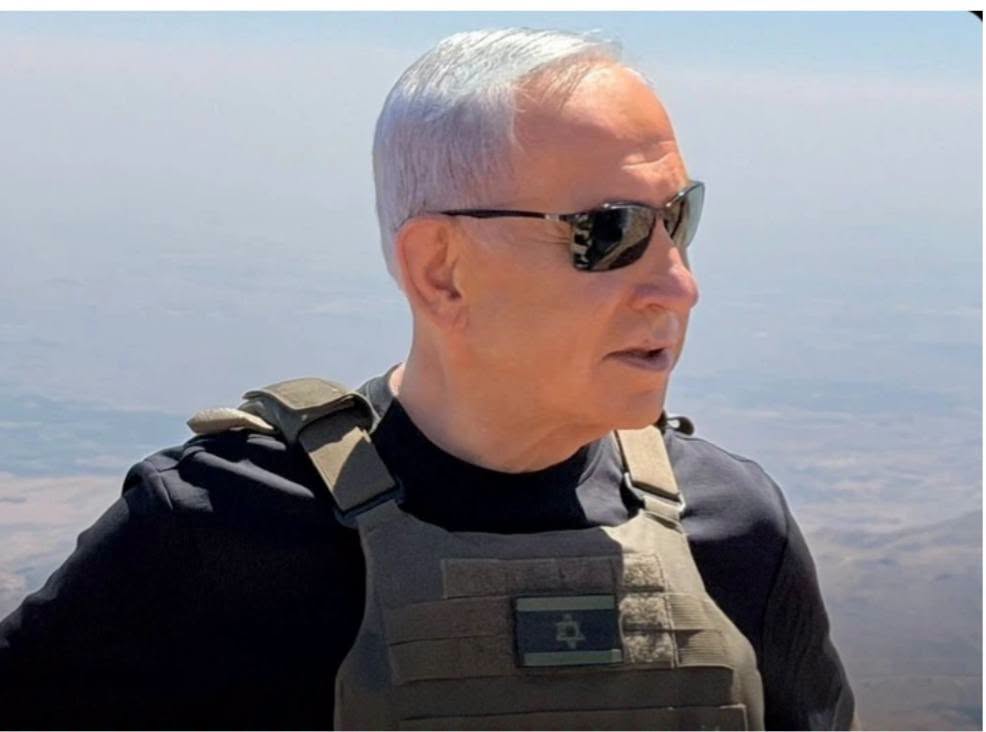
Unveiled during a joint press conference with Israeli Prime Minister Benjamin Netanyahu, the plan envisions transforming Gaza into the “Riviera of the Middle East” by resettling Palestinians in neighboring countries like Jordan and Egypt.

While the proposal received support from Israel, the global response has been overwhelmingly negative, with strong condemnations from major powers, regional countries, and even US lawmakers.

Global powers reject forced relocation

Both Russia and China criticized the plan, highlighting the violation of international norms.

Kremlin spokesperson Dmitry Peskov reaffirmed Russia’s support for a two-state solution, while the Russian Foreign Ministry said: “Any populist comments are counter-productive and ramp up tensions.”

China condemned the forced displacement, emphasizing that “Palestinians governing Palestine” is fundamental for post-conflict stability.

European countries have also been vocal on the plan, expressing strong opposition.

German Foreign Minister Annalena Baerbock labeled the proposal a breach of international law, stressing that Gaza belongs to the Palestinians.

France reiterated its opposition to any forced displacement, calling it a serious violation of international law.

The UK, under Prime Minister Keir Starmer, supported Palestinian rights to return and rebuild, while Denmark said: “It doesn’t seem to be a realistic way forward.”

Reasserting Italy’s support for the two-state solution, the Italian foreign minister said nothing can be achieved without the Palestinians, noting: “It seems to me that it is a bit difficult (to implement the plan).”

Spain, Ireland, and Slovenia, having recognized Palestine in 2024, condemned the plan, calling it ignorant of Palestinian history and contradiction of the UN Security Council resolutions.

Belgium said forced displacement of populations constitutes “a grave breach of international humanitarian law” while Poland expressed support for a two-state solution.

Canada, where Trump put tariffs on hold last week, said its longstanding position on Gaza has not changed and is committed to achieving a two-state solution.

Relocation plan ‘unacceptable’

Turkish Foreign Minister Hakan Fidan condemned the plan as “unacceptable,” stressing that even considering such a proposal is wrong. The Turkish Defense Ministry declared its complete opposition to the displacement of Palestinians.

Palestinian President Mahmoud Abbas rejected the plan outright, stating peace cannot be attained without a Palestinian state.

Hamas group called it “hostile,” while Qatar, Egypt, and Saudi Arabia warned it would destabilize the region.

Iran also voiced firm opposition to the plan, and Iraq condemned the plan to displace Palestinians.

Although Latin American countries were largely silent, Brazil’s President Lula da Silva criticized the proposal as “incomprehensible,” questioning where displaced Palestinians would live.

Dissent within US

Despite originating in Washington, the plan faced criticism even from US lawmakers.

Democratic Senator Chris Van Hollen condemned it as “ethnic cleansing by another name.” Representative Rashida Tlaib, a Palestinian-American, declared: “Palestinians aren’t going anywhere.”

Even Republican figures like Senator Lindsey Graham found the proposal “problematic,” while Senator Tim Kaine labeled it “deranged.”

Trump’s Gaza relocation plan has united a broad spectrum of global opposition, transcending geopolitical divides.

While no country has openly expressed support for the plan, many countries have remained silent. Argentina, Japan, and India, the countries that sent representatives to Trump’s inauguration, have not made any statements on the issue.

Countries that want to maintain good relations with the new US administration have also remained silent. Latin American countries, where Trump has cracked down on immigration and drugs after taking the office, have so far kept mum.

Aside from Israel, the international community remains steadfast in rejecting forced displacement, advocating instead for a two-state solution as the only viable path to lasting peace in the region according to Anadolu.

Continue reading
Trump Goes Rogue

Donald Trump has gone rogue during the first days of his second residence in the White House. His executive decrees have upset US global relations and threaten US short, medium and long-term interests.

Trumps’ actions have unsettled this already tense region. His call 2.3 million Palestinians to be expelled from Gaza to Egypt and Jordan and for the US to take-over and develop the Strip as a tourist destination has been rejected by Gazans, Hamas which rules Gaza, the West Bank-based Palestinian Authority, Egypt, Jordan, Saudi Arabia, Qatar, the United Arab Emirates and the Arab League. They have rejected any attempt to displace Palestinians from their land and called on Trump to support “a just and comprehensive peace in the Middle East based on the two-state solution.” This is, of course, rejected by Israel which has colonised the West Bank and annexed East Jerusalem to pre-empt the emergence of a Palestinian state in this territory illegally occupied by Israel since 1967.

Trump’s administration has backed Israel’s January 30th ban on UNRWA, the UN agency caring for Palestinian refugees, which is meant to end its operations in East Jerusalem, the West Bank and Gaza. The UN Palestinian Rights Committee condemned the ban as a “direct violation of the General Assembly mandate [resolution 302 of December 1949] and the resolution [supporting UNRWA’s mandate] recently adopted by the General Assembly by an overwhelming majority.” The ban has also been condemned by Britain, Belgium, Ireland, Luxembourg, Malta, Norway, Slovenia and Spain. Belgium’s foreign ministry said the Israeli action “sets a disastrous precedent that deeply undermines the multilateral system and the United Nations itself.”

As soon as he took office, Trump ordered a 90-day halt to US foreign and military aid except for Israel (of course) and Egypt. Secretary of State Marco Rubio subsequently issued a waver allowing for “life-saving humanitarian assistance” programmes.

The US gives Israel $3.8 billion a year in military aid and Israel has received an additional $17.9 billion during its genocidal and devastating war on Gaza, according to Brown University’s Costs of War Report. The US has given Egypt $1.2 billion in military aid since the 1978 negotiations which led to the 1979 peace treaty with Israel.

His ignorant and destructive decree has frozen $95 million allocated mainly for Lebanon’s military as the country’s troops deploy in the south to secure Israel’s withdrawal under the fragile ceasefire between Hizbollah and Israel. This sum had previously been earmarked for Israel and Egypt, the Associated Press reported.

The non-governmental organisation managing Syria’s Al-Hol camp has said it will have to end operations without US funding. Controlled by US-sponsored Syrian Democratic Forces. Al-Hol houses more than 40,000 wives and children of Daesh fighters.

The freeze could negatively impact Jordan ($770 million in 2023) and Yemen ($35.9 million) which receive economic aid through the $95 million provided by the US Agency for International Development. The lion’s share of $14.4 billion has been allocated for Ukraine which is fighting the US-led Western war against Russia.

UN and other humanitarian agencies promptly responded to the freeze by ordering reductions in programmes to cut spending. UN Secretary General Antonio Guterres called for exemptions to “ensure the continued delivery of critical development and humanitarian activities for the most vulnerable communities around the world.” Committed to his “America First” policy, Trump cares little for such communities.

Trump has paused for 30-day his imposition of 25 per cent tariffs on imports from Canada and Mexico which have threatened to launch a North American trade war. Canadian Prime Minister Justin Trudeau said he would impose tariffs on $106.6 billion worth of US imports to his country. These include beer, wine, fresh fruits and vegetables, processed food, seafood, vehicles, dairy, and spare parts, crude and refined petroleum.

Trump justified his tariffs on Mexico by accusing government of being in league with drug cartels which smuggle drugs into the US, an allegation hotly denied by President Claudia Sheinbaum. She charged the Trump administration of “slander” and told the US to cut the illegal southward flow of guns arming the cartels. She asked her trade minister to respond with 25 per cent tariffs and non-tariff measures. the main goods Mexico exports to the US are computers, cars and vehicles, spare parts and accessories.

Trump justified announced tariffs by saying, “This was done through the International Emergency Economic Powers Act because of the major threat of illegal aliens [crossing into the US] and deadly drugs killing our citizens, including [the addictive drug] fentanyl.” 

During the pause, Trump can be expected to use tariff leverage to compel Canada and Mexico to capitulate to his demands on border security and other issues.

Beijing said it would lodge a complaint with the World Trade Organisation as Trump levied a blanket 10 per cent tariff on Chinese goods. Combined, China, Mexico and Canada accounted for more than 40 per cent of imports into the US last year.

He has also threatened tariffs on the European Union which he claims is taking advantage of the US. Trump stated, “They don’t take our cars, they don’t take our farm Products, they take almost nothing, everything from them.”

The Washington Post reported Trump’s tariffs could cost every US household $1,200 which could be ignored by the wealth and absorbed by the middle class while stressing the working class and driving the poor into debt.

Trump has not forgotten his determination to transform Canada into the 51st US state despite overwhelming Canadian rejection and to buy or occupy Greenland which belongs to Denmark. In Panama on his first trip abroad Secretary of State Marco Rubio said the US could take action to reassert control over the waterway if the Panamanian government does not exclude Chinese presence around the canal which connects the Caribbean Sea with the Pacific Ocean. The US considers the operations of canal, built by the US between 1904-1914 but ceded to Panama in 1999, a national security issue.

Trump’s ill considered transactional pronouncements and policies have rattled close allies and created global concern over the stability and reliability of the US as the world’s hyperpower.

Michael Jansen is a columnist in the Jordan Times.

Continue reading
Amos Harel: Israel Didn’t Defeat Hamas

Israeli military analyst Amos Harel has dismissed a “total victory” for Tel Aviv in the Gaza war, arguing that such assertions, promoted by supporters of Prime Minister Benjamin Netanyahu, are contrary to the ground reality.

Harel, a military affairs analyst for the Israeli newspaper Haaretz, in his write-up published on Friday, stated, “One has to be a blind follower who has shed all vestiges of doubt and criticism to believe that Israel actually defeated Hamas.”

“The organization sustained a tremendous military blow, but it certainly did not surrender,” he noted, adding that “that’s not consistent with Netanyahu’s declarations about the war’s goals, or with his promises in its course.”


US mediation efforts

Harel also touched on the role of the US in the region, highlighting that the administration of President Donald Trump is pushing for the full implementation of a multi-phase ceasefire and prisoner exchange agreement between Israel and Hamas. This contrasts with Netanyahu’s preference to focus solely on the initial phase.

The ceasefire, which began on Jan. 19, is set to last for 42 days in its first stage, with negotiations ongoing for subsequent phases under the mediation of Egypt, Qatar, and the US.

According to Harel, “The visit to the region by Steve Witkoff, US President Donald Trump’s special Mideast Envoy, attested to the mood of the administration.

“Washington views the first phase of the deal as a necessary point of transition to the second phase, which in itself is preparation for the bigger deal.

“Washington views the first phase of the deal as a necessary point of transition to the second phase, which in itself is preparation for the bigger deal: huge US-Saudi contracts accompanied by normalization between Riyadh and Jerusalem.”

He added that “Witkoff was here to ensure that Israel continues on the track laid out by Trump,” with key details expected to be discussed next week in a meeting between Trump and Netanyahu in Washington. This meeting, Harel suggested, holds significant weight as reported in Anadolu.


Challenges to Gaza deportation plans

Harel also addressed Trump’s controversial suggestion of relocating Palestinians from Gaza to neighboring countries, highlighting the practical difficulties in implementing such a proposal.

The idea is partly aimed at maintaining Netanyahu’s coalition with the far right. However, he noted that the chances of executing such a plan are slim.

“Washington’s bargaining power in the Middle East on emigration doesn’t resemble what it’s capable of achieving with its neighbors in Latin America,” said the analyst.

“Trump appears to be looking at Gaza like the real estate entrepreneur he used to be. To resettle the destroyed area, an evacuation-construction project is needed,” he explained.

Harel pointed out that while these proposals align with the long-standing aspirations of Israel’s right-wing to remove Palestinians from the equation, they are likely to face strong resistance.

“Such schemes will inevitably encounter Palestinian opposition, backed by Arab states. At this moment, it is difficult to imagine any Arab leader endorsing Trump’s relocation plan for Gaza,” he concluded.

On Jan. 25, Trump publicly proposed relocating Gaza’s Palestinian population to nearby countries like Egypt and Jordan. His suggestion has been widely rejected by several countries, including Jordan, Iraq, France, Germany, the Arab League, the Organization of Islamic Cooperation, and the UN.

Continue reading
Israel Kills More Than 15,000 Pupils in Gaza

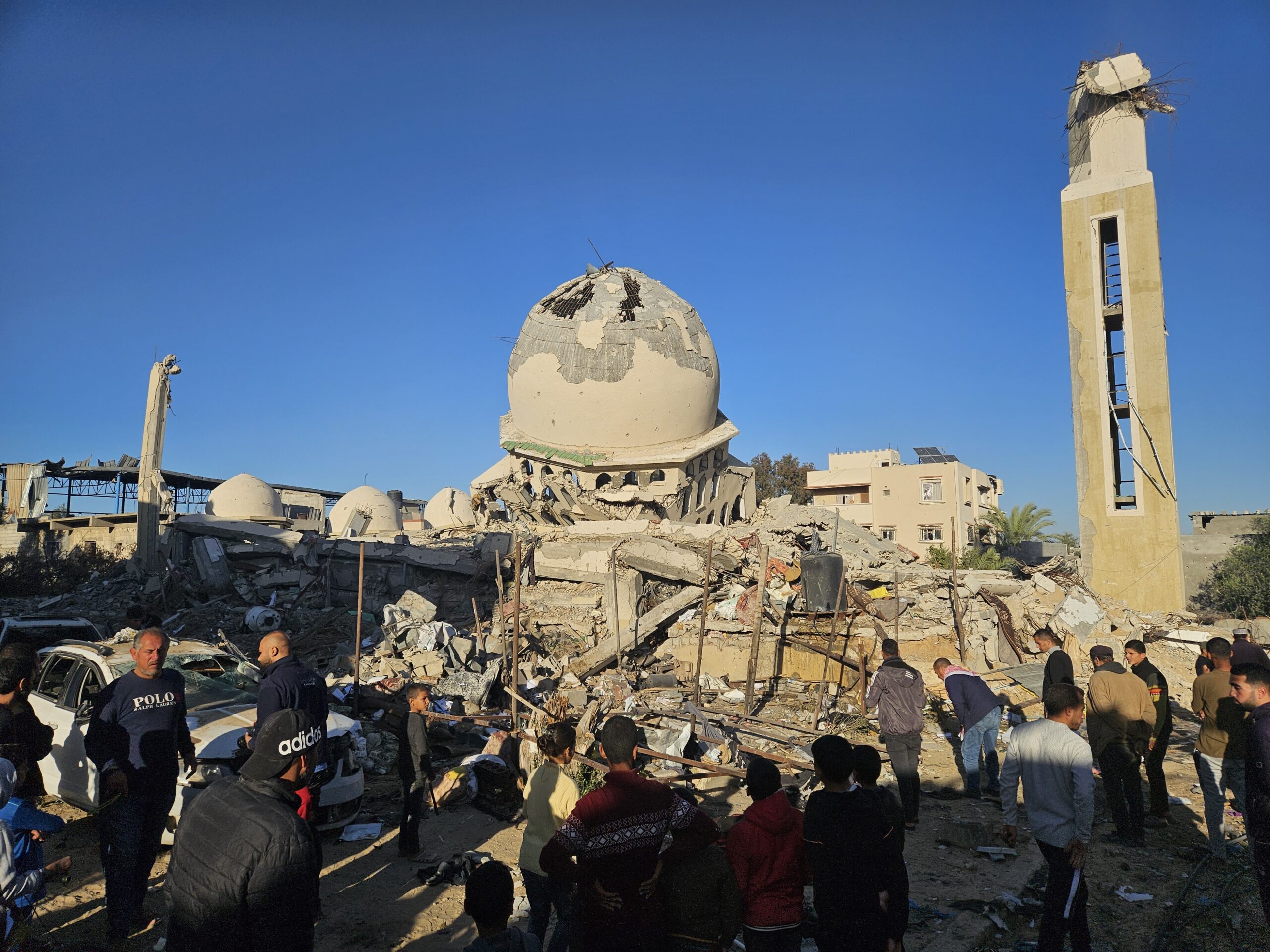
The Ministry of Education in the Gaza Strip announced, Wednesday, the genocide committed by Israel over the course of more than 15 months resulted in the killing and disappearance of more than 15,000 Palestinian school-age children, and the targeting of 95 percent of school and educational buildings.

The ministry said in a statement: “Initial statistics indicate the martyrdom and disappearance of more than 15,000 school-age children, more than 800 education sector workers, and the injury of 50,000 male and female students.”

It added: “The horrific number of martyrs is equivalent to a mass extermination of human elements, students and workers in more than 30 schools, which reflects the extent of the crimes committed against children and educational staff.”

It explained that the genocide resulted in the killing of 1,200 male and female students enrolled in higher education institutions, more than 150 scientists, academics and workers in those institutions, and hundreds were injured and disabled.

The ministry confirmed that 95 percent of school and educational buildings were directly damaged, while 85 percent of them were completely or partially out of service due to their destruction.

It indicated that the Israeli army destroyed more than 140 administrative and academic facilities, including devices, equipment, laboratories, clinics and libraries.

The ministry estimated losses of the education sector at more than $3 billion.

It explained thousands of children were exposed to shocking experiences and unprecedented psychological pressures, which led to the emergence of psychological symptoms and trauma that require specialized interventions.

The ministry announced the completion of emergency response plans for the next stage, which includes completing the 2023/2024 school year and opening the 2024/2025 school year.

The ministry called on media outlets and human rights institutions to document the “Israeli crimes” against children and depriving them of their right to education, and to prosecute Tel Aviv before international bodies and courts.

It also appealed to supporting bodies and partner institutions to provide urgent and necessary support to relieve and rehabilitate the educational sector.

With American support, Israel committed genocide in the Gaza Strip between October 7, 2023 and January 19, 2025, leaving more than 158,000 Palestinians dead and wounded, most of them children and women, and more than 14,000 missing.

Last Sunday, a ceasefire between Hamas and Israel came into effect, and its first phase will last for 42 days, during which negotiations will begin to start a second and then a third phase, mediated by Egypt, Qatar and the United States.

Israel has turned Gaza into the largest prison in the world, as it has besieged it for the last 18 years, and the genocide has forced about two million of its citizens, numbering about 2.3 million Palestinians, to flee in tragic conditions with a deliberate severe shortage of food, water and medicine.

Continue reading
Netanyahu: Ideologue, Pragmatist or a Proxy?

Dr Khairi Janbek

PARIS – When talking about the Israeli prime minister Netanyahu, we must not miss the point that in effect he is a politician, thus, he is both an ideologue and a pragmatist. He is an ideologue when he feels he can go all the way with brinkmanship and get away with it, and he is a pragmatist, when realizes that he should stop and talk. However, by and large that usually depends on the position of the USA primarily, and on the regional situation in the second degree.

He was a pragmatist, when he originally gave his implicit support to Hamas as a guardian of peace in Gaza, and the guarantor of border security with Israel, and he was an ideologue when he demanded that the PNA accepts that Israel is a Jewish state, and accept moreover, that any form of a Palestinian state ought to be demilitarized and just a guardian of the border with Israel.

https://twitter.com/LegitTargets/status/1847287962024747060

He was an ideologue when avenging the 7 October events and a pragmatist in letting the hostage crisis drag on. He chose to head a government in which he can present himself as the only one whom the world can talk to when compared to his extremist colleagues, through his masque of pragmatism, rather than go into a government with partners whom will make him look as the only ideologue among pragmatists.

Again, this Netanyahu dualism, be that the ideologue who has the freedom to do as he sees fit, or the pragmatist who gets to know his boundaries one cannot say is clear, at least for the moment. For all intents and purposes, the red apple of the so-called Abrahamic Accord, Saudi Arabia, remains illusive, as the Saudis have indicted in no uncertain terms, that any prospects of normalization are conditional on at least, reviving the two-state solution. But at the same time, Netanyahu still has working relationships with the UAE and Bahrain in the Gulf as well as Qatar.

As for the older cold peace partners, Jordan and Egypt, Netanyahu is content that at least the situation is stable as it could be.

Now, will Netanyahu be able to pull a rabbit out of the hat when it comes to Trump, or does he really feel that he can take Trump for granted? The current thought in the Middle East fluctuates between those two guesses. But in reality with a paradigm shift, perhaps we can see things clearer. For a start, we are currently living in the age of separation of economics and business from the world of politics, also the separation of interests from principled positions. This age is not created by either Netanyahu or Trump but it certainly suits their relationship fine.

One thing for certain, Netanyahu can rely on Trump’s support as an intransigent ideologue, for Israel is undoubtedly the advanced military post of the USA, but also as a pragmatist, he has to understand to what extent he can be a tool of US foreign interests especially that Trump is very much fond of the concept of proxies and does not like infringements on his business deals.

Dr Khairi Janbek is a Jordanian historian based in Paris and the above opinion is written exclusively for crossfirearabia.com. 

Continue reading