Israel Kills 3 Palestinians Every 24 Hours in Gaza

 Israel has killed 150 Palestinians—an average of three people every 24 hours—since the ceasefire on 19 January 2025. The Euro-Med Monitor field team has documented Israeli sniper and drone attacks since the ceasefire went into effect, as well as the continued use of the blockade as a weapon of slow death by starvation in the ongoing genocide in the Gaza Strip.

The ongoing killings by the Israeli army are carried out by snipers and drones, including quadcopter aircraft, which target Palestinian civilians in the Gaza Strip. The deadly attacks frequently occur when residents attempt to return and inspect their damaged homes near the so-called “buffer zone” imposed by Israel along the Strip’s northern and eastern borders.

An Israeli drone strike on Monday 10 March killed Abdullah Ali al-Shaer and injured another person in the east of Rafah, despite the victims being in a designated “safe zone”. Just hours earlier, a separate drone attack killed three siblings—Mahmoud, Mohammed, and Ahmed Abdullah Ahmed—northeast of al-Bureij refugee camp in the central Gaza Strip.

Rafah Governorate has faced the most Israeli targeting since the ceasefire. Fifty-three-year-old Abdel Moneim Ali Qishta was killed inside his home by Israeli forces stationed along the Egyptian border opposite the al-Salam neighbourhood in the southern part of the city, on the morning of Saturday 8 March. That same day, an Israeli drone strike killed two young men, Mahmoud Hussein Farhan al-Hissi, 37, and Mahdi Abdullah Nadi Jarghoun, 39, in the town of al-Shawka, east of Rafah City.

Euro-Med Monitor has also documented the Israeli army’s ongoing killings of Palestinians in repeated attacks on the Shuja’iyya neighbourhood, east of Gaza City, and the town of Beit Hanoun, in the northern Gaza Strip, since the beginning of March. Since the ceasefire, Israel has killed 150 Palestinians—an average of six people every two days—and injured 605 others, at a rate of 11.8 individuals per day. This pattern underscores Israel’s systematic and ongoing targeting of Palestinians in the Strip, carried out with no military justification and in blatant disregard of the ceasefire and international law.

Israel has engaged in widespread killing and destruction in the besieged enclave for over 15 months and has intensified its genocidal policies by imposing deadly living conditions on Palestinians that result in their slow, systematic killing. Through a complete, illegal siege, Israel is preventing the entry of humanitarian aid and essential supplies while blocking the repair of critical infrastructure and services necessary for survival—all amid an absence of effective international intervention.

Euro-Med Monitor warns of a worsening humanitarian crisis if the blockade persists, with markets now being rapidly depleted of goods. Additionally, numerous relief and food distribution centres have halted operations due to the ongoing closure of the Gaza Strip’s border crossings and Israel’s refusal to allow supplies to enter since 2 March. This has significantly worsened the suffering of civilians, pushing them closer towards famine without the swift intervention of the international community.

Famine is not the only threat that should prompt the international community to act, and waiting for it to occur before responding is unacceptable. Depriving the enclave’s vulnerable population, particularly children, of proper nutrition will lead to severe malnutrition, resulting in long-term health damage and potentially irreversible physical and psychological disabilities depending on the individual’s age. Euro-Med Monitor asserts that severe malnutrition during critical growth stages weakens the immune system, heightens the risk of fatal diseases, and causes significant delays in cognitive and motor development, leaving a person with permanent health consequences that cannot be remedied, even if conditions improve in the future.

This is not merely a temporary humanitarian crisis, but a deliberate, systematic policy aimed at eradicating entire Palestinian generations. It constitutes a direct act of genocide, as outlined in the 1948 Convention on the Prevention and Punishment of the Crime of Genocide, which explicitly prohibits the creation of conditions that lead to the destruction of a group, in whole or in part. The continued implementation of this policy, without decisive international intervention, not only reflects a failure in humanitarian response but also amounts to complicity in the documented crime of genocide.

Euro-Med Monitor reiterates that Israel’s renewed starvation of Palestinians will exacerbate the existing humanitarian crisis and thus serves as a clear indicator of genocidal intent, and that this crime aligns with the broader, US-proposed ethnic cleansing policy. Humanitarian aid is a fundamental right of civilians under international humanitarian law, with no exceptions, and there is no legal justification for Israel to deny Palestinians access to essential aid. Israel is not only using humanitarian aid as a bargaining chip for political and military gain but is also deliberately enforcing a policy of systematic starvation, creating life-threatening conditions designed to make survival in the Gaza Strip impossible.

Israel’s repeated statements announcing its full coordination with the United States administration, which has explicitly stated its intention to displace the Strip’s entire population, confirm that the crimes of starvation and blocking of humanitarian aid are not isolated incidents or negotiating tools. Instead, they are part of a deliberate plan aligned with the US strategy to forcefully displace and depopulate the Gaza Strip.

Israel’s policy continues to perpetuate genocide, even after the ceasefire. By depriving the Palestinian population of their most basic needs as part of a long-term plan that threatens their physical survival as a national group, Israel has maintained deadly conditions designed to gradually eliminate them. The international community can no longer afford to dismiss the illegal blockade imposed on the Gaza Strip, which stands as one of the most prominent tools of Israel’s genocide.

All relevant countries and entities must fulfil their legal responsibilities and take immediate action to halt the genocide in the Gaza Strip. This includes pressuring Israel to lift the blockade entirely, allowing the unrestricted movement of individuals and goods into and out of the enclave, unconditionally opening all border crossings, and implementing effective measures to protect Palestinians from the ongoing policies of slow killing and forced displacement. Furthermore, an urgent response committee should be activated to address the population’s immediate needs, including temporary and adequate housing.

The international community must impose economic, diplomatic, and military sanctions on Israel in response to its systematic and severe violations of international law, including a ban on arms trade and military cooperation, as well as freezing the financial assets of officials involved in crimes against the Palestinian people.

To pressure Israel to halt its crimes against the Palestinians, Euro-Med Monitor also calls for the suspension of any trade privileges and bilateral agreements that provide Israel with economic benefits.

Euro-Med Human Rights Monitor urges the international community to uphold its legal and humanitarian responsibilities by implementing the International Court of Justice’s order from 28 March 2024. This includes the precautionary measures requiring Israel to take necessary and effective actions, in cooperation with the United Nations, to ensure the unhindered and timely entry of aid into the Gaza Strip, in compliance with its obligations under the Genocide Convention.

The International Criminal Court must expedite its investigations and issue arrest warrants against Israeli officials implicated in international crimes in the Gaza Strip. Euro-Med Monitor reminds the member states of the Rome Statute of their legal obligations to fully cooperate with the Court, ensure the enforcement of arrest warrants, and prevent impunity for those responsible.
EuroMed Human Rights Monitor

Continue reading
Israel Returns to ‘Total’ Starvation of Gaza

Israel’s decision to cut off all humanitarian aid to the Gaza Strip until further notice is deeply concerning. This dangerous escalation exacerbates the ongoing humanitarian crisis and weaponises starvation as a tool of genocide. The decision coincides with increasingly inflammatory statements by Israeli officials, underscoring a deliberate intent to continue Israel’s crime of genocide by depriving Palestinians of their most basic needs and imposing conditions that threaten their survival.

The Israeli government announced on Sunday a total blockade on humanitarian aid to the Gaza Strip, shutting all border crossings. Prime Minister Benjamin Netanyahu also publicly declared plans for “further consequences,” disregarding the dire humanitarian crisis affecting over two million people.

Humanitarian aid is a fundamental right of civilians under international humanitarian law, with no exceptions, and there is no legal justification for Israel to deny Palestinians access to essential aid. Israel is not only using humanitarian aid as a bargaining chip for political and military gain, but is also deliberately enforcing a policy of systematic starvation, creating life-threatening conditions designed to make survival in the Gaza Strip impossible.

Israel’s repeated statements announcing its full coordination with the United States administration, which has explicitly stated its intention to displace the Strip’s entire population, confirm that the crimes of starvation and blocking of humanitarian aid are not isolated incidents or negotiating tools. Instead, they are part of a deliberate plan aligned with the US strategy to forcefully displace and depopulate the Gaza Strip.

Euro-Med Monitor warns that statements by Israeli ministers and Knesset members reveal a premeditated intent to exterminate the Palestinian population in the Gaza Strip. International silence has allowed Israel and the US to move beyond threats and implement the total cut-off of humanitarian aid, advancing the 16-month genocide through blockade and starvation, with apparent impunity.

Most of the statements made by senior Israeli officials, including one on opening “the gates of hell” on the enclave and blocking all humanitarian aid to its residents, coupled with Israel’s actions on the ground, amount to direct and public incitement to genocide. Israeli Finance Minister Bezalel Smotrich declared that halting the entry of humanitarian aid into Gaza is an “important step in the right direction,” further stating that Israel must “open those gates as quickly and lethally as possible on the cruel enemy, until absolute victory”.

Israeli Foreign Minister Gideon Sa’ar dismissed warnings from the United Nations and international organisations regarding the risk of renewed famine in the Gaza Strip amid the tightened blockade and halting of humanitarian aid. Sa’ar said he considered these warnings to be “just a lie” and affirmed that the Israeli government has no commitment to delivering humanitarian aid.

Additionally, Israeli Knesset member and former Minister of National Security Itamar Ben-Gvir has declared that now is the best time to “open the gates of hell” and cut off electricity and water supplies to the Gaza Strip, urging continued efforts to implement plans for the forcible displacement of its residents. Israeli Knesset member Almog Cohen urged Israeli forces to kill Palestinians in Gaza “with no mercy” during the holy month of Ramadan, saying it “is the best time to kill them because they are weak and tired”.

The intention to commit genocide has been publicly expressed by the Israeli government and members of the mainstream Israeli media since the beginning of the genocide in Gaza on 7 October 2023, and even before that. Israeli Minister of Religious Services, Matan Kahana, previously voiced his wish to be able to “press a button” to expel all Palestinians. Following 7 October, genocidal rhetoric surged and making statements containing such rhetoric became a daily routine for senior Israeli officials, including the infamous statement by former Israeli Defence Minister Yoav Gallant: “We are imposing a complete siege on Gaza. There will be no electricity, no food, no water, no fuel, everything will be closed. We are fighting human animals, and we are acting accordingly.”

The inflammatory statements by Israeli officials could pave the way for an escalation of the genocide in the Gaza Strip, including in the conditions Israel has created to cause the physical destruction of the Palestinian population in whole or in part. The deliberate worsening of these conditions is being implemented through the ongoing blockade and denial of humanitarian aid, following over 15 months of relentless aggression targeting civilian facilities, infrastructure, hospitals, schools, and all aspects of daily life.

Israel’s blocking of humanitarian aid constitutes a war of starvation against the residents of the Gaza Strip, as they are entirely dependent on this aid for sustenance. Notably, the United Nations confirmed three days ago that there are many difficulties in delivering aid to residents of the Strip, and that the humanitarian conditions there have reached catastrophic levels.

Not only did Israel inflict widespread killing and massive destruction on the Gaza Strip for over 15 months, but it continues to implement policies that will effectively lead to the death of the Palestinian population without swift international intervention. This includes the ongoing Israeli policy of gradual killing of Palestinians through a comprehensive illegal blockade that obstructs the flow of humanitarian aid and essential materials, prevents the repair of vital infrastructure, and halts the provision of basic services necessary for the population’s survival.

Euro-Med Monitor emphasises that this Israeli policy can only be interpreted as a deliberate act of genocide as defined by the 1948 Convention on the Prevention and Punishment of the Crime of Genocide, which prohibits imposing living conditions on a group with the intent to destroy it, in whole or in part. Despite the ceasefire, Israel has continued to create conditions likely to result in the physical destruction of Palestinians in the long term, given the comprehensive nature of its actions, which affect all aspects of Palestinians’ lives, particularly due to the prolonged duration for which they have been subjected to such conditions.

All relevant states and entities must fulfil their legal responsibilities and take immediate action to halt the genocide in the Gaza Strip, compel Israel and the United States to adherence to international law, and implement effective measures to protect Palestinians from US-Israeli plans of slow killing and forced displacement. This includes activating an urgent response to meet the immediate needs of the population, resuming the unrestricted entry of all humanitarian aid, removing any blockades or restrictions that hinder ongoing relief efforts, and ensuring the provision of essential services such as healthcare, water, education, and temporary, adequate housing.

Euro-Med Monitor urges the international community to fulfill its legal and humanitarian responsibilities by ensuring the implementation of the International Court of Justice’s ruling on 28 March 2024. This includes the issuance of precautionary measures requiring Israel to take necessary and effective actions, in cooperation with the United Nations, to guarantee the unobstructed and timely entry of aid into the Gaza Strip, in accordance with its obligations under the Genocide Convention.

EuroMed Human Rights Monitor

Continue reading
How Israel Destroyed Rafah?

Israeli forces continue to attack Gaza residents in violation of the terms of the ceasefire agreement, the first phase of which took effect on 19 January. Airstrikes and gunfire targeting civilians and their property continue in various areas of Gaza, resulting in hundreds of deaths and injuries. Meanwhile, the entry and distribution of humanitarian aid – particularly medical equipment, hospital supplies, tents, mobile homes, and essential machinery for rubble removal and body recovery – remains severely hampered. As a result, civilians face deteriorating humanitarian conditions due to the widespread destruction of infrastructure and essential services. In Rafah, displaced residents continue to be prevented from returning to their homes, while Israeli forces are systematically demolishing both private and public buildings in the city.

Israeli forces redeployed along Gaza’s borders in the first phase of the ceasefire agreement continue to maintain absolute control and a heavy military presence in most areas of Rafah in southern Gaza for the 10th consecutive month. Field reports indicate that since the invasion of Rafah in early May 2024 and the seizure of the Palestinian side of the Rafah crossing, the Salah al-Din axis (Philadelphi Corridor), and other parts of the city, Israeli forces have systematically destroyed infrastructure. Explosions and the sound of military machinery remain constant on the outskirts of the city, while residents are still barred from returning to most areas. The majority of Rafah’s displaced population remains in makeshift tents in central Gaza and in Al-Mawasi, Khan Younis.

According to information gathered by Al Mezan, Israeli forces have not kept within the designated areas outlined in the ceasefire agreement and continue to maintain positions deep inside Rafah – more than one kilometer inside the city center, extending to the eastern garage area, the Palestinian-Egyptian border to the south, and the eastern perimeter fence. These areas remain highly dangerous, where any movement is met with artillery fire, sniper attacks, and aerial bombardment.

According to the Rafah Municipality, 200,000 of the city’s 300,000 residents are still unable to return. No organizations have been able to access many of the areas that are still under Israeli control, including Abu Al-Saeed in Tal Al-Sultan – stretching from the coast to the Rafah Crossing – as well as neighbourhoods deep within the city, such as Al-Awda and Al-Najma squares. Of Rafah’s total area of 60,000 dunams, 60% has been declared a restricted and highly dangerous zone.

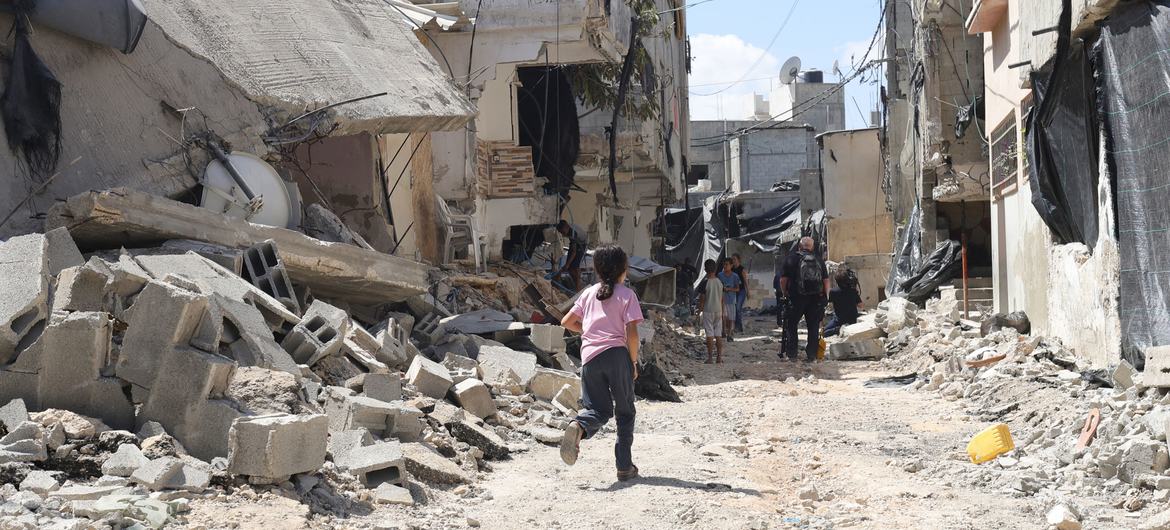
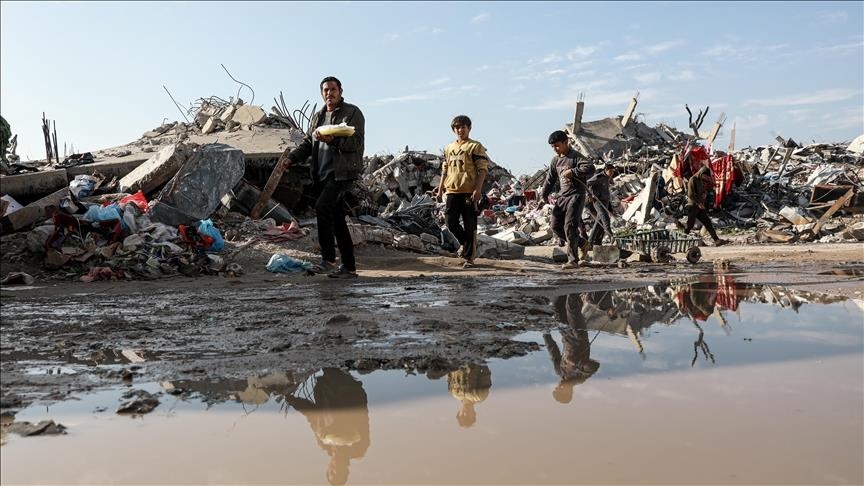
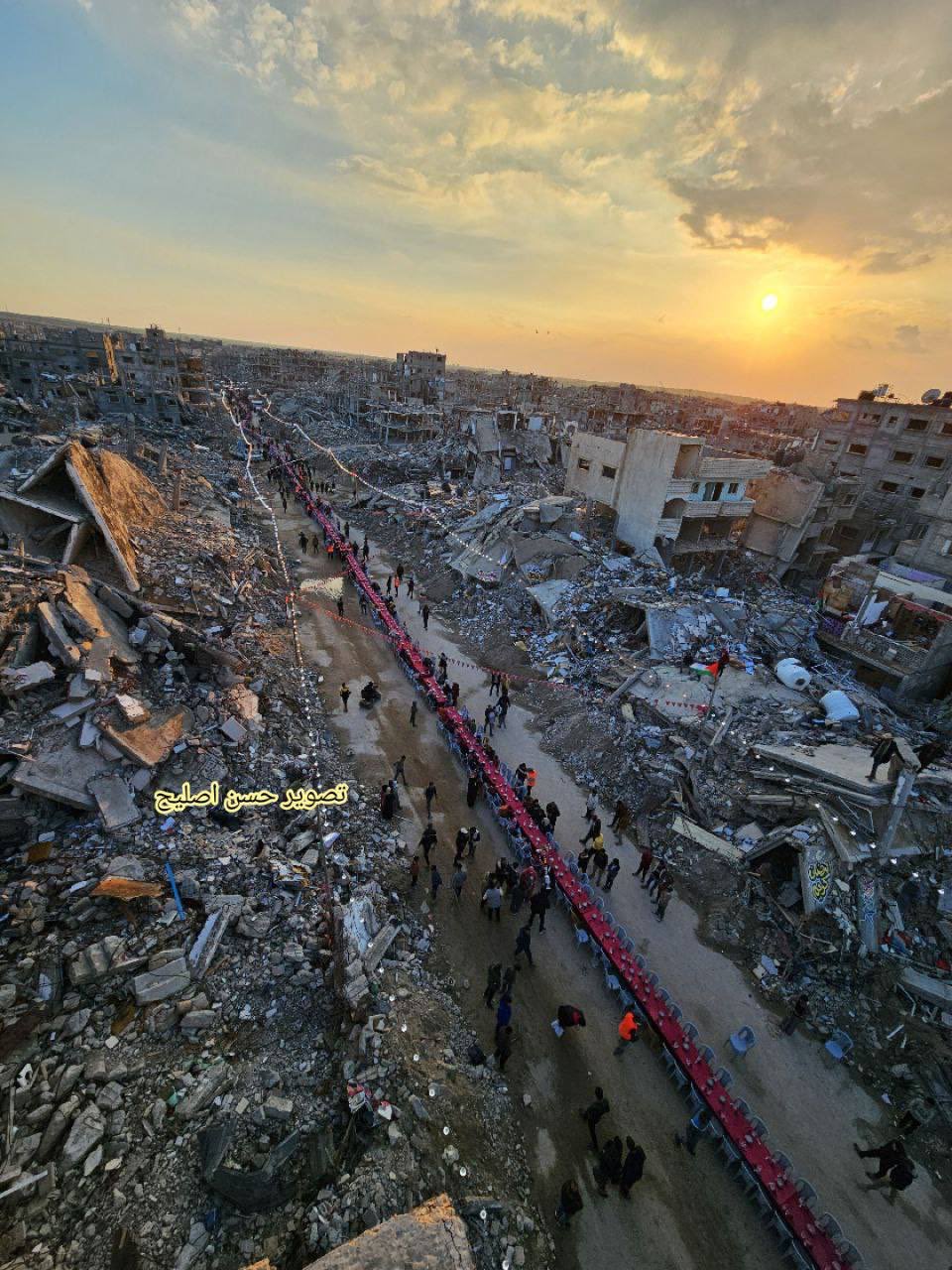
More than 90% of Rafah’s neighbourhoods have been completely or partially destroyed, with severe damage to residential buildings, roads, and essential public infrastructure – including health, government, and commercial facilities. The damage is particularly concentrated in the southern and western parts of the city, where six out of fifteen neighbourhoods and five refugee camps have been completely levelled. In addition, nine medical centers were destroyed, including the Abu Yousef Al-Najjar Hospital – the only government hospital in Rafah – the Kuwaiti Hospital, and the Indonesian Field Hospital. Approximately 70% of sewage and water pumps have been destroyed, while electricity and communications networks have nearly totally collapsed. The amount of rubble in Rafah is estimated at 20 million tons, with many bodies still believed to be trapped beneath it.

According to the Gaza Ministry of Health, Israeli forces have killed 111 civilians and injured 916 others since the ceasefire came into effect. The Rafah Municipality reports that approximately 40% of these casualties occurred in Rafah, as residents attempted to check on their homes and agricultural lands. The most recent victim, Hanaa Tawfiq Suleiman Hassanein (Al-Ghouti), was killed on 21 February 2025 when an Israeli tank fired at her home in the Al-Jeneina neighborhood, in the eastern part of Rafah, shortly after she returned home.

Mr. Mohammed Hassan Abu Sultan, 35 years old, married and a father of two, shared his experience of attempting to return to his home in Rafah:

“In early May 2024, my family and I were forced to flee to Deir al-Balah, and later to Al-Mawasi, Khan Younis, where we struggled to live in a tent with meager resources. When the ceasefire was announced on 19 January 2025, I was overjoyed, believing that I could finally return home and leave the hardships of displacement behind. But the next day, I discovered that the Israeli forces had not completely withdrawn from Rafah. A few days later, I tried to check on my house in the Al-Jeneina neighbourhood. When I arrived in Rafah, I was shocked by the extent of the destruction. Before I even reached my neighbourhood, I and others who were going to inspect our homes came under fire. I barely escaped. I later learned that the gunfire came from an Israeli crane positioned south of Al-Jeneina, with tanks stationed on nearby sand dunes. Every day I hear of more civilians being killed or injured as they try to check on their homes. I am still living in a tent in Al-Mawasi, Khan Younis, enduring the bitter cold and poor conditions, waiting for the full withdrawal of Israeli forces so that I can return to my home – even if it has been destroyed.”

Similarly, Mohammed Mahdi Mousa Al-Dawoudi, 38 years old, married and a father of four, recounted his attempt to return to his home in Rafah after the ceasefire took effect:

“On 28 May 2024, my family and I, like many others, were forced to flee our home in the Tal Al-Sultan neighbourhood of Rafah due to intense bombardment and the advance of Israeli forces. We took refuge in a small tent in Al-Mawasi, Khan Younis, where we endured displacement and harsh living conditions. The ceasefire was announced on 19 January 2025, after we had waited for several months to return home. I finally went back to check on my home, but when I arrived in Tal Al-Sultan, I was horrified to see entire neighbourhoods reduced to rubble. As we inspected the aftermath of the bombardment in the area, Israeli forces positioned along the Philadelphi Corridor (the Egyptian-Palestinian border) opened fire on us. I barely made it back to Al-Mawasi. I later learned that most Rafah residents are unable to return due to Israeli gunfire and military presence in the eastern and southern parts of the city. Many civilians have been killed trying to reach their homes. I remain displaced in a tent, struggling to survive the freezing temperatures, waiting for the Israeli forces to completely withdraw so that I can return to what remains of my home.

As of the time of this press release, Israeli forces continue to maintain control over most areas of Rafah, attacking residents with gunfire and other weaponry, particularly those attempting to return to their homes. The ongoing Israeli operations include the widespread demolition of homes and infrastructure, especially in the Al-Awda and Tal Al-Sultan neighbourhoods, in what appears to be a deliberate effort to alter the city’s landscape and render it uninhabitable.

Al Mezan unequivocally condemns Israel’s ongoing crimes, perpetrated in furtherance of the continuing genocide in Gaza, particularly in Rafah. We call on the international community to take urgent and concrete measures to end the genocide, stop the systematic destruction of Rafah, and ensure the safe return of displaced residents. Immediate steps must be taken to hold those responsible accountable, including full support for the International Criminal Court and other accountability mechanisms, the imposition of a two-way arms embargo on Israel, and targeted sanctions against individuals and entities complicit in these crimes. The international community must also review and suspend bilateral agreements and diplomatic ties that enable Israel’s violations, work toward dismantling the unlawful occupation, and uphold the Palestinian people’s right to self-determination.

Reliefweb

Continue reading
Is Israel Re-occupying The West Bank?

Weeks of deadly Israeli military raids in the occupied West Bank have turned Palestinian communities into “battlefields” and left 40,000 people homeless, UN humanitarians warned on Wednesday.

The violence has seen exchanges of fire between Israeli troops and Palestinian militants – and the use of bulldozers in refugee camps for the first time in 20 years which have destroyed public services, including vital electricity and water networks.

Israel’s defence minister said on Sunday forces could remain in the camps for the “coming year”. 

Philippe Lazzarini, head of the UN’s Palestine refugee agency, UNRWA, said that “fear, uncertainty, and grief once again prevail. Affected camps lie in ruins…Destruction of public infrastructure, bulldozing roads and access restrictions are common place.” 

More than 50 people including children have been killed since Israeli military raids started five weeks ago, the UN agency said, warning that the West Bank “is becoming a battlefield” where ordinary Palestinians are the first and worst to suffer.

Lethal force

Meanwhile, UN aid coordinating office, OCHA, also condemned the “lethal, war-like tactics” being employed by the Israeli military against Palestinian communities in the occupied West Bank.

OCHA confirmed further civilian casualties and mass displacement after a two-day Israeli military raid in the northern town of Qabatiya in Jenin governorate that ended on Monday.

Palestinians were detained in the operation, OCHA noted, before reiterating deep concerns about the use of excessive force against civilians and the additional humanitarian needs among people left homeless.

Responding to needs

UN partners on the ground are doing their utmost to help people uprooted by the violence despite growing “physical and administrative” challenges, OCHA said.

According to the UN World Food Programme (WFP), it reached 190,000 people in January with cash assistance and has provided one-off cash assistance to more than 5,000 displaced people from the Jenin refugee camp.

Gaza cold kills six children

In neighbouring Gaza, UN and its humanitarian partners have continued to scale up food security and livelihood support, while six children reportedly died from the cold.

Needs remain enormous amid desperate humanitarian conditions caused by 15 months of constant Israeli bombardment sparked by Hamas-led terror attacks on Israel that left 1,200 dead and some 250 people captured as hostages.

Citing the Gazan health authorities, OCHA said that six children from the Gaza Strip have died in recent days because to the severe cold, bringing to 15 the total number of youngsters killed by the winter conditions.

Meanwhile, more than 800 trucks entered the Gaza Strip on Tuesday alone, OCHA said. Since the start of the ceasefire on 19 January, WFP has brought more than 30,000 tonnes of food into Gaza. More than 60 kitchens supported by the UN agency across the Strip have handed out nearly 10 million meals, including in North Gaza and Rafah in the south.

The biggest aid provider in Gaza, UNRWA, has reached nearly 1.3 million people with flour and reached about two million people with food parcels since the start of the ceasefire.

The UN Food and Agriculture Organization (FAO) also reported that it has delivered animal feed to northern Gaza for the first time since the escalation of hostilities.

The aid delivery last week has helped 146 families with livestock in Gaza City alongside another 980 in Deir al Balah.

Between the start of the ceasefire and 21 February, FAO distributed more than 570 metric tonnes of animal feed across the Gaza Strip to some 2,300 families with livestock.

OCHA noted in addition that aid partners working in education have identified additional schools in Rafah, Khan Younis and Deir al Balah that were used as shelters for displaced people. “These schools will be assessed and repaired to prepare for their reopening,” it said. 

UN News

Continue reading
‘We Will Rebuild’

In front of my destroyed home in Gaza

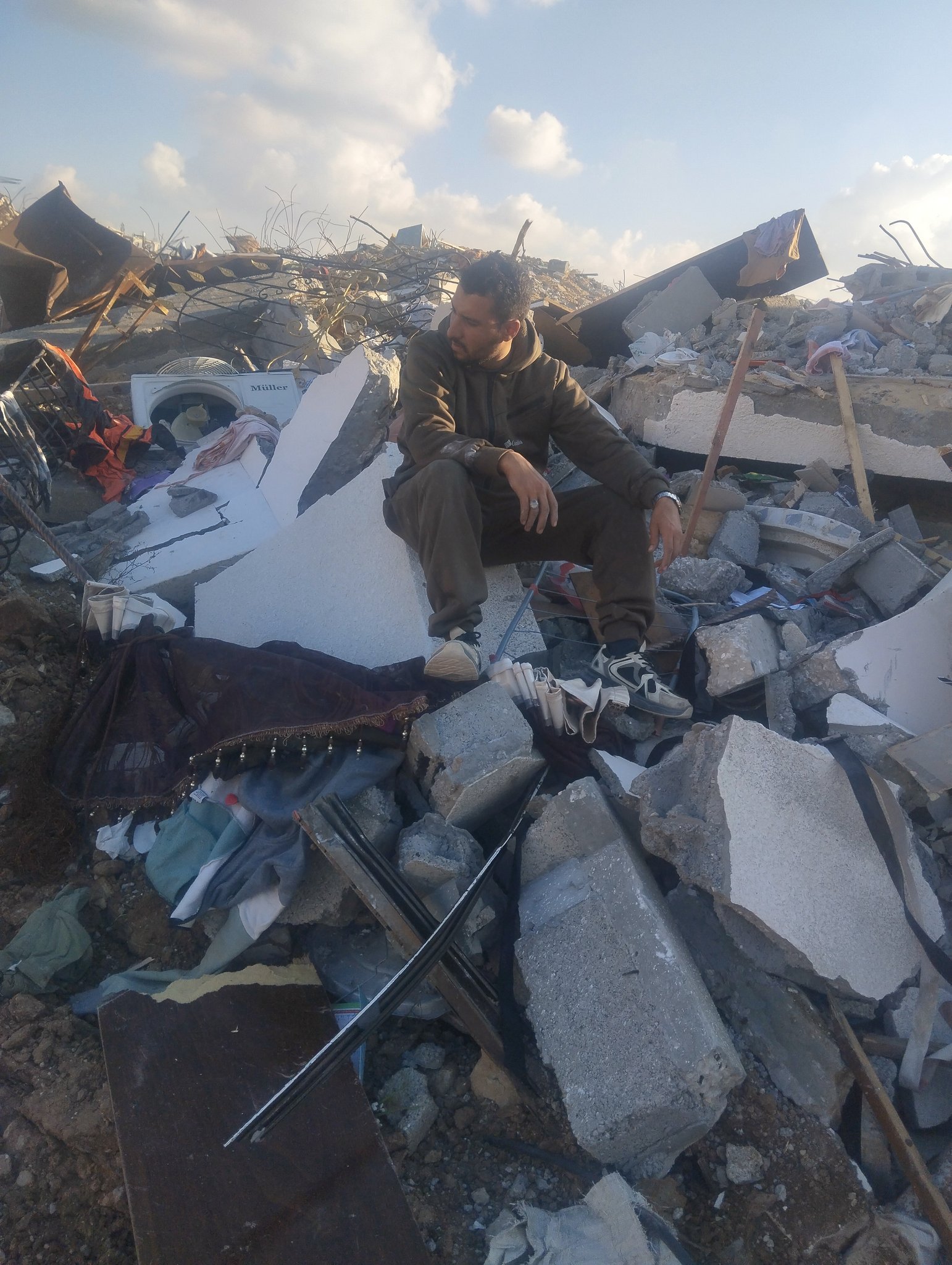
This bright morning, filled with hope, I stood before my ruined house and shouted with all my heart: I swear to you, we will rebuild it stronger than ever. I swear to you, our homeland will bloom again. I swear to you, the sun of freedom is on its way.

.

Continue reading