Testing Iran’s Foreign Moves

By Dr Khairi Janbek

Iranian foreign policy is a mixture of historical, ideological and geopolitical factors. As a major regional power in the Middle East, its foreign policy has often been seen as pragmatic; but practicality with an ideological component.

The country’s policy decisions are influenced by its revolutionary origins in competition with other regional powers. In reality, Iran cannot be understood outside the consideration of the legacy of the 1979 revolution, which highlighted the centrality of the concept of Velayet e Faqih; the Guardianship of the Jurist on Iran’s political and and ideological stance on global affairs.

Iran adopted a foreign policy that combined ideology with the desire for regional leadership often expressed as the defender of oppressed Muslims, the power behind the spread of Islamic values and opposition to western imperialism, especially that of the USA.

The objective has been ever since to focus on expanding and maintaining influence in the Middle East, not necessarily by creating a ‘Shiite Crescent’, but rather by creating a Persian-dominated crescent through fostering alliances with groups in Syria, Iraq, Lebanon, Yemen, and Hamas in Gaza.

This crescent has been aimed primarily as being an arch to exclude, in the first degree, Iran’s biggest Islamic rival Saudi Arabia with its close relations with the USA, from its sphere of influence.

At the same time, Iran’s nuclear ambition have put it in direct conflict with the USA and western powers. However this confrontation with the USA has habitually fluctuated between agreement, as during the Obama administration, and confrontation during the first Trump administration, then the ambiguity of the current Biden administration.

However, currently, the country faces the delicate balance of managing its relations with the western powers as well as regional actors, while seeking to maintain good relations with Russia and China.

Currently, with the ongoing tensions with Israel on one side, and melting of ice with Saudi Arabia, with the possibility of further serious confrontation with the Trump administration, Iranian foreign policy and its ability to continue to be able to navigate the preservation of its interests, will most certainly be put to the test.

Dr Khairi Janbek is a Jordanian historian based in Paris and the above opinion is written exclusively for crossfirearabia.com. 

Continue reading
After Gaza Regional War Looms

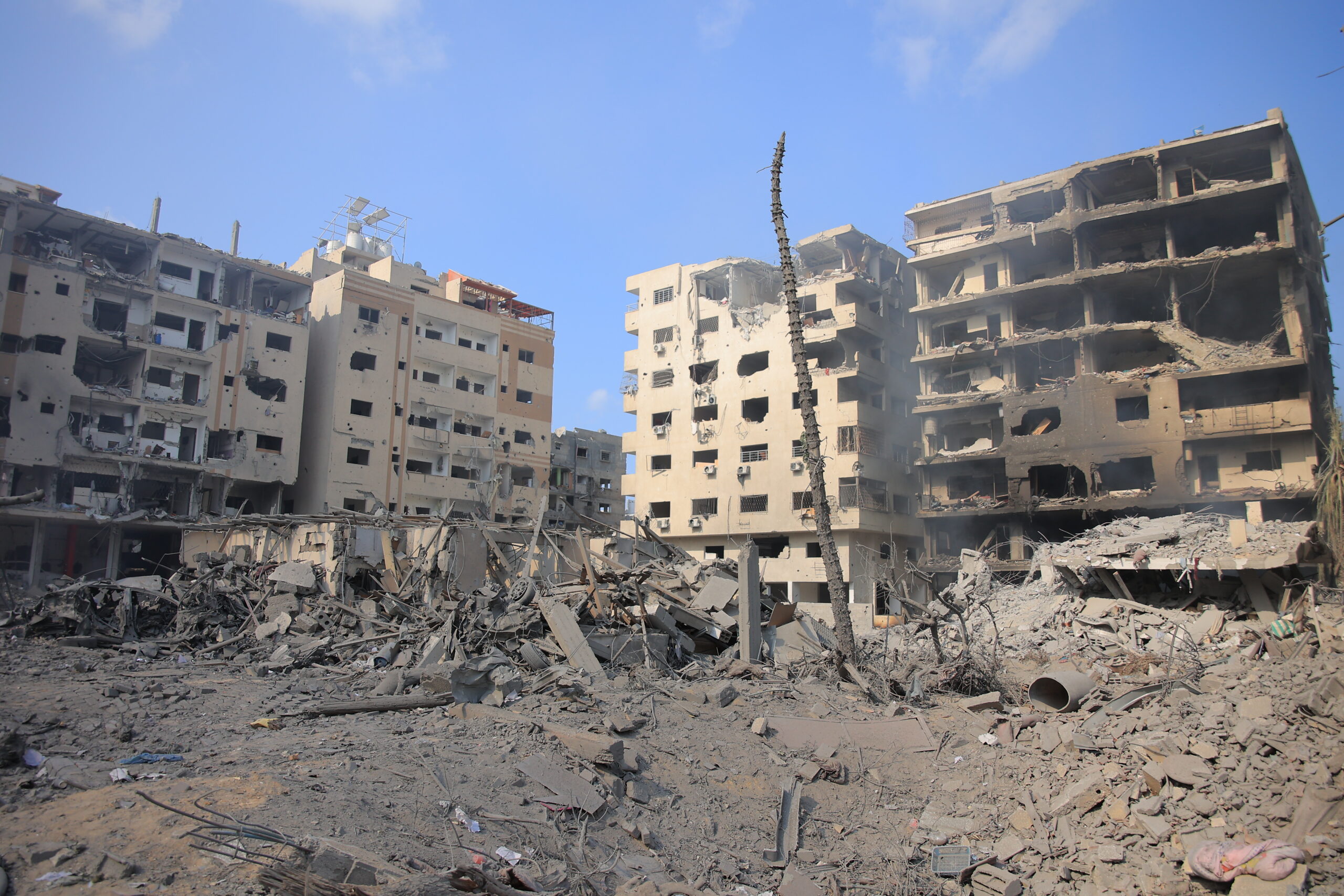
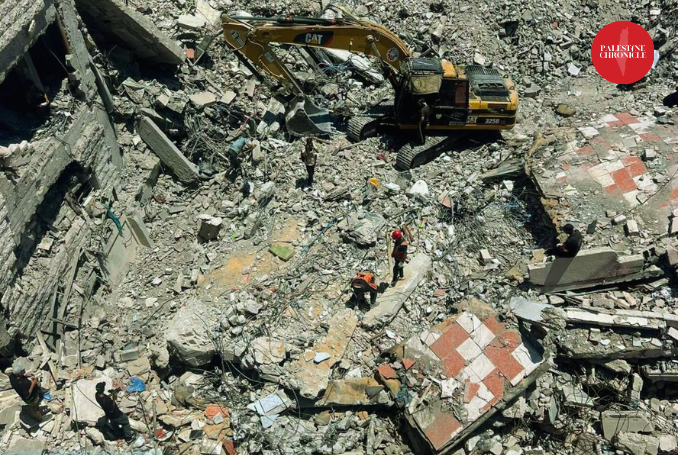
As the war in Gaza enters its second year, the Palestinian enclave is now unrecognizable, with most areas reduced to rubble. The Palestinian death toll exceeds 41,000 while over 95,000 people have been injured, a large number of them facing life-changing injuries. Thousands of people are estimated to be still buried under the rubble.

At the same time, 97 out of 251 people abducted in Israel on 7 October 2023, are still held hostage by Palestinian armed groups in Gaza, denied humanitarian visits. This horrific attack also cost the lives of 815 civilians.

Both Israel and Palestinian armed groups have committed a series of violations of international law resulting in significant civilian harm and the widespread destruction of key infrastructure across Gaza.

Over the last 12 months, each attack against civilians and civilian objects has further undermined the rules of war. This sets a dangerous precedent that threatens the stability and security of the region and beyond.

The devastation in Gaza has been fueled by the supply of foreign weapons from a wide range of States. These arms, including the use of explosive weapons in densely populated areas, have caused staggering levels of civilian harm.

As a result, civilians in Gaza have had nowhere safe to go amid near constant bombardment and ground operations. This was apparent within weeks of the outbreak of war. This is why we at Center for Civilians in Conflict (CIVIC) were among the first organizations to call for a #CeasefireNow.

Nearly 365 days after the start of the war in Gaza, we continue to call for an immediate ceasefire, the protection of civilians, and unfettered humanitarian access.

We now extend this call to Lebanon, where recent strikes have resulted in hundreds of civilian casualties and displaced more than one million people. With nearly 90 percent of Lebanon’s population living in urban areas, Israel’s continued used of heavy explosive in populated neighborhoods will undoubtedly cause further harm to civilians.

We are also gravely concerned about the ongoing retaliatory attacks between the Houthis, Israel, and its allies. These strikes have already targeted vital infrastructure, including power plants and seaports in Yemen, such as the Hodeidah port—a critical lifeline for delivering food and humanitarian aid to the Yemeni population.

With Israeli strikes in Gaza, Lebanon, Yemen, and Syria, as well as Iran’s missile attack against Israel on Tuesday evening, we stress the urgent need for immediate de-escalation across the region to prevent further civilian suffering, which has already reached unbearable levels.

Immediate action is necessary to halt the growing human cost.

We demand:

  • All warring parties to cease all their attacks against civilians and civilian infrastructure, including the designated so-called ‘safe zones’ in Gaza, and to stop violating international humanitarian and human rights laws.
  • The immediate release of hostages and all individuals detained unlawfully in Gaza and Israel.
  • All warring parties to allow unconditional, safe, and unhindered humanitarian access to affected populations.
  • An immediate end to the transfers of arms to Israel and Palestinian armed groups. In particular, we call for an end to US arms transfers to Israel, including the passage of recently introduced US Senate resolutions to suspend sales of weapons documented in extensive civilian harm and repeated apparent violations of international law.
  • All countries and world leaders to use their influence to secure an immediate ceasefire, ensure the protection of civilians and compliance with international humanitarian law, and support de-escalation across the region.
  • All warring parties to stop using explosive weapons in populated areas.
  • International, independent, and transparent investigations into all allegations of violations of international law, and ensure those responsible are held accountable.

It’s now time for international leaders and warring parties to demonstrate political courage and moral leadership, to prevent the world from falling into a state of normalized lawlessness, and to abdicate the double standards.

What has unfolded in Gaza and the region for the last 12 months is unparalleled in its intensity, brutality and scope. The response of global powers to this reality will shape the future of warfare for the better or the worse.

This statement is made by by Hichem Khadhraoui, executive director of the Center for Civilians in Conflict and posted on Reliefweb

Continue reading
Missiles, Sirens and Underground Shelters

CROSSFIREARABIA – Despite their heinous war on Lebanon, Israelis today are gripped with fear and psychological problems in a cyclone of fear dominated by incoming missiles, drones and blasting sirens all over northern and central Israel.

The Israeli psyche is particularly acute these days because of the insistence of Prime Minister’s Netanyahu extension of the Gaza war to Lebanon.

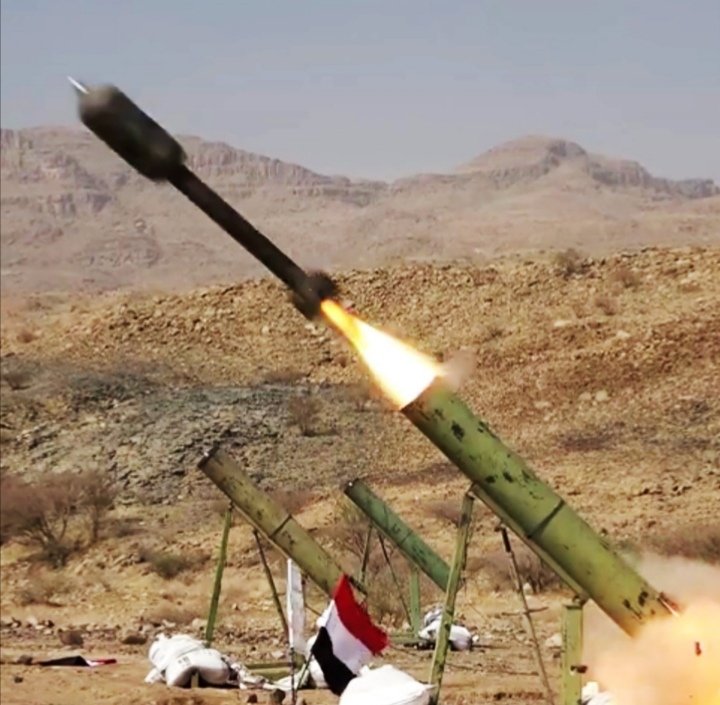
Saturday was particularly eerie for the Israelis because of the never-ending sirens that started in Tel Aviv in the afternoon warning of an incoming ballistic missile all the way from Yemen.

Although the Israeli media told us the missile – appropriately named Palestine 2 – was shot down by Israel’s Iron dome, no doubt bringing down with it lots of shrapnel, it created much panic among ordinary Israelis.

The social media video clips showed it all. People dropped whatever they were doing and hurried down to the underground shelters with the blasting sirens ready to give anyone a heart attack.  

The video clips showed a city in different positions. First of all, it was empty, hardly any traffic on the roads, you can say a ghost town, just tall buildings with risk noise in the background.

Then there is a video clip of people on road pavements amidst cars, hurrying, running and then steadying their pace to beat the others to get to the underground shelters. But there is a sense of anxiousness to get to the door of the shelter whether they have to go steadily down.

On this occasion, there was no news of injuries, but on previous rocket attack sirens in the city, there were reports of injuries, people trampled upon to reach the shelters in what appeared as tight doors.

And then there was the Ben Gurion Airport on the outskirts of the city. People were taking no chances this time. Just the previous day sirens blasted all over the city warning of a missile attack from the Houthis of Yemen, all 2000-kilometers away.

Just like this one, the previous missile struck just six kilometers from the Ben Gurion Airport. In the latest video-clip, people were seen running towards the end of the wide corridor at the sound of “horrible” noise with a man on the loudspeaker in Hebrew, no doubt telling people to hurry down to the shelters.

For Israelis, this war, although on the periphery of their lives, has become an absolute nightmare!

Outside, there was more noise coming from the beach filled with swimmers and sunbathers. At the sound of the sirens they dropped everything and began scurrying to the nearest shelter.

Meanwhile, there was another video clip of the plane carrying Prime Minister Benjamin Netanyahu after making his speech to the almost-empty UN General Assembly, because of the mass walkout.

Just as he entered Israeli airspace an F-35 phantom appeared to escort the plane to the airport. This was due to two reasons, the killing of Hezbollah’s Secretary-General Hassan Nasrallah, the previous day and which he ordered and the fact that incoming missiles and drones were coming in from Lebanon in a deadly war he insists on continuing.    

Continue reading
Domination Space For Common Space

By Dr Khairi Janbek

When we think of contemporary Iran, one always believes that the Arab Middle East had always been dominated by the three Non-Arab American allies; Iran under of the Shah, Turkey and Israel.

One thinks that those “neighborhood police stations’ were the guarantors of stability through their convergence, and at times contradictions, in the age of Cold War and oil. However, the Shah of Iran was deposed and the Anti-communist Cold War ended, but that didn’t mean that oil stopped becoming important nor that Russia and China were no longer threats.

One would say, that the rehabilitation of Iran and possibly turning it into a negotiations partner aims at keeping the third angle of the police stations triangle going, because non of the Arab countries, no matter how much they tried, could never replace Iran, because no Arab police station is permitted to emerge as a third angle.

Having said that, it would be beyond naive to think that the expansion of Iran’s power and influence happened by stealth or escaped the notice of the US and NATO.

After after all Iran grew to become a Red Sea country through its influence on the Houthis in Yemen, a Mediterranean country through its influence in Syria as well Lebanon through Hezbullah and the major Gulf country through its supporters in Iraq. 

In fact this Iranian domination of space is what has created a common space between all its long-arm organisations in the region.

Essentially, if we compare Iran to an octopus, all those various groups are its tentacles, and they all serve the purpose of Iran’s strategic interests, albeit not through a push-button approach, but through not taking any action which would not please their Persian master.  

Of course, this puts Iran in a strong position to be a major player in the region and an inescapable negotiations partner for the US, which is also convenient for the Americans, in order to remind their Arab allies who is their protector in a region policed by Turkey, Israel and Iran.

Of course this takes us to the point of saying that, for all intents and purposes, for the Americans a trusted adversary is more important than distrusted friends, and that it would be absurd to think that all those long arms of Iran in the Arab world can be amputated by military means; they certainly can be weakened, but without the consent of Iran and without the right price, so long as it remains behind them, nothing much can change.

At this point, from what one can only see, is that no one in their right mind or otherwise, will permit a war to emerge in which Israel is pitted against Iran and the US as well as NATO putting all their weight behind Israel and forcing the Arabs to choose their camp.  

That would be the scenario of the end of the world as we know it, or with major civil wars in the Arab countries controlled by the tentacles of Iran, and which no one wants.

Dr Khairi Janbek is a Jordanian writer based in ParisFrance

Continue reading
Sirens Blast in Tel Aviv as Yemeni Missile Hovers Over City  

Air raid sirens blasted in Tel Aviv, early Friday morning as explosions were heard in the city with the Israeli army stated the sirens were triggered by a missile launched from Yemen with an interceptor missile that also launched to counteract it.

“The Arrow air defense system successfully intercepted the missile launched from Yemen, and air raid sirens and explosions were heard after the missile was intercepted and shrapnel fell,” the Israeli army stated.

Israeli Channel 12 reported that 17 Israelis were injured while fleeing to shelters after the sirens were activated in Tel Aviv.

The leader of the Ansar Allah movement in Yemen, Abdul-Malik al-Houthi, said on Thursday the battle is one and that “the aggression against the Lebanese people is within the framework of the aggression against the Palestinian people.”

On 15 September Houthi military spokesman Brigadier General Yahya Saree, spoke of the carrying out of a qualitative military operation that targeted a military target in Jaffa, Israel, with a hypersonic missile.

“The missile succeeded in reaching its target, and the enemy’s defenses failed to intercept and confront it, and it traveled a distance of 2,040 kilometers within 11 and a half minutes,” he said.

For its part, the Israeli army said at the time that the initial investigation revealed that the missile launched by the Houthis at Israel crashed in the air.

Israeli Prime Minister Benjamin Netanyahu said that the “Houthis” should “know that they will pay a heavy price for every attempt to harm us.”

Nine Israelis were injured while fleeing upon hearing the sirens of a missile attack on Tel Aviv that lies in central Israel.

Since dawn last Monday, Israeli forces have been launching waves of intensive airstrikes in an operation called “Arrow of the North”, targeting areas in southern and eastern Lebanon, which are considered strongholds of Hezbollah, leaving more than 600 dead and thousands wounded, with the death the toll is expected to rise.

In contrast, sirens continue to sound in northern Israel near the border with Lebanon, after Hezbollah fired dozens of rockets at military sites and settlements.

Since 8 October, 2023, Lebanese and Palestinian factions in Lebanon, most notably Hezbollah, have been exchanging daily shelling with the Israeli army across the “Blue Line” separating the country, resulting in hundreds of deaths and injuries, most of them on the Lebanese side.

These factions demand an end to the war that Israel has waged on the Gaza Strip since 7 October, which has left more than 137,000 Palestinians dead and wounded, most of them children and women, and more than 10,000 missing, amid massive destruction and deadly famine according to Russia Today.

Continue reading