
Israel Waits For The US to Enter The War

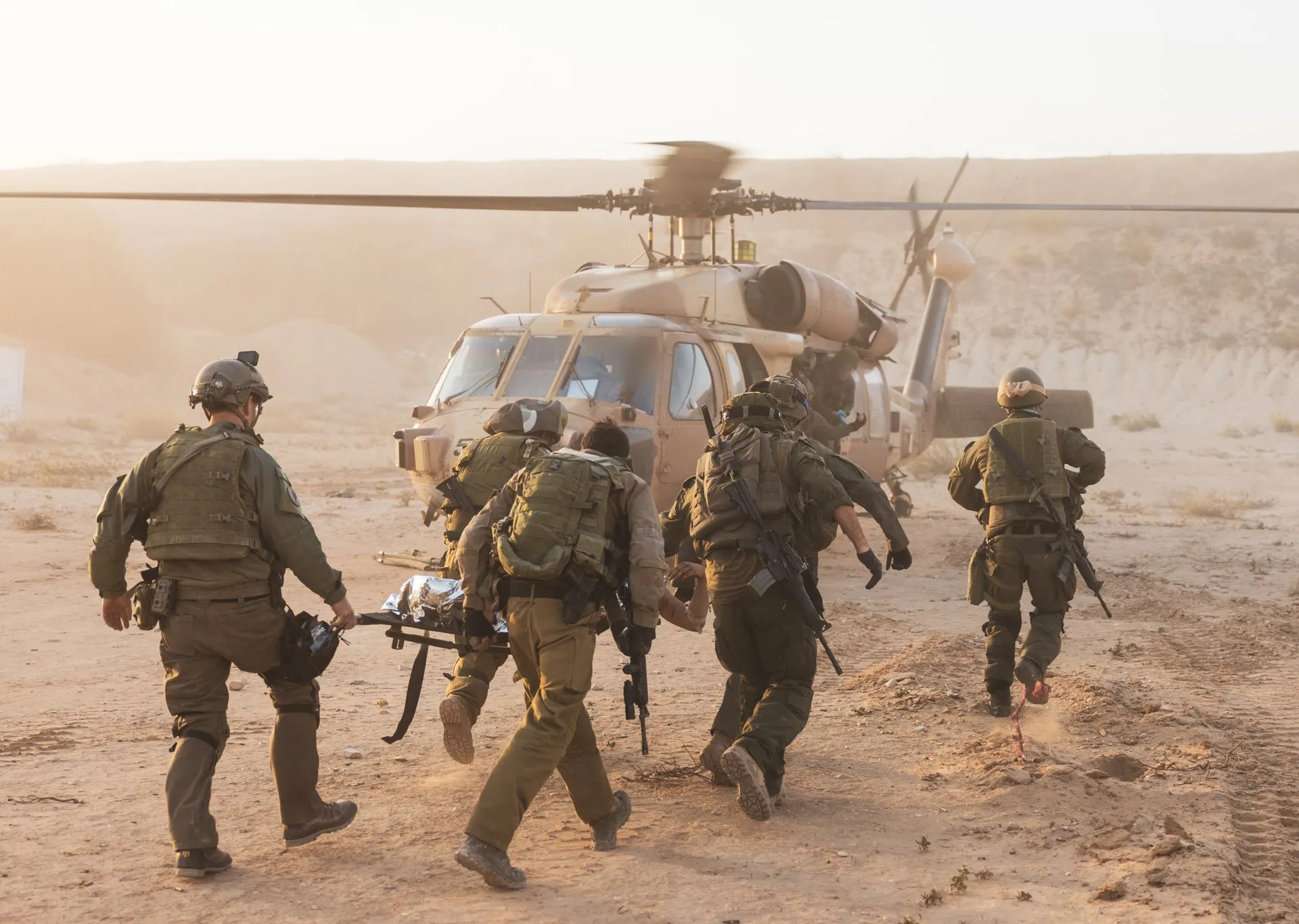
Everyone one is waiting for US president Donald Trump to make up his mind to enter the war with Iran on the side of the Israelis.

Analysts suggest clearly that Israel Prime Minister Benjamin Netanyahu is playing a great pressuring role to force the USA to enter the war, and especially to destroy its nuclear infrastructure and ballistic missiles. But for Trump, this is easier said than done for the president, seen as one of the most pro-Israelis in America’s modern history is in still in deep doubt and contemplation.

Aside from the fact that Trump is generally know for shying away from wars because it disrupts his economic vision of “making America great again”, he is trying to distance America from global conflicts.

And today, he is backed by global pollsters which are suggesting that 60 percent of Americans oppose sending US troops to take part in a war to fight the Iranian government. For Americans, the Iraqi experience of removing Saddam Hussein from power and seeking to rule the country was a devastating experience that dominated most of the first decade of the millennium.

Trump and his team at the White House are watching the war unfold between Iran and Israel very carefully but it doesn’t mean he will enter the war despite the conflicting vibes coming from Washington. Trump wants to keep the diplomatic door open on Iran. Yet he has clear objectives. He wants Iran to unconditionally “surrender” its nuclear weapons come what may. For this is a principled stand, with him arguing that Iran must not be allowed enrichment and prohibited from obtaining nuclear weapons. 

But this is clearly not acceptable to the Iranians who say enrichment is a sovereign decision which they will not break away from regardless of what Trump do by way of arms-twisting them to steer away from their nuclear programs long deemed for useful uses which Trump refuses to believe in. 

Deadlock may be! But Trump has also said he wouldn’t commit the American army to fighting Iran simply because Israel is doing the trick of fighting Iran under the pretext of wanting to destroy its nuclear weapons and different missiles including its ballistic missiles. Israeli warplanes, in a disconcerting fashion have dominated the Iran skyline since it’s started its war on Iran.

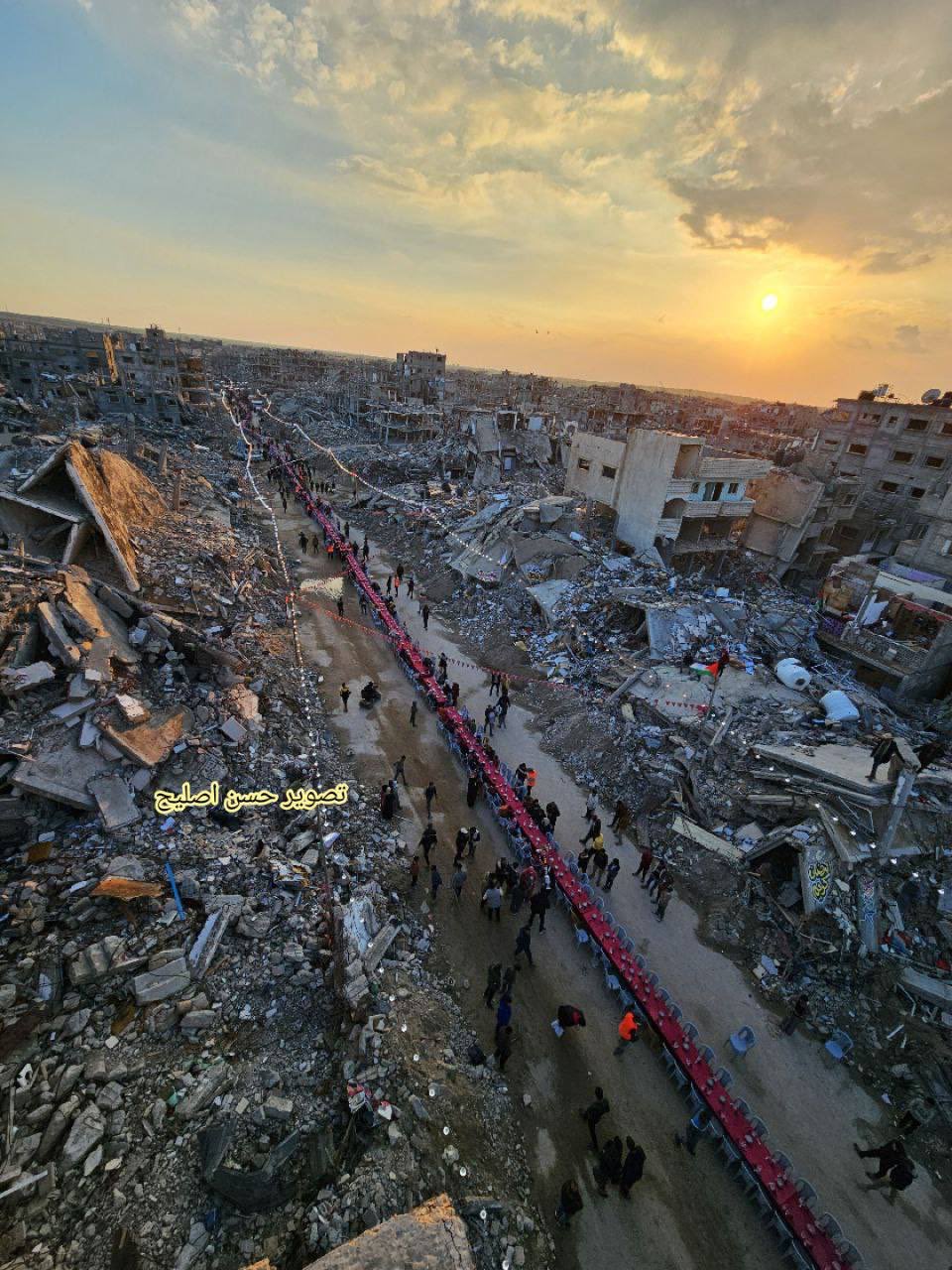
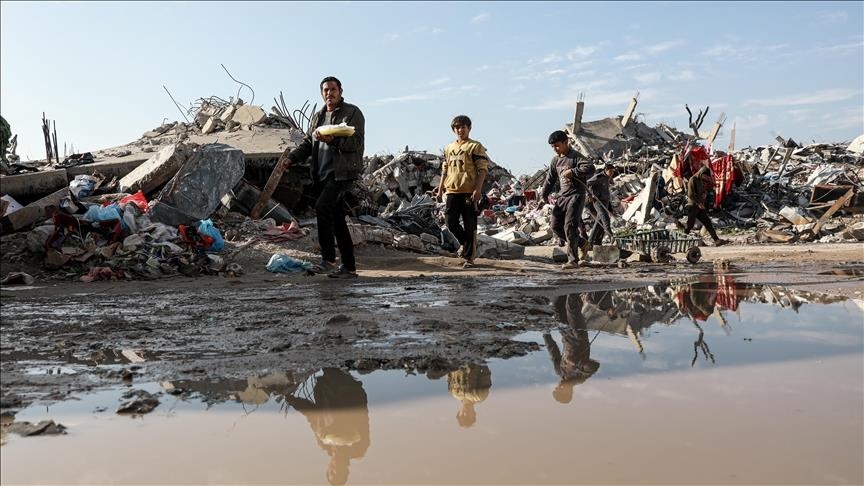
But this is also easier said than done for Israel – especially its central areas including Tel Aviv – has also been getting a hammering in the first six days of the war that started on 13 June 2025 with destruction of infrastructure and debris of buildings much the same witnessed in Gaza created by the Israeli war machine since 7th October 2023. 

Rather than just Israel Trump may have other considerations. It is not that simple to commit Washington to what tantamount to a global war where other global nuclear powers are likely to take part in. Countries like Russia, China, Pakistan and even North Korea are not likely standby and let American have a free-hand in possibly crushing Iran. For that would upset the global political relations and today these powers are watching the coming moves very carefully.

That’s is why Trump is taking a long time to make a decision on entering the war on Iran to the dismay of Netanyahu and his extremist government who feel that if they are to win the war, America must help but Washington has other global considerations including the sneaking suspicion of not allowing Israel to become top dog in the Middle East whilst at the same time seeking to clip its wings for their special interests.

Continue reading
Changing The Middle East Face Through War

Dr Marwan Asmar

Israeli Prime Minister Benjamin Netanyahu finally got what he wanted: ‘A war with Iran.” But this war – now in its fifth day, is already proving very costly for Israel because of the Iranian military firepower meted out on Jewish cities, towns and military installations.

Such a war that begun Friday, 13 June, 2025, will be remembered as one of the greatest events in the calendar of the Middle East. The start of the reaping of the Muslim pride, for up until it was always US-backed Israeli ‘superman superiority’ – versus Islamic weakness and meekness.

Netanyahu may have made a devastating calculation by attempting to go after the Iranian vast nuclear infrastructure while in reality creating mayhem in Iranian cities, people and assassinating 10 of its top military leaders in the early hours of Friday morning.

This was all to change on the evening of that day as Iranian long-range missiles began to hurl down on central Israel and more precisely the Greater Tel Aviv area that includes other cities, towns and settlements with a population of 4 million people.

The start of the strikes on Israel stands today as unprecedented, a first-time development since the creation of the Zionist entity in 1948 and struck a series of bullet sounds among the Israeli population who has been huddling up-and-down the shelters since the conflict begun and best summarized by the US Ambassador to Israel Mike Huckabee who said one night after the bombs that:

“It was a tough night in Israel,” referring to the fact that he had to go down to the bomb shelter five times because of the incoming Iranian missiles that would not let up.

Shock, mayhem, hysteria quickly consumed Israelis as they started seeing first-hand, the destroyed buildings and quashed cars in the middle of Tel Aviv and its surrounding areas like Bat Yam, Ramat Gan, Rehovot, Petah Tikva and Herzliya.

Very quickly as well, missiles, and indiscriminately so, began to fall in these places, long seen as the pride of joy of Israeli technology, military industrialization and top business. These were crumbling in front of their eyes as reported by the Israeli newspapers and media channels.

Shocking was the fact, the incoming missiles, which made Israeli defenses like the Iron Dome and the David Sling look pitiful, were striking buildings and high-scrappers including the prestigious Weizmann Institute of Science with reporters of three its top flights struck and is now in fear of complete collapse.

Despite this, Netanyahu says he is sure of a complete victory, adding that Israel is on the verge of completely changing the face of the Middle East, including his claims of bombing Iranian military facilities, but in reality striking at civilian infrastructure and people.

However, for the first time Gazans and Palestinians are jubilating at the sight of what seems to be the non-stop Iranian missiles falling on Israeli areas where sirens go off and on in all middle of the night and day whilst in glee at the ruined and destroyed buildings. “Let them see how its like to be hit by a missile,” is a frequent comment voiced not only by Palestinians but also by many others in the world.

It is true the face of the Middle East is, and for the first time, is truly changing the face of the Middle East, but not according to the wishes of Netanyahu but to the people of the area of Gazans, Palestinians Arabs and Persians where they have watched the Israeli army bomb the enclave over the past 21 months or so.

This is indeed a historic moment led by Iran and soon to be joined by members of the Muslim world including Turkey, Pakistan, Malaysia and Indonesia. The unexpected war in the Middle East, as brought on by Netanyahu and his extremist and racist government, is upsetting the plans of the Trump plan for the Middle East who is portraying himself as a so-called “man of peace” – a fake image in the light of the fact that the US has been the top military supplier for Israel to carry out its Gaza genocide.

The conflict with Iran – that is not likely to end any time soon because of the arsenal that waits in the ready and to be unleashed – has effectively put an end to the idea of transferring Palestinians from Gaza to other lands. They are likely to stay firmly on their places despite the mass destruction of the enclave.

However, there is a clear slippery-slope to this war that is still in the initial stages with outside powers ready to take sides developing into a real possibility of World War III, if cool hands don’t take the lead and let real and effectively diplomacy take the reign of power to stop what was seen in the 1960s, 1970s and even 1980s the concept of Mutual Assured Destruction.  

The world today is on a precipice….


Continue reading
‘We Must Fight The Disinformation War’

Amidst the growing escalation between Iran and the Israeli occupation, a striking approach has emerged from Lebanese political writer and journalist Qassem Kassir. He addresses what he describes as the “importance of the battle of awareness” in this conflict whilst highlighting the media, political, and moral dimensions of this ongoing confrontation.

Open Battle on All Fronts

Kassir believes that “Iran is currently engaged in a direct confrontation with the Israeli occupation, which began after a clear and explicit Zionist aggression against its territory, without any legal or political justification, but rather as a joint American-Israeli decision aimed at curbing the Iranian nuclear project on the one hand, and undermining its regional presence, which supports resistance movements, on the other.”

In a statement received by Quds Press, Kassir goes further. He believes “this escalation may conceal deeper strategic objectives, including the effort to overthrow the Islamic regime in Iran and restore the pro-Western monarchy, which has long been a base of support for the United States and the Zionist entity in the region.”

The author asserts “the current conflict does not allow for equivocal positions or neutrality. Iran’s defeat, as he puts it, means “the fall of the Arab and Islamic region under the hegemony of the Zionist project.” This explains the declared—and even silent—positions of many Arab and Islamic countries rejecting the aggression, despite political differences or alignments with the United States.”

Battle of Awareness: Duty of The Stage

In confronting the media disinformation war, Kassir focuses on the “importance of awareness” at this stage, warning against being drawn into Israeli narratives or inaccurate news. He emphasizes the need to obtain reliable information from its sources, whether from the Iranian side or the enemy’s media, but with an informed and non-hasty analysis.

The author emphasizes that “high morale” is part of the confrontation. Despite the legitimate recognition of losses or weaknesses, awareness of the nature of the conflict, its continuity, and the possibility of it transforming into a regional or even international war, requires in-depth reading and a clear position.

Qasir concludes by emphasizing the importance of trusting the Iranian leadership and believing that “God supports those who support Him.” He places this confrontation within a holistic and political framework, requiring awareness and long-term preparation.

Tensions between Iran and the Israeli occupation have been escalating for years, against the backdrop of Iran’s nuclear program and Iranian support for the resistance in Palestine, Lebanon, and Syria. However, recent months have witnessed a qualitative development in the nature of the confrontation, with direct military operations being carried out, most notably the Israeli attack on the Iranian consulate in Damascus and Tehran’s unprecedented response by bombing the occupied territories last April.

Observers agree that the region has entered a new phase of open conflict, one that is being decided not only on the battlefield, but also in the media, public opinion, and the collective consciousness of the nation.

Since dawn on Friday, the occupying state, with tacit support from the United States, launched a massive attack on Iran with dozens of fighter jets, dubbed “Rising Lion.” During the attack, it bombed nuclear facilities and missile bases in various areas, assassinating prominent military leaders and nuclear scientists.

On the evening of the same day, Iran launched an operation dubbed “True Promise 3,” responding to the attack with a series of ballistic missile and drone strikes. The number of these strikes has so far reached six, according to Hebrew media. These strikes have resulted in dozens of deaths and injuries, as well as significant material damage to buildings and vehicles.

Continue reading
Houthis Launch Missile on Israel

The Israeli army claimed it has intercepted a new missile from Yemen launched by the Houthis Sunday, morning.

Since 19 March when the Israel re-launched its war on Gaza, the Houthis Ansar Allah group fired around 38 ballistic missiles no Israel.

This is not to mention the ordinary missiles and other drones fired on Israeli cities, towns, airports and ports fired by the Houthis over 2000 kilometers far away from Yemen.

The Houthis have since maintained that “either stop the war on Gaza or the missiles would continue. The Houthis leadership maintains that the missiles would continue to be launched despite the regular Israeli strikes on Yemen.

Continue reading