Palestinian Pound Lives on!
 CrossFireArabia
- April 27, 2026
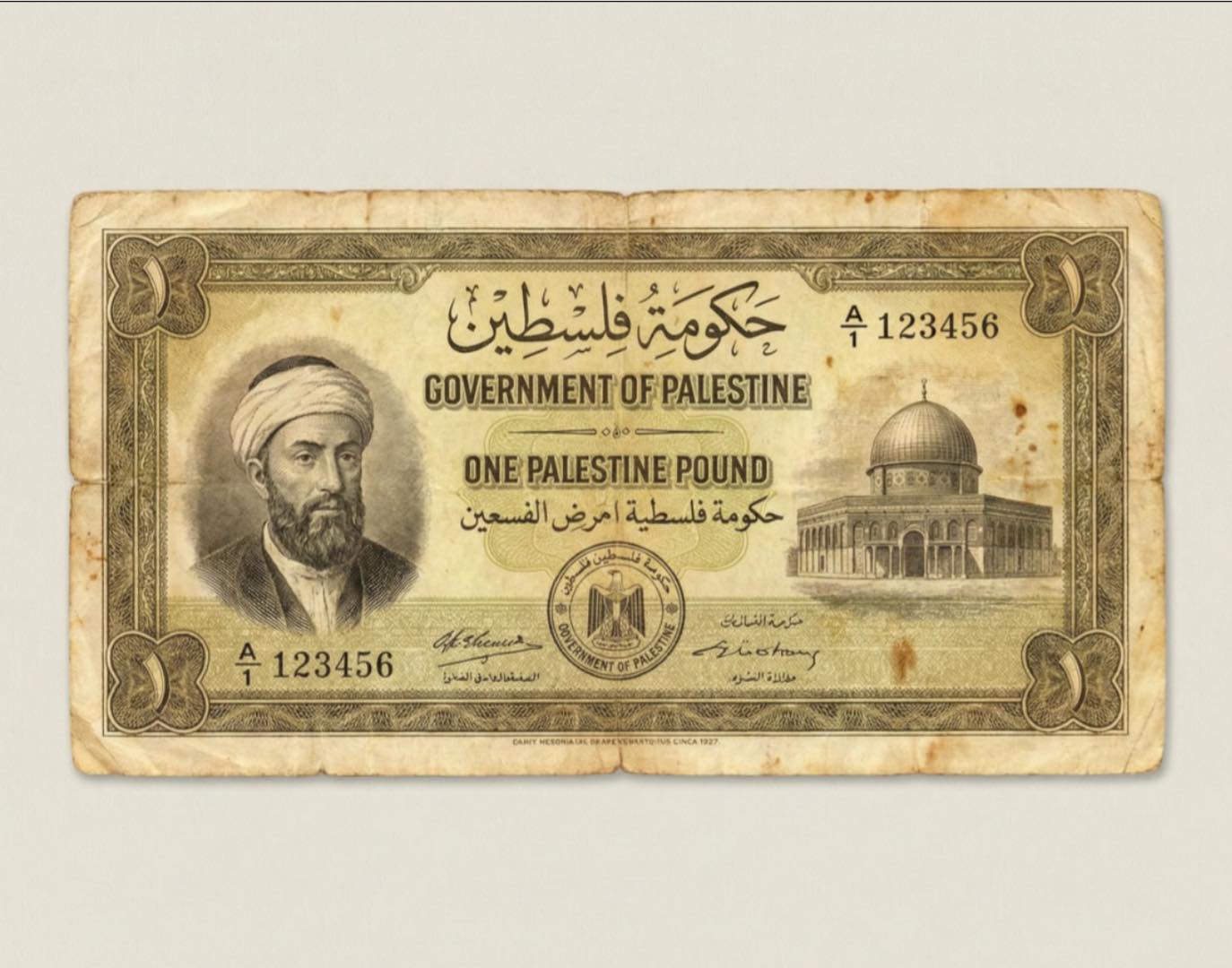
One day, a Palestinian currency will re-emerge once again as it existed prior to 1948.
 CrossFireArabia
One day, a Palestinian currency will re-emerge once again as it existed prior to 1948.
CrossFireArabia
Israel has reopened Jerusalem’s Al-Aqsa Mosque to Palestinians after a 40-day closure, as large crowds flocked to the holy site to pray, expressing joy following the unjustified closure.
More than 3,000 Palestinian worshippers performed the dawn (Fajr) prayer at the holy site for the first time since the start of the US-Israeli assault on Iran on 28 February.
Videos circulating on social media show the reopening of the mosque’s gates, with large crowds entering its courtyards.
Videos also showed volunteers and mosque custodians cleaning and preparing the site to receive worshipers.
https://x.com/EyeonPalestine/status/2040924466176315576?ref_src=twsrc%5Etfw%7Ctwcamp%5Etweetembed%7Ctwterm%5E2040924466176315576%7Ctwgr%5E4a344521cf0e4edb17fc98d10781a4cc143288f9%7Ctwcon%5Es1_c10&ref_url=https%3A%2F%2Fqudsnen.co%2F
Israel has barred Muslim worshipers from accessing Jerusalem’s Al-Aqsa Mosque since the start of the ongoing Israeli-US assault on Iran, marking a total closure of one of Islam’s holiest sites not seen since the start of the occupation in 1967 and raising concerns over Israeli plans to impose further restrictions and tighten control over the compound.
No exceptions have been made for Muslims, even during Ramadan, Islam’s holiest month, or the Eid al-Fitr holiday.
Meanwhile, it allowed settler incursions into Islam’s third-holiest site on Sunday. Up to 50 settlers were permitted to visit the Al-Buraq Wall, which is part of the walls of the Al-Aqsa Mosque complex and known to Jews as the Western Wall. The settlers attended traditional prayers as part of the Passover holiday, held in a covered space by the Western Wall plaza.
https://platform.twitter.com/embed/Tweet.html?dnt=false&embedId=twitter-widget-
Israeli occupation authorities have also resumed near-daily incursions by Israeli settlers into Al-Aqsa following its reopening, while extending their duration.
Dozens raided the site from 6:30am local time, shortly after Muslim worshipers were cleared from the site following dawn prayers.
They were seen performing Tamudic rituals, praying, singing and dancing while backed by forces.
https://x.com/AlQastalps/status/2042230636283384277?ref_src=twsrc%5Etfw%7Ctwcamp%5Etweetembed%7Ctwterm%5E2042230636283384277%7Ctwgr%5E4a344521cf0e4edb17fc98d10781a4cc143288f9%7Ctwcon%5Es1_c10&ref_url=https%3A%2F%2Fqudsnen.co%2F
Before the war, such incursions took place in two shifts on weekdays: from 7am to 11am and from 1:30pm to 2:30pm. Under a new schedule approved before the war on Iran, raids now run from 6:30am to 11:30am and from 1:30pm to 3pm, totalling six and a half hours daily.
The Jerusalem Governorate described the extension as a “dangerous escalation” that further undermines the status quo.
“The extension reflects an acceleration in efforts to impose new realities at Al-Aqsa Mosque and entrench time-based division, particularly following its reopening after a 40-day closure,” it said.
Tomorrow will be the first Friday since the closure, during which the holy site was shut for five Fridays according to the Quds News Network.
CrossFireArabia
TEHRAN—Like many fathers in Iran, Nariman, a 57-year old teacher, is trying to protect his family from a war that feels closer than ever.
On Monday, he arranged with his two daughters to pack their things immediately and flee Tehran for the relative safety of the northern region of the country near the Caspian Sea where U.S. and Israeli strikes have been less frequent.
Nariman, who did not want to share his last name for safety, made the fraught decision to leave after U.S. President Donald Trump posted an ultimatum on TruthSocial on Sunday: “Tuesday will be Power Plant Day, and Bridge Day, all wrapped up in one, in Iran. There will be nothing like it!!! Open the Fuckin’ Strait, you crazy bastards, or you’ll be living in Hell – JUST WATCH! Praise be to Allah,” Trump wrote.
In a separate post, Trump later added a specific deadline: “Tuesday, 8:00 P.M. Eastern Time.”Most Iranians don’t have access to the global internet because of blackouts, but news travels fast through domestic intranet platforms. Nariman saw the updates and realized the scale of the threat.
“I panicked when I saw this. He wants to ‘blow everything up’ and ‘take the oil?’ He is gonna hit bridges?” Nariman told Drop Site News over the phone, his voice shaking. “I must get my family to safety before things go wrong.”
The family is packing to prepare for a long drive up north, bracing for huge traffic from Tehran of people who have made a similar calculation to flee the capital in the face of Trump’s threat of widespread destruction. When they will return is unclear. But their car is packed with enough clothes and other supplies for what may be an extended time away from home.
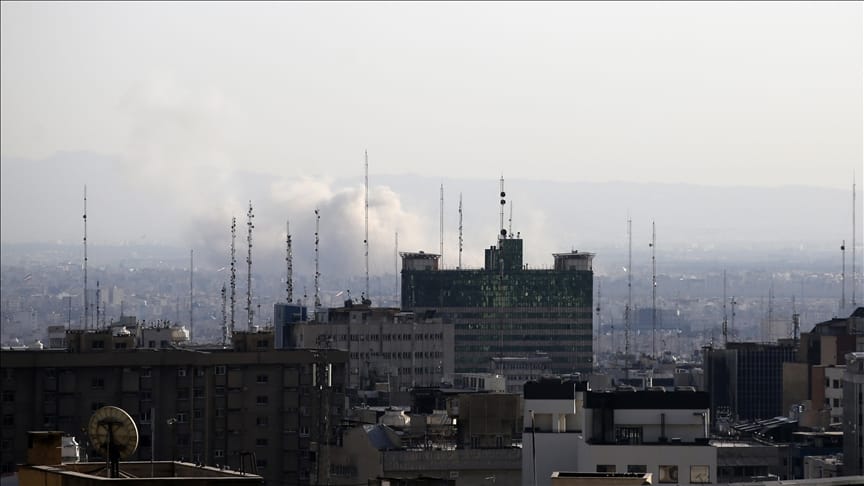
Several neighborhoods of Tehran have transformed into scenes of devastation after over a month of Israeli and U.S. airstrikes targeting major public buildings and residential areas of the city. The terrifying rumble of airstrikes has become a regular feature of life in major cities like Tehran, Shiraz, and Isfahan. At least 2,076 people have been killed by US-Israeli attacks since the war began according to the country’s Health Ministry.
Figures from the Human Rights Activist News Agency, a monitoring group funded in part by the U.S. government, put the number at over 3,500 killed, including 1,600 civilians, and several hundred children.
According to figures from the United Nations High Commissioner for Refugees, as many as 3.2 million Iranians had already been internally displaced by the conflict as of mid-March. That number is believed to have risen significantly as the U.S. and Israel have continued to heavily target urban centers in the country.
The war against Iranian infrastructure has already been going on for weeks. Last week, a major bridge connecting the cities of Karaj and Tehran was destroyed in U.S. aerial attacks. The attack killed at least 8 people and wounded dozens more, including in “double tap” attacks after the original bombing that killed several rescuers. Trump later posted footage of the bombing on social media, stating that there would be “much more to follow.”
Israel has also carried numerous strikes targeting steel, petrochemical, and energy targets, as well as pharmaceutical companies and medical centers across Iran—attacks aimed at destroying the country’s substantial industrial base and limiting its ability to recover after a conflict.
Major universities and hospitals across Tehran and other parts of the country have been hit in Israeli and U.S. attacks, raising the fear—even among Iranians opposed to the government—that the war is really about destroying Iranian society rather than achieving its stated aim of stopping the Iranian nuclear program, or diminishing the capabilities of the Islamic Revolutionary Guards Corps.
On Sunday night, U.S. and Israeli airstrikes targeted Sharif University of Technology, one of the most famous engineering schools in the country, in an attack that drew condemnation not just from the government but anti-government activists both in the country and abroad. ”We are caught between two evils: a vengeful Islamic Republic and a deranged, war-loving president,” Nariman said. “I am responsible for my family’s safety, I cannot let them live in peril. I have no choice but to flee Tehran.”
The recent comments by Trump about destroying Iranian power plants and bridges come amid a steady stream of volatile comments by the U.S. president about his intentions for Iran and its people. By now, many Iranians have noticed a pattern: Trump often issues threats while the markets are closed, only to pull back just before they open. There is a widespread hope that his latest ultimatum is simply another bluff.
But for some the situation feels different, owing to recent events. Tehran has been hit increasingly hard by U.S. and Israeli strikes in recent weeks, as the targeting priorities of the two countries shifts from police stations or military sites on the periphery of the city to famous landmarks and infrastructure familiar to all Tehran residents.
“We just have to stay here and hope the Tuesday deadline is another market day bluff.
”The attack on the Tehran-Karaj bridge has alarmed many that fleeing the city may even become impossible if attacks on civilian infrastructure escalate as Trump has promised. While some like Nariman and his family have taken to the road in the wake of his threat, others, however, have no way out even as the air war against Iranian civilians escalates. For those without family outside the capital or the means to travel, the only option is to wait.
“We’ve been sitting in our room just staring at the phone,” said Parisa, a 21-year-old university student living with her roommate in central Tehran to Drop Site News. “My roommate is from a small village in southern Iran and her city is under continuous bombardment; there is no way for us to leave. We don’t have a car, and we don’t have anywhere to shelter. We just have to stay here and hope the Tuesday deadline is another market day bluff.” “I am not panicking because we might lose electricity. We are very well-prepared for that,” she added.
“We bought canned food and hygiene supplies in the first days of the war, and we have been refilling our stocks since.” When asked what she is concerned over, however, she said: “The infrastructure. So many years and countless efforts went into building these things for us. I am afraid we will suffer a major setback. I am young; I don’t want to spend the next five or ten years of my life struggling just to take a hot shower.”
Last-ditch diplomatic efforts are under way to avert further escalation. On Monday, following a Pakistani-mediated proposal for a temporary ceasefire, Iran reiterated its own demands for an agreement setting out a permanent end to the war—trading concessions on its nuclear program for sanctions relief and recognition of its ability to exercise control over the Strait of Hormuz.
The current talks have not resulted in any brisk progress to a final diplomatic agreement that could end the war before Trump’s threat comes into effect.Parisa, like many of her friends, believes that a negotiated solution is unlikely, Iranians are in this for the long haul, and that she must keep her morale high as she stays in Tehran.
Other Iranians who are weighing whether to flee or tough out the war at home are making similar calculations. “I don’t even look at my suitcases anymore,” Elnaz, a 34-year-old painter in Tehran, told Drop Site News. “To flee, you need a destination and the money to get there. I have my brushes and my canvases, and that’s about it. I’m staying because I have nowhere else to go.”
While many are focused on the Tuesday deadline laid out by Trump, Elnaz is also bracing for a longer war. “People act like the world ends or resets on Wednesday morning, but this isn’t going to be over in a weekend,” she said. “Looking at how things are escalating, I think we’re looking at another month or two of this.” “It’s going to be a long, slow process,” she added, referring to the course of the war. “We’re just stuck here waiting.” Drop Site
CrossFireArabia
By Abdel Bari Atwan
We do not dispute the official and popular Iranian resistance narrative and use by its military leadership of hypersonic missiles with cluster warheads weighing between one and two tons, and which penetrated most of Israel’s air defenses and destroyed its targets in the occupied Palestinian cities (Israel) in the first five weeks. These were one of the most prominent surprises of the current American-Israeli war on Iran.
However, the biggest and most unexpected surprise for many, both for Israel and the Arab environment, is this powerful resurgence of Hezbollah in Lebanon, its military wing, formidable missile and drone capabilities, and the highly efficient management of the ongoing battle by its “hawkish” leadership. This is constituting a powerful shock to the Israeli enemy, official Lebanese authorities, and the Americans.
The Hezbollah Party’s military wing, led by a young command trained in North Korea and China in the latest guerrilla warfare tactics, is waging the war with high efficiency, overseeing the launch of more than 200 rockets and drones daily. Most of these reach their targets in the Greater Tel Aviv area, much of whose cities now destroyed, and Haifa and its bay, reduced to a blazing inferno. The Hezbollah missiles are targetting settlements in the Upper and Lower Galilee, most notably Kiryat Shmona, which has become a ghost town.
***
Hezbollah deceived all of its adversaries, inside and outside Lebanon, remaining steadfast, feigning restraint and flexibility, and avoiding confrontation with the state by all means. It never responded neither to the clamorous voices predicting its demise and political and military exit from the scene, nor to the killing of some of its new leaders, even after the “Pagers War” or to the provocative Israeli violations of the ceasefire, which exceeded 10,000 over the past 16 months. This was because its priorities focused on internal restructuring and rebuilding its missile and drone industries to achieve military self-sufficiency for the current major confrontation.
Data from trusted sources confirm that the party currently possesses more than 30,000 short- and medium-range missiles, thousands of Shahed and Hudhud drones, and more than one 100,000 fighters, most of whom are young men under the age of thirty.
The party’s success and precision of its missiles in exhausting the Israeli enemy and its forces and emptying the occupied Galilee of all its settlers who fled to central and southern Israel seeking safety and security, restored its prestige and broadened its popularity, both within its Shiite base and among many members of other sects, especially young people, as well as in the wider Arab and Islamic worlds.
Hezbollah destroyed at least 40 Israeli Merkava tanks, killed more than 35 Israeli soldiers, and wounded 80 others since entering the war on 4 March. This number of casualties, by the Israeli enemy’s own admission, is the same as their numbers during the 12-day war last June.
We do not believe the Israeli leaks circulated by some Lebanese circles, whether in their media outlets and/ or on social media platforms, claiming the existence of three wings within Hezbollah: First, the moderate wing, which wants to avoid confrontation with the state; second, the “doves,” who do not object to linking disarmament to Israeli withdrawal and reconstruction; and third, the “hawks,” united behind its military leadership, which believes in the option of resistance, maintaining and developing weapons until the liberation of all Lebanese and Arab lands.
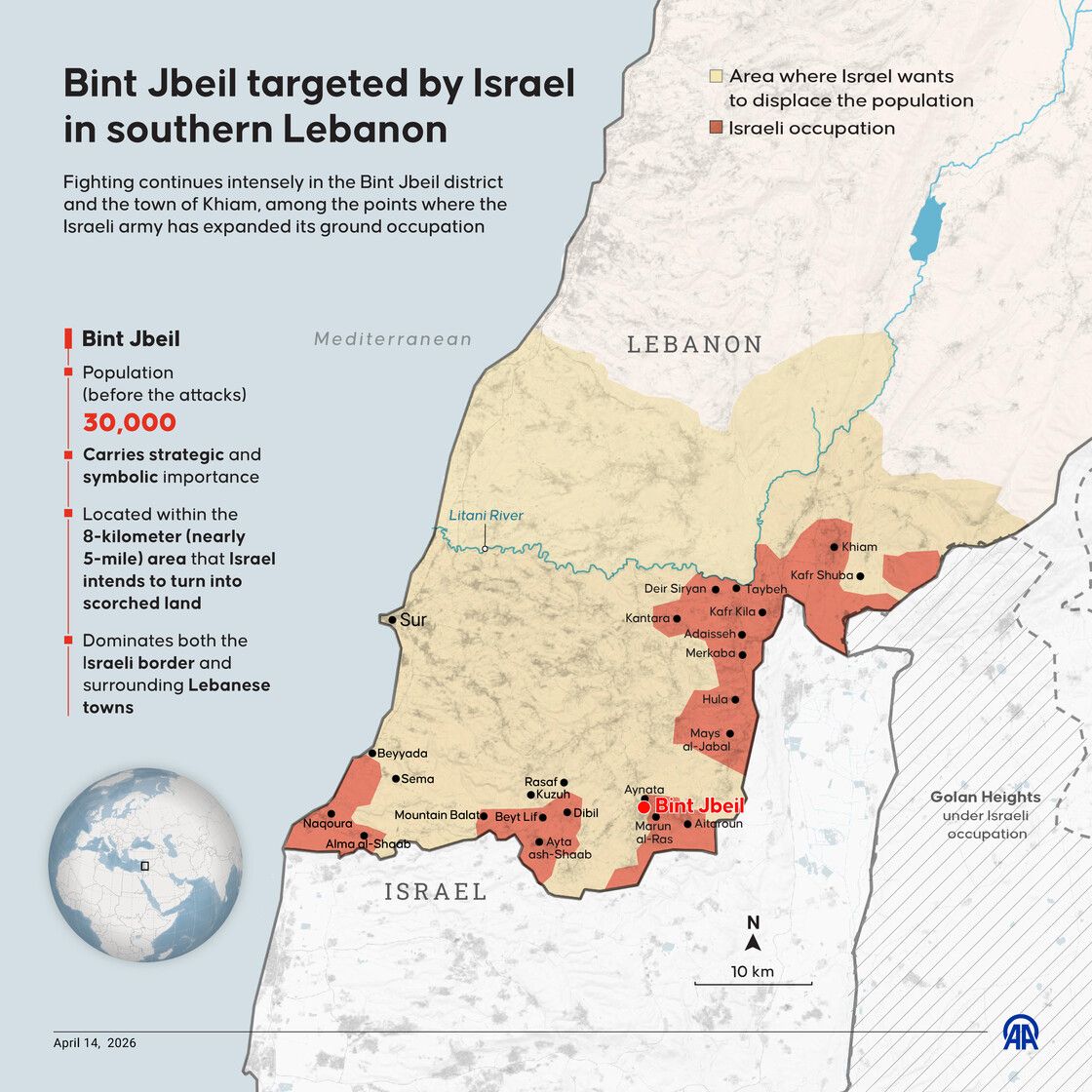
The upper hand now belongs to the “hawks,” around whom everyone rallies, and who have absolutely no trust in the capitulating state, nor in America and the Western world in general, who have starved the Lebanese people, supported the Israeli occupation and all its crimes in displacing more than 1 million Lebanese from the south, seized the border strip south of the Litani River, and whose planes have not ceased bombing the southern suburbs of Beirut, Bekaa Valley, and cities and neighborhoods that support the resistance.
***
We urge those who focus solely on Israel’s theatrical assassinations in Lebanon—and which are clearly part of a psychological warfare campaign—to reconsider and focus on stamping out intelligence breaches, to cease promoting Israeli plans and instead see the other side of the cup: The significant losses inflicted deep inside Israel, even reaching settlements around Gaza Strip in the far south. This war is still in its early stages, specifically its first month, and more than seven million settlers are living in shelters and tunnels day and night, terrified of Lebanese, Iranian, and Yemeni missiles.
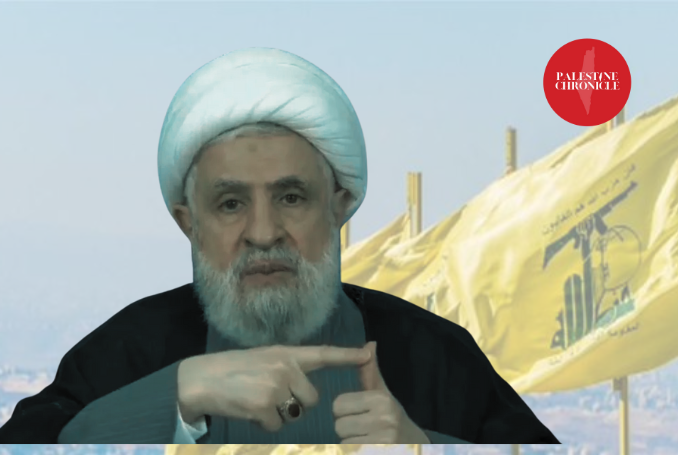
Sheikh Naim Qassem, Secretary-General of Hezbollah, hit the nail on the head when he said that Israel poses an existential threat to everyone in Lebanon and beyond. Therefore, the resistance war must continue until this threat is eradicated. Hezbollah’s patience has its limits; it is not unlimited.
No pagers, no smartphones, no announcement of the names of the new leaders, and the party has returned to its early beginnings, which is equivalent to carrier pigeons, direct communication, smart ambushes, limited-number cells, and finally, patience and fighting until victory, which is imminent, God willing… and the days will tell.
This comment by Chief Editor of Abdel Bari Atwan of Al Rai Al Youm was translated from Arabic and published in crossfirearabia.com