Gaza Genocide Results in 4500 Amputations

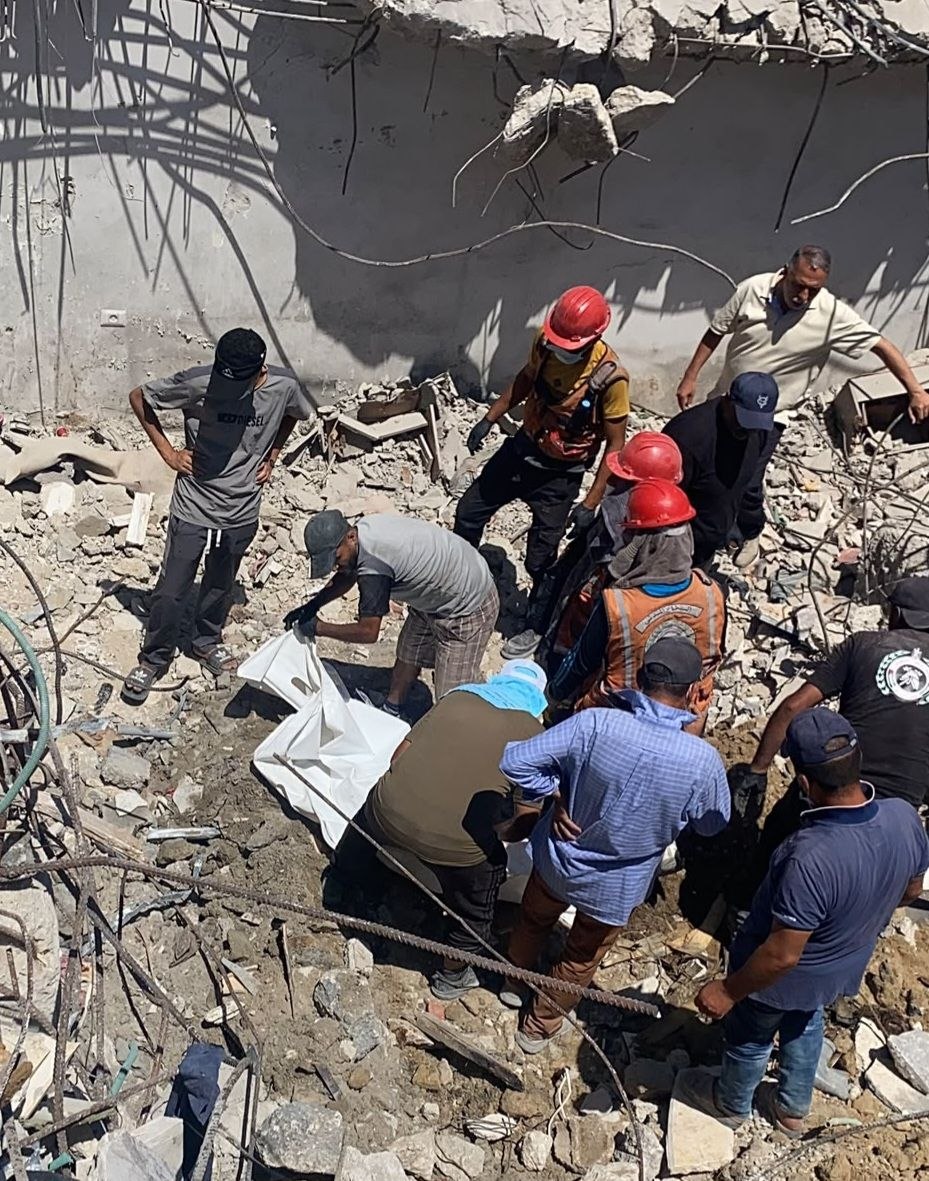
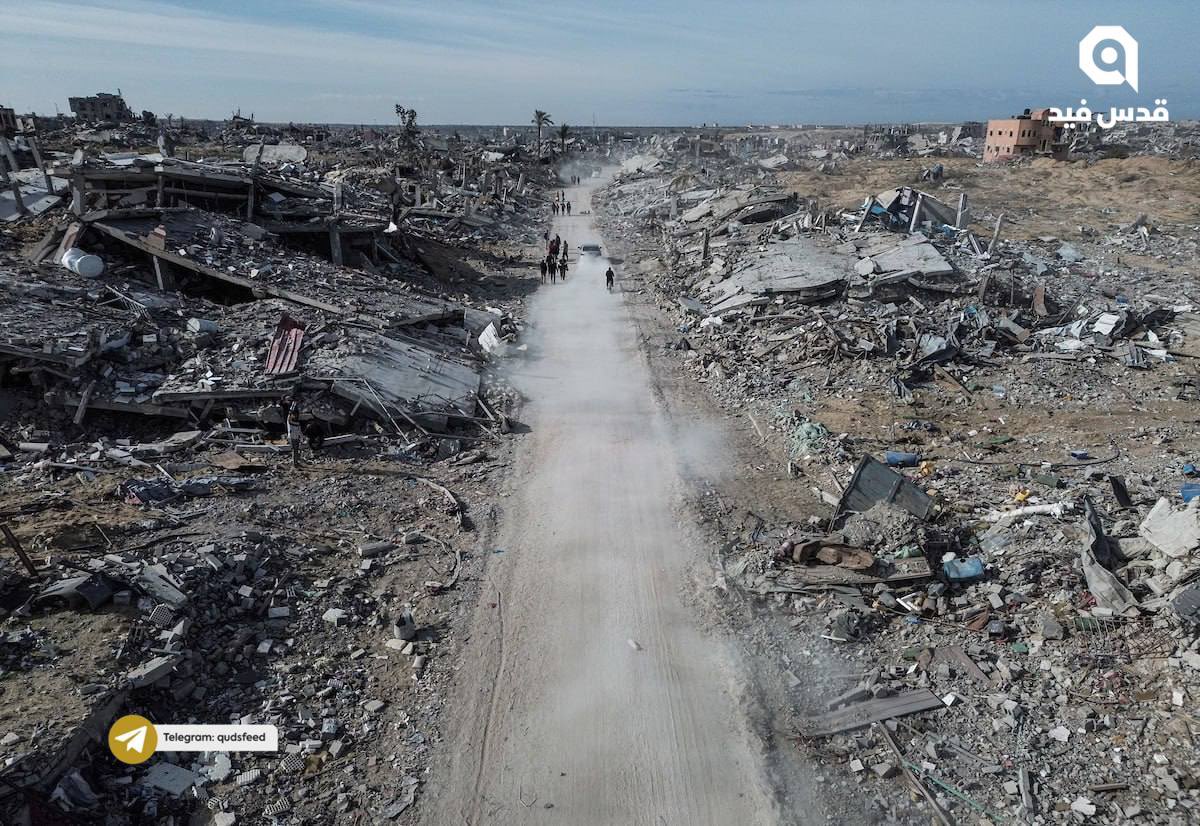
A senior health official in Gaza has announced that the Health Ministry documented 4,500 amputations, including upper and lower limbs, since the beginning of the Israel’s genocide in the besieged enclave.

“We have recorded 4,500 amputation cases by the end of 2024, as a result of the continuous Israeli airstrikes and ground attacks on Gaza,” Zaher al Wahidi, the head of the Health Information Unit at the ministry, said in a statement on Friday.

He reported that about 800 of the amputees were children, making up 18 percent of the cases, while 540 women accounted for 12 percent of the amputations.

Wahidi stressed that the figures reveal the enormity of the humanitarian catastrophe facing the civilian population, particularly the most vulnerable groups — children and women.

Read More

Live blog: Gaza death toll rises over 46,500 amid Israel’s genocidal war

He added that the number of amputations will likely continue to rise as the genocidal war persists, exacerbating the already dire strain on the health care system which is grappling with critical shortages of medical supplies due to the blockade that has been imposed for more than 18 years.

Since the Israeli war began in October 2023, the Israeli army has deliberately targeted health care facilities, bombing hospitals and forcing evacuations while blocking essential medical supplies, particularly in the north, which has been heavily attacked since October 5.

Wahidi urgently called for international support to address the worsening crisis, demanding immediate action to halt Israeli violations and protecting the civilian population.

‘Largest group of child amputees in modern history’

In response to the escalating number of amputations among children, Lisa Dutton, an official at the UN Office for the Coordination of Humanitarian Affairs (OCHA), said in October that Gaza had become “home to the largest group of child amputees in modern history.”

The Israeli army has continued its genocidal war on Gaza that has killed more than 46,000 victims, mostly women and children, despite a UN Security Council resolution calling for an immediate cease-fire.

The International Criminal Court issued arrest warrants in November for Israeli Prime Minister Benjamin Netanyahu and his former Defense Minister Yoav Gallant for war crimes and crimes again st humanity in Gaza.

Israel also faces a genocide case at the International Court of Justice for its war on the enclave.

TRTWorld

Continue reading
Israel Kills Anadolu Cameraman in Gaza

Saed Abu Nabhan, a freelance Anadolu cameraman in Gaza, was killed on Friday by a long-range rifle attack by the Israeli army. Abu Nabhan, 25, had a wife and one child.

In the fatal incident, the Israeli military first surrounded an area in the Al-Jadeed Refugee Camp, located in the central Gaza Strip’s Nuseirat region, where many journalists were, before targeting those in the area.

Footage from the scene shows a wounded individual being rushed out of a house on a stretcher with the help of aid workers.

Nearby, Abu Nabhan is seen trying to run while covering the incident with his equipment. At that moment, he is targeted by what appears to be a shot fired from a long-range rifle.

Abu Nabhan then falls to the ground and lies motionless. People nearby struggle fearfully to approach him due to the threat of being targeted by Israeli bullets.

Official Palestinian news agency Wafa reported on the attack, confirming that Abu Nabhan was killed.

Separately, at least one person was reported dead, with the deceased and injured taken to Al-Ahli Baptist Hospital, following an Israeli airstrike on a house in Gaza’s Shuja’iyya neighborhood.

The death of Abu Nabhan brought the total number of Palestinian journalists killed in Israeli attacks on the Gaza Strip since Oct. 7, 2023 to 203. Reports also indicate that 399 journalists have been injured, and 43 others captured.

The Israeli army has continued a genocidal war on Gaza that has killed more than 46,000 people, most of them women and children, since a Hamas attack on Oct. 7, 2023, despite a UN Security Council resolution calling for an immediate cease-fire.

In November, the International Criminal Court issued arrest warrants for Israeli Prime Minister Benjamin Netanyahu and former Defense Minister Yoav Gallant for war crimes and crimes against humanity in Gaza.

Israel also faces a genocide case at the International Court of Justice for its deadly war on Gaza.

Continue reading
Israel’s War on Truth

The number of journalists killed in Gaza since Oct. 7, 2023 is unprecedented in human history. More media workers have lost their lives in the Gaza war than in World War II, the Vietnam War or the 1990s conflicts in the former Yugoslavia. Tallies vary because of different counting methodologies. The International Federation of Journalists puts the toll at 148 deaths while others record a figure of over 200. For context, there were around 1,000 journalists working in Gaza at the start of 2023, so the mortality rate is significant. Of course, the overall toll in this war is horrendous; more than 45,000 have perished, according to the authorities in Gaza. However, the death toll among journalists is dramatically higher than that among any other occupational group.

Explaining such an extraordinary proportion of lost lives is necessarily speculative – but there are factors that are impossible to ignore. The Israeli Defense Forces have access to sophisticated monitoring equipment, such as Pegasus, which secretly infects mobile phones and discloses their precise locations. They have AI-powered systems known as “Lavender” and “Gospel” to select targets and program weapons systems to precise geo-locations. They also have a fleet of deadly drones.

Obstacles to reporting

Neither of these are the only circumstantial evidence that something terrible is in progress. International reporters have been barred from Gaza since the war’s outset. Foreign correspondents have repeatedly petitioned to pass through the Rafah crossing to witness events for themselves, and they have been consistently denied. The Foreign Press Association in Jerusalem has stated: “Never before has Israel enforced such a long and strict information blackout. It has repeatedly rejected our appeals for access, (and) fought us in court to uphold this draconian ban.”

During the same period, the Israeli daily paper Haaretz has been sanctioned by its own government, and the Qatari television station Al Jazeera has been banned from operating in both Israel and the West Bank. The most profound effect of this campaign is felt in Gaza, of course, but such an attack on free reporting has an impact all around the world.

Call for international action

As long as the Israeli government pursues such a policy, and is facilitated by its allies, it provides cover for all those around the world who would undermine media freedom. So, what then can be done by those of us who support free and unfettered journalism?

The first step is to recognize the extraordinary bravery of those who continue to report from Gaza. They deserve every form of support that we can provide. In recent months, the IFJ, working with UNESCO, has launched three journalists’ solidarity centers in Gaza where reporters work, recuperate, socialize and access training. Alongside many other agencies, the IFJ also directly aids journalists through their union, the Palestinian Journalists’ Syndicate. Anyone can support this work via the IFJ’s International Safety Fund.

No less important is the demand for an international investigation into what has happened to journalists in Gaza. Karim Khan, the chief prosecutor of the International Criminal Court has already announced that he has “reasonable grounds to believe that Benjamin Netanyahu and Yoav Gallant bear criminal responsibility for war crimes and crimes against humanity.” It is critical that Khan’s investigation progresses and that its findings are examined in a court of law. Only when this happens will there be a chance for Palestinians to start believing that international law protects them.

International law needs to be more accessible

Such a long wait for the ICC to take up this case – and previous crimes such as the killing of Shireen Abu Akleh in 2022 – makes it clear that obtaining international justice for journalists is a significant challenge. For this reason, the IFJ has long campaigned for a specific UN Convention on the Safety of Journalists. This would not create new rights, but would make international law more accessible when journalists are targeted. Adoption of such a Convention in the next few years will be of little comfort to those who have lost their lives in Gaza. It would, however, be a recognition of the service that journalists provide and the sacrifice that this often demands.

Without journalists, the people of the world would have little idea of how lives beyond their own neighborhoods are impacted by global events. Most of us may have cause to disagree with the perspectives of some or many individual journalists, but the more reporting is available to us, the more voices are heard, the better we will be able to make up our own minds about what is important. Emphasizing the international legal provisions that protect journalists will improve the safety for all – whether they work in war zones or at home alone.

The above piece is written by Tim Dawson who is the deputy general secretary of the International Federation of Journalists for Anadolu.

Continue reading
French Journalist Detained by Israeli Troops in Syria

French journalist Sylvain Mercadier was detained on Wednesday for over four hours, during which he was “threatened and humiliated” by Israeli forces while reporting on their advance in Syria. Mercadier was reportedly in the southwestern Syrian province of Quneitra where Israeli forces have been seizing additional territory beyond what they already occupied of the Golan Heights.

Continue reading