 In The Line of Fire: Gaza Families Fear The ‘Yellow Line’
 Kushner Tells Netanyahu Not to Move ‘Westwards’ in Gaza
 A Middle East Whirlpool! View From Amman
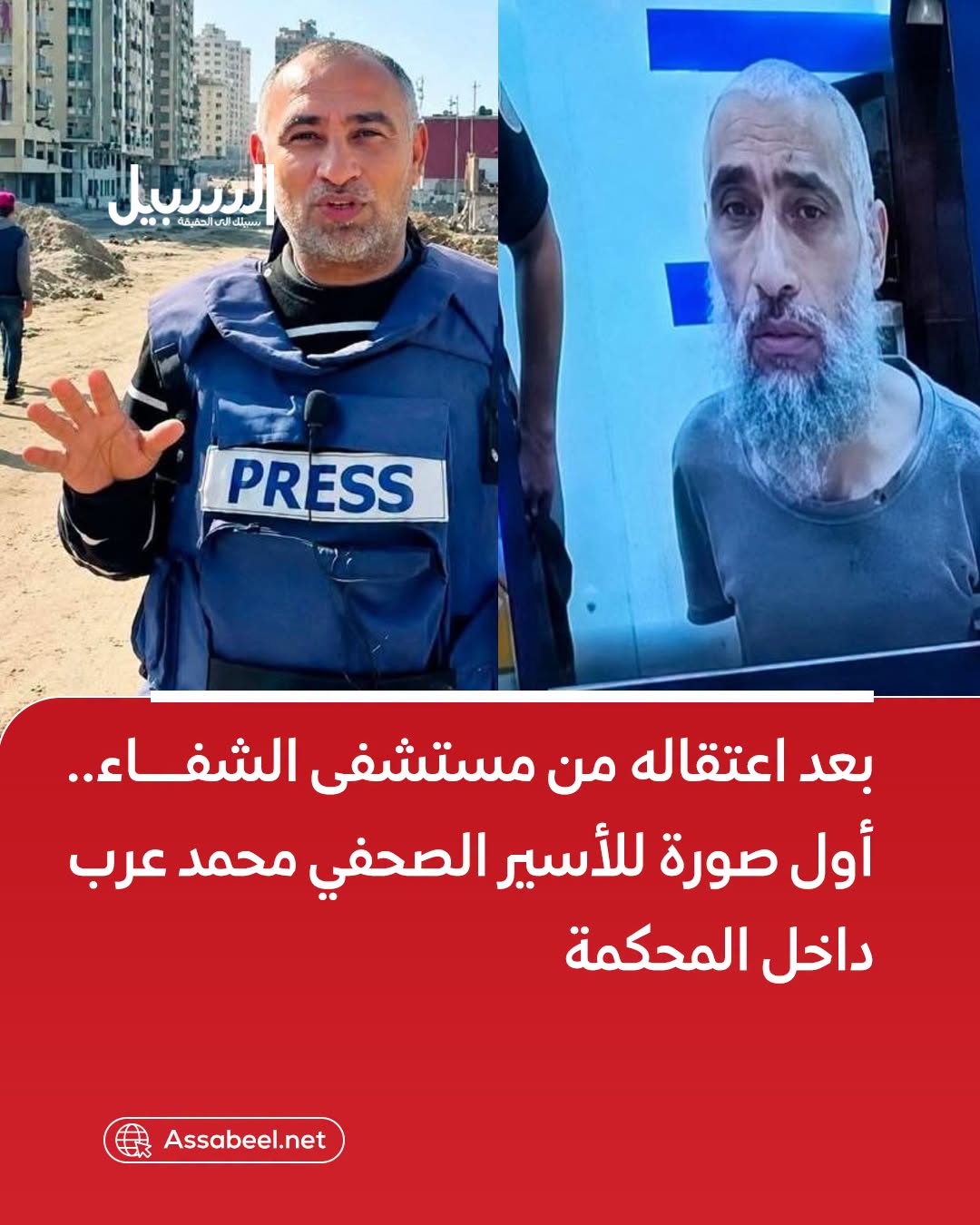 Prisoner Mohammad Arab Hadn’t Seen His Face in 2 Years!
 UN: 3000 Settler Attacks on West Bank Palestinians Since 2025

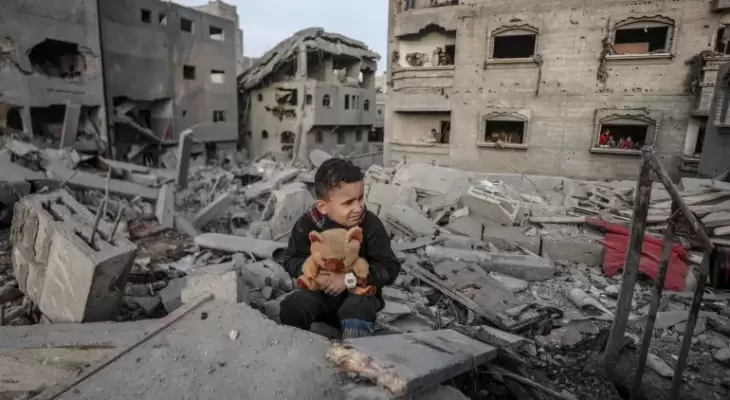
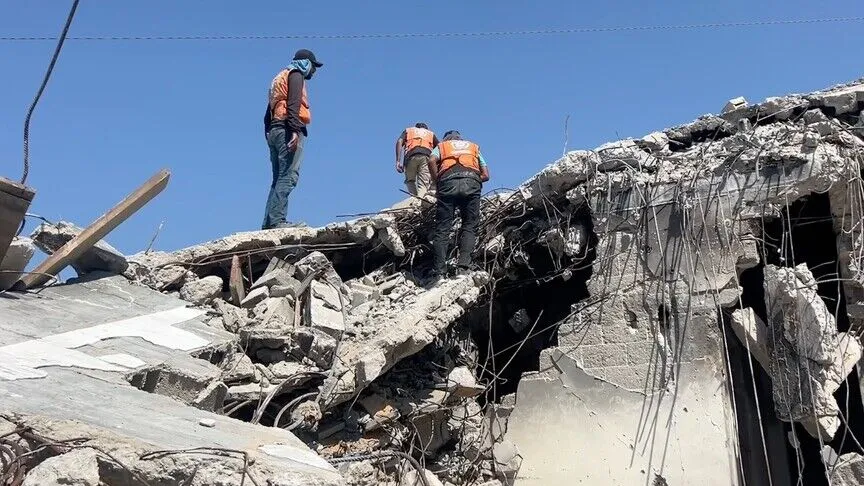
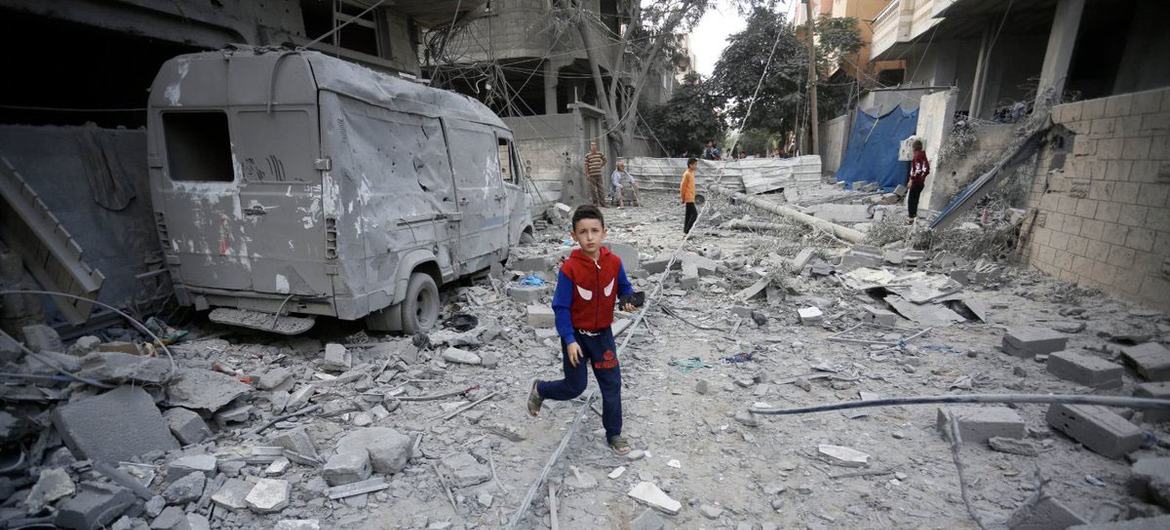
In The Line of Fire: Gaza Families Fear The ‘Yellow Line’
marwan
- August 17, 2026
 marwan
 Saleem Ayoub Qunamarwan
 CrossFireArabiaCrossFireArabiaCrossFireArabiaCrossFireArabiamarwanCrossFireArabiaCrossFireArabiamarwanCrossFireArabia
 HebaCrossFireArabiamarwanCrossFireArabiamarwanHebaCrossFireArabiamarwanmarwanHebaCrossFireArabiamarwanmarwanCrossFireArabiamarwanHebaCrossFireArabiaCrossFireArabiaCrossFireArabiaHebamarwanCrossFireArabiamarwanHebaCrossFireArabiaHebamarwanmarwanCrossFireArabiamarwanmarwanmarwanmarwanmarwanmarwanmarwanmarwanmarwanCrossFireArabiaCrossFireArabiamarwanmarwanCrossFireArabiaCrossFireArabiamarwanCrossFireArabiamarwanHebaHebamarwanmarwanCrossFireArabiamarwanmarwanmarwanmarwanCrossFireArabiaCrossFireArabiamarwanmarwanmarwanCrossFireArabiaCrossFireArabia
Those who have been exposed fully to the live-streamed genocide in Gaza are overwhelmingly the young people of the United States.
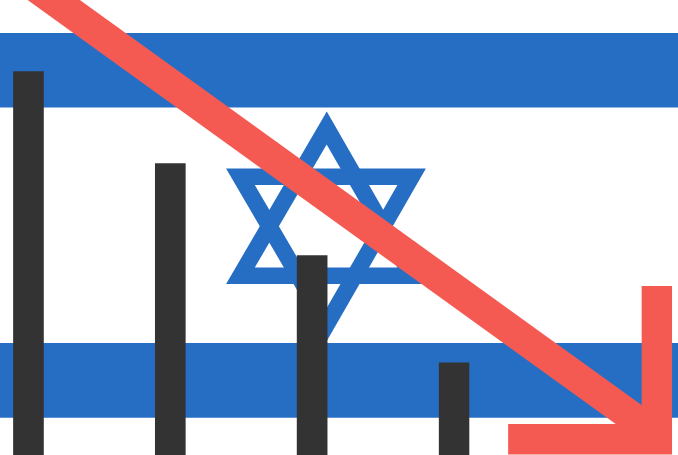
It is no secret that Israel’s stock amongst the global public has been plummeting since October 7, 2023. A top Israeli think-tank has now identified the trend as a “brewing crisis in bilateral relations”. However, reversing the damage done to Israel’s reputation is now impossible.
The Institute for National Security Studies (INSS), an influential Israeli think tank, has expressed great concern over the growing partisan gap in the United States on the issue of Israel. It took note of polling data and the growing gap between Democratic versus Republican Party support for Israel.
Support for Israel has long been a bipartisan stance in the United States. Back in 2018, according to a Gallup Poll conducted that year, some 64% of Americans supported Israel and only 21% said they leant towards Palestine.
The next year, while support for Palestine remained the same, only 59% of respondents said they supported Israel, which sparked major concerns for the Israel Lobby.
Fast forward to 2025 and the latest Gallup poll shows that only 32% of the US public back Israel’s military campaign in Gaza, most of whom are Republicans, with only 8% of Democrats supporting the Israeli assault.
Perhaps the most notable takeaway from the Gallup Poll however, were the opinions of young Americans, which appear to cut across Party lines in opposition to Israel. Overall, only 9% of respondents aged 18 to 34, said they supported Israel’s military actions in Gaza, while only 6% said they had a favorable view of Israeli Prime Minister Benjamin Netanyahu.
Recently, the right-wing Zionist Anti-Defamation League (ADL) conducted a survey and claimed to have found that 46% of the global adult population had entrenched anti-Semitic beliefs, up from 26% of adults harboring those same attitudes in 2014.
It should be noted that the ADL has been shown to include pro-Palestinian and anti-Israel views as “anti-Semitism”, which is what led to recent reports in which it concluded exponential spikes in “anti-semitic incidents”. The ADL’s reports indicate that the Zionist movement is certainly in a state of crisis.
The key takeaways here are that Americans who are women, young people, Democrats or people of color are overwhelmingly opposed to Israel. This was, just years ago, unimaginable to be speaking about the majority of the US population now standing in opposition to Israel.
A recent Pew Poll from a few months back also indicated that despite the continued Republican Party voter support for Israel, when you look specifically at Republicans aged between 18 to 49, half of them viewed Israel unfavorably.
Although the Pew data didn’t reveal the Gallup age range of 18 to 34, the evidence supports the notion that this demographic holds the most unfavorable views of Israel.
In response however, the Israeli government appears to be only bothering to focus its efforts on winning over young Republicans, not caring so much for Democrats that appear as a lost cause. This indicates an admission that in the future, Palestine-Israel is going to be a partisan issue in the United States.
When we also put into consideration that younger Americans get their news from social media, new media and independent commentators/journalists, more so than they do the major news outlets, it indicates that what they have already seen will have made up their mind as to where they stand on the issue.
Those who have been exposed fully to the live-streamed genocide in Gaza are overwhelmingly the young people of the United States. For them, Palestine has become the issue of a generation.
The big fear now for the Israel Lobby is that they are fully exposed and the younger generations will eventually grow up, making the population overwhelmingly pro-Palestine if no seismic shift occurs.
(The Palestine Chronicle)

– Robert Inlakesh is a journalist, writer, and documentary filmmaker. He focuses on the Middle East, specializing in Palestine. He contributed this article to The Palestine Chronicle.
CrossFireArabia
David Grossman, one of Israel’s most prominent authors, told Italian daily La Repubblica he has decided to start using the word “genocide” to describe the situation in Gaza.
“For years, I refused to use the word ‘genocide.’ But now I can’t hold back from using it, after what I’ve read in the newspapers, after the images I’ve seen and after talking to people who have been there”, he said in the interview published in the paper’s print edition on Friday.
Grossman said coming to the realization that Israel is committing genocide in Gaza was an extremely painful process on a personal level, but that he now found such conclusion inescapable.
“I want to speak as a person who has done everything he could to avoid having to call Israel a genocidal state. And now, with immense pain and a broken heart, I have to say that it is happening before my eyes. Genocide,” he said.
The Israeli writer went on to say he now feels a moral obligation to speak up. “I feel an inner urgency to do the right thing, and now it is the time to do it,” Grossman said.
Asked by the journalist about the spiraling death toll in Gaza, he said: “I feel sick. Even though I know that those numbers are controlled by Hamas and that Israel cannot be solely responsible for all the atrocities we are witnessing. Nevertheless, reading in the newspaper or hearing in conversations with friends in Europe the juxtaposition of the words ‘Israel’ and ‘hunger’; to do so starting from our history, from our supposed sensitivity to the suffering of humanity, from the moral responsibility we have always claimed to have towards every human being and not only towards Jews… all this is devastating”, he said.
Grossman’s words come amid growing condemnation of Israel for its actions in Gaza on the international stage, and as several countries, including France and Britain, have pledged to recognize a Palestinian state in the near future.

The use of the word genocide to describe Israel’s war in Gaza is also becoming more common in international intellectual circles.
In mid-July, an opinion piece titled “I’m a Genocide Scholar. I Know It When I See It” in the New York Times by Professor Omer Bartov, an Israeli professor of Holocaust and genocide studies at Brown University, made the case for the use of the word genocide.
Grossman, who is one of Israel’s most well-known writers abroad, has long been a vocal critic of Israel’s occupation of Palestinian territories. The editor of The New Yorker, David Remnick, recently described him as “the only [living Israeli] novelist with comparable moral authority” to that of the late Amos Oz. In the interview in La Repubblica, he reiterated that he considers Israel’s occupation of the West Bank and Gaza after the Six-Day War as a key watershed moment in the country’s history.
“I am absolutely convinced that Israel’s curse began with the occupation of the Palestinian territories in 1967. Perhaps people are tired of hearing about it, but that is how it is,” he said.
Grossman also noted it is critical to ensure those harboring antisemitic sentiments do not “use and manipulate” the word genocide. He also criticized Hamas for turning Gaza into a base for launching rockets into Israel in the aftermath of Israel’s withdrawal in 2005.
“The Palestinians’ big mistake is that they could have turned the Strip into a thriving place, but instead they gave in to fanaticism and used it as a launching pad for missiles against Israel”, he said.
“If they had made the other choice, perhaps this would have prompted Israel to also give up the West Bank and end the occupation years ago”, he said.
Grossman also added that many around the world still fail to understand the magnitude of the trauma of October 7 for Israelis.
“Many people still don’t understand what it meant for us. Many people I know [in Israel] have abandoned our common left-wing values since that day; they have given in to fear, and suddenly their lives have become easier, they feel accepted by the majority, they no longer need to think,” he said.
Grossman considers resettling Gaza, as some Israeli ministers advocate, wrong and self-defeating. “I hear people like Smotrich and Ben-Gvir saying that we must rebuild settlements in Gaza, but what are they saying? Don’t they remember what happened when we were there, with Hamas killing hundreds of Israeli civilians, women and children, without us being able to protect them? We did not leave Gaza out of generosity, but because we could not protect our people”, he argued.
Looking forward, Grossman said he remains a believer in the two-state solution. As such, he praised French President Emmanuel Macron’s decision to recognize a Palestinian state, that was followed by similar statements by other leaders. “I don’t understand the hysteria it has provoked here in Israel”, he said.
Finally, Grossman rejected accusations that Israel’s cultural elites should have taken a stronger stance on what is happening in Gaza a lot faster. “I believe that targeting those who have fought the Occupation for 70 years, who have invested most of their lives and careers in this battle, is unfair”, he concluded.
CrossFireArabia
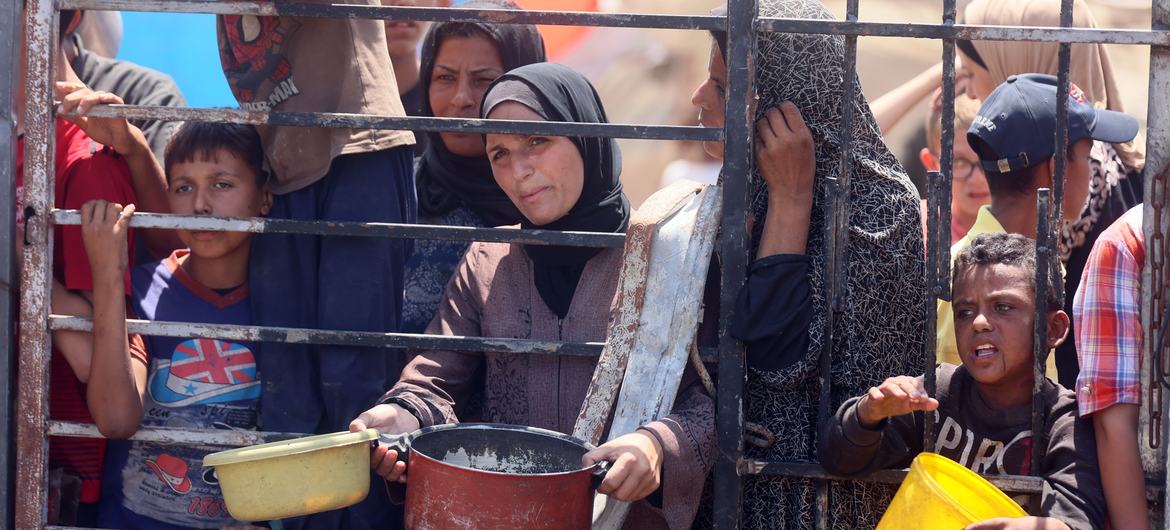
Despite Israel’s 27 July announcement of daily military pauses in western Gaza “to improve humanitarian responses,” Israeli forces continued attacks along food convoy routes and near Gaza Humanitarian Foundation (GHF) aid sites, according to the UN human rights office in Palestine (OHCHR).
Between 30 and 31 July alone, 105 Palestinians were killed and at least 680 more injured along the convoy routes in the Zikim area in North Gaza, southern Khan Younis, and in the vicinity of the GHF sites in Middle Gaza and Rafah, the office (OHCHR) said in a press release issued on Friday
In total, since 27 May, at least 1,373 Palestinians have been killed while seeking food; 859 in the vicinity of the GHF sites and 514 along the routes of food convoys.
OHCHR noted that most of the killings were committed by the Israeli military, and that while it is aware of the presence of other armed elements in the same areas, it does not have information indicating their involvement in the killings.
“[The office] has no information that these Palestinians were directly participating in hostilities or posed any threat to Israeli security forces or other individuals. Each person killed or injured had been desperately struggling for survival, not only for themselves, but also for their families and dependents,” it said.
The office emphasized that intentionally directing attacks against civilians not taking direct part in hostilities and intentionally using starvation of civilians as a method of warfare by depriving them of objects indispensable to their survival, including willfully impeding relief supplies, are war crimes.
“If part of a systematic or widespread attack on the civilian population, these may also constitute crimes against humanity,” OHCHR added, noting that the cumulative impact of these incidents and humanitarian access restrictions.
“Each of these killings must be promptly and independently investigated, and those responsible held to account. Urgent measures must be put in place to prevent recurrence,” it said.
Meanwhile, the UN Relief and Works Agency for Palestine Refugees (UNRWA), underscored the need to open road crossings to supply aid at scale across the Gaza Strip.
“Airdrops are at least 100 times more costly than trucks. Trucks carry twice as much aid as planes,” UNRWA Commissioner-General Philippe Lazzarini said on social media.
“If there is political will to allow airdrops – which are highly costly, insufficient and inefficient, there should be similar political will to open the road crossings,” he stressed.
Mr. Lazzarini further noted that UNRWA has 6,000 trucks loaded with aid stuck outside Gaza waiting permission to enter.
During the ceasefire earlier this year, UNRWA and other UN agencies were able to bring in 500 to 600 trucks of aid each day.
“Aid reached the entire population of Gaza in safety and dignity. It succeeded to reverse the deepening starvation without any aid diversion,” the UNRWA head said.
“Let us go back to what works and let us do our job.”
CrossFireArabia
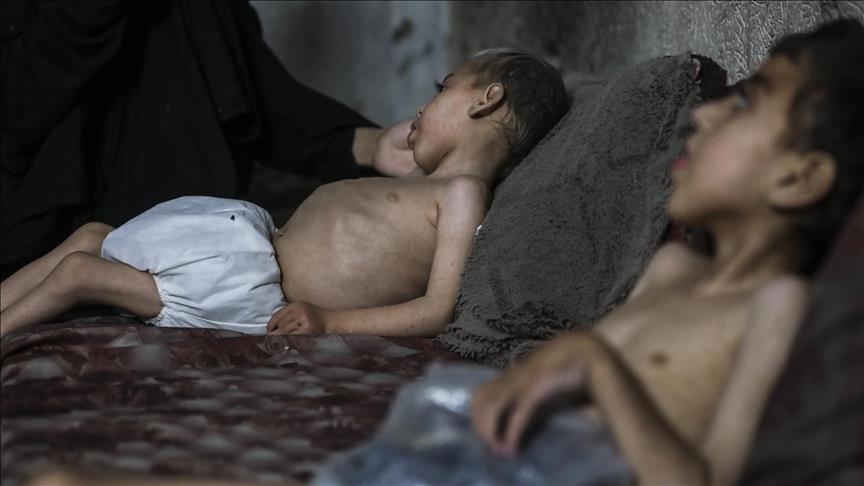
Israel is heading toward a major diplomatic breakdown as famine spreads in Gaza, the daily Yedioth Ahronoth reported on Friday.
The newspaper revealed that Prime Minister Benjamin Netanyahu’s government ignored mounting international warnings about an unfolding humanitarian catastrophe in the besieged Palestinian enclave.
The report states that on March 2, Israel’s Security Cabinet made a decision to halt the entry of food aid into Gaza. This move came despite clear assessments from Israel’s own security establishment about the worsening famine, as well as urgent warnings from Gen. Ghassan Alian, the coordinator of Government Activities in the Territories, and several international relief organizations.
Unnamed political and security sources told the Yedioth Ahronoth that the decision “was not rooted in strategic considerations but was driven by political pressure from National Security Minister Itamar Ben Gvir and Finance Minister Bezalel Smotrich,” both known for their far-right policies according to Anadolu.
The daily noted that the Israeli government was fully aware Gaza was “on the brink of famine,” yet continued to block aid entry endangering the lives of countless Palestinian civilians.
The EU reportedly issued a stern warning to Israel regarding the consequences of the deepening crisis, even hinting at suspending its partnership agreement with Tel Aviv.
This came after a similar warning from the administration of US President Donald Trump, a staunch supporter of Israel, urging Netanyahu to act, while the prime minister “wasted time and hesitated to make decisions,” the report added.
Yedioth Ahronoth concluded that “Israel has steered itself into both a humanitarian disaster in Gaza and an impending diplomatic collapse on the global stage.”
Rejecting international calls for a ceasefire, the Israeli army has pursued a brutal offensive on Gaza since Oct. 7, 2023, killing more than 60,000 Palestinians, most of them women and children. The relentless bombardment has destroyed the enclave and led to food shortages.
Last November, the International Criminal Court issued arrest warrants for Netanyahu and his former Defense Minister Yoav Gallant for war crimes and crimes against humanity in Gaza.
Israel also faces a genocide case at the International Court of Justice for its war on the enclave.
CrossFireArabia
“Please bring food in before I die of hunger. I am on the verge of death and living in hell,” said the captive Israeli soldier Rom Barslavsky, appealing to his government in a message described by Saraya al-Quds, the military wing of the Islamic Jihad movement, as the last before losing contact with the group holding him captive in the Gaza Strip.
The Saraya broadcast a video of the 22-year-old Israeli captive from occupied Jerusalem, appearing in his place of captivity, weeping, tired, and exhausted, tossing and turning in his bed.
The video was titled “Gaza… Killing by Starvation,” referring to the worsening humanitarian conditions in the Strip. The captive confirmed that he has been held by Saraya al-Quds for more than a year and nine months, noting that his suffering began following what he called the “Gideon’s Wagons” operation.
Barslavsky described his deteriorating health, saying: “I’m in a bad condition. I have pain in my feet and hands. Every time I try to get up and go to the bathroom, I feel dizzy and fall. I can’t breathe and I can’t continue living.”
The prisoner revealed a significant decrease in the amount of food he is provided, confirming that “from morning until night, there is nothing,” and that he eats “only three falafel sandwiches throughout the day” or “barely a plate of rice.”
He added, crying, “I simply don’t eat or drink. There is no food here. Food is scarce, and we can barely get it.”
The prisoner spoke about watching children in Gaza on television, saying, “I saw children dying of hunger, skeletons. I’ve never seen scenes like this before.”
He appealed to his government, “This is immoral. This is torture. This is torture against innocent children. What is their fault that you should do this to them?”
The prisoner begged Israeli officials, saying: “Stop this hell we’re living in. Stop this suffering. Please stop this war. Don’t continue killing young children. Don’t continue your campaign of starving them. These actions do not suit your conscience.”
Barslawski made a final plea, saying: “If not for the children of Gaza, then do it for your prisoners in Gaza. Bring in food and drink. I beg you.”
The video showed images of the prisoner writing in his diary in Hebrew while crying, in addition to previous photos of himself and children dying of hunger in Gaza.
The Al-Quds Brigades concluded the video with a clear message: “What our people are suffering, your prisoners are suffering,” linking the suffering of the prisoners to the suffering of the Palestinian people in the besieged Gaza Strip.