Israel, Trump and the Latest Bombing of Gaza

Israel relaunched its bloody war on Gaza, with vehemence and callousness and with the blessing of the Donald Trump administration in the White House.

Its back to the “good old bloody days” of murder, mayhem and slaughter of mostly innocent women and children who have no part in the current war waged between Israel and Hamas.

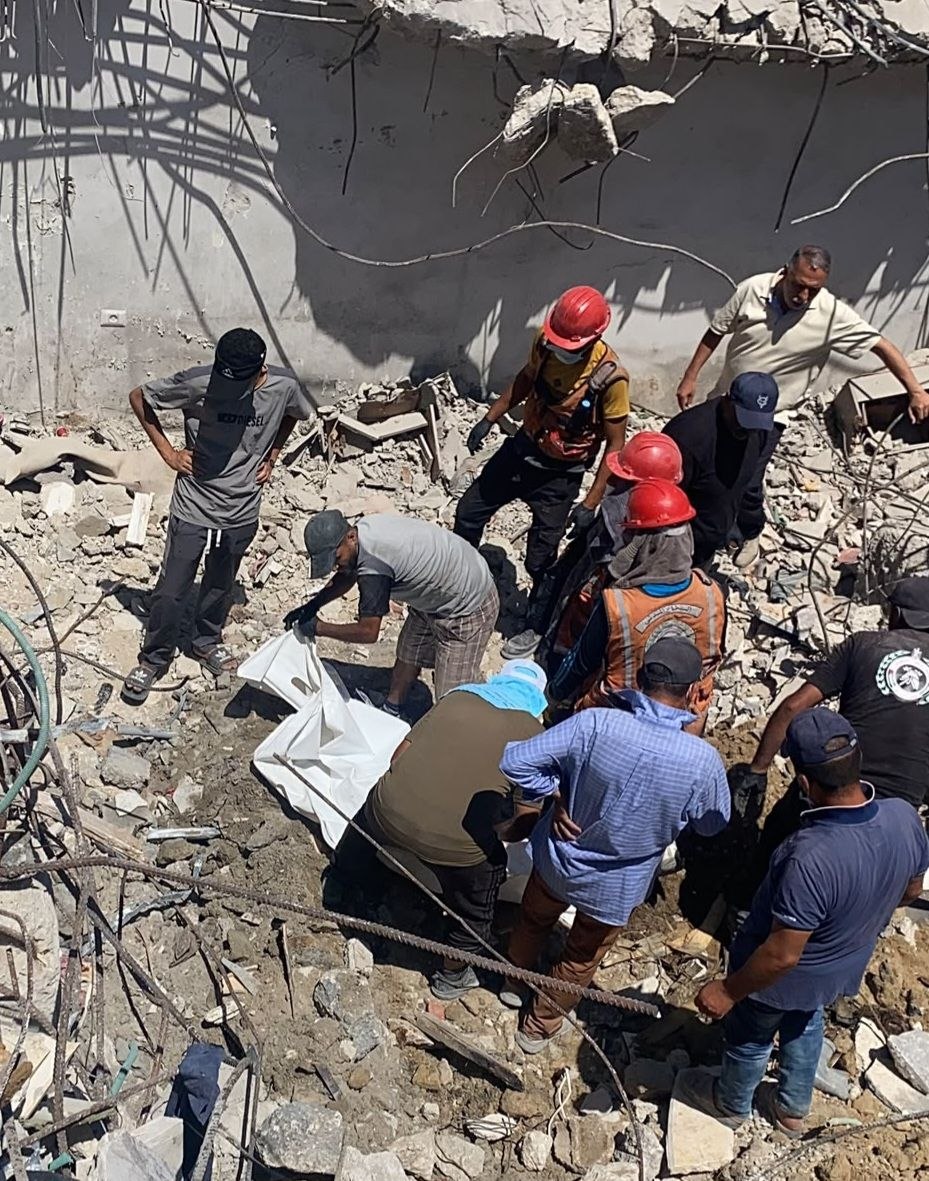
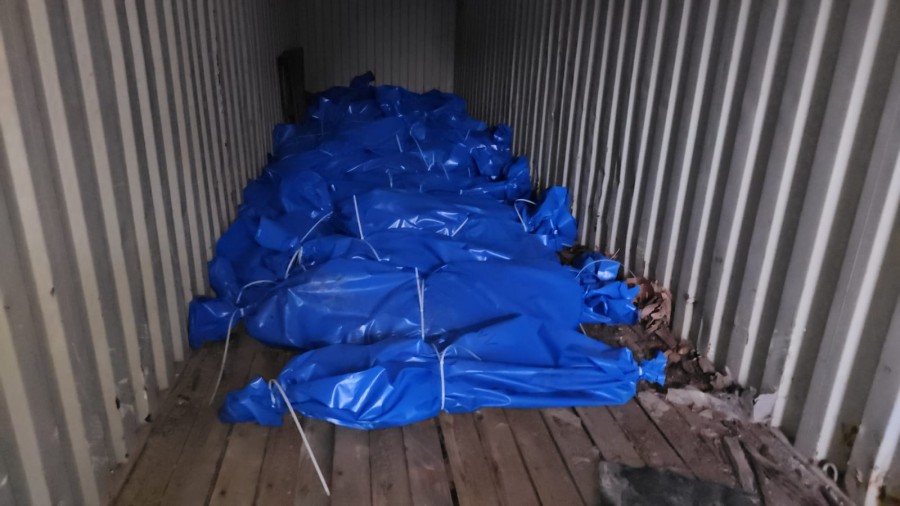
Unwilling to quench its thirst for blood, Israel relaunched its war on the 364-kilometer Gaza Strip by killing over 322 people in the first five hours of early morning Tuesday while everyone was fast asleep.

Up until then it has been a “slight” rest bite reached through a ceasefire on 19 January between Hamas and Israel through US, Qatari and Egyptian mediators bringing an end to the daily killing of Gazans that today stands at 48,500 people.

Everyone is asking if the ceasefire is wrecked and stands in ruin on day 525, the total length of the carnage started on the people of Gaza soon after 7 October 2023, when about 1200 Israelis were killed.

Whatever the politics of the recent war, it has become amply clear the Israel slaughter has not been aimed at Hamas fighters, which it couldn’t eradicate even after 15 months of war on the Islamic organization but resulted in the mass killing of the women and children of Gaza.

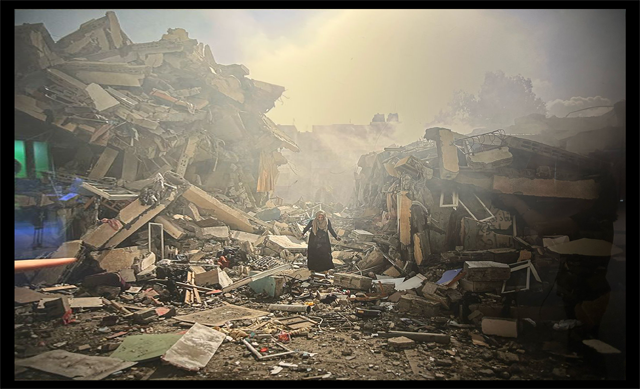
The latest spate of dropping bombs on the people of Gaza, facilitated by the United States which stands as complicit in this genocide, sees no end light, but is seen as just the beginning although Gaza and its infrastructure is already annihilated with its people displaced and living in the wild and under the skies.

The world stands and waits to see, if the genocide will continue from this day onwards, or is it just a pressure tool to get Hamas to release the 59 or so Israeli prisoners it currently holds. If the latter is the case however, Hamas has long shown, it has a long breath and will not release the prisoners that originally were around 250 and now stands at the current number through exchange deals with the fact that the Israeli army has killed around 23 of them in failed rescue operations.

The latest bombings, carried from the air starting from the south of the strip on the southern city of Rafah, Nuseirat, Al Shati and Maghazi camps, and Deir Al Balah in the center of the enclave, including Gaza city and the destroyed northern areas, speaks of dark days are expected ahead.

Hamas are yet to respond militarily. There are couple of issues to consider here. Hamas officials have been talking to the Trump administration officials in the last couple of weeks about different paths.

Will that continue, particularly after this bloody debacle. Prime Minister Benjamin Netanyahu, who long wanted to destroy Hamas, and thus the war to continue, said this time around, the latest military operation in Gaza is being carried out “in consultation” with Trump and his associates.

If this is the case, the latest Israeli deadly spate, may not last long, particularly because Trump is on record of stating that he doesn’t want the war to continue but wants to end it which means he will not continue to supply Israel with weapons indefinitely and there will come a time when he will stop.

But that might be a while before that and he may continue to tolerate the mass bombing of Gaza. However, since he is talking to different parties through his envoy Steve Witkoff, he will likely “manage” what Israel continues to militarily do in the Gaza Strip and be involved in a “stop-go” war process.

The problem with Trump is that also he is looking for different objectives in Gaza. He first wanted to displace its 2.2 million people to neighboring countries like Jordan and Egypt. Now, he appears to be retracting from this position because of Arab and world pressure.  

Will he backdown and order Israel for a quick “fix” and or let the war on Gaza continue by which time Hamas, will once again, start fighting Israel again, both in the Strip and through endlessly targeting its major cities, towns, settlements for the past 15 months.

Despite the fact that Trump said that “all hell will break lose” on Gaza if the war doesn’t stop and Hamas is not brought to heed, the US president is choosing to forget the Houthis, despite mass bombing them in the last couple of days. They promised they will continue to strike Israel if it continues to stand as an obstacle to humanitarian and food delivery to Israel and will not be deterred by US and British bombing of Yemen. And to prove their point, a ballistic missile was fired on the same day, Tuesday, after the Israeli bombing of the Strip.

Hence what Trump wants and what he will get on the ground are two different things. His wish to end the Israel-Hamas war and establish a “new Gaza” will not be achieved through parochial thinking.

The Palestinians are on the ground, they have no wish to go anywhere while Hamas continues to have a formidable fighting capability and have no qualms to going back to war. The fact they are talking to the mediating parties, including the US doesn’t mean they are ready to put their guns down and leave the grounds of Gaza.

Netanyahu must realize that unless he wants the whole Middle East region to be engaged in a perpetual long-term war. The question is Trump and the United States military establishment prepared for that?

The above-analysis is written by Dr Marwan Asmar, chief editor of the crossfirearabia.com website.

Continue reading
White House Complicity: Bloody Days Return to Gaza

The Israeli army said early Tuesday that it has conducted airstrikes in the Gaza Strip, the largest since a ceasefire with the Palestinian group Hamas took effect on Jan. 19.

“Based on directives from the political echelon, IDF and Shin Bet forces are launching a large-scale attack on Hamas terrorist targets throughout the Gaza Strip,” military spokesman Avichay Adraee said on X.

Local media, citing the Palestinian civil emergency service, said at least 200 people have been killed, including women and children.

Israeli Prime Minister Benjamin Netanyahu and Defense Minister Israel Katz have instructed the army to take “strong action” against Hamas in Gaza, the Prime Ministry’s Office said.

“This follows Hamas’s repeated refusal to release our hostages, as well as its rejection of all of the proposals it has received from US Presidential Envoy Steve Witkoff and from the mediators,” it said in a statement.

The army is attacking Hamas targets in the Strip “to achieve the objectives of the war as they have been determined by the political echelon, including the release of all of our hostages, the living and the deceased.”

“Israel will, from now on, act against Hamas with increasing military strength. The operational plan was presented by the IDF over the weekend and approved by the political leadership,” it added.

Hamas said the Israeli government has declared war on Gaza by breaking the ceasefire agreement.

“We demand that the mediators hold Netanyahu and the Zionist occupation fully responsible for violating and overturning the agreement,” it said in a statement.

Israel consulted with US: White House

A White House spokesperson confirmed Monday that Israel consulted with the US on its airstrikes in Gaza.

“As President (Donald) Trump has made it clear: Hamas, the Houthis, Iran, all those who seek to terrorize not just Israel, but also the United States of America, will see a price to pay. All hell will break loose,” Karoline Leavitt told Fox News.

Ahead of a meeting Tuesday of the UN Security Council on Gaza, Israeli ambassador to the UN Danny Danon said the country will show “no mercy” against its enemies.

“Let me be very clear: Israel will not stop until all of our hostages are back home. We will make it very clear to the Security Council that if they want to stop the war in Gaza, they have to ensure that the hostages are coming back to Israel,” Danon said.

The UN did not immediately react to the strikes, but deputy spokesman Farhan Haq said the UN has consistently warned against a return to fighting in Gaza.

Despite the ceasefire, local authorities in Gaza had reported almost daily violations by the Israeli army.

Israeli attacks have killed more than 48,500 Palestinians since October 2023, most of them women and children, and left Gaza in ruins.

The International Criminal Court issued arrest warrants in November last year for Netanyahu and his former Defense Minister Yoav Gallant for war crimes and crimes against humanity in Gaza.

Israel also faces a genocide case at the International Court of Justice for its war on the enclave.

Continue reading
How Do You Deal With a ‘Political Earthquake’?

The Middle East has long been accustomed to dramatic events and repeated surprises. However, it is undeniable that what came before October 7 is fundamentally different from what followed.

This shift is not only due to the ongoing wars that have spread beyond Gaza to other fronts, nor solely because of the consequences these conflicts have triggered across the region. More significantly, it has exposed the harsh realities the region faces, from the collapse of the concept of the state and its implications to the erosion of national identities and the emergence of new ethnic, sectarian, and geographical standards reshaping political maps.

Over the past years, the failure of the nation-state model, coupled with its reduction to authoritarian concepts, has played a pivotal role in deepening the psychological division in many countries, a division that, in many cases, precedes geographical fragmentation.

In the current geopolitical landscape, Gaza is no longer the Gaza we once knew. With the absence of a viable Arab-led solution, the US administration, despite its often-contradictory diplomatic statements, still keeps the depopulation of Gaza on the table as a practical resolution. Meanwhile, the West Bank is experiencing Israeli operations aimed at bringing about a radical transformation, one that all parties may soon have to accept as a new reality.

Syria, too, has entered a state of turmoil that makes it increasingly difficult to revert to its former political and territorial structure. Whether through shifts in internal power dynamics or anticipated geographical and political changes, Syria is on a path of transformation.

These unprecedented changes, which directly impact Jordan, impose urgent requirements for adaptation and strategic engagement with new realities. This new era demands a shift in priorities, making “Jordanian-focused thinking” a fundamental approach to navigating the geopolitical and security challenges unfolding across the region.

This strategic recalibration must take place on three levels. The first involves managing relations with the current U.S. administration, which has been in the White House for only a few weeks yet has already triggered a geopolitical earthquake on the global stage. For Jordan to remain a key regional player, it must employ new tools and diplomatic tactics that emphasize effectiveness and tangible results, especially considering that this administration is highly focused on reassessing the utility of aid provided to its allies.

The second is the regional shift, where several key issues stand out. The evolving relationship with Israel, which is shifting dramatically and deteriorating from bad to worse, requires a reconsidered strategy for future engagement. The relationship with Saudi Arabia, meanwhile, demands greater attention, not only because Saudi Arabia remains the only pillar of stability in the region but also due to its economic and political influence, which could prove crucial for Jordan in the coming phase. In this context, the concept of “political and economic integration” should be the foundation for shaping and strengthening ties between the two countries.

Perhaps the most pressing regional challenge is Jordan’s approach to Syria. Changes are already unfolding in the areas adjacent to Jordan’s northern border, creating a new reality that Jordan must navigate carefully. It is imperative to formulate a strategy that not only secures borders but also leverages new political and economic configurations to serve Jordan’s long-term interests.

The third is the domestic, and most important recalibration, how does Jordan adapt to these external shifts and their internal repercussions? This phase demands a new political discourse and a fresh approach to managing internal affairs. Shielding Jordan from external shocks, narratives of fragmentation, sectarian polarization, and social discord requires a two-pronged strategic response: strengthening the bureaucratic system and reinforcing national identity.

This necessitates a well-crafted national narrative, a reinvigoration of collective national consciousness, and tangible policy actions that signal the beginning of a new phase of resilience and transformation, one that will be the defining test of the coming period.

Dr Amer Al Sabaileh is a columnist in the Jordan Times

Continue reading
The A, B, C to Rebuilding Gaza

By Dr Raad Mahmoud Al-Tal

According to the Gaza reconstruction plan report from the temporary Arab Summit in Cairo, Gaza’s economy shrank by 83 per cent in 2024. Unemployment rose to 80%, and inflation reached 309.4 per cent in October 2024 due to severe supply shortages. On the humanitarian side, 91 per cent of Gaza’s population faces food insecurity, and this number is expected to rise to 1.95 million by April 2025. The healthcare system is collapsing, with 64 per cent of primary health centers out of service, and 25 per cent of the injured require long-term rehabilitation. Education is also in crisis, with 745,000 children out of school because schools were either destroyed or used as shelters. Over a million children need psychological and social support, and there are between 17,000 and 18,000 unaccompanied children, which makes child care even more difficult.

The damage in Gaza is divided into three categories: areas completely destroyed, which need the rubble cleared and infrastructure rebuilt from scratch; semi-destroyed areas, which need repairs to restore basic services; and lightly damaged areas, which require limited work to restore services and ensure ongoing reconstruction. The damage is assessed by comparing the current situation to how things were before the crisis, and the affected assets are classified into three levels: fully destroyed, partially damaged, and lightly damaged.

The reconstruction plan has two phases. The first phase, early recovery, will take 6 months and cost $3 billion. This phase includes clearing rubble, repairing main roads, providing 200,000 temporary housing units, and restoring 60,000 damaged homes. The second phase, which is the main reconstruction phase, will take 5 years and cost $50 billion. It is split into two parts: The first part, lasting 2 years at a cost of $20 billion, involves finishing the rubble removal, building 200,000 homes, repairing 20,000 acres of farmland, and setting up water desalination plants and sewage treatment facilities. The second part, lasting 2.5 years at a cost of $30 billion, involves building 200,000 more homes, developing ports, creating an industrial zone, and building a coastal road.

Housing has been the hardest-hit sector, with 15,000 homes completely destroyed. The plan aims to build 150,000 new homes and provide 100,000 temporary homes, costing $15 billion. About 30 per cent of Gaza’s farmland was also destroyed, requiring the rehabilitation of 10,000 hectares at a cost of $5.6 billion. The water and electricity sectors also need significant investment to keep providing essential services to the people. The total cost of reconstruction is estimated at $53 billion over 10 years. The funds for this will come from international donors, humanitarian organizations, and local investments. Around $4.5 billion will be for development projects, and $18 billion will go toward infrastructure.

For the reconstruction plan to succeed, it is important to get enough financial resources to fix the huge damage in Gaza. This will help restore normal life and improve the economic and social situation, leading to long-term sustainable development. To ensure the plan works, it is crucial to have different sources of funding. These could include the United Nations, international financial organizations, donor countries, investment funds, government agencies, development banks, and civil society groups.

An international trust fund will be set up to manage the funds efficiently, ensuring transparency and proper oversight. The Egyptian government will also hold a high-level conference in Cairo, in partnership with the Palestinian Authority and the United Nations, to gather the necessary support for the reconstruction plan. This conference will bring together donor countries, international and regional financial institutions, the Palestinian and international private sectors, and civil society organizations. It will be a key event to secure financial resources and suggest investment projects that can be implemented with the help of supporting organizations.

The writer is head of the Economics Department – University of Jordan – [email protected]

Continue reading