Israel: A Cultural Destroyer in Gaza

It is unthinkable for “culture” to be destroyed by wars, yet in Gaza it is. Culture, its monuments and symbols have long become  military targets crushed in a sadistic and criminal context where the aggressor targets the human and civilizational components of the subjugated party. This is what the Israeli occupation wants from its war on the Gaza Strip, brutal images committed for more than 14 months.

The Rashad Shawa Cultural Center (RSCC) is evidence of the Israeli “scorched-earth” policy on the Gaza Strip. The center was transformed from a cultural symbol receiving hundreds of people daily as part of its intellectual, cultural, and artistic activities, exhibitions, and communicating with the world in seminars addressing all local and global issues, into a destroyed, desolate place now for displaced people who seek shelter from the Israeli Nazi Holocaust the occupation is waging across the Strip.

Following 7 October, 2023, the Israeli aggression began targeting all cities and regions of the Strip, especially the northern governorates, and spreading death everywhere with the residents of Gaza finding themselves forced to move from one place to another, seeking nothing more than escape from the Israeli cauldrons of death.

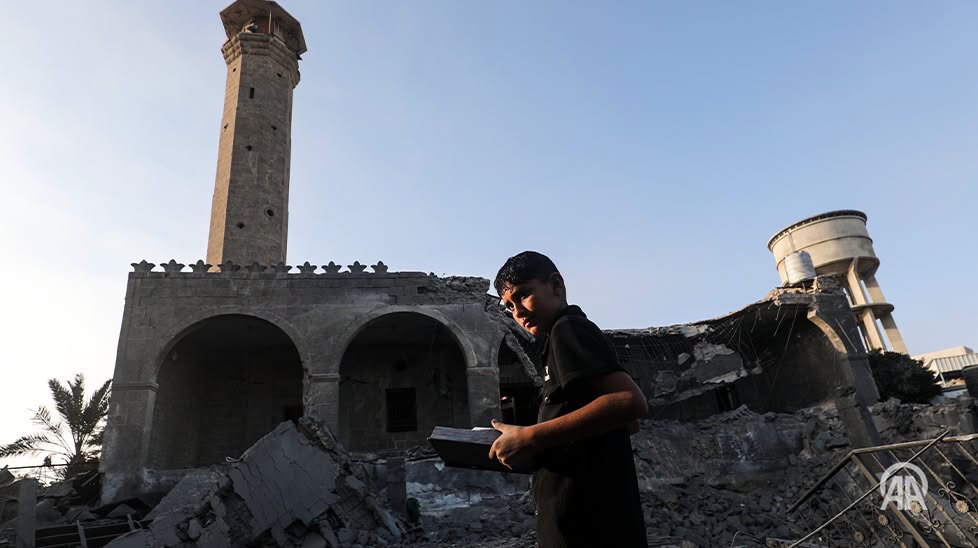
Weeks passed after the start of that aggression while  temporary truces only lasted for a few days, allowing the people of the Al-Rimal neighborhood in Gaza City to return to their wrecked homes, only to be shocked by the the gutted Center that had become a thing of the past, after the Israeli army and occupation bombed it.

The residents had long been accustomed to seeing this great cultural edifice. Inside were chants, competitions, and humming of readers in the library that held more than 100,000 books in the sciences, knowledge, and arts, and a source of pride for the residents of Gaza becoming a destination for visitors from all over the world; a beaconed intellectual window that expresses Palestinian civilization with its diverse spectrums and openness to the world, in addition to what it represented of dear memories, now turned upside down by the brutality of the occupation into a pile of dirt.

The Gaza Municipality condemned the Israeli destruction of the Center, as part of its barbaric aggression on the Gaza Strip, killing thousands of civilians, destroying the city’s main landmarks, and erasing the cultural memory of the Palestinian people according to the Palestine Information Center.

The municipality called on UNESCO to intervene and condemn the occupation’s crimes against cultural centers, libraries, and historical and archaeological landmarks of the city.

The RSCC was the first of its kind to be built in Palestine, and named after Rashad Shawa, who served as the  mayor of Gaza between 1972 and 1975, and built this center to become a Palestinian cultural beacon.

The architectural and engineering plans for establishing and designing the center began in 1978 and it first opened its doors in 1985 and its printing press began the following year  with the center slowly expanding its activities reaching a peak in the 1990s and especially after 1994 when the Palestinian Authority took its seat there.

The RSCC center had a distinctive design that give it a modernistic outlook spread over two floors with a spiral stairway and an impressive triangular roof. In 1992, it was nominated for the Aga Khan Award for Creativity in Architecture. Before its destruction, those in charge took care of it and restored it periodically to preserve its distinctive architectural appearance.

The building witnessed important events in the history of the Palestinian cause, including: Hosting sessions of the National and Legislative Councils, and visits by heads of state, including former US President Bill Clinton in 1998 met by the late Palestinian President Yasser Arafat, and many world figures.

Cultural isolation

Before its destruction, the center worked to end the cultural and civilizational isolation the Palestinians suffered from as a result of the Israeli occupation, and its attempt to erase the Palestinian identity and steal its heritage.

Even before its destruction, the center faced global isolation because of the continued Israeli siege that was imposed on Gaza since 2007 and the worsening economic situation that was created and which was reflected in the social and cultural aspects of life in the Strip.

As with all aspects of life in Gaza, nothing has remained the same, the buildings no longer stand, the patterned landmarks destroyed, families scattered while institutions reduced to brick and mortar if not plotted out.

Culture usually plays its role in awareness and enlightenment but here and over the past months, it has become a witness to the tragedies of massacres, separation of family and friends, and the endless journeys of people forced to move with the center reduced to housing refugees who place plastic bags on its walls to protect themselves, and light fires to try and keep warm from the harsh winter.

In its ongoing aggression on the Gaza Strip, the Israeli occupation targeted the cultural and scientific centers of Gaza, its universities, and all outlets expressing the identity, civilization and heritage of the Palestinian people to obliterate their cultural landmarks so that the barbarism of occupation is entrenched in their public memory and the identity of the right of the owners to the land and holy places erased.

Israel Will Not Succeed

The RSCC was not the only architectural and cultural victim of the Israeli aggression as the destruction machine flattened universities and other cultural centers, including Al-Saqa Palace in Gaza City’s Shuja’iyya built at the end of the Ottoman period during the reign of Sultan Muhammad IV.

In November 2023, Abaher Al-Saqa, professor in the Department of Social and Behavioral Sciences at Birzeit University, wrote: “Beit Al-Saqa, or as people call it, Qasr Al-Saqa, was built by my late grandfather’s cousin, Ahmad Al-Saqa, one of the city’s major merchants. Its walls are studded with sandstone and the ceilings are Roman marble. It is 350 years old and was designated by the family to be turned into a cultural center after it was restored by the Islamic University. It was bombed as part of the brutal colonial bombing. The colonial authorities are exterminating the city’s urban and architectural history, in parallel with the genocide.”

Riwaq, the Palestinian Center for Popular Architecture, based in the West Bank city of Al-Bireh (which participated in the restoration of Beit Al-Saqa with the Iwan Center of the Islamic University of Gaza), noted in a recent post the house was completely bombed on 9 November, according to Aser Al-Saqa, a member of the family that owns the historic building in Shuja’iyya.

Continue reading
Dysfunctional Netanyahu

If all the criticism directed at Israel’s current prime minister, Benjamin Netanyahu, fails to unseat him, then there is something deeply troubling about Israeli democracy—it is fundamentally dysfunctional.

Netanyahu has been the most influential architect of Israel’s policies and politics since 1996, when he first became prime minister.

He has often been quoted as saying, “Israel has no negotiating partner on the Palestinian side.”

Yet, we should ask: Where is the negotiating partner on the Israeli side?

Since taking office, Netanyahu has waged wars against nearly all of Israel’s neighbours, particularly Lebanon, Gaza, the occupied West Bank, and Syria and the occasional bouts with Iraq and Iran.

If we tally all the conflicts under his leadership, they exceed ten, many of them prolonged and devastating.

The cumulative cost, both in human lives and property, is staggering—over $500 billion lost and at least 100,000 people killed.

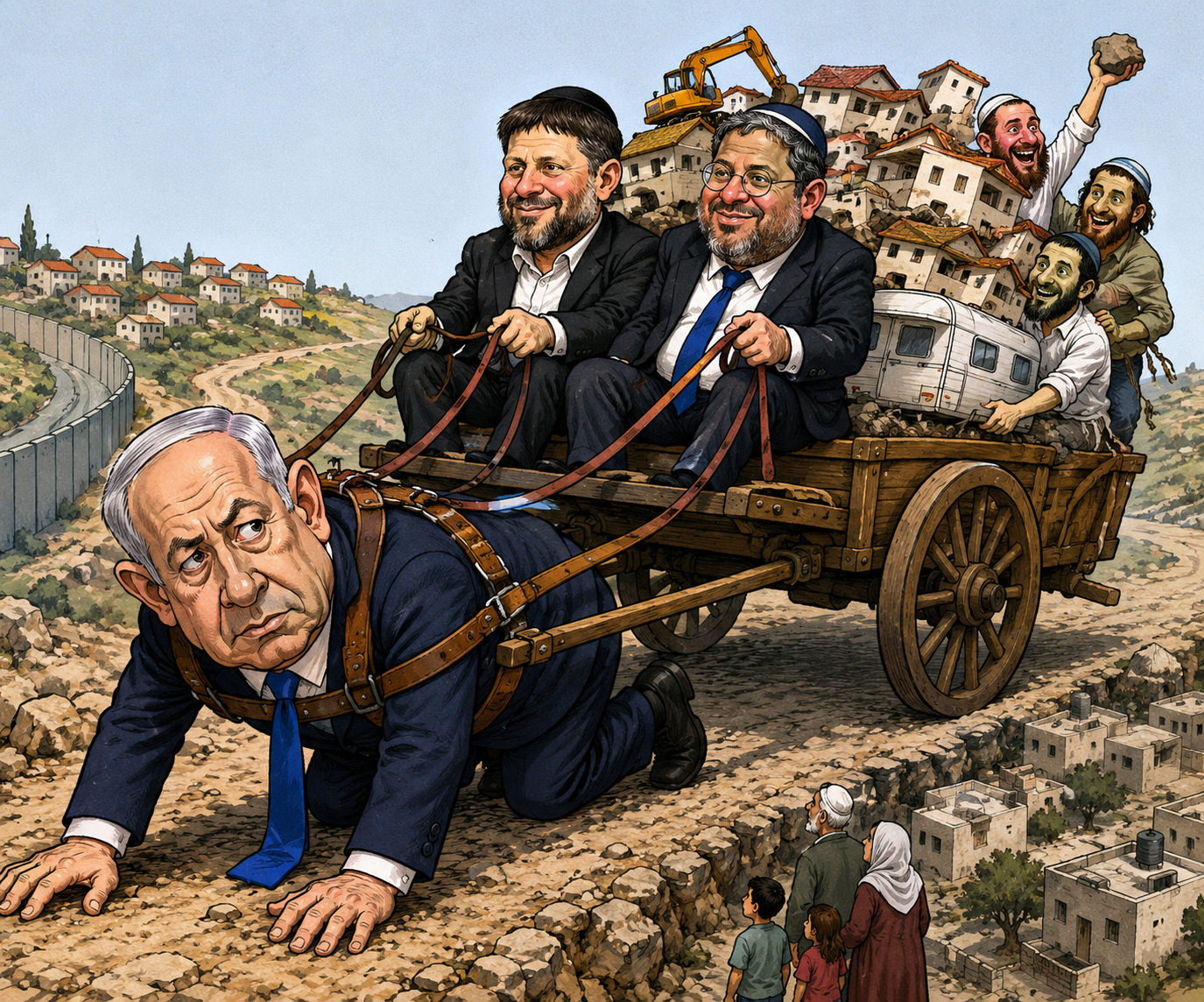
Netanyahu has systematically violated agreements, expropriated land for illegal settlements, and sanctioned the destruction and pillaging of homes, hospitals, schools and infrastructure.

His policies have included uprooting trees, destroying livelihoods, and killing tens of thousands of civilians, including children and women.

He stands as an indicted war criminal and is currently being tried in Israeli courts on charges of bribery, fraud, and abuse of power.

Many respected Israeli voices—authors, journalists, political analysts, human rights activists, lawyers, peace advocates, as well as his political allies and adversaries—express anger and even sometimes contempt for him, criticising his deceit and betrayal.

Every time Netanyahu insisted on engaging in dialogue with the late King Hussein or King Abdullah II, shortly after his army would commit grave atrocities against Palestinian civilians in the occupied territories.

Thus creating the false impression of a sequitur relationship between the meeting and the atrocities.

He even welcomed the Israeli guard who killed two Jordanians at the Israeli embassy in Amman with open arms, celebrating him instead of subjecting him to trial, despite Jordan’s accepting the murderer’s return to Israel, out of respect for the international diplomatic protocols.

Why does Netanyahu continue to act with such impunity? His actions appear to be deeply influenced by the ideology of his father, Benzion Netanyahu.

Born in Warsaw, Poland, Benzion served as the secretary and close aide to Ze’ev Jabotinsky, who instilled in him—and later his son Benjamin—the principles of revisionist Zionism.

It is exceedingly difficult to make peace with the proponents of the maximalist and revisionist branch of Zionism, which was established by the extremist Abba Ahimeir.

Although Benzion was a historian specializing in the history of Jews In Spain—a history rich with examples of tolerance and coexistence between Muslims and Jews under Islamic rule—he chose to become a disciple and propagator of revisionist Zionism. He became a staunch spokesperson for this ideology in the United States.

To better understand the radicalisation of Netanyahu and his father, one need look no further than the statements made by their mentor, Jabotinsky.

The following quotes are sourced from betarus.org, a well-known Zionist website:

1.“We, the Zionists, all applaud, day and night, the iron wall.”

This is the same iron wall that neo-historian Avi Shlaim described as being created to hammer Arab heads against, until they agree to Zionist claims to their lands.

2.“We hold that Zionism is moral and just, and since it is moral and just, [that means] justice must be done, regardless of whether Joseph, Simon, Ivan, or Ahmet (Ahmad) agree with it or not.”

3.Finally, Jabotinsky declared, “We were not created in order to teach morals and manners to our enemies. We want to hit back at anyone who harms us—only someone who can hate his enemies can be a faithful friend to those who love him.”

With sentiments like these, what chances does a serious, just, and lasting peace—or perhaps any peace at all—have?

Dr Jawad Al Anani, a former Jordanian government minister, contributed this piece to The Jordan Times.

Continue reading
Israel Starves Gaza Kids

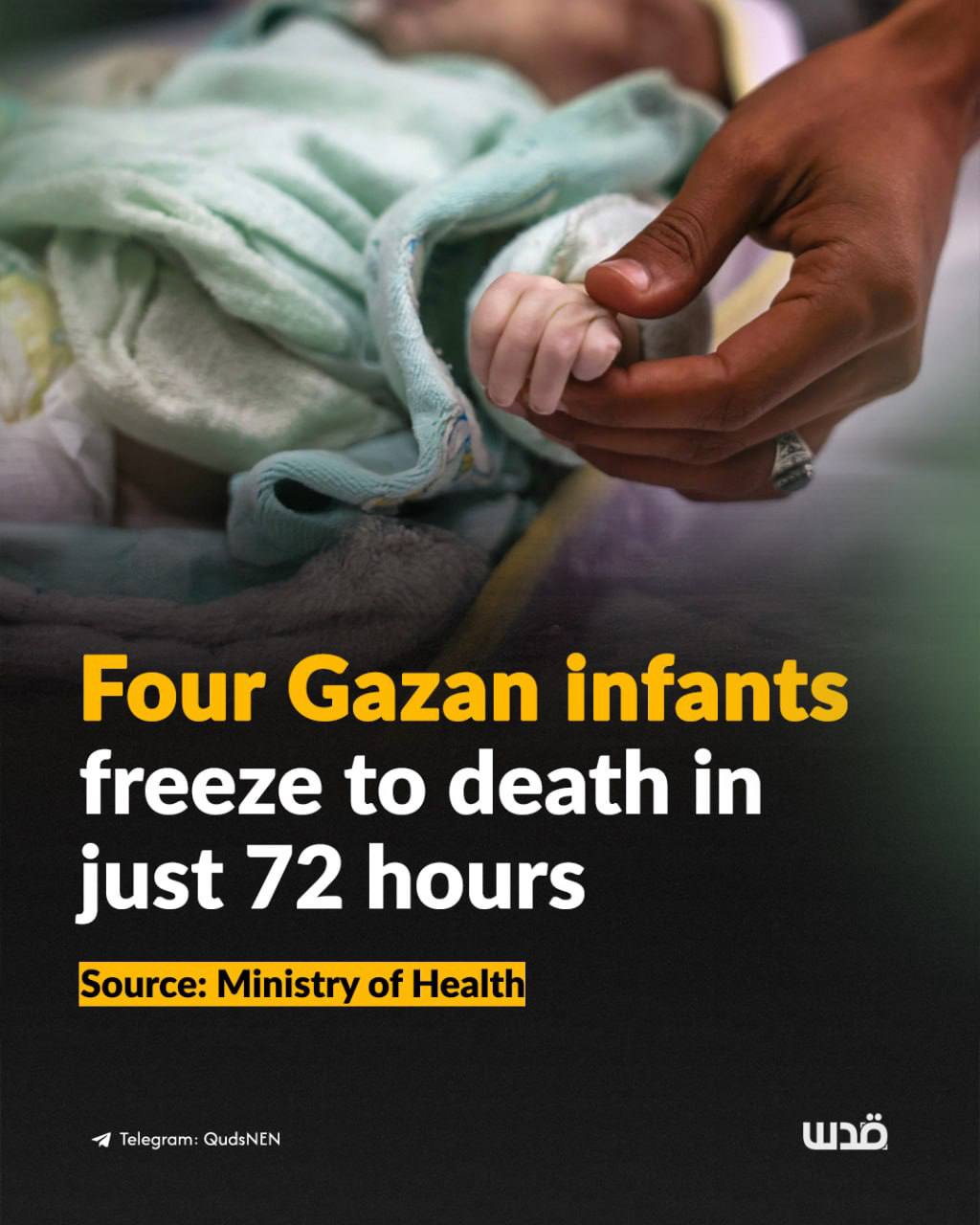
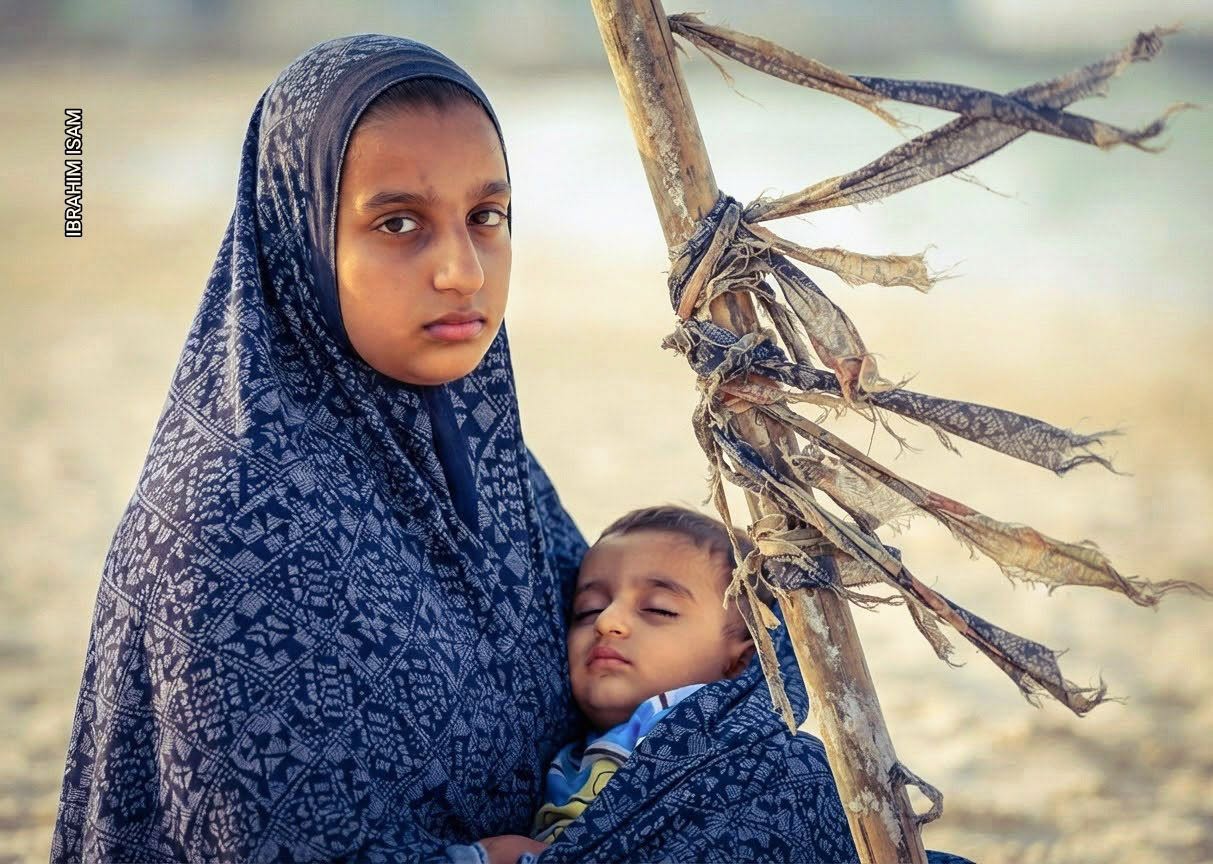
Spokesperson of UNICEF stated that Palestinian children in the Gaza Strip are most affected by the ongoing aggression. Children barely find food to eat amid the ongoing famine that has increased in intensity over the past 12 months.

Continue reading
Netanyahu Knows I Want The Gaza War to End, Trump Says

US President-elect Donald Trump told the Time magazine, Thursday, that Israeli Prime Minister Benjamin Netanyahu knows he wants the Gaza genocide war to end.

“The Middle East is going to get solved. I think it’s more complicated than the Russia-Ukraine, but I think it’s easier to solve,” Trump said, according to a transcript of the interview.

The interview appears in the upcoming issue of Time, which named Trump as “Person of the Year” for the second time, the first being after he first won the White House in 2016.

Speaking about the Israeli assault in Gaza, Trump said Netanyahu “knows I want it to end.”
According to Time, Trump informed Netanyahu of his stance during phone calls the two held during the US election campaign according to the Quds News Network.

Asked if Netanyahu has given him assurances about ending the Gaza war, Trump declined to respond directly, saying, “I don’t want people from either side killed… whether it’s the Palestinians and the Israelis and all of the different entities that we have in the Middle East.”

When Time asked if he trusted Netanyahu going into the second term, Trump took a second before answering: “I don’t trust anybody.”

Asked if he still supports his 2020 “deal of the century,” Trump claimed: “I support a plan of peace, and it can take different forms.”

“I support whatever solution we can do to get peace. There are other ideas other than two-state, but I support whatever is necessary to get not just peace, [but] a lasting peace. It can’t go on where every five years you end up in tragedy. There are other alternatives,” he said.

In the Time interview, Trump also would not come out against a possible Israeli annexation of the West Bank.

Asked whether he still stands behind his “deal of the century,” or if he would let Israel proceed with the annexation, Trump responded: “What I want is a deal where there’s going to be peace and where the killing stops.”

Asked again if he would prevent Netanyahu from annexing the West Bank, Trump avoided responding directly. Instead, he acknowledged having stopped Netanyahu from taking the step.

“There are numerous ways you can do it. You can do it two-state, but there are numerous ways it can be done,” Trump reiterated. “I’d like to see everybody be happy. Everybody goes about their lives, and people stop from dying. That includes on many different fronts.”

On January 28, 2020, Trump formally announced his long-awaited Middle East Peace Plan to resolve the seven-decade-long Israel’s occupation of Palestine. He hailed it as “the deal of the century”. It controversially accepts Israeli calls to annex the Jordan Valley and Israeli settlements in the occupied West Bank and recognizes all parts of occupied East Jerusalem as part of Israel’s capital. These include large parts of the city where more than 300,000 Palestinians live, the Old City and holy sites, including the Al-Aqsa Mosque.

The plan says a Palestinian state would be established only when Palestinian leadership wholly accepts Israel’s new borders, disarms completely, removes Hamas from power in Gaza and agrees to Israeli security oversight on all of its territories until a point in the future deemed ripe for withdrawal.

Continue reading