Jordan, Trump and The High Stakes of Politics

The recent remarks by US President Donald Trump suggesting the displacement of Gaza’s residents to Egypt and Jordan as a “practical solution” for Gaza’s reconstruction carries significant risks. This proposal not only overlooks the fundamental complexities of the issue, from the acceptance of displacement by Gaza’s residents to the logistical feasibility of relocating populations and securing the consent of all involved parties, but also reveals that forced displacement appears to be Trump’s primary solution, one that the region may have to contend with for years to come.

It is essential to remember that we are observing Trump in the early phases of his political return. He is eager to present himself as a strong and decisive leader capable of imposing solutions, even if they appear coercive. However, as with many theoretical ideas that seem simple at first glance, the real challenge lies in their practical implementation.

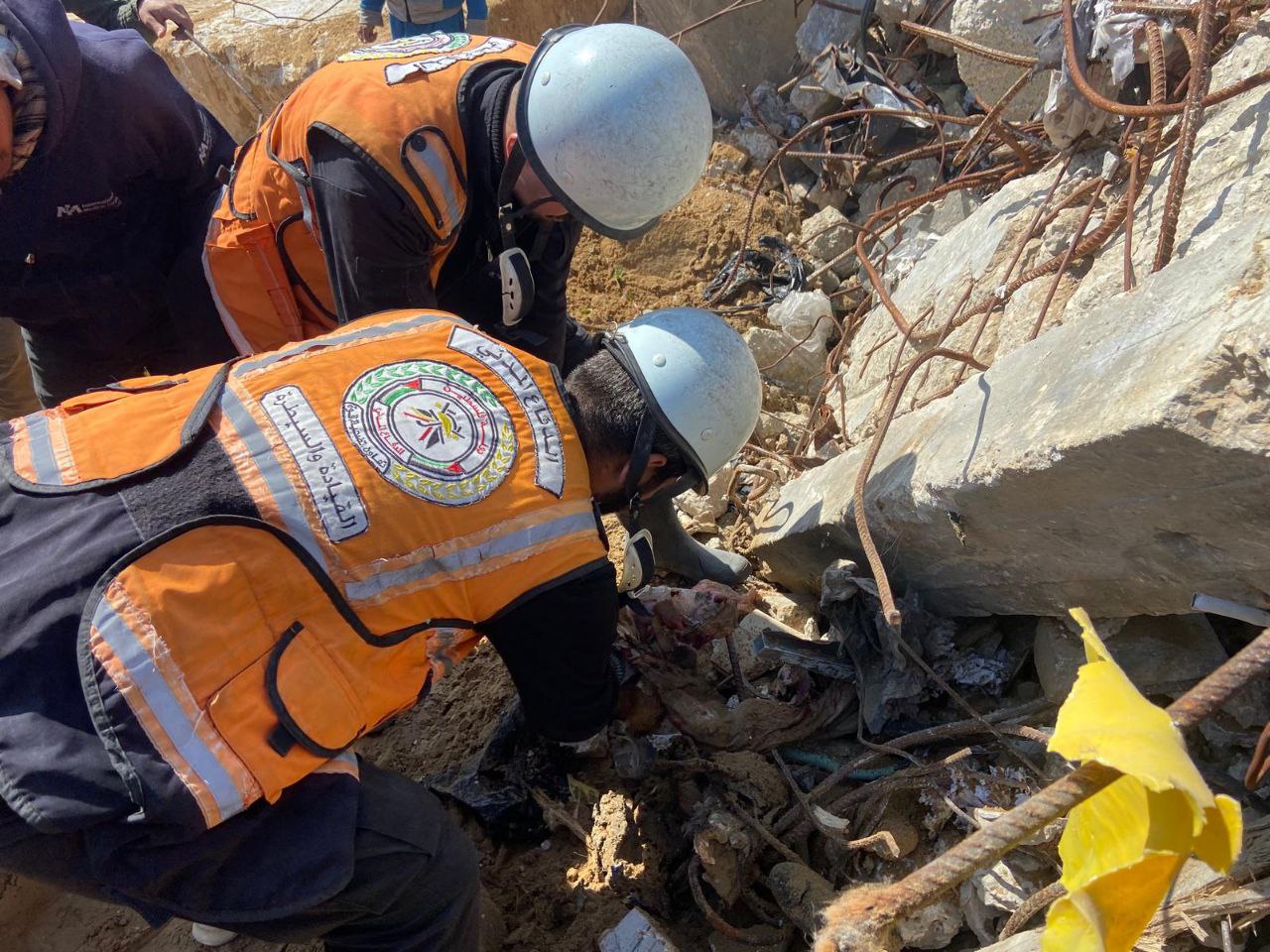
We are living through an unprecedented era. The events following October 7 have fundamentally altered the region. Gaza is witnessing destruction on a scale it has never seen before. Amid this devastation, Israel appears to be betting on worsening the humanitarian crisis, hoping to make life in Gaza unbearable for its residents. This coincides with difficulties in finding realistic reconstruction solutions or even implementing humanitarian relief efforts that adequately respond to the scale of the disaster. 

Israel’s strategic vision is focused on achieving demographic displacement in Gaza and redrawing its geographic landscape. These goals might seem attainable if the crisis continues, and the humanitarian catastrophe deepens. What is alarming, however, is that proposing Jordan as an option in this context may implicitly lay the groundwork for considering it a destination for displaced Palestinians from the West Bank as well, should this theory of forced displacement extend beyond Gaza. 

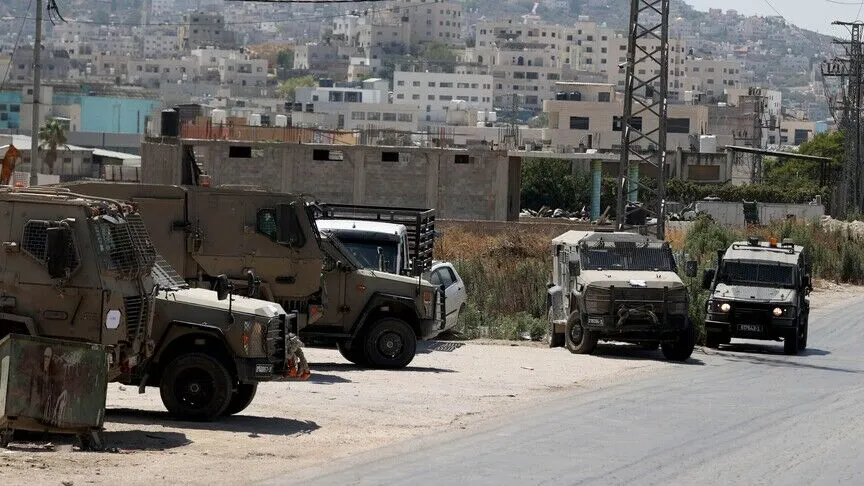
Indeed, Israel is actively pursuing this scenario by seeking to reshape the geography of the West Bank through dismantling densely populated areas, such as the refugee camps in Jenin, Nablus and Tulkarm. This objective aligns with the vision of the Trump administration, which supports Israel’s ambitions under the framework of “Judea and Samaria.” Neither Egypt nor Jordan has had sufficient opportunity to directly engage with the US administration to present alternatives or explain the security, economic, and political risks associated with these proposals. 

Jordan’s strategic response should focus on warning against these scenarios while presenting viable alternatives. Highlighting the potential shocks these steps could inflict on a key ally like the United States is crucial. Additionally, Jordan has several cards to play, particularly in the economic domain. These include regional energy projects, development initiatives, and the reconstruction of Syria. Such endeavours could offer the US tangible benefits across multiple fronts, forming the foundation for alternative approaches. 

In short, navigating Trump’s looming flood of proposals requires a nuanced understanding of American perspectives and avoiding direct confrontation whenever possible. At the same time, Jordan must strengthen its position with robust Arab support. Elevating strategic relations with Saudi Arabia is particularly crucial, given its dominant role in the current and upcoming phases and its centrality to Trump’s economic and political ambitions, including regional peace efforts. 

Nevertheless, Israeli Prime Minister Netanyahu’s visit to Washington may signal a new escalation in the region. The Gaza conflict remains unresolved, and tensions in the West Bank and Lebanon persist. If the conflict extends further to Iran, a broader escalation could stretch from Iraq to Iran, potentially resulting in the imposition of forced displacement as a grim humanitarian reality, especially if violence escalates once again in Gaza and intensifies in the West Bank.

Dr Amer Al Sabaileh is a professor and a columnist at the Jordan Times

Continue reading
A Gaza War Reader

By Dr. Tariq Sami Khoury

Despite the Gaza truce announcement, the question everyone is asking: Did this war end in victory or defeat?

Did the Zionist entity achieve its strategic goals, or did the Palestinian resistance factions impose a new equation on the ground? The mass destruction and great human losses open the way for a deeper analysis of the situation from multiple angles.

Zionist entity…Goals successes or victory illusions?

Israel launched its aggression on Gaza with unprecedented brutality, resulting in the near-total destruction of the Strip’s infrastructure, and the deaths of more than 250,000 people between those killed and wounded with the displacement of hundreds of thousands of residents.

Also the Israeli aggression extended to southern Lebanon and Syria, whilst targeting Yemen and Iran in clear attempts to expand the scope of the confrontation.

But did the Zionist entity achieve its goals?

1) Eliminating the resistance: Despite all attempts at genocide and continuous bombing, the Israeli army was unable to end the resistance or dismantle its infrastructure. The resistance proved its ability to continue to confront, and to carry out qualitative military operations till the last minute.

2) Recovering Its prisoners: Israel did not succeed to recover all its prisoners. In the end it was forced to enter into negotiations with the resistance under their own terms, which showed Israel was unable to impose its will by military force alone.

3) No deterrence: Instead of imposing a new equation to deter the resistance, Israel faced continuous missile strikes that reached deep into its territories and imposed a new and unprecedented reality on the Israeli internal front and unbearable political and security pressure on the Zionist leadership.

Legendary  Palestinian resistance…

Despite the Israel ferocity and the intense destruction, the Palestinian resistance emerged strong and cohesive. The battle it fought was not only for defense, but to establish a new equation in the conflict, as it was able to:

1) Survive despite the bombardment: Israel was unable to break the resistance will or push its fighters to surrender and remained able to respond and maneuver till the last moment, which shows the failure of the Zionist plan to crush it.

2) Imposing negotiating equations: The resistance was able to impose itself as a key party in any future solution, and succeeded in confirming that the prisoners are not just a pressure card, but a negotiating element that changes the equation.

3) Maintaining morale: Despite Gaza’s humanitarian catastrophe, the Palestinian people came out to celebrate the truce, in scenes that reflect their steadfastness and ability to overcome hardships. That is a psychological defeat for the Zionist entity.

Regional and international dimension… Exhaustion or victory?

Israel expanded the scope of its aggression to Lebanon, Syria, Yemen and even Iran to attempt to weaken any future threats. But this did not lead to decisive results. Rather it opened up several fronts without achieving any strategic gains.

1) Northern front (Lebanon and Syria): Despite its continuous bombing, Israel was not able to stop the force of the axis of resistance, but faced more threats leading to the exhaustion of its forces.

2) Yemeni front: The air strikes on the country failed to stop Yemen from participating in the conflict equation by targeting the ships in the Red Sea going to the Israeli Port of Eilat, and which added a new strategic dimension.

3) Iranian Front: The Zionist strikes did not deter Iran or stop its support for the axis of resistance, but strengthened its position whilst prompting it to escalate its support for the Palestinian resistance.

Truce.. Rest bite and an opportunity?

With the ceasefire announcement, it can be said the resistance emerged victorious through its ability to withstand and maintain its position to influence the future. In contrast, while the Zionist entity may have achieved some of its field goals, it failed to draw a decisive victory and end of the resistance.

Conclusion.. Victory and defeat

The battle was not equal in terms of military strength, but victory is not only measured by the ability to destroy; it is by steadfastness and ability to continue. Israel did not achieve a decisive victory, but fought a long war of attrition, while the Palestinian resistance emerged more solid and able to impose a new reality in the regional equation.

In the final analysis, the fact remains that liberating the land and restoring rights can only be achieved through continuous resistance, and that every Zionist attempt to eliminate the Palestinian people will be met with a will that does not know surrender. Thus, Palestine remains the compass of the free.

The author is a Jordanian writer and contributed this piece in Arabic for the JO24 website.

Continue reading
Syria: 10 Days That Shook The World

Dr Khairi Janbek

Without much ado, the western media is currently preoccupied with this question: Are the Syrian rebels Jihadis? This is while the Arab media appears to be in a state of euphoria about the Syrian rebels seen as liberators. The issue however is about two perspectives, the first being cautious about the next phase for the country, and this is for understandable reasons, while the second reflects optimism for the next stage and also for understandable reasons.

Now, the fear of dividing Syria on ethnic and sectarian grounds has its blueprint in the colonial history of Syria and certainly not a product of today and/or creative chaos utterances.

Looking back

In fact, on 1 July, 1922, the French colonial authorities divided Syria into federal statelets: statelet of Damascus, statelet of Aleppo, statelet of the Alawites, and the statelet of the Druze. Of course, the idea was that the country would be easier to rule and a regional and a sectarian balance would guarantee political stability. Of course, the Kurds were outside this formula as they were struggling to create an independent state of their own.

But what about Syria now, to paraphrase John Reed, after the 10 days that shook the world. Indeed, the two regional police stations in the region, Turkey and Israel seems to be gaining major influence in the current affairs, while the third police station, Iran, has lost out in this formula.

Rivalry

For all intents and purposes, no one is naive enough to think that the march towards Damascus could have occurred without Turkish support, and the Israeli foreign minister has confirmed that talks were held between his government and the Druze as well as the Kurds of Syria, whom he described as having good relations with them.

But what about the Russians? One would venture to say that they are like to stay in Syria as most probably, paying guests of the new Syrian government, renting their military installations from them.

Undoubtedly, no matter how much we can be optimistic about the future of all-inclusive democratic Syria, we will always reluctantly fall back on our cognitive dissonance regarding the case of Iraq, and make the mistake of comparison with the post-Saddam era of terrorism, sectarianism an ethnic strife.

This is simply because, we forget that in Iraq there was superpower which brought down the regime and destroyed all the functioning institutions of the country favoring when religious Islamic sect over another, and supporting one ethnicity against others. While in Syria, its the Syrians themselves brought down the Ba’ath regime.

On the face of it, the rebels don’t seem to want to be the new masters of Syria and they are working very hard to protect and preserve the functioning institutions of the country, and claim their adherence to pluralism and for an all inclusive new regime.

But two important questions remain outstanding, and only time will tell how these will unfold: To what extent will there be Turkish and Israeli influence on the emerging regime, and more importantly, what would be the share of those two police stations of the country?

In other words, how will Turkey perceive the future of the Kurds in Syria, and where does Israel see its border posts with the “new” Syria?

In all likelihood, the rebels will keep their word of wanting a stable pluralist Syria, but let us not forget also, that a future spark of ethnic, regional or sectarian conflict, will very likely turn all into extremists in the country.

Dr Khairi Janbek is Jordanian commentator based in Paris.

Continue reading
Trump’s Mideast Utterings ‘Hot Air’

By Abdel Bari Atwan

After the private dinner hosted by Donald Trump “in honor” of Mrs. Sara Netanyahu, the US President-elect immediately threatened to set the Middle East on fire if the Israeli prisoners in the Gaza Strip tunnels, guarded by the Qassam Brigades and the Al-Quds Brigades, were not released before his return to the White House on 20 January 2025.

Trump went further when he threatened the Palestinian resistance factions with paying a heavy price if the hostages were not released, and directed his threats specifically at the leaders of the Hamas and Islamic Jihad movements.

In his first term as US President, he made many similar threats, such as destroying North Korea, subjugating China, forcing Mexico to pay the bill for the border wall to keep out immigrants, and turning Iran into another Hiroshima if it responded to the assassination of the martyrs, Qassem Soleimani and Abu Mahdi al-Muhandis.

Trump – an “unruly” professional liar – did not dare to carry out any of these threats, and perhaps the only threat he carried out was withdrawing from the nuclear agreement with Iran in 2017, which backfired and came as a major gift to Iran it never dreamed of, which since developed, theoretically and practically, into an unofficially declared nuclear state.

We would like to tell Trump his threats will not move a hair on the head of the smallest hungry or injured Palestinian infant in the steadfast and heroic Gaza Strip.

If his partner [Netanyahu] in the extermination war and ethnic cleansing and who used all kinds of mass destruction weapons to bomb Gaza – executed more than 45,000 martyrs, three-quarters of whom, children and women, and destroyed 95 percent of their homes – did not succeed in releasing these Israeli prisoners, despite advanced US intelligence, what does Trump have that is stronger and more effective than that?  Hitting the Gaza Strip with a nuclear bomb, as his criminal friend Senator Lindsey Graham suggests?!

The heroic Al-Qassam Brigades and Al-Quds Brigades have not submitted to all this bloody Israeli pressure and did not release the prisoners throughout the past 14 months. All the pressure and rounds of negotiations sponsored by America failed, unfortunately with Arab collusion; the USA wanted to trap Hamas and Jihad which firmly stuck to their conditions, and did not give up a single inch.

So what more can the reckless Trump do?

We need to remind Trump and draw his attention to a set of points he must have forgotten about in the midst of his euphoria on his victory over his naive and foolish opponent Kamala Harris:

First, the resistance in Gaza is still strong, ongoing, and inflicting huge and humiliating losses on the Israeli enemy and its forces, and from zero-distance, which reflects the heroism and courage of its men.  Not a single mujahid surrendered, all fought until martyrdom.

Second, there is not a single American aircraft carrier now in the Middle East and its seas, whether it is red, white or Arab, due to the blessed Yemeni missiles. It is enough to point out the attack with naval ballistic missiles that hit the carrier Abraham Lincoln a few days ago, which escaped with heavy casualties and damaged three destroyers and other ships. The day before yesterday, a Yemeni hypersonic missile struck a military base in the heart of occupied Jaffa.

Third, the brave and courageous Trump did not dare respond to the Iranian missile that shot down his largest drone in the Gulf, the “RQ-4 Global Hawk” in 2019 (costing $300 million) after it deviated from its course several meters inside Iranian territory.

Fourth, great America withdrew from Afghanistan, defeated and humiliated, a few months after Biden took power from you. We all witnessed, and the whole world at that, the great escape of American forces in a way that reflects the height of humiliation.

Trump no longer frightens anyone, and in his new version he did not dare utter a single word of criticism at Russian President Vladimir Putin, who defeated his country on the plains and coasts of Ukraine, and cut off and annexed more than 20 percent of its “territory”.

Trump did not dare utter the name of China, which was his number one enemy in his first term, and let us not forget in this haste to touch on North Korea and its leader Kim Jong-un, who humiliated and degraded him, and brought him to Hanoi and Singapore in two summit meetings, from which he returned to Washington with his head bowed.

Perhaps only some Arabs who were forced to accept the humiliating normalization and his “Deal of the Century” during his first term will be afraid of Trump and his threats. But times have changed, and there is now a major superpower called the “Axis of Resistance” with a mighty head and long, deadly arms.

Above all, there is the new, powerful BRICS organization, which will not end Trump’s second term in the White House (four years) until the US dollar exhales most of its last breath. The days lie ahead, Mr. Trump!

This is a translated piece from Arabic by Mr Abdel Bari Atwan, chief editor of Al Raialyoum website and reprinted on www.crossfirearabia.com.

Continue reading
Trump Recycled!

By Saleem Ayoub Quna


CROSSFIREARABIA – In his younger years (in the late 70s and early 80s of last century), Trump, the rising and flamboyant businessman, when asked by reporters about his presidential aspirations, repeatedly said that he did not want to become a president!


Time has just proved that he was lying even at that early stage! But it was a lie that took a nap that lasted nearly four decades! The nap finally came to an end in 2016. Trump was the first person who could not
believe, his own eyes and ears, that he won the race to become the 45th President of the US!


Prior to that surprising outcome, the vast majority of polls, indications and analyses were in favor of his rival, the veteran Democratic nominee, Hillary Clinton.


Another interesting coincidence in Trump’s path to the White House, then and now was the fact that his two rivals in the two races were women! This last race in November, however, was unexpectedly different in that he won by a large and significant margin, one which the Americans label as a “landslide victory”!


Even during the shorter nap or forced absentia from real politics, when “sleepy” Joe Biden occupied the White House for four years, Trump was not never absent from the public eye and the thirsty and nagging American media. He frequently appeared in the media sitting in courtrooms, in different locations (States), frustrated yet polite, listening to more than 30 allegations, leveled against him by Attorney Generals, of breaking the rules of the land.


The question number one in the US and around the world today is this: Will Trump repeat himself, or should we expect a recycled Trump? Either way, someone around him will, definitely, remind him that the world has significantly changed since his interrupted presidency back in 2020!

This someone would also remind Trump that he was not the only one who must have learned his lesson. Others did that too, especially his country’s big so-called “adversaries” or rivals around the world, the likes of China, Russia, North Korea, Iran and others!


His country’s allies and friends, the likes of the European Union, the Ukraine, Japan, South Korea and Israel must have also done their homework, and were readying themselves for this expected day as Trump has re-merged from his forced absentia.


Whatever the case might be, Trump’s second term will be even more newsworthy and consequential! The issues at stake are huge and complicated, such as the illegal immigrants from South America, the Paris Agreement on climate change, the commercial war with China, NATO relations, the Ukraine-Russian war, the war in the Middle East and other problems.


If Trump and his new hand-picked team think they can handle all these issues in the span of four years, they must be either over optimistic or naïve. Remember when Trump back in the 2016 presidential race against Clinton, kept saying he will build a wall along the borders with Mexico to stop the flaw of immigrants and workers to the US and vowed that Mexico will pay the cost?


Has the new Trump’s team prepared an answer to that question? If I were part of that team, I would take a look at the US-Mexico borders and statistics today first. Trump may have the luxury of changing faces and hats of his team. But he cannot escape from his own instincts and mentality as a bossy powerful and cunning businessman as he faces a new dynamic world order, in which his country happens to be just the number one player!


The issues at stake today are much intimidating and bigger than Trump’s credentials, ambitions and instincts! Yes, he can tackle some pending socioeconomic problems at home, apply “anesthesia” techniques to address other international problems like the situation in the Middle East or the relations
with China or Iran or Russia, but he cannot ever put an end to any of the above, once for all in just four years!

This opinion was especially written for Crossfire Arabia by Saleem Ayoub Quna who is a Jordanian author writing on local, regional and international affairs and has two books published. He has a BA in English Literature from Jordan University, a diploma from Paris and an MA from Johns Hopkins University in Washington. He also has working knowledge of French and German.

Continue reading