Can Israel Change The Middle East?
 CrossFireArabia
- April 9, 2025
By Mohammad Abu Rumman
In the short term, Israel is no longer in a hurry to normalise relations with Saudi Arabia, which it considers the grand prize in the Islamic world. Although its leaders view normalization as necessary, indeed inevitable, over the long run, what Netanyahu and his team currently see is an unprecedented historical opportunity that has not occurred since the founding of the State of Israel. They are thus pushing to implement sweeping and profound changes to the Palestinian situation, through displacement, expulsion, settlement expansion, annexation, and the Judaization of Jerusalem, from Gaza to Jerusalem and the West Bank. For the Israeli right, these policies take precedence over any other strategic interests.
It is not only about the Palestinians. The Israeli right’s ambitions today extend to constructing new and unprecedented spheres of regional influence and redefining Israeli security. This includes striking at any source of potential future threats and establishing Israel as the dominant regional power.
There are three key variables that must be taken into account when analyzing the current geopolitical shifts and the repercussions of Israel’s war on Gaza, not only in terms of the Palestinian issue, but also on a regional and global scale.
The first variable can be described as “Political Netanyahuism.” Today’s Israel is no longer the Israel of the past—this marks the era of Benjamin Netanyahu, especially post-Operation “Al-Aqsa Flood.” This era has unleashed the historical project of the Israeli right-wing in full force, with no intention of reversing course. The key features of this project include, first, a complete abandonment of the peace process, a rejection of the Oslo Accords and their consequences, and the annexation of large parts of the West Bank—effectively nullifying the Palestinian Authority’s political relevance and perhaps returning to a system of disconnected “cantons.” Additionally, this entails the Judaiztion of Jerusalem. Second, Netanyahuism is reflected in a complete structural shift of Israel toward the right, with the near-total erosion of the secular-leftist stream in Israeli politics. Third, it involves the deep penetration of religious ideology into Israel’s security and military institutions, leading to their full domination by religious-nationalist elements.
Even if Netanyahu were to exit the political scene, this would not alter the course of these policies or shift current events. Israel post-Netanyahuism will not be the same as it was before. The historical Zionist dream persists—ideologically, strategically, and religiously—even if tactical approaches differ. This new political reality is not merely shaped by individuals like Itamar Ben Gvir and Bezalel Smotrich; rather, they are products of a broader environment and not anomalies within it.
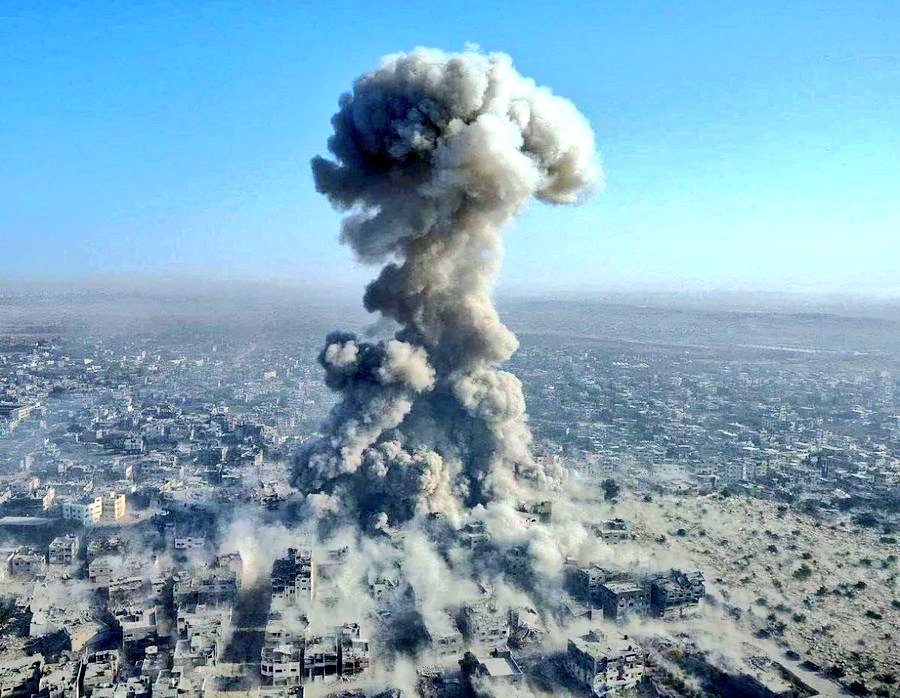
The second variable is the major Arab strategic collapse—a process that began decades ago but reached a far more dangerous stage in the past 15 years, especially after so called “the Arab Spring”. The resulting transformations led to the fragmentation and collapse of numerous Arab states and the weakening of the entire Arab geopolitical map—in Syria, Iraq, Yemen, Sudan, and Libya. It now seems as though the Arab geopolitical landscape, shaped after World War I, is disintegrating. This has created a strategic opportunity for Israel to expand, particularly following the recent decline in Iran’s regional influence over the past year in the wake of the war on Gaza.
The third variable is the return of Donald Trump to the White House—this time accompanied by a team that is more Zionist and ideologically aligned with the Israeli right than ever before. The unprecedented genocide unfolding in Gaza, the (implicit) green light granted to settlers and Netanyahu’s government in the West Bank and Jerusalem, and the statements made by Trump’s team concerning Palestine, Iran, Lebanon, and Syria all suggest an unprecedented alliance—perhaps even an organic one—between a hardline right-wing American administration and an extremist Israeli right. Although US policies have historically been biased in favor of Israel, the situation has never reached this level of alignment and support.
These three variables together shape a new political landscape, they significantly impact Jordan’s strategic perspective on national interests and security and necessitate a reevaluation by political elites who previously believed that there were multiple factions within Israel with whom one could engage, or that American influence could constrain the Israeli right, or that an effective Arab strategic space could be mobilized to counter such dangerous transformations.
The writer is a columnist in the Jordan Times
Al-Duwairi: Houthi Missiles on Tel Aviv Confirms Failure of US Airstrikes on Yemen
- CrossFireArabia
- March 25, 2025
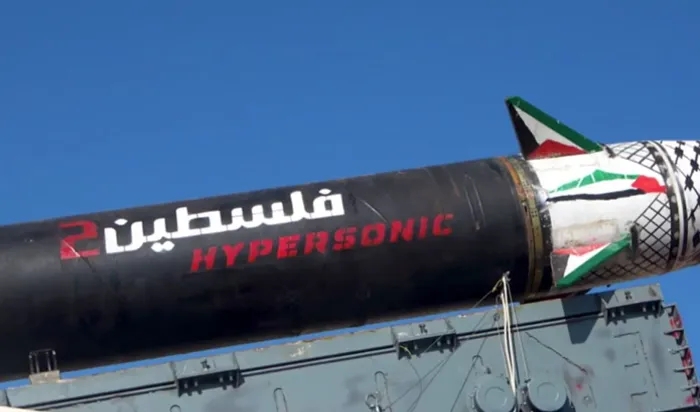
The missiles launched by the Houthis at Israel do not make a significant military difference, according to military expert Major-General Fayez al-Duwairi. However, he said they confirm the failure of the US airstrikes to destroy the group’s capabilities and reveal the contradictions in Israeli statements regarding the interception of these missiles.
In an analysis of the military situation on Al Jazeera, al-Duwairi asserts that the Israeli military’s statement about the interception of the missile launched, Monday, before it entered Israeli airspace contradicts its statement about interceptor debris falling west of Jerusalem and south of Tel Aviv.
The fact that these debris fell on these areas, in al-Duwairi’s opinion, means that the missile bypassed Israeli air defenses, whilst confirming the Houthis’ possession of sonic missile technology. He added that this is something not many countries possess.
The fact that air raid sirens sounded only in Jerusalem and greater Tel Aviv, but not in the rest of Israel, confirms that the missile was not detected until it reached these specific areas, al-Duwairi said.
Confusion in Israeli Society
Whilst the Houthi missiles will not bring about a military change, according to the strategic expert, they put Israeli society on almost daily alert, disrupting daily life, and proving that the intensive US air campaign has not prevented the Houthis from launching attacks.
The Houthis’ launch of an eighth missile in just a few days demonstrates the failure of intensive US strikes to stop these attacks. The failure of Israeli defenses to detect the missiles before they entered Israeli airspace is a qualitative advantage for this Yemeni group.
As for the missiles that the Palestinian resistance has begun launching in the past few days, they carry more political than military messages, according to al-Duwairi, because it is impossible to compare the resistance’s capabilities today with those of the beginning of the war nearly 18 months ago.
However, the resistance’s ability to bombard greater Tel Aviv, as it did two days ago, confirms that it has a stockpile of missiles capable of causing disruption within Israel.
Yesterday evening, the Israeli Home Front Command announced that air raid sirens sounded in Jerusalem and its suburbs, as well as in more than 200 towns and cities in central Israel, as a result of a missile launched from Yemen.
The Israeli military said it intercepted the missile with its Arrow missile system before it entered airspace. However, sources confirmed to Al Jazeera that explosions were heard in areas of Tel Aviv, Jerusalem, and the coastal region south of Tel Aviv following the launch of a missile from Yemen.
Israel: Displacement Versus Regional Expansion
- CrossFireArabia
- March 25, 2025
It’s a war game between an isolated leader and an accused leader, a leader fleeing corruption and the courts, and a leader selling homelands like real estate on the pavement of the White House. How can they make peace? With the blessing of pseudo-leaders, once described as Arab Muslims, they have forgotten that history disowns false heroism, no matter how long it lasts. Indeed, it’s a stain that history will never erase, for conspiracies have an expiration date.
The game is aggressive and contradictory, with diminished rights and usurped land, and it is being exaggerated to create new heroes, expose traitors, and burn paper heroes. Announcing radical change is more Trumpian than it is a way to achieve the goal. The goal is geopolitical whose stakes are greater than those in the ruins of Gaza, or for the people of the West Bank.
What we perceive now on the ground is the result as actually being implemented in the region of Palestine, Jordan, Syria, Lebanon, Iraq, Egypt, and elsewhere. This is far removed from the American political legacy, which has come to present itself as an unfair mediator with its possibility of implementing peace by force!
A Zionist base
We are faced with an occupying state that wields American power, a Zionist base in the heart of America and entity. America studies the state of politics firsthand. It is the largest country to explore the concept of state with military, geographical, and geopolitical capabilities. Geopolitical power is the most important element of its strength, exploited on the basis of geographical expansion.
States are considered human communities that grow and expand, weaken and shrink. The plan, my dear friends, is a trial balloon the size of the Middle East, with its peoples remaining stagnant and helpless. But the question is: Where does its success lie?
Let’s address this point by point. Reality shocks us, while history never forgets the amount of public discussion about settlement and the forcible preparation of political conditions to weaken the position of the international community and Europe in the ongoing conflict to subjugate the Arab situation to the point of fragmentation, division, and subservience.

Yes, Netanyahu continues his war to preserve his government with Smotrich, and Ben-Gvir, to pump billions of dollars into the government budget, to evade prosecution, and to realize the agenda of the Likud and religious Zionism to control the levers of the occupying state in its extremist Jewish nationalist form. But to what extent can Netanyahu can he continue to be evasive?
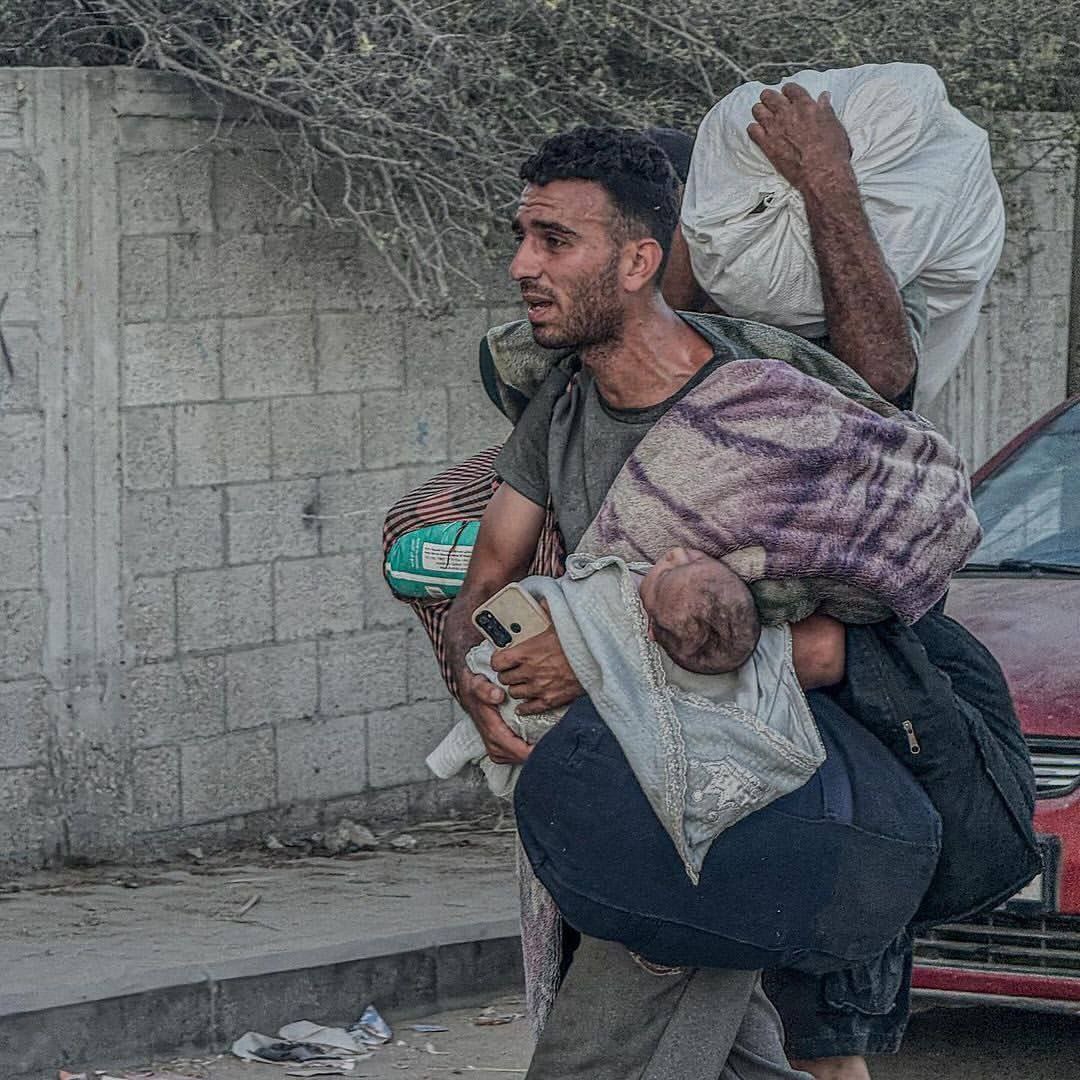
Netanyahu is now using the concept of force through traditional methods of exterminating civilians and then displacing the largest possible number of Gazans. He is also seeking to change the map of the region, annexing lands in the West Bank and Gaza Strip, Judaizing Al-Aqsa Mosque and Jerusalem, reshaping security to suit Israeli interests, and impose normalization. The region is in turmoil and change whilst undergoing a process of formation and renewal. The Syrian model is a prime example.
Regional expansion
The imposition of further conditions of humiliation on the Arab environment, the multi-front military campaign, as is happening in Syria and southern Lebanon, to reshape and strengthen Israeli security and regional influence in the long term. These developments will impose new facts on the ground to prevent any future political solution, as Israel seeks to expand settlements, forcibly displace Palestinians, and annex the remaining land.
Recognizing the Jewishness of the state and following the provisions of the Nation-State Law stipulates that Jews have the right to settle in the Arab region wherever they wish, and that the Israeli state must provide protection and care for every Jew. Declaring the Jewish state from the sea to the river is a form of soft displacement by all means, both covert and overt. Israel’s ambitions span the entire Arab region, as the Nation-State Law does not define the borders of the Jewish state posing great dangers to the delusional states that normalize relations with Israel, whilst believing that Israel will be an ally against an imaginary, fabricated enemy.
We should not overlook the fact that some Zionist political and military leaders believe that Israel should not consider the “alternative homeland” concept of displacement as a strategic and ultimate goal because it poses a constant danger and threat to its existence based on its assumption of a neighboring state(s) hosting the displaced Palestinian people within its vicinity as an occupier of their land and homeland.
Additional questions that must be raised is: To what extent should the goal be security-related? How large is the required area for expansion? Is this a fundamental and permanent requirement for Israel’s security, as has been stated? How does the area of land, whether in Syria, southern Lebanon, or elsewhere, fit into a general Zionist plan to serve as Israel’s eastern flank? To what extent should the region be expansionist, to what extent should it be aligned with Zionist expansion into the Gulf states?
Another issue is: Will there be a push to conclude an agreement with Israel that is more important than Wadi Araba and be in Israel’s favor? What about the four-party negotiations or more, and to whom will the invitation be addressed? And what would be the price that would follow? Perhaps the Palestinian Authority itself? The contradiction in the statements is clear and deliberate, and Israel is the ruling authority there! The most important question remains: What leverage do the countries of the region possess and use to prevent its negative influence?
Greater Israel
What is of certain is that Israel is pursuing of what is beyond for the greater Zionist entity reach. While discussing the Jewishness of the state, we cannot overlook other aspects of Zionist lore, the most important of which is the construction of the pagan Third Temple on the ruins of the Dome of the Rock. Are we concerned about that?
Unfortunately, the entity of Israel as a whole is illegitimate, but the world offers nothing but rejection of our Arab and Islamic identity.
They continue with the Zionist entity’s plan for the Middle East under the guise of the Sharon-Eitan strategic regime, the “spit of the century,” and other labels, provided there is Arab and Islamic division, an increasing imbalance of power, and the absence of genuine Arab peoples calling for the freedom of their homelands…not to provide for their livelihood, whose voices will be silenced by the provision of aid and debt forgiveness, or such some.
The writer is a researcher specializing in Middle Eastern affairs and the above article was edited from Arabic that appeared in Alrai Alyoum website.
How do You Stop Israel’s New War?
- CrossFireArabia
- March 6, 2025
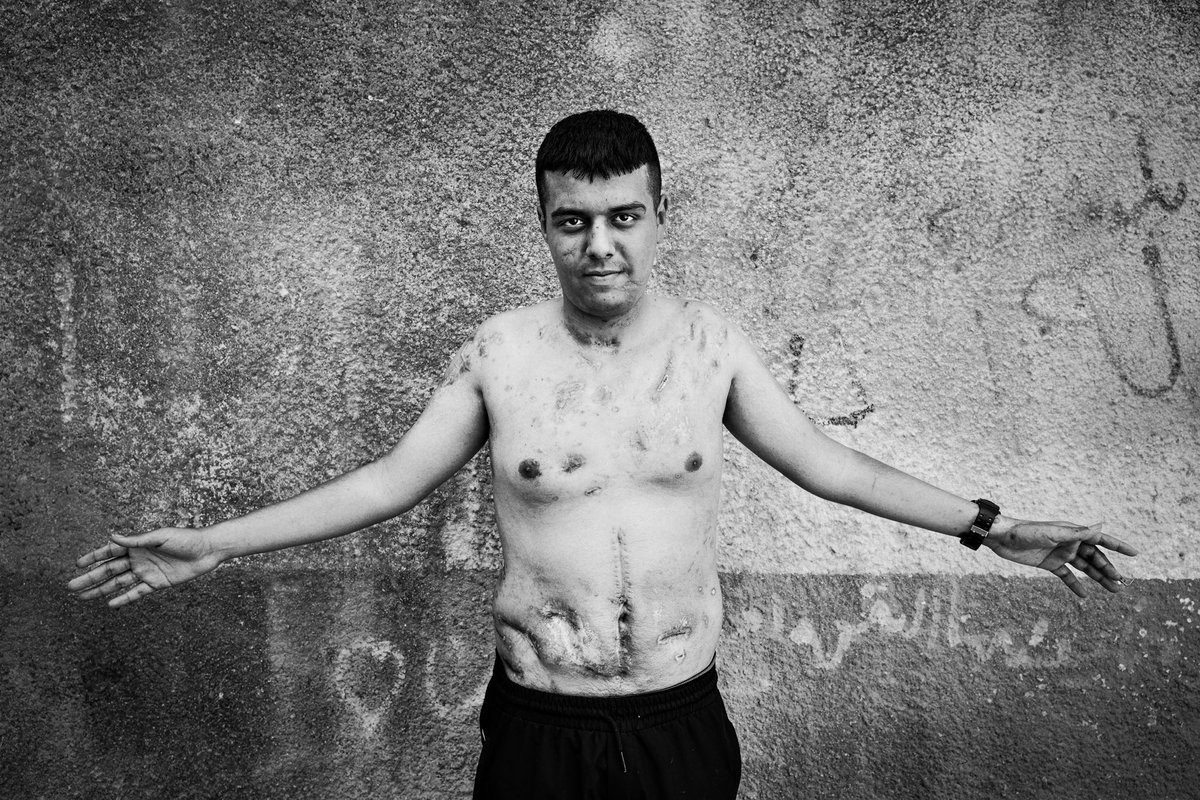
As Israel’s forces intensify their assault on the occupied West Bank, concerns are mounting over its broader objectives, further territorial expansion, forced displacement of Palestinians, and the gradual annexation of the occupied land.
Israel has killed more than 64 Palestinians, arrested at least 365, displaced hundreds of thousands and destroyed scores of homes and properties in the occupied West Bank since it launched its operation, the “Iron Wall,” on January 21, just days after a ceasefire took effect in the Gaza Strip.
For the first time in more than 20 years Israel deployed tanks in the West Bank and Defense Minister Israel Katz said that the army will remain in some refugee camps “for the next year.”
Since the start of the operation by the Israeli forces on January 21, several refugee camps have been nearly emptied of their residentsand over 5,000 Palestinian families have been displaced by the ongoing Israeli attacks in the West Bank according to the Palestinian government.
Starting in Jenin Camp, the operation has expanded to Tulkarm, Nur Shams, and El Far’a refugee camps and led to the displacement of more than 40,000 Palestine refugees.
As well, the occupation forces stormed several towns, including Idhna, Al-Shuyukh, and Beit Awa in Hebron, as well as the Al-Disha and Aida camps in Bethlehem, the Al-Mughayyir and Birzeit towns in Ramallah.
Israeli troops also raided the Amari camp in Al-Bireh and the Airport Street area in the Kafr Aqab neighborhood, located north of Jerusalem.
As the operation is spreading across most West Bank cities and refugee camps, analysts say that Israel’s long-standing aim to annex the occupied Palestinian territory is now more evident than ever and that it plans to annex the West Bank, squeeze the Palestinians into the smallest areas possible, particularly to expel them from Area C,referring to the division that makes up some 60 per cent of the Palestinian territory.
The use of air strikes, armored bulldozers, controlled detonations, and advanced weaponry by the Israeli forces has become commonplace, a spillover of the war in Gaza.
Such militarised approaches are inconsistent with the law enforcement context of the occupied West Bank, where there have been at least 38 airstrikes in 2025 alone.
Jenin Camp stands empty today, evoking memories of the second intifada and this scene stands to be repeated in other camps.
On the other hand, as the Israeli operation escalates, illegal settlers push further into Palestinian territories as
Area C -over 60 per cent of the West Bank- is basically what the Israeli settler movement and the Israeli state view as ultimately theirs.
Besides, they are creeping into Area B, which constitutes approximately 22 per cent of the West Bank.
The illegal settlers are backed by the Israeli state, which provides them with military, economic, and political support across the political spectrum, not just from right-wing factions.
Since the start of the onslaught against the Gaza Strip on Oct. 7, 2023, at least 927 Palestinians have been killed and nearly 7,000 injured in attacks by the Israeli army and illegal settlers in the West Bank, according to the Palestinian Health Ministry.
In January, the Israeli anti-settlement group Peace Now warned that Israeli authorities were planning to approve the construction of 2,749 new settlement units in the occupied West Bank.
The group said 2025 could see “record numbers” of settlement expansions, an average of 1,800 units per month.
On its part, the International Court of Justice declared in July that Israel’s long-standing occupation of Palestinian territories is “unlawful,” demanding the evacuation of all settlements in the West Bank and East Jerusalem.
The United Nations Relief and Works Agency for Palestine Refugees (UNRWA) reiterates that civilians and civilian infrastructure must be protected at all times and that collective punishment is never acceptable.
However, under the Knesset laws implemented on January 30, UNRWA no longer has any contact with the Israeli authorities, making it impossible to raise concerns about civilian suffering or the urgent need for the delivery of humanitarian assistance.
UNRWA, the main agency providing humanitarian aid for Palestinians in the refugee camps, has been banned by Israel to operate in East Jerusalem and now in the West Bank which is having a huge impact on the well-being of people, and on the economic situation.
This puts at grave risk the lives of Palestine Refugees and the UNRWA staff that serve them.
Israel has long tried to eliminate the UN agency, which enshrines the right of Palestinian refugees to return home.
Israel’s aggressive assault on the refugee camps and the UNRWA, aligns with Israeli Prime Minister Benjamin Netanyahu’s goal “to end the concept of a Palestinian refugee”.
Moreover, the ongoing West Bank operation is seen as part of Israel’s plan to establish an exclusively Jewish state and recent reports surface that Israel is preparing to set up a military base in the Jenin camp, a part of its strategy to eliminate the refugee identity.
All of Israel’s actions and policies throughout the last several decades have been geared toward the ultimate goal of creating a Greater Israel across all of historic Palestine.
Najla M. Shahwan is a Palestinian author, researcher and freelance journalist. Author of 13 books in literature and a children story collection. Chairwoman of the Palestinian Center for Children’s Literature (PCCL). Founder of Jana Woman Cultural Magazine. Recipient of two prizes from the Palestinian Union of Writers. She contributed this article to The Jordan Times.