Israel’s War on Gaza Cost it $42 Billion

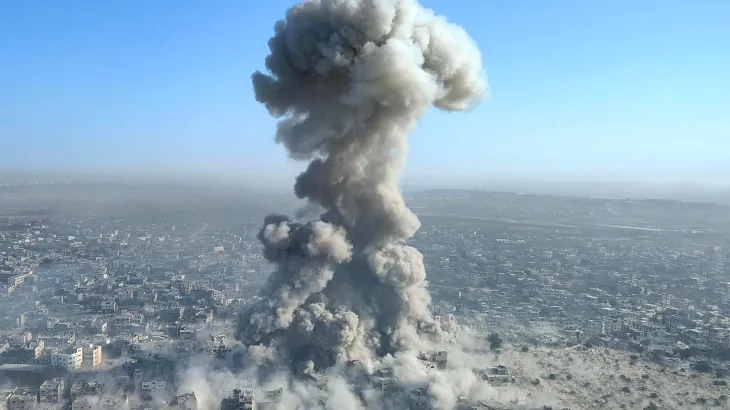
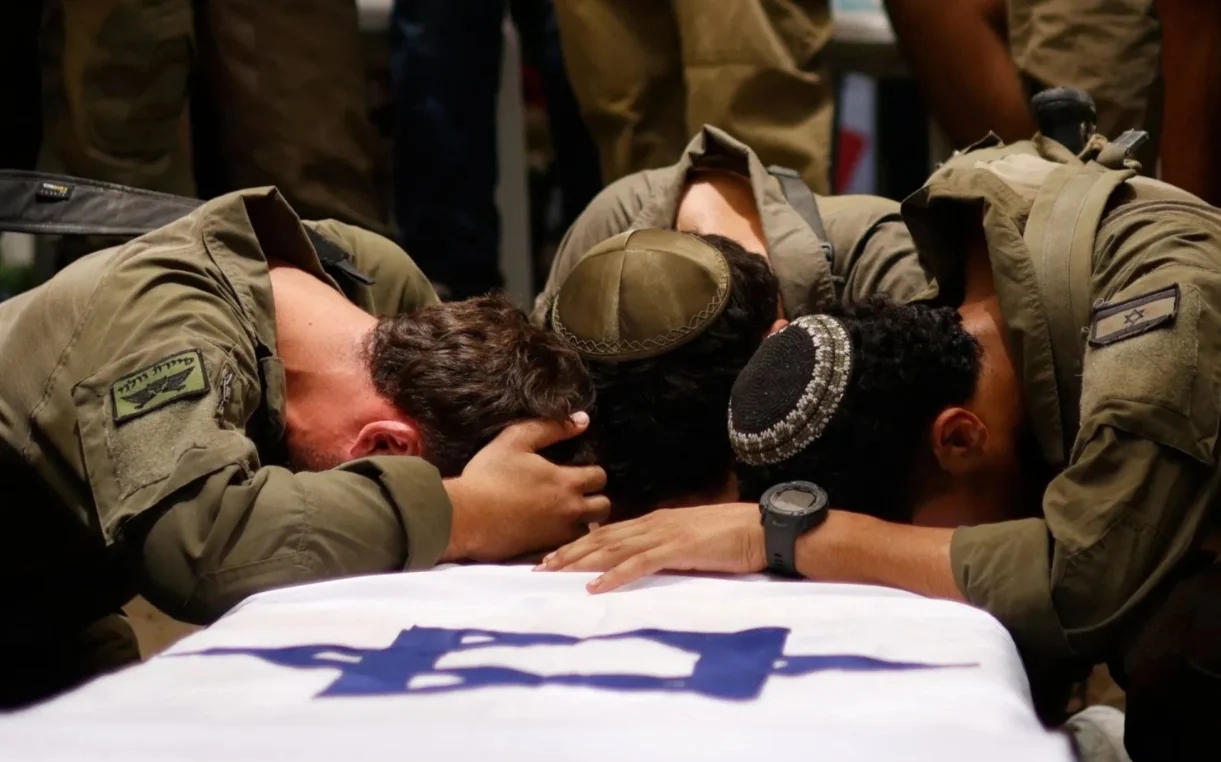
The cost of the war for the Israeli occupation, until mid-January 2025, was 150 billion shekels (about $ 42 billion). That is an average of 300 million shekels (about $84 million) per day, according to the Israeli Yedioth Ahronoth.

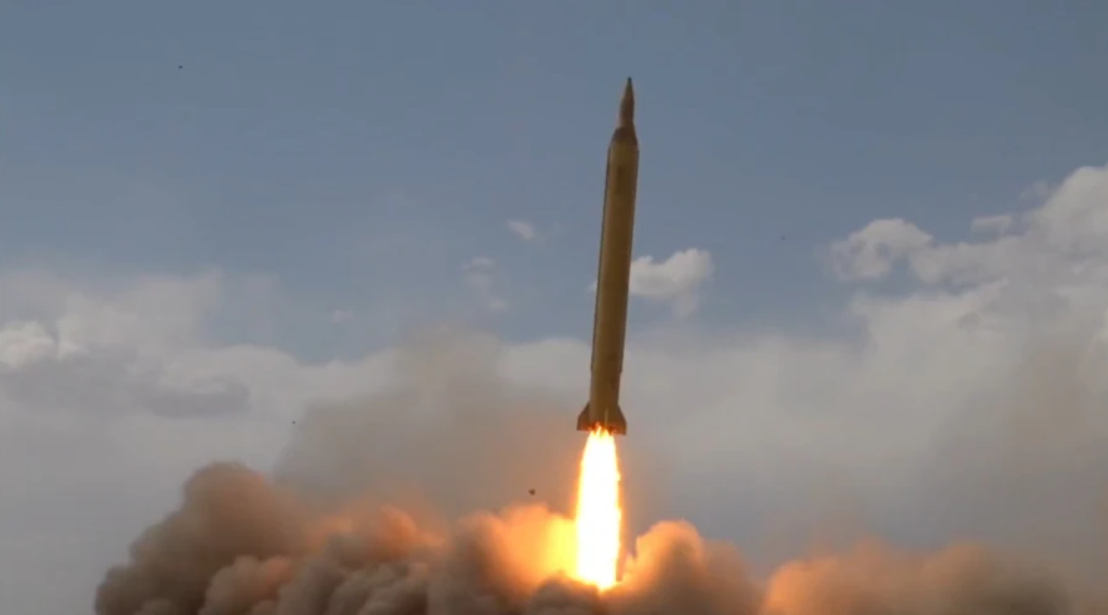
The newspaper reported there are large gaps between the cost of fighting in Lebanon, the cost of the Gaza Strip, and the “days of intense fighting” (i.e. attempts to confront Iranian missiles).

According to it, the heaviest cost in security expenditures is “funding the reserve army,” which amounts to 45 billion shekels (more than $12 billion).

A high-ranking source in the Israeli Ministry of Finance previously stated the huge new budgets allocated for 2025 to rebuild the northern and southern settlements are “frozen.”

The source told Yedioth Ahronoth that “the use of these budgets will not be possible until the final approval of the government budget.”

The source added the failure to approve the government budget for 2025 “is already causing significant damage to the economy, while the concern in the Finance Ministry now is that Israel will be run for an entire quarter on an interim budget, with the budget for each of the months of January, February, and March equal to 1/12 of the original government budget for 2024.”

However, “the Finance Ministry’s accountant general decided to allocate a smaller budget, for fear that there would be a need to finance additional months with an interim budget, and to create a reserve aimed at preventing disruption to the budgets of vital services for Israelis.”

In the same context, a senior government economic source also expressed to Yedioth Ahronoth “real concern about the possibility that the government budget will not be approved by the deadline set by law, March 31.”

“If that happens, it will be a disaster,” the source said, adding that “the government’s failure to run the full budget required during the war, with a huge deficit and special security tasks that cannot be implemented, will cause enormous damage to the economy and security,” as stated in Al Mayadeen.

Continue reading
 A Great Day For The Resistance in Palestine 

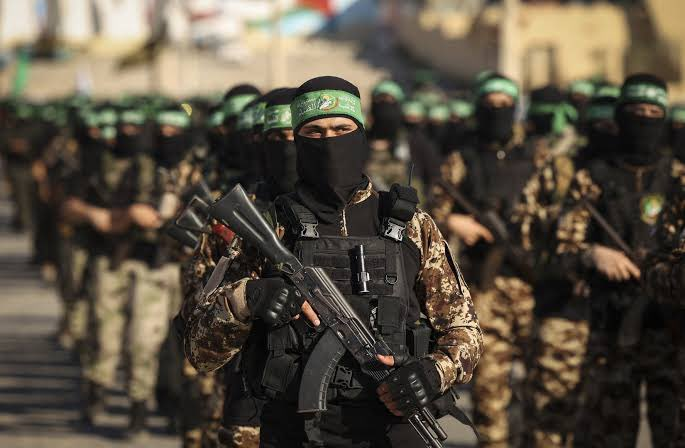
The Qassam Brigades succeeded not only in winning the war and achieving victory in Gaza, but also in dealing fatal blows to Israeli morale, when they surprised the entire world, not just Israel, by organizing a military parade for hundreds of their fighters who emerged from the rubble, and/or heart of tunnels in their extremely elegant green clothes with their personal weapons, in a startling move,  shedding light on their strength, despite Netanyahu’s 15 months of carnage. Brigade fighters stood steadfast, fighting, and sniping Israeli soldiers like birds and rabbits, despite the deceptions by their political and military leaders.

***

The smiling faces of the three Israeli female prisoners released in the first batch of the exchange according to the first phase of the ceasefire agreement were striking. The three young women emerged as if they had just returned from a concert, in good health, and in high spirits as if they were staying in a five-star hotel. It was a wonderful and very smart gesture for their guards to present symbolic gifts before they left the Strip in a Red Cross car.

These are the terrorists according to US and European specifics, setting an example of humanity, while the diplomatic envoys of Western civilization rape prisoners and treat them in a Nazi-like manner. The most honest example is the mujahida Khalida Jarrar and the painful state she appeared in after her release.

The fire of resistance ignites in the West Bank, suicide operations expand, and the dead among the occupation forces rises on the first days of the ceasefire to confirm that jihad is continuing in parallel and in conjunction with the exchange of prisoners.

The one who forced Netanyahu to drink the cup of defeat is not Trump, but the heroes of the Qassam Brigades, Al-Quds Brigades, and the Fatah Al-Aqsa Martyrs Brigades, who exhausted the Israeli army with heavy losses among its brigades and battalions, in the Gaza Strip, West Bank, and southern Lebanon.

Netanyahu stands defeated, not achieving any of his goals, neither eliminating the resistance movements in Gaza, nor with displacing the people of the Strip and replacing them with Israeli settlers.

As such we do not rule out the fact that he may violate the ceasefire in the coming days, and before the end of its first phase, in the hope of remaining in power. But no matter, the goals he failed to achieve over the course of 15 months of extermination and ethnic cleansing will not be achieved if he returns to war again but legitimize many retaliatory reactions from the West Bank and the Gaza Strip, Yemen, and perhaps soon from Lebanon and Iraq.

***

Our people in the Gaza Strip celebrate and sing for joys of victory achieved by the resistance. Perhaps the return of the symbolic Abu Obeida after months of absence, congratulating all on victory and ignoring all Arab leaders except Yemen whilst affirming the readiness of the Qassam to return to fighting is a confirmation of the strength and steadfastness of the resistance, and its high capabilities to manage war, manage negotiations, and psychological warfare.

Thus we assert that the liberation of Palestine, all of Palestine, and the restoration of dignity to the Arabs and Muslims, has become imminent and it is only a matter of time…

This editorial by Al Rai Al Youm’s Chief Editor  Mr Abdel Bari Atwan has been reproduced from Arabic

Continue reading
A Gaza War Reader

By Dr. Tariq Sami Khoury

Despite the Gaza truce announcement, the question everyone is asking: Did this war end in victory or defeat?

Did the Zionist entity achieve its strategic goals, or did the Palestinian resistance factions impose a new equation on the ground? The mass destruction and great human losses open the way for a deeper analysis of the situation from multiple angles.

Zionist entity…Goals successes or victory illusions?

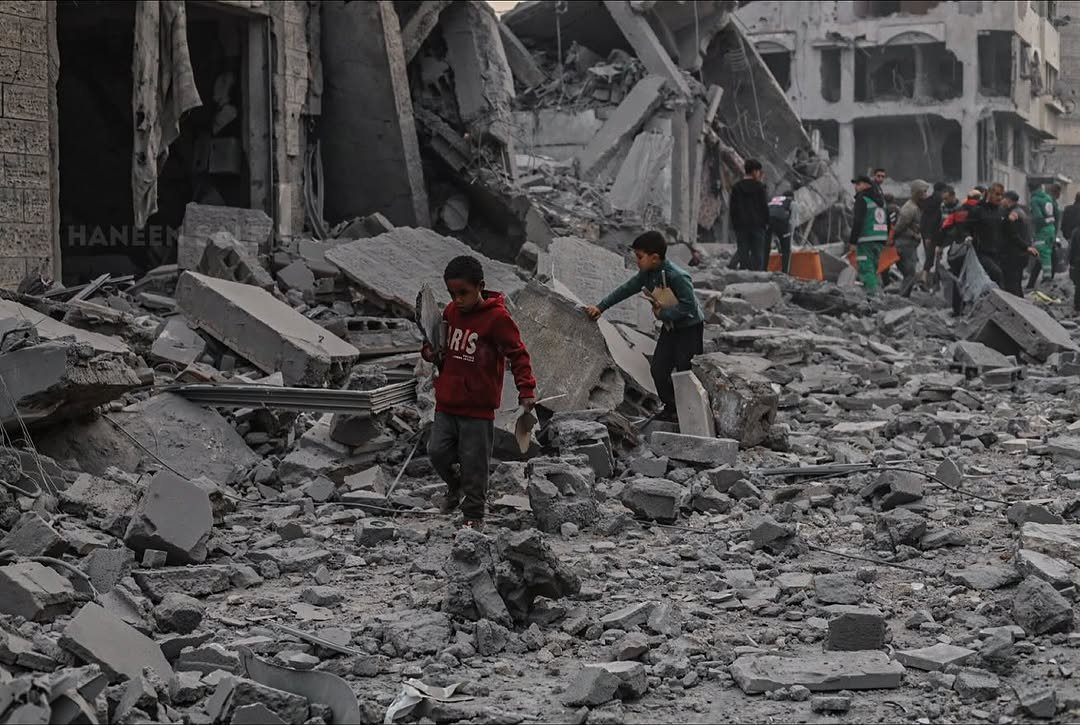
Israel launched its aggression on Gaza with unprecedented brutality, resulting in the near-total destruction of the Strip’s infrastructure, and the deaths of more than 250,000 people between those killed and wounded with the displacement of hundreds of thousands of residents.

Also the Israeli aggression extended to southern Lebanon and Syria, whilst targeting Yemen and Iran in clear attempts to expand the scope of the confrontation.

But did the Zionist entity achieve its goals?

1) Eliminating the resistance: Despite all attempts at genocide and continuous bombing, the Israeli army was unable to end the resistance or dismantle its infrastructure. The resistance proved its ability to continue to confront, and to carry out qualitative military operations till the last minute.

2) Recovering Its prisoners: Israel did not succeed to recover all its prisoners. In the end it was forced to enter into negotiations with the resistance under their own terms, which showed Israel was unable to impose its will by military force alone.

3) No deterrence: Instead of imposing a new equation to deter the resistance, Israel faced continuous missile strikes that reached deep into its territories and imposed a new and unprecedented reality on the Israeli internal front and unbearable political and security pressure on the Zionist leadership.

Legendary  Palestinian resistance…

Despite the Israel ferocity and the intense destruction, the Palestinian resistance emerged strong and cohesive. The battle it fought was not only for defense, but to establish a new equation in the conflict, as it was able to:

1) Survive despite the bombardment: Israel was unable to break the resistance will or push its fighters to surrender and remained able to respond and maneuver till the last moment, which shows the failure of the Zionist plan to crush it.

2) Imposing negotiating equations: The resistance was able to impose itself as a key party in any future solution, and succeeded in confirming that the prisoners are not just a pressure card, but a negotiating element that changes the equation.

3) Maintaining morale: Despite Gaza’s humanitarian catastrophe, the Palestinian people came out to celebrate the truce, in scenes that reflect their steadfastness and ability to overcome hardships. That is a psychological defeat for the Zionist entity.

Regional and international dimension… Exhaustion or victory?

Israel expanded the scope of its aggression to Lebanon, Syria, Yemen and even Iran to attempt to weaken any future threats. But this did not lead to decisive results. Rather it opened up several fronts without achieving any strategic gains.

1) Northern front (Lebanon and Syria): Despite its continuous bombing, Israel was not able to stop the force of the axis of resistance, but faced more threats leading to the exhaustion of its forces.

2) Yemeni front: The air strikes on the country failed to stop Yemen from participating in the conflict equation by targeting the ships in the Red Sea going to the Israeli Port of Eilat, and which added a new strategic dimension.

3) Iranian Front: The Zionist strikes did not deter Iran or stop its support for the axis of resistance, but strengthened its position whilst prompting it to escalate its support for the Palestinian resistance.

Truce.. Rest bite and an opportunity?

With the ceasefire announcement, it can be said the resistance emerged victorious through its ability to withstand and maintain its position to influence the future. In contrast, while the Zionist entity may have achieved some of its field goals, it failed to draw a decisive victory and end of the resistance.

Conclusion.. Victory and defeat

The battle was not equal in terms of military strength, but victory is not only measured by the ability to destroy; it is by steadfastness and ability to continue. Israel did not achieve a decisive victory, but fought a long war of attrition, while the Palestinian resistance emerged more solid and able to impose a new reality in the regional equation.

In the final analysis, the fact remains that liberating the land and restoring rights can only be achieved through continuous resistance, and that every Zionist attempt to eliminate the Palestinian people will be met with a will that does not know surrender. Thus, Palestine remains the compass of the free.

The author is a Jordanian writer and contributed this piece in Arabic for the JO24 website.

Continue reading
Can Joseph Aoun Get Lebanon Out of its Rut?

By Dr Khairi Janbek

We have grown accustomed to Lebanon being in the headlines as a result of blood and destruction, but no longer. Whether due to the weakening of Iran, determination of the international community and/or both, all this appears to be changing.

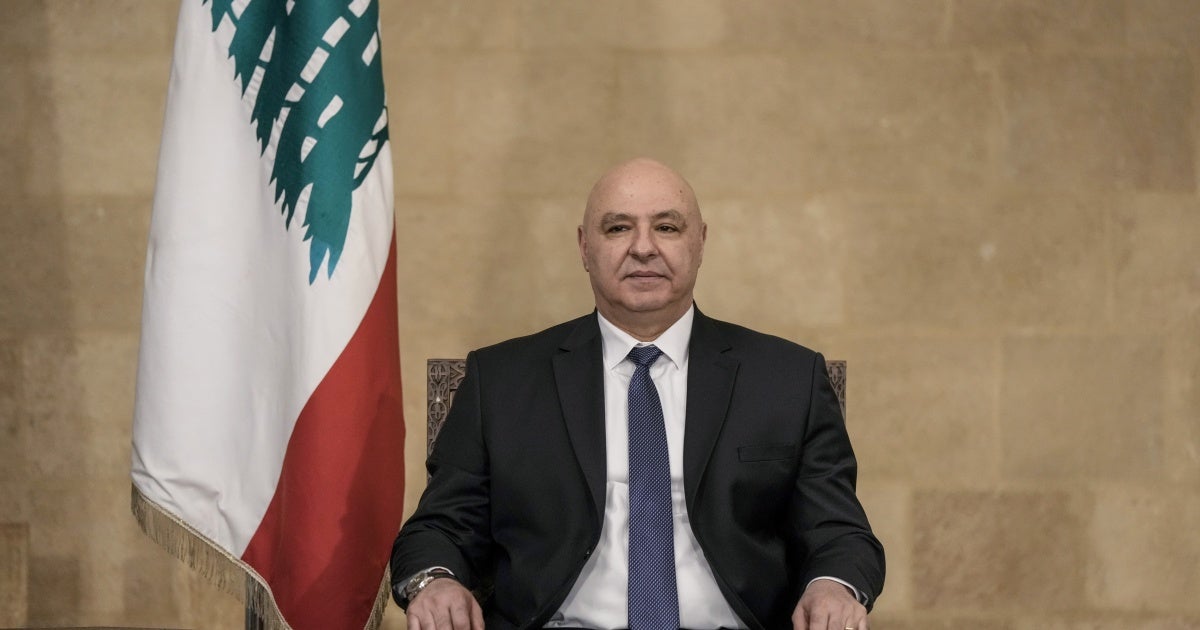
Lebanon has now officially elected a new president, ending a long period of political crisis that has long left the country without a head of state since the term of former president Michel Aoun expired in late October 2022. After protracted negotiations and intense political maneuvering, not to mention Arab and international pressure, general Aoun, with a tough military reputation who has lead the army since 2017, has become the latest leader of the country.

General Aoun takes office amidst a period of significant economic and social challenges for Lebanon, as the country is grappling with an acute and ongoing financial crisis, soaring rates of unemployment, and the collapse of its currency, in addition to the refugee crisis and deteriorating infrastructure that has left Lebanon hanging by a thread.

In fact to top it all, the powerful sectarian political groups which hindered the election of a president for the past 26 months and more will not likely disappear with the election of general Aoun despite the seemingly robust character of the new leader.

The new 14th Lebanese president in his first address to parliament, vowed to work with all political factions to implement reforms and tackle the pressing economic issues that has long log-jammed the country. His speech was one that had determination and a sense of purpose and appeal with a rallying-cry for all of the fractious political groups of Lebanon.

Having said that, and despite the election in the Lebanese Parliament, the country’s future still remains uncertain with challenges. The new president will need to navigate carefully the deeply entrenched political system which often leads to gridlock and an inability to implement meaningful change.

Additionally, the country’s economy remains in freefall, with millions of Lebanese struggling to afford basic goods and services. Therefore, it is clear the road ahead will be a challenging one to say the least. Logically for many, the focus has already turned to whether the new president can live up to the promise of healing the nation and lead it towards a more stable system.

From the Arab and international perspectives, the messages of support from both seem to be encouraging, but this support will need to be translated into monetary terms for re-building the country. It is said there is the promise of $10 billion earmarked for this effort but frozen on the condition that Lebanon elects a president based.

Now this hurdle has been overcome and passed. At the end of the day as well, General Aoun is seen as the consensus candidate for the Arab countries as well as the international community. In this sense, the release of the re-building funds may look optimistic but there is still the snag of the question of Hezbollah and Israel’s future belligerent intentions towards the country, issues that are still to be ironed out.

The new Lebanese administration needs guarantees from Hezbollah in as much as it needs guarantees from the new Lebanese administration, and the Arab and international community eagerly awaits the results of this dimension because, putting it bluntly, no one wishes to see their investments blown up in another war nor their money burnt in smoke.

All that one can say under the circumstances, is that General Aoun, and he is the fourth president to be chosen from the military establishment, can negotiate with Hezbollah to surrender their heavy weapons to the Lebanese Army while keeping their light weapons; at least for the time being, and stay away from the Litani River as demanded by Israel.

But this will need considerable political dexterity and acumen.

Dr Khairi Janbek is a Jordanian analyst based in Paris

Continue reading