Israel’s Forgotten Story: Palestinian Women Prisoners

By Raed Mohammed Mahmood Amer 

Since the beginning of the Palestinian struggle, women have played a central role alongside men in resisting Israeli occupation. They have played a key role in all aspects, whether in the phase of preparing and building, or in the battle for liberation. This participation was not limited to the more traditional roles, but formed the essence of the Palestinian struggle.

Despite the growing sacrifices they continue to make, Palestinian women continue to bear the cost of this struggle. Since its inception, Israeli occupation has systematically targeted women through killings, torture, arrests, and other forms of oppression.

As it pertains to arrest and detention, thousands of Palestinian women have been placed in the occupation’s prisons and military detention camps over the past close to six decades. Women have been used as leverage to pressure armed resistance fighters, particularly those related to them. Arrests of their female family members have been used as a form of blackmail aimed at forcing the men to surrender. This abusive policy has only escalated since Oct. 7, amid Israel’s ongoing assault on the Palestinian people in Gaza, Jerusalem, and the West Bank.

Since the start of the genocide, the arrest and detention of Palestinian women has spiked. According to our own data as prisoner’s defense groups, Israeli occupation forces have since Oct. 2023 arrested at least 490 Palestinian women from Gaza, the West Bank, and Jerusalem. These arrests include women from all walks of life—at least 25 university students, six journalists, lawyers, mothers, wives of martyrs, and public figures such as parliamentarian Khalida Jarrar.

In addition, we have clear indications that there are a large number of female prisoners who were arrested from Gaza, that are being subject to the severe crime of enforced disappearances, with the occupation refusing to disclose their identities, the number of women being held, and the location of where they are being held.

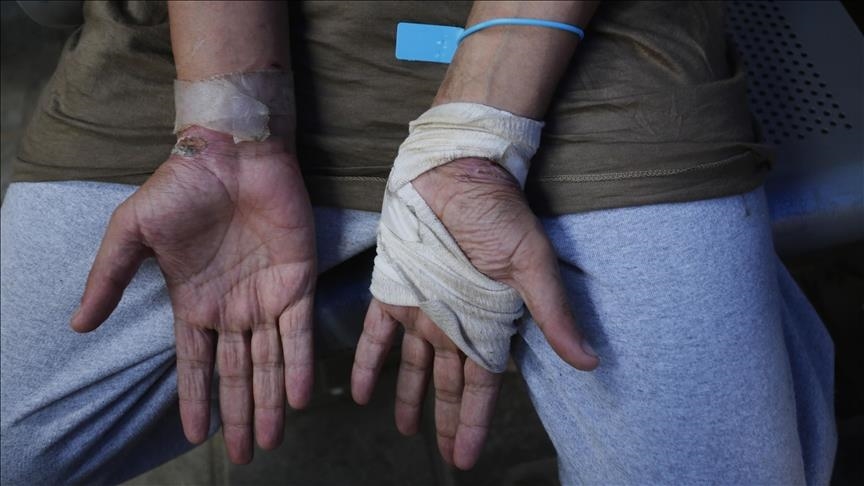
Palestinian women currently in Israeli custody are enduring the most violent and dangerous period in the history of the prisoners’ movement. They are enduring a wide array of severe violations that have also been practiced against men. Knowing that women are among the most vulnerable sectors of Palestinian society, the Israeli occupation has weaponized and used women’s bodies against them in an attempt to inflict the most pain possible. These violations include rape, sexual, physical and psychological assault, forced unnecessary strip searches, enforced starvation, and deprivation of female-related necessities among many other things. While women have historically suffered such violations at the hands of occupation authorities, these practices only became severely more frequent and violent since the start of the genocide in Gaza. Countless testimonies of liberated Palestinian women serve as proof to the widespread abuses taking place inside the Israeli occupation’s prisons. The UN acknowledged reports of sexual violence, particularly against female detainees from Gaza.

Some examples of female prisoners

A prominent example is Khalida Jarrar, a Palestinian Legislative Council member. She has endured all forms of abuse by the occupation, including solitary isolation, torture, starvation, and medical neglect. She was placed in solitary confinement for five consecutive months before her release on Jan. 19, 2025 as part of the first batch of a prisoner exchange and ceasefire deal between the occupation and the Hamas movement. Among the worst violations that Jarrar faced was being denied the chance to attend the funeral of her daughter, who passed away while Khalida was in prison. Israel robbed Jarrar of her ability to bid her daughter farewell, like many other prisoners before and after her.

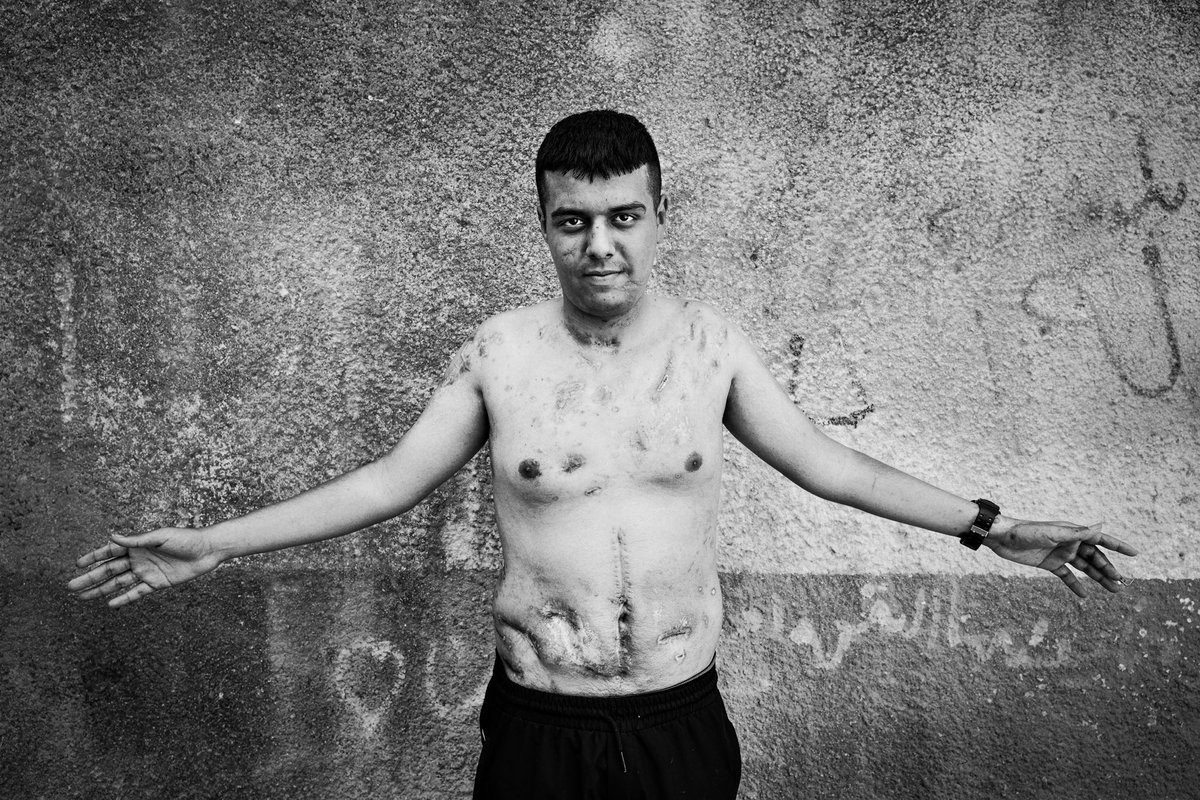
Another tragic example is the case of Israa Jaabis, who suffered severe burns on her body during her arrest. The Israeli authorities denied her medical treatment, exacerbating her already severe suffering. Additionally, female prisoner Hana Shalabi has been arrested and tortured several times. She went on a 44-day hunger strike in protest of being held without trial or charge, also known as administrative detention, amid the harsh conditions in Israeli prisons. Such cases highlight the magnitude of violations faced by Palestinian female prisoners, where the occupation shows no concern for the lives of these detainees.

Despite these grave violations faced by Palestinian women in Israeli prisons, international human rights organizations and institutions remain silent in the face of these abuses. The international community has not made any serious efforts to hold the Israeli occupation accountable or exert pressure on it to halt these inhumane policies against Palestinian female prisoners. Palestinian female prisoners are enduring an ongoing journey of suffering, and their plight is a part of the unending violations of the occupation. Palestinian women continue to await freedom, hoping justice will prevail.

The writer whose article appeared in Anadolu, is president if the Palestinian Prisoners Association.
Continue reading
How do You Stop Israel’s New War?

As Israel’s forces intensify their assault on the occupied West Bank, concerns are mounting over its broader objectives, further territorial expansion, forced displacement of Palestinians, and the gradual annexation of the occupied land.

Israel has killed more than 64 Palestinians, arrested at least 365, displaced hundreds of thousands and destroyed scores of homes and properties in the occupied West Bank since it launched its operation, the “Iron Wall,” on January 21, just days after a ceasefire took effect in the Gaza Strip.

For the first time in more than 20 years Israel deployed tanks in the West Bank and Defense Minister Israel Katz said that the army will remain in some refugee camps “for the next year.”

Since the start of the operation by the Israeli forces on January 21, several refugee camps have been nearly emptied of their residentsand over 5,000 Palestinian families have been displaced by the ongoing Israeli attacks in the West Bank according to the Palestinian government.

Starting in Jenin Camp, the operation has expanded to Tulkarm, Nur Shams, and El Far’a refugee camps and led to the displacement of more than 40,000 Palestine refugees. 

As well, the occupation forces stormed several towns, including Idhna, Al-Shuyukh, and Beit Awa in Hebron, as well as the Al-Disha and Aida camps in Bethlehem, the Al-Mughayyir and Birzeit towns in Ramallah.

Israeli troops also raided the Amari camp in Al-Bireh and the Airport Street area in the Kafr Aqab neighborhood, located north of Jerusalem. 

As the operation is spreading across most West Bank cities and refugee camps, analysts say that Israel’s long-standing aim to annex the occupied Palestinian territory is now more evident than ever and that it plans to annex the West Bank, squeeze the Palestinians into the smallest areas possible, particularly to expel them from Area C,referring to the division that makes up some 60 per cent of the Palestinian territory.

The use of air strikes, armored bulldozers, controlled detonations, and advanced weaponry by the Israeli forces has become commonplace, a spillover of the war in Gaza.

Such militarised approaches are inconsistent with the law enforcement context of the occupied West Bank, where there have been at least 38 airstrikes in 2025 alone. 

Jenin Camp stands empty today, evoking memories of the second intifada and this scene stands to be repeated in other camps. 

On the other hand, as the Israeli operation escalates, illegal settlers push further into Palestinian territories as 

Area C -over 60 per cent of the West Bank- is basically what the Israeli settler movement and the Israeli state view as ultimately theirs. 

Besides, they are creeping into Area B, which constitutes approximately 22 per cent of the West Bank. 

The illegal settlers are backed by the Israeli state, which provides them with military, economic, and political support across the political spectrum, not just from right-wing factions.

Since the start of the onslaught against the Gaza Strip on Oct. 7, 2023, at least 927 Palestinians have been killed and nearly 7,000 injured in attacks by the Israeli army and illegal settlers in the West Bank, according to the Palestinian Health Ministry.

In January, the Israeli anti-settlement group Peace Now warned that Israeli authorities were planning to approve the construction of 2,749 new settlement units in the occupied West Bank.

The group said 2025 could see “record numbers” of settlement expansions, an average of 1,800 units per month.

On its part, the International Court of Justice declared in July that Israel’s long-standing occupation of Palestinian territories is “unlawful,” demanding the evacuation of all settlements in the West Bank and East Jerusalem.

The United Nations Relief and Works Agency for Palestine Refugees (UNRWA) reiterates that civilians and civilian infrastructure must be protected at all times and that collective punishment is never acceptable.

However, under the Knesset laws implemented on January 30, UNRWA no longer has any contact with the Israeli authorities, making it impossible to raise concerns about civilian suffering or the urgent need for the delivery of humanitarian assistance. 

UNRWA, the main agency providing humanitarian aid for Palestinians in the refugee camps, has been banned by Israel to operate in East Jerusalem and now in the West Bank which is having a huge impact on the well-being of people, and on the economic situation.

This puts at grave risk the lives of Palestine Refugees and the UNRWA staff that serve them.

 Israel has long tried to eliminate the UN agency, which enshrines the right of Palestinian refugees to return home.

Israel’s aggressive assault on the refugee camps and the UNRWA, aligns with Israeli Prime Minister Benjamin Netanyahu’s goal “to end the concept of a Palestinian refugee”.

Moreover, the ongoing West Bank operation is seen as part of Israel’s plan to establish an exclusively Jewish state and recent reports surface that Israel is preparing to set up a military base in the Jenin camp, a part of its strategy to eliminate the refugee identity. 

All of Israel’s actions and policies throughout the last several decades have been geared toward the ultimate goal of creating a Greater Israel across all of historic Palestine.

Najla M. Shahwan is a Palestinian author, researcher and freelance journalist. Author of 13 books in literature and a children story collection. Chairwoman of the Palestinian Center for Children’s Literature (PCCL). Founder of Jana Woman Cultural Magazine. Recipient of two prizes from the Palestinian Union of Writers. She contributed this article to The Jordan Times.

Continue reading
Israeli Prisons: Places of Torture

Since its establishment, Israel has been accused of policies aimed at displacing Palestinian communities and altering the demographic landscape of the occupied territories. The occupation has employed lethal tactics against Palestinians including killings, torture, and arrests. Since 1967, over 1 million Palestinians have been prosecuted under Israel’s military court system and subjected to detention.

For decades, Palestinian political prisoners have been used by the Israeli occupation as bargaining chips during negotiations of the so-called “peace process.” They have exercised all forms of brutality and torture against Palestinian prisoners in interrogation and detention centers in an attempt to extract confessions – whether true or false – by force, using both psychological and physical methods against them, in a blatant disregard for international law and countless international treaties and laws related to human rights. The current level of abuse, torture, and maltreatment of Palestinian detainees is unprecedented in terms of scale and frequency.

After Oct. 7, 2023, Palestinians saw a severe spike in the occupation’s long-standing violent policies and practices. The crisis extends beyond Gaza. Reports indicate systematic abuses within Israeli prisons and military camps, amounting to crimes against humanity, as defined under international law. At least 58 Palestinian political prisoners, including 37 people arrested from Gaza, have been murdered and martyred in the occupation’s custody since Oct. 7, 2023, including through torture, lethal beatings, starvation, and severe deprivation of medical treatment. The 58 people killed are only the ones whose identities have been revealed by the occupation. Dozens more have been killed and subject to enforced disappearance in Israeli custody with authorities refusing to reveal their identities. All of this is occurring amid international inaction, with the UN, and international human rights institutions and bodies, proving their inability to protect the Palestinian people and their rights.


Enforced disappearance and mass arrests

It is worth mentioning that Israeli occupation authorities are committing the severe crime of enforced disappearance against thousands of Palestinian detainees who have been arrested from Gaza since the start of the genocide, particularly from the beginning of the ground invasion. Thousands of civilians, including men, women, and children, have been abducted from different parts of the Gaza Strip, as well as thousands more who were working as laborers in the 1948-occupied territories prior to the outbreak of the war.

The crime of enforced disappearance is one of the main features of the genocide that went on for close to 500 days. Additionally, dozens of medical personnel were targeted with arrests during the Israeli army’s repeated invasions of hospitals, the largest of which was the invasion of the Shifa Hospital. Numerous videos circulated on social media showing Palestinian detainees in degrading conditions, including being stripped naked, blindfolded, and shackled in overcrowded spaces. Many were forced into tight groups in open areas, on the streets, and in military transport vehicles while restrained and exposed. They appeared in conditions that were highly degrading to human dignity and showed a severe disregard and contempt for Palestinian lives.

The Israeli judicial system has contributed to cementing the crime of enforced disappearance, further enabling the use of torture against detainees who were abducted from Gaza. Thousands of detainees from the strip were arrested and detained based on the “illegal combatants” law issued by the Knesset (Israeli parliament) in 2002, which fundamentally violates fair trial procedures and human rights. At the start of the genocide, the occupation made legal amendments to the “illegal combatants” law, which is similar in nature to its “administrative detention” military order used in the occupied West Bank.

Among the most significant amendments made to the illegal combatants law were as follows: Extending the detainee’s initial detention period for 45 days, judicial review after 75 days, and prohibition of detainees from meeting with their lawyers for 180 days. It is important to note that since the start of the genocide, the occupation has continued to refuse to allow the International Committee of the Red Cross to visit detainees and prisoners in jails and camps as per its mandate. These amendments further institutionalized policies associated with enforced disappearance, as Israeli authorities continue to withhold information on detainees from Gaza, including their identities and locations. As a result, several human rights organizations filed petitions to the Israeli Supreme Court demanding the identities of the detainees and their places of detention. In every instance, the Supreme Court affirmed its long-standing role as a fundamental tool in cementing crimes against Palestinians.

To this day, there is no clear or accurate information about the total number of Palestinians arrested from Gaza, including women and children, nor about the martyrs who were killed through torture or executions. The only available data, up until the beginning of February 2025, shows that at least 1,882 Palestinians arrested from Gaza are categorized as “illegal combatants,” and this data does not include all of the detainees held in military camps.

Prisoner rights groups highlighted that the occupation built and restored special military camps used to detain Palestinians abducted from Gaza, alongside the existing central prisons. Among the most notorious of these military camps was the Sde Teiman camp, where detainees were subject to severe sexual assault, including rape. Other military camps being used to hold detainees from Gaza are the Anatot and Ofer camps, which have also witnessed extreme violations against Palestinian prisoners. In November 2023, when the occupation began releasing laborers from Gaza who had been held in Israel’s military camps, the prisoners’ testimonies began to reveal the level of inhumane and humiliating violations they endured. This included severe beatings, starvation, dehydration, denial of medical treatment, and keeping detainees blindfolded and handcuffed 24/7, causing many of them to need limb removal surgeries.

As time went on and more prisoners were released from Israeli custody, the testimonies only increased in terms of how horrific and shocking the crimes being committed were. The images of the detainees upon their release serve as a living testimony to the unfathomable violations committed against them. These revelations continued through several reports and journalistic investigations conducted about the Sde Teiman camp, including the leaking of a video showing soldiers gang-raping a Palestinian detainee.


International responsibility

As the genocide continues, some legal teams and human rights lawyers have been allowed limited access to a small portion of Gaza detainees. Their reports confirm systematic crimes, including extrajudicial executions, torture, and enforced disappearance. In this context, the Israeli occupation is employing the severe crime of enforced disappearance against thousands of detainees abducted from Gaza, which constitutes a crime against humanity according to the International Convention for the Protection of All Persons from Enforced Disappearance. This convention defines enforced disappearance as “the arrest, detention, abduction or any other form of deprivation of liberty by agents of the State or by persons or groups of persons acting with the authorization, support or acquiescence of the State, followed by a refusal to acknowledge the deprivation of liberty or by concealment of the fate or whereabouts of the disappeared person, which place such a person outside the protection of the law.”

We reiterate our call to the international human rights system to overcome its ongoing impotence in the face of this genocide, and to take clear decisions and actions to hold the Israeli occupation accountable. This all-out war and aggression against our people, including those held in the occupation’s military camps and central prisons, must be halted now, and not a second later.

Raed Mohammed Mahmood Amer is the president of the Palestinian Prisoners Association and wrote this article for the Anadolu news website.

Continue reading
Mad President and Street Brawl

By Dr Khairi Janbek

People from my generation remember a pop group which used to sing a song called the lunatics have taken over the asylum. Now, they were not themselves lunatics but merely performing for their audience and their fans, in the same manner. Neither Trump nor his band wagon are necessarily a bunch of thugs, but they are merely performing for their fans and audience.

However one cannot find any reason for world leaders to go to the Oval Office in order to provide US president Donald Trump with the material to entertain his fans and audience.

He ambushed King Abdullah of Jordan with the entry of journalists when that was not supposed to happen in order to market his absurd Gaza plan, president Emmanuel Macron of France provided him with the opportunity of posturing as an antagonist to the EU, prime minister Keir Starmer provided him with the opportunity of showing what Britain was groveling for – a free trade agreement and a role of being a bridge between the US and EU.

Ironically however, the worst of the Trump performance was left for Volodymr Zelensky, though his trip was the only one that made sense.

Zelensky for all intents and purposes, went to sign an agreement to hand the resources of Ukraine to America, but suddenly the situation deteriorated to almost a street brawl. Why? The whole thing was agreed upon by both sides from the start.

Of course, Zelensky expected a protection commitment from the USA in exchange for the mineral resources, but in fairness, without an explicit US commitment protection would have been implicitly there since supposedly, American companies and workers would be working in Ukraine, so what has actually happened to derail the whole agreement?

Of course, any such agreement with potential implicit US protection of Ukraine, is totally against Russian interests, especially according to some speculation, Putin has the intention to occupy the whole of Ukraine, therefore the talk in the corridors, is that Putin has offered Trump the exploitation of Ukrainian resources in the occupied territories of Russia, which in effect sabotaged the minerals agreement between US and Ukraine, and rescued Trump from having to give security guarantees; albeit implicit to Ukraine.

Now, at the peril of repeating the usual cliche of the EU facing a crossroad on its path, something which had happened frequently, this time it’s in fact different. The truth is that the US has been distancing itself from the EU at least from the days of president Obama, but the difference now is that the EU is being attacked by both the US and Russia, and finds itself as the large leviathan with clay feet unable to move.

The dilemma of differences within the EU are prominent, with full support for Ukraine, with some having lukewarm support, while some with no support at all, moreover the NATO future is hanging in the balance, to keep or not to keep that is the question, but what is the alternative? A European army which is yet to crystallize as an idea, or just drop all the effort?

What it boils down to now, is the idea of leadership of the “Free World”, certainly this notion has always been a nebulous idea, still, the US stood by it and projected its image accordingly, but now, it seems the US is not interested in world affairs except in what it can exploit and use and abuse for its own interests, which means, who will be the new leader of the Free World?

In fact, is there a need for a leader of the free world assuming that there is such a world? If the EU has any such pretensions, then big changes are necessary within its membership as it must be realized the road is very long for such an objective. But in the mean time, we have to settle for the theory of the mad president, ie. Trump would do anything, and peace by force with an oxymoron.

Dr Janbek is a Jordanian writer based in Paris.

Continue reading
Putting The Cart Before The Horse

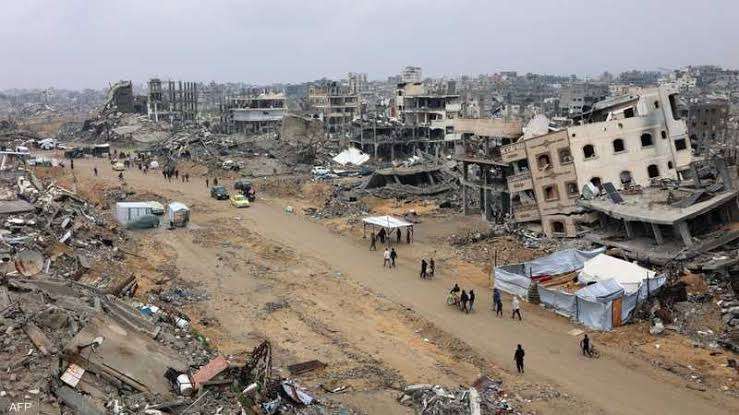
With the approach of the Cairo Summit to discuss the Palestinian issue and the reconstruction of Gaza, Arab leaders find themselves facing three main scenarios to make decisive decisions that determine the future of Gaza and the fate of the Palestinians the day after the cessation of the war. The dilemma is no longer limited to reconstruction only but also includes the political and administrative arrangements that ensure the stability of the sector and prevent the recurrence of the devastating conflict.

From the American side, it seems that the Trump administration is adopting a more stringent approach, as it recently stated the necessity of displacing Palestinians from Gaza as a “solution” to ensure regional security, which reflects its traditional position biased towards Israel and complicates any Arab efforts to find an independent solution for the sector.

 This American position raises great concerns in Arab and international circles, given the disastrous consequences it carries for the Palestinians and the entire region, especially in light of the widespread international rejection of forced displacement policies.

The first scenario involves adopting a comprehensive regional solution led by Arabs, aiming to place Gaza under temporary Arab administration, which may include Egypt and perhaps some Gulf states, in coordination with the Palestinian Authority. In this scenario, a transitional body would be established to administer the Strip, which would undertake reconstruction operations, organize basic services, and reorganize the security situation in a way that prevents the recurrence of the conflict. 

This body could also work to pave the way for comprehensive Palestinian elections to be held later, so that Gaza would be part of a unified Palestinian entity. 

This temporary administration would work to restructure institutions within the Strip, ensure the regular provision of health and education services, and rehabilitate infrastructure damaged by the war. It would also undertake the tasks of securing the crossings and ensuring the flow of humanitarian aid, while imposing strict control to prevent the infiltration of any elements that might contribute to destabilization. 

It is expected that the contributing Arab states would have different roles, as Egypt could handle security aspects, while the Gulf states would contribute to financing and reconstruction. This option requires Arab and international consensus, as well as internal Palestinian acceptance, which may be difficult in light of the differences between the factions. 

Israel may not view this scenario favorably, as it strengthens the Arab role in Gaza and limits its influence there. In addition, the success of this scenario depends on the Arabs’ ability to impose a unified vision and work to reduce external interventions that may hinder this solution. Ultimately, this scenario remains a realistic option, but it is fraught with challenges that require active diplomacy and strong political will.

As for the second scenario, it is to support the restructuring of the Palestinian Authority and grant it full control over Gaza after reaching internal understandings with the various factions, including Hamas. In this framework, the security services are integrated into a unified framework under the supervision of the Authority, and the administrative institutions are unified, with an Arab and international commitment to provide financial and logistical support to ensure the success of this transition.

One of the main pillars of this scenario is rebuilding trust between the various Palestinian factions, which requires intensive efforts from regional and international mediators, especially Egypt and the United Nations. This proposal also requires providing guarantees that the faction leaders will not be targeted or excluded from the political scene, which necessitates establishing a joint governance mechanism for a transitional period.

This scenario depends primarily on the ability of the Palestinian Authority to impose its effective control over the Strip, which is doubtful, especially in light of the deep differences between the West Bank and Gaza, and the lack of trust between the Palestinian parties. 

In addition, Hamas’s acceptance of this proposal may be conditional on effective participation in governance, which may not be acceptable to Israel or some regional powers. Moreover, this solution faces obstacles related to the extent of the international community’s ability to commit to funding reconstruction, and to ensuring that Israel does not obstruct any efforts aimed at strengthening the Palestinian Authority’s control over the Strip.

The third scenario, which may be the most complex, is to impose an international solution under the auspices of the United Nations, whereby international peacekeeping forces are deployed to oversee the administration of Gaza for a transitional period, during which the Strip is rebuilt, and the political conditions are prepared to find a comprehensive Palestinian settlement. 

In this scenario, the infrastructure is rehabilitated, security guarantees are provided to prevent the outbreak of new confrontations, while the way is opened for an internal Palestinian dialogue under international auspices to reach an agreement on the future of governance in Gaza. 

This scenario also includes international supervision of the rehabilitation of civilian institutions in Gaza, ensuring the distribution of aid, and preventing the use of resources in any military activities that may lead to a renewal of the conflict. 

It could also contribute to reactivating the peace process between the Palestinians and the Israelis through an international mechanism that ensures the implementation of any understandings reached. 

However, this option faces several obstacles, most notably the rejection by some Palestinian forces of any direct international intervention in Palestinian affairs, and Israel may refuse to deploy international forces near its borders, preferring to keep Gaza under siege or in a state of instability that keeps it weak and unable to pose a security threat. 

Moreover, any international intervention will require consensus among the major powers, which may be difficult to achieve in light of global political tensions. Each of these scenarios carries its own challenges, and the optimal choice remains linked to the extent of the Arabs’ ability to unify their positions and make bold decisions that go beyond narrow political calculations. 

The main challenge lies in reaching a solution that spares Gaza further destruction, establishes a new phase of stability and development, and ensures that the Palestinian issue is not exploited in regional conflicts. The question remains: Will the Cairo Summit be able to overcome Arab differences and present a unified vision to save Gaza and its future?

Hasan Dajah is professor of Strategic Studies at Al-Hussein Bin Talal University

Continue reading