US Officials Downplay Trump’s Gaza Proposal as Unvetted Ideas

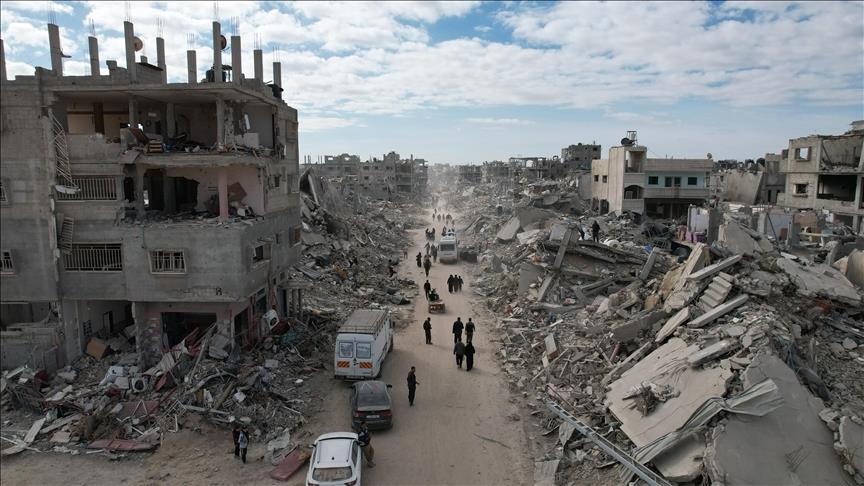
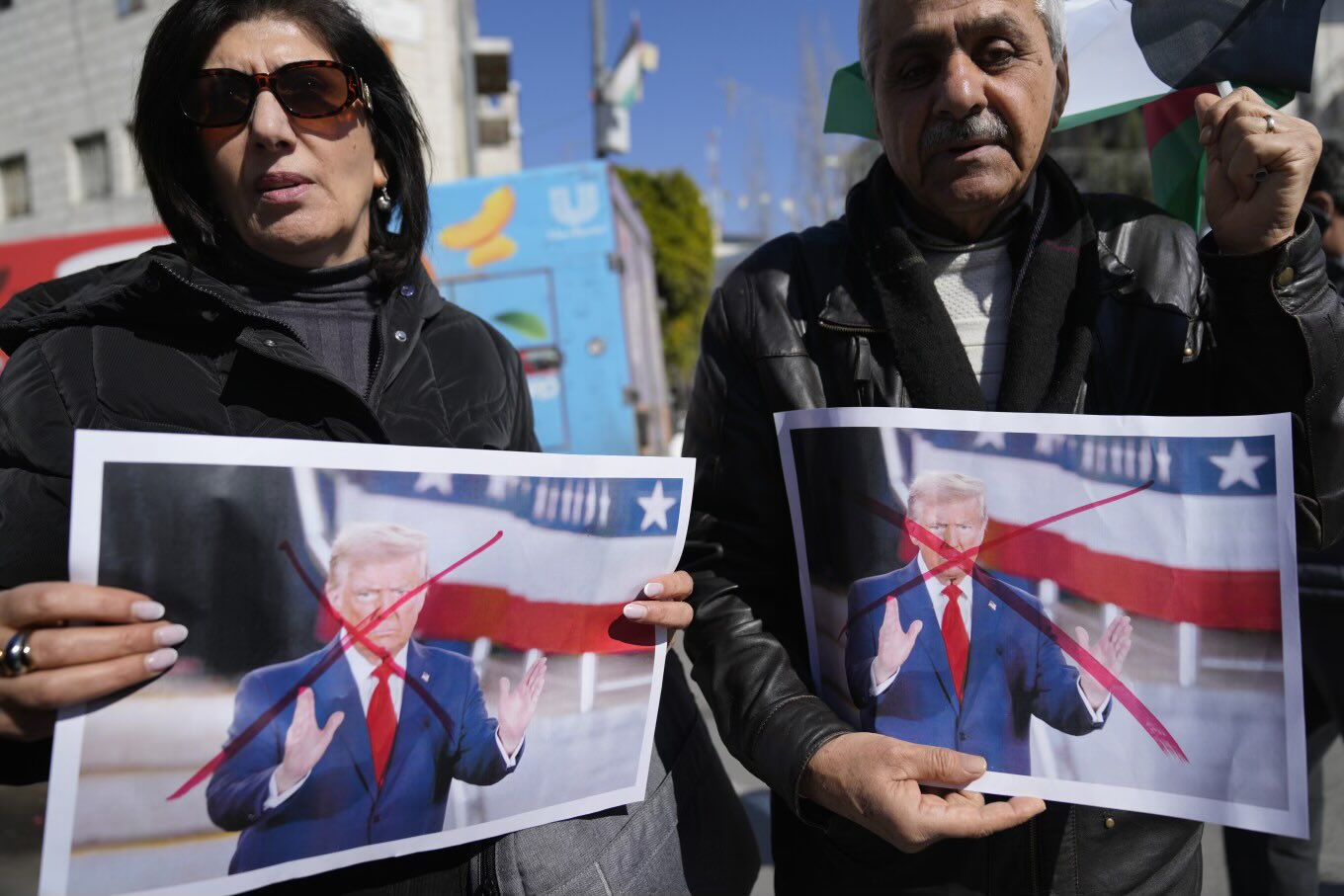
US President Donald Trump’s abrupt announcement proposing that the US take “ownership” of the Gaza Strip – battered by a 15-month Israeli offensive – has left senior officials, foreign counterparts, and political observers perplexed, press reports said on Wednesday.

While Trump presented the idea as a formal initiative, advisors and insiders described it as underdeveloped and lacking the necessary planning to make it a viable policy, according to The New York Times. During his first term, Trump was also known for presenting unvetted ideas as policy, leaving his aides scrambling to justify what the president unexpectedly said.

During a joint press conference with Israeli Prime Minister Benjamin Netanyahu, Trump read his proposal from a prepared statement, but sources within the administration said the plan had not been discussed in any formal capacity.

“There had been no meetings, no interagency consultations, no feasibility studies – nothing,” one senior official familiar with the matter was quoted by The New York Times as saying.

Idea without foundation

The lack of preparation behind the announcement was obvious, according to the Times.

Officials from the Pentagon and State Department – critical stakeholders in any foreign policy initiative of this magnitude – were not consulted.

There were no assessments of the military or financial requirements needed to implement such a plan, nor any evaluations of its legal or diplomatic implications.

The announcement also caught Netanyahu off guard.

According to individuals briefed on the matter, Trump told the Israeli leader of the proposal just minutes before their public appearance.

While Netanyahu appeared pleased during the press conference, the broader international response has been far cooler, and even hostile.

The announcement was met with immediate opposition from key US allies in the Arab world, including Saudi Arabia.

Critics highlighted several glaring questions left unanswered by Trump’s proposal.

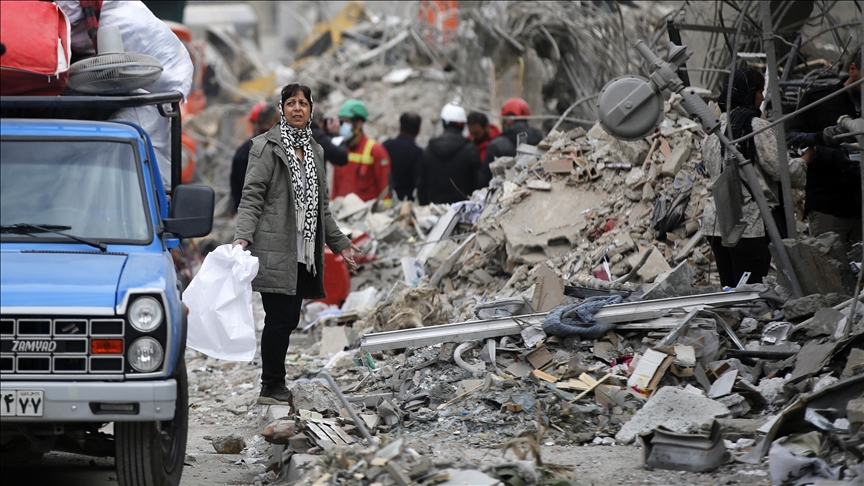
These include the logistics of removing Palestinian group Hamas, clearing unexploded ordnance, rebuilding Gaza’s infrastructure, and justifying such an action under international law.

There are also concerns about the fate of the some 2 million Palestinians living in Gaza, their home.

Trump suggested that residents could be relocated temporarily to neighboring countries such as Jordan or Egypt, but both nations have already rejected the proposal.

In his remarks, Trump claimed Palestinians would be eager to leave Gaza due to its uninhabitable conditions, a statement that drew further criticism for its tone and feasibility.

Trump is known for vaguely citing people said to hold certain opinions to justify a course of action he has decided upon.

Contradictions, mixed messaging

In a bid to clarify the president’s remarks, White House press secretary Karoline Leavitt downplayed the scope of the proposal, stating that Trump was merely seeking temporary solutions involving regional partners.

However, Trump’s comments during the announcement, including his willingness to put “boots on the ground” (soldiers) if necessary, signaled a far more ambitious and interventionist approach, according to The New York Times.

Senior administration officials have struggled to defend the proposal.

National Security Adviser Mike Waltz, speaking on CBS News, described the plan as a collection of “concepts” rather than a fully formed policy.

“The fact that nobody has a realistic solution, and he puts some very bold, fresh new ideas out on the table, I don’t think should be criticized in any way,” Waltz said.

He added that Trump’s announcement could spur other nations in the region to develop their own solutions if they find his proposal not to their liking.

Critics raise alarms

Many experts and former officials have dismissed the idea as implausible and dangerous.

Daniel B. Shapiro, a former US ambassador to Israel, described the proposal as “not serious” and warned it could worsen tensions in an already volatile region.

“The danger is that extremists within the Israeli government and terrorists of various stripes will take it literally and seriously, and start to act on it,” Shapiro said.

He also cautioned that the plan could jeopardize the ongoing release of hostages under the current ceasefire deal and undermine efforts toward normalization between Israel and Saudi Arabia.

Senior officials within the administration privately expressed similar reservations, calling the proposal a “fantastical event” born out of Trump’s ad hoc approach to foreign policy.

One advisor suggested that the plan would likely fade away as its practical challenges grow more and more apparent.

Trump’s approach to Gaza is consistent with his broader foreign policy style, which often frames international relations as transactional deals.

During his presidency, he has proposed similar ideas, including purchasing or otherwise acquiring Greenland, reclaiming the Panama Canal, and treating Canada as a potential 51st state.

His critics argue that such proposals lack serious consideration of geopolitical realities and international norms.

Trump’s vision for Gaza reflects his background as a real estate developer, viewing the region’s challenges as opportunities for reconstruction and investment.

His Middle East envoy, Steve Witkoff, also comes from a real estate background and reportedly influenced Trump’s thinking after visiting Gaza and witnessing the dire conditions in the war-battered enclave firsthand.

But David Friedman, who served as Trump’s ambassador to Israel, praised the proposal as “out of the box” thinking.

“It’s brilliant and creative,” Friedman said, while acknowledging the immense challenges involved.

“After 15 years of rebuilding, it could be a market-driven process,” he added, referencing Gaza’s potential as a waterfront destination according to Anadolu.

Broader implications, future steps

Despite the skepticism surrounding the plan, Trump’s announcement has already sparked debate among policymakers and international observers.

Supporters argue that it could serve as a catalyst for alternative solutions to the Gaza crisis, while critics warn of the risks associated with floating such half-baked idea.

The proposal’s timing also raises questions, given Trump’s ongoing efforts to reshape US foreign policy.

His administration has faced criticism for reducing the role of the US Agency for International Development (USAID) and other agencies responsible for humanitarian and development assistance.

Observers pointed to contradictions between his stated goals and his administration’s actions.

As the discussion around Gaza evolves, the lack of detailed planning behind Trump’s proposal underscores the challenges of addressing one of the world’s most complex conflicts.

Whether the idea gains traction or fades away quietly, its announcement highlights the unpredictable nature of Trump’s presidency and its impact on global diplomacy.

Proposal

At a news conference on Tuesday with Israeli Prime Minister Benjamin Netanyahu, Trump said the US “will take over the Gaza Strip, and we will do a job with it too,” and that if necessary, US troops would be sent in to turn it into “the Riviera of the Middle East.”

​The controversial announcement sparked global outrage, with many Arab, European, and African countries, as well as the Organization of Islamic Cooperation, issuing statements condemning the proposal.

Trump first triggered an uproar last week by suggesting that Palestinians in Gaza should be relocated to Jordan and Egypt, calling the enclave a “demolition site” after Israel’s 15-month war that has claimed more than 47,500 lives. A ceasefire that took hold on Jan. 19 is currently in place.

The International Criminal Court (ICC) issued arrest warrants in November for Israeli Prime Minister Netanyahu and his former Defense Minister Yoav Gallant for war crimes and crimes against humanity in Gaza.

Israel also faces a genocide case at the International Court of Justice for its war on the enclave.

Continue reading
Trump, Delusion Man and Gaza

By Ahmet Yusuf Ozdemir

US President Donald Trump has made an astonishing and deeply troubling proposal: the United States should take control of Palestine’s Gaza and transform it into a ‘Riviera of the Middle East’. He even claimed, “Everybody I’ve spoken to loves the idea of the US owning that piece of land.” The question is: who exactly is this “everybody”?

The answer seems clear when you consider that Trump made this announcement standing beside none other than Israeli Prime Minister Benjamin Netanyahu, the architect of the ongoing devastation in Gaza.

To further amplify the absurdity, Marco Rubio, Trump’s Secretary of State, took to social media to gleefully tweet: “Make Gaza Beautiful Again.” This is a vision that sees Gaza not as a place of human struggle, resilience, and history, but as an empty plot of land—waiting to be “beautified” by foreign intervention, with little regard for the millions of lives it holds.

Gaza has been on the news headlines again after October 7, 2023. Israel, Egypt, and the Mediterranean Sea surround it. Movement into and out of it is heavily controlled, as Israel has enforced a nearly complete land, sea, and air blockade of the area since 2007.

This small pocket of land has attracted the world’s attention every one or two years for the last one and a half decades but is also sometimes forgotten. If you are someone who is reading about Gaza for the first time in your life with this article, you may think the author is talking of a deserted island, uninhabitable place, or “a land without a people.”

In fact, Gaza is 365 square kilometres of land, and it inhabits 2,351,000 people, which makes it one of the densest areas in the world, with 6441 people per square km. One should also avoid the statisticalisation trap where people who are living in Gaza are human beings with stories and memories. They are faces rather than mere numbers. However, it becomes clear that political language in the United States with the new Donald Trump administration will be based on the dehumanisation of Gaza.

The implications of his words at the press conference on February 5, are staggering. Trump’s proposal is a glaring reminder that in the eyes of many world leaders, the people of Gaza—Palestinians—are reduced to little more than background noise in a geopolitical game.

This isn’t just about land or politics; it’s about the systematic erasure of a people, their history, and their struggle for self-determination. To Trump, Gaza isn’t a place of suffering and resistance—it’s an opportunity for rebranding. It’s a strip of land to be “fixed,” a place to be renovated into a “tourist destination,” regardless of who lives there or the decades of hardship they’ve endured under a brutal occupation and blockade.

Colonialism rebranded

What Trump’s rhetoric reveals is a deeply troubling mindset—a belief that Palestinians in Gaza have no voice, no agency, and no right to self-determination or votes.

Their homes, their land, their very existence, are reduced to a resource for someone else to exploit, more valuable than the people living on it. This may come as a surprise to some observers, but this is a modern-day manifestation of colonialism, echoing the Manifest Destiny doctrine in the United States—a belief that one nation has a divine right to control another’s land, regardless of the people who have lived there for generations. It’s the kind of thinking that has long fuelled the oppression of indigenous peoples, and it is alive and well in Trump’s vision for Gaza.

The legal context around this proposal only deepens its gravity. The International Criminal Court (ICC) has issued arrest warrants for Israeli officials, including Netanyahu and former Defence Minister Yoav Gallant, for crimes against humanity and war crimes. The International Court of Justice (ICJ) has condemned Israel’s actions in Gaza as genocide.

And yet, Trump’s words seem to offer a dangerous legitimisation of the very actions that have brought Gaza to the brink of collapse. Netanyahu’s rhetoric only adds fuel to the fire. In a speech soon after October 7 where he infamously referred to Palestinians as “animals” and invoked the biblical story of the Amalekites, justifying violence with religious fervour. “You must remember what Amalek has done to you,” he said.

This was not an ordinary reference, but put in the context of war, it could be interpreted as “genocidal intent.” Netanyahu was referring to the following passage; “‘I will punish the Amalekites for what they did to Israel when they waylaid them as they came up from Egypt. Now go, attack the Amalekites and totally destroy all that belongs to them. Do not spare them; put to death men and women, children and infants, cattle and sheep, camels and donkeys.’”

This is not just inflammatory speech—it’s the rhetoric of destruction, one that seeks to dehumanise and erase an entire population.

Trump’s chilling comments about the people of Gaza add to this. When asked whether Palestinians would ever be able to return to their homes if Gaza were to fall under US control, Trump responded bluntly: “I don’t think people should be going back to Gaza. I think that Gaza has been very unlucky for them. They’ve lived like hell…the only reason they want to go back is because they have no alternative.”

Notice how he frames it: Gaza isn’t a homeland—it’s a prison. Palestinians, in his view, are not people with rights, dreams, or a history—they are mere sufferers, trapped in a place they should leave behind. The use of “they” is telling: Trump doesn’t even use the word “Palestinian” when he talks about Gaza. It’s as though the very identity of the people who live there has been erased.

Resilience

But despite the relentless violence and oppression, the spirit of the people of Gaza remains unbroken. After the ceasefire between Palestinian resistance forces and Israel, which came after weeks of unimaginable destruction, Gaza’s resilience was on full display. Thousands of Palestinians returned to their homes in the northern part of Gaza, even though Israel has tried to make it uninhabitable.

This wasn’t just a physical return—it was a powerful statement of defiance, a refusal to be erased. During the release of Israeli hostages, Palestinians expressed solidarity with the resistance in a show of strength: smiling, cheering, even taking photos with fighters from the Qassam Brigades. This is a people who refuse to submit to occupation. Their will is unshaken.

So, while Trump’s words might make headlines, they also expose the lengths to which certain powers will go to suppress Palestinian resistance, to break their spirit, and to erase their struggle for justice. If this vision is allowed to continue, the Middle East could be facing a future marked by further instability, deepened injustice, and a growing humanitarian crisis.

But as Gaza has shown time and time again, the Palestinian struggle will not be easily silenced. No matter the attempts to erase them from the map, the people of Gaza will remain, with their history, their identity, and their fight for freedom.

TRT World


Ahmet Yusuf Ozdemir

Ahmet Yusuf Ozdemir

Ahmet Yusuf Ozdemir is an Assistant Professor of Political Science and International Relations Department at Ibn Haldun University.

Continue reading
Europe Says No to Trump’s Plan to Take Over Gaza, Transfer its People

Several European leaders, Wednesday, rejected US President Donald Trump’s controversial plan to “take over” Gaza and forcibly resettle its Palestinian population in other countries.

Germany

Dismissing the proposal, German Foreign Minister Annalena Baerbock said that the only way forward for peace is a negotiated two-state solution.


“It is clear that Gaza—like the West Bank and East Jerusalem—belongs to the Palestinians,” Baerbock said, warning that forcibly expelling the civilian population would violate international law and fuel further hatred.

She stressed that the UN, EU, and G7 have consistently opposed Israeli settlements on Palestinian territories.

France

France also swiftly rejected Trump’s proposal, reaffirming that Gaza should remain part of a future Palestinian state.


“The future of Gaza must be inscribed not in the perspective of control by a third State but in the framework of a future Palestinian State, under the aegis of the Palestinian Authority,” a French Foreign Ministry statement said.

“France reiterates its opposition to any forced displacement of the Palestinian population of Gaza, which would constitute a serious violation of international law, an attack on the legitimate aspirations of the Palestinians, but also a major obstacle to the two-state solution,” it added.


Britain

Responding to a question on Trump’s Gaza remark, UK Prime Minister Keir Starmer said Palestinians in Gaza “must be allowed home, they must be allowed to rebuild, and we should be with them in that rebuild on the way to a two-state solution”


Spain

Spain also joined the chorus of disapproval, with Foreign Minister Jose Manuel Albares firmly rejecting the idea of US control over Gaza.

“Gaza is the land of the Palestinian Gazans. The Palestinian Gazans must stay in Gaza,” Albares said.

Spain reaffirmed its commitment to a future Palestinian state that includes Gaza as part of its territory.


Poland

Poland’s Deputy Foreign Minister Andrzej Szejna expressed support for a two-state solution and emphasized the need for Palestinian involvement in the peace process.

“Just like in the case of Ukraine, where we say that you can’t decide about Ukraine without Ukraine, if we’re talking about the peace process. Similarly, you can’t decide about Palestine without the Palestinians. This is Poland’s position,” Szejna said.

Slovenia

Slovenian Foreign Minister Tanja Fajon criticized Trump’s comments as reflective of a “deep ignorance of Palestinian history.”


Speaking from Lebanon, Fajon warned that such proposals could lead to further unrest and violence and stressed that Palestinians completely reject the idea of being displaced from their homeland.


Scotland

Scottish First Minister John Swinney also condemned the proposal, calling any suggestion of displacing Palestinians “unacceptable and dangerous.”

Swinney emphasized that the suffering of the people in Gaza must not be exacerbated by plans for forced relocation, following months of intense violence and loss of life in the region.

Further reaction

The Palestine Solidarity Campaign (PSC) condemned Trump’s remarks, describing them as “illegal” and part of a “grotesque plan” that would lead to the mass ethnic cleansing of 2.3 million Palestinians.

“This is a blueprint for a crime of historic proportions,” said the PSC, highlighting that the plan would violate the Geneva Convention’s prohibition on the forcible transfer of populations.

The Muslim Council of Britain has criticized Trump’s plan, urging international action for Gaza’s reconstruction that is led by the Palestinian people themselves.

Wajid Akhter, Secretary General of the Muslim Council of Britain, warned that any attempt to reconstruct Gaza through displacement would amount to ethnic cleansing.

“Reconstruction without displacement is not only possible – it is the only acceptable path forward,” he stated.

Amnesty Denmark

Amnesty Denmark echoed the widespread rejection, with spokesperson Vibe Klarup drawing a stark comparison between Trump’s plan and Russia’s invasion of Ukraine.

” (What) Trump is advocating here is, first of all, a real invasion of another people’s country,” Klarup said, adding that any US takeover of Gaza would be criminal and a grave breach of international law.

During a news conference with Israeli Prime Minister Benjamin Netanyahu in Washington on Tuesday, Trump said that the US “will take over” Gaza after relocating Palestinians elsewhere under a redevelopment plan that he claimed could turn the enclave into “the Riviera of the Middle East,” according to Anadolu.

Continue reading
‘…No Force…Can Remove Palestinians From Their Homes’ Husam Zomlot

Palestine’s envoy to the UK on Wednesday termed US President Donald Trump’s plan to “take over” Gaza “very dangerous,” and warned that it will go far beyond Palestine.

Palestinian people are tested with genocide, mass-kill, mass-murder, mass-destroy yet the people remain as hundreds of thousands are now marching back to their homes, said Husam Zomlot.

“So, no force on earth can remove Palestinians from their homes,” he told Sky News.

His remarks came after Trump’s controversial remarks that the US “will take over” Gaza after relocating Palestinians to other countries.

The Palestinian ambassador highlighted that the future is about a two-state solution, the international consensus, ending the occupation and establishing the state of Palestine.

“If people from Gaza will go anywhere later, it will be back to their original homes inside the 1948 areas,” said Zomlot, adding Palestinians have one homeland, Palestine.

Gaza is just the “last episode” of what Trump wants to take over, the ambassador said, referring to Trump’s previous statements on Canada, Panama, and Greenland.


“We are watching global order being burnt, I think our global order is being collapsed,” he added.


The Palestinian ambassador noted that with his Gaza remarks, Trump normalized the ethnic cleansing and the idea of mass expulsion of people from their homes, which, he stressed is “very dangerous and it will go far beyond Palestine.”

“This is not just about Gaza, can you imagine a world where you can just go and claim ownership of a territory … where does it stop?” he questioned.

Zomlot said that the UK needs to “correct the gravest injustice inflicted” on Palestinians according to Anadolu.

“We need recognition of the state of Palestine immediately, Mr. Starmer, do not wait one more day,” he added.

During a news conference with Israeli Prime Minister Benjamin Netanyahu in Washington on Tuesday, Trump said that the US “will take over” Gaza after relocating Palestinians elsewhere under a redevelopment plan that he claimed could turn the enclave into “the Riviera of the Middle East.”

Continue reading