The US General Who Swallowed His Own Truth

By Jassem Al-Azzawi

General Dan Kaine, Chairman of the Joint Chiefs of Staff, delivered a confidential warning to President Trump with the utmost candor—the kind of candor that democracies rely on and empires routinely ignore. He said: “We don’t have enough ammunition to win this war. It’s not going to be pretty.” This warning wasn’t born of cowardice; it was the last vestige of institutional integrity that still flickers within the halls of American military power.

Trump’s response was that of a circus clown, not a commander-in-chief. Through his “Truth Social” platform—that distorted mirror of American political life—he dismissed the warning with the arrogance of a street vendor, saying: “Oh, no, no, no. If we do it, we’ll win easily.” Thus, a sober assessment became mere publicity, and caution a lie.

But the biggest lie came later. When Kaine’s warning leaked, Trump not only rejected it but completely reversed it. With the confidence of a man who has never been held accountable for anything, he told the American public the general had said the exact opposite—that the United States had plenty of missiles, munitions, and everything else. “That’s not what he said at all,” Trump declared, putting words of false victory in the mouth of a man who had offered only warnings.

And General Cain remained silent

This silence is not just a footnote in this story; it is the story itself. By remaining silent, Cain allowed the American public to absorb the falsehood as truth. He did not say: “No, Mr. President, that’s not what I said.” He did not invoke his oath, nor the soldiers who would pay with their lives for the gap between political rhetoric and logistical reality. He chose the safety of silence over the danger of truth, and in doing so, he betrayed not only himself but the Republic. This is the rot at the heart of American militarism.

As historian Andrew Bacevich has long warned, the professional military has become more of an instrument of imperial ambition than a defender of democratic values, with senior officers more concerned with their next post than with the Constitution they swore to uphold. Kaine’s silence was not a mere slip of the tongue; it was a symptom of a deeper malaise.

The logistical picture Kaine described in private was not theoretical; the calculations were unforgiving.

Current stockpiles of interceptor missiles and precision munitions could not sustain a prolonged air campaign against a country three times the size of Iraq. The Wall Street Journal documented a “worrying gap” in U.S. missile stockpiles, noting that reserves were “far below” the requirements of intensive and sustained operations. Pentagon contractors were instructed to “double or even quadruple” production of Patriot, SM-6, and precision-strike missiles—a tacit admission that the arsenal built for Cold War scenarios is inadequate for the war being fought today.

Consider Gaza: Israel, the most heavily armed military power in the Middle East, with complete air and naval dominance, has turned a tiny coastal strip into a moon-like landscape of devastation over two and a half years, yet it has not broken Hamas. Gaza is only 37 kilometers long. Iran, on the other hand, is a nation of 90 million people, with mountainous terrain, strategic depth, fortified infrastructure, and a combat-hardened Revolutionary Guard. The idea that it will collapse under a few weeks of American airstrikes is not strategy; it is wishful thinking. “God help us if this continues, if it gets to four weeks,” Colonel Daniel Davis warned on the Deep Dive podcast. He was speaking in military terms, and the same prayer applies. Politically.

When Trump now raises the prospect of sending ground troops, he is not escalating from a position of strength, but rather improvising from a position of denial. Admitting that air power and missiles alone cannot achieve the political objective is an admission that the original objective was never honestly assessed. This is the pattern of American wars at the end of an empire: Glittering promises, disastrous calculations, and then a grim and horrific reckoning paid in blood by those who had no seat at the table where the lies were told.


The costs are already piling up—not just in the currency of munitions and riches, but in the currency that empires always ultimately spend and regret most: credibility. America’s word, already devalued by two decades of contrived justifications for war, is getting cheaper by the day.

Democracies can tolerate miscalculations, and they can tolerate bad presidents, but what they cannot long tolerate is the institutionalization of a culture where the truth is whispered behind closed doors and swallowed whole in front of cameras. When the chairman of the Joint Chiefs of Staff allows his words to be weaponized for propaganda — when the man in charge of counting missiles refuses to correct a president who pretends they are plentiful — something far greater than military credibility collapses.

What is crumbling is the social contract between the governed and those who send them to their deaths.

Caine’s silence was not cautious; it was complicity. And in an imperial machine suffering from a shortage of ammunition and a shortage of truth, complicity is the only resource that seems inexhaustible, because when the missiles finally run out, slogans won’t replace them.

Reality will.

Al-Azzawi is an Iraqi writer who contributed this piece to Al Rai Al Youm which was translated and appeared in crossfire.com

Continue reading
BoP and The Lurking Devil!


Eight months ago and precisely in June 2025, the US and Israel launched their first combined “Midnight Hammer” military operation against Iran, in an attempt to obliterate its controversial nuclear facilities, set since 2018, to be settled through negotiations between the US and Iran. Prior to that strike, not Ukraine nor Venezuela or Greenland, but Gaza was the hottest issue on Trump’ international agenda, as he was applying the final touches on his anticipated peace plan for the devastated tiny strip! On 26 January this year, i.e. nearly a month ago, Trump from Davos, in Switzerland, proudly announced the birth of BoP, “The Board of Peace”, which he would preside over forever.


To enhance his initiative’s chances to succeed, Trump had invited world leaders to join his new born club for peace. Those who responded favorably had little choice to do otherwise, and some of them promised to contribute billions of dollars to make the plan work. Other big shots such as Russia, France or China were either not interested or invited!


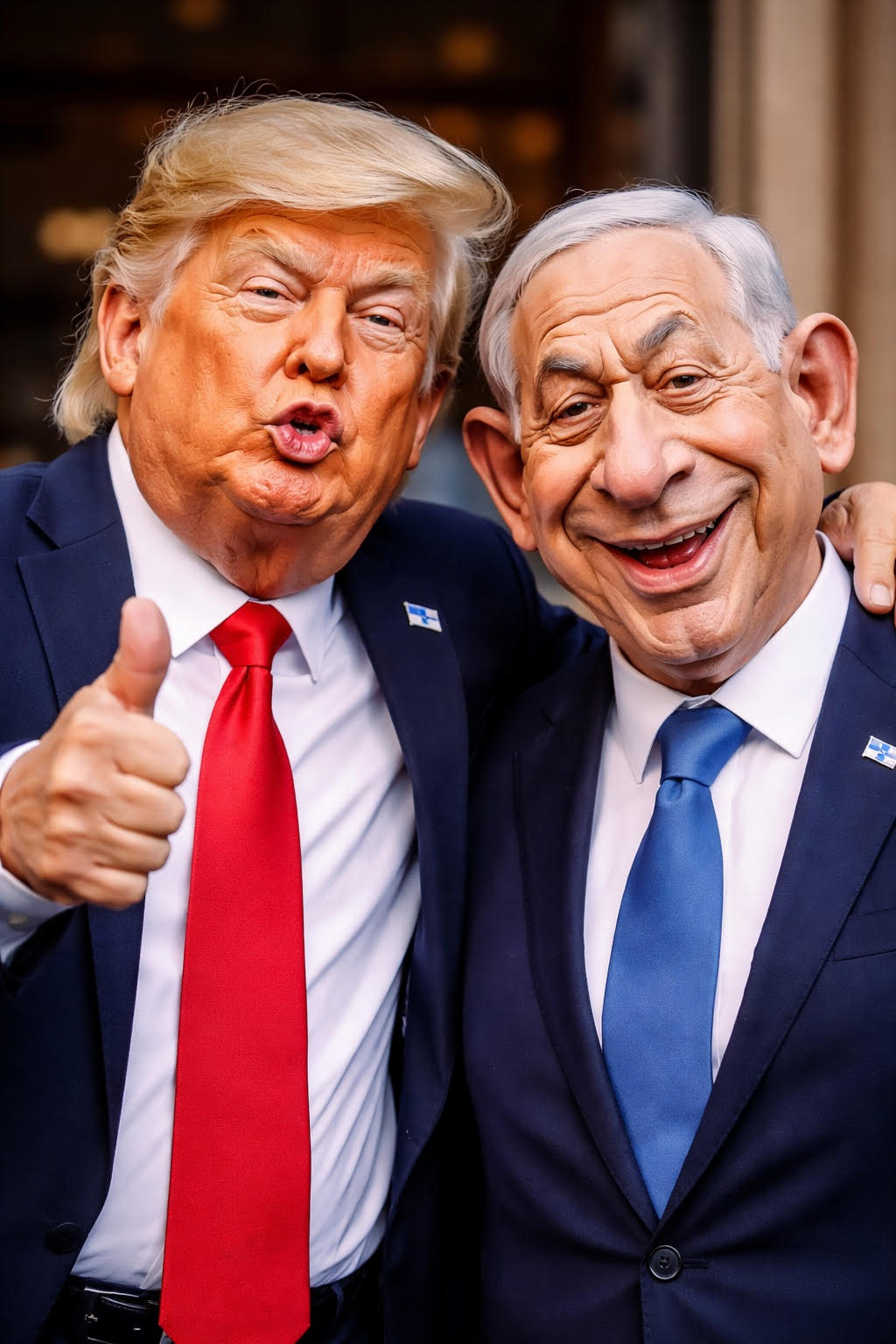
The last one to join the club, but reluctantly, was no other than the Israeli Prime Minister, Benjamin Netanyahu, despite his direct involvement in the thick of the matter. Netanyahu thought the plan was naïve and amateurish in more than one aspect! So he would send his Foreign Minister to attend the signing ceremony in Davos, for his own thoughts were focused on other more important issues that would take place later! Regardless of Netanyahu’s caveats, the Trump BoP seemed to be one of few feasible options to stop the violence and killing committed by Israel.

in Gaza, and a shy start towards a peaceful transition in Gaza and beyond despite the many loopholes.
On this occasion Trump said: “This is a big, big day, a beautiful day, potentially one of the great days ever in civilization”. The he added: “I am not talking about Gaza. Gaza is one thing, but we are talking about
much beyond Gaza. The whole deal, everything getting solved. It is called peace in the Middle East”. While this BoP was hailed as an achievement for Trump’s diplomacy, envisaged by his top capable advisor to the Middle East, Steve Witkoff, and his assistant Jared Kushner, Trump’s trusted son-in-law, it whistled disaster in Netanyahu’s ears.


From this man’s point of view, if the BoP was put on track of the peace train, let alone its arrival at its desired destination, it would mean one thing and nothing else: the end of Gaza tragedy which also meant the end of Netanyahu’s political career. For him, it looked like a trap that he had, knowingly but unwillingly, a role in setting up. At this crucial moment the manipulative devil and the survival instinct in
Netanyahu, were awakened and pushed him to embark on planning a reversal of this momentum. He had to end this nonsense talk about peace for Gaza, let alone beyond! For certain, he regretted his consent to the suspension of the Midnight-Hammer strike back in June against Iran. Now time is running short for him again.

He needs to take a big and last gamble to divert Trump’s current menacing approach to solve the thorny issues in this region. He, prematurely, and ahead of his originally scheduled visit to the US, books
a meeting with Trump at Mar-a-Lago in Florida, thus effecting his sixth meeting with Trump in less than a year!

There, he presents his case: Today, he tells Trump, Iran is the biggest real danger facing Israel and the free world led by the US; Iran is stockpiling an arsenal of all kinds of deadly missiles; the majority of
Iranians want the US to help them topple the regime which is massacring the protesters in the streets; Iranian negotiating team are just buying more time; it is now or a never again chance to finish this
nightmare called Iran, after its proxies in Syria, Yemen, Iraq, Gaza and Lebanon were defeated earlier.
Trump submissively listened, as Netanyahu managed to put a hold on every other item on Trump’s agenda, including his cherished BoP project for which he hoped to be nominated for the Nobel Prize for
peace!

Today as the war against Iran goes into its sixth day, two things and plus are crystal clear; there will be no peace prizes, and there will lot of havoc and chaos on the ground, plus the devil in Netanyahu, will be the happiest breathing creature around, for the time being!

Continue reading
Larijani: Iran Will Not Negotiate With The US

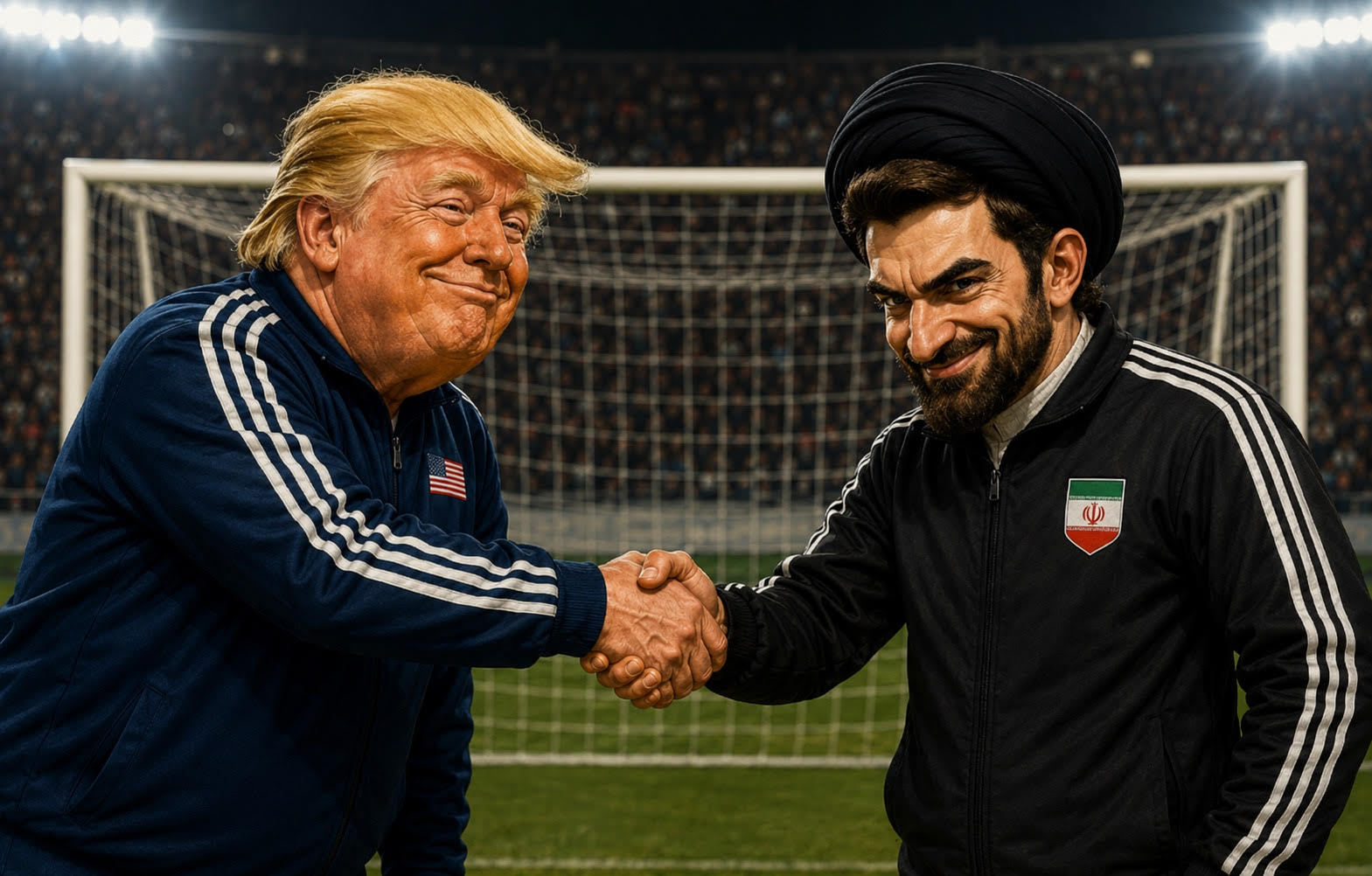
Iran’s Supreme National Security Council Secretary Ali Larijani affirmed that his country will not negotiate with the United States. He added that US president Donald Trump has plunged the region into chaos with his “false hopes.”

On Monday, Larijani asserted Iran will not negotiate with the United States, noting that Trump “has plunged the region into chaos with his ‘false hopes,’ and is now worried about further losses among American forces.”

In a post on his “X” account, Larijani argued Trump has transformed his “America First” slogan into “Israel First,” sacrificing American soldiers for Israel’s pursuit of power. He continued: “With delusional actions and new lies, Trump is once again making American soldiers and their families pay the price for his personality cult.”

He added: “Today, the Iranian people are defending themselves, and the Iranian armed forces did not initiate the invasion.”

These statements come in response to a report in the Wall Street Journal about an initiative by Larijani to resume talks with Washington, presented through Omani mediators.

These statements also come amidst the ongoing US-Israeli aggression against Iran, which has targeted large areas of the country and resulted in the martyrdom of the Supreme Leader of the Islamic Revolution and the Islamic Republic of Iran, Ayatollah Ali Khamenei, and a number of other Iranian leaders. Almayadeen

Continue reading
Ayatollah Khamenei is Alive & Well – FM Araghchi

Iranian Foreign Minister Abbas Araghchi on Saturday said that supreme leader Ayatollah Ali Khamenei is still alive “as far as I know,” in an interview with NBC News.

“Almost all officials are safe and sound and alive. We may have lost one or two commanders, but that is not a big problem,” he said.

When asked about US President Donald Trump’s pre-recorded remarks after the attacks, Araghchi labeled efforts of regime change as “Mission Impossible.”

“You cannot do regime change while millions of people are supporting this so-called regime,” he said, adding that Tehran is “certainly interested for de-escalation.”

“Well, there is no communication right now. But if Americans want to talk to us, they know how.”

Damage in Iran

Araghchi downplayed the damage caused by US/Israel strikes and highlighted a rapid military response, stating that they were able to start retaliation “in less than two hours.”

He also condemned an attack on a girls’ primary school in the city of Minab in southern Iran’s Hormozgan province, where at least 40 were killed, stating: “This attack was unprovoked, illegal and absolutely illegitimate and against international law.”

“I don’t know why… why they decided to attack us, perhaps, you know, it was others who dragged the United States for their own benefits into this,” the minister added.

Iranian missiles won’t reach US

When asked to confirm if Iran would build missiles designed to hit the US, Araghchi confirmed that Iranian missiles were intentionally limited in range and cannot hit the US mainland.

“No, no, we don’t have those (with) that capability. We have intentionally kept the range of our missiles below 2,000 kilometers,” he said.​​​​​​​

Araghchi emphasized that “Our missiles [are] only for deterrence and defense. They are not for aggression.”

Ongoing strikes

On Saturday morning, Israel launched what it called a “preemptive” attack against Iran under the name “Lion’s Roar,” declaring a “special and immediate” state of emergency across the country.

Trump later said his forces launched “major combat operations” in Iran aimed at “protecting the American people by eliminating imminent threats from the Iranian regime.”

The attacks come as talks between Washington and Tehran over Iran’s nuclear program had been ongoing under Oman’s mediation. A new round of talks in Geneva ended on Thursday according to Anadolu.​​​​

Continue reading